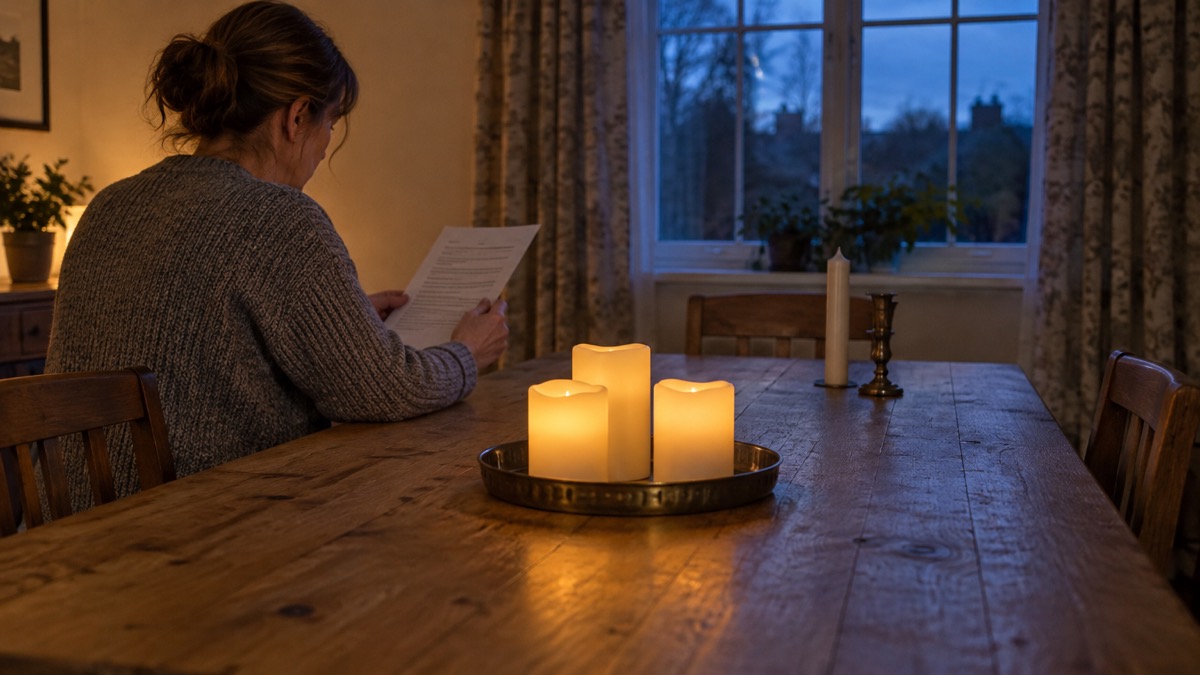
If you are choosing between LED candles and real ones, the answer from the fire services is straightforward: battery and LED candles are the safer choice. The government's Be Ready guidance says plainly that torches are safer than candles1, and fire services across the UK recommend flameless LED candles as a safer alternative to tea lights2. A battery candle cannot set a curtain alight, cannot be knocked into a costume and cannot be left burning when you fall asleep.
The reason for that advice is the record. Candles cause over 800 fires in UK homes every year3, and around 30 per cent of fires started by candles and attended by fire and rescue services result in death or injury4. Around one in eight house fires begin with naked flames such as candles, matches or cigarettes5. Those are not figures about careless people. They are what happens when a small, open, moving flame meets the ordinary contents of a home.
None of this means you cannot have candlelight. It means the choice should be deliberate. Use LED and battery candles wherever the flame is decoration rather than function, and if you do burn real candles, treat every one as something that needs watching, spacing and putting out properly.
| LED and battery candles | Real candles | |
|---|---|---|
| Flame | None11 | Open flame, needs watching4 |
| Where they can go | Easier and safer to place, including near decorations11 | In a proper holder, away from anything flammable3 |
| Left unattended | No fire risk from the light itself | Never leave burning, put out before sleep12 |
| Best use | Power cuts, pumpkins, decorations, festive tables2 | Only where an adult can stay in the room13 |
LED candles are the safer choice, say fire services
The recommendation is not a matter of taste. It comes from the bodies that attend the fires. The Be Ready campaign, the government's own emergency preparedness advice, states plainly that torches are safer than candles7. Wiltshire and Swindon's preparedness guidance is equally direct: candles can be used but they present a fire hazard, so it is best to stick with torches8.
Fire and rescue services go further and name flameless candles specifically. The London Fire Brigade's winter guide describes flameless LED candles as a safer alternative to tea lights2. Its advice for carers of people with hoarding disorder is to encourage them not to light candles or tea lights of any kind, with LED flameless candles offered as the safer option9. Devon and Somerset Fire and Rescue Service says it is safest to avoid using candles at all and to choose safer alternatives such as battery-powered lights10.
The practical advantage is placement. As one fire service puts it, because battery candles do not have a real flame, they are easier and safer to place11. You can put one inside a paper lantern, on a windowsill next to a curtain, or among decorations on a shelf, and the only thing you have to think about is the battery.
Candle fires: over 800 a year in UK homes
The national figure is stark. North Yorkshire Fire and Rescue Service states that candles cause over 800 fires in UK homes every year3. In England alone, government fire safety guidance for celebrations puts the number of accidental fires in the home started by candles at 850 every year14. The two figures come from different documents and different periods, and they are close enough to describe the same problem: several hundred fires a year, in ordinary homes, from an ordinary object.
Local services see their share of it. Devon and Somerset Fire and Rescue Service attends over 20 fires every year caused by candles15. That is one service area, in one part of the country, and it is a useful reminder that the national figure is made up of many small, local ones.
There is good news in the longer trend. Wiltshire and Swindon's fire safety guidance notes that progress has been made through candle safety campaigns, smoke and carbon monoxide alarms and a better understanding of hazardous and flammable materials16. Candle safety campaigns work. The remaining risk is concentrated in the situations where a flame is left alone, placed badly or brought near something that burns easily.
Why a naked flame is the risk
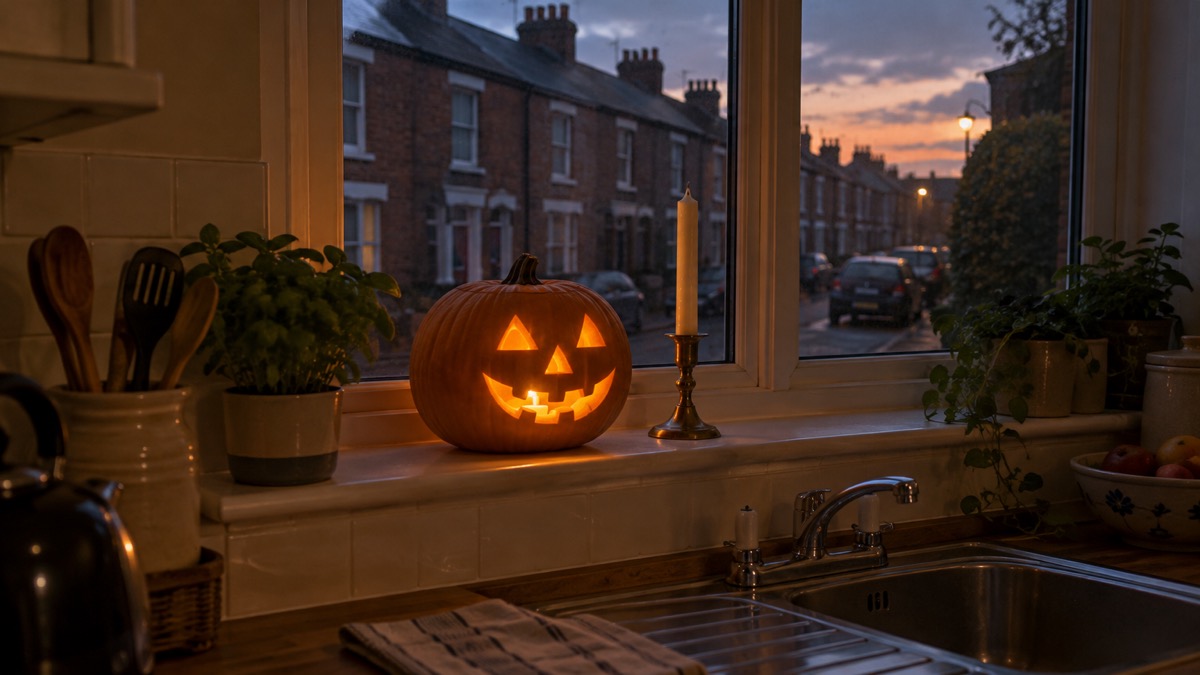
A candle is a controlled fire that stops being controlled the moment it is knocked, forgotten or placed too close to something. That is why official advice treats naked flames as a category of hazard rather than a single product. The guidance for households preparing for a power cut is blunt: it is not advised to use candles or any other naked flames to provide light, as these could pose a fire hazard12.
The risk multiplies with what is around the flame. Fire services warn that around one in eight house fires begin with naked flames such as candles, matches or cigarettes5. Some of that risk sits with the person, not the candle. Emollient creams, used for skin conditions, are not flammable in isolation, but regular use soaks into clothing, bedding and bandages, and fabric with dried-on cream is easily ignited by a naked flame, which may cause rapid fire growth, severe burns or even death17. Fire services advise anyone using emollients to consider using LED candles instead of candles with a naked flame18.
Around 30% of candle fires end in death or injury
This is the figure that should decide the question for most households. Around 30 per cent of fires started by candles and attended by fire and rescue services result in death or injury4. The National Fire Chiefs Council's stay fire safe leaflet gives the same figure20. Three in ten candle fires, in other words, are not just a scorched tablecloth.
That severity is why fire services treat candles differently from other lighting. A torch that fails leaves you in the dark. A candle that fails can take a room with it. The comparison is not dramatic licence: it is the reason the Be Ready checklist puts torches ahead of candles1, and the reason fire services recommend battery lights as the default10.
The risk is not evenly spread through the year. Halloween remains one of the highest-risk times of year for incidents involving naked flames5. Every year many adults and children are injured when lit candles come into contact with costumes and wigs11. Christmas brings its own hazards, not least a real Christmas tree, which can be more of a fire hazard than an artificial one21.
Using LED candles safely: keep the batteries out of reach
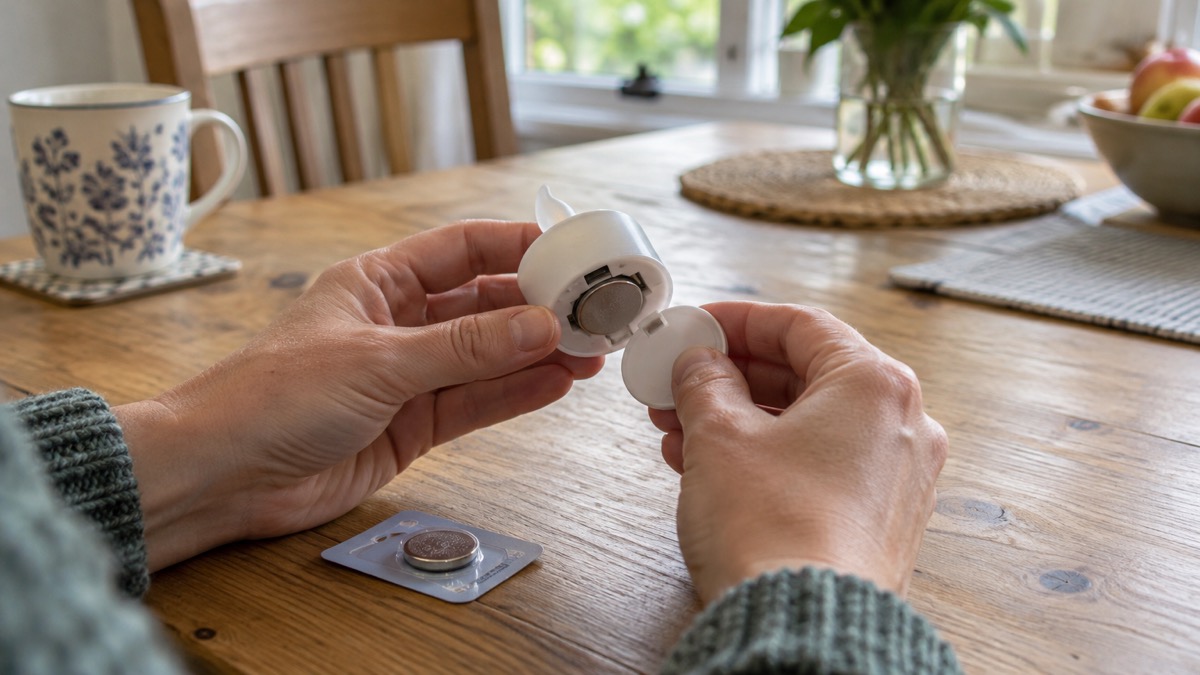
A battery candle removes the flame, but it does not remove every hazard. The one that matters most in a household with young children is the battery itself. Button and coin cells power most tea light sized candles, and they are small enough to be swallowed. Keep spare cells and the candles that hold them out of reach of small children, and check that the battery compartment on any candle you buy closes securely.
The other sensible habits are simple. Store spare batteries somewhere cool and dry, and keep them away from anything metal that could bridge the terminals. When a battery candle dims, change the cell rather than leaving a leaking battery inside the candle body. If a candle or its battery looks damaged, stop using it.
Placement still matters, even without a flame. Fire services advise keeping pumpkins, candles and other lights well away from anything that can burn11, and that applies to a battery candle left among dry decorations just as much as to a real one. The advantage of LED candles is that the list of things that can go wrong is much shorter, not that it is empty.
If you do burn real candles: holders, spacing and never unattended
Real candles are not banned, and fire services give clear rules for using them. Follow them every time, not just when you remember.
- Use a proper holder. Always make sure candles are in a suitable holder and away from anything flammable4. North Yorkshire Fire and Rescue Service adds that you should secure candles in a proper holder and keep them away from flammable materials like curtains22.
- Give them space. Keep candles away from curtains, clothing and furniture13. Make sure pumpkins, candles and other lights are placed well away from anything that can burn11.
- Stay in the room. Always stay in the room while the flame is burning23.
- Never leave them unattended. Never leave burning candles unattended, and always extinguish them before going to sleep, making sure the wick ember is no longer glowing17.
- Keep them out of bedrooms. Do not use candles in bedrooms or anywhere where you might fall asleep4.
- Never use one as a nightlight. Fire service guidance is explicit on this point17.
- Do not group them. Do not burn several candles close together, as this might cause flaring24.
- Keep children and pets clear. Take extra care to keep candles out of reach of small children or pets25.
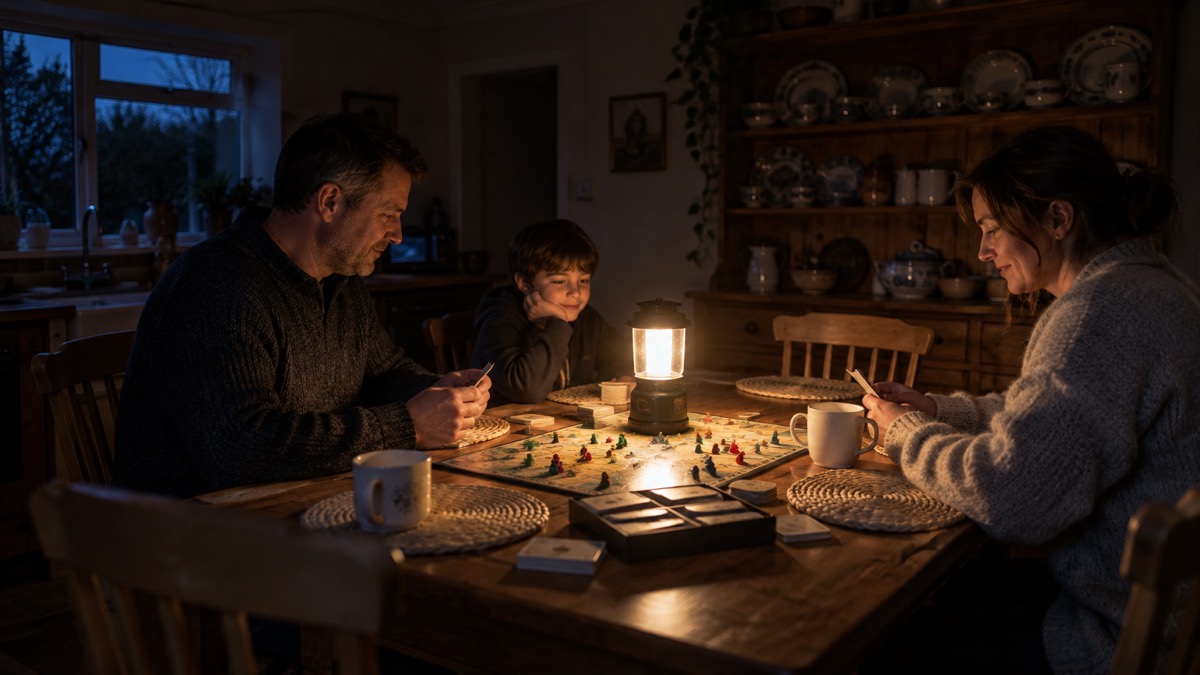
If a power cut leaves you reaching for a naked flame, the same rules apply with extra force, because the lights are off and it is easy to lose track of where a candle is. Northern Ireland's government advice for households during severe weather is to take extra care if you must use naked flames and make sure they are put out before you go to bed17. The same wording appears in the equivalent guidance for strong winds and heavy rain26.
Lighting the home in a power cut without a flame
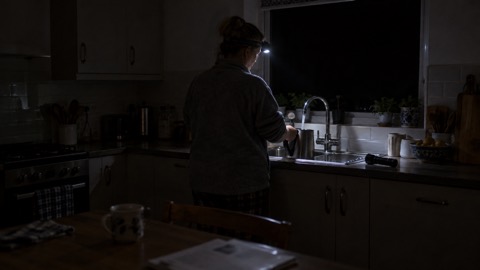
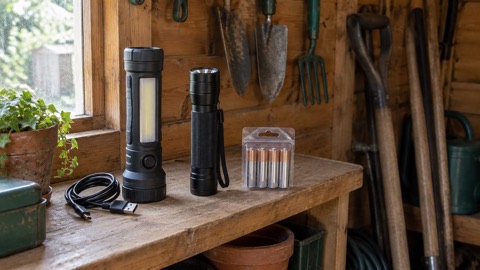
The best answer to a power cut is not a candle at all. Be Ready tells households to keep a battery or wind-up torch, and spare batteries, at home, and states that torches are safer than candles21. A wind-up torch needs no batteries and cannot run flat at the wrong moment, which makes it a dependable backup even if the battery torches are in another room.
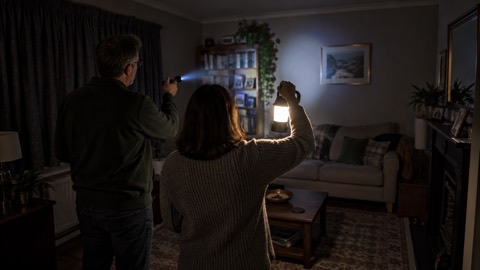
For lighting a room rather than a corner, a battery or rechargeable lantern does the job a candle is often used for, without the flame. Our guide to lighting your home safely when the power goes off sets out how to place lights so a room is usable, and the emergency lighting section covers torches, lanterns and candles side by side. If you want to compare the main options, torches and lanterns each have their own guide, and solar and wind-up lamps covers lights that need no batteries at all.
If you are using candles for light during a flood or a power cut, the London Fire Brigade's advice is to follow its candle safety guidance27. Better still, keep a power cut checklist with your lights so that the first thing you reach for is a torch, not a match.
Candles at Halloween: costumes, pumpkins and battery tea lights
Halloween is where candle risk and costume risk meet. Fire services recommend battery-powered tea lights in pumpkins instead of traditional candles28, and South Wales Fire and Rescue Service says to switch to battery operated lights as a safer option6. Northern Ireland Fire and Rescue Service advises using battery-operated candles and inspecting electrical decorations for faults29. The message is the same across the UK.
The reason is the costume. Fancy dress costumes can be highly flammable and can catch alight in seconds from something as simple as a tea light5. Children's outfits are classed as toys, not clothing, so they do not have to meet the same fire safety standards as everyday clothes, which makes them more flammable5. Keep costumes well away from naked flames5, and keep all Halloween costumes away from candles25.
The safer pattern for the evening is easy to set. Light the pumpkin with a battery tea light, give children a torch or glow stick to carry, and keep any real candles on a high shelf well back from the door where trick-or-treaters gather. Our guide to battery tea lights in a pumpkin covers the practical detail, and torches, candles and children covers keeping younger members of the household safe around both.
Candles at Christmas and through the winter
Christmas brings candles back onto tables and mantelpieces, often near things that burn easily. A real Christmas tree can be more of a fire hazard than an artificial one21, so keep any flame well clear of it, along with cards, wrapping paper and decorations. The rules do not change with the season: a proper holder, space from anything flammable, an adult in the room, and out before bed4.
Winter also brings power cuts, and with them the temptation to light the room with candles. The advice for a loss of electricity is the same in December as in July: candles present a fire hazard, so it is best to stick with torches8. Keep torches where you can find them in the dark, and check them before winter rather than during a storm.
If you use candles as part of a religious or family tradition, the safety rules still apply, and a battery candle can often stand in for the flame without losing the meaning of the moment. Our guide to using candles safely at Christmas goes through the seasonal detail, and the candle safety checklist is a short list to run through before you light anything.
Where to get help and advice
If you are unsure whether your candle use is safe, or you care for someone who uses candles, your local fire and rescue service can help. Many offer a free home fire safety visit, and our guide to free home fire safety visits explains what happens and how to ask for one. The candle fire safety at home guide covers the wider rules, and keeping pets away from lit candles deals with the household member most likely to knock one over.
For anyone who uses emollient creams, home oxygen or has trouble moving quickly, the case for LED candles is stronger still. Fire services advise considering LED candles instead of candles with a naked flame for emollient users18, and the London Fire Brigade's guidance for oxygen users is to keep all naked flames away19. If you are supporting an older or disabled person, our guide to lights for older and disabled people in a power cut sets out the options.
The simplest summary is the one the fire services keep repeating. A battery candle gives you the look of candlelight with none of the flame. A real candle gives you a small fire in your home that needs an adult, a proper holder and a clear space around it, every single time.
Sources (30)
- Be Ready for Emergencies, UK Government, 2026
- Extreme Weather Winter Guide, London Fire Brigade, 2025
- Candle Safety, North Yorkshire Fire and Rescue Service, 2026
- Candles, Merseyside Fire and Rescue Service, 2026
- Firefighters Advise Using Battery Tealights This Halloween, Devon and Somerset Fire and Rescue Service, 2025
- Safety During Halloween, Devon and Somerset Fire and Rescue Service, 2026
- Celebrate Safely, Humberside Fire and Rescue Service, 2026
- How to Prepare for the Loss of Electricity, Wiltshire and Swindon Prepared, 2026
- Hoarding Disorder, London Fire Brigade, 2026
- Top Ways to Reduce Your Risk of Having a Fire at Home, Devon and Somerset Fire and Rescue Service, 2026
- Halloween Candle Safety, Scottish Fire and Rescue Service, 2023
- 12 Tips to Prepare for a Power Cut, Horsted Keynes Parish Council, 2026
- Know the Fire Risk, National Fire Chiefs Council, 2026
- Stay Safe This Winter, North Wales Fire and Rescue Service, 2016
- Candles, Devon and Somerset Fire and Rescue Service, 2026
- Fire Safety, Wiltshire and Swindon Prepared, 2026
- Home Fire Safety, Northern Ireland Fire and Rescue Service, 2026
- Strong Winds: Weather Warning Information and Advice, nidirect, 2026
- Specialist Health Equipment, London Fire Brigade, 2026
- Stay Fire Safe Leaflet, National Fire Chiefs Council, 2023
- Be Informed About Hazards: Power Cuts, UK Government, 2026
- Halloween Safety Tips, North Yorkshire Fire and Rescue Service, 2025
- Fire Safety Booklet, London Fire Brigade
- Stay Safe This Halloween, North Yorkshire Fire and Rescue Service, 2020
- Stay Safe This Halloween, North Yorkshire Fire and Rescue Service, 2023
- Strong Winds and Heavy Rain: Warning Information and Advice, nidirect, 2026
- My Street Is Flooding, London Fire Brigade, 2026
- Halloween and Bonfire - South Wales Fire and Rescue Service, South Wales Fire and Rescue Service
- Don’t Let Flames Play Tricks on Your Treats This Halloween - Northern Ireland Fire & Rescue Service, Northern Ireland Fire & Rescue Service
- Don't Let Fire Turn Your Halloween Into a Nightmare, Northern Ireland Fire and Rescue Service, 2026
 Torch or Head Torch
 Lantern vs Torch
 Rechargeable or Battery Torches