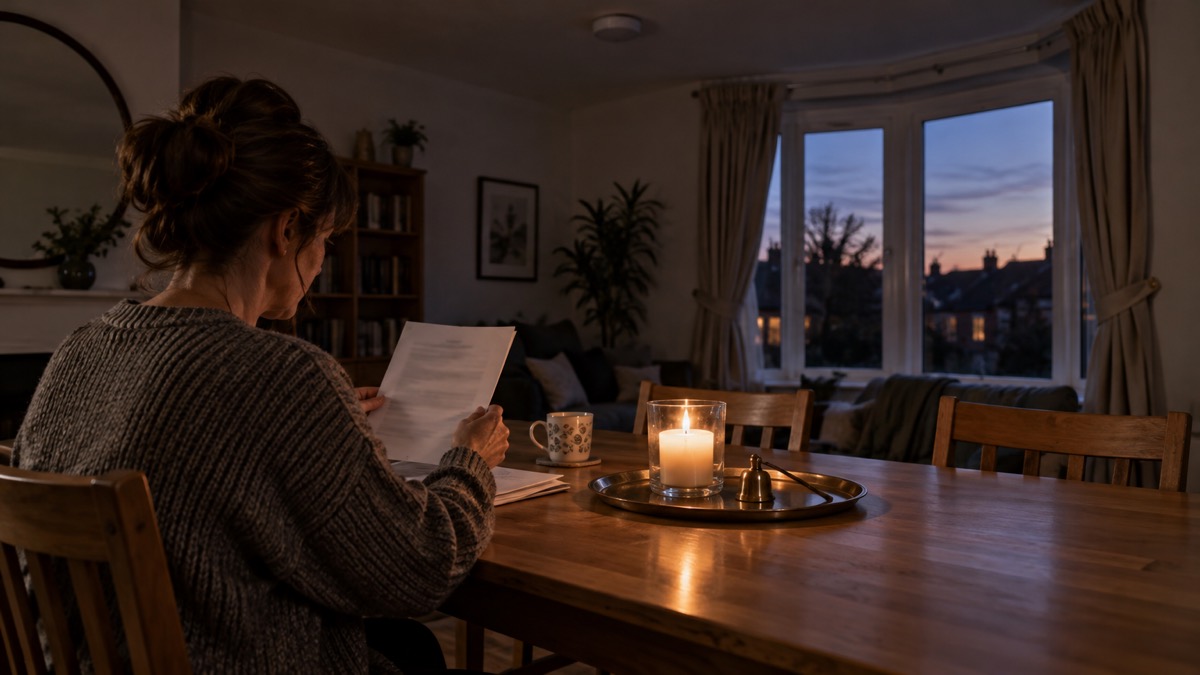
If the power goes off and you reach for a candle, the first thing to know is that fire and rescue services do not tell you never to use one. They tell you to use it carefully. Keep candles well away from anything that could catch fire, and never leave a lit candle alone1. If you must use a naked flame, take extra care and make certain it is put out before you go to bed2.
The second thing to know is the scale of the risk. Candles cause over 800 fires in UK homes every year3, and government figures put the England total at 850 accidental fires in the home started by candles every year4. Around 30% of fires started by candles and attended by fire and rescue services result in death or injury5.
The third thing is that you do not need a flame at all. Fire services across the UK now point households towards battery lights: consider using LED candles instead of candles with a naked flame6, and flameless LED candles can be a safer alternative to tea lights7. The checklist below is for the times you use a real candle anyway, and for the battery lights that replace them.
The candle safety checklist
Work through this before you light anything, and again before you leave the room or go to bed. Each item is there because a fire service names it.
Candles cause around 850 house fires a year in England
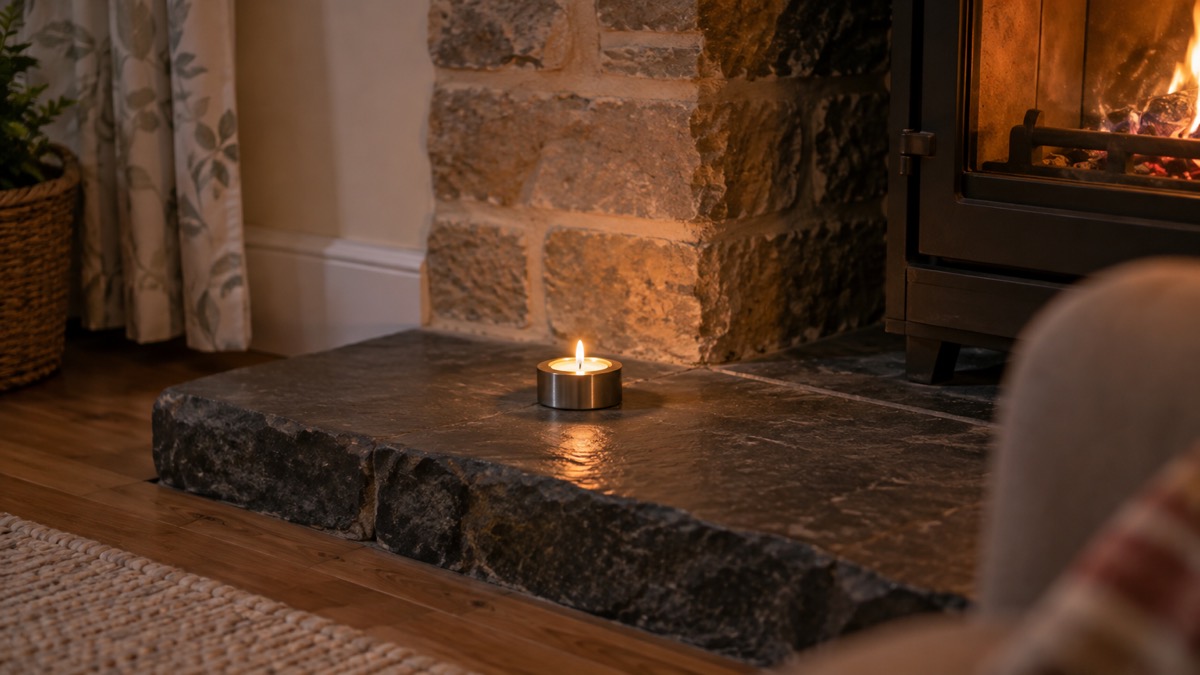
The headline figure for England is 850 accidental fires in the home started every year by candles, from government fire safety guidance4. Fire services describe the same problem in their own areas: North Yorkshire Fire & Rescue Service says candles cause over 800 fires in UK homes every year3, and Devon and Somerset Fire and Rescue Service attends over 20 fires every year caused by candles16.
The consequences are more serious than the number of fires suggests. Around 30% of fires started by candles and attended by fire and rescue services result in death or injury5. Across England there have been 254,030 accidental dwelling fires over the last ten years, with 1,804 deaths and 44,806 casualties17. Candle fires are a small share of that total, but they are among the most avoidable.
Power cuts are one of the moments the risk rises. Firefighters can be called to fires started by candles or portable heaters during a power cut1. That is why the same guidance that suggests keeping a supply of candles also says to keep them well away from anything that could catch fire and never to leave a lit candle alone1.
| Where you are | What the fire service says |
|---|---|
| England | 850 accidental house fires a year started by candles4 |
| North Yorkshire | Candles cause over 800 fires in UK homes every year3 |
| Devon and Somerset | Over 20 fires every year caused by candles16 |
| UK-wide | Around 30% of candle fires attended by fire and rescue services result in death or injury5 |
The pattern is the same in all four nations: the risk is not the candle itself but what is next to it and whether anyone is awake to notice.
Where a candle must never be left burning
Some places in a home are out of bounds for a naked flame, whatever the reason for lighting it. The clearest is the bedroom. Don't use candles in bedrooms or anywhere where you might fall asleep5, and never use a candle as a nightlight10. A candle left burning while you drift off can set light to bedding or curtains while you are not aware of it.
The second is anywhere you are not. Never leave burning candles unattended, and always extinguish before going to sleep, checking that the wick ember is no longer glowing10. Put burning candles out when you leave the room11. Northern Ireland Fire & Rescue Service puts the same rule in capitals: never leave candles unattended18.
The third is anywhere with something that burns close by. Keep candles away from soft furnishings, decorations, Christmas trees and wrapping paper, and out of reach of pets and children18. Keep them away from curtains, furniture, papers and clothes7.
The fire and rescue services are unanimous on the rule that matters most. Never leave burning candles unattended, and always extinguish them before going to sleep, checking that the wick ember is no longer glowing18. Put burning candles out when you leave the room, and make sure they are out completely once you have finished with them19. Never leave them burning when you are not in the room20.
Tea light holders and heat-resistant surfaces
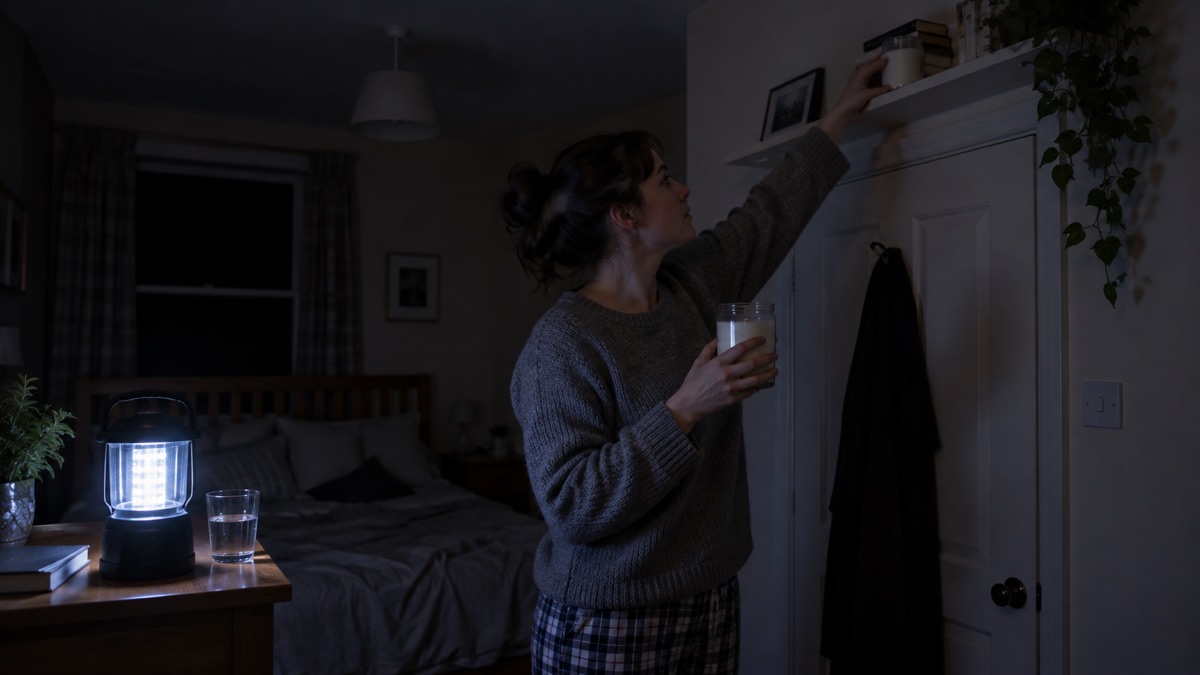
A tea light looks harmless because it is small. The foil cup it sits in is the problem. Put tea lights in proper holders: the foil outer container gets extremely hot and can melt surfaces underneath21. Put tea lights in a holder or on a plate, because the foil they are contained in can become extremely hot and melt what is underneath8.
The rule from fire services is consistent: always burn tea lights in or on a suitable, non-flammable holder on a heat resistant surface8. The holder should be heat resistant, sturdy and large enough to contain drips or melted wax10. A stable, heat-resistant surface underneath matters as much as the holder itself11.
| Item | What it does | What to check |
|---|---|---|
| Candleholder | Holds the candle and catches drips or melted wax10 | Heat resistant, sturdy, large enough for the wax10 |
| Non-flammable tea light holder | Contains the foil cup and spreads the heat8 | Suitable for tea lights, not paper or plastic8 |
| Heat resistant surface | Protects the table or shelf underneath11 | Stable, and clear of anything that can burn7 |
| Battery tealight | Gives the same glow with no flame7 | Battery cover secure and closed14 |
The same care applies to joss sticks, oil and incense burners16, and to oil burners, which should also go on a stable, heat-resistant surface11. If you use emollient creams on your skin, the risk is higher again, and LED candles are the safer choice6.
LED candles and torches: the safer way to light your home
The simplest way to remove candle risk is to remove the candle. Fire services recommend flameless LED candles as a safer alternative to tea lights7, and suggest considering LED candles instead of candles with a naked flame6. For a power cut, a torch or a battery lantern lights a room better than a candle and can be left safely while you move about.
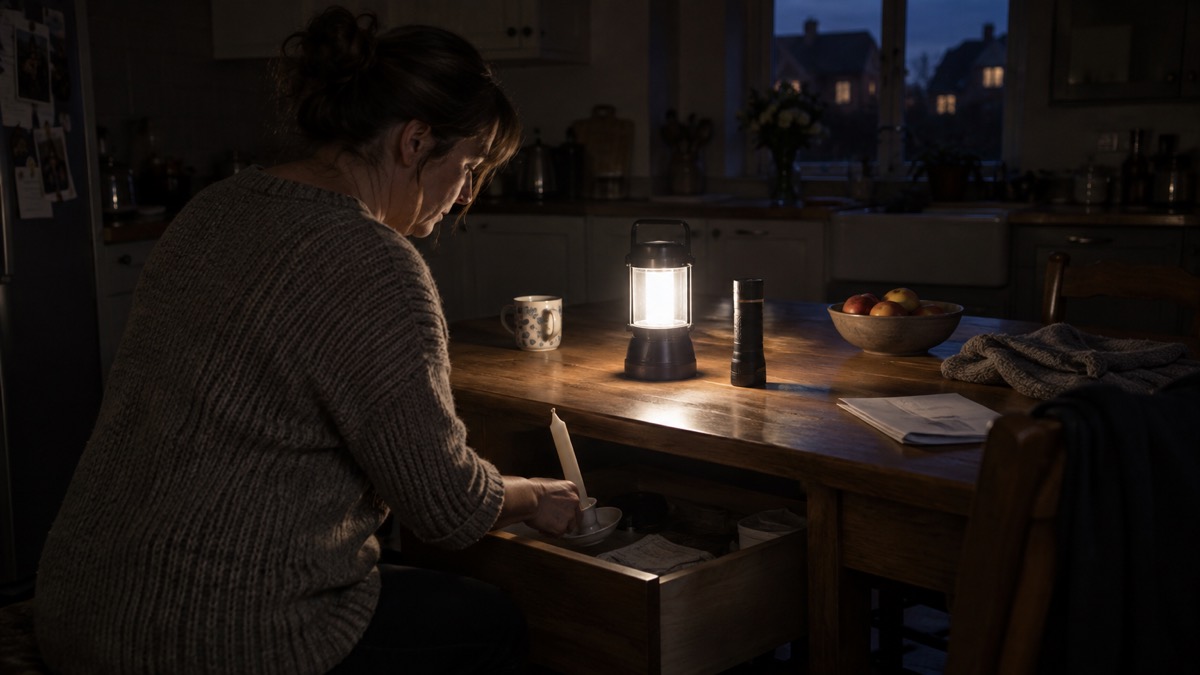
Battery lights bring their own small risks, and they are easy to manage. Make sure batteries are secure and battery boxes are vented14. Keep spare and used button batteries away from children, because small batteries are a hazard if swallowed. If a rechargeable battery becomes extremely hot to the touch it may be defective and could start a fire20, and if a battery begins to smoke or catches fire, get out immediately, raise the alarm, call 999 and do not attempt to tackle the fire yourself20. Do not leave chargers running overnight22.
For more on choosing and running battery lights, see lighting your home safely when the power goes off, battery and rechargeable lanterns and torches: types and how to choose one. If you want the direct comparison, LED candles or real candles: which is safer? sets the two side by side, and candle fire safety at home covers the wider subject.
Fancy dress, pumpkins and Christmas: the seasonal risks
Candles do most damage at the moments when homes fill with things that burn. Halloween is the clearest. Children's fancy dress outfits are classed as toys, not clothing, so they don't have to meet the same fire safety standards as everyday clothes, making them more flammable19. A costume can catch alight in seconds from something as simple as a tea light23. Keep costumes well away from naked flames19, and avoid wearing fancy dress or flowing materials when near a naked flame or heat source12.
Pumpkins are the other half of the problem. Avoid using a naked flame or candle in pumpkins; use a torch, glow stick or battery-operated candle9. If a pumpkin with a battery-powered tealight gets knocked over, or you forget to turn it off overnight, nobody gets hurt and nothing is damaged19. Make sure pumpkins, candles and other lights are placed well away from anything that can burn15.
Christmas brings the same risks with more fuel around. Keep candles away from soft furnishings, decorations, Christmas trees and wrapping paper, and out of reach of pets and children18. Check your Christmas lights are in good working order and conform to the British Standard8. For the full seasonal picture, see using candles safely at Christmas.
Keeping the checklist ready
A checklist only works if the things it asks for are to hand before the power goes off. Keep a torch where you can find it in the dark, and a battery lantern for the room you use most. Keep a supply of batteries for both, and check them before winter. Keep a proper tea light holder and a heat resistant plate or tray with the candles, so nobody is tempted to use the foil cup alone.
If you use candles regularly for reasons other than a power cut, a free home fire safety visit from your local fire service will look at the risks in your home and advise on what to change. See free home fire safety visits from your fire service. For a wider set of checks before winter, see lighting checks before winter, and for the full power cut list, torches, lanterns and candles: power cut checklist.
Sources (26)
- Power cuts, Scottish Fire and Rescue Service, 2026
- Strong winds and heavy rain warning: information and advice, nidirect, 2026
- Candle safety, North Yorkshire Fire & Rescue Service, 2026
- Fire safety when celebrating, UK Government, 2021
- Candles, Merseyside Fire and Rescue Service, 2026
- Know the fire risk, National Fire Chiefs Council, 2026
- Extreme weather winter guide, London Fire Brigade, 2025
- Fire safety checklist, Devon and Somerset Fire and Rescue Service, 2026
- Safety advice for Halloween, North Yorkshire Fire & Rescue Service, 2019
- Home fire safety, Northern Ireland Fire & Rescue Service, 2026
- Candle safety, Carmarthenshire County Council, 2026
- Celebrate safely, Humberside Fire and Rescue Service, 2026
- Bedtime checks, Scottish Fire and Rescue Service, 2024
- Fire and summer safety advice, nidirect, 2026
- Halloween candle safety, Scottish Fire and Rescue Service, 2023
- Candles, Devon and Somerset Fire and Rescue Service, 2026
- Home Safety - NFCC, National Fire Chiefs Council (NFCC)
- NIFRS issues safety plea following two house fire fatalities in one day, Northern Ireland Fire & Rescue Service, 2025
- Firefighters advise using battery tealights this Halloween, Devon and Somerset Fire and Rescue Service, 2025
- Spot the warning signs: could your e-bike or e-scooter start a fire?, London Fire Brigade, 2026
- Top ways to reduce your risk of having a fire at home, Devon and Somerset Fire and Rescue Service, 2026
- Talk to your children about fire safety, Devon and Somerset Fire and Rescue Service, 2026
- Safety during Halloween, Devon and Somerset Fire and Rescue Service, 2026
- Don't let fire turn your Halloween into a nightmare, Northern Ireland Fire & Rescue Service, 2026
- NIFRS urges everyone to be fire aware for a happier Halloween, Northern Ireland Fire & Rescue Service, 2022
- Don't let flames play tricks on your treats this Halloween, Northern Ireland Fire & Rescue Service, 2021
 Spare Batteries for Lights
 Lighting Checks Before Winter
 Power Cut Lighting Checklist