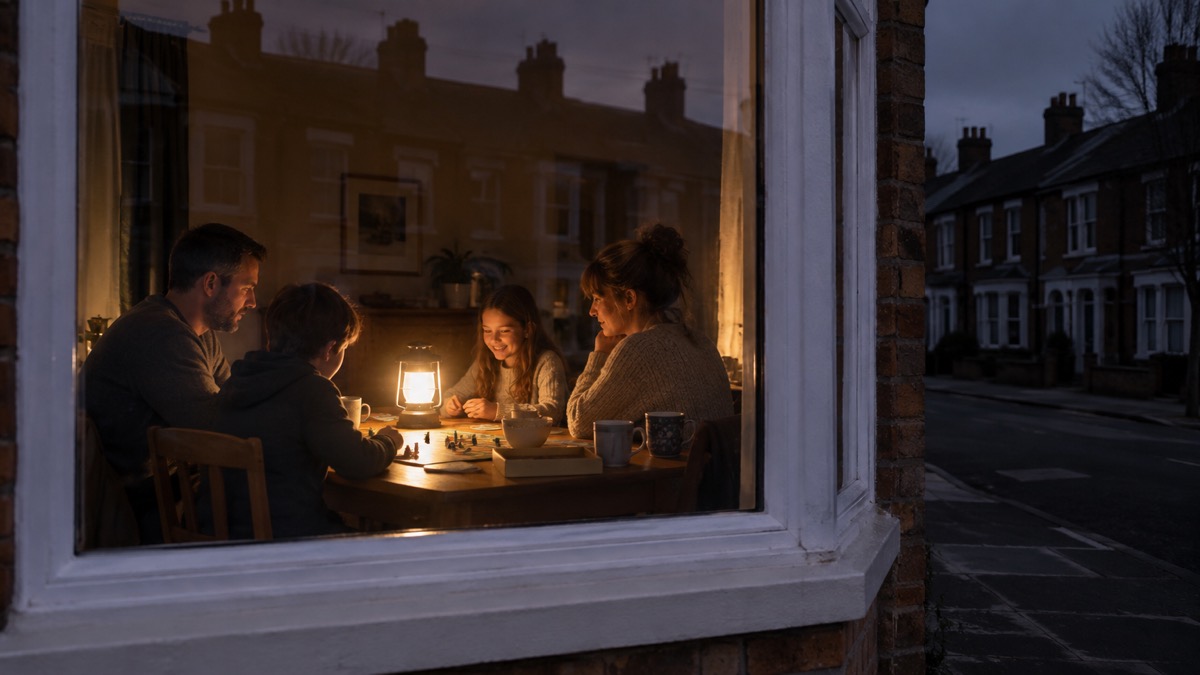
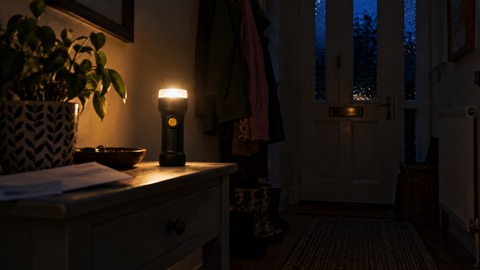
When the power goes off, the question is not just whether you have a light, but whether it lights the room. A torch throws a beam in one direction: fine for finding the fuse box, awkward for eating dinner by or keeping children calm. A lantern does the opposite. A battery lantern gives soft light for a whole room, and it costs around ten to twenty pounds from Argos, Screwfix or a supermarket1.
The safety case is unambiguous. Devon and Somerset Fire and Rescue Service's severe weather advice is to use a standing electric torch or battery-powered lights in a power cut, because candles are a fire risk1. The National Fire Chiefs Council makes the same point in its cost of living guidance: LED candles and lights, and battery or wind-up torches, are the safer products to light your home2. The Met Office, in its power cut advice, tells households to make sure they have multiple torches along with extra batteries3.
This page covers what to look for in a lantern for the home, how to charge and store rechargeable models safely, how to dispose of the batteries when they die, and the specific dangers of button batteries around children. It applies to any household in England, Scotland, Wales or Northern Ireland, because the fire safety advice is the same across the four nations.
Why a lantern is safer than candles in a power cut
Every fire and rescue service that has published advice on power cuts and Halloween reaches the same conclusion: replace the flame with a battery. North Yorkshire Fire and Rescue Service advises using battery-operated candles in pumpkins and lanterns because they are much safer than traditional candles8. Dorset and Wiltshire Fire and Rescue Service says the same, adding that battery-powered candles are cheap, do not blow out and are much safer9. Devon and Somerset Fire and Rescue Service encourages battery-powered tea lights for Halloween decorations to reduce fire risk10.
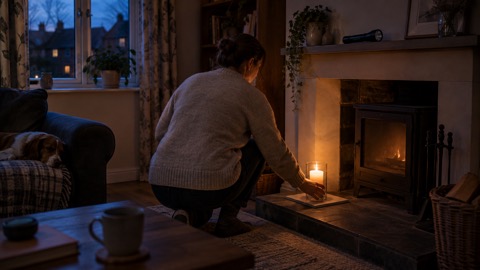
The reason is simple. An open flame in a dark house, with people moving around unfamiliar furniture, children excited or frightened, and possibly a pet underfoot, is a fire waiting for a moment of inattention. Merseyside Fire and Rescue Service's candle advice is to keep candles away from flammable objects like curtains, furniture, bedding and books11. The Scottish Fire and Rescue Service's power cut guidance says never to leave a lit candle alone, and to keep lit candles in candle holders12. London Fire Brigade's home fire safety booklet says to keep them away from curtains, clothing and furniture, always stay in the room while the flame is lit, and make sure the flame is out before you go to bed13.
A lantern removes every one of those risks at a stroke. There is no flame, nothing to knock over onto bedding, nothing that keeps burning after you fall asleep. It also solves the practical problem a torch does not: it lights the room in every direction at once, so a family can sit, eat, read or play a board game without someone holding a beam. For a fuller comparison of the two, see lantern or torch: which lights a room better, and for the wider picture of lighting a home safely when the power goes off, see lighting your home safely when the power goes off.
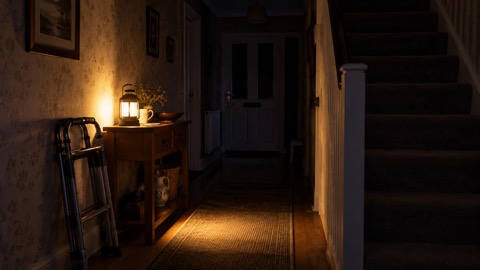
A battery lantern gives soft light for a whole room and costs around ten to twenty pounds from Argos, Screwfix or a supermarket14. That soft, room-filling light is what makes a lantern the safer choice over candles in a power cut: it stands on its own, needs no flame, and can be placed anywhere in the room without a fire risk. Keep spare batteries with it so it stays working through a long outage.
Choosing a lantern: battery, rechargeable or wind-up
Lanterns divide by how they get their power, and each type suits a different household.
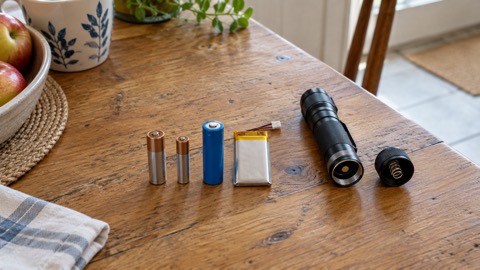
Battery lanterns take disposable cells, usually AA or AAA. Their great virtue is that you can keep fresh batteries in a drawer for years and swap them in minutes when the old ones die. Wiltshire and Swindon Prepared's advice on preparing for a loss of electricity is to make sure you have spare batteries if your torch or lantern is battery operated15. The Met Office's power cut advice is the same: multiple torches along with extra batteries3. If you want a light that will still work after a week of winter storms, a battery lantern with a sealed packet of spares is the dependable choice. See torch batteries: AA, AAA, 18650 and built-in packs for what the different cell types mean in practice.
Rechargeable lanterns have a lithium-ion battery built in, charged by USB from the mains or a power bank. They are cheaper to run and often brighter for their size, and many can charge a phone as well as light a room, which makes them useful beyond the power cut itself. The trade-off is that the battery slowly loses charge sitting in a drawer, so they need topping up every few months, and the lithium-ion battery inside needs the charging care set out in the next section. Some models also work as a power bank for your mobile, which the Met Office lists among the essentials for coping with a power cut: battery candles, torches and batteries, and a mobile phone power pack16.
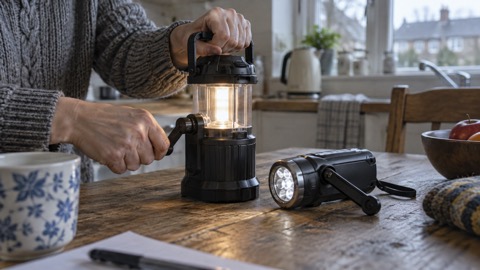
Wind-up and solar lanterns need no batteries at all. Wiltshire and Swindon Prepared notes that wind-up torches or lanterns are available which require no batteries at all, and calls them better still for that reason15. A wind-up lantern will never be caught flat, but the light is usually dimmer and you have to keep winding. Solar lanterns, including inflatable ones designed for camping, charge on a windowsill and cost nothing to run, though a British winter gives them less to work with. See solar and wind-up lamps that need no batteries for how these compare.
| Type | Power source | What it does well | What to watch |
|---|---|---|---|
| Battery lantern | Disposable AA or AAA cells | Long outages, storage for years | Cost of replacement batteries |
| Rechargeable lantern | Built-in lithium-ion, USB charging | Everyday use, phone charging | Loses charge in storage, needs charging care |
| Wind-up lantern | Hand crank | Never being caught without light | Dimmer, needs constant winding |
| Solar lantern | Sunlight | Free running cost, camping use | Weak in a British winter |
Choose by your household's circumstances: a battery lantern suits a kit stored for years for rare long outages, a rechargeable one suits regular use, and a wind-up or solar lantern suits a household that wants light without depending on batteries.
Whatever you choose, the Met Office's advice applies to all of them: keep more than one light in the house, with spare batteries where relevant, so that a single flat battery or a single lantern in the wrong room does not leave you in the dark3. Our page on where to keep torches so you can find them in the dark covers the storage side.
Charging and storing a rechargeable lantern safely
Most rechargeable lanterns contain a lithium-ion battery, the same technology as in mobile phones, laptops, power-packs, children's toys and power tools18. These batteries are safe during normal use, but Devon and Somerset Fire and Rescue Service warns they present a fire risk when over-charged, short-circuited, submerged in water or damaged7. The National Fire Chiefs Council describes lithium-ion battery fires as particularly dangerous because they are instantaneous and explosive in nature, potentially compromising escape routes19. That is not a reason to avoid rechargeable lanterns; it is a reason to charge them properly.
The fire and rescue services' charging advice, repeated across the UK, comes down to a handful of rules:
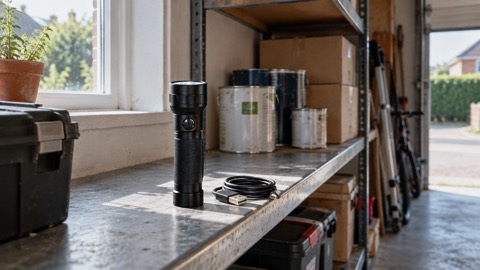
- Charge in a safe, visible location. Mid and West Wales Fire and Rescue Service advises charging batteries where you can see them, and avoiding charging near flammable materials or in escape routes4.
- Never charge on a bed, under a pillow or under anything. Devon and Somerset Fire and Rescue Service reports fires from charging devices on flammable surfaces, and the Scottish Fire and Rescue Service says plainly: do not cover the charger, battery or device while charging, as this can cause overheating or even a fire20.
- Unplug after charging and use manufacturer-approved chargers, advises Devon and Somerset Fire and Rescue Service7.
- Do not block your exit or escape route by charging batteries or devices, advises London Fire Brigade's home fire safety booklet13.
- Do not overload power sockets or use unsuitable extension cords; the Scottish Fire and Rescue Service advises always using uncoiled extension leads that are properly rated for your devices21.
- Use a charger that automatically shuts off or has a timer to prevent overcharging, advises Devon and Somerset Fire and Rescue Service20.
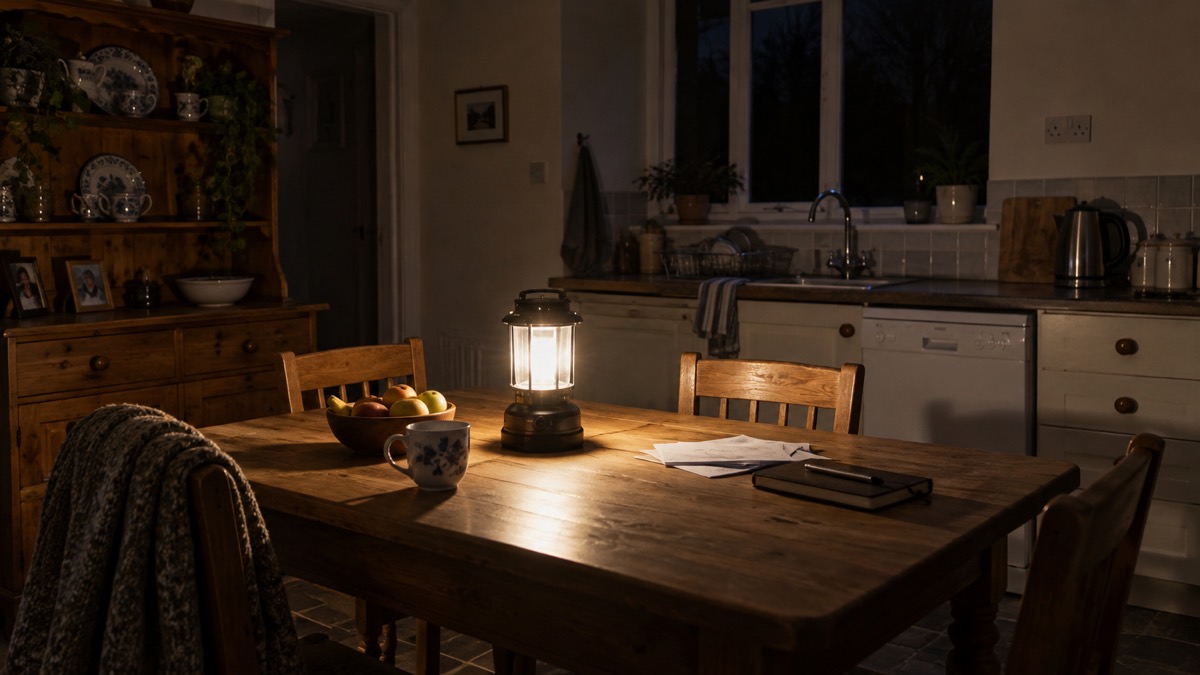
Two further points matter for buying. First, cheap chargers and batteries may not meet UK safety standards and can be dangerous, warns Mid and West Wales Fire and Rescue Service4. The Scottish Fire and Rescue Service states that items which do not meet British or European safety standards pose a huge fire risk21. Buy from a reputable supplier rather than an unknown marketplace listing. Second, learn the warning signs of a failing battery. London Fire Brigade lists lumps, leaking or physical damage to the battery casing as warning signs22, and North Yorkshire Fire and Rescue Service's Charge Safe campaign describes the same signs: a swollen battery, or any lump or leaking from the device23. A lantern showing any of these should be taken out of use and disposed of as set out below. Our page on charging and storing rechargeable torches safely goes into this in more detail.
Disposing of used batteries safely
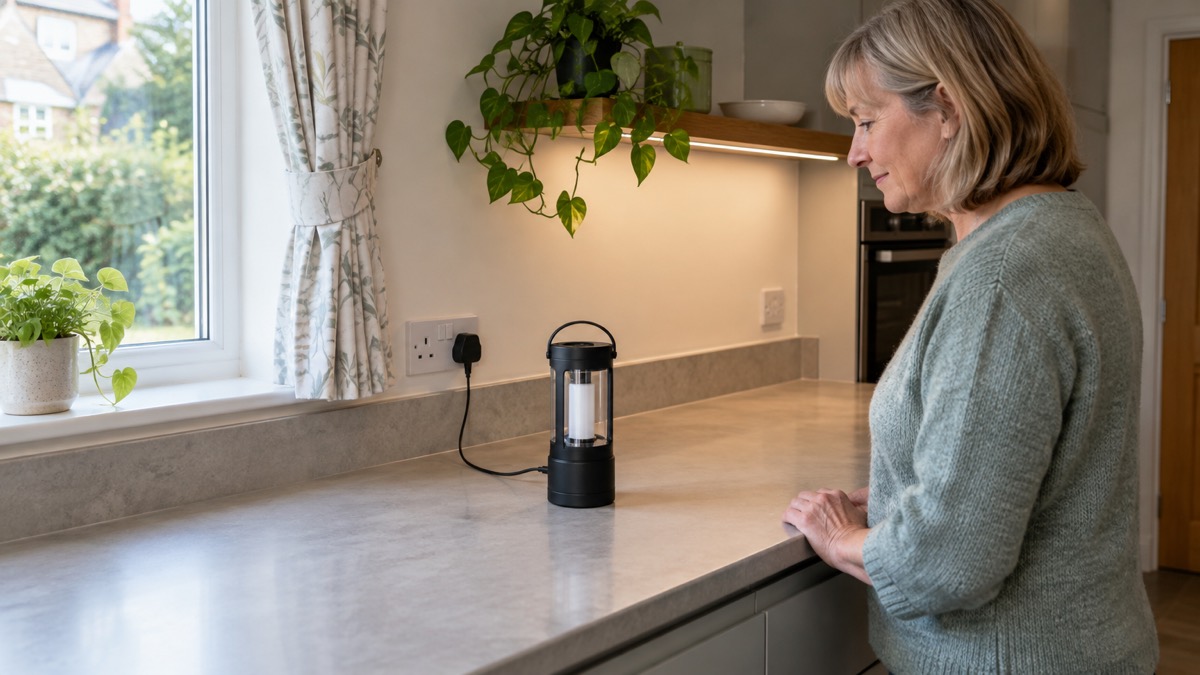
This is the part of lantern ownership most households get wrong, and it causes real fires. The fire and rescue services' message is identical in England, Scotland and Wales: do not dispose of damaged or end-of-life batteries in your household waste or normal recycling, because these batteries, when punctured or crushed, can cause fires in bin lorries, recycling and waste centres24. Devon and Somerset Fire and Rescue Service's campaign on battery recycling spells out the causes to avoid: overcharging batteries, charging devices on flammable surfaces, using batteries not recommended by the manufacturer, and exposing them to hot temperatures or water20.
The safe route for ordinary used batteries is straightforward:
- Take them to a battery recycling point. Great Ormond Street Hospital advises that many supermarkets have battery disposal bins, and suggests checking your council's website for your nearest one6.
- Dispose of each battery as soon as it dies. Do not store them up to dispose of in one go, advises Great Ormond Street Hospital6.
- Tape over the terminals with electrical tape to prevent short circuits and fire risk, advises Mid and West Wales Fire and Rescue Service4.
- Set aside a bag just for batteries. North Yorkshire Fire and Rescue Service's Recycle Your Electricals campaign suggests putting each battery in the bag as you remove it, ready to take to a recycling point or for council collection26.
- Use a recycling locator to find your nearest electrical recycling point, often found in supermarkets and shops, or check your council's website for collection, advises the same campaign26.
The same campaign makes the wider point: anything with a plug, battery or cable can be reused or recycled23. That includes a lantern that has reached the end of its life. A damaged or end-of-life lithium-ion battery deserves particular care: the National Fire Chiefs Council's guidance is not to put it in household waste or normal recycling, for the same crushing and fire risk27. If a battery is swollen, leaking or physically damaged, treat it as damaged waste, keep it away from anything flammable, and take it to a proper recycling point rather than the kitchen bin. Our checklist of spare batteries to keep for your lights covers the buying side of this.
Button batteries and children
If your lantern or its remote uses button batteries, this section matters more than anything else on the page. Button batteries are small, round, silver batteries found in lots of electrical toys and devices, as the NHS explains28. Great Ormond Street Hospital lists the objects that use them: watches, calculators, remote controls, electronic toys, key fobs such as car keys, LED lights, monitoring devices such as blood glucose monitors, digital thermometers, and greetings cards that make a sound6.
The danger is that a child can find them in things you would never think of as hazardous. An NHS safety notice lists where children encounter them: toys where the battery compartment is not secured, string lights and nightlights, small remote controls, car key fobs or key finders, musical cards and books, light-up toys and novelty items, and digital scales and thermometers29. String lights and nightlights are on that list, which brings button batteries directly into the subject of home lighting.
Prevention comes down to three habits. First, check that every battery compartment in a light or toy is secured, and be wary of bargains from online marketplaces or local discount shops, which the NHS safety notice warns may have button batteries your child can get to easily29. Second, keep spare button batteries locked away, and treat flat ones as dangerous: our page on whether flat button batteries are still dangerous covers why. Third, dispose of a dead button battery safely straightaway rather than leaving it on a surface or in a drawer, as Great Ormond Street Hospital advises6. For the wider picture, see torches, candles and children: keeping them safe.
Mains lamps and rechargeable emergency bulbs
Some households bridge the gap with lamps that run from the mains but switch to battery when the power fails. The Met Office's power cut essentials list includes battery candles, torches and batteries, and a mobile phone power pack, prepared in advance16. A rechargeable emergency bulb fits a normal light fitting and charges itself while the mains is on, then lights automatically when the power goes off, which means it is always where you expect it and never needs finding in the dark. Our page on power failure lights and rechargeable emergency bulbs covers how these work and what to check before buying.
Whatever plugs into the wall, the same electrical rules apply. The Scottish Fire and Rescue Service advises not overloading power sockets, not using unsuitable extension cords, and always using uncoiled extension leads that are properly rated for your devices21. A lamp left on a windowsill to charge, or an emergency bulb in a standard fitting, should be treated like any other appliance: nothing covering it, nothing flammable touching it, and the socket not shared with a heater and a kettle.
For households with children who depend on powered medical equipment, an NHS letter on power shortages advises charging fully any equipment with batteries ahead of a planned power cut, and for unplanned cuts making sure any items not in use are charging or charged30. A rechargeable lantern kept topped up serves the same purpose for the rest of the household.
Keep any lamp away from curtains, paper and bedding
A lantern carries nothing like the fire risk of a candle, but it is not zero, and where you put it matters. A rechargeable lantern left charging on a bed, under a pillow or on a pile of papers is one of the specific fire causes Devon and Somerset Fire and Rescue Service warns about: charging devices on flammable surfaces20. Mid and West Wales Fire and Rescue Service's advice to avoid charging near flammable materials applies to the lantern on the windowsill next to long curtains as much as to anything else4.
The rules that fire and rescue services give for candles are worth applying to any lamp, flame or not:
- Keep it away from flammable objects like curtains, furniture, bedding and books, advises Merseyside Fire and Rescue Service11.
- Keep it away from curtains, clothing and furniture, advises London Fire Brigade13.
- Do not block your exit or escape route, advises London Fire Brigade13.
- Charge it in a safe, visible location, advises Mid and West Wales Fire and Rescue Service4.
A lantern hanging from a hook in the middle of a room, or standing on a hard table away from the curtains, meets all of these. A lantern charging overnight on a bedside table under a duvet does not. If you do keep candles as well, the Scottish Fire and Rescue Service's power cut rules apply: keep lit candles in candle holders, and never leave a lit candle alone12. Our candle safety checklist covers that side of the house.
Register your lamp in case of a safety recall
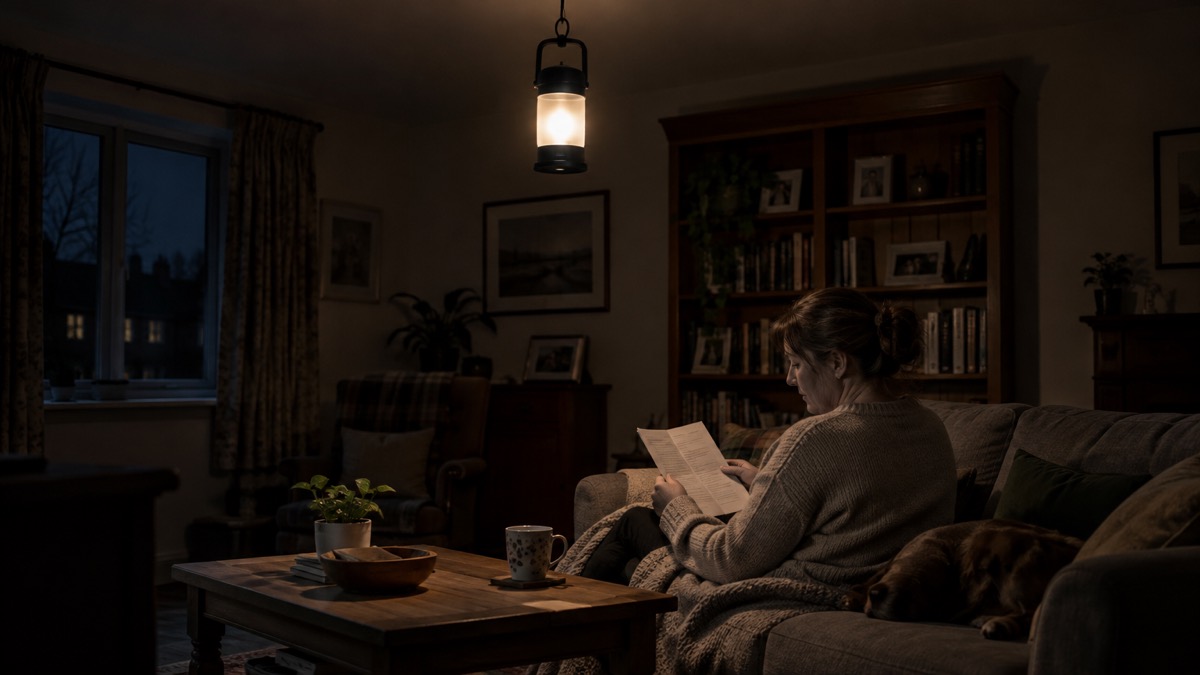
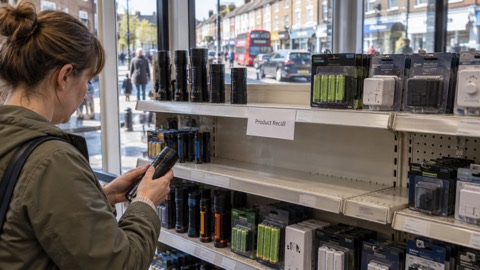
Lanterns, chargers and batteries are electrical products, and electrical products are recalled when a fault is found. The National Fire Chiefs Council's guidance on e-bikes and scooters, whose battery advice applies to any lithium-ion product, recommends registering your product with the manufacturer to validate any warranties, noting that batteries are usually included in warranties, and pointing out that registering makes it easier for manufacturers to contact you in the event of safety or recall information27.
Registration is usually a card in the box or a short form on the maker's website, and it costs nothing. Without it, a manufacturer has no way of telling you that the battery in your lantern has been recalled. With it, you hear before the fault becomes a fire. Our page on recalled and unsafe torches and chargers explains how to check whether a light you already own has been recalled, and how to report a dangerous one.
Where to get help
If a lithium-ion battery in a lantern or charger catches fire, the instruction from Devon and Somerset Fire and Rescue Service is unambiguous: do not attempt to put it out yourself, get out and call the fire service7. London Fire Brigade's warning signs page gives the same number: call 99922.
You do not need a fire to make contact worthwhile. Every fire and rescue service in the UK offers free home fire safety advice, and many offer a free home visit, particularly for older or disabled people. Our page on free home fire safety visits from your fire service explains how to arrange one, and lights for older and disabled people in a power cut covers the lighting side of that planning. If you or someone in your household relies on electricity for medical equipment or would struggle in an outage, ask your energy supplier about the Priority Services Register, which exists to make sure vulnerable households are supported during power cuts.
Before winter, run through our lighting checks before winter and the full torches, lanterns and candles: power cut checklist. A lantern with charged batteries, kept where you can find it in the dark and away from anything flammable, is the whole of the preparation in one object.
Sources (30)
- Safety in severe weather conditions, Devon and Somerset Fire and Rescue Service, 2026
- Cost of living toolkit, National Fire Chiefs Council, 2023
- What to do in a power cut, Met Office, 2026
- Lithium battery fire safety, Mid and West Wales Fire and Rescue Service, 2026
- E-bikes and e-scooters, Scottish Fire and Rescue Service, 2026
- Button batteries: using them safely, Great Ormond Street Hospital, 2018
- Battery fires, Devon and Somerset Fire and Rescue Service, 2026
- Halloween safety tips, North Yorkshire Fire and Rescue Service, 2025
- Stay safe this Halloween, Wiltshire and Swindon Prepared, 2026
- Safety during Halloween, Devon and Somerset Fire and Rescue Service, 2026
- Candle safety advice, Merseyside Fire and Rescue Service, 2026
- Power cuts, Scottish Fire and Rescue Service, 2026
- Easy read fire safety booklet, London Fire Brigade, 2026
- UK Power Cut Preparedness: Household Survival Guide · survival-kit.co.uk, survival-kit.co.uk
- How to prepare for the loss of electricity, Wiltshire and Swindon Prepared, 2026
- Stay safe in a thunderstorm, Met Office, 2026
- Stay safe in lightning, Met Office, 2026
- E-scooter, e-bike and mobility scooter fire safety advice, North Yorkshire Fire and Rescue Service, 2026
- Home safety position statement, National Fire Chiefs Council, 2025
- Recycle your batteries, prevent fires, Devon and Somerset Fire and Rescue Service, 2024
- Lithium-ion batteries, Scottish Fire and Rescue Service, 2025
- Spot the warning signs: could your e-bike or e-scooter start a fire?, London Fire Brigade, 2026
- Charge Safe campaign, North Yorkshire Fire and Rescue Service, 2026
- E-bikes and e-scooters, South Wales Fire and Rescue Service, 2026
- E-bikes and e-scooters fire safety guidance, National Fire Chiefs Council, 2025
- Recycle Your Electricals campaign, North Yorkshire Fire and Rescue Service, 2024
- Guidance on e-bikes and scooters, National Fire Chiefs Council, 2022
- What to do if your child has an accident, NHS, 2025
- Button battery safety leaflet, WWL Teaching Hospitals NHS Foundation Trust, 2026
- Parental letter re power shortages, NHS North West Children's ODND Hub, 2022
 Spare Batteries for Lights
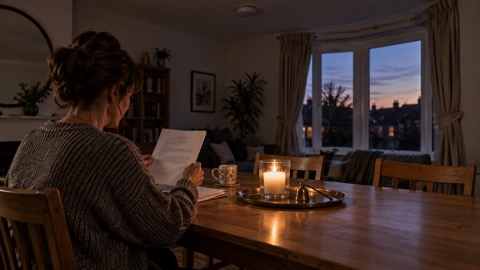 Candle Safety Checklist
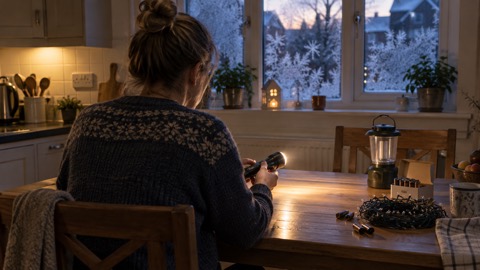 Lighting Checks Before Winter
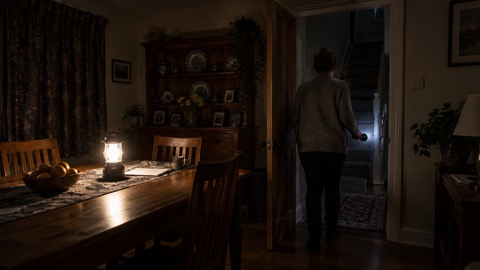 Lighting Home in a Power Cut
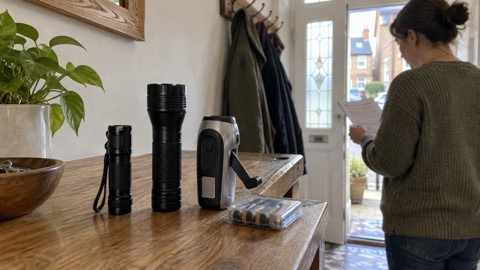 Choosing a Torch for Home
 Head Torches for Power Cuts
 Emergency Bulbs
 Solar and Wind-Up Lamps
 Lumens and Beam Distance
 Torch Batteries Explained
 Charging and Storing Torches
 Candle Fire Safety at Home
 Lights for Disabled People
 Torches, Candles and Children
 Recalled Torches and Chargers