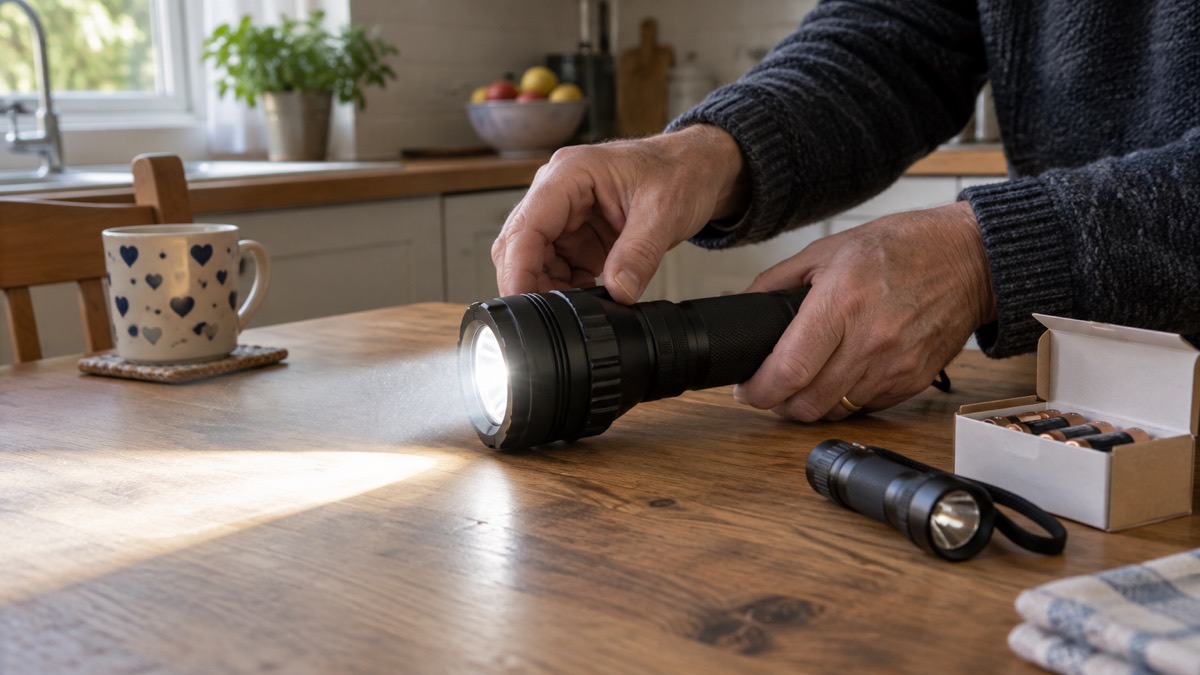
If you have ever picked up a torch or a lamp box and wondered what "500 lumens" or "beam distance 120 meters" actually means for you, the short answer is this: lumens tell you how much light the thing gives out, beam distance tells you how far that light reaches before it fades, and run time tells you how long it will keep going on one charge or set of batteries. Those three numbers together matter more than any single one, because a torch that is bright for twenty minutes is less useful in a power cut than a dimmer one that lasts all night.
But the numbers on the box are only half the story. Before any light can help you in an emergency, it has to be safe and working. That means a mains lamp in the UK needs a proper 3-pin plug with the correct fuse, a 3A fuse for table and standard lamps according to London Fire Brigade guidance1, a bulb no more powerful than the shade's stated maximum2, and a place well away from curtains, paper and bedding3. This page explains the figures first, then walks through the checks that make sure the lights you own will actually be safe to use when the power goes off.
What lumens, beam distance and run time actually measure
Lumens are the standard measure of how much light a source gives out. The higher the lumen figure, the more light reaches the room or the path in front of you. Beam distance is the companion figure: it tells you how far the light travels before it becomes too faint to be useful, measured in metres. Run time is the third number, and it is the one people most often overlook. It tells you how long the light will run at each brightness setting, and it is always a trade-off, because a torch on its highest setting drains far faster than the same torch on low.
The best way to see the trade-off is to look at how makers publish their own figures. Ledlenser's P7R 25th Anniversary Edition rechargeable torch, for example, is listed by the maker at 1,200 lumens with a 240m beam for a 2.5-hour runtime on its Power mode, 450 lumens with a 150m beam for 5.5 hours on Mid power, and 25 lumens with a 35m beam for an 80-hour runtime on Low power, with a boost mode giving a short burst of 2,000 lumens4. The pattern is the same on every torch: ten times the run time when you drop to the lowest setting, and a beam that reaches a fraction of the distance.
| Setting | Lumens | Beam distance | Run time |
|---|---|---|---|
| Power | 1,200 | 240m | 2.5 hours |
| Mid power | 450 | 150m | 5.5 hours |
| Low power | 25 | 35m | 80 hours |
| Boost | 2,000 | short burst | momentary |
Figures are the maker's own for the Ledlenser P7R 25th Anniversary Edition4.
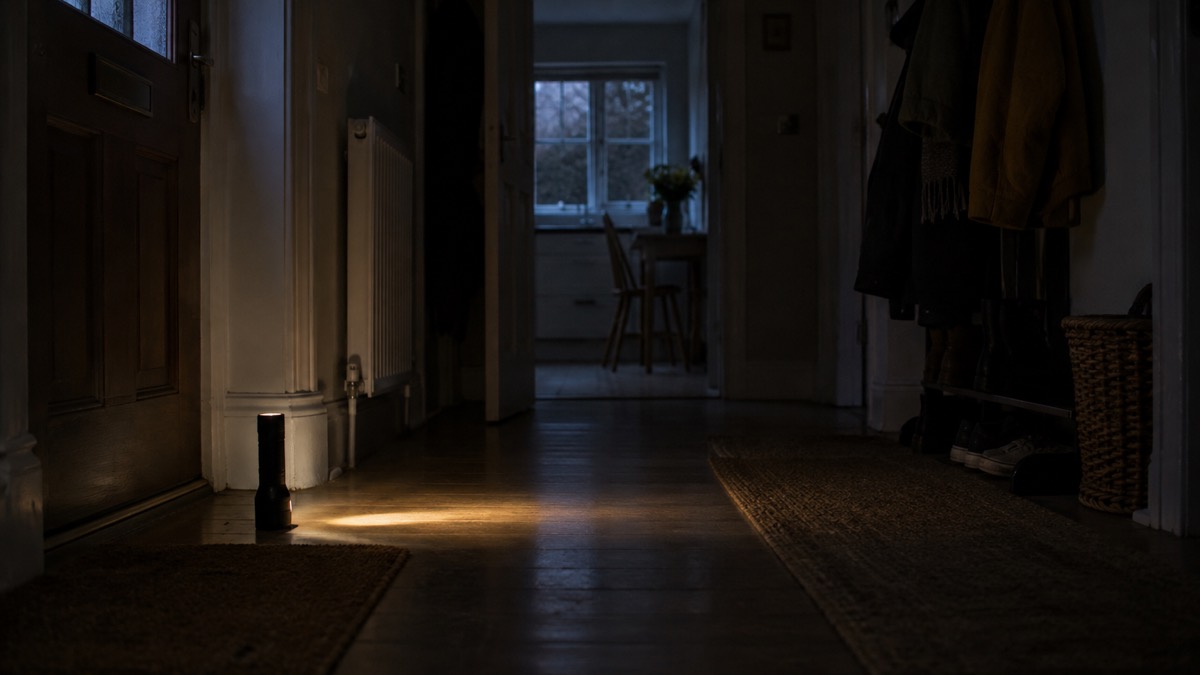
So how many lumens do you need? For finding your way round the house during a power cut, very few. A small torch such as Ledlenser's P3 Core, listed by the maker at 90 lumens maximum with a 110m beam and a 3-hour runtime, also runs at 50 lumens for 4 hours or 15 lumens for 6 hours6. Fifteen lumens is enough to light your hands and the floor directly in front of you, and it stretches the battery far longer than the top setting. NEBO's Torchy 600 Flex, running on a single AA battery, gives 100 lumens for 3.5 hours reaching 68 metres on High, or 60 lumens for 8.5 hours reaching 54 metres on Low7. For reading a meter, checking a fuse box or walking downstairs, those figures are ample.
The bright modes earn their keep outdoors. Ledlenser's P7 Special Edition torch is listed at 500 lumens reaching 120 metres for 2 hours on Standard Power, 250 lumens reaching 150 metres for 5 hours on Mid Power, and 20 lumens for 40 hours on Low Power8. A beam reaching 120 metres is one that lets you check the whole length of a garden or a street, which a 15-lumen light cannot. If you want to compare the types side by side, our pages on torches, head torches and lanterns set out what each does.
Every mains lamp needs a UK 3-pin plug and the right fuse
Any lamp that plugs into the wall in the UK must have a proper 3-pin plug fitted with the correct fuse. London Fire Brigade's guidance on cables, fuses and leads is specific about the rating: a 3A fuse is the correct size for a table lamp or standard lamp, along with televisions, computers, fridges and freezers1. The fuse is there to blow if a fault develops, cutting the power before the wiring can overheat. A fuse that is too large will not blow when it should, and a lamp with no fuse at all has no protection.
Check three things on any mains lamp you own or are thinking of using:
- The plug is a moulded or properly wired UK 3-pin plug, not a travel adaptor or a two-pin plug pushed into a converter1
- The fuse inside is the rating the fire and rescue service advises for lamps, which is 3A1
- The cable is undamaged, with no cuts, fraying or exposed conductors9
If a lamp arrives with a foreign plug or no plug at all, do not improvise. Have the seller replace it, or have a qualified electrician fit a UK plug with the correct fuse. Battery-powered lights avoid the issue entirely, and they are the safer choice in a power cut: official severe weather safety advice is to use a standing electric torch or battery-powered lights, because candles are a fire risk10.
Register your lamp so you hear about safety recalls
Electrical items are recalled more often than most people realise, and a recall only protects you if you hear about it. The Scottish Fire and Rescue Service advises that registering your appliance means you will be the first to know of any safety repairs or recalls, and that you can register old appliances as well as new ones through the Register My Appliance scheme11. Registration is free and takes a few minutes per item.
It applies to more than lamps: torches, chargers and rechargeable lights with lithium batteries have all been subject to safety notices. If you own several lights, register the ones you would actually rely on in an emergency first. Our page on recalled and unsafe torches and chargers explains how to check an item you already own and how to report a problem.
Bulb power rating: never go over the lamp's limit
Every lamp and lamp shade has a maximum bulb power it can safely take, and exceeding it is one of the commonest causes of lamp fires. The Scottish Fire and Rescue Service states it plainly:
"All lamp shades advise the maximum wattage of light bulb that can be safely fitted."
The rating is printed on a label on the shade or the fitting, and the fire and rescue service advises always checking it before fitting a bulb, because higher wattage bulbs can cause the shade to overheat and catch fire2. London Fire Brigade's home fire safety booklet gives the same instruction from the other direction: use bulbs that are the right size and wattage recommended by the appliance, make sure bulbs are fitted correctly because loose bulbs may get too hot, and do not put anything over the bulb as it can get very hot and cause a fire3. Cleveland Fire and Rescue Service adds the same check to its seasonal lighting advice: ensure bulbs are the correct size and wattage for the lamp or light9.
The same principle applies to decorative and fairy lights. Warwickshire County Council's fire safety advice warns that bulbs can get very hot and must not touch materials that scorch or burn easily, such as paper or fabrics12. Electrical Safety First adds two rules for Christmas lights: never use lights outdoors unless they are specifically designed for outdoor use, and always replace failed bulbs as soon as possible to prevent overheating13.
Choosing a replacement bulb that suits the lamp
When a bulb fails, the replacement needs to match the lamp in two ways: it must not exceed the shade's maximum wattage2, and it should suit how you use the lamp. For most household lamps today that means an LED bulb. Electrical Safety First recommends LED lights over traditional filament bulbs, and its reasons apply to lamps as much as to decorative strings: LEDs use around 10 per cent of the power of conventional lights, they generate less heat which reduces fire risk, and they are made of a special plastic so there is no worry about broken glass bulbs13.
The lower power draw matters for the wattage limit too. Because an LED bulb uses a fraction of the power of an old filament bulb for the same brightness, it is far easier to stay under a shade's maximum rating. When you shop, look at the lumens figure on the bulb box for brightness and the watts figure only to check you are within the shade's limit. A bulb's lumens tell you how much light you get; its watts tell you how much heat and power it produces, and the shade's label is concerned with the second of those.
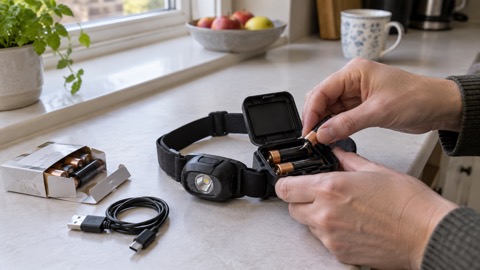
For portable lights, the same reading of the box applies. A head torch such as Ledlenser's HF4R SIGNATURE is listed by the maker at 300 lumens reaching 100 metres for 2.5 hours on Standard Power, with a Boost Mode of 600 lumens for 140 metres described as a short burst of maximum power for when you need it most14. Note that the maker itself describes boost as a short burst: it is not a setting to plan around for a long outage, but a momentary surge for finding something at distance. Our page on rechargeable or battery torches compares the two power systems for emergencies.
Where a lamp must never go
Some places are simply off limits for any light with a flame, and several carry the same warning from every fire and rescue service that has issued guidance. Tents top the list. North Yorkshire Fire and Rescue Service advises always keeping a torch handy for emergencies and never using lighted candles in or near a tent, because torches are much safer15. The Northern Ireland Fire & Rescue Service gives the identical instruction: keep a torch handy, and never light a candle or have any kind of flame burning apparatus in or near to a tent16.
The same rule extends to other enclosed and flammable settings. The Northern Ireland Fire & Rescue Service advises avoiding a naked flame or candle in pumpkins and using a torch, glow stick or battery-operated candle instead17. For oil lamps, the Scottish Fire and Rescue Service advises never using a cracked or broken oil lamp, and standing an oil lamp on a stable, non-flammable base wider than the lamp to prevent it tipping over18.
For gas and paraffin lamps used during power cuts, the Scottish Fire and Rescue Service's power cut guidance adds a ventilation rule: make sure any gas or paraffin lamp is used in a well-ventilated area and is not used close to curtains or fabrics19. Open-flame lamps of any kind also carry the standing fire service warnings about sleeping: Merseyside Fire and Rescue Service advises not using candles in bedrooms or anywhere you might fall asleep20, and the Northern Ireland Fire & Rescue Service advises never using a candle as a nightlight and never leaving burning candles unattended21.
Keep lamps away from curtains, paper and bedding
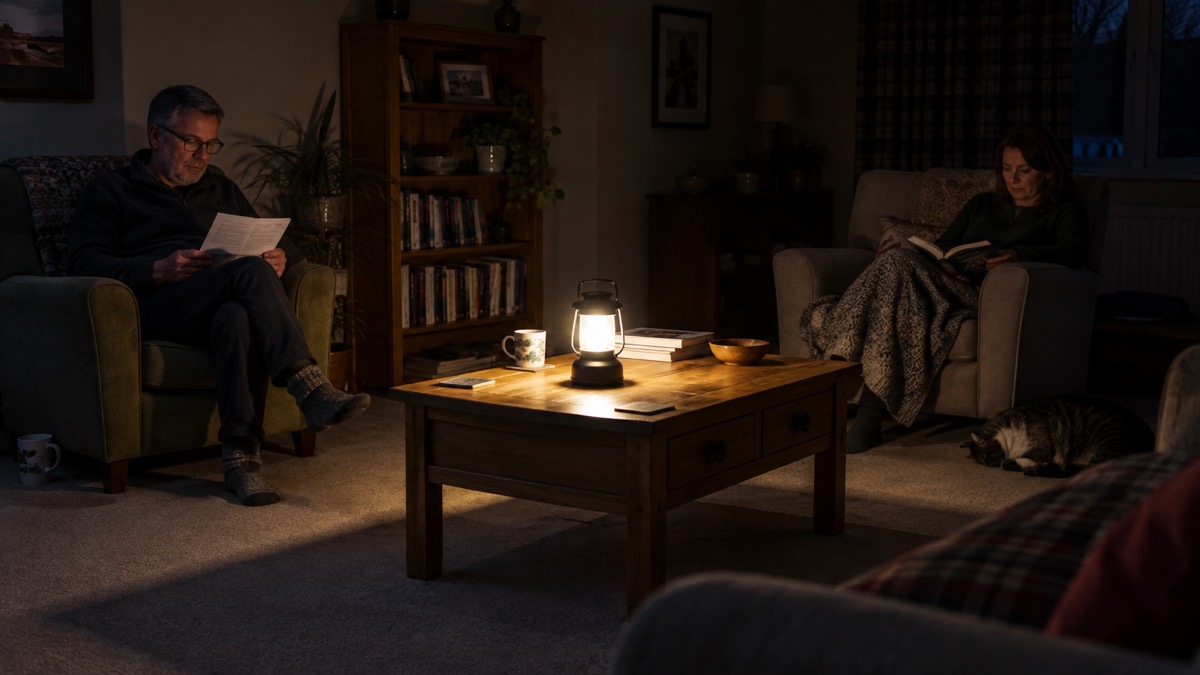
Whatever the light source, the materials around it decide whether it stays safe. The fire and rescue services' advice is consistent across England, Scotland, Wales and Northern Ireland. London Fire Brigade's home fire safety booklet advises keeping flames away from curtains, clothing and furniture, staying in the room while a flame is lit, and making sure the flame is out before you go to bed3. The Scottish Fire and Rescue Service advises keeping candles, tea lights and anything that burns well away from anything that could catch fire, such as curtains, furniture, papers and clothes22.
The same rule is repeated for every seasonal and decorative use. The Northern Ireland Fire & Rescue Service advises keeping candles away from soft furnishings, decorations, Christmas trees and wrapping paper, and out of reach of pets and children23. The National Fire Chiefs Council advises that candles, heaters and decorations should be kept well away from flammable materials such as curtains or furnishings24. For students and anyone in new accommodation, the Northern Ireland Fire & Rescue Service advises keeping candles and tealights away from flammable surfaces or textiles such as curtains, televisions and bath tubs, never leaving lit candles unattended and using a proper holder25.
For lamps specifically, the heat comes from the bulb rather than a flame, but the materials to avoid are the same. Apply the fire services' clearances to any lamp that runs hot:
- Curtains and nets, which the lamp safety advice names among the flammable items to keep lamps away from3
- Bedding and cushions, which the same advice lists as flammable items that must be kept away from lamps22
- Paper, cards and wrapping, which scorch and catch easily12
- Anything draped over the lamp or shade, which the Scottish Fire and Rescue Service warns can quickly overheat and catch fire2
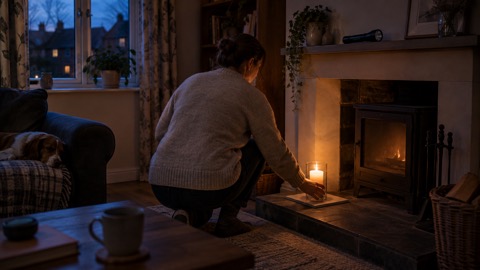
Carmarthenshire County Council's candle safety advice adds a useful general rule for small lights of any kind: place them away from soft furnishings and on a non-flammable surface such as a plate or tile, using a proper holder wherever possible26. That is good practice for small lamps and tea-light-sized lights too. Our candle safety checklist covers the full set of checks if you keep candles as a backup.
Checking a lamp before you rely on it in a power cut
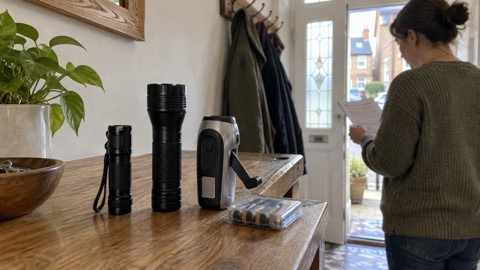
The time to find out a lamp does not work is not the middle of a power cut. The Met Office's power cut advice is to make sure you have multiple torches along with extra batteries5, and London Fire Brigade's extreme weather winter guide advises keeping a fully charged torch handy22. Multiple matters: one torch for the adult dealing with the fuse box, one for whoever else is in the house, and ideally a head torch so your hands stay free. An NHS letter to families of technology-dependent children makes the point about hands-free light directly: chargeable lamps and head torches are useful to allow your hands to be free for care, and it advises getting these now rather than waiting for an outage to be announced, when there may be a shortage in the shops27.
Run through this check before winter and before any forecast severe weather:
- Keep a fully charged torch handy, as power cut preparation advice recommends5
- Check for damage to wires, replace broken bulbs, and check the fuse in the plug is the correct size, as Cleveland Fire and Rescue Service advises for lamps and decorative lights9
- Make sure you have multiple torches along with extra batteries5
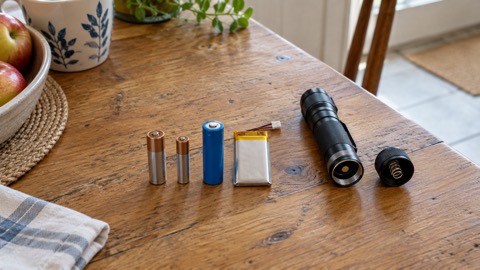
- Stock spare batteries in the sizes your lights take5
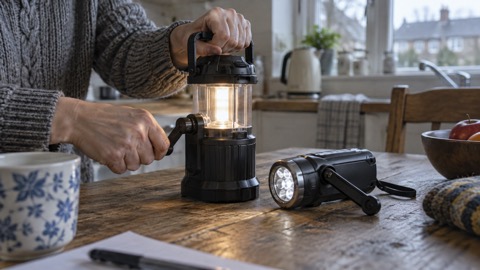
- Consider a wind-up torch or lantern, which Wiltshire and Swindon Prepared notes requires no batteries at all28
- Keep a torch in the car: the Met Office's winter car kit advice calls a large torch with spare batteries, or a wind-up torch, essential for your vehicle29
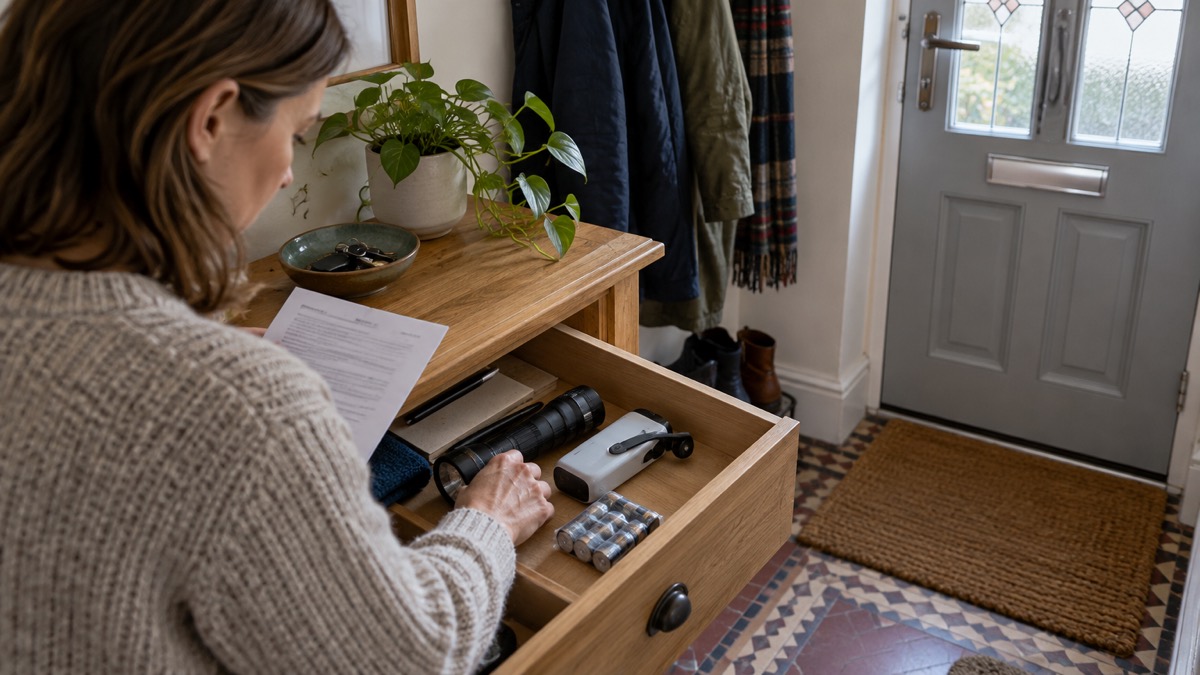
Run time is the figure to check when you test. Look at the maker's stated run time for the setting you would actually use, not the boost or maximum figure, because a light lasts far longer on its low setting than on full power. Plan to use low for moving around the house and save the bright settings for short jobs. Our page on how long a torch battery lasts on low goes deeper on this, and where to keep torches so you can find them in the dark covers storage.
For lighting a whole room rather than a path, a lantern is the better tool, and our comparison of lanterns and torches sets out the difference. If someone in your household needs light for care tasks, our page on lights for older and disabled people covers the options, and lights for children covers keeping young ones safe and calm.
Sources (29)
- Cables, fuses and leads, London Fire Brigade
- Your guide to fire safety, Scottish Fire and Rescue Service, 2023-11-03
- Easy read fire safety booklet, London Fire Brigade, 2026
- P7R 25th Anniversary Edition rechargeable torch, Ledlenser, 2026-10-26
- What to do in a power cut, Met Office, 2026-10-25
- P7R Core and P3 Core combo set, Ledlenser, 2026-10-26
- Triple light kit, Torchy 600 Flex, NEBO, 2026-10-25
- P7 Special Edition torch and H7 SE head torch bundle, Ledlenser, 2026-10-25
- Lighting safety tips, Cleveland Fire and Rescue Service, 2022-11-12
- Safety in severe weather conditions, Devon and Somerset Fire and Rescue Service, 2026
- Electrical safety at home, Scottish Fire and Rescue Service, 2025-02-27
- Christmas safety tips, Warwickshire County Council, 2026-10-26
- Avoid housebling hazards for a safe Christmas, Electrical Safety First, 2026-10-25
- HF4R SIGNATURE RGB rechargeable head torch, Ledlenser, 2026-10-25
- Caravans and camping safety, North Yorkshire Fire and Rescue Service, 2026-05-13
- Stay safe this summer: essential tips from NIFRS, Northern Ireland Fire & Rescue Service, 2026-06-22
- Don't let flames play tricks on your treats this Halloween, Northern Ireland Fire & Rescue Service, 2025-10-21
- Candle safety, Scottish Fire and Rescue Service, 2024-06-12
- Power cuts, Scottish Fire and Rescue Service, 2026-10-25
- Candle safety advice, Merseyside Fire and Rescue Service, 2026-10-26
- Home fire safety, Northern Ireland Fire & Rescue Service, 2026-10-14
- Extreme weather winter guide, London Fire Brigade, 2025-01
- NIFRS safety plea following two house fire fatalities in one day, Northern Ireland Fire & Rescue Service, 2025-12-12
- Prevention activity essential to help prevent fires in the home, National Fire Chiefs Council, 2025-12-19
- Charge safely for your own safety: NIFRS urges students, Northern Ireland Fire & Rescue Service, 2026-09-21
- Candle safety, Carmarthenshire County Council, 2026-06-26
- Parental letter re power shortages, NHS North West Children's ODN Hub, 2022-11-25
- How to prepare for the loss of electricity, Wiltshire and Swindon Prepared, 2026-10-25
- Winter car kit, Met Office, 2026-10-25
 Spare Batteries for Lights
 Candle Safety Checklist
 Lighting Checks Before Winter
 Lighting Home in a Power Cut
 Choosing a Torch for Home
 Head Torches for Power Cuts
 Lanterns for Lighting a Room
 Emergency Bulbs
 Solar and Wind-Up Lamps
 Torch Batteries Explained
 Charging and Storing Torches
 Candle Fire Safety at Home
 Lights for Disabled People
 Torches, Candles and Children
 Recalled Torches and Chargers