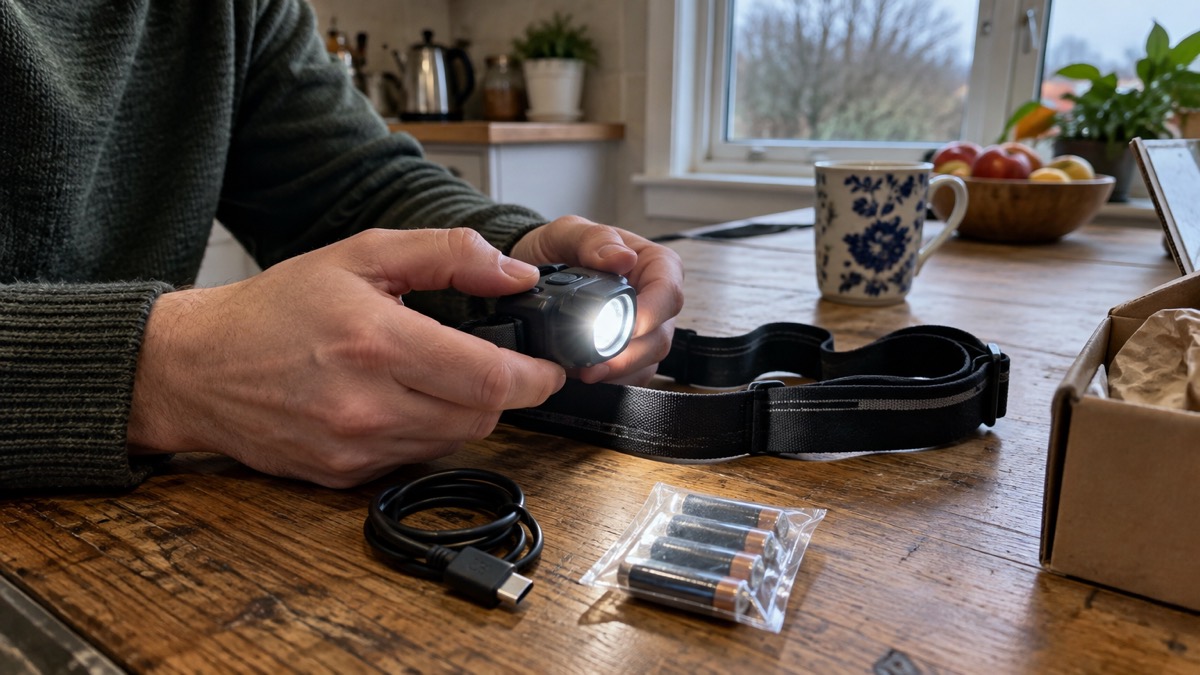
The Ledlenser HF4R Signature is a rechargeable head torch: a lamp on an adjustable band that leaves both hands free. For a household getting ready for a power cut, that is the point of it. You can hold a candle lighter, a fuse box door or a child's hand and still have light where you are looking. The maker describes the HF4R as "particularly useful for hands-free tasks during outages"1.
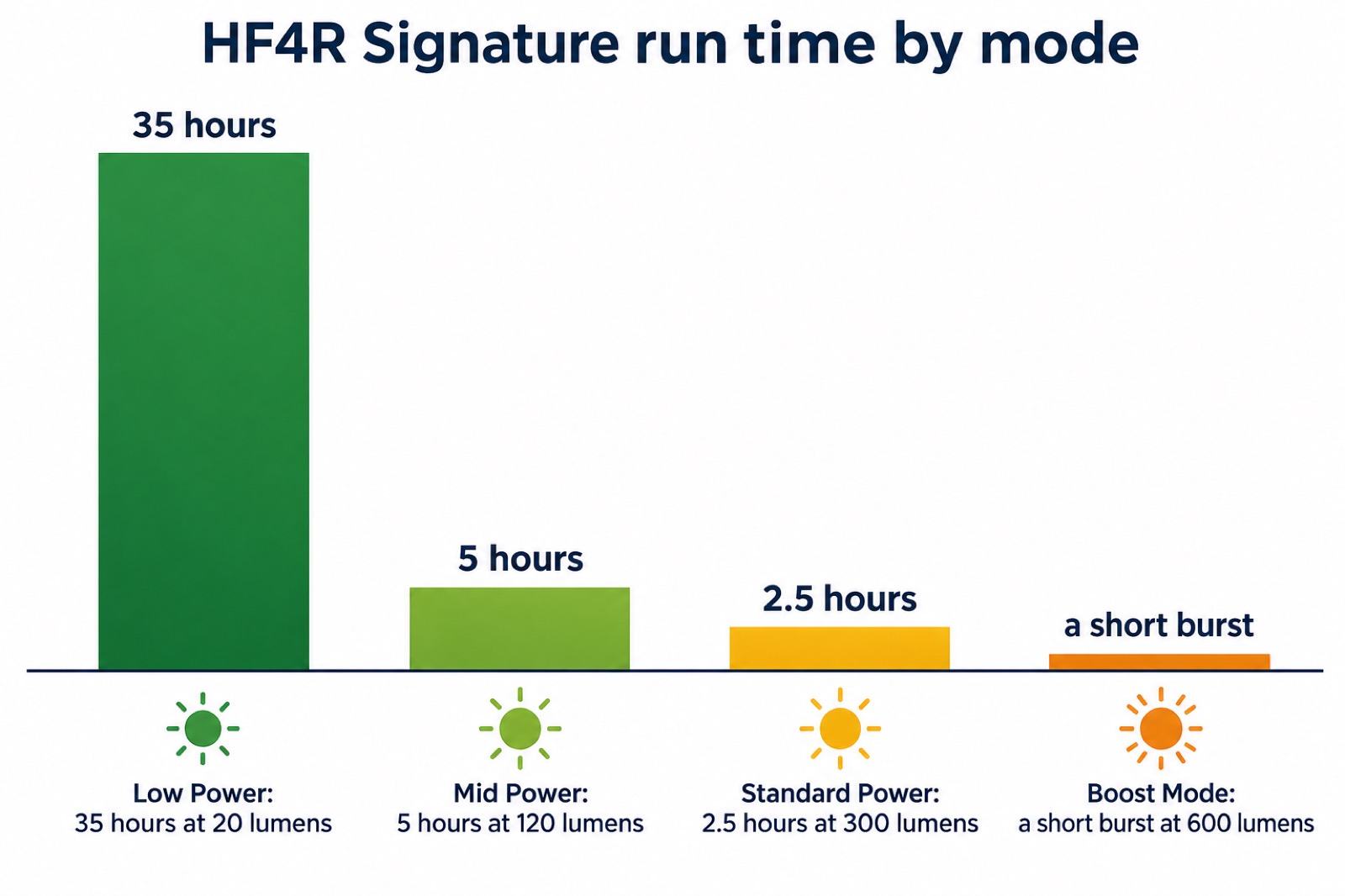
The figures that decide whether it suits you are the run times. On the maker's specifications, Low Power gives 20 lumens for 35 hours, Mid Power gives 120 lumens at 60 metres for 5 hours, and Standard Power gives 300 lumens at 100 metres for 2.5 hours2. Boost mode reaches 600 lumens at 140 metres, which the maker calls "a short burst of maximum power for when you need it most"2. A full charge takes 180 minutes2.
So the practical answer for a long outage is to charge it before the weather or the forecast warns of trouble, and to run it on the lowest setting that is bright enough. A head torch that lasts 35 hours on its lowest setting will see most households through the first night and well into the next day; the same torch on Boost will not.
What the HF4R Signature RGB is, and what it does in an emergency
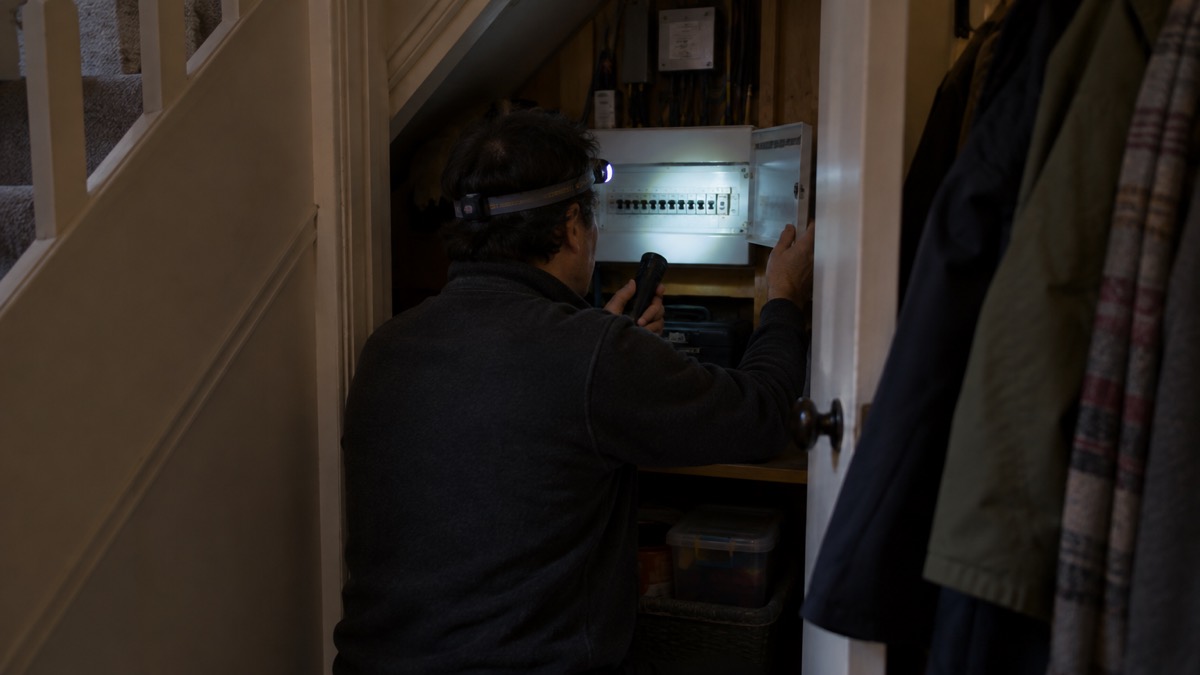
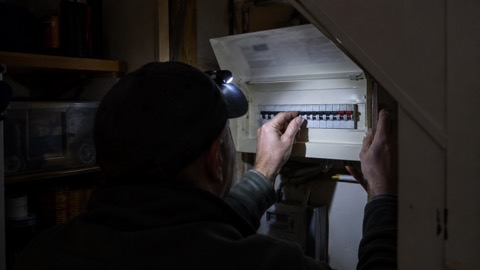
This is a head torch rather than a handheld torch or a lantern, and the difference matters when the power goes off. A head torch puts light exactly where you are looking and leaves your hands free, which is what you want for checking a consumer unit, reading a meter, carrying water upstairs or settling a child in a dark room. The maker's own guidance on preparing for blackouts singles out the HF4R for hands-free tasks during outages and describes it as a useful addition to a wider household kit1.
The maker lists the HF4R Signature RGB as a 2023 model with 600 lumens2. It has an integrated rechargeable battery that the maker says "fully charges the integrated battery in 180 minutes with the innovative USB-C Magnetic Charge System"2. That magnetic USB-C connection is worth knowing about before an emergency, because it is the one cable you must be able to find in the dark. Keep it with the torch, not in a drawer of assorted leads.
The maker also lists an adjustable, washable headband with reflective elements, a battery indicator, a charge indicator, a low battery warning and a transport lock mode2. For emergency use, two of those earn their place. The low battery warning tells you to stop and recharge rather than discover the problem mid-staircase. The transport lock stops the torch switching itself on inside a bag or drawer and arriving flat when you need it.
HF4R Signature and HF4R Signature RGB: how the versions differ
The HF4R family is sold in more than one form, and the figures on this page describe the RGB model. The clearest difference the maker gives is the light options. The RGB version is "complimented by red, green and blue light options; making this head torch ideal for any outdoor activity"3. The white light modes are shared across the range: Low Power, Mid Power, Standard Power, Boost Mode and Blink Mode2.
| Feature | What the maker gives | Why it matters at home |
|---|---|---|
| Light modes | Low, Mid, Standard, Boost, Blink, plus red, green and blue on the RGB2 | A low setting for a long night, a bright one for a job |
| LED colour | White2 | Clear, neutral light for stairs and paperwork |
| Colour temperature | 5200k to 6200k2 | A cool white beam rather than a warm, yellow one |
| Colour rendering index | 702 | Colours read reasonably truly under it |
| Number of LEDs | 22 | The figure to check against a listing |
| Head movement | 45°2 | Tilt the beam down without moving your head |
| IP class | IP682 | Dust-tight and rated for temporary submersion |
| Working temperature | -20 to +402 | Rated for a cold, unheated house in winter |
| Charge time | 180 minutes2 | Plan a full charge well before an outage |
| Warranty | 7 years with registration2 | Register it and keep the receipt |
The Blink Mode is worth a moment's thought before you need it. The maker lists it "to bring attention to yourself in an emergency"2. That is a signalling function, not a working light, and it belongs in the same part of your plan as knowing where the torch is: useful if you ever need to be seen, not something to run all evening.
Brightness and beam: 120 lumens and 60 metres in Mid Power mode
Mid Power is the setting most households will settle on for ordinary tasks in a dark house: bright enough to light a hallway or read by, without burning through the battery. The maker gives it as 120 lumens at 60 metres for 5 hours2. The beam distance figure is how far the light carries in the dark, not how far you will be using it indoors; in a landing or a kitchen, 60 metres of reach is far more than the room needs, which is why the lower settings are the ones that matter day to day.
The full set of modes, as the maker lists them, is the practical heart of the torch:
- Low Power: 20 lumens, 15 metres, 35 hours2
- Mid Power: 120 lumens, 60 metres, 5 hours2
- Standard Power: 300 lumens, 100 metres, 2.5 hours2
- Boost Mode: 600 lumens, 140 metres, a short burst2
The maker's own description of Boost is the one to remember: "a short burst of maximum power for when you need it most"2. It is for a moment, such as checking something at a distance or lighting a path briefly, not for an evening. If you plan to sit out a power cut, plan around Low and Mid.
The beam can also be shaped. The maker lists a spot to flood beam adjustment on the HF4R Signature RGB3. A spot beam throws light further; a flood beam spreads it wider. For lighting a room or a table, the wider setting is usually the more useful of the two, and it is worth trying both before an emergency rather than during one.
Run time: 5 hours in Mid Power mode
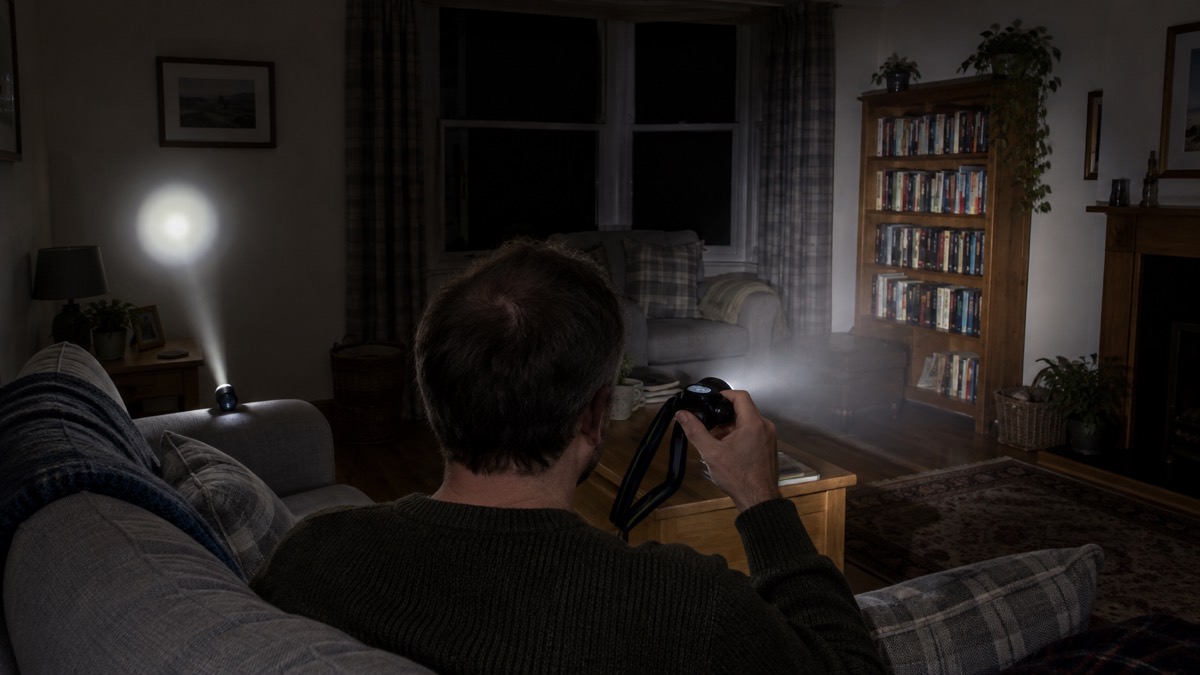
The run time is the figure that decides whether a torch is an emergency tool or a toy. On the maker's specifications, Mid Power runs for 5 hours, Low Power for 35 hours and Standard Power for 2.5 hours2. Those are three different jobs. Standard Power is for a short, bright task: finding the stopcock, checking a loft, inspecting a fence after a storm. Mid Power is a working light for an evening. Low Power is the setting that gets you through a long outage without a recharge.
The maker's figures are given per mode, so the same torch appears with more than one brightness and run time depending on the setting. That is not a contradiction: it is how a multi-mode torch is specified. Read the mode alongside the number whenever you compare lights or plan how long yours will last.
A full charge takes 180 minutes2, so the practical routine is simple. Charge it fully when a storm, a flood warning or a cold snap is forecast, and again after any use. Do not leave it to the night the lights go out. If you want to understand how run time figures are worked out and why a low setting lasts so much longer, the guide to lumens, beam distance and run time explains the trade-off.
Charging, storing and using it safely
The maker's charging instruction is specific: the torch "fully charges the integrated battery in 180 minutes with the innovative USB-C Magnetic Charge System"2. Use the maker's own magnetic USB-C charging system and the cable supplied with the torch, and keep that cable with the torch so it can be found in the dark. The maker's specification gives a working temperature range of -20 to +402, which covers an unheated British house in winter, but it is not an invitation to leave a charging battery somewhere very cold or very hot.
The IP68 rating is the one to understand properly. The maker says it "ensures complete protection against dust and water, so much so it can be temporarily submerged"3. That is useful in a flood or a leak, but temporary submersion is not the same as diving with it, and the rating says nothing about dropping it down a staircase. Treat it as a torch that will survive rain and an accidental dunking, not as indestructible.
Storing it is straightforward. Keep it somewhere you can reach without a light: a bedside drawer, a hall shelf, a hook by the consumer unit. The transport lock mode the maker lists2 is there to stop it switching on in storage, so use it. A head torch that has been quietly draining itself in a bag for three months is no better than no torch at all. The guide to where to keep torches so you can find them in the dark covers the household side of this.
Support and warranty
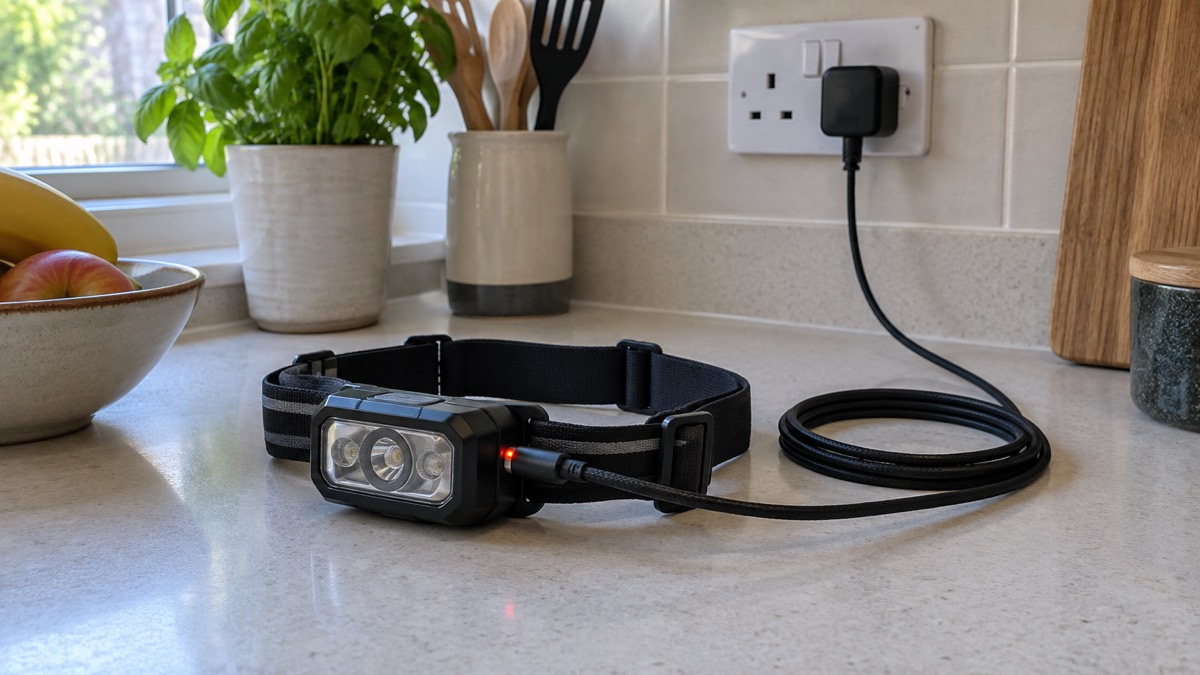
The maker lists a 7 year warranty with registration on the HF4R Signature RGB2. Registration is handled by Ledlenser, so use the registration route supplied with the torch or given on the Ledlenser website, and keep your proof of purchase with the torch's details. Registering soon after purchase puts the cover on record before you need it, which is the sensible order for a light you are depending on.
The maker's product pages are the place to check the specification against your own model2. If something does not match, the model name on the box is the thing to quote. Ledlenser's wider range and support pages are gathered on the Ledlenser brand page.
If you are building lighting into a household plan rather than buying a single torch, this head torch is one layer of it. A head torch suits tasks and movement; a lantern suits lighting a room for several people; and a torch that takes standard batteries is a useful backup when there is no power to recharge anything. The guides to head torches for power cuts and jobs in the dark, battery and rechargeable lanterns for lighting a room and rechargeable or battery torches for emergencies set out the choices side by side. For the wider picture of lighting a home through an outage, start with lighting your home safely when the power goes off.
Sources (3)
- Torch for power cuts: what to keep at home, Ledlenser, 2026-05
- HF4R Signature RGB Rechargeable Head Torch, Camo, Ledlenser, 2026-10-25
- HF4R Signature Head Torch, Ledlenser, 2026-10-25

 NEBO Galileo Tempest 350
 NEBO Newton 500 Torch
 NEBO Davinci 800L
 NEBO Luxtreme SL25R
 NEBO Master Series SL25
 NEBO 8K Flood Light
 NEBO 5K Floodlight
 NEBO Torchy 2K Torch
 NEBO Torchy 600 Flex
 NEBO Tac Slyde Torch
 NEBO Slyde King 4K
 NEBO Mycro 900+ Headlamp