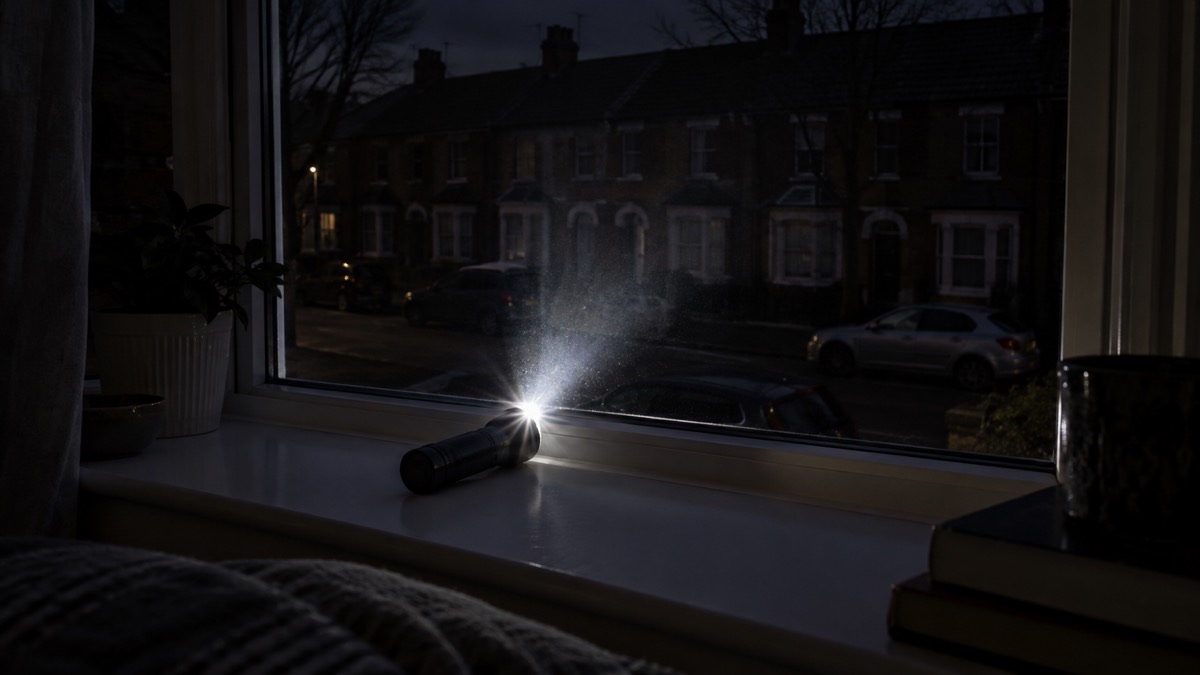
A battery-powered or wind-up torch is the safest light to reach for when the power goes off, and every official guide to power cuts says the same thing: keep one at home with spare batteries, and keep it where you can find it in the dark1. Candles are the alternative most households think of first, but fire services across the UK are clear that torches are safer, and several advise avoiding candles altogether3.
Some torches have a strobe setting, a rapid flash that is useful for signalling for help rather than for lighting a room. On a torch like the NEBO Torchy 2K, a double tap of the power button switches to Strobe, and the Ledlenser C5R Classic lists its strobe mode as being for emergency signalling5. Knowing how to reach that mode, and when to use it, is worth a minute of practice before you need it.
This page covers what to keep, where to keep it, how to check it works, and how to use a torch safely in a power cut or a flood. It also explains why a torch beats a candle, and how to signal for help if you are cut off.
A torch is the safest light in a power cut
The advice from network operators, government campaigns and fire services is consistent: a battery-powered or wind-up torch is the safest option for lighting a home during a power cut1. The UK government's Be Ready campaign tells households to keep a battery or wind-up torch and spare batteries at home, and states plainly that torches are safer than candles2. Northern Powergrid gives the same instruction, and SP Energy Networks suggests keeping a torch with charged batteries, or a wind-up dynamo torch, within easy reach1.
There is a second option worth knowing about. SP Energy Networks notes that you can buy battery-powered lights that plug into a power socket and come on automatically during a power cut9. These are useful for lighting a hallway or landing without anyone having to find a torch, but they depend on being plugged in when the power fails, so they work best alongside a handheld torch rather than instead of one.
The Scottish Government's emergency kit guidance includes a battery-operated torch and spare batteries, or a wind-up torch, as standard equipment10. The Met Office winter checklist lists a torch and spare batteries as part of a household's winter preparation11. In other words, this is not specialist prepping advice: it is the same short list repeated by the bodies that deal with power cuts every winter.
Fire and rescue services go further than simply preferring torches. Devon and Somerset Fire and Rescue Service advises using a standing electric torch or battery-powered lights in a power cut because candles are a fire risk4. The Scottish Fire and Rescue Service says that during a power cut you should use battery-operated lights or torches as an alternative light source12. The message is the same across the four nations: light the room with a torch, not a flame.
Torch or candles: why a torch is the safer choice
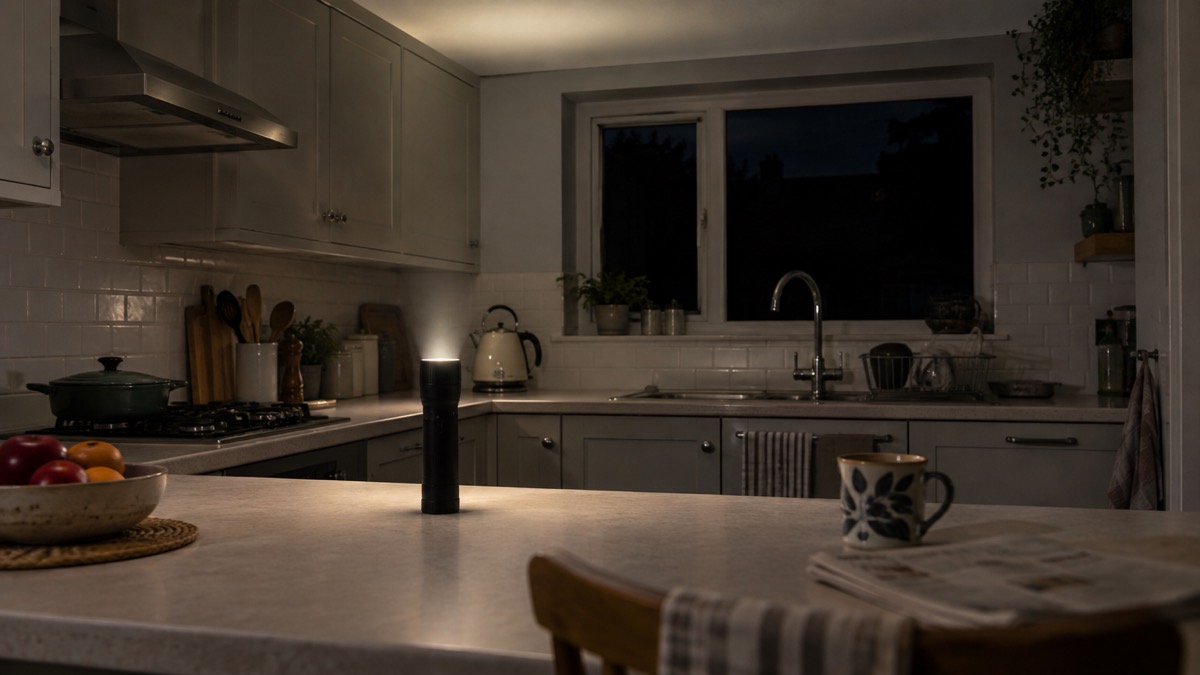
Candles are the traditional answer to a power cut, and they are also the reason fire services repeat the same warning every winter. The Be Ready campaign states that torches are safer than candles2. Wiltshire and Swindon Prepared says candles can be used but present a fire hazard, so it is best to stick with torches13. The British Red Cross advises avoiding candles where possible because they increase the risk of fire14.
Where official guidance does mention candles, it points towards battery-powered versions. The Devon and Somerset Fire and Rescue Service says the safest way to use candles is to buy battery-powered versions, which have almost no fire risk, last longer and can be reused15. Merseyside Fire and Rescue Service gives the same advice and adds a caution: make sure the batteries cannot be accessed by children or pets16. Devon and Somerset Fire and Rescue Service goes further still, saying it is safest to avoid using candles at all and to choose safer alternatives such as battery-powered lights17.
If you do keep real candles for a power cut, treat them as a last resort rather than a first choice. Keep them away from curtains, soft furnishings and anything that can catch, and never leave a lit candle in a room with no one in it. The simplest way to avoid the question entirely is to make sure the torch is charged and easy to find, so nobody reaches for a match in the first place.
Where to keep your torch and spare batteries
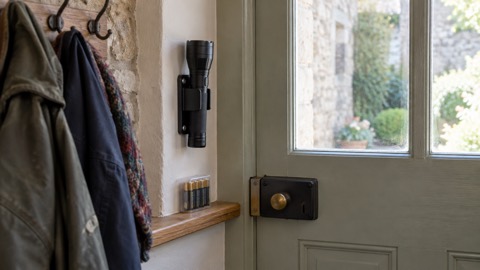
A torch is only useful if you can find it in the dark. Northern Powergrid advises keeping a torch with spare batteries in an accessible location18. The Isle of Anglesey County Council suggests storing a battery or wind-up torch somewhere you can access easily, so you can use it to check the fuse box and make your way around the house safely7. Electricity North West says simply to keep a battery-operated or wind-up torch somewhere easy to find19.
There is a social side to this as well. Official guidance notes that everyone in the home should know where the torches are kept, so the nearest person can retrieve them and safely help others20. That matters in a household with more than one person: if only one person knows where the torch lives, everyone else is in the dark until that person is found.
A few practical places to consider:
- A bedside drawer, so you can find it if the power fails at night.
- A hallway cupboard or shelf near the fuse box, so you can check the trip switches with light in hand7.
- A kitchen drawer, for everyday use and for finding your way to the mains switch.
- A car glovebox, with spare batteries, as part of a winter car kit11.
Keep the spare batteries with the torch rather than in a separate drawer, so the two are always found together. If you have a battery torch, make sure you have spare batteries to fit it13. The Met Office winter checklist also lists a torch and spare batteries as part of a household's winter preparation, so the same kit serves both the home and the car11.
Getting your torch ready before an emergency
The time to discover a flat torch is in daylight, not during a storm. A short check before winter, and again when a weather warning is issued, is enough for most households. Switch the torch on, cycle through its modes, and replace the batteries if the beam looks weak.
How you reach the modes depends on the torch. On the NEBO Torchy 2K, the power button cycles through High, Medium and Low when pressed, and a double tap of the button switches to Strobe5. The same torch has five light modes in total: Turbo, High, Medium, Low and Strobe5. The Ledlenser C5R Classic has three modes, including strobe for emergency signalling6. Read the instructions for your own torch once, and practise the double tap so you can find strobe without thinking about it.
A simple pre-winter routine:
- Test every torch in the house, including the one in the car, and note which ones need new batteries.
- Replace the batteries in any torch that looks dim, and put a fresh set of spares with each torch13.
- Learn the modes on each torch, especially how to reach strobe or flashing5.
- Tell everyone in the household where the torches are kept20.
- Check the torch is where it should be after any tidy-up or move.
If your torch is rechargeable, charge it fully before winter and follow the maker's instructions for charging. The Scottish Fire and Rescue Service reported a rise in fires involving rechargeable batteries in December 2024, so charge on a hard surface, do not cover the torch, and unplug it once charged12. For more on choosing between battery and rechargeable models, see Rechargeable or Battery Torches for Emergencies.
Wind-up or battery torch: which suits your household
Both types appear in official guidance, and the right choice depends on how your household lives. A wind-up torch needs no batteries, so it will always work, which is why the Met Office lists one as an option for a car kit11. A battery torch is usually brighter and simpler to use, but it depends on spare batteries being in the house13.
| Type | What it does well | What to watch | Suits |
|---|---|---|---|
| Battery torch | Bright, simple, cheap to replace batteries | Needs spare batteries stored with it13 | Most households, especially where a bright beam is wanted |
| Wind-up torch | Works without batteries, always available11 | Needs winding to keep going | A backup light, or a car kit11 |
| Rechargeable torch | No disposable batteries, often brighter | Needs charging before an emergency; charge safely12 | Households that will remember to charge it |
| Plug-in emergency light | Comes on automatically when power fails9 | Only works if plugged in at the time | Hallways and landings, alongside a handheld torch |
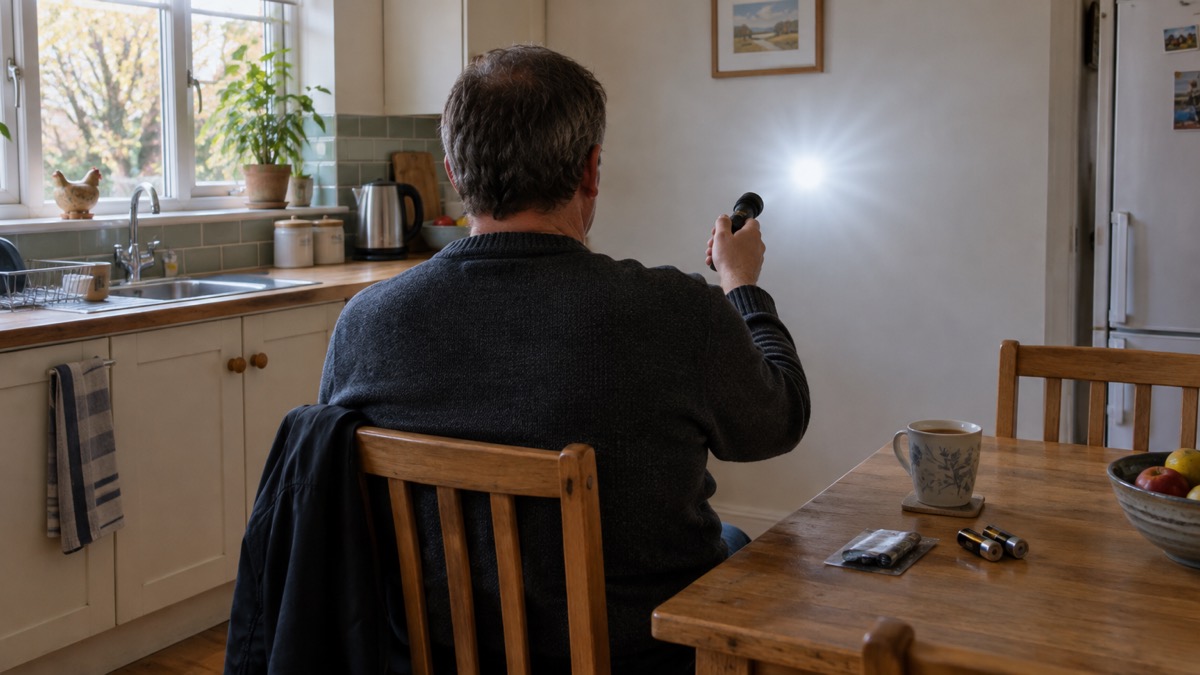
Many households keep one of each: a battery torch for everyday use and a wind-up model as a backup that cannot run flat. The Scottish Government's emergency kit allows for either a battery-operated torch with spare batteries or a wind-up torch, which suggests both are acceptable10. For a fuller comparison, see Torches: Types and How to Choose One for Home.
Using a torch safely in a flood
A torch with spare batteries is part of a standard emergency flood kit in Northern Ireland8. If flood water is coming into your home, a torch helps you see and move safely, but it does not make the building safe. The UK government's flood guidance is clear: do not touch an electrical switch if you are standing in water21. If you are in immediate danger, call 99922.
If you are trapped in a vehicle in flood water, the London Fire Brigade advises shouting and sounding your horn for help23. A torch is useful here too: flash it towards rescuers or passing traffic if you can do so safely. Keep the torch with your flood kit, along with spare batteries, so it is ready before the water arrives8.
Signalling for help with a torch
Strobe mode exists for a reason: it is a rapid, attention-grabbing flash that is far more visible than a steady beam, especially at night or in poor visibility. The Ledlenser C5R Classic lists its strobe mode as being for emergency signalling6. The NEBO Torchy 2K reaches strobe with a double tap of the power button5.
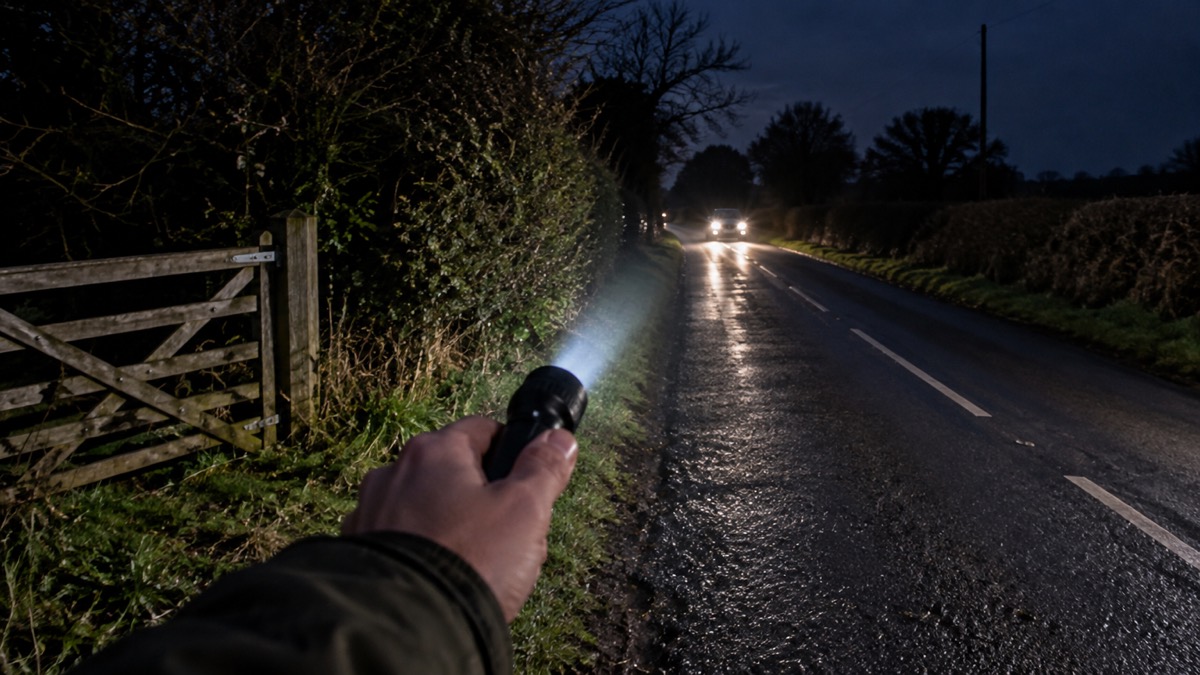
Use it in short bursts rather than leaving it on continuously, so you keep battery for the hours ahead. Flash the light towards where help is likely to come from, such as a road, a neighbouring building or a rescue boat. If you are with others, agree who is signalling and when, so the torch is not wasted.
For more on lighting a room during a power cut, see Lighting Your Home Safely When the Power Goes Off. For the wider picture on preparing for a power cut, see Power Cuts: A Household Guide.
Sources (23)
- What to do in a power cut, Northern Powergrid, 2026-10-25
- Be informed about hazards: power cuts, Be Ready campaign, 2026-10-21
- Tips to prepare for a power cut, Electricity North West, 2026-10-26
- Safety in severe weather conditions, Devon and Somerset Fire and Rescue Service, 2026
- Torchy 2K, NEBO Tools, 2026-10-25
- C5R Classic Rechargeable Torch, Ledlenser, 2026-10-25
- Winter ready, Isle of Anglesey County Council, 2026
- Preparing for a flood, nidirect, 2025-09-11
- Being prepared for a power cut, SP Energy Networks, 2026-10-26
- Emergency kit, Ready Scotland, 2026-10-22
- WeatherReady winter checklist, Met Office, 2026
- Power cuts, Scottish Fire and Rescue Service, 2026-10-25
- How to prepare for the loss of electricity, Wiltshire and Swindon Prepared, 2026-10-25
- Power cut, British Red Cross, 2026-10-25
- Stay warm safely in winter, Devon and Somerset Fire and Rescue Service, 2026
- Candles, Merseyside Fire and Rescue Service, 2026-10-26
- Top ways to reduce your risk of having a fire at home, Devon and Somerset Fire and Rescue Service, 2026
- Be prepared, Northern Powergrid, 2026-10-25
- Staying safe at home, Electricity North West, 2026-10-25
- 12 tips to prepare for a power cut, Horsted Keynes Parish Council, 2026
- Help during a flood, GOV.UK, 2026-10-25
- Flooding, London Assembly, 2026-10-26
- Flood water is coming into my home, London Fire Brigade, 2026-10-25
 Spare Batteries for Lights
 Candle Safety Checklist
 Lighting Checks Before Winter
 Can Jar Candles Shatter
 Battery Tea Lights in a Pumpkin
 Keeping Pets Away from Candles
 Finding Torches in the Dark
 Red Light Mode on a Head Torch
 IPX Ratings for Torches
 Torch Battery Runtime
 Camping Lantern Run Time
 Using a Torch While Charging
 Looking Into a Bright Torch
 Storing Spare Coin Cells
 Flat Button Battery Dangers