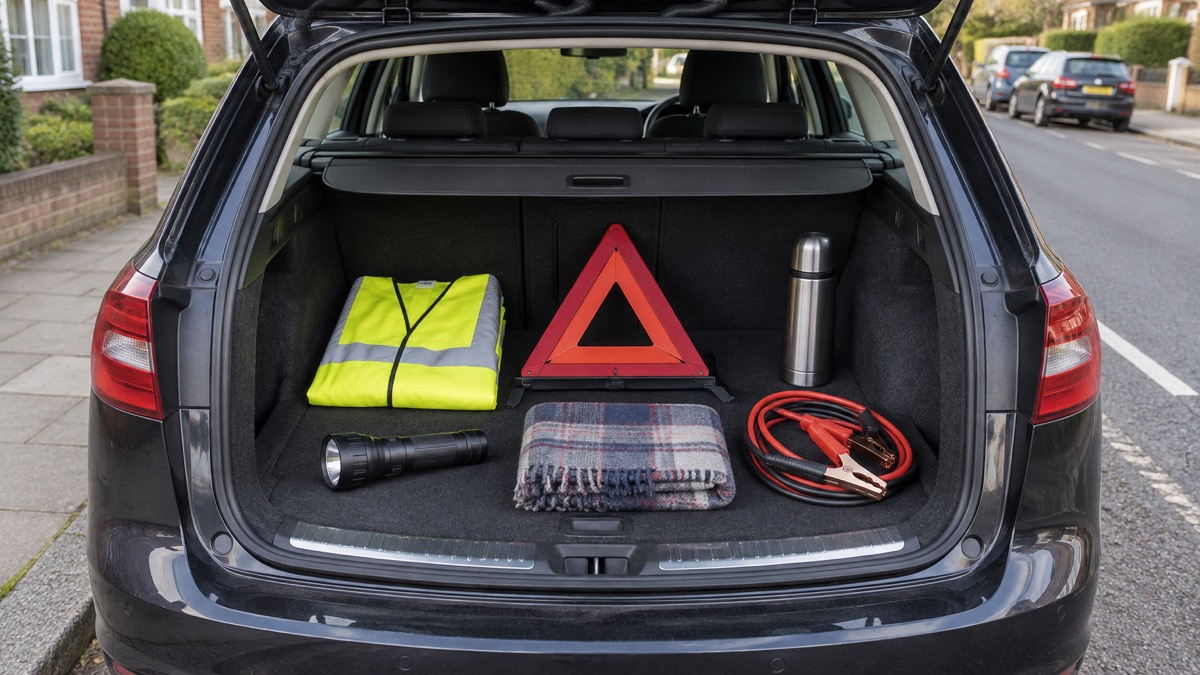
A breakdown on a cold night or a car stuck in snow can leave you waiting hours for help, and what you have in the boot decides whether that wait is uncomfortable or dangerous. The UK government's travel advice is to keep an emergency kit in your vehicle in case you are delayed or stranded, including a torch, in-car phone charger or power bank, warm clothes and blankets, high-visibility clothing, jump leads, food and drink, a first aid kit and a shovel1. National Highways adds that you should keep warm clothes, a hi-vis jacket, a torch and your breakdown cover details in the car if you can2.
None of this is exotic or expensive. Almost every item on the official lists is ordinary clothing, food or household equipment, and most of it lives happily in a boot all year. The Met Office's winter car kit is a good baseline: an ice scraper and de-icer, a torch, a paper road atlas, an in-car phone charger, warm clothes and blankets, high-visibility clothing, jump leads, an empty fuel can, food and drink, a shovel, warning triangles and sunglasses3. This page sets out what each item does for you, what to add for winter, and how to keep the kit in working order.
Being seen, and getting help on the way
If you break down on a fast road or in snow, the first problem is not comfort, it is being visible to other traffic and findable by the recovery driver or emergency services. That is why hi-vis clothing appears on every official list. The Met Office includes high-visibility clothing in its winter car kit3, the government's Be Ready campaign includes it in the boot kit for wintry weather6, and National Highways names a hi-vis jacket among the items to keep in the car2. One jacket per regular occupant is the practical standard, so that whoever steps out can be seen.
A torch serves the same purpose from a distance. The Welsh ambulance service's guidance on calling 999 asks callers to have something visible so crews can locate you, such as car lights, a torch, waving with arms and clothing, or a jacket or coat7. A torch beam or hazard lights can be the difference between a crew finding you on a dark rural road and passing your gate. The Met Office advises a large torch with spare batteries, or a wind-up torch which does not require battery power3.
Warning triangles extend your visibility to oncoming traffic. The Met Office kit includes warning triangles3, and nidirect's ice weather warning advice specifies two reflective warning triangles8. North Wales Fire and Rescue Service includes a high visibility vest and warning triangle in its snow driving kit9. Set a triangle well back from your car on a straight, visible stretch, never on a bend, and only if it is safe to walk there. On a motorway hard shoulder, official advice is to stay behind a barrier or up the bank rather than setting anything out at all.
Keep your breakdown cover details in the car as a printed card or note, as National Highways advises2. If your phone is dying or has no signal, a number you can read from paper and dial from a passer-by's phone is worth more than an app. If you have no cover, you can still call a local recovery firm, and in a genuine emergency you call 999. If you do call 999, follow the ambulance service's advice and arrange something visible so the crew can find you7.
Keeping your phone charged on the road
Your phone is your link to breakdown recovery, to family waiting for you, and to 999, so keeping it alive is the single most useful thing the kit does. The government's travel advice lists an in-car phone charger or power bank in the vehicle emergency kit1, and the Met Office says to have an in-car phone charger so you can top up your battery even when you are out and about3. Wiltshire and Swindon Prepared's advice on staying in contact is simply to keep extra batteries to charge your phone10.
Three layers of backup appear across the official advice:
- An in-car charger that runs from the car's socket while the engine or battery is live3
- A power bank carried in the kit, which works even if the car's battery is flat1
- A wind-up or battery powered charger as a last resort, listed in Nottinghamshire's emergency kit contents11
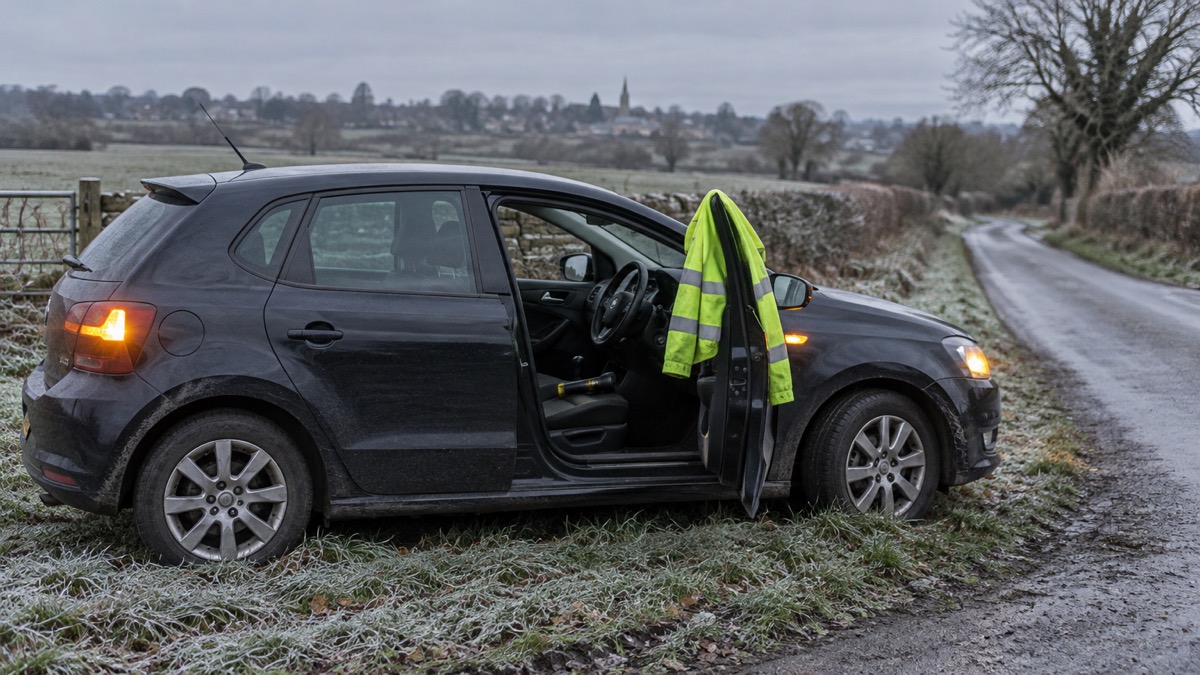
One caution from South Wales Fire and Rescue Service: preserve your phone for making emergency calls5. If you are stranded and unsure how long for, resist the temptation to scroll while you wait. Dim the screen, send one message to say where you are and that you are safe, and then conserve the battery. A power bank stored in a car should be checked periodically, since both heat and cold drain stored charge over months.
If you drive an electric vehicle, Warwickshire's road safety guidance adds a step: display the necessary emergency contact information and EV-specific identification stickers on your vehicle's exterior, providing guidance to first responders in an emergency. This is about the high-voltage system, and it matters to fire crews arriving at an incident.
Warm clothes and a blanket in case you are stranded
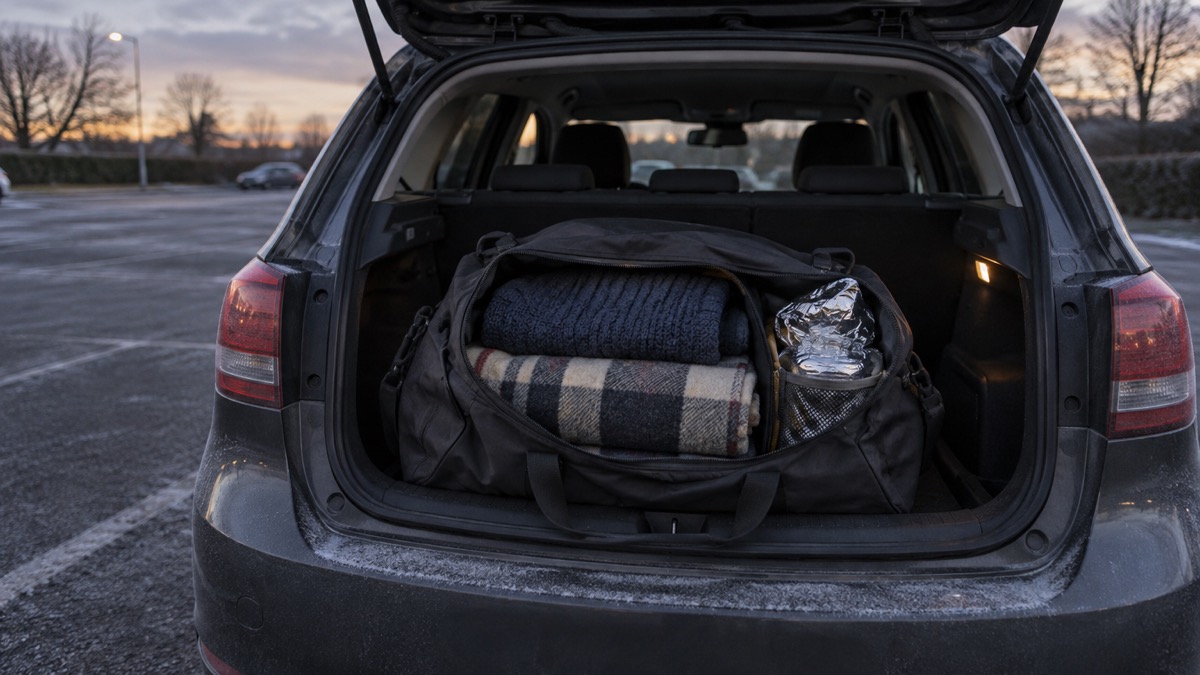
A broken-down car goes cold fast. Traffic Scotland's advice on the vehicle emergency kit is blunt about why: having warm clothes and blankets in your vehicle will be useful if you break down as temperatures can drop quickly and you may be stranded for some time4. A car with a dead engine in winter loses heat quickly, and if you are waiting hours for recovery in a queue of stuck traffic, that becomes a real problem rather than an inconvenience.
The official lists converge on the same core: warm clothes and blankets1, a big coat, gloves, a spare jumper, hat and gloves to wrap up in case of a breakdown3, and a blanket or sleeping bag with suitable winter clothes and footwear in Pembrokeshire's severe weather kit12. NHS Lanarkshire's winter preparedness advice lists battery jump leads, a blanket and a first aid kit as the core of a car emergency kit13. Wiltshire and Swindon Prepared makes the practical point well: having a spare jumper, blanket and bottle of water in the car will not make up for the broken down car, but it will enable you to stay comfortable while waiting for recovery14.
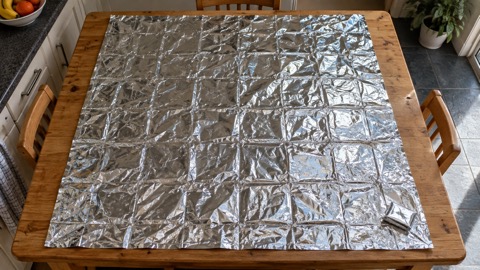
Pack for the worst conditions you could be stopped in, not the conditions you set out in. A mild afternoon can end in a snow queue after dark. The West Yorkshire Prepared winter driving checklist is the most detailed official list of clothing to keep in the car: a blanket, hat, scarf and gloves, thick socks, a warm coat, a reflective jacket and a foil or emergency blanket15. A foil blanket per person is the standard measure used in official emergency kit guidance16, and it costs almost nothing in space. Our page on foil blankets explains how they work and how to use one, and the comparison of a survival bag or foil blanket sets out which suits a car.
Extra items for winter driving and getting stuck in snow
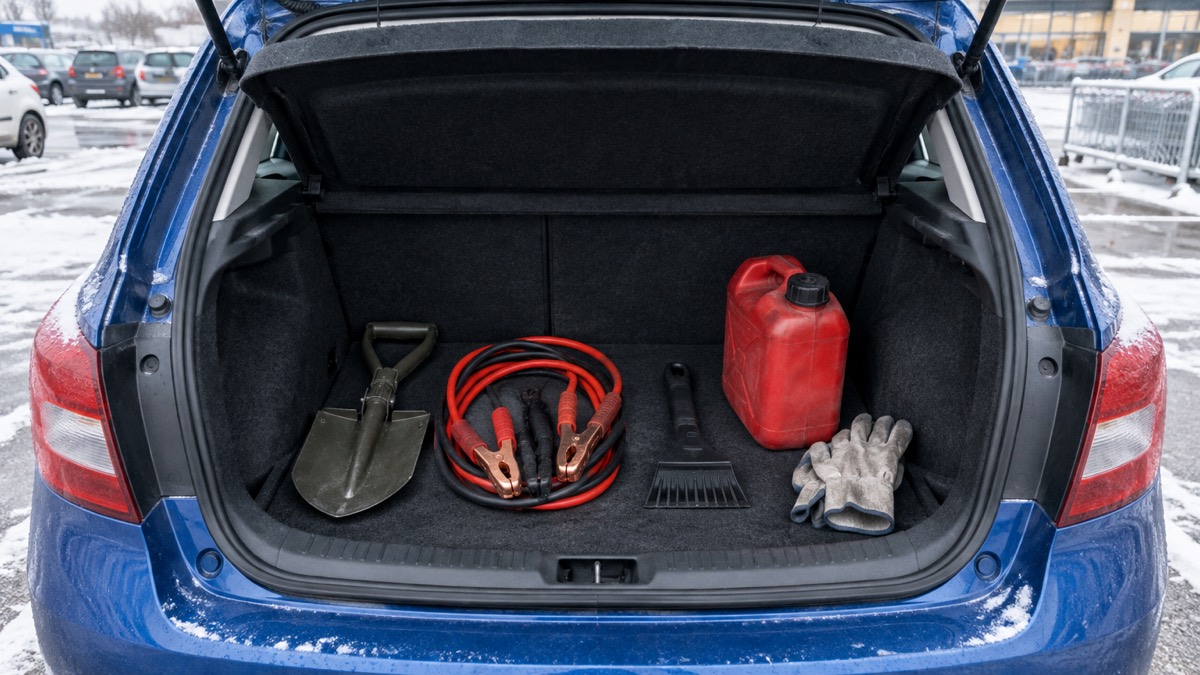
From the first frost to the last, the basic kit grows. Nidirect's advice for driving in adverse weather is to take an emergency kit of de-icer, ice scraper, torch, warm clothing and boots, first aid kit, jump leads and a shovel, together with a warm drink and emergency food in case you get stuck or your vehicle breaks down17. The same items recur across the UK's official winter driving advice, with a few additions worth noting.
| Item | What it does | Who lists it |
|---|---|---|
| Ice scraper and de-icer | Clears the screen before you drive | Met Office3, nidirect17, North Wales FRS9 |
| Boots or sturdy footwear | Lets you stand on a verge or walk safely | nidirect17, Nottinghamshire18, North Wales FRS9 |
| Shovel | Digs snow from around wheels | Met Office3, nidirect17, Cheshire FRS19 |
| Warning triangle(s) | Warns approaching traffic | Met Office3, nidirect8, Devon and Somerset FRS20 |
| Sunglasses | Cuts low winter sun and glare off snow | Met Office3, North Wales FRS9, Nottinghamshire18 |
| Road atlas | Guides you round unplanned diversions | Met Office3, Argyll and Bute21, Nottinghamshire18 |
| Hot drink in a flask and energy food | Keeps you warm and fed during a wait | Argyll and Bute21, nidirect17 |
Two of these deserve a word of explanation. Sunglasses seem odd in a winter kit until you have driven east into a low December sun off a snowfield. A paper road atlas matters because diversions around flooded or closed roads often outlast your phone's battery and signal, and Argyll and Bute's advice includes a map for any unplanned diversions21.
North Wales Fire and Rescue Service adds items for getting a stuck car moving again: a piece of old carpet and grit based cat litter, both of which give tyres grip on ice or packed snow9. The West Yorkshire Prepared checklist lists grit, sand or cat litter for the same purpose, along with snow chains or snow socks if you are running summer tyres15. If snow is forecast for your route, that checklist also suggests spare bulbs, medication and emergency food15. For the wider picture of preparing your household for snow and ice, see our guide to storms, snow and ice.
A vehicle first aid kit
Every official car kit list includes a first aid kit. Neath Port Talbot's emergency kit checklist says to keep a first aid kit in your car in the event of an emergency22, Lincolnshire's emergency advice includes a first aid kit12, and Traffic Scotland lists one in both the year-round and winter vehicle kits4. Anglesey's winter driving tips ask for a first aid kit in good order23, which is the important phrase: a kit with expired dressings or a case you have never opened is not much use.
What belongs in it is the same as a household kit, sized for the car. The purpose in a vehicle is twofold: treating a minor injury at the roadside without waiting, and providing basic care after a collision until an ambulance arrives. Anglesey's list also includes emergency rations including a hot non-alcoholic drink in a flask23, which pairs with the first aid kit as the care side of the car kit.
Check the kit when you check the rest of the car's supplies, replacing anything used or out of date. Our first aid at home guide covers what a household kit contains and how to use the main items, and the same principles apply to the version in your boot. If anyone in the household relies on regular medication, Argyll and Bute's winter driving advice is to carry personal medication with you21, and Nottinghamshire's winter kit list includes personal medication18. That belongs on your person or in the car's kit, not in a suitcase in the boot you cannot reach.
Jump leads, de-icer and a spade: tools that get you moving again
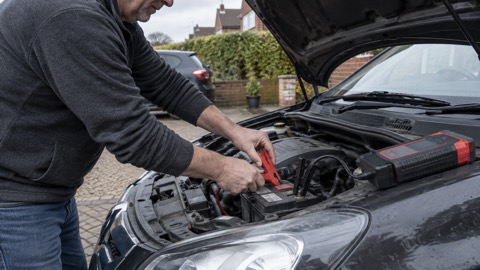
The tools in a car kit divide into those that get the car going and those that get you out of a spot. Jump leads are on nearly every list, from the government's travel advice1 to Traffic Scotland's year-round kit4 and NHS Lanarkshire's three-item core of jump leads, a blanket and a first aid kit13. A flat battery is one of the most common winter breakdowns, and jump leads let a passing driver or the recovery patrol get you started in minutes. Our guide to portable jump starters explains the self-contained alternative that does not need a second car.
De-icer and an ice scraper are the daily-use end of the toolkit. The Met Office lists both3, and Cheshire Fire and Rescue Service's adverse weather advice is to pack a snow or ice scraper, de-icer, snow shovel, hat, gloves, boots, a torch, bottle of water and a first aid kit19. Never pour hot water on a frozen screen: the temperature shock can crack the glass, and the water refreezes on the wipers and locks.
A shovel is listed for snow conditions specifically. The Met Office includes a shovel3, nidirect includes one in the winter emergency kit17, and the Be Ready campaign says a shovel for snow is part of the wintry weather boot kit6. A folding spade takes little space and is enough to dig wheels out of a drift. Anglesey's recommended kit adds a tow rope23, which appears again on the West Yorkshire Prepared checklist15 and in Pembrokeshire's severe weather kit12, useful when a friendly tractor is the only recovery available on a blocked lane.
An empty fuel can is a quieter member of this group. Traffic Scotland lists one in the year-round kit4, as does the Met Office3. It is empty because carrying fuel in a filled can in a hot boot is a fire risk; the point is that you can walk or be driven to a filling station and bring fuel back. Anglesey also lists Wellington boots23, which belong with the tools as much as the clothing: digging out or walking for fuel in ordinary shoes is how people end up soaked and cold.
Pack an emergency bag before a winter journey
For an ordinary commute, the standing kit in the boot is enough. Before a longer winter journey, or when severe weather is forecast, official advice is to pack an additional bag for the trip. Nottinghamshire's winter driving advice splits its kit exactly this way: an in-car emergency kit of ice scraper, de-icer, torch and spare batteries, warm clothes and blanket, boots or sturdy footwear, first aid kit, sunglasses, road atlas or sat nav and personal medication, and then, for longer journeys or during severe weather, jump leads, a mobile phone charger, a shovel, food and a warm drink, and a reflective warning sign18.
London Fire Brigade's extreme weather winter guide takes the same approach: take an emergency bag in case you get stranded or your vehicle breaks down, including medication, a blanket, warm clothes, ice scraper, de-icer, water, food, jump leads and a shovel24. The bag is packed for that journey and brought back indoors afterwards, so food and flasks do not sit in the car for weeks spoiling and freezing.
A workable routine for a winter journey:
- Check the forecast and the road conditions before you leave, and delay the journey if severe weather is expected17
- Pack the journey bag: medication, blanket, warm clothes, water, food, a flask with a hot drink, jump leads, shovel24
- Charge your phone fully before setting out, and carry the charger or power bank3
- Tell someone your route and expected arrival time, so they can raise the alarm if you do not arrive
- Dress for the destination as if you might have to walk part of the way, with boots in the car17
If you are caught in snow while driving, nidirect's advice for icy or snowy weather is to take the emergency kit with you if you have to leave the vehicle, and the same guidance underpins the standing advice to keep the kit together in one bag rather than scattered through the car17. Our page on grab bags covers the same idea for leaving home in a hurry, and the household emergency kit guide covers what to keep indoors.
Where to stow the kit, and how to keep it working
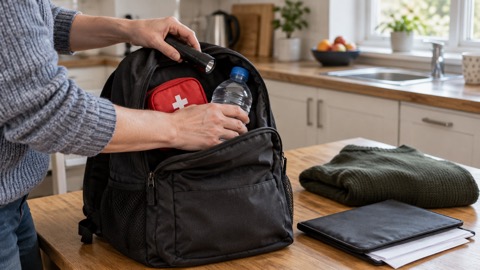
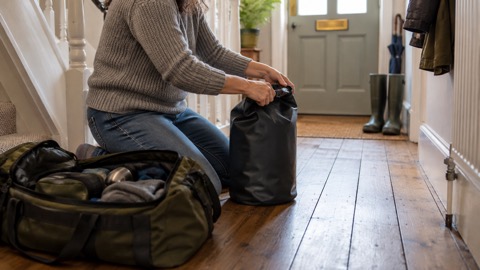
Keep the kit together, in the boot or a dedicated bag, so that everything is in one place in the dark. The Met Office frames its winter kit as a few essential items packed in your car's boot3, and the Be Ready campaign says the same6. A soft holdall or box keeps it from sliding around and lets you carry it all in one hand if you have to leave the car. Our page on choosing a rucksack or holdall and the guide to keeping supplies dry apply here as much as at home, since boots collect condensation and damp.
Check the kit on a rhythm rather than when you need it:
- Before the first frost each autumn, add the winter items and test the torch3
- Check batteries and replace any that have run down, or carry a wind-up torch that needs none3
- Rotate the food and water so nothing sits for years, and replace anything that has frozen and thawed1
- Check the first aid kit is in good order, with dressings in date23
- Confirm the breakdown cover details are still current2
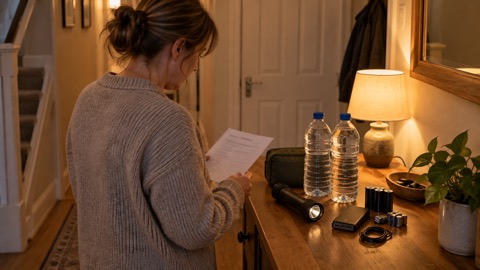
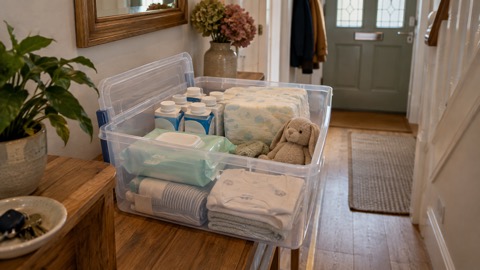
The household preparedness checklist includes the car alongside home and grab bag, and our guide to checking and restocking supplies covers expiry dates and replacement in more detail. If you carry children regularly, the supplies for babies and young children page lists what to add for them, from formula and snacks to spare warm layers in their sizes.
Sources (24)
- Travel advice: get prepared for emergencies, Prepare Campaign, 2026-10-06
- Driving on motorways, National Highways, 2026-10-29
- Winter car kit, Met Office, 2026-10-25
- Vehicle emergency kit, Traffic Scotland, 2026-10-29
- Adverse driving conditions, South Wales Fire and Rescue Service, 2026-08-28
- Be ready for emergencies, Be Ready Campaign, 2026-10-21
- Calling 999, NHS 111 Wales, 2021
- Ice weather warning: information and advice, nidirect, 2026-02-16
- Driving in snow, North Wales Fire and Rescue Service, 2026-10-29
- Prepare: yourself, Wiltshire and Swindon Prepared, 2026-10-25
- Preparing for an emergency, Nottinghamshire County Council, 2026-10-29
- Get help and advice in an emergency, Lincolnshire County Council, 2026-10-29
- Winter preparedness, NHS Lanarkshire, 2023-11-23
- Personal resilience: yourself, Wiltshire and Swindon Prepared, 2026-10-25
- Winter Driving Checklist, West Yorkshire Prepared, 2020-09
- Flooding Checklist, West Yorkshire Prepared, 2022-10
- Driving in adverse weather conditions (226 to 237), nidirect, 2026-09-22
- Winter driving advice, Nottinghamshire County Council, 2026-10-29
- Driving in adverse weather, Cheshire Fire and Rescue Service, 2026-03-11
- Driving in snow and icy conditions, Devon and Somerset Fire and Rescue Service, 2026-01-02
- Winter weather, roads and travelling FAQs: driving advice, Argyll and Bute Council, 2026
- Emergency kit checklist, Neath Port Talbot Council, 2026-10-29
- Winter driving tips, Anglesey County Council, 2026-10-29
- Extreme weather winter guide, London Fire Brigade, 2025-01
 30-Day Household Checklist
 Emergency Plan Template
 Supply Interruption Checklist
 Home Emergency Pack
 Grab Bags
 Important Documents
 Cash to Keep at Home
 How Many Days Supplies Last
 Storing Your Supplies Safely
 Checking and Restocking Supplies
 Rucksacks and Holdalls
 Keeping Supplies Dry
 Foil Blankets
 Portable Jump Starters
 Supplies for Babies and Children