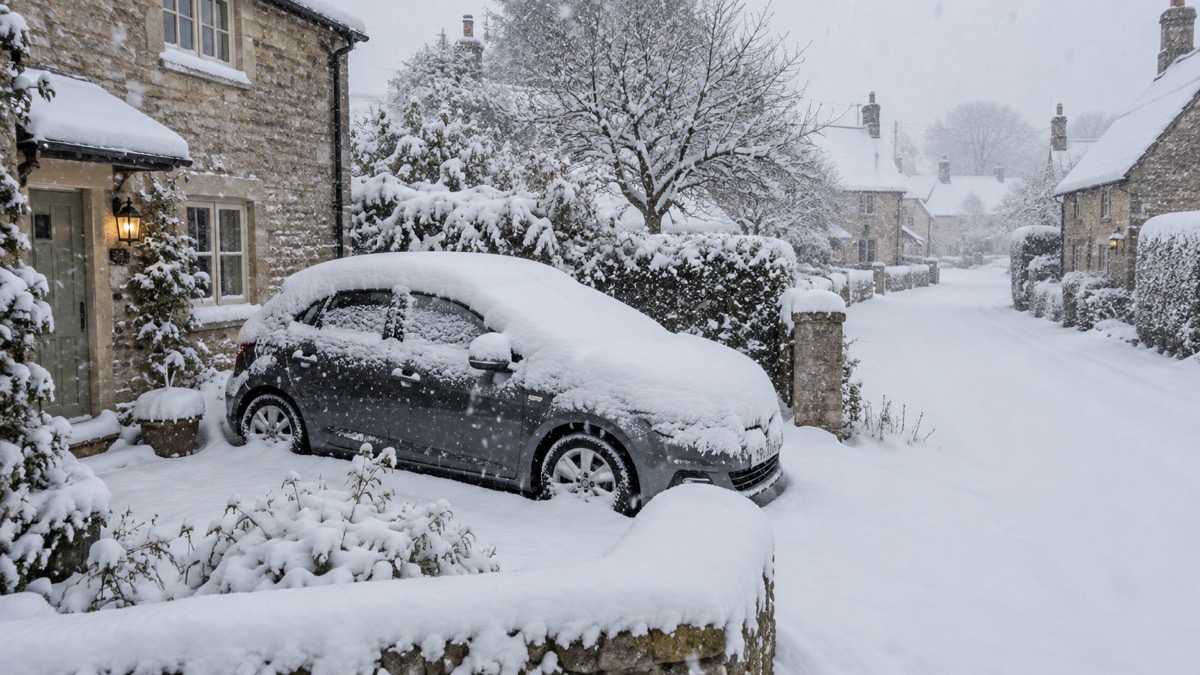
If severe weather is forecast, the first question to ask is not how to drive in it but whether you need to go at all. Official guidance from across the UK is consistent: think about whether your journey is really necessary, and if it is not, delay it until the bad weather has passed1. When there are severe weather warnings, only travel when absolutely necessary3.
If you decide the journey is essential, the second step is to check before you set off. Look at local and national forecasts and travel information, allow extra time, tell someone where you are going and when you expect to arrive, and charge your phone4. In strong winds, consider delaying until they clear7. In heavy downpours, consider delaying until the rain passes8.
The rest of this page sets out how to make that decision journey by journey, what changes for high-sided vehicles and for rain, snow and ice, and what to have with you if you do travel.
Delay your journey if the weather turns severe
The clearest advice is also the simplest. Think about delaying journeys that are not essential during severe weather10. Ask yourself if you can put off your journey until conditions improve, and if you are travelling by air or sea, check with the ferry company or airline for delays or cancellations11. If heavy downpours are expected, consider delaying your journey until it clears8. If strong winds are expected, consider delaying your journey until it clears7.
This applies to public transport as much as to the car. Severe weather can disrupt buses, trains and ferries, so be prepared for delays, and take warm clothing, food and a hot drink in a flask if you have to wait12. Fog can make driving conditions very poor and journey times longer, and passengers may be delayed or stranded at airports or ferry terminals, so always check the forecast before you travel13.
The decision is not all or nothing. Sometimes roads are more affected than the rail network, and on other occasions the opposite is true. You may be able to use a bus if the main roads are clear, or you may be able to work from home or do an online shop if travel is not advised14. Thinking through those alternatives before the weather arrives is the practical version of "is this journey essential".
Ask yourself first: is this journey essential?
Almost every official source starts with the same question. Ask yourself, is your journey really necessary1? Consider before you set off whether your journey is essential, and if it is not, whether it can be delayed until after any bad weather has subsided2. Ask yourself if your journey is absolutely essential before setting out in wintry weather15. Consider if your journey is essential, or can it wait until the weather improves16.
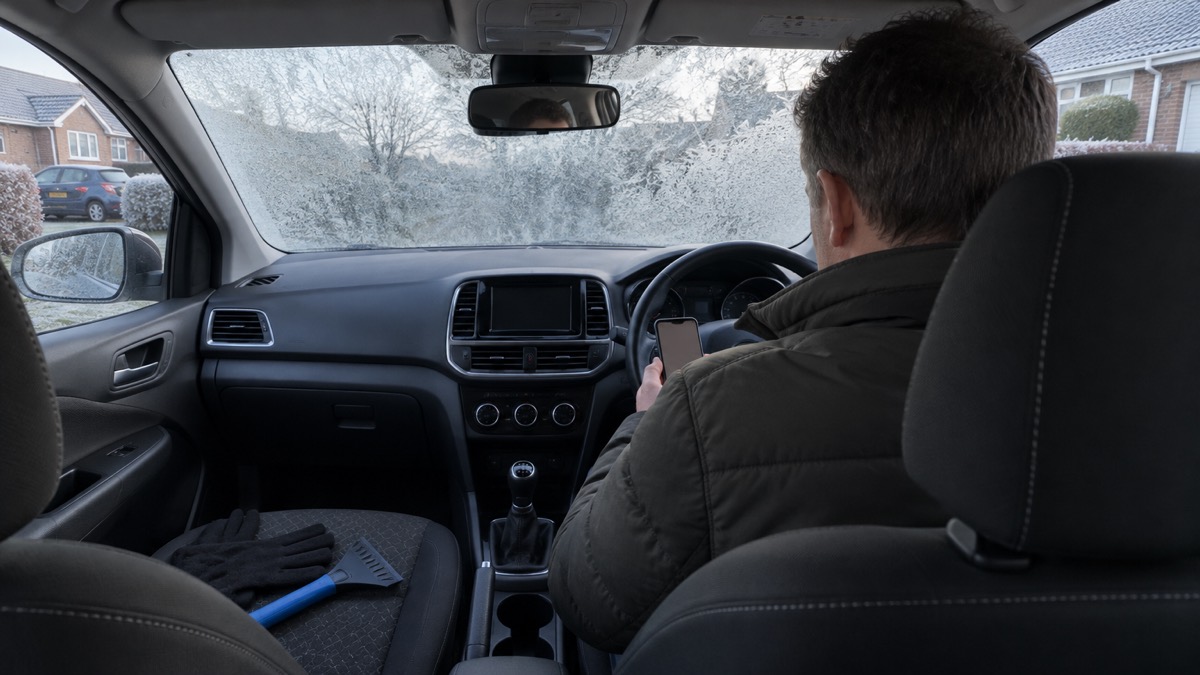
If the answer is that the journey is necessary, the guidance turns to planning. Ask whether the journey is necessary; if not, do not travel; if it is, plan your journey using the primary route road network and wait until roads have been gritted17. Think about whether your journey is necessary, plan to use main roads and check the gritting routes, check the live weather cameras, allow extra time, tell someone your plans, and check whether you need breakdown or recovery insurance18. In serious or prolonged weather conditions, consider how necessary your journey is19.
A simple way to make the decision is to sort the trip into one of three groups:
- Can wait: shopping, visiting, days out, routine appointments that can be rearranged. Delay until conditions improve11.
- Needs planning: work, school runs, caring responsibilities. Check forecasts and travel information, plan a main-road route and allow extra time17.
- Cannot wait: emergencies and essential care. Travel, but tell someone your route and expected arrival time, and carry an emergency kit6.
If you are unsure which roads are treated and when, our guide to which roads are gritted and how councils decide explains how priority routes are chosen.
Check the latest weather and travel advice before you set off
Before any journey in doubtful weather, check local and national weather forecasts, listen to local radio for the latest weather and traffic updates, tell someone where you are going and how long the journey should take, give the car a winter check, and charge your mobile phone in case you need to make an emergency call4. Before travelling, check weather forecasts and travel information; if severe weather is expected, consider whether your journey is essential and allow extra time if you do need to travel5.
The Met Office is the reference point for forecasts and warnings. Check the weather forecast before you go out, and keep up to date with the latest forecasts on the Met Office website, app and social media channels13. Always check the weather on the Met Office website and visit the traffic information map before you head off, especially in winter20. Check the forecast for your route and destination, not just for where you are starting9. If you want warnings sent to you, our guide to signing up for Met Office weather alerts walks through it, and Met Office weather warnings: yellow, amber and red explained sets out what each level means for travel.
| Check before you go | Why it matters |
|---|---|
| Forecast for your route and destination | Conditions can differ sharply from home to arrival9 |
| Met Office warnings | Tells you the severity and timing for your area13 |
| Traffic information map | Shows closures and delays on your planned route20 |
| Local radio | Latest weather and traffic updates while you travel4 |
| Gritting routes | Main roads are treated first; plan around them17 |
| Someone who knows your plans | They can raise the alarm if you do not arrive4 |
Strong winds: when to wait until they clear
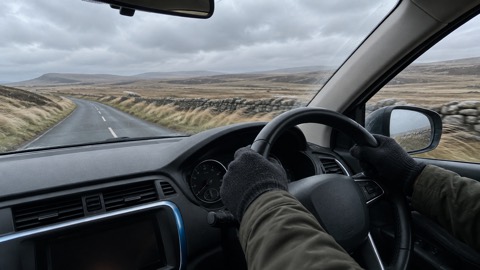
Strong winds deserve particular caution because they affect vehicles differently. If strong winds are expected, consider delaying your journey until it clears7. If your vehicle is susceptible to strong-wind conditions, consider delaying your journey until weather conditions improve if you can21. During a storm, do not drive unless your journey is really necessary22.
High-sided vehicles are most affected by windy weather, but strong gusts can also blow a car, cyclist, motorcyclist or horse rider off course, on open stretches of road exposed to strong cross winds and when passing bridges or gaps in the hedges23. Drivers of high-sided vehicles, caravans and motorbikes are advised to take extra care because of the increased risk of vehicles being blown over in high wind24. During strong winds there will be more restrictions for high-sided vehicles, so make sure you are aware of these restrictions before travelling15.
If you do travel, expect sudden gusts at any time, particularly on open stretches of road, when passing bridges or gaps in hedges, or when overtaking high-sided vehicles24. Watch for debris in the road25. Check the weather and any Met Office warnings before driving, and consider holding off the trip if high winds are forecast26. If you are caught outside during high winds, wait until the storm is over before going to clean up any damage25. For more on handling a vehicle in gusty conditions, see how to drive safely in strong winds, and for preparing your property, preparing your home and garden for high winds.
Heavy rain, snow and ice: when to hold back
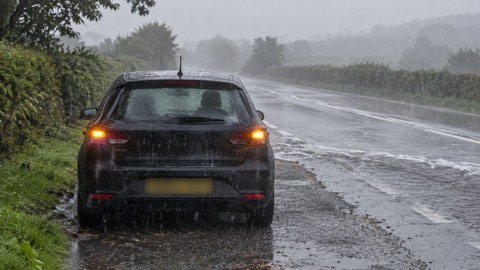
Rain changes the decision in two ways: it reduces visibility and it makes the road surface slippery. If there is surface water on the road, or if visibility is poor, check whether you need to travel27. Do not travel in heavy rainstorms unless absolutely necessary28. If heavy downpours are expected, avoid starting your journey until it clears9.
If you go, adjust how you drive. Roads will be more slippery than usual in wet weather, so give yourself more time to react when approaching a hazard, and increase your following gap to at least four seconds from the moving traffic in front9. Our guide to driving in heavy rain and avoiding aquaplaning covers the detail.
Snow and ice bring the same question with a firmer answer. Consider if your journey is essential, or can it wait until the weather improves16. Ask whether the journey is necessary; if not, do not travel; if it is, plan your journey using the primary route road network and wait until roads have been gritted17. For the driving technique itself, see driving in snow and ice: staying safe on the road, and for stopping distances, how much longer are stopping distances on ice.
If you must travel in a storm, leave extra time
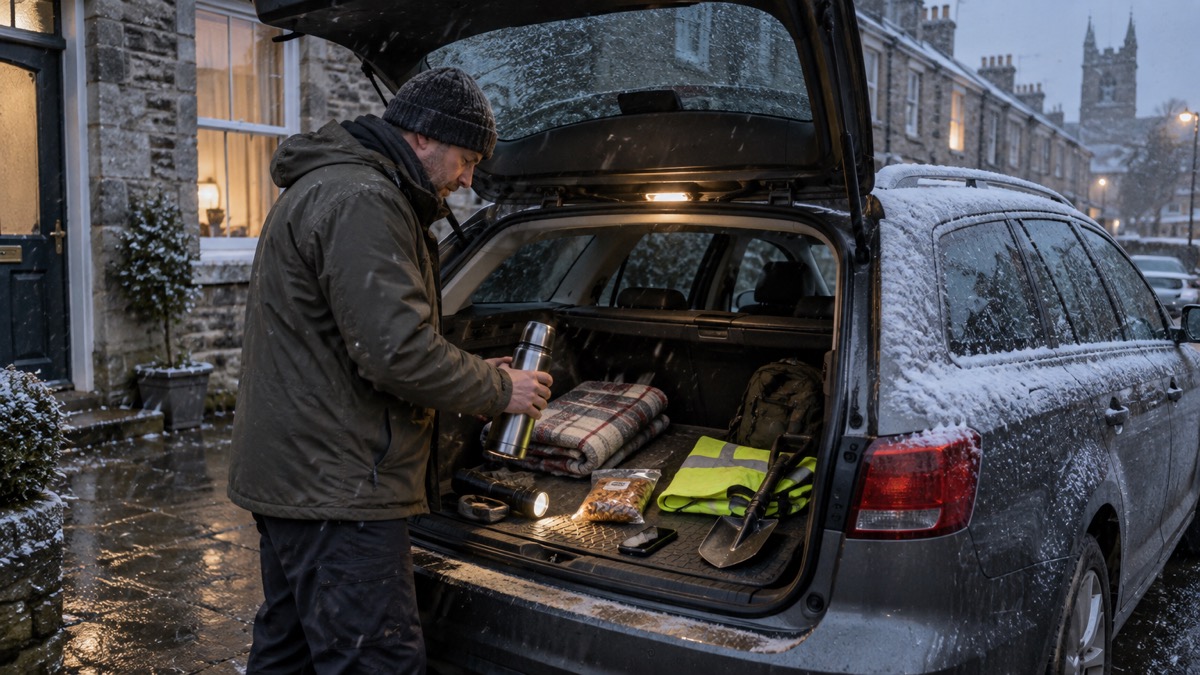
When the journey cannot wait, the guidance shifts from whether to how. Avoid non-essential travel; if you must travel, allow extra time29. Stay at home unless you have to travel, because it is the safest place to be; if your journey is essential, plan your route and take extra time30. If you need to travel during bad weather, allow extra time for your journey, and you may also need more time to walk safely to and from your bus stop31.
Plan ahead, allow extra time, tell someone your destination and when you plan to arrive, pack an emergency kit and charge your phone before you go, and have one or more emergency contact numbers on your phone or in your bag6. Give the car a winter check and charge your mobile phone in case of an emergency call4.
A sensible kit for a journey in bad weather, drawn from official travel advice, includes:
- Warm clothing, food and a hot drink in a flask, in case of delays12
- A charged mobile phone and emergency contact numbers on your phone or in your bag6
- Your destination and expected arrival time shared with someone before you leave6
- A winter check of the car before you set out4
If the worst happens and you stop moving, our guide to what to do if your car gets stuck in snow takes you through it, and car checks before winter is a checklist to work through before the season starts.
Where to get help and how the nations differ
The travel advice is broadly the same across the UK, but the organisations that issue it differ. In England, National Highways publishes guidance on travelling in severe weather, including strong winds and rain8. In Wales, Traffic Wales covers driving in strong winds, snow and ice, and heavy rain or floods8. In Scotland, Ready Scotland and Traffic Scotland publish storm, wind and winter travel advice, including a vehicle emergency kit list6. In Northern Ireland, nidirect carries the warning information and advice, including on driving in adverse weather conditions11.
Whichever nation you are in, the same three steps apply: ask whether the journey is essential, check the forecast and travel information for your route, and if you must go, allow extra time and tell someone your plans1. If conditions are forecast to be severe, the safest option is to stay at home unless you have to travel30. For the wider picture of how warnings are issued and what they mean for your household, start with storms, snow and ice: a household guide, and for disruption to trains, buses and bridges, see trains, buses and bridge closures in bad weather.
Sources (31)
- Winter road safety, Greater Manchester Fire and Rescue Service, 2026-10-29
- Winter travel and driving safety advice, South Western Ambulance Service NHS Foundation Trust, 2026-10-29
- Keeping warm in winter, Warwickshire County Council, 2026-10-29
- Winter road safety, Mid and West Wales Fire and Rescue Service, 2026-10-29
- Be prepared for winter emergencies, NHS Norfolk and Suffolk Integrated Care Board, 2026-10-01
- Storms and high winds, Ready Scotland, 2026-03-24
- Travelling in strong winds, National Highways, 2026-10-29
- Travelling when it's raining, National Highways, 2026-10-29
- Travelling in storms, rain and wind, Met Office, 2026-10-26
- Weather safety, Oxford Health NHS Foundation Trust, 2026-09-18
- Strong winds and heavy rain warning information and advice, nidirect, 2026-01-27
- Cold, snow and ice, Ready Scotland, 2026-03-25
- Top tips to be weather ready, Met Office, 2026-10-25
- Top tips to be WeatherReady - Met Office, Met Office
- Driving in strong winds, Traffic Wales, 2026
- Winter driving, Cornwall Council, 2026-10-29
- Snow and ice, Ceredigion County Council, 2026-10-29
- Winter, summer and wet weather driving tips | North Yorkshire Council, North Yorkshire Council
- Winter driving, Staffordshire County Council, 2026
- Vehicle emergency kit, Traffic Scotland, 2026-10-29
- Travelling in strong winds, Traffic England, 2026-10-29
- Strong winds weather warning information and advice, nidirect, 2026-10-24
- Driving in adverse weather conditions, nidirect, 2026-09-22
- Driving in adverse weather, Cheshire Fire and Rescue Service, 2026-03-11
- High winds, Scottish Borders Council, 2026-10-29
- Driving in high winds, Traffic Scotland, 2026-10-29
- Driving in heavy rain or floods, Traffic Wales, 2026
- Strong winds and heavy rain warning information and advice, nidirect, 2026-08-30
- Storms and gales, Lancashire Prepared, 2026-10-29
- Safety in severe weather conditions, Devon and Somerset Fire and Rescue Service, 2026
- Disruption due to adverse weather, Surrey County Council, 2026-07-22
 Flood Warning Checklist
 First Steps After a Flood
 Insurance Claim Records
 Reporting a Fallen Tree
 Driving in Heavy Rain
 Met Office Weather Alerts
 Driving in Strong Winds
 Wind Damage and Insurance