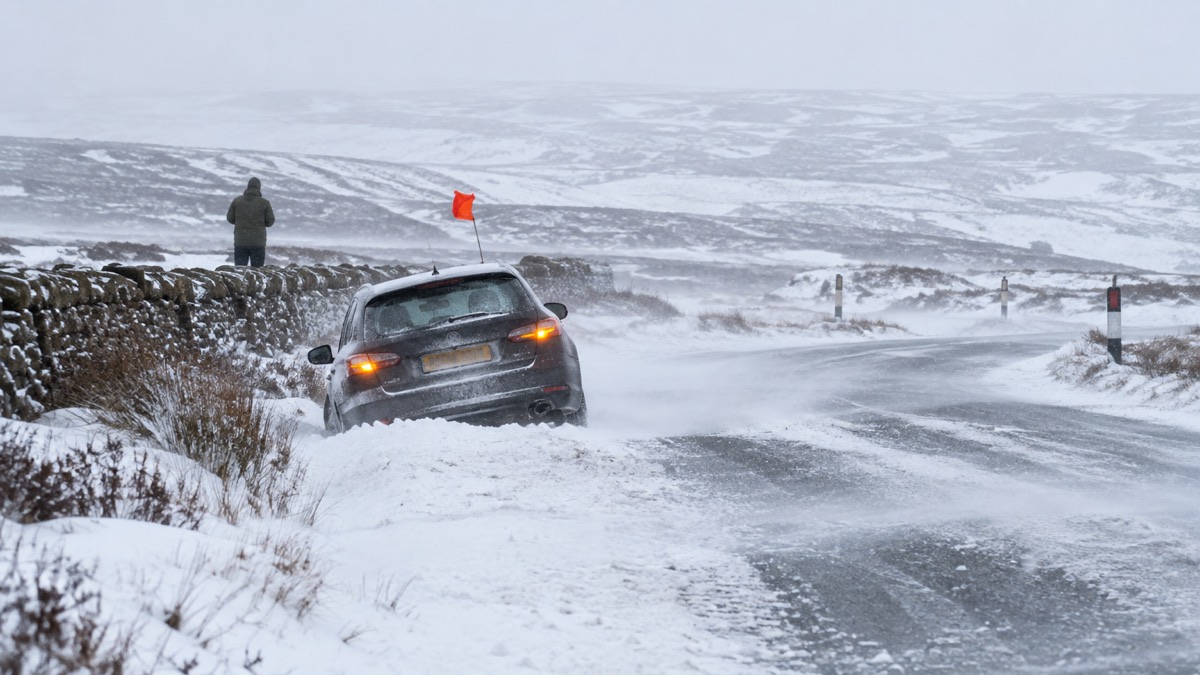
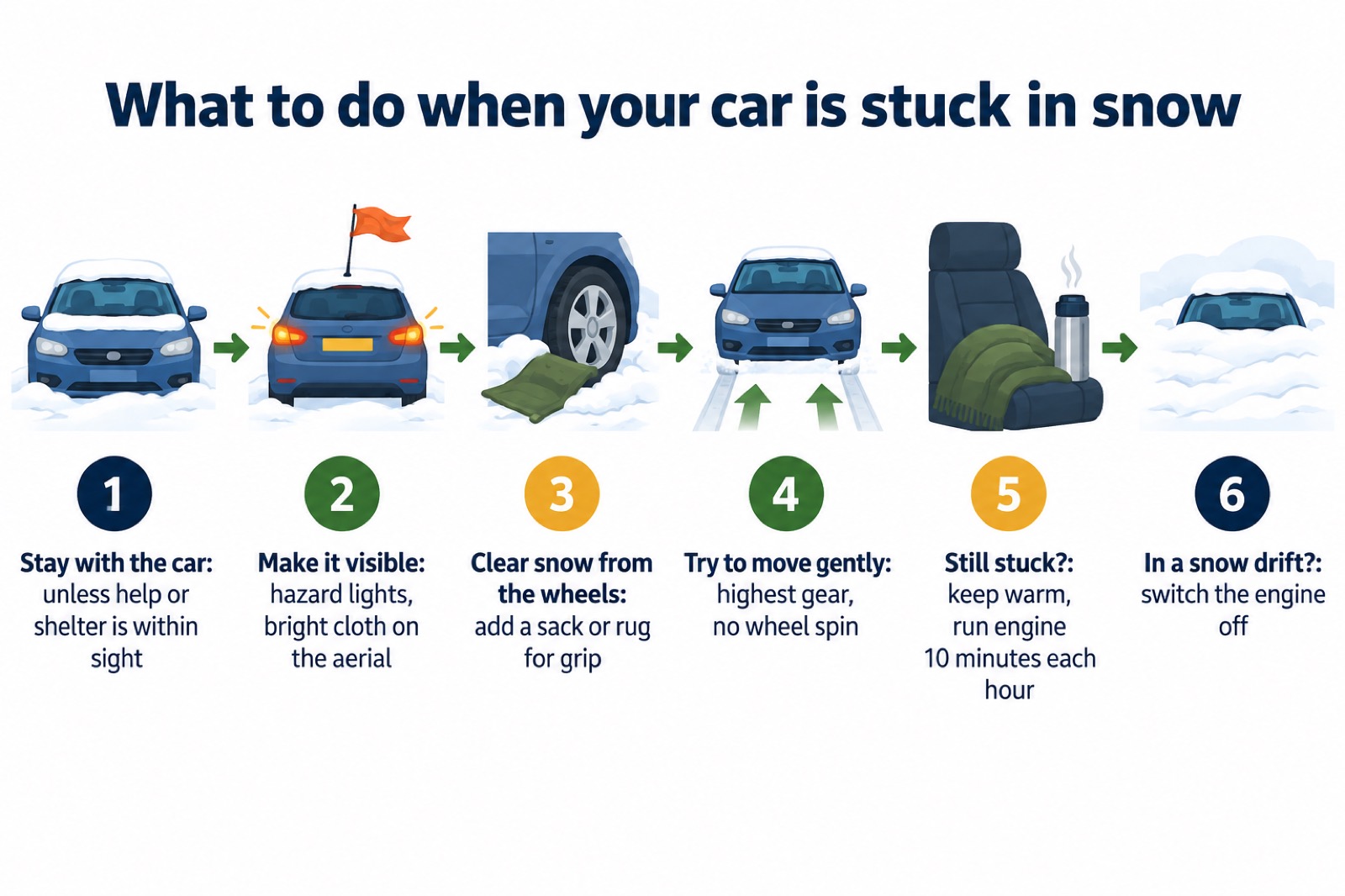
If your car gets stuck in snow, the first thing to do is stay with it. Rescue vehicles and snow ploughs cannot get through if abandoned cars block the road, and you are far easier to find inside your vehicle than out of it1. Unless help is within sight, or you can see a building you know you can shelter in, stay put and let help come to you3.
Once you have decided to stay, make the car visible and keep warm. Tie something brightly coloured to the aerial, switch on the hazard lights and, if you have one, hang a distress flag from the radio aerial or window4. Run the engine and heater for about 10 minutes each hour, opening a window slightly while it runs and clearing snow from the exhaust pipe5. If you are stuck in a snow drift, switch the engine off entirely so the car does not fill with exhaust fumes6.
Getting moving again is often possible without help. If you do get stuck, clear the snow from the wheels and put a sack or old rug in front of the driving wheels to give grip7. Do not rev the engine or spin the wheels: manoeuvre gently and avoid harsh acceleration4. If you cannot move, stay with the car and wait.
Stay with your car unless help is within 100 yards
The single most important decision when you are stuck is whether to stay or walk. Official guidance is consistent: stay with your vehicle until help arrives, because abandoned vehicles hold up rescue vehicles and snow ploughs, and the road cannot be cleared while they are in the way1. If you are stuck in a winter storm in a remote area, remain in the vehicle where rescuers are most likely to find you, and only leave if buildings are nearby where you can take shelter8.
If you must leave, do not go unless you are in sight of a suitable destination. Let help come to you3. If you do leave the vehicle to get help, make sure other drivers can see your car and that you are visible at the side of the road9. If you are forced to abandon the car, leave it as close to the side of the road as possible to help gritters and emergency services get through7.
Getting moving again: straighten the wheels and add grip under the tyres
Before you try to drive out, straighten the wheels and clear snow from around them. Put a sack or old rug in front of the driving wheels to give grip7. This is the standard technique recommended by councils: it gives the tyres something to bite on rather than spinning on packed snow.
Check your grip on the road surface where there is snow or ice by choosing a safe place to brake gently. If the steering feels unresponsive, this may indicate ice and your vehicle losing its grip on the road. When travelling on ice, tyres make virtually no noise11. Good tyres matter: check that tyres have plenty of tread depth and are maintained at the correct pressure, because snowy conditions require good grip12. In icy and rainy conditions it is even more important to have tyres with enough grip, so check the condition of your tyres, including the spare, for correct pressure and tread depth9.
If you start to skid, release the brake pedal fully or ease off the accelerator, steer into the skid, and as you straighten, steer back along the road13. Do not brake heavily, as it will lock your wheels and you will skid further; consider changing to a lower gear instead14. Test your brakes to ensure they are working properly before you set off15.
Do not spin the wheels or rev the engine
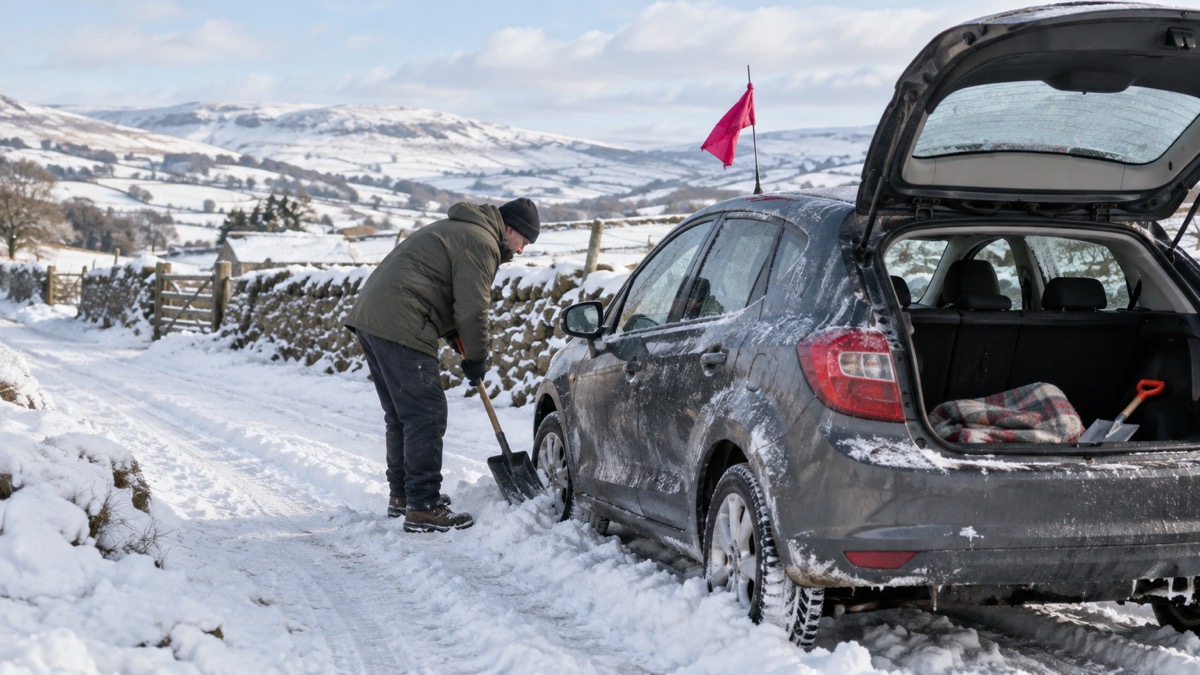
Spinning the wheels digs the car deeper and makes the situation worse. Use the highest gear possible to avoid wheel spin, manoeuvre gently and avoid harsh braking and acceleration4. If you start to skid, gently ease off the accelerator and avoid braking; if braking is necessary, pump the brakes rather than slamming them on4.
The same principle applies on the move. Try not to brake suddenly, as it may lock up your wheels and you could skid further16. Do not brake heavily, as it will lock your wheels and you will skid further; consider changing to a lower gear14. To stop on ice or snow without locking your wheels, get into a low gear earlier than normal, allow your speed to drop and use the brake pedal gently17.
It can take 10 times as long to stop in snowy or icy conditions, so allow extra room4. Slow down, ease gently off the accelerator if you skid, and pump the brakes rather than slam them on18. If you are driving uphill, use dipped headlights, accelerate gently using low revs, and change to higher gears as quickly as possible19.
Make your car easy for rescuers to see
Visibility is what gets you found. If you get stuck, make the vehicle and yourself as visible as possible to other road users and rescuers, keep warm, and if you use a mobile phone, give accurate details of your location6. Tie something brightly coloured to your aerial during snow or ice4. Pull off the road, turn on the hazard lights and hang a distress flag from the radio aerial or window5.
If you have to leave your vehicle to get help, make sure other drivers can see your car and that you are visible at the side of the road9. High-visibility clothing in the boot is for exactly this moment20. A fully charged mobile phone is part of the kit, and you should not waste battery power while you wait9.
| What to do | Why it helps |
|---|---|
| Hazard lights on | Warns other drivers you are stationary5 |
| Bright cloth on the aerial | Makes the car easier to spot in snow4 |
| Distress flag from aerial or window | Signals you need help5 |
| High-visibility clothing | Keeps you visible if you step out20 |
| Accurate location by phone | Helps rescuers find you6 |
Emergency kit to keep in the boot for snow
Getting stuck in your car in winter could be dangerous, so get a winter car kit ready22. Prepare your vehicle for driving in cold weather and consider packing a few essential items in your car's boot in case of getting stuck in cold and wintry weather20. The Met Office suggests an ice scraper and de-icer, torch, paper road atlas, in-car phone charger, warm clothes and blankets, high-visibility clothing, jump leads, empty fuel can, food and drink, shovel, warning triangles and sunglasses21.
Traffic Scotland's list adds a pair of boots, a first-aid kit, a tow rope, a warm drink in a flask and a map for unplanned diversions24. Argyll and Bute Council advises warm clothes, boots and a blanket, a fully charged mobile phone, a hot drink in a flask, energy boosting food, a pen or pencil, a first aid kit, a torch, an ice-scraper, a map and a shovel for snow9. Ceredigion Council lists suitable winter clothes and footwear, a blanket or sleeping bag, mobile phone, radio, torch and extra batteries, shovel, windscreen scraper, water and snacks, tow chain or rope and jump leads25.
| Kit item | What it does for you |
|---|---|
| Snow shovel | Keeps a snow shovel in the car in the event of an emergency26 |
| Warm clothes and blanket | Keeps you warm while stranded21 |
| High-visibility clothing | Makes you visible at the roadside21 |
| Torch and spare batteries | Light for the car27 |
| In-car phone charger | Keeps the phone alive for location calls21 |
| Food and drink, flask | Keeps energy and warmth up9 |
| Jump leads | Restarts a flat battery21 |
| First aid kit | A first aid kit can also be helpful27 |
| Ice scraper and de-icer | Clears the car before you set off21 |
| Map or road atlas | Covers unplanned diversions21 |
Keeping warm while you wait
Warm clothes and blankets in your vehicle will be useful if you break down, as temperatures can drop quickly and you may be stranded for some time27. Run the engine and heater for about 10 minutes each hour to keep warm, opening a window slightly when the engine is running and periodically clearing snow from the exhaust pipe5. Move around to maintain body heat but avoid over-exertion, huddle with passengers, make sure someone stays awake to keep an eye out for rescue teams, drink fluids to avoid dehydration, and do not waste battery power5.
If you are heading on a long trip, make sure you have a winter car kit just in case you get stuck28. Getting stuck in your car in winter could be dangerous, so get a winter car kit ready22. If you are stuck in a snow drift, switch the engine off to prevent your vehicle filling with exhaust fumes6.
Driving on snow to avoid getting stuck: gears, gaps and gritted roads
Most of the work of not getting stuck happens before you leave. Clear your car of any ice or snow, make sure your car is winter ready and you have a car emergency kit29. Clear any snow on the roof of the vehicle before you drive off, as it can slip down over the windscreen and obscure your view24. Check tyre pressure and tread depth and your spare tyre, that lights are working and clean, wipers and screen wash containing anti-freeze, that the car battery is in good condition and fully charged, and that windows and mirrors are clear of ice26. Top up anti-freeze and screenwash13.
On the road, take care around gritters and do not be tempted to overtake4. Slow down and allow extra room4. Use dipped headlights, accelerate gently using low revs, and change to higher gears as quickly as possible19. If the fog is so severe that you are struggling to see other vehicles, switch on your fog lights16. Slow down so you can stop in the distance you can see clearly7.
Check your grip on the road surface where there is snow or ice by choosing a safe place to brake gently11. If the steering feels unresponsive, this may indicate ice and your vehicle losing its grip on the road11. If you are forced to abandon your car, leave it as close to the side of the road as possible to help gritters and emergency services get through7.
For more on preparing the car before winter, see our car checks before winter checklist and the wider guide to driving in snow and ice. If you are deciding whether to travel at all, our page on whether to delay your journey sets out the trade-offs, and how much longer stopping distances are on ice explains the 10 times figure in more detail.
Sources (29)
- Winter driving, Derbyshire County Council
- Winter driving, Cornwall Council
- Winter weather guidance, Humber Local Resilience Forum, August 2024
- Travelling in heavy snow and ice, Met Office
- Severe weather, Pembrokeshire County Council
- Winter driving, Staffordshire County Council
- Safe driving in winter, Nottinghamshire County Council
- Extreme weather, Flintshire County Council
- What advice can you give me on driving?, Argyll and Bute Council
- Winter weather: be prepared, Argyll and Bute Council
- How to drive safely on snow and icy roads | Traffic Scotland, Traffic Scotland
- Driving in Adverse Weather, Cheshire Fire and Rescue Service
- Ice weather warning: information and advice, nidirect
- Winter road safety, Sefton Council
- Driving in snow and icy conditions | Devon and Somerset Fire and Rescue Service, Devon and Somerset Fire and Rescue Service
- Driving in severe weather, Met Office
- Driving in winter, Oxfordshire County Council
- Are you ready?, Culham Parish Council, September 2025
- Stay safe in snow, Met Office
- Cold weather, snow and ice, Prepare campaign, October 2026
- Winter car kit, Met Office
- 10 things you should do now to prepare for winter, Met Office
- Top tips to be weatherready, Met Office
- Driving in bad weather, Transport Scotland
- Snow and ice, Ceredigion County Council
- Emergency kit checklist, Neath Port Talbot Council
- Vehicle emergency kit, Traffic Scotland
- WeatherReady winter partner toolkit, Met Office
- Adverse weather events: snow, Llangattock Community Council, October 2023
 Car Checks Before Winter
 Flood Warning Checklist
 First Steps After a Flood
 Bedroom Temperature at Night
 Hitting Black Ice
 Car Battery in Winter
 Clearing Snow and Ice Safely
 Clearing Snow from Pavements
 Using Fog Lights
 Signs of Frostbite
 Falling Through Ice
 De-Icing a Frozen Windscreen
 Request or Refill a Grit Bin
 Overtaking a Gritter
 Insulating a Loft Water Tank