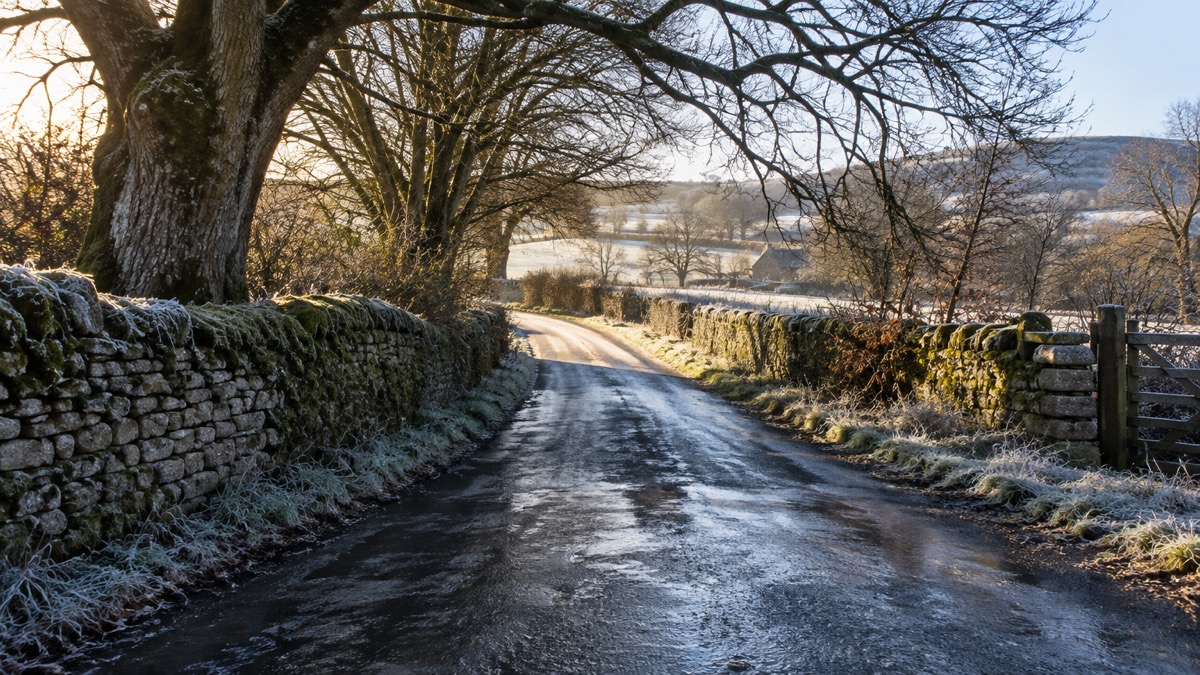
Black ice is a thin, often invisible layer of ice on the road. If you hit it, the car can lose grip with no warning at all. The single most important thing to do is nothing sudden: keep the steering wheel straight, maintain your speed, do not brake, and use the gears to slow down if you need to1. Avoid any sudden movements until you are back on a surface with grip.
That advice is the same across the UK fire and rescue services and the national traffic agencies. Where drivers go wrong is instinct: braking hard or wrenching the wheel. Braking heavily will lock your wheels and you will skid further, so if you need to slow, change to a lower gear instead2. If the car does skid, ease off the accelerator and steer gently in the direction of the skid until you have control3.
This page takes you through the first seconds on ice, how to slow down and stop safely, what to do once you have stopped, and what to do if you or someone else goes through ice into water. It is general driving safety information, not a substitute for the conditions in front of you: if a journey is not necessary when ice is forecast, the safest option is not to make it.
Keep the wheel straight and do not brake
The first rule on black ice is counter-intuitive: do less. Oxfordshire Fire and Rescue Service advises that if you hit a patch of black ice you should keep the steering wheel straight, maintain your speed, not brake, use the gears to slow down if necessary, and avoid any sudden movements1. Manchester Fire and Rescue Service gives the same core instruction for a skid: steer gently into it, and do not take your hands off the steering wheel or brake hard2.
Why does braking make it worse? On ice the tyres have very little grip to give. Braking heavily will lock your wheels and you will skid further, so the advice is to consider changing to a lower gear instead7. Traffic England puts it plainly: try not to brake suddenly, as it may lock up your wheels and you could skid further8. The same applies to acceleration and steering: accelerate, brake, steer and change gear as smoothly as possible to reduce the risk of a skid9.
If the car does begin to slide, ease off the accelerator and steer slightly in the direction of the skid until you gain control, and never brake if the vehicle skids3. Nottinghamshire County Council adds the same point: ease off the accelerator but do not brake suddenly if skidding occurs10.
Use the gears to slow down
Slowing down on ice is a skill in itself, and it starts before you touch the brake pedal. The consistent advice is to get into a low gear earlier than normal, allow the vehicle's speed to fall, and then use the brake pedal gently to avoid the wheels locking10. Oxfordshire Fire and Rescue Service gives the same sequence for stopping on ice or snow without locking your wheels: get into a low gear earlier than normal, allow your speed to drop, and use the brake pedal gently1.
Transport Scotland's guidance for driving on ice is to drive at a slow speed in as high a gear as possible, accelerate and brake very gently, and avoid braking heavily because it will lock the wheels and cause further skidding11. South East Coast Ambulance Service adds a practical detail for manual cars: to slow down on ice and snow, lift the gas early to allow the speed to drop sufficiently to select a lower gear, and if you need to use the brakes, use very gentle pressure and depress the clutch early to avoid stalling the engine12.
The Met Office explains why this matters so much: it can take 10 times longer to stop in snowy or icy conditions, so allow extra room4. That figure is the reason for everything else on this page. At normal speeds on a dry road you may have a fraction of a second to react; on ice, the same stop takes ten times the distance.
A few more habits help:
- Pull away gently. Use a high gear to help avoid wheel spin, accelerate gently using low revs, and you may need to take off in second gear to avoid skidding8. Pulling away in second gear and easing off the clutch gently avoids wheel-spin10.
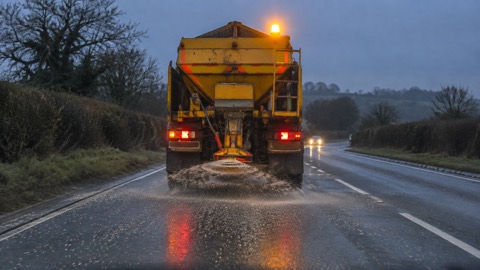
- Take care around gritters. Do not be tempted to overtake them4.
- Be extra cautious at junctions, where road markings may not be visible under snow or ice8.
- Check your grip where there is snow or ice by choosing a safe place to brake gently. If the steering feels unresponsive, that may indicate ice and your vehicle losing its grip, and tyres make virtually no noise on ice13.
Hitting black ice: the first seconds, step by step
When the car goes light and the steering stops answering, you have a few seconds to get it right. This is the sequence the fire and rescue services and traffic agencies describe, in the order you would do it.
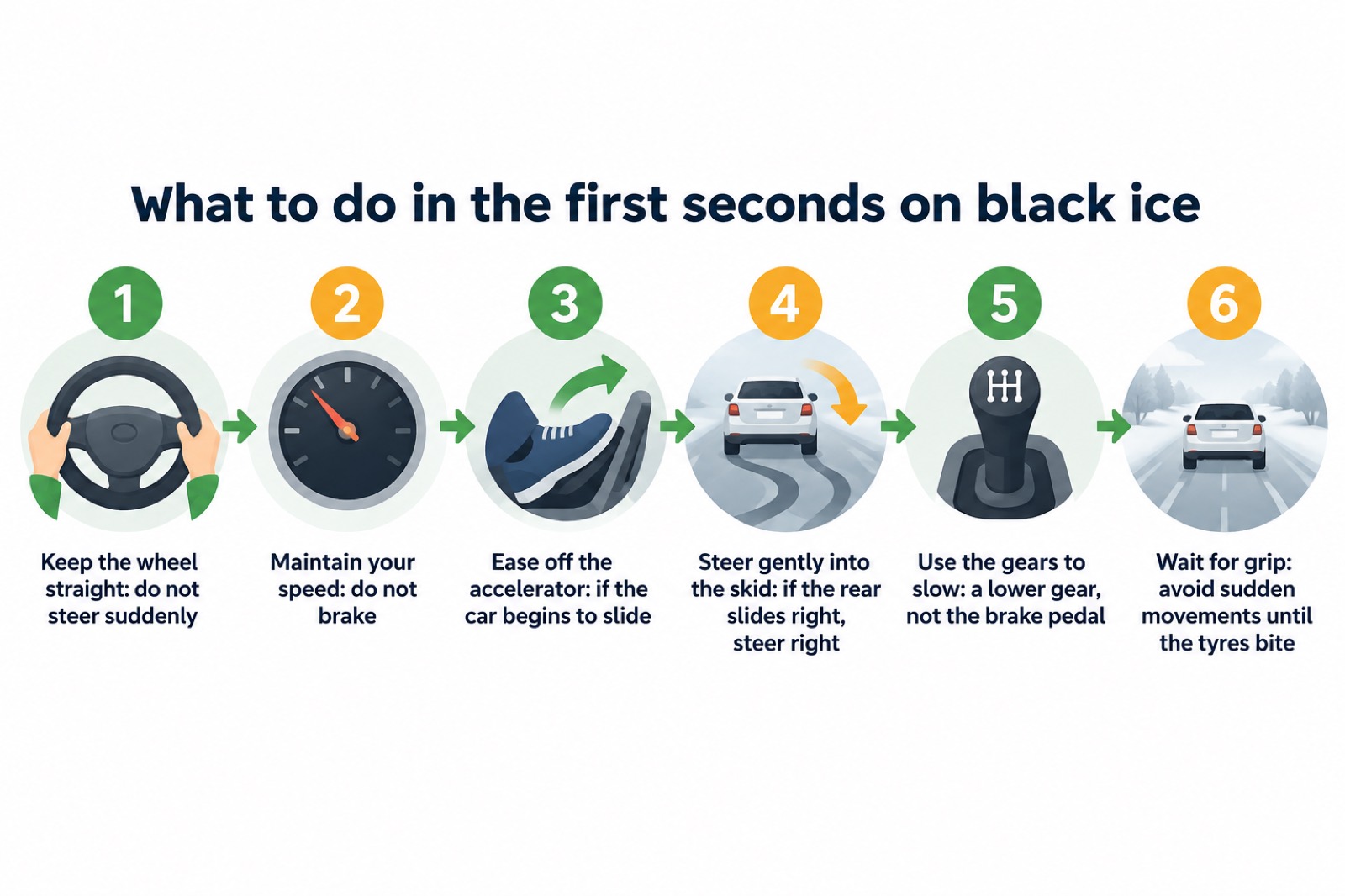
- Keep the steering wheel straight. Do not wrench it to correct a slide you have not yet felt1.
- Maintain your speed and do not brake. Braking hard locks the wheels and lengthens the skid1.
- Ease off the accelerator if the car starts to slide, and steer gently in the direction of the skid until you have control3.
- Use the gears to slow down if you need to reduce speed, rather than the brake pedal1.
- Avoid sudden movements of any kind until you are back on a surface with grip1.
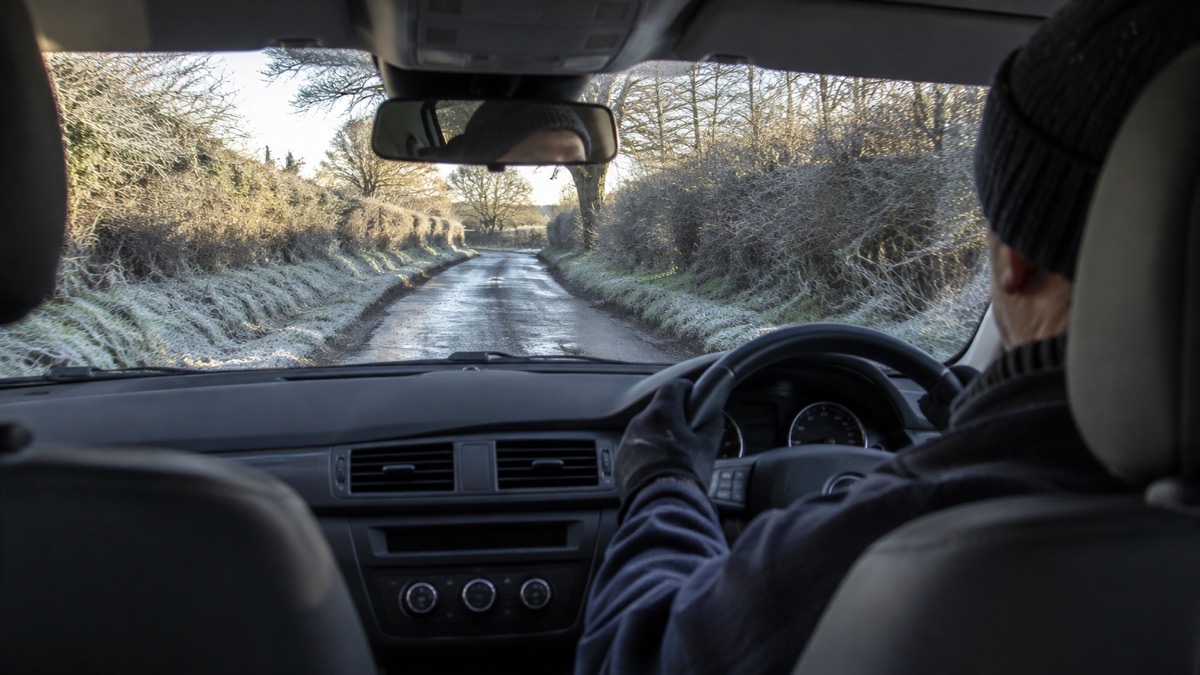
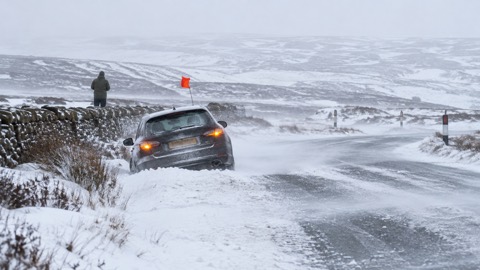
If you do get stuck, straighten the steering and clear the snow from the wheels to give the tyres some grip, and once moving try not to stop until you reach firmer ground14. If you get stuck in snow, stay with your car and tie something brightly coloured to your aerial4.
Spotting black ice before it catches you
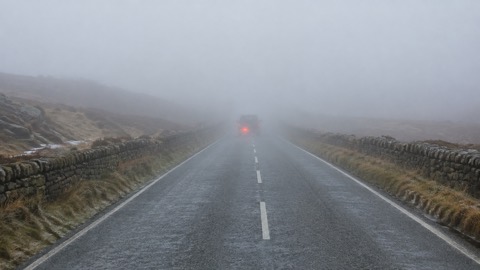
Black ice can look like a glossy sheen on the road, and in some cases you may not see it at all. Be extra cautious on exposed or shaded stretches of road and where there is less traffic1. That is the whole difficulty: the stretches most likely to hold ice are often the ones that look like ordinary tarmac.
Traffic Scotland's guidance gives drivers two practical tests. Where there is snow or ice, check your grip on the road surface by choosing a safe place to brake gently. If the steering feels unresponsive, that may indicate ice and your vehicle losing its grip on the road. And when travelling on ice, tyres make virtually no noise13. Silence and a light steering wheel are your warnings.
Freezing rain is a particular danger. Traffic England warns that in freezing rain you should keep your distance and reduce your speed, because black ice is difficult to see and conditions can be slippery even when they seem normal8. If freezing rain is forecast, the safest journey is the one you do not make. For the wider picture on when to travel and when to stay put, see Driving in Snow and Ice: Staying Safe on the Road and Should I Delay My Journey in Bad Weather?.
If you skid sideways
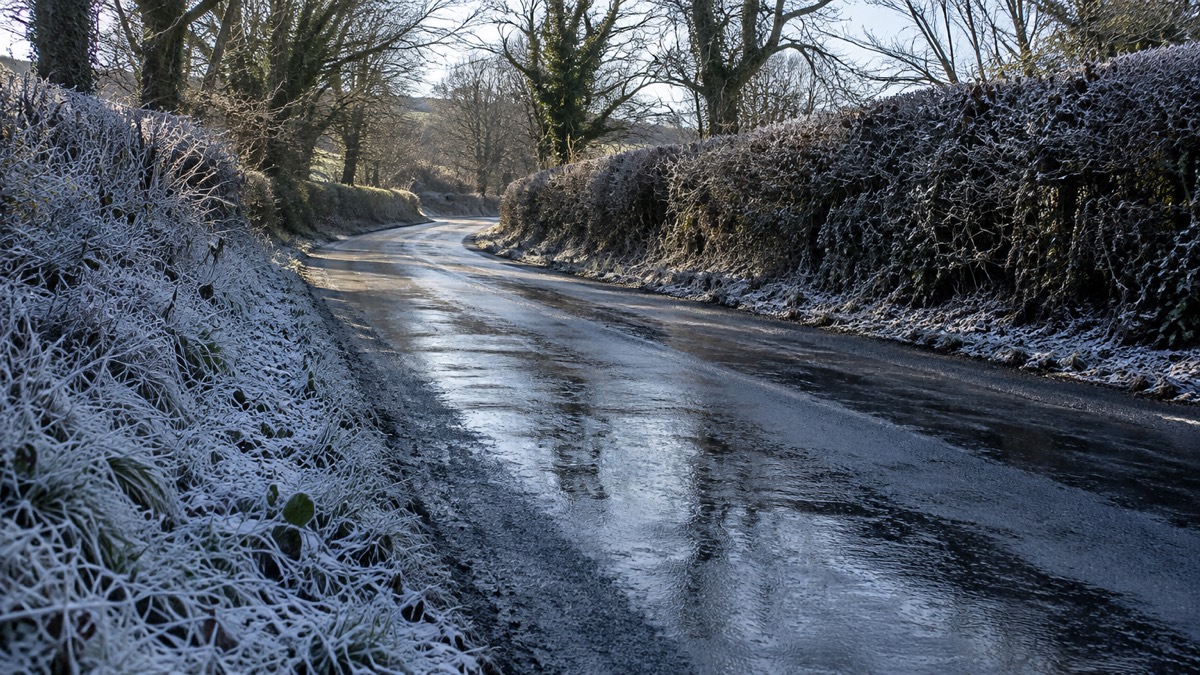
A sideways skid on ice feels like the back of the car stepping out. The fire and rescue services are consistent on what to do. Manchester Fire and Rescue Service advises: if you do encounter a skid, steer gently into it. For example, if the rear of the car is sliding to the right, steer to the right. Do not take your hands off the steering wheel or brake hard2. Nottinghamshire County Council adds: ease off the accelerator but do not brake suddenly if skidding occurs10.
The Met Office gives the same instruction in its winter travel advice: if you start to skid, gently ease off the accelerator and avoid braking. If braking is necessary, pump the brakes, do not slam them on4. The aim throughout is to keep the tyres rolling and the steering inputs small, so the car can recover grip on its own.
| What happens | What to do | What not to do |
|---|---|---|
| The car hits black ice and runs straight | Keep the wheel straight, maintain speed, use the gears to slow1 | Do not brake or make sudden movements1 |
| The rear slides to one side | Steer gently into the skid, hands on the wheel2 | Do not brake hard or let go of the wheel2 |
| You need to slow down | Get into a low gear early, let speed fall, brake gently10 | Do not brake heavily: it locks the wheels2 |
| You are stuck in snow | Straighten the steering, clear snow from the wheels14 | Do not keep spinning the wheels |
After you stop safely
Once you have come to a stop, the priority shifts from control to visibility and warmth. Pull as far off the carriageway as you can and switch on your hazard lights so other drivers can see you. Stay with your car rather than walking along the road, where other vehicles may be sliding.
If you are stuck, straighten the steering and clear the snow from the wheels to give the tyres some grip, and once moving try not to stop until you reach firmer ground14. If you get stuck in snow, stay with your car and tie something brightly coloured to your aerial4. A winter kit in the boot makes a stop far more comfortable: Traffic Wales advises carrying an ice scraper and de-icer, a torch with spare batteries, blankets, sunglasses, bright-coloured clothes such as a high-vis, boots, a shovel and a first aid kit16. The Scottish Government's emergency kit guidance also lists an ice scraper17. For a full list, see Car Checks Before Winter.
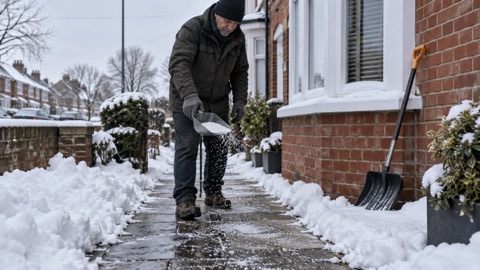
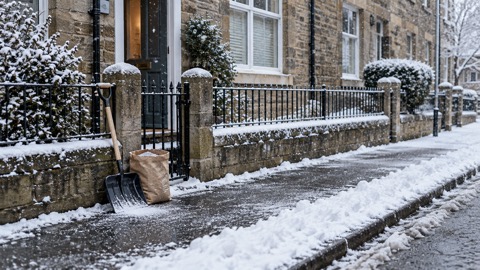
If you have to leave the car, take care on foot: keep walkways clear of ice and wear shoes with good grip18. If you do fall and cannot get up, reach for a phone or lifeline alarm and call for help; if you cannot shout, bang on the floor or a wall to attract a neighbour or passer-by, keep warm by pulling something over to cover you, and move as much as you can19. For more on walking safely, see Walking on Ice: Avoiding Slips and Falls on Pavements.
If you fall through ice: stay calm and shout for help
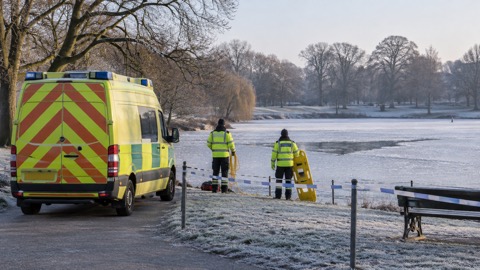
Frozen water is far more dangerous than it looks, and the advice for anyone who goes through it is clear. Keep calm and call for help. If no help is available, spread your arms across the surface of the ice. If the ice is strong enough, kick your legs and slide onto the ice, then lie flat and pull yourself to the bank. If the ice is very thin, break it in front of you and make your way to the shore. If you cannot climb out, wait for help keeping as still as possible, press your arms by your side and keep your legs together. Once you are safe, go to hospital immediately for a check-up5.
The reason for staying still and not swimming straight away is cold water shock. The initial effects of cold water pass in less than a minute, so do not try to swim straight away: relax and float on your back to catch your breath, try to get hold of something that will help you float, keep calm, then call for help or swim for safety if you are able20. London Fire Brigade gives the same advice: if you get into difficulty, float, take a minute, and do not try to swim straight away21.
If you see someone else fall through the ice, the advice is emphatic: do not try to rescue them yourself. Telephone 999 immediately and ask for the fire and rescue service22. Stay on the bank and shout to the person to keep still and hold their head above the water14. Shout for assistance and send for the emergency services, call 999 or 112, which is a free call from any phone. Stay off the ice. Try to reach them from the bank using a rope, pole, tree branch or clothing tied together, and lie down when reaching to avoid being pulled onto the ice. Slide something that floats, such as a rescue buoy, across the ice, or wait for the emergency services while calming and reassuring them23. Once out, seek medical attention immediately24.
For the full picture on frozen lakes, canals and ponds, see What to Do If Someone Falls Through Ice. For the wider household picture during a cold snap, start with Storms, Snow and Ice: A Household Guide.
Sources (25)
- Driving in winter, Oxfordshire County Council, 2026
- Winter driving, Greater Manchester Fire and Rescue Service, 2026-10-29
- Driving in snow and icy conditions, Devon and Somerset Fire and Rescue Service, 2026-01-02
- Travelling in heavy snow and ice, Met Office, 2026-10-25
- Stay safe this winter, Oxfordshire County Council, 2026
- Stay safe this summer | Oxfordshire County Council, Oxfordshire County Council
- Winter Road Safety, Sefton Council
- Travelling in snow and ice, National Highways, 2026-10-29
- Stay safe in ice, Met Office, 2026-10-28
- Safe driving in winter, Nottinghamshire County Council, 2026-10-29
- Driving in bad weather, Transport Scotland, 2026-10-29
- Winter preparedness, South East Coast Ambulance Service, 2025-10-22
- Driving in snow and ice, Traffic Scotland, 2026-10-29
- Driving in snow, North Wales Fire and Rescue Service, 2026-10-29
- Road safety, Warwickshire County Council, 2026-10-29
- Driving in snow and ice, Traffic Wales, 2026
- Emergency kit, Scottish Government, 2026-10-22
- Self care at home advice, South Western Ambulance Service, 2026-10-29
- What to do if you fall, NHS Inform Scotland, 2026-04-30
- Water safety, Devon and Somerset Fire and Rescue Service, 2026
- Extreme weather summer guide, London Fire Brigade, 2024-05
- Stay safe, stay off frozen water, North Wales Fire and Rescue Service, 2026-10-29
- Frozen water dangers, Dorset and Wiltshire Fire and Rescue Service, 2024-01-18
- Extreme weather winter guide, London Fire Brigade, 2025-01
- Keep warm in winter - Derbyshire County Council, Derbyshire County Council
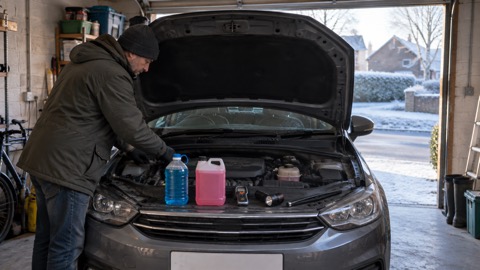 Car Checks Before Winter
 Flood Warning Checklist
 First Steps After a Flood
 Bedroom Temperature at Night
 Car Battery in Winter
 Car Stuck in Snow
 Clearing Snow and Ice Safely
 Clearing Snow from Pavements
 Using Fog Lights
 Signs of Frostbite
 Falling Through Ice
 De-Icing a Frozen Windscreen
 Request or Refill a Grit Bin
 Overtaking a Gritter
 Insulating a Loft Water Tank