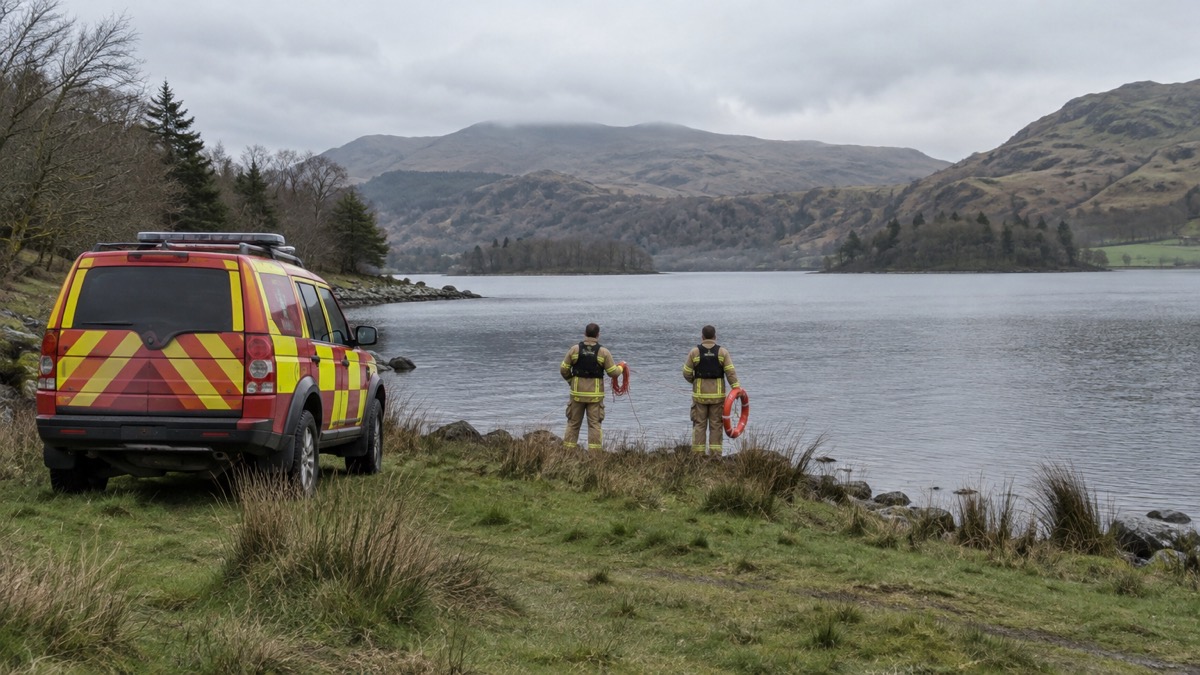
If you fall into cold water, the single most important thing to know is this: the initial effects pass in less than a minute, so do not try to swim straight away. Fight the instinct to swim hard, lean back, spread your arms and legs, and float until the cold water shock has passed1. Then, and only then, call for help or swim for safety if you are able.
Cold water shock is an involuntary response to the body being suddenly or unexpectedly immersed in water below 15°C2. It is not a matter of toughness or swimming ability: it can happen to anyone of any age or swimming ability3, and it can cause heart attacks even in the relatively young and healthy2. All waters in and around the UK are cold enough to cause it, and the average UK sea temperature is just 12°C1.
If you see someone else in trouble in the water, do not go in after them. Call 999 and ask for the Coastguard at the coast, or the Fire and Rescue Service inland, tell the person to float, and throw something that floats if you can do so safely4.
If you fall in: take a minute and float to live
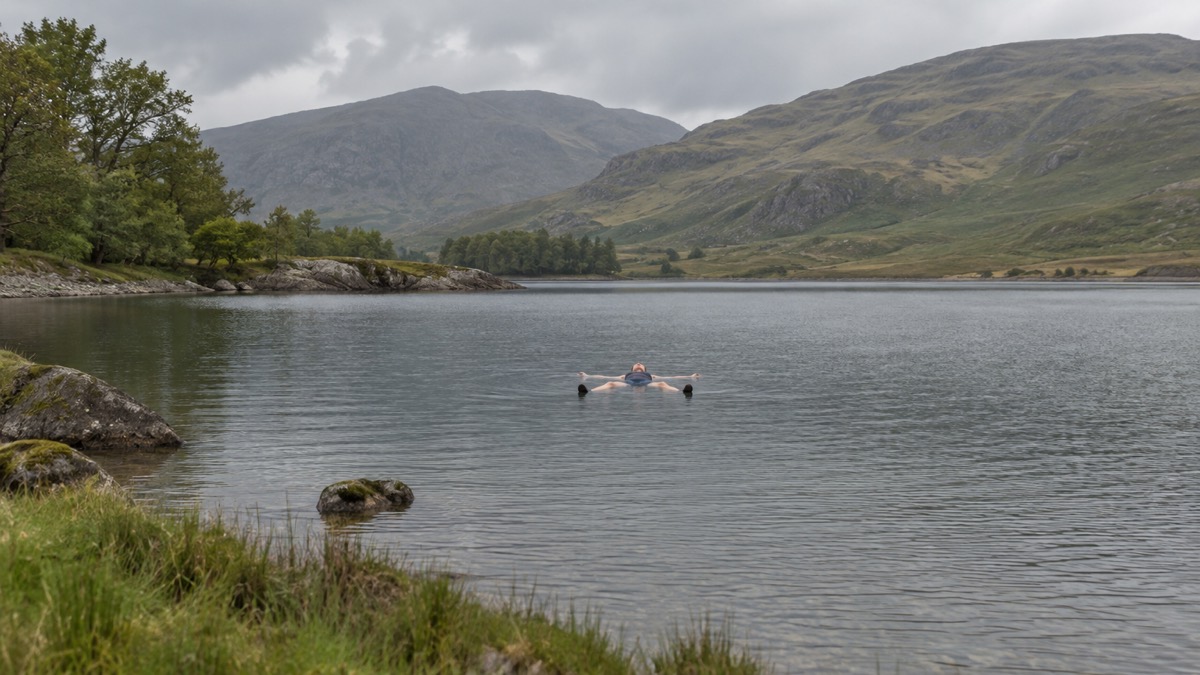
The instinct when you hit cold water is to swim hard for the bank, the shore or anything that looks like safety. That instinct is the danger. Thrashing about drives the gasping reflex, raises your heart rate and uses up the energy and breath control you need to survive the first minute. Fire and rescue services and the RNLI give the same advice under the name Float to Live: fight the instinct to swim hard and float until the cold water shock has passed1.
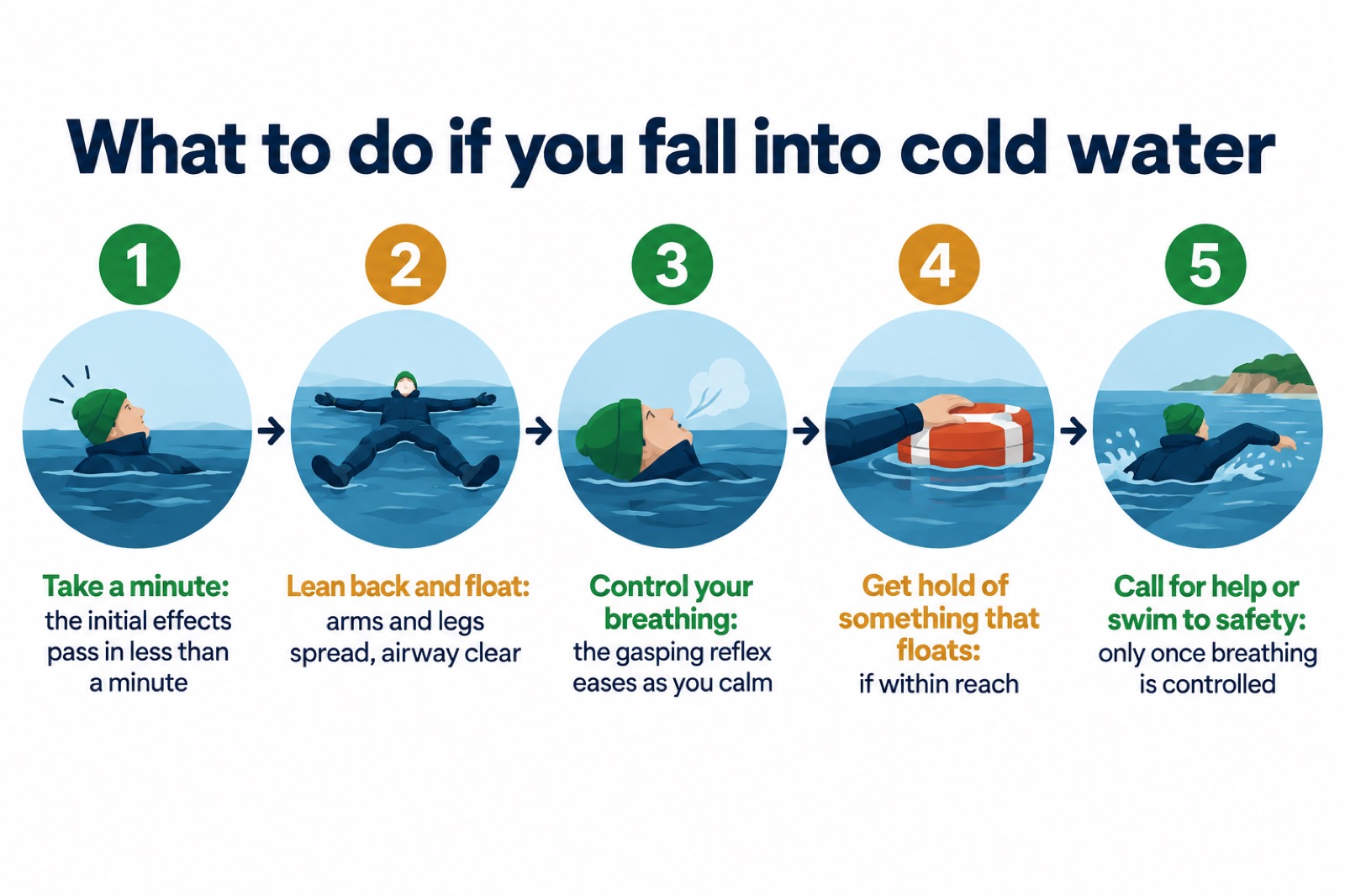
The full sequence, as given by Devon and Somerset Fire and Rescue Service and the RNLI, is:
- Take a minute. The initial effects of cold water pass in less than a minute, so do not try to swim straight away1.
- Lean back and float on your back, looking at the sky, with your arms and legs spread out, keeping your airway clear5.
- Try to control your breathing. The gasping reflex will ease as your body calms down6.
- Try to get hold of something that will help you float if one is within reach1.
- Keep calm, then call for help or swim for safety if you are able1.
Dorset and Wiltshire Fire and Rescue Service describe how it feels: if you fall into the water suddenly you can get cold water shock, and it feels like your breath has been taken away. If this happens, float on your back looking at the sky until your body calms down7. That feeling of breathlessness is frightening, but it is temporary, and holding the floating position through it is what keeps your head above water.
Once your breathing is under control, you have choices again. If you can reach the bank or shore without exhausting yourself, swim for it. If you cannot, stay floating, keep your airway clear and shout or signal for help. The Met Office's water safety advice adds that if you are wearing a buoyancy aid or can reach a floating object, use it to stay at the surface while you wait2.
What cold water shock is, and what it does in the first minute
Cold water shock is an involuntary response to the body being suddenly or unexpectedly immersed in water with a temperature below 15°C2. It is not a choice, a reaction you can talk yourself out of, or a sign of weakness. It is the body's automatic response to sudden cold, and it runs on its own for the first minute or so.
Two things happen almost at once. First, the blood vessels in the skin close, which increases the resistance of blood flow, so the heart has to work harder and blood pressure goes up2. The RNLI describes the same mechanism: cold water shock causes the blood vessels in the skin to close, heart rate is increased, and as a result the heart has to work harder and blood pressure goes up8.
Second, the sudden cooling of the skin makes you involuntarily gasp for breath and increases your breathing rate2. This is the effect people describe as the breath being taken away. Uncontrolled, fast breathing makes it much harder to keep your head clear of the water, and it greatly increases the chance of inhaling water directly into the lungs2. The RNLI puts a number on how little water that takes: it only takes half a pint of sea water to enter the lungs for a fully grown man to start drowning8.
NHS inform, the Scottish health information service, lists what sudden cold water immersion can do: it can overstimulate the nerves, which may cause the heart to stop (cardiac arrest), cause hypothermia, and make shock worse9. This is why cold water shock is treated as a medical emergency and not simply a matter of getting out of the water quickly.
"Cold water shock is an involuntary response to the body being suddenly or unexpectedly immersed into water which has a temperature below 15°C."
The key timing, repeated across fire and rescue services and the RNLI, is that the initial effects of cold water pass in less than a minute1. That first minute is when the gasping and the racing heart are at their strongest, and when the risk of water entering the lungs is highest. Stay afloat through that minute by floating, and once your breathing is back under control you have your window to get out of the water before the further effects of cold water shock kick in10.
Cold enough to cause it: water at 15°C or lower
The threshold is 15°C. Anything below 15°C is defined as cold water and can seriously affect your breathing and movement8. Devon and Somerset Fire and Rescue Service state that cold water shock can occur in water below 15 degrees Celsius1, and Mid and West Wales Fire and Rescue Service define anything below 15°C as cold water that seriously affects breathing as well as movement4. Wiltshire and Swindon Prepared put it plainly: when open water is 15°C or lower, it is considered dangerous for cold water shock11.
That threshold matters because almost all UK water sits below it for most or all of the year:
| Water | Temperature | Cold enough for cold water shock? |
|---|---|---|
| UK seas, average | just 12°C1 | Yes, all year |
| UK and Ireland seas, winter | 6 to 10°C2 | Yes |
| UK and Ireland seas, summer | 15 to 20°C, depending on location2 | Often yes, and the risk is significant most of the year8 |
| UK lakes, rivers and floods | often much colder than it looks12 | Yes, even in summer |
The Met Office gives the seasonal range: average sea temperatures around the UK and Ireland range from 6 to 10°C in the winter to 15 to 20°C in the summer, depending on location2. Even at the top of that summer range, some waters sit at or below the 15°C threshold, and the RNLI's conclusion is that the risk is significant most of the year8.
Two traps catch people out. The first is that water outdoors is often much colder than it looks, and entering it suddenly can trigger cold water shock, putting even strong swimmers in trouble12. The second is that the water may feel warm on the surface but be icy cold underneath, even in hot weather5. A warm day tells you nothing about the temperature a metre down, and it tells you nothing about currents, depth or what lies under the surface.
Flood water is a particular case. Devon and Somerset Fire and Rescue Service advise: do not enter floodwater for any reason, because even in the summertime flood water can be very cold and cause cold water shock13.
Why it stops strong swimmers and can trigger heart attacks
Swimming ability does not protect you, because the things cold water shock attacks are the very things swimming depends on: breathing control, heart rhythm and muscle control. Devon and Somerset Fire and Rescue Service explain that cold water shock causes the blood vessels in the skin to close, increasing the resistance of blood flow, and that the heart rate increases so the heart has to work harder and blood pressure goes up3. North Yorkshire Fire and Rescue Service warn that hot weather can entice people to submerge themselves in water to cool down, which can be dangerous if it happens in a disorganised or unexpected way14.
The heart risk is real and not reserved for the elderly. The RNLI states that cold water shock can cause heart attacks, even in the relatively young and healthy8. NHS inform lists cardiac arrest among the effects of cold water submersion, alongside hypothermia and shock9. Oxfordshire's fire and community safety advice describes cold water shock as a physical response that can affect your breathing, reduce your muscle ability and even lead to a heart attack15.
The muscle effect matters as much as the heart effect. Cold water reduces muscle ability15, and Dorset and Wiltshire Fire and Rescue Service warn that in winter conditions cold water can numb your arms and legs16. A swimmer who loses breathing control in the first minute, then loses muscle control in the minutes that follow, can find that the swimming ability that carried them into the water is simply not there when they need it.
The sequence that leads to drowning is well described across the sources: cold water shock causes you to temporarily lose control of your breathing and ability to swim, which can lead to drowning11. The RNLI calls cold water shock a precursor to drowning8, and Mid and West Wales Fire and Rescue Service say the same: cold water shock can be a precursor to drowning4.
Helping someone in the water: never go in after them
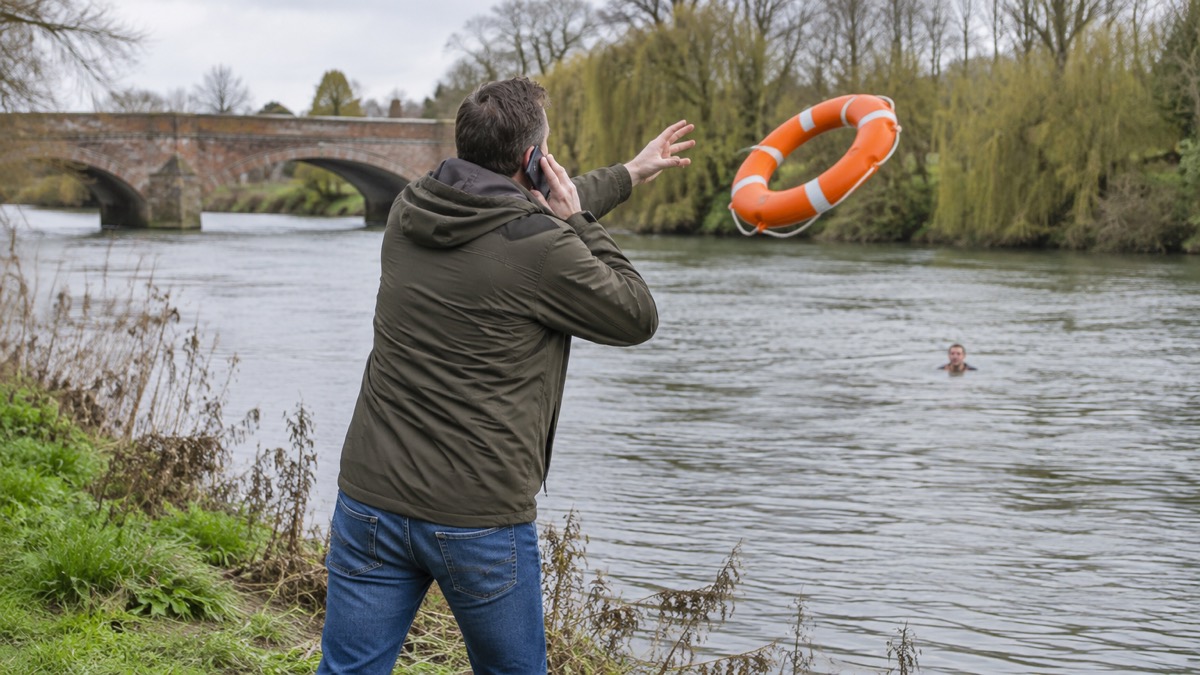
The rule from every fire and rescue service in these pages is absolute: never enter the water to try to save someone. Devon and Somerset Fire and Rescue Service give the reason: you could experience cold water shock, which will leave you unable to help, even if you are a strong swimmer1. The Northern Ireland Fire and Rescue Service put the same warning in plain terms: if you go into the water you are likely to suffer from cold water shock, which will leave you unable to help, even if you are a strong swimmer18. Lincolnshire's advice turns it into a question worth remembering: never enter the water to try to save someone, who will save you?19
What to do instead, from the bank or the shore:
- Call 999 and ask for the right service: the Coastguard at the coast, the Fire and Rescue Service inland4.
- Tell the person to float. Shout to them to keep still, hold their head above the water, and offer reassurance to keep them calm20.
- Throw something that floats if you can do so safely: a flotation device, a throwline if there is one nearby, or even a ball21.
- Give your location, or describe any visible landmarks or signs5.
Look for throwline boards or signs near the water: many inland water sites and beaches have rescue equipment and location markers posted, and these tell the 999 operator exactly where to send crews22. If it is a dog in difficulty rather than a person, encourage it to swim back to you rather than going in22.
Calling 999 or 112: Coastguard at the coast, Fire and Rescue inland
Getting the right service matters, because the Coastguard and the fire and rescue services are the ones equipped and trained for water rescue. The instruction is consistent across England, Wales, Scotland and Northern Ireland:
- At the coast or in the sea: call 999 and ask for HM Coastguard23.
- Inland, at rivers, lakes, canals, reservoirs and floods: call 999 and ask for the Fire and Rescue Service4.
- If you are unsure which applies: tell the 999 operator what has happened and where, and they will direct the call24.
The Met Office's water safety code states it directly: if you get into trouble at the coast or in the sea, call 999 and ask for HM Coastguard23. Manchester's beach safety advice adds that you can use your mobile or go to the nearest telephone and dial 999, asking for the fire service at inland water sites and the coastguard at the beach25. Devon and Somerset Fire and Rescue Service add that if someone falls in the water inland, you should ask for the fire and ambulance services26.
Giving your location: what3words and landmarks
The hardest part of a water rescue call is often saying where you are. Open water, riverside paths and beaches frequently have no street address. Three tools help:
- Landmarks and signs: give a location, or describe any visible landmarks or signs, and look for throwline boards or signs5.
- The what3words app: the free what3words app can help you pinpoint your location, so download it before you go5. North Yorkshire Fire and Rescue Service advise considering GPS apps like What3Words to let the 999 operators know exactly where you are14.
- Your phone's map: if you have a signal, your phone's map app can give a grid reference or a location pin to read out.
Before you go in: conditions, wetsuits and flotation
If you swim, paddleboard or take part in any water activity, the RNLI's advice is to check conditions, including water temperature, before heading to the coast, wear a wetsuit of appropriate thickness, and wear a flotation device8. Those three preparations change what cold water does to you: a wetsuit slows the sudden cooling of the skin, and a flotation device keeps your airway clear even if you lose breathing control.
How you enter matters as much as what you wear. Suffolk's warm weather safety advice is to enter water slowly to acclimatise rather than jumping in17. Sudden immersion is the trigger for cold water shock; gradual entry gives your body time to adjust.
Alcohol, jumping in and other traps
Several behaviours recur in the drowning causes listed by NHS inform: swimming in strong currents, swimming in cold water, swimming or boating after drinking alcohol, suddenly entering cold water, and the physical effort of swimming9. Mid and West Wales Fire and Rescue Service warn that anything below 15°C seriously affects breathing and movement, and their water safety pages pair that warning with the dangers of alcohol near water4.
The summer trap deserves its own warning. The Met Office notes that heat can entice people to submerge themselves in water to cool down, which can be dangerous if it happens in a disorganised or unexpected way23. The Northern Ireland Fire and Rescue Service put it plainly: jumping into a body of water may look inviting to cool down, but it can be dangerously cold and unpredictable, and you can get cold water shock, which hinders your ability to swim6.
For paddleboarders, Cumberland Council's water safety advice is to avoid offshore winds, which will blow your board far out into the lake27. The same principle applies to inflatables at the beach: Dorset and Wiltshire Fire and Rescue Service warn that inflatables can be easily blown out to sea3.
Where to swim and what the beach flags mean
The safest place to swim in the sea is a lifeguarded beach, between the red and yellow flags. Dorset and Wiltshire Fire and Rescue Service and nidirect give the same core advice: go to a lifeguarded beach, swim between the red and yellow flags, learn what the flags mean and follow the safety guidance3.
The flags to know:
| Flag | What it means | What to do |
|---|---|---|
| Red and yellow | Lifeguarded swimming zone | Swim between these flags3 |
| Red | It is dangerous to bathe or swim | Do not go into the water25 |
Beyond the flags, Dorset and Wiltshire Fire and Rescue Service advise swimming parallel to the beach and close to the shore, avoiding swimming near rocks, piers and breakwaters, being aware that distances can be deceptive, and remembering that inflatables can be easily blown out to sea3. Distances are the quiet killer here: what looks like a short swim to a buoy or platform is often much further, and cold water drains the energy needed to get back.
Keeping children safe around cold water
Children are drawn to water in hot weather and in ice in winter, and the advice differs by season but the principle is the same: supervision and teaching.
In winter, London Fire Brigade's advice is to keep any children within reach and teach them not to go on the ice20. Ice on rivers, lakes, canals and ponds in the UK is rarely thick enough to bear a person's weight, and the water beneath it is cold enough year-round to cause cold water shock within seconds.
In summer, the Northern Ireland Fire and Rescue Service warn that cold water can affect you physically and that you can get cold water shock18, and nidirect's summer safety advice repeats the warning for beach swimming28. Teaching children the Float to Live position, and teaching them how to ring 999 and ask for the right service, gives them the two skills that matter most. Our page on teaching children basic life-saving skills and how to ring 999 covers the second of these in detail.
Dogs and ice
Dogs and ice are a lethal combination, and the figures are stark. Dorset and Wiltshire Fire and Rescue Service report that over 50% of ice-related drownings involve the attempted rescue of a dog16, and North Yorkshire Fire and Rescue Service repeat the same figure29. The advice from both services, and from Manchester's frozen water safety pages, is consistent:
- Do not go onto the ice to rescue a dog or other animal that ventures onto the ice or falls through it; you are likely to end up in the freezing water and unable to help the animal30.
- Never throw sticks or balls onto the ice for your dog24.
- Keep dogs on a lead near frozen water24.
- If a dog is in difficulty in open water, encourage it to swim back to you from the bank22.
- If an animal is in trouble on or in ice, call 999 for help rather than attempting a rescue16.
After the rescue: medical care when water has been inhaled
Anyone who has been in the water, even briefly and even if they seem fine afterwards, needs medical assessment. The reason is the gasp reflex: the sudden cooling of the skin by cold water can make you involuntarily gasp for breath, increasing your breathing rate, which can lead to water entering the lungs and increase the risk of drowning2. Given that it only takes half a pint of sea water entering the lungs for a fully grown man to start drowning8, any inhalation is serious.
Dorset and Wiltshire Fire and Rescue Service give the aftercare sequence for a casualty rescued from frozen water, and the principles apply to any cold water rescue: make sure an ambulance is on its way, lay them flat, check breathing and pulse and begin resuscitation if necessary, warm them gradually with a sleeping bag, blankets or spare clothing including the head, and get them under shelter. Do not undress them until they are in a warm place, and do not rub their skin, apply hot water or give them an alcoholic drink16.
If the person is not breathing normally, start CPR. Our pages on how to do CPR, how to check if someone is breathing and what to do after someone nearly drowns cover the steps in full, and the recovery position explains what to do once breathing returns. NHS inform's drowning first aid guidance is the reference for Scotland and is consistent with this advice9.
Sources (30)
- Water safety, Devon and Somerset Fire and Rescue Service
- Winter water safety, Met Office
- Water safety, Dorset and Wiltshire Fire and Rescue Service, 2025-08-20
- Alcohol and the dangers of water, Mid and West Wales Fire and Rescue Service
- Survival and rescue, London Fire Brigade
- Stay safe this summer: essential tips, Northern Ireland Fire and Rescue Service
- Be Water Aware, Dorset and Wiltshire Fire and Rescue Service, 2026-07-24
- Cold water shock, RNLI
- Drowning first aid, NHS inform, 2026-07-24
- Cold Water Shock, the Facts, Royal Life Saving Society UK (RLSS UK)
- Cold water shock, Wiltshire and Swindon Prepared, 2026-10-25
- Summer safety advice as temperatures rise, North Yorkshire Fire and Rescue Service, 2026-06-26
- Safety in severe weather conditions, Devon and Somerset Fire and Rescue Service
- Water safety campaign, North Yorkshire Fire and Rescue Service, 2026-08-18
- Stay safe in summer, Oxfordshire County Council
- Frozen water dangers, Dorset and Wiltshire Fire and Rescue Service, 2024-01-18
- Warm weather safety, Suffolk Fire and Rescue Service
- Water safety: open water swimming, Northern Ireland Fire and Rescue Service, 2026-10-22
- Water safety, Lincolnshire County Council
- Winter water safety, London Fire Brigade
- Light Nights campaign, North Yorkshire Fire and Rescue Service, 2026-06-10
- Extreme weather winter guide, London Fire Brigade, 2025-01
- Water safety code, Met Office
- Water safety, Manchester Fire and Rescue Service
- Beach safety, Manchester Fire and Rescue Service
- Top ways to stay cool safely in summer, Devon and Somerset Fire and Rescue Service, 2022-07-17
- Water safety, Cumberland Council
- Fire and summer safety advice, nidirect, 2026-07-03
- Ice safety, North Yorkshire Fire and Rescue Service, 2022-12-12
- Frozen water safety, Manchester Fire and Rescue Service
 Baby and Child Kit Checklist
 Bleeding Control Kit Checklist
 Car Kit Checklist
 Danger, Response, Airway
 CPR Steps for Adults
 2025 Resuscitation Guidelines
 Defibrillators (AEDs)
 Public Access Defibrillators
 Choosing a Defibrillator
 The Recovery Position
 Choking First Aid
 Cuts, Grazes and Wounds
 Burns and Scalds
 Adrenaline Auto-Injectors
 Sepsis Signs to Act On