Most cuts and grazes can be treated at home with three steps: stop any bleeding, clean the wound well, and cover it with a plaster or dressing to help prevent infection1. Most cuts and grazes treated at home will start to heal in a few days1. The decisions that matter are about severity: whether the bleeding will stop, whether something is stuck in the wound, and whether the cut is on a part of the body where healing and scarring matter more, such as the face or the palm of the hand.
Phone 999 or go to A&E if you have a cut and you cannot stop the bleeding, if blood comes out in spurts and is bright red and hard to control, if you lose feeling near the wound or have trouble moving it, if you have a bad cut on your face or the palm of your hand, if the wound is very large or deep, or if there is something stuck in the cut1. Severe bleeding that cannot be stopped is a 999 emergency in every part of the UK2. For everything else, this page walks through what to do at home and when to get help.
When to phone 999 or go to A&E
The clearest signal that a cut is an emergency is bleeding that will not stop. NHS inform's guidance on cuts and grazes lists the situations in which you should phone 999 or go straight to A&E: a cut you cannot stop bleeding; blood that comes out in spurts, is bright red and is hard to control; losing feeling near the wound or having trouble moving it; a bad cut on your face or the palm of your hand; a wound that is very large or deep; or something stuck in the cut1. Spurting, bright red blood suggests an artery is involved, and a wound you cannot feel or move may mean deeper damage, which is why both are on the list even when the bleeding looks manageable.
Ambulance services across the UK give the same message. The South Western Ambulance Service NHS Foundation Trust includes severe bleeding among the reasons to call 9992, and the Scottish Ambulance Service lists severe bleeding that cannot be stopped as a reason to phone 999 or go to A&E in Scotland3. NHS 24 in Scotland adds severe bleeding and severe injury to its list of 999 or A&E situations6. If you are with someone who is bleeding heavily, ring 999 straight away and do exactly what the person on the phone tells you7.
If possible, ask someone else to phone 999 while you help the injured person, and give the call handler details of the injury and the extent of the bleeding4. If nothing is stuck in the wound, apply pressure to the wound using a clean pad or dressing and keep doing this until the bleeding stops8. If the casualty is bleeding severely, apply pressure directly to the wound and phone 999 for help9. Severe bleeding can also lead to shock, so treat any injuries you can see that could be causing it and reassure the casualty that you will help them10. The full sequence for life-threatening bleeding, including how to check the person over first, is covered on our pages on how to stop severe bleeding and shock.
When a cut needs medical help short of 999
Not every cut that needs a doctor needs an ambulance. NHS inform advises phoning 111 or contacting your GP practice urgently if a wound has soil, pus or body fluids in it or is still dirty after cleaning; if you were bitten by a person or a wild or stray animal; if a cut is swollen, red and getting more painful or has pus; if a cut is larger than around 5cm (2 inches); or if you have cut yourself and also feel generally unwell or have a high temperature1. Those last signs, a cut that is getting more painful and red rather than less, are the signs of an infected wound, and they mean the wound needs a professional's eye rather than another plaster.
For children, the NHS advises going to A&E or a minor injuries unit if the cut keeps bleeding, if there is a gap between the edges of the wound, or if there is something in the cut such as a piece of glass11. A gap between the wound edges is the practical sign that a cut may need stitches or closure by a clinician: the edges cannot be held together by a plaster alone, so the wound should be seen rather than taped shut at home.
If you cannot wait to see your GP, get help at an urgent treatment centre. The East of England Ambulance Service explains that these centres are for minor cuts, sprains or rashes when you cannot wait for a GP appointment12. The South Central Ambulance Service adds that doctors, nurses, paramedics and other healthcare professionals working at urgent treatment centres can help with deep cuts and wounds, eye injuries, minor fractures, severe sprains, minor head injuries, minor burns and scalds13. In Scotland, a minor injuries unit can help with a cut, a minor burn, a sprain or strain, or a suspected broken or fractured bone14. NHS 111 online can direct you to the right service, and depending on what the person needs, they might be advised to call 999 or go to A&E, go to an urgent treatment centre, see an out-of-hours GP, book a callback from a nurse, contact their own GP surgery, see a pharmacist, or look after themselves safely at home15.
| Where to go | What it is for | Who to contact |
|---|---|---|
| 999 or A&E | Bleeding you cannot stop, spurting blood, large or deep wounds, something stuck in the cut, bad cuts to the face or palm1 | Phone 999 or go to A&E |
| 111 or GP practice | Wound still dirty after cleaning, bites, signs of infection, cuts larger than around 5cm, feeling unwell with a high temperature1 | Phone 111 or contact your GP urgently |
| Urgent treatment centre | Minor cuts, sprains or rashes when you cannot wait for a GP; deep cuts and wounds12 | Walk in or check local opening times |
| Minor injuries unit (Scotland) | A cut, minor burn, sprain or strain, suspected broken bone14 | Contact your local unit |
Something stuck in the wound: press either side, never on it
If there is something stuck in the wound, do not try to take it out, and do not press down on the object. Press firmly either side of it to push the edges of the wound together1. This rule holds whether the object is a splinter of glass, a nail or anything else embedded in the skin, and it is one of the few wound rules where every official source says exactly the same thing.
The reason is bleeding. The NHS guidance on children's accidents explains that if there is an object embedded in the wound, like a piece of glass, you should not remove it as this can make the bleeding worse; press around the edges of the object rather than directly on it11. The North West Ambulance Service puts it bluntly: do not remove an object stuck in a wound as this could cause further blood loss. Instead, press firmly on either side of the object, build up padding around it, and bandage over the padding to avoid putting pressure on the object itself16. The object may be plugging the vessel that is bleeding, so pulling it out can turn a controlled wound into a severe one.
NHS inform's severe bleeding guidance adds one more instruction: do not press directly on an object embedded in the wound4. So the technique is consistent across sources. Build up padding around the object, bandage over it without pressing the object further in, and get medical help, because a wound with something embedded in it is on the 999 or A&E list1. Our page on whether you should remove an object stuck in a wound covers this in more detail, and how to remove a splinter safely deals with the everyday case where a splinter is in the skin but not embedded in a wound.
Cleaning the wound: water first, wipes once
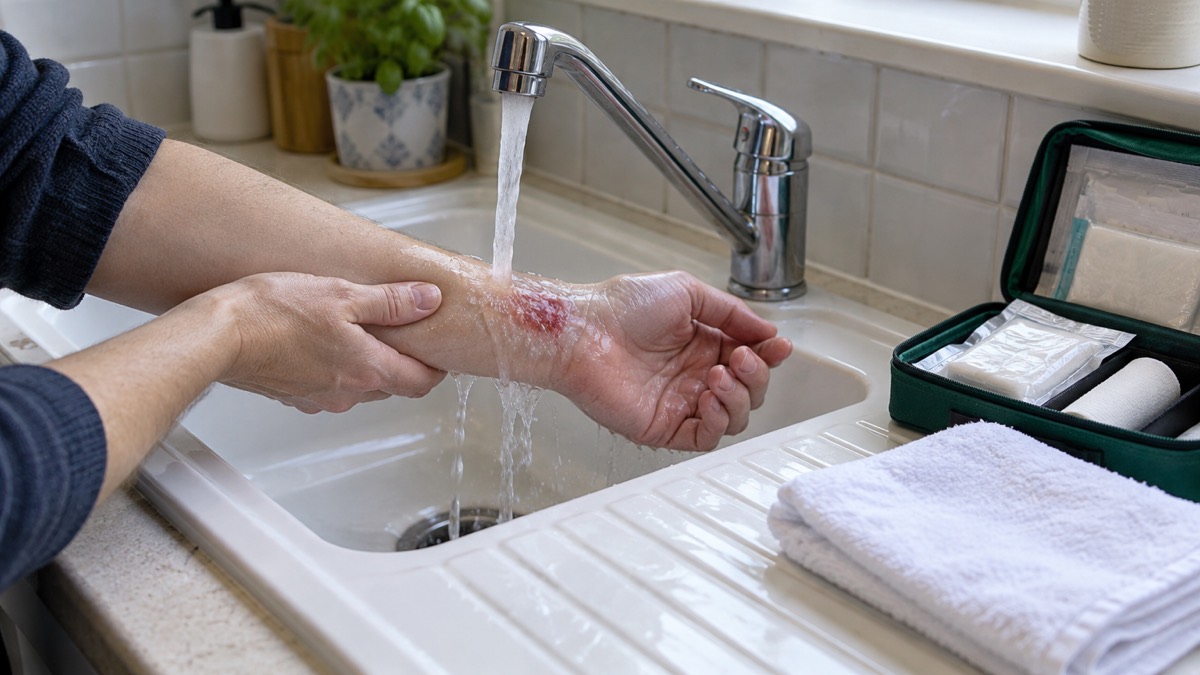
Once any bleeding has stopped, clean the wound well before covering it1. Washing with water is the first step, and it is what makes the rest of the treatment safe: a wound left dirty is a wound at risk of infection, and NHS inform lists a wound that is still dirty after cleaning as a reason to phone 111 or contact your GP practice urgently1.
If you use alcohol-free wipes from your first aid kit, use them carefully. NHS 111 Wales advises that to avoid introducing an infection, you should only wipe the wound once before disposing of the wipe, then use a new wipe and repeat if necessary5. Wiping back and forth with the same wipe moves dirt and bacteria back across the wound you have just cleaned, which is why the wipe goes in the bin after a single pass. A household first aid kit can also include antiseptic lotion or saline for cleaning wounds, along with cotton wool17.
For a wound with a lot of bleeding, the NHS advises pressing firmly on the wound with a clean cloth or your fingers; if an object is embedded, press around the edges rather than directly on it18. Cleaning comes after the bleeding is under control, because holding a clean pad on the wound is itself part of keeping it clean. If the wound has soil, pus or body fluids in it, or is still dirty after your best cleaning, that is the point to stop and phone 111 rather than cover it up and hope1.
Plaster or sterile dressing: which one the wound needs
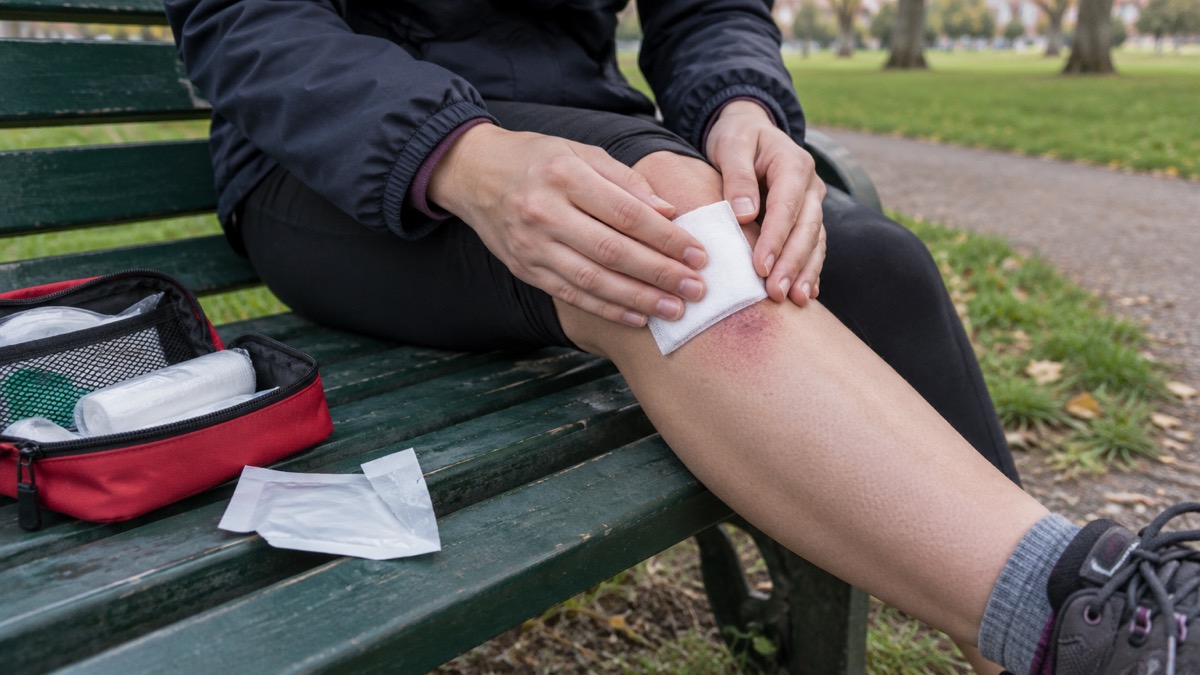
Always cover a wound with a dressing to help prevent infection19. The choice between a plaster and a sterile dressing comes down to size and severity, and the rule is simple: a plaster for a small wound, a sterile dressing for a larger one.
NHS 111 Wales describes a cut as a wound in which the skin is fully broken5. Whatever the size of the wound, the choice of covering follows its size: sterile dressing pads, which come in a variety of sizes with a bandage attached, are used to cover most common wounds whenever a plaster is too small, and larger injuries should be covered with a sterile dressing to prevent infection until treatment can be given by a healthcare professional. A household kit can hold both kinds: fabric plasters and waterproof plasters for the small wounds, and sterile wound dressings, sterile eye pads and sterile pads for the larger ones20.
Larger injuries should be covered with a sterile dressing to prevent infection until treatment can be given by a healthcare professional21. Sterile dressing pads come in a variety of sizes and have a bandage attached to them, and they are used to cover most common wounds whenever a plaster is too small5. Dressing pads with roller bandages are quick to apply and useful in emergency care, which makes them some of the most practical options for a home kit20. A full household kit can also include a sterile wound dressing, a sterile eye pad and a sterile pad alongside the plasters20.
| Dressing type | What it is for | How it is used |
|---|---|---|
| Plaster (fabric or waterproof) | Small wounds, once washed with water and padded dry5 | Stick directly over the clean, dry wound |
| Sterile dressing pad with bandage | Most common wounds whenever a plaster is too small5 | Cover the wound, secure with the attached bandage |
| Sterile wound dressing | Larger injuries, to prevent infection until treatment21 | Cover and seek medical advice if the wound is severe |
| Gel blister plaster | Cushions the area and prevents further rubbing while healing20 | Stick over the blister |
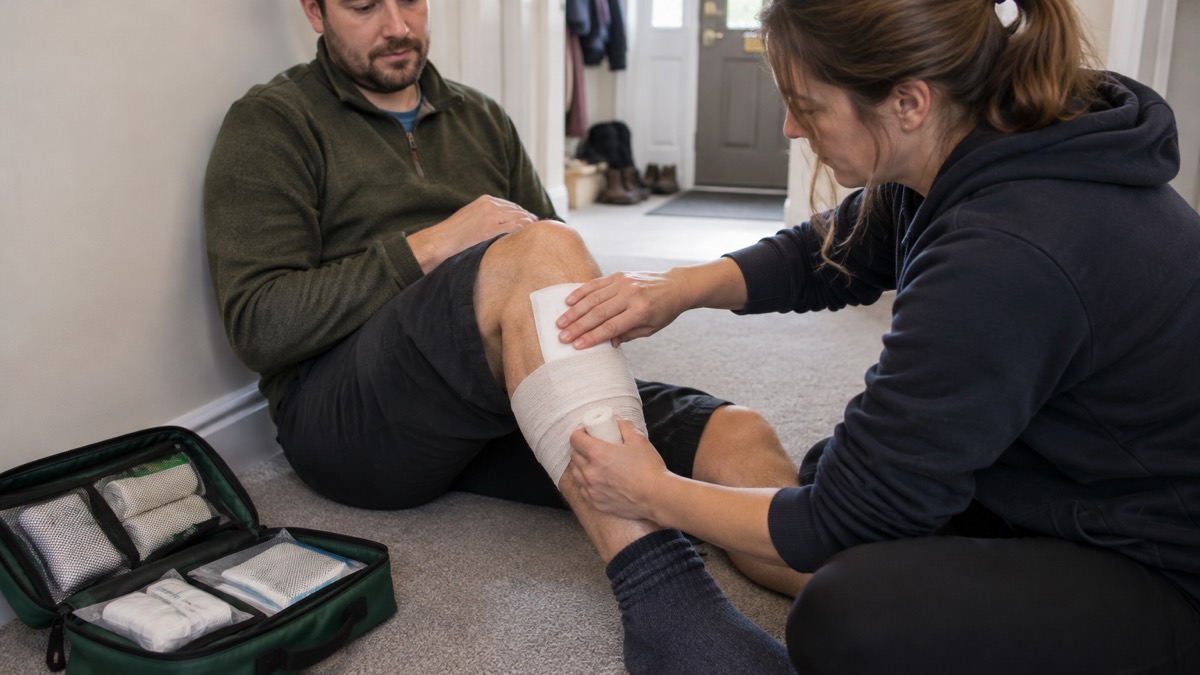
Two safety points from the St John Ambulance advice published by the NHS on applying dressings and bandages. Never wrap tape all the way around the injured part, as this could reduce the blood flow; if you need to maintain pressure to control bleeding, use a roller bandage instead19. And when bandaging, start from the front and injured side of the casualty, and apply the bandage firmly but not so tight that it restricts circulation22. A bandage that numbs or discolours the limb below it is too tight and should be re-applied more loosely.
If blood soaks through a dressing, add another on top
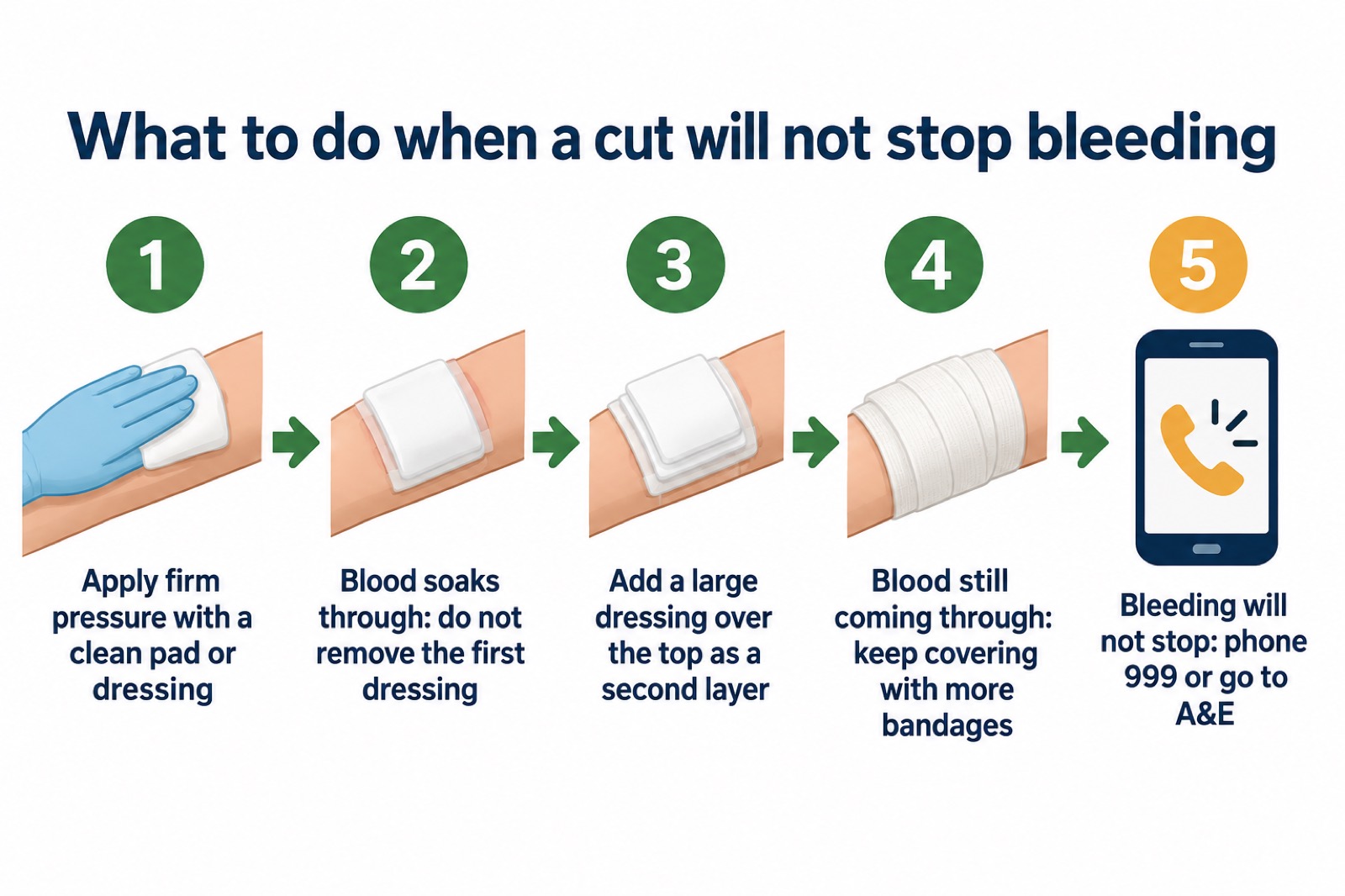
If blood soaks through a dressing, do not remove it. Apply a large dressing over the top as a second layer5. This is the rule that feels least intuitive, because the instinct is to take off a soaked dressing and start again, but removing it disturbs the clot that is forming underneath and can restart the bleeding.
The North West Ambulance Service gives the same instruction in its first aid guidance for heavy bleeding: if blood is still coming through the first bandage, keep covering it with more bandages7. Each layer you add maintains pressure on the wound while protecting the clotting that has already begun. Bleeding that soaks through one bandage after another is heavy bleeding by definition, and it is not a wound to keep managing at home: keep the pressure on and get the casualty medical help rather than continuing to add layers indefinitely7.
The sequence, then, is: apply pressure with a clean pad or dressing and keep doing this until the bleeding stops8; if blood comes through, add another layer on top without removing the first5; and if the bleeding will not stop, phone 9991. If the person shows signs of shock, such as pale, clammy skin, treat the bleeding you can see and reassure them while help comes10.
Pain relief in the first few days
If the wound is painful for the first few days, you can take pain relief such as paracetamol or ibuprofen1. Many common illnesses and injuries can be treated at home with rest, painkillers such as paracetamol or ibuprofen, and basic first aid13, and a small wound that aches for a couple of days while it starts to heal is firmly in that category.
The one firm rule is aspirin. Do not give aspirin to children under 161. The same instruction appears in official guidance on burns and scalds: children under 16 years of age should not be given aspirin23. For children, give paracetamol or ibuprofen if they are distressed or uncomfortable, checking the packaging or leaflet to make sure the medicine is suitable, or speak to a pharmacist or GP if unsure24. There are special child versions of pain relievers available, so always read the label and follow the instructions for use very carefully17.
Keep the pain in perspective as a signal, too. A cut that is getting more painful rather than less, especially if it is also swollen and red, is showing signs of infection and needs a call to 111 or your GP practice rather than another dose of painkillers1.
Most cuts start to heal in a few days
Most cuts and grazes treated at home will start to heal in a few days1. That is the expected course for a wound you have cleaned and covered properly, and it gives you a baseline for judging whether things are going right. A wound that is settling should hurt less each day, not more.
The signs that the healing is not going to plan are the infection signs in the NHS inform guidance: a cut that is swollen, red and getting more painful, or has pus1. Add to those a wound that is still dirty after cleaning, a wound with soil, pus or body fluids in it, and feeling generally unwell or having a high temperature after cutting yourself, and the instruction is to phone 111 or contact your GP practice urgently1. A wound infection that is caught early is usually straightforward to treat; the danger is leaving it because it seems like a small cut, which is why the "getting more painful" test matters more than the size of the wound.
Keep the wound covered while it heals. Always cover a wound with a dressing to help prevent infection19, and change the plaster or dressing if it becomes soaked, dirty or loose. If at any point the bleeding returns and will not stop, you are back to the 999 or A&E list1.
Bites: always get advice
Bites are treated differently from ordinary cuts because of infection risk. NHS inform's guidance is to phone 111 or contact your GP practice urgently if you were bitten by a person or a wild or stray animal1. Berkshire Healthcare NHS Foundation Trust advises for dog bites: clean the wound and seek medical advice, contact NHS 111 if you are concerned about the injury, and seek urgent medical attention for severe wounds, heavy bleeding, signs of infection, or bites to the face, hands, feet or head25.
Independent first aid guidance adds that if there may still be objects such as teeth, hair or dirt in the wound, you should seek medical assistance or contact 111, and that you should go to A&E if the wound is large or deep, or if you cannot stop the bleeding. So the first steps are the same as for any cut, clean the wound and control the bleeding, but the decision to get medical advice is made for you, not left to judgement. Our page on bites and stings covers insect, dog and other animal bites in more detail.
What to keep in a first aid kit for wounds
A well-prepared first aid kit can help treat minor cuts, sprains and bruises, and reduce the risk of cuts becoming infected26. For wounds specifically, the NHS guidance on first aid kits lists the dressing types worth having: fabric plasters, waterproof plasters, a sterile wound dressing, a sterile eye pad, a sterile pad, and dressing pads with roller bandages20. Gel blister plasters are worth adding for blisters, as a gel-based adhesive wound dressing cushions the area and prevents further rubbing while healing20.
The nidirect guidance for Northern Ireland suggests a household first aid kit could include plasters, bandages, safety pins or tape, pain relievers such as paracetamol or aspirin, a medical spoon or syringe for giving babies and children their medicines, antiseptic lotion or saline for cleaning wounds, cotton wool, a thermometer, tweezers for splinters, sharp scissors, sun block of factor 25 or higher for children, and child insect repellelent17. Remember the aspirin rule above: paracetamol or ibuprofen are the painkillers to use for children under 16, never aspirin1.
For a kit aimed at babies and young children, NHS 111 Wales advises including sticking plasters in a variety of sizes for minor cuts, blisters and sore spots, adhesive tape, crepe bandages, tubular bandages, triangular bandages, and sterile gauze dressings27. A variety of plaster sizes matters more than it sounds: a plaster that is too small for a wound does not cover its edges, and one that is far too large on a fingertip peels off within the hour.
- Plasters in a variety of sizes, fabric and waterproof20
- Sterile wound dressing, sterile pad and sterile eye pad20
- Dressing pads with roller bandages, for wounds too big for a plaster5
- Safety pins or tape to secure dressings17
- Antiseptic lotion or saline for cleaning wounds, and cotton wool17
- Tweezers for splinters and sharp scissors17
- Pain relief: paracetamol or ibuprofen, with child versions, never aspirin for under 16s1
Our page on first aid kits for the home covers choosing and stocking a full kit, and dressings, bandages and plasters explains what each type is for.
Sources (27)
- Cuts and grazes, NHS inform, 2026-07-31
- When to call 999, South Western Ambulance Service NHS Foundation Trust, 2026-10-29
- When should you call 999?, Scottish Ambulance Service, 2026-10-29
- Severe bleeding first aid, NHS inform, 2026-07-24
- First aid kit, NHS 111 Wales, 2021
- NHS 24 111 service, NHS 24, 2026-02-09
- Heavy bleeding: what to do when someone is hurt, North West Ambulance Service NHS Foundation Trust, 2025-03-13
- First aid facts leaflet, North West Ambulance Service NHS Foundation Trust, 2019-04
- How to do a primary survey, NHS inform, 2026-07-24
- Shock first aid, NHS inform, 2026-07-24
- What to do if your child has an accident, NHS, 2025-12-18
- Using 999, East of England Ambulance Service NHS Trust, 2026-10-28
- Alternatives to 999, South Central Ambulance Service NHS Foundation Trust, 2026-10-29
- Right care, right place, NHS 24, 2023-10-30
- NHS 111 online, NHS Digital, 2026-10-29
- Heavy bleeding emergency advice, North West Ambulance Service NHS Foundation Trust, 2019-04-25
- First aid, nidirect, 2025-12-04
- Safety and accidents in pregnancy, NHS 111 Wales, 2023-05-17
- How do I apply plasters and other dressings?, NHS, 2025-04-28
- What should I keep in my first aid kit?, NHS, 2026-10-25
- Keep well stocked medicine cabinet at home, NHS Black Country Integrated Care Board, 2026-10-28
- How do I apply a bandage?, NHS, 2025-04-28
- Burns and scalds, NHS inform, 2026-07-31
- Flu, NHS, 2026-02-03
- Child safety, Berkshire Healthcare NHS Foundation Trust, 2026-10-29
- Self care advice, NHS Birmingham and Solihull Integrated Care Board, 2026-10-28
- Safety: first aid kit, NHS 111 Wales, 2021-04-19
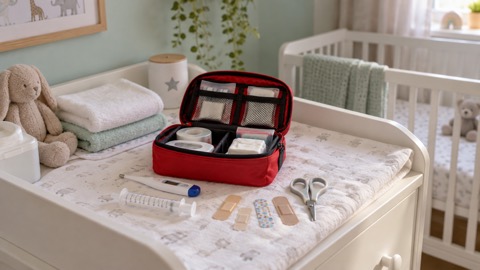 Baby and Child Kit Checklist
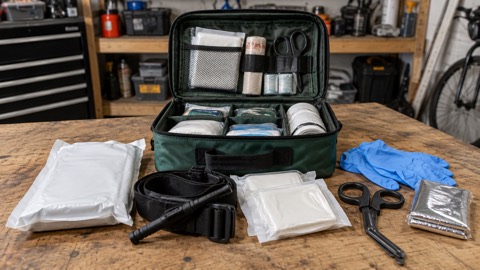 Bleeding Control Kit Checklist
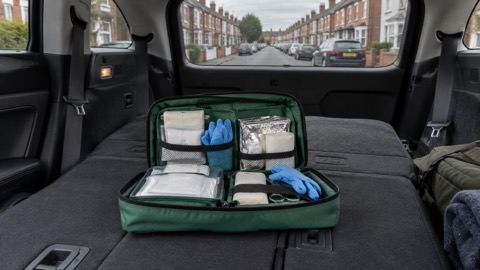 Car Kit Checklist
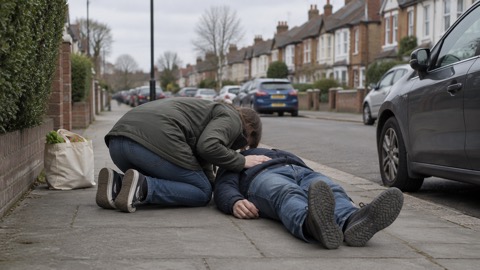 Danger, Response, Airway
 CPR Steps for Adults
 2025 Resuscitation Guidelines
 Defibrillators (AEDs)
 Public Access Defibrillators
 Choosing a Defibrillator
 The Recovery Position
 Choking First Aid
 Burns and Scalds
 Adrenaline Auto-Injectors
 Sepsis Signs to Act On
 Shock Signs and What to Do