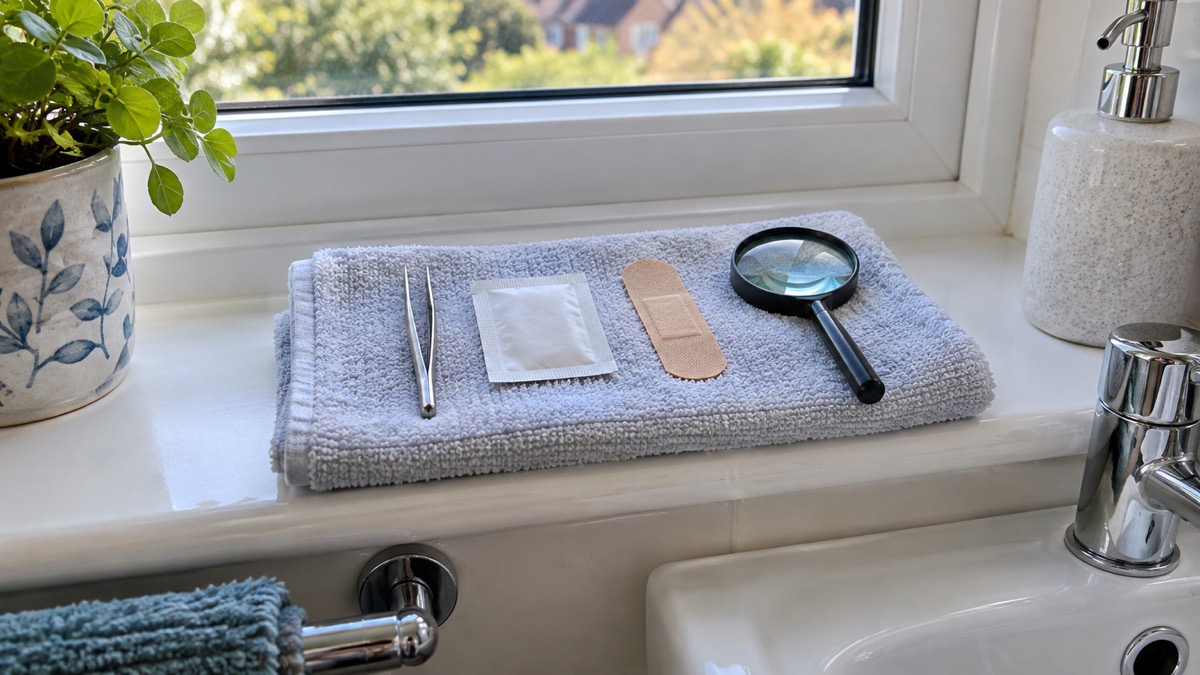
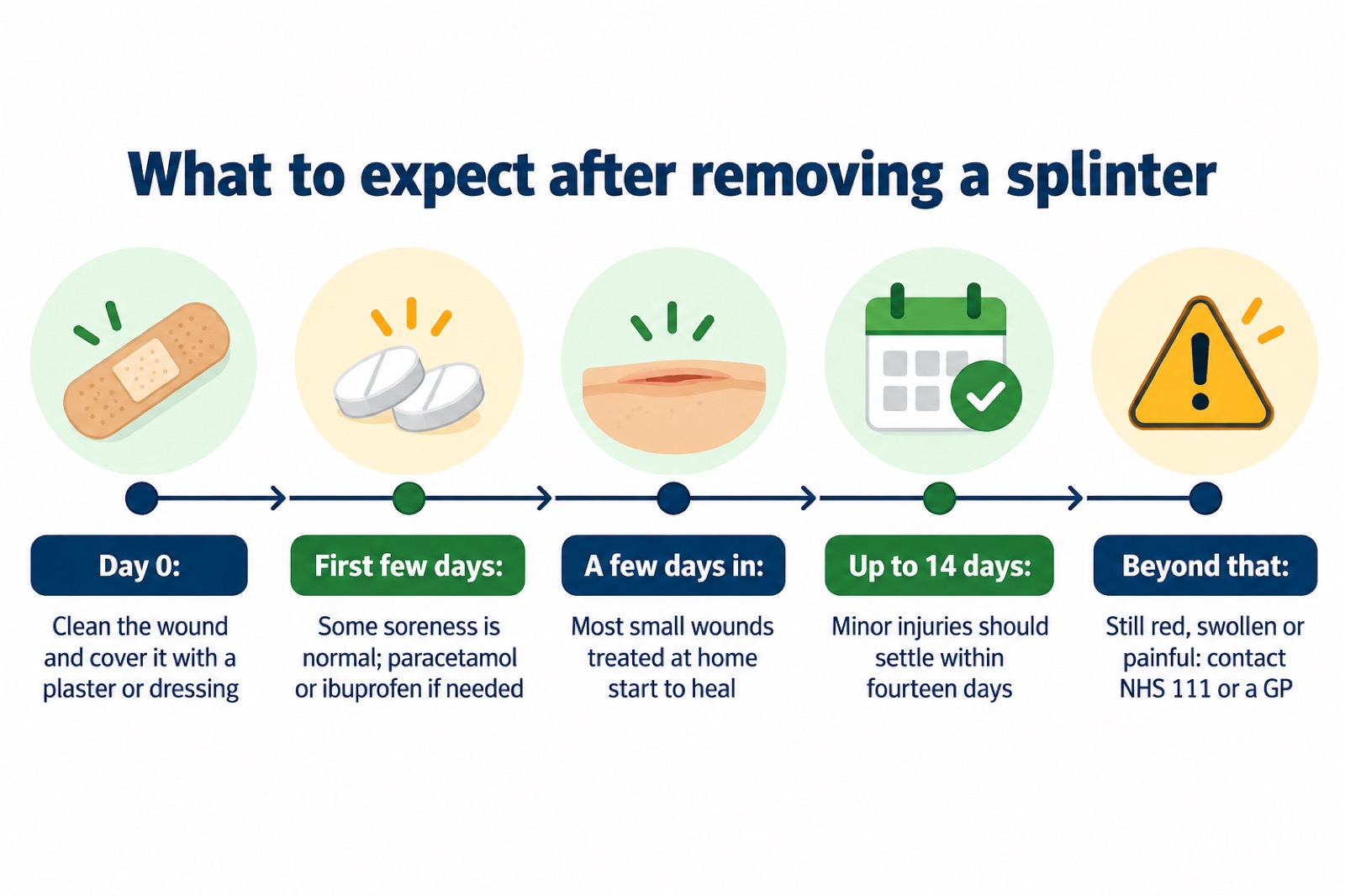
Most splinters are a nuisance rather than a danger, and a shallow one sitting near the surface of the skin can usually be taken out at home with a pair of tweezers. The St John Ambulance advice is to grasp the splinter with the tweezers as close to the skin as possible and draw it out in a straight line, keeping it at the same angle as it went into the skin1. Clean the spot afterwards and cover it with a plaster or dressing to help prevent infection2.
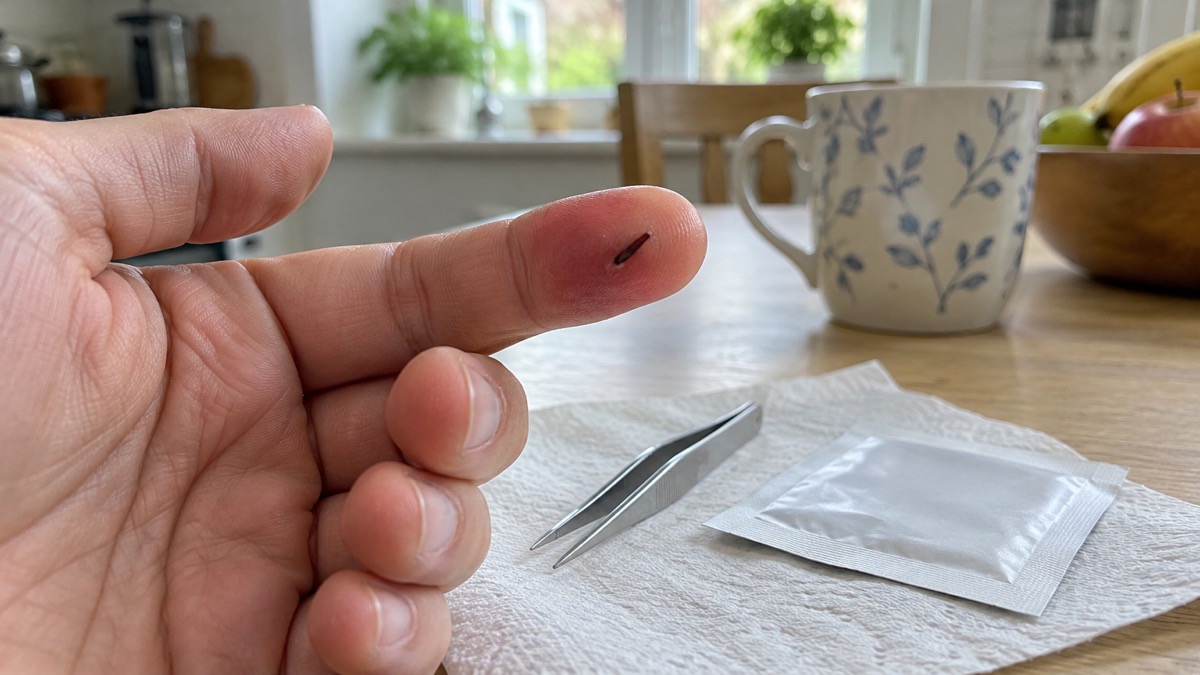
The important exception is a splinter that is deep in the skin. That can be difficult to remove and should be left in place, with the person advised to seek medical help1. Trying to dig out something deeply embedded risks pushing it further in and making any bleeding worse, which is why official first aid guidance for wounds says not to try to take out something stuck in a wound and not to press down on it2.
Once the splinter is out, treat the spot like any small cut: stop any bleeding, clean the wound well, and cover it with a plaster or dressing2. Most cuts and grazes treated at home will start to heal in a few days2. If the site becomes red, swollen, more painful or starts leaking pus, contact NHS 111 or a GP surgery1.
Taking out a splinter that sits near the surface
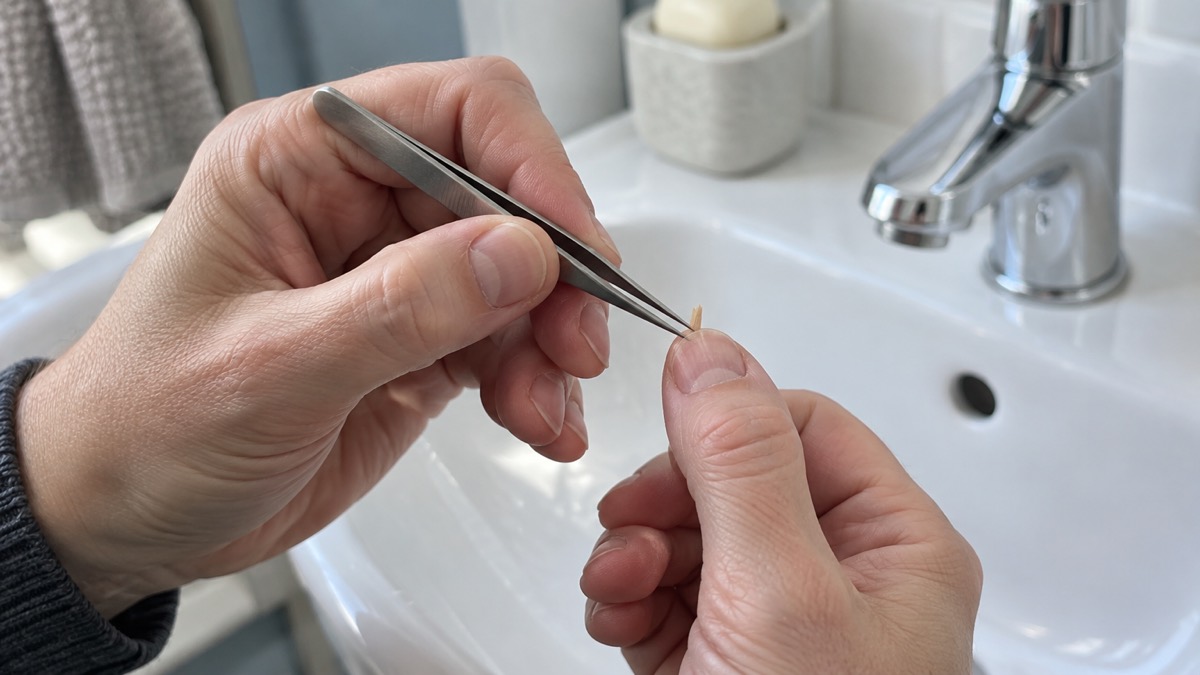
A splinter you can see clearly, with one end showing above the skin, is the kind you can deal with yourself. Wash your hands first, then use a clean pair of tweezers. The technique matters more than the tool: grip the splinter as close to the skin as you can get, and pull it out in a straight line rather than at an angle, keeping the same line it followed going in1. Pulling sideways or twisting can snap it and leave a fragment behind.
Tweezers earn their place in a household medicine cabinet for exactly this job. NHS guidance on stocking a medicine cabinet lists tweezers for taking out splinters, and notes that if splinters are left in they can cause discomfort and could become infected4. That is the reason to remove a shallow one cleanly rather than leave it to work its way out.
If the splinter is under a fingernail but still near the surface, the same tweezer method applies. If it is deep under the nail, or deep in the pad of a finger or foot, it falls into the "leave it and seek medical help" category1. Do not use a needle, pin or scissors to dig for it: that is not in any of the official guidance, and it turns a small problem into a wound.
Leave a deeply embedded object in place and press either side of it
A splinter is a small embedded object, and the rules for embedded objects in wounds are firm and consistent across the UK's first aid guidance. Do not try to remove an object embedded in a wound, because it may be helping to plug the hole and stop the blood flow; instead, apply pressure around it6. NHS inform's severe bleeding guidance says the same: do not try to remove the object, and apply pressure either side of the embedded object to control the bleeding7.
For a cut with something stuck in it, NHS inform's cuts and grazes advice adds a detail worth knowing: do not press down on the object, but press firmly either side of it to push the edges of the wound together2. The NHS advice for children says the same for an object like a piece of glass, because removing it can make the bleeding worse; press around the edges rather than directly on it8.
So the test is simple. If the splinter is sitting proud of the skin and will come away with a gentle straight pull, take it out. If it is buried, if it is in a place you cannot see properly, or if pulling it would mean digging, leave it where it is, press either side if it is bleeding, and get it looked at1.
Clean the wound and cover it
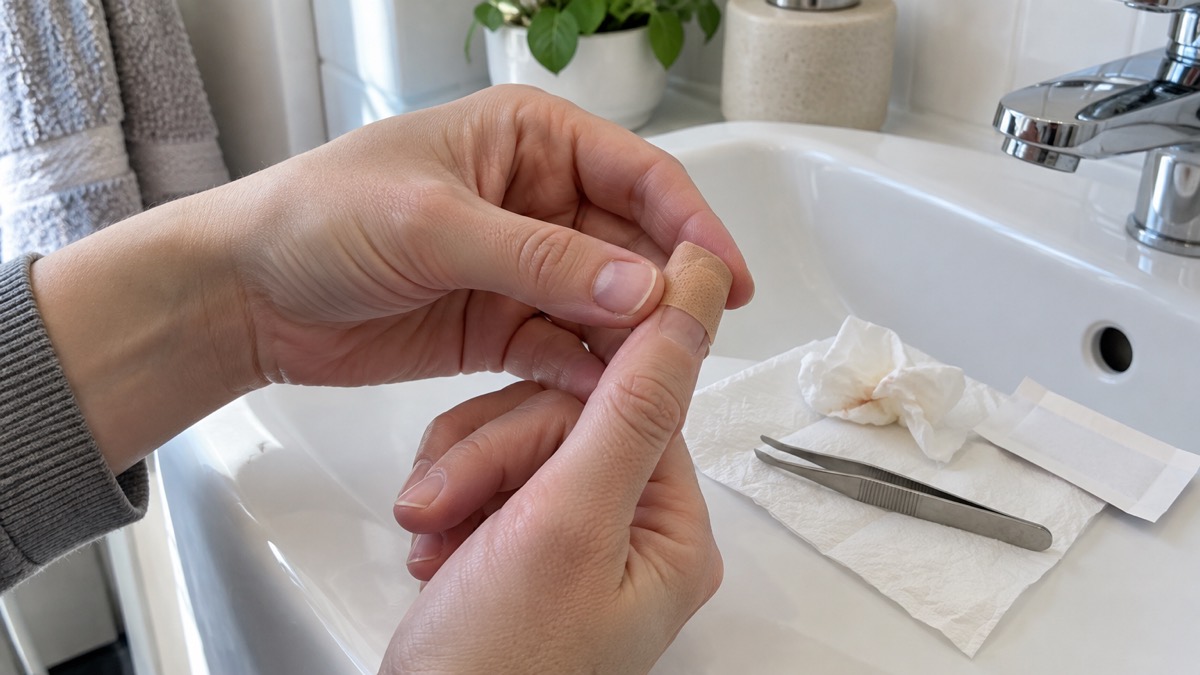
Once the splinter is out, the spot is an open wound, however small, and it should be treated like one. The standard advice is to stop any bleeding, clean the wound well, and cover it with a plaster or dressing to help prevent infection2. For a small bleed, firm pressure with a dressing or a clean, non-fluffy cloth such as a tea towel or flannel will usually settle it; if you have no clean cloth, use your fingers8.
If bleeding soaks through whatever you are pressing with, remove it and replace it with a fresh one, keeping firm pressure on the wound6. Do not keep lifting the original to check.
Keeping the spot clean and covered matters more than usual if your hands are going to be in water, soil or mess. Public Health Wales advises keeping any open cuts or sores clean and dry, and says waterproof plasters and bandages can help9. Derbyshire County Council's flood clean-up guidance says to cover open cuts and wounds on exposed skin with a waterproof plaster10. The same logic applies to gardening, DIY and any dirty job: a covered splinter site is a protected one.
When to phone 999 or go to A&E
A splinter alone rarely needs an emergency response, but the wound it leaves can. NHS inform's cuts and grazes guidance says to phone 999 or go to A&E if you have a cut and cannot stop the bleeding, if blood comes out in spurts and is bright red and hard to control, if you lose feeling near the wound or have trouble moving it, if you have a bad cut on your face or the palm of your hand, if the wound is very large or deep, or if there is something stuck in the cut2.
That last point is the one that catches people out. Something stuck in a cut that you cannot safely remove is an A&E matter, not a kitchen table matter2. Severe bleeding is listed among the reasons to call 99911.
For burns and scalds, the threshold is different again: phone 999 or go to A&E if a burn or scald is very large or deep, is on the face, genitals or bottom, or has been caused by an acid or chemical, or by electricity12. These are not splinter scenarios, but they are the kind of household injury that arrives alongside one, and the same principle holds: a wound that is large, deep, dirty or not stopping bleeding needs more than a plaster.
If you are unsure whether a problem is an emergency, NHS 111 online can point you to the right service. Depending on what you need, it may advise calling 999 or going to A&E in an emergency, going to an urgent treatment centre, seeing an out-of-hours GP, booking a callback from a nurse, contacting your own GP surgery, or seeing a pharmacist13. In an emergency, go to A&E immediately or call 99914.
Pain relief for the first few days, and the aspirin rule for children
A splinter site can be sore for a day or two, especially if it was deep or in a fingertip. If the wound is painful for the first few days you can take pain relief such as paracetamol or ibuprofen2. Many common injuries can be treated at home with rest, painkillers such as paracetamol or ibuprofen, and basic first aid11.
The rule that matters most is about children. Do not give aspirin to children under 162. NHS guidance is consistent on this: aspirin must not be given to children under 163, and it should not be given to children under 16 unless a doctor has prescribed it3. The same warning appears in first aid guidance for burns and scalds, which states that children under 16 years of age should not be given aspirin16.
For children, use paracetamol or ibuprofen instead, and always read the label and follow the instructions for use very carefully, noting that special child versions are available3. If you are unsure about a dose for a child, ask a pharmacist.
| Situation | What to do |
|---|---|
| Painful wound, adult | Paracetamol or ibuprofen if needed for the first few days2 |
| Painful wound, child | Paracetamol or ibuprofen; never aspirin under 16 unless prescribed2 |
| Unsure about a medicine | Read the label carefully; special child versions exist17 |
Signs of infection, and when to see a GP
The main reason to take a splinter out properly is to avoid infection. Signs of infection include redness, swelling, increased pain, or leaking pus1. If the site appears to become infected, contact NHS 111 or a GP surgery1.
There is a second set of reasons to seek medical attention for a wound, separate from the 999 list. Seek medical help if a wound won't stop bleeding, a foreign object is embedded in the wound, the wound is from a human or animal bite, you think the wound might be infected, or you are unsure whether the casualty has been immunised against tetanus2. Signs of infection include redness, swelling, increased pain, or leaking pus2. A splinter from a garden or a building site can carry soil into the skin, so the risk of infection is worth watching for.
For anything that is not an emergency, make an appointment with your GP if you are feeling unwell, for example with ear ache or back pain18. Make an appointment for an illness or injury that will not go away, including persistent vomiting, ear pain, stomach ache or back ache, contacting the surgery online, by app or by phone14. If your GP surgery is closed and you need urgent advice, call NHS 11119.
How long a small wound takes to heal
Most small wounds treated at home start to heal in a few days2. Minor injuries may cause some discomfort for the next few days but should disappear within fourteen days20. If a splinter site is still painful, red or swollen well beyond that, it is worth getting it looked at rather than waiting longer.
For comparison, small burns and scalds can often be treated at home and can take around 2 weeks to heal12, and minor burns normally heal in around 14 days and leave little scarring16. A splinter wound should be quicker than that, which makes a slow-healing site a signal to seek advice.
Bites and stings that need more than a plaster
A splinter is a puncture from a piece of wood, metal or glass. A bite or sting is a puncture from something living, and the advice differs. A wound from a person or a wild or stray animal needs urgent medical attention even if it looks minor, so contact NHS 111 or your GP practice2. Clean it well and cover it first2.
Insect stings have their own first aid. A bee will usually leave behind a stinger attached to a venom sac, and it should be removed quickly using a scraping motion with a hard-edged card such as a debit card21. Wasps do not leave their stinger and can sting again; clean the area with soap and water, apply an ice pack wrapped in cloth or a wet cloth for a few minutes, use an age-appropriate antihistamine and apply calamine lotion21.
If a sting or bite is followed by swelling of the face or throat, difficulty breathing or a rash, that is a different emergency and needs 999. For more on bites and stings, see Bites and Stings: Insects, Dogs and Other Animals.
Keeping the right kit to hand
You do not need much to deal with a splinter: a pair of tweezers, something to clean the skin, and a plaster. Tweezers are listed in NHS medicine cabinet guidance specifically for taking out splinters4. A well-stocked medicine cabinet also covers the aftermath: painkillers such as paracetamol or ibuprofen, plasters and dressings, and a thermometer for checking for a high temperature4.
| Item | What it does for a splinter |
|---|---|
| Tweezers | Grips the splinter close to the skin so it can be drawn out in a straight line1 |
| Plaster or dressing | Covers the cleaned wound to help prevent infection2 |
| Waterproof plaster | Keeps the site covered during dirty or wet jobs9 |
| Paracetamol or ibuprofen | Eases soreness in the first few days2 |
| Antihistamine and calamine lotion | For insect stings rather than splinters21 |
For a fuller list, see First Aid Kits for the Home: Contents and How to Choose and Cuts, Grazes and Wounds: Cleaning and Dressing at Home. If you are dealing with a wound that is bleeding heavily or has something larger stuck in it, Should You Remove an Object Stuck in a Wound? and How to Stop Severe Bleeding cover the steps in more detail.
Sources (21)
- Splinter first aid advice, St John Ambulance, 2026
- Cuts and grazes, NHS inform, 2026
- What to keep in your Medicine Cabinet :: Hertfordshire and West Essex Healthier Together, Hertfordshire and West Essex Healthier Together (NHS)
- The family medicine chest, NHS Vale of York and Scarborough and Ryedale ICB, 2026
- Keep a well stocked medicine cabinet at home, NHS Black Country ICB, 2026
- First aid for a baby or child who is bleeding heavily, British Red Cross, 2026
- Severe bleeding first aid, NHS inform, 2026
- What to do if your child has an accident, NHS, 2025
- Flooding and health, Public Health Wales, 2026
- Cleaning up and returning home after flooding, Derbyshire County Council, 2026
- Alternatives to 999, South Central Ambulance Service, 2026
- Burns and scalds, NHS, 2026
- NHS 111 online, NHS Digital, 2026
- Using 999, East of England Ambulance Service, 2026
- In an emergency, Medway NHS Foundation Trust, 2026
- Burns and scalds, NHS inform, 2026
- First aid, nidirect, 2025
- When to call 999, South Western Ambulance Service, 2026
- Poisoning, NHS Frimley Healthier Together, 2026
- Minor injuries, North West Ambulance Service, 2025
- Staying safe over the summer, NHS Healthier Together, 2026
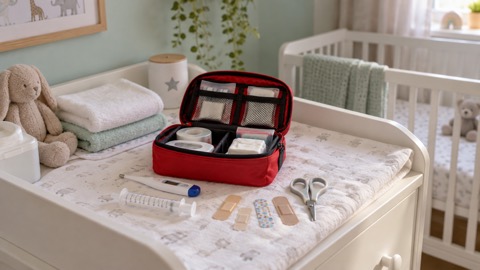 Baby and Child Kit Checklist
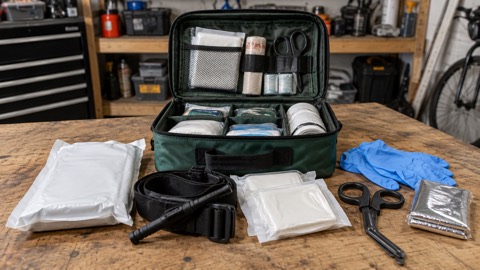 Bleeding Control Kit Checklist
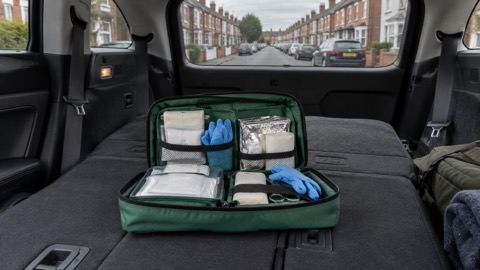 Car Kit Checklist
 CPR on a Baby
 CPR on a Child
 Chest Compression Rate and Depth
 Rescue Breaths or Hands-Only CPR
 Checking Breathing
 Agonal Breathing and CPR
 Breathing During CPR
 Recovery Position and Spine
 Cardiac Arrest vs Heart Attack
 Heart Attack First Aid
 Defibrillator Pad Placement
 Defibrillator on a Child