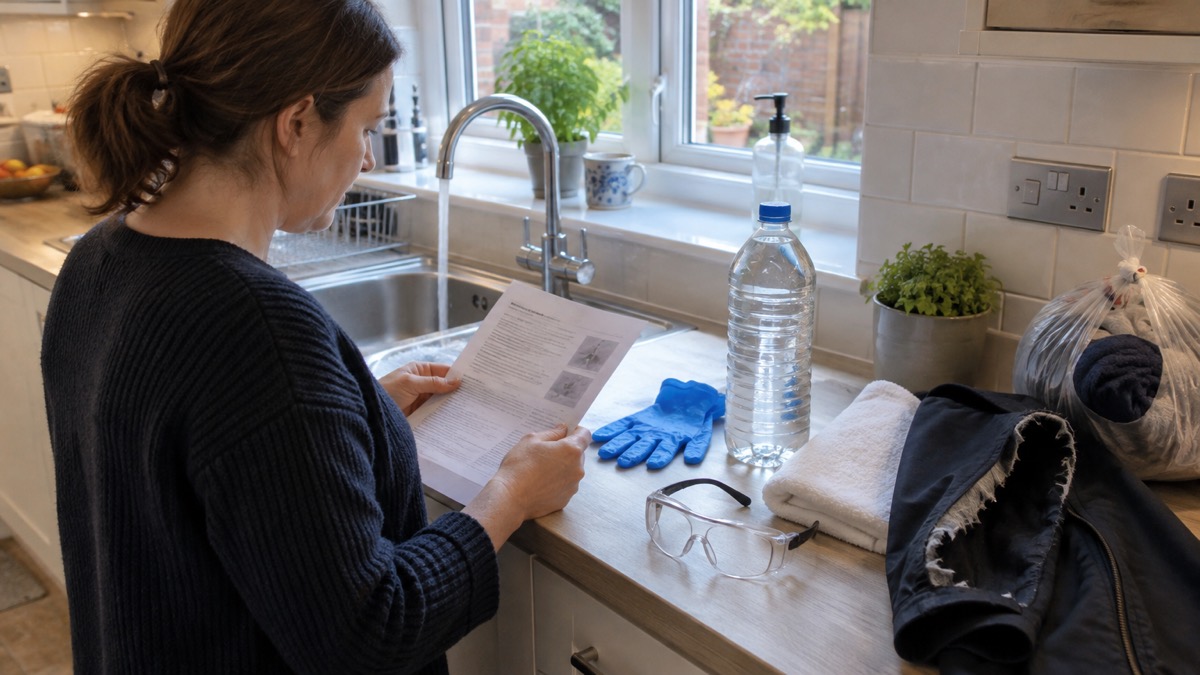
If someone has been splashed with acid or another corrosive substance, the first minutes decide how much damage is done. The official advice is short and it is repeated three times: REMOVE. REMOVE. REMOVE. Remove yourself or the casualty from the immediate area, remove any affected outer clothing, and remove the substance from the skin, rinsing continually with water if the skin is itchy or painful1. Then call 9993.
This applies whether the exposure was deliberate or accidental. ProtectUK, the police's own advice service, says to follow the REMOVE advice if you think you have been attacked with a corrosive or acidic substance, and the national Prepare campaign gives the same steps for any hazardous materials incident1. You do not need to identify the substance before you act.
The single most useful thing in most homes is running water. NHS guidance for an acid or chemical burn is to dial 999, carefully try to remove the chemical and any contaminated clothing, and rinse the affected area using as much clean water as possible3. For the eye, flush immediately with clean, cold water for at least 20 minutes6.
What to do straight away: REMOVE, REMOVE, REMOVE
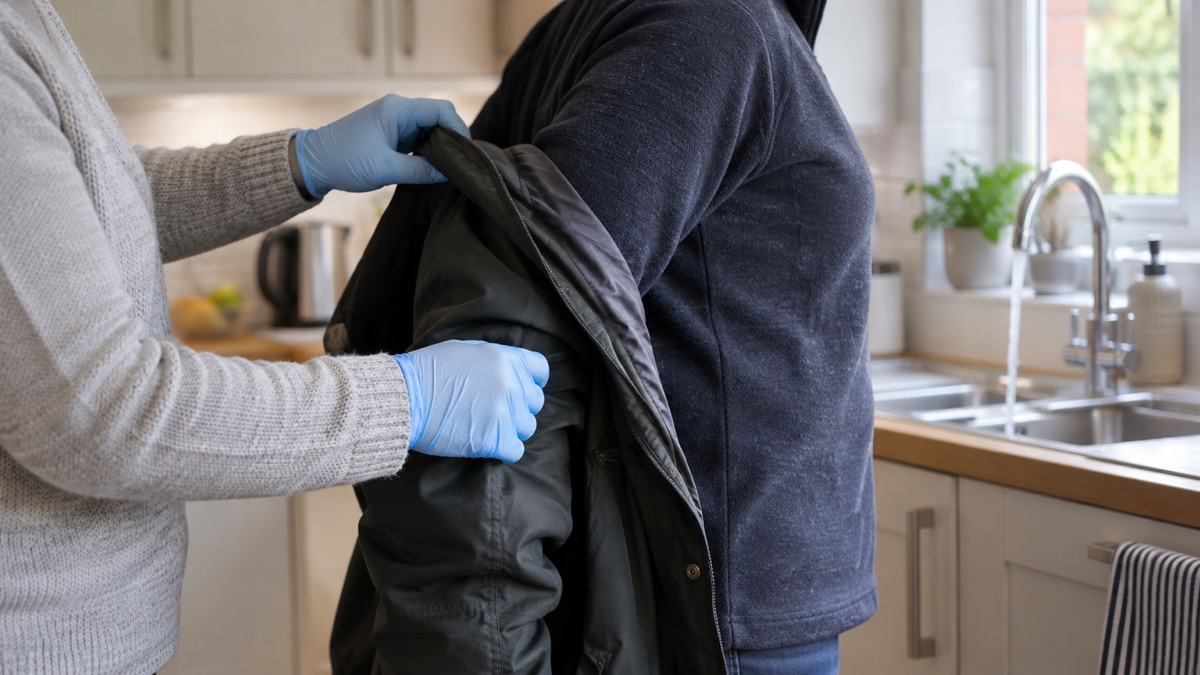
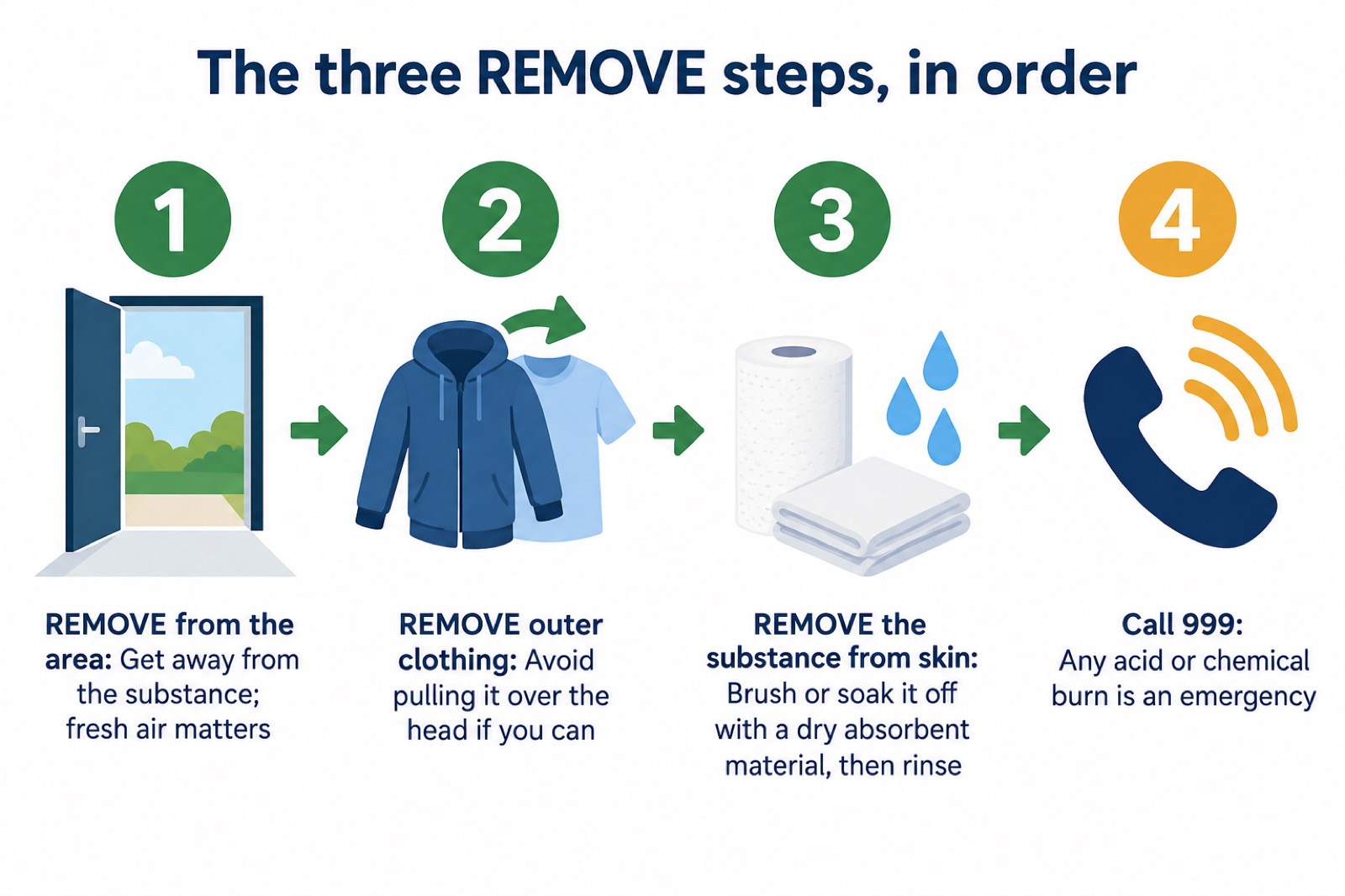
The three REMOVE steps are set out in order by the police's ProtectUK guidance and repeated by local resilience teams. The first is to remove yourself from the immediate area to avoid further exposure to the substance, because fresh air is important. If the skin is itchy or painful, find a water source2. The second is to remove outer clothing if it has been affected, trying to avoid pulling clothing over the head if possible2. The third is to remove the substance from the skin using a dry absorbent material to either soak it up or brush it off, and to rinse continually with water if the skin is itchy or painful2.
The national Prepare campaign, run through the government's preparedness site, summarises the same sequence as "the remove, remove, remove advice": remove yourself from the immediate area, remove outer clothing if affected, and remove the substance from skin using a dry absorbent material, rinsing continually with water if the skin is itchy or painful5.
Notice the order. You get away from the source first, then get the soaked clothing off, then deal with what is on the skin. Doing it the other way round means you keep exposing yourself and the casualty while you work.
Remove contaminated clothing safely
Clothing holds the substance against the skin and keeps burning. NHS guidance for chemical burns is to remove contaminated clothing carefully to prevent further exposure8, and burns first aid guidance is to remove any burnt or contaminated clothing9. The word that matters is "carefully": rough handling spreads the substance and damages skin that is already injured.
There is one firm rule. Do not pull off any clothing stuck to the skin, as it may damage that skin; a trained medical professional will remove it when it is safe to do so2. The same principle appears in NHS burns advice, which says to remove clothing or jewellery near a burn but not to move anything that is stuck to the skin10.
Where the clothing has to come off, take it off in a way that avoids dragging it across the face. ProtectUK's second step is to try to avoid pulling clothing over the head if possible2, and asbestos decontamination guidance from Public Health Wales gives the same instruction: remove any contaminated clothing, not over the head, and place it in a bag11.
- Cut or open the garment rather than pulling it over the head where you can.
- Bag it. Put removed clothing into a bag so the substance does not transfer to skin, floors or other people11.
- Keep it. Do not throw it away; tell the ambulance crew you have kept it.
- Leave anything stuck. A medical professional will deal with it2.
Rinse with plenty of water until help arrives
Water dilutes and washes away what is left on the skin. NHS guidance for an acid or chemical burn is to rinse the affected area using as much clean water as possible3, and the REMOVE advice is to rinse continually with water if the skin is itchy or painful2. Keep going until the ambulance crew take over. There is no need to wait for a special solution: ordinary clean water is what the guidance names.
If the substance is dry rather than liquid, brush or soak it off with a dry absorbent material first, then rinse2. Brushing a powder or paste straight into wet skin can spread it.
For the eye, the advice is specific. Flush your eye immediately with clean, cold water for at least 20 minutes, then lightly cover the eye to stop yourself from rubbing it6. Keep the eyelid open under gently running water and do not rub.
Protecting yourself while you help
You cannot help anyone if you become a casualty too. NHS poisoning first aid guidance is explicit: if the casualty is contaminated with chemicals, wear protective gloves, goggles or a mask14. Put them on before you touch the person or their clothing if you possibly can.
Think about the route the substance takes. It transfers from clothing to your hands, from your hands to your face, and from a wet floor to your shoes and then your home. If the casualty is contaminated with chemicals, wear protective gloves, goggles or a mask15. If gloves are available, put them on before you treat them16, and if someone else is on hand and wearing protective gloves, they can remove contaminated clothing while you carry on cooling the burn6.
- Gloves, goggles, mask before contact with a contaminated casualty14.
- Stand clear of pools and splashes on the ground.
- Bag contaminated clothing rather than dropping it11.
- Wash your own hands afterwards, and change any clothing of yours that got splashed.
While you wait, reassure the casualty and cover them to keep them warm17. If they show signs of shock, treat any injuries you can see that could be causing it, for example severe bleeding, and reassure them that you will help18. Keep talking to them calmly; the waiting is often the hardest part for the person who has been hurt.
When to call 999 and what to tell them
Call 999 for any acid or chemical burn3. NHS guidance for chemical burns is to call 999 for emergency assistance immediately8, and the same instruction appears in the acid and chemical burn advice: dial 999, remove the chemical and contaminated clothing carefully, and rinse with as much clean water as possible3. The ambulance service's own guidance lists serious injuries among the reasons to call 99919.
When you get through, the call handler needs to send the right help and warn the crew what they are walking into. Say:
- Where you are, with the full address and any landmark, and stay on the line.
- What happened: that someone has been splashed with a corrosive or acidic substance, and whether it was deliberate.
- What the substance was, if you know, and where on the body it landed, especially the face or eyes.
- What you have already done: clothing removed and bagged, rinsing started and for how long.
- How many people are hurt, including anyone else who touched the substance.
If you are facing a credible and immediate threat, fire service guidance is to call 999 immediately and ask for the police15. An attack with a corrosive substance is a crime as well as a medical emergency, and the police will need to know. Do not wait for the ambulance to arrive before you tell them.
After the first minutes
Once the casualty is in professional hands, there are a few things worth doing. Note what you saw and when, because the police will ask. If the incident happened in or near your building, report any damage to your housing provider as soon as you can so they can arrange repairs16.
For a household, the preparation is modest. Know where your spare glasses or contact lenses are, or keep them in your emergency kit, as official resilience advice recommends20. Keep a pair of protective gloves and goggles in the same place, so you can put them on without searching14. Know which tap in your home gives you the easiest, steadiest flow of water for rinsing an eye or a hand.
If the person hurt is a stranger, the same steps apply: protect yourself, remove them from the area, remove affected outer clothing, rinse, reassure, keep them warm and call 99914. You do not need to know them to start.
For the wider picture of how these incidents are handled and what else a household should know, see our guide to chemical, biological and radiological attacks and the fuller explanation of the Remove, Remove, Remove protocol. If you are caught up in any kind of attack, Run, Hide, Tell covers what to do while it is happening, and support for victims and families sets out where to get help afterwards. A well-stocked first aid kit at home makes the first minutes easier.
Sources (20)
- Chemical, biological, radiological incidents (CBR), ProtectUK
- Hazardous substance exposure, Essex Prepared
- Burns and scalds, Andaman Surgery
- Burns and scalds, Victoria Road Surgery
- Hazardous materials incident, Prepare campaign
- Poisoning and accidental swallowing, Healthier Together
- Terrorist Attack | Lancashire Resilience Forum, Lancashire Resilience Forum
- Burns prevention and tips, Mid and South Essex NHS
- Burns and scalds prevention, Healthier Together
- Burns and scalds, Cambridgeshire Community Services NHS
- Asbestos, Public Health Wales
- Swallowed something, Alder Hey Children's NHS
- What to do if your child has an accident, NHS
- Poisoning first aid, NHS inform
- Reducing arson risk, Devon and Somerset Fire and Rescue Service
- Escape plan for blocks of flats, London Fire Brigade
- Burns first aid, NHS inform
- Shock first aid | NHS inform, NHS inform
- When to call 999, South Western Ambulance Service NHS
- Be more resilient in 30 simple ways in 30 days, Scottish Borders Council
 Bomb Threat Calls
 Radiation Checklist First Hour
 Power Cut Kit Checklist
 Where to Hide in an Attack
 When Armed Police Arrive
 Young People in a Terror Attack
 Family Caught in an Attack
 Suspicious Letters and Parcels
 Reporting Terrorist Content
 Tap Water Safety
 Shelter or Evacuate
 Collecting Children at School
 Food After a Nuclear Accident
 Martyn's Law at Venues
 Sellafield Emergency Advice