Martyn's Law is the everyday name for the Terrorism (Protection of Premises) Act 2025. It is the law that asks certain public premises and events to take reasonable steps to keep the people who use them safer from a terrorist attack. The government announced the details of what it then called the Protect Duty on 19 December 2022, naming it in tribute to Martyn Hett, who was killed alongside 21 others in the Manchester Arena attack in 20171. The draft Bill was published on 2 May 20232, and the law became official in April 20251.
For a household, the practical effect is small but worth knowing. You are not being asked to do anything new when you go to a gig or a shopping centre. The duty sits with the people who run the venue. What changes for you is what you can reasonably expect to see: staff who have thought about evacuation, exits that are clear, and in some places first aid equipment designed for serious bleeding3. Your own part is the same as it has always been: pay attention to exits, evacuation routes and safety announcements when you arrive somewhere busy5.
This page explains where the law came from, what it asks of venues, what it does not do, and how to use the changes to look after yourself and the people you are with.
Martyn's Law strengthens security at public venues and events
The purpose of the law is set out plainly by the government: it will deliver the Government's manifesto commitment to strengthen the security of public premises and events across the UK1. That is the whole of its ambition. It is not a law about policing, surveillance or restricting what the public can do. It is a law about the places people gather, and about the people who run them thinking ahead.
The formal title is the Terrorism (Protection of Premises) Act 2025. ProtectUK, the police's counter-terrorism advice service, hosts a range of material related to the Act under that name, and notes that it is also known as Martyn's Law6. If you go looking for official guidance, search for either name; they lead to the same place.
The draft Terrorism (Protection of Premises) Bill, known as Martyn's Law, would, if agreed, require certain premises and events to take forward reasonably practicable mitigations2. That phrase, "reasonably practicable", is the heart of the law. It does not demand that every venue be made invulnerable, which no building can be. It asks the people responsible to look at their premises, consider what could happen, and put in place measures that are reasonable and proportionate to the risk and to the size of the place.
That is why the law is often described as a duty rather than a set of fixed rules. A village hall and a large arena will not be asked to do the same things, because what is reasonable differs between them. ProtectUK hosts a range of material related to the Terrorism (Protection of Premises) Act 2025, also known as Martyn's Law, and is open to business owners, people who work in security and members of the public6.
Named in tribute to Martyn Hett
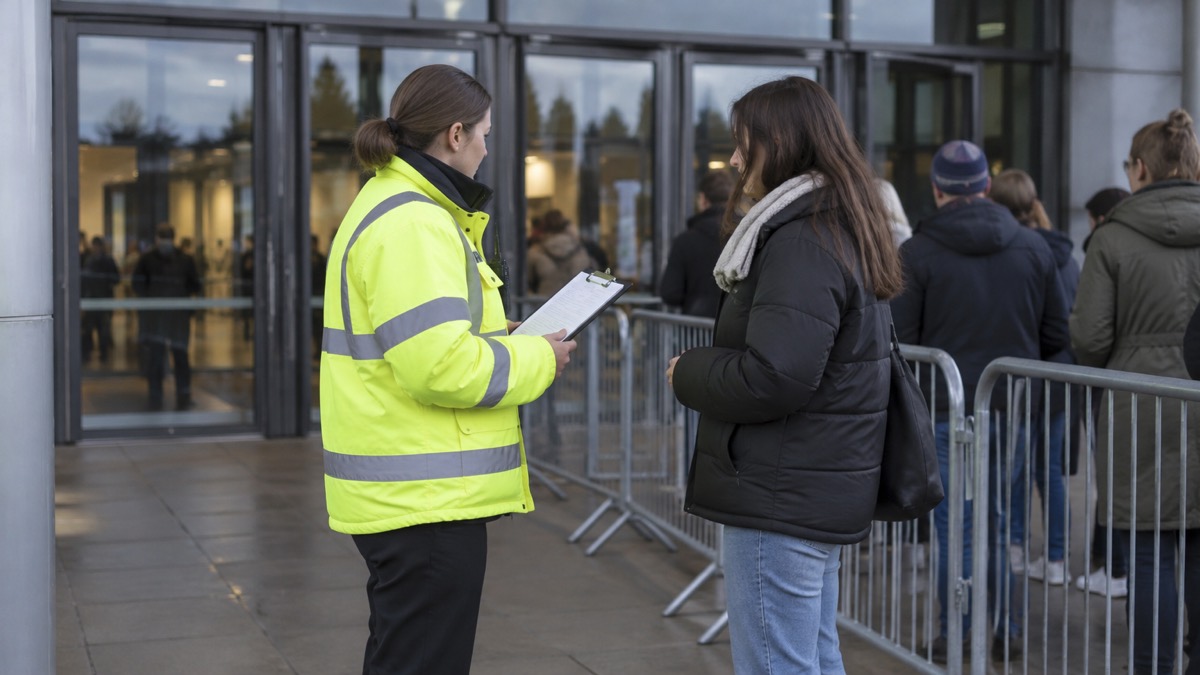
Martyn Hett was one of the 22 people killed in the Manchester Arena terrorist attack in 2017. When the government announced the details of the Protect Duty on 19 December 2022, it said the duty would now be known as Martyn's Law in tribute to him1. The naming matters. It ties a piece of technical safety law to a person and a family, and it is why the law is discussed in the press and in Parliament by a name that people recognise rather than by its formal title.
Naming a law after a person is a British habit, and it is worth knowing how it works so you are not confused by similar names. The Herbert Protocol, for example, is a national police scheme that encourages carers to compile useful information which could be used to help locate a vulnerable person if they go missing7. It is named after George Herbert, a war veteran of the Normandy landings who lived with dementia and died while missing, trying to find his childhood home7. The pattern is the same: a scheme or a law takes the name of someone whose experience exposed a gap.
For a household, the tribute is the reason to read the law kindly. It exists because a crowded venue was attacked and families wanted the country to learn from it. The measures it asks for are not an accusation against venues. They are the practical form of that learning.
What venues are expected to do: reasonable safety measures
The law's core expectation is that certain premises and events take forward reasonably practicable mitigations10. In plain terms, the people responsible for a venue are expected to think about what could happen, and to put in place measures that are reasonable for the size and nature of the place. The law does not publish a single checklist that every venue must follow, because what is reasonable for a small community hall is not what is reasonable for a stadium.
What that looks like in practice varies. Some of it is about the building: clear exits, routes that are not blocked, and staff who know what to do. Some of it is about equipment. ProtectUK publishes guidance on first aid provision at venues, and asks those responsible to consider whether their provision supports treatment of those with major bleeding3. That is an assessment to make, not a blanket rule that every venue must hold a particular kit.
The same guidance sits alongside the wider counter-terrorism advice that ProtectUK and local councils give to the public. Coventry City Council, for example, advises residents to familiarise themselves with emergency procedures when visiting public venues, events and crowded places, and to pay attention to exits, evacuation routes and safety announcements5. That advice is for you, not for the venue, and it is the single most useful thing you can do.
"Familiarise yourself with emergency procedures when visiting public venues, events and crowded places. Pay attention to exits, evacuation routes and safety announcements"
The law also sits alongside other safety duties that venues already carry, such as fire safety. Fire and rescue services publish guidance on fire safety regulations for premises, including the use of alterations notices where major alterations would cause a serious risk to the people who use a building11. Those duties are separate from Martyn's Law, but they point the same way: the people running a venue are expected to have thought about how people get out.
PAcT kits at venues
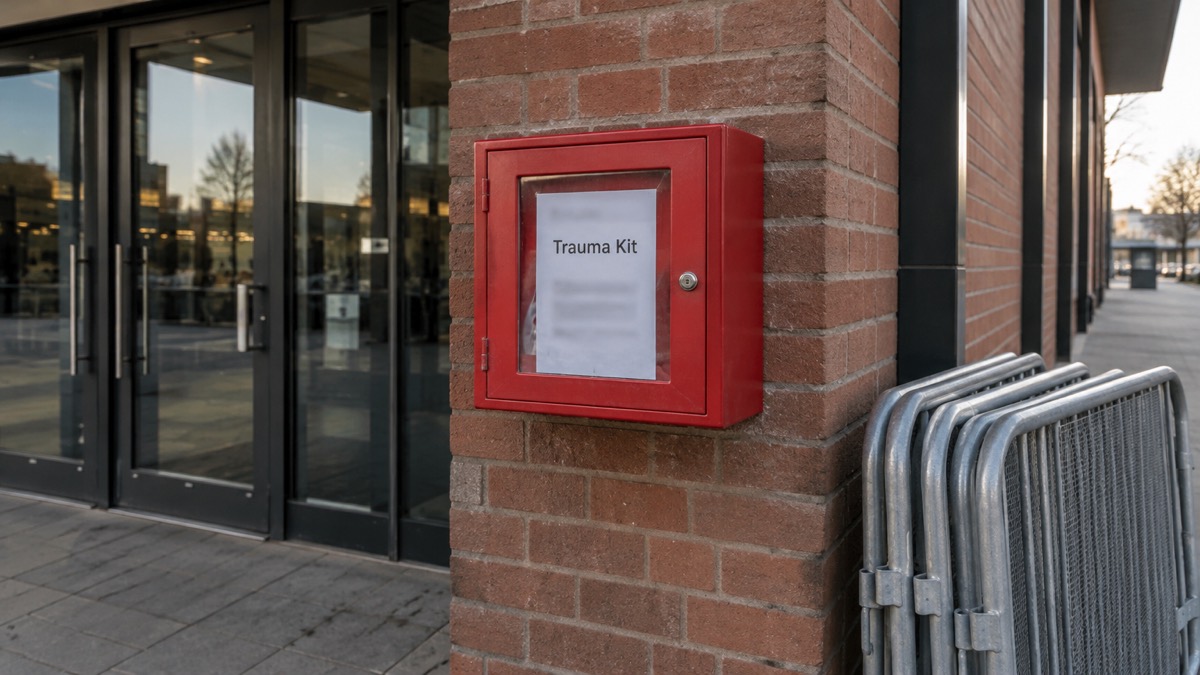
One of the visible changes you may notice at some venues is a Public Access Trauma kit, usually called a PAcT kit. ProtectUK describes these as first aid kits for use by any person, regardless of their level of training, to support the treatment of life threatening injuries4. They are intended to be located in areas which the public can access4, so that someone nearby can use one before the emergency services arrive.
The injuries a PAcT kit is designed for are the ones that kill quickly: major bleeding, and people who are not breathing on their own3. The kit is not a substitute for calling 999 or for trained help. It is a bridge, meant to be used by an ordinary person in the first minutes.
| What it is | Who it is for | Where it should be | What it helps with |
|---|---|---|---|
| Public Access Trauma (PAcT) first aid kit4 | Any person, regardless of training4 | Areas the public can access4 | Life threatening injuries such as major bleeding and those not breathing on their own3 |
Whether a particular venue holds a PAcT kit is a matter for that venue. ProtectUK's guidance asks those responsible to assess whether their first aid provision supports treatment of major bleeding3, but it does not say that every venue must hold a kit. If you want to know, ask a staff member, or look for signage near the entrance or in the main public areas.
From draft Bill to law: where things stand
The law has moved in clear stages, and knowing them helps you judge how settled the position is.
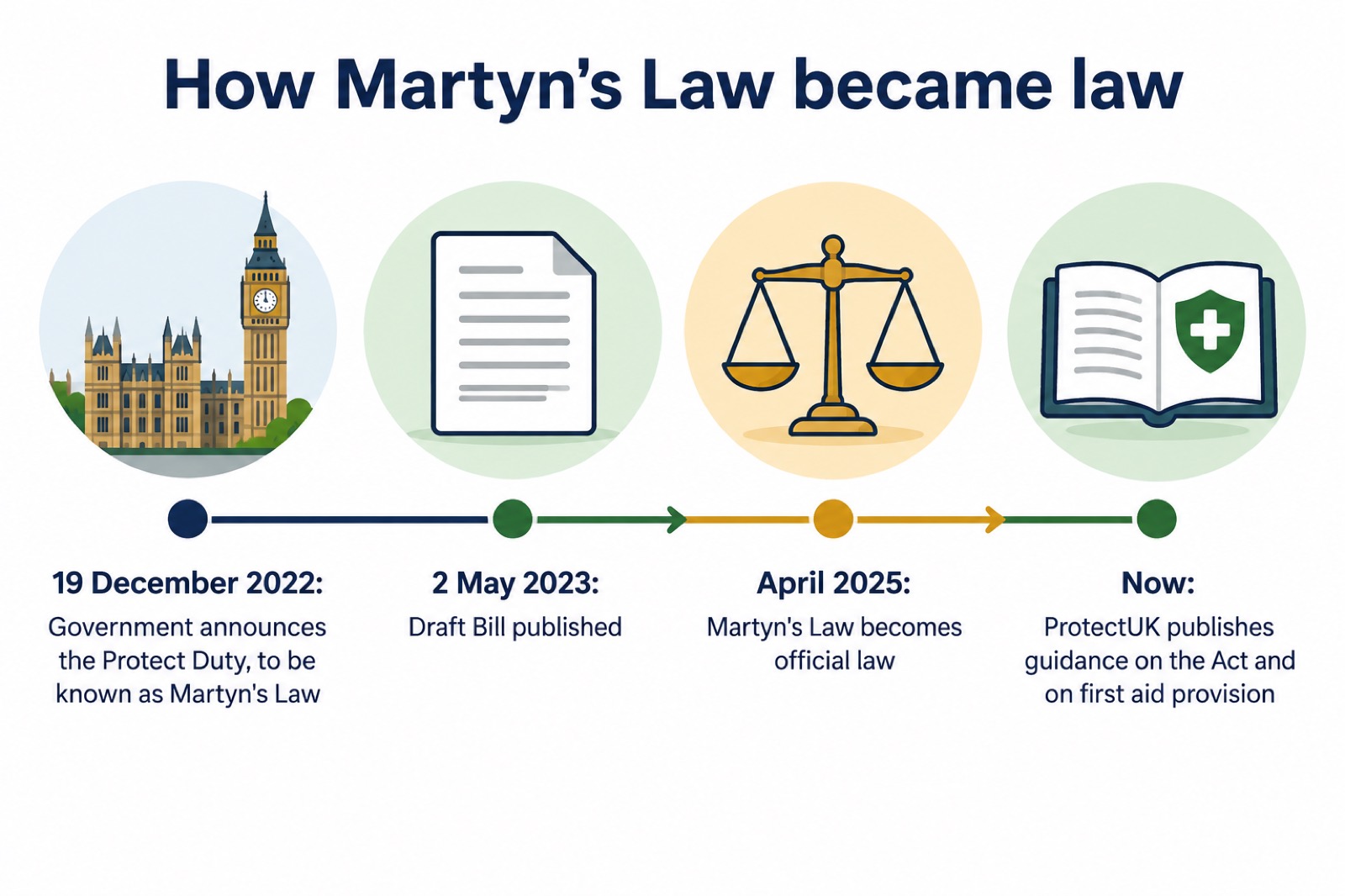
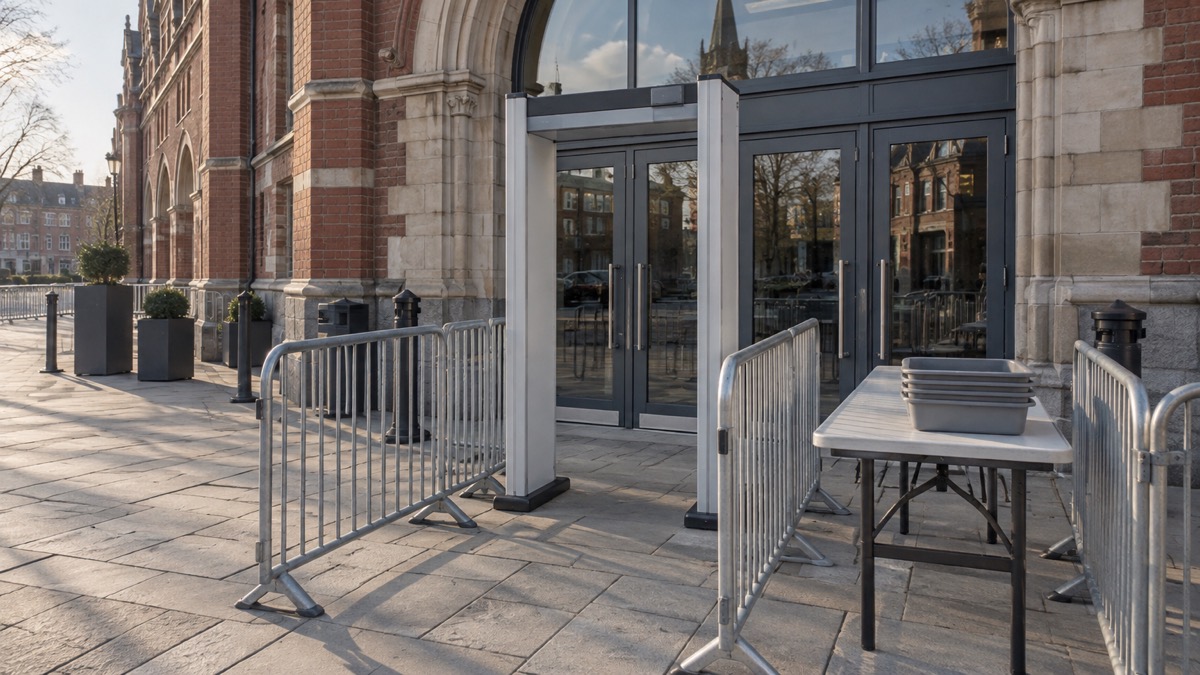
The draft Bill was published on 2 May 20232. It set out what the government intended: that certain premises and events would be required to take forward reasonably practicable mitigations2. A draft Bill is not yet law; it is a proposal published so that Parliament and the public can see what is intended.
Martyn's Law then became official law in April 2025, when the Terrorism (Protection of Premises) Act 2025 reached the statute book1. From that point the duty exists in law, and ProtectUK hosts material related to the Act under its formal name6.
What that means for a household is that the law is no longer a proposal. It is on the books, and the guidance that goes with it is being published and updated. If you want the current position on a specific venue or event, ProtectUK is the place to look6. The detail of which premises and events are in scope, and what each is expected to do, sits in the Act and in that guidance rather than in a single public list.
What it changes for you as a visitor
The law does not put a new duty on you. It puts a duty on the people who run venues and events. What changes for you is what you can reasonably expect, and what is worth doing when you arrive somewhere busy.
The most useful habit is the one Coventry City Council recommends: when you get to a venue, event or crowded place, note where the exits are, look at the evacuation routes, and listen to the safety announcements5. That takes a few seconds and it is the thing most likely to help you if something goes wrong. It is also the same advice that sits behind the wider counter-terrorism guidance for the public, which you can read in our guide to the terrorism threat in the UK and in Run, Hide, Tell.
Beyond that, the law's effect on you is mostly about what you will see. Staff at larger venues are more likely to have been briefed on evacuation and on what to do in the first minutes. Some venues will hold a PAcT kit in a public area4. Some will have clearer signage. None of that replaces your own awareness, and none of it means a venue is unsafe if you do not see it.
If you are at a venue and something happens, the advice is the same as anywhere else: follow the instructions of staff and police, and get out by the nearest safe route if you can. Our guide to what to do in a major incident sets out the Run, Hide, Tell approach in full, and our page on what to do when armed police arrive explains what to expect from officers.
Where to get help and how to prepare
The law is one part of a wider picture. If you want to be ready for an emergency at a venue or anywhere else, the place to start is your own household plan. Our guide to getting started sets out the basics, and our emergency kit page explains what to keep ready at home.
ProtectUK provides vital counter terrorism advice and is open to business owners, people who work in security and members of the public6. Our section on major incidents brings the household guidance together, including how to report suspicious activity and what to do with an unattended or suspicious item.
If you are caught up in an incident and need support afterwards, our guide to support for victims and families after a terror attack explains where to turn. And if you want to do more than read, the free ACT Awareness e-learning is a short course that teaches the same awareness the law is trying to spread.
Sources (11)
- Protect yourself: terrorist attack, Lancashire Prepared, 2026
- The UK Government Resilience Framework 2023 implementation update, UK Government, 2023
- First aid provisions, ProtectUK, 2026
- Standards for public access trauma (PAcT) first aid kits and equipment, ProtectUK, 2026
- Protect and prepare, Coventry City Council, 2026
- Be informed about hazards: terrorism, Prepare campaign (UK Government), 2026
- Herbert Protocol, Greater Manchester Police, 2026
- Herbert Protocol, West Yorkshire Police, 2024
- Herbert Protocol, Dorset Police, 2026
- 2023_NATIONAL_RISK_REGISTER_NRR.pdf, Cabinet Office, UK Government
- Fire safety regulations, Suffolk Fire and Rescue Service, 2026
 Bomb Threat Calls
 Radiation Checklist First Hour
 Power Cut Kit Checklist
 Where to Hide in an Attack
 When Armed Police Arrive
 Young People in a Terror Attack
 Family Caught in an Attack
 Suspicious Letters and Parcels
 Reporting Terrorist Content
 Corrosive Attack First Aid
 Tap Water Safety
 Shelter or Evacuate
 Collecting Children at School
 Food After a Nuclear Accident
 Sellafield Emergency Advice