
If you live near Sellafield, the single most useful thing you can do is sign up for the free automated telephone warning system. Cumberland Council, which provides emergency information for the site, encourages people living near Sellafield to register, and says the system gives a warning in the highly unlikely event of an emergency at the site, with updates by text message, email and mobile calls during exercises1.
The second thing is to know the number to ring for recorded information. The Sellafield Emergency Information Line is 0808 909 80902. Keep it somewhere you will find it without hunting, such as on the fridge door or saved in your phone.
Beyond that, the picture is reassuring. The council states that the possibility of such emergencies occurring is remote, and that the design and operation of all plants on the site are independently monitored by the Office for Nuclear Regulation, the Health and Safety Executive and the Environment Agency1. Your job is not to monitor the site. It is to be reachable, to know what to do if told to shelter, and to know who to ask when you have a question.
The warning system, and how to register for it
The automated telephone warning system is free and aimed at homes near the site. Its purpose is narrow and important: to put a warning into your home in the highly unlikely event of an emergency at Sellafield1. Because it works by telephone, it reaches people who may not be looking at a phone screen or a social media feed.
Registration is not automatic in the way a household might assume, which is why the council encourages people to sign up1. When you register, give every route by which you can be reached. The council says the system also provides updates via text messages, email and mobile calls on exercises, so a mobile number and an email address are worth adding alongside a landline1.
- Landline: the primary route into the home, and the one to keep if you have one.
- Mobile: useful if you are out, and used for exercise updates1.
- Email: a second channel for exercise messages1.
- Keep details current: if you move house or change number, tell the council, or a warning goes to a phone that is no longer yours.
This pattern, a local sign-up run by a resilience forum or council, is common across the country. The government's Prepare campaign notes that some Local Resilience Forums offer a sign-up option for alerts to receive news and information about emergencies in your local area3. Sellafield's system is the version that applies to you if you live in the Detailed Emergency Planning Zone.
The site siren: what it means and when it sounds

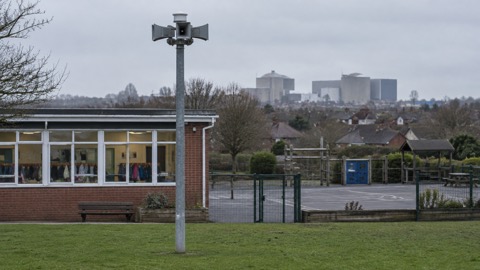
Sellafield's siren is not a mystery to be decoded in the moment. The council publishes the dates on which exercises take place and the siren may be sounded, so that a test is never mistaken for the real thing. The listed dates are Tuesday 16 September 2025, Wednesday 10 June 2026 and Tuesday 20 October 20261.
That advance notice matters. It means that if you hear the siren on one of those days, you can be confident it is an exercise. If you hear it on any other day, treat it as real.
The general rule for site sirens, as set out for another hazardous site, INEOS Dalmeny in Edinburgh, is that sirens warn people who live or work in the area of any risk from an incident on the site, and the response is to go in, stay in, tune in4. The same sheltering logic applies to a nuclear site, and it is set out in full on our page on going in, staying in and tuning in.
Who is watching the site, and how likely an emergency is
The council's own wording is worth quoting, because it answers the question most people actually have.
"the possibility of such emergencies occurring is remote and that the design and operation of all plants on the site are independently monitored by the ONR, HSE and EA"
Three separate regulators are named: the Office for Nuclear Regulation, the Health and Safety Executive and the Environment Agency1. That is the assurance behind the warning system. The system exists because the consequences of an emergency would be serious enough to plan for, not because one is expected.
For a household, this changes what you do in a practical way. You do not need to watch the site, follow technical reports or interpret readings. You need to be contactable, to have read your booklet once, and to know the sheltering instruction. The rest is the regulators' work.
If you want the wider picture of how nuclear sites are planned for, including the zones around them and the information booklets issued to households, our guide to emergency planning zones around nuclear sites sets it out. For the general behaviour of sirens and phone warnings at nuclear and chemical sites, see sirens and phone warnings.
Living outside the planning zone
The Detailed Emergency Planning Zone is the area covered by the warning system and the household booklet. Cumberland Council also publishes an Outline Planning Zone, shown on a map as extending 50km from the centre of the site1. That is a much wider area, and many households inside it will not be on the telephone warning list.
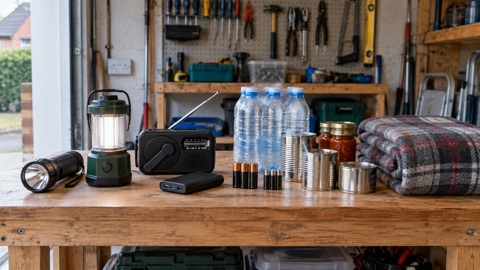
If you are outside the Detailed Emergency Planning Zone, the practical advice is the same as for any household in the country. Know the sheltering instruction, keep a battery or wind-up radio so you can hear local updates if the power goes, and keep a small emergency kit. The government's Prepare campaign is the starting point for that general preparation5.
A whistle is a small item worth adding to a home kit, to signal for help if you are trapped or cut off; both Scottish and English emergency kit guidance include one6.
| Zone | What it means for you | What to do |
|---|---|---|
| Detailed Emergency Planning Zone | Covered by the telephone warning system and the household booklet1 | Register your contact details and keep them current1 |
| Outline Planning Zone (50km from the centre of the site)1 | Wider area, not necessarily on the warning list | General household preparation, radio, know the sheltering rule5 |
| Elsewhere in the UK | No site-specific arrangements | General household preparation5 |
The emergency booklet: what it is and what to do with it
Cumberland Council issues an emergency booklet to households near Sellafield. A new edition was issued in September 2023, replacing the 2021 green booklet, which should be recycled2. If you still have the older green booklet, swap it for the current one.
The booklet's job is to tell you how you can help yourself and your family in an emergency, in the words used by Cheshire Fire and Rescue Service for its equivalent publication8. Read it once, now, rather than for the first time during an incident. Note the Emergency Information Line number, 0808 909 80902.
- Keep it where you can find it in the dark: a kitchen drawer or beside the radio.
- Read the sheltering instruction once: go in, stay in, tune in.
- Check the edition date: September 2023 replaced the 2021 booklet2.
- Ask for a replacement from the council's resilience team if yours is missing1.
What to do if you hear the siren or get a warning
The response to a site warning is the same whether it arrives by siren, by telephone or by radio: go in, stay in, tune in. Go indoors, close doors and windows, and turn on local radio or the local news for instructions4.
If you have to call for help, use 999. The fire service advice is to dial 999 only if there is an immediate risk to life10. Once you are safely outside a burning building, the instruction is to use your mobile phone to dial 999, ask for the fire brigade, give the address and not go back inside11. The same discipline applies to any emergency call: state where you are, say what has happened, and stay on the line.
If you have children at school, do not assume you should collect them. Schools have their own arrangements, and some councils run text or email alerts for parents when a school reports a closure13. Check what your school's plan says before an incident, not during one.
Where to get help and who to ask
Cumberland Council provides emergency information for Sellafield, and questions can be sent to its Joint Emergency Management and Resilience Team1. That team is the right first contact for anything about the booklet, the warning system or your registration.
If you are concerned about someone's wellbeing, the council asks you to contact its health and wellbeing social care team for more advice14. During a storm or severe weather, the council lists key contacts on its website to help you plan and get information5.
- Sellafield Emergency Information Line: 0808 909 8090 for recorded information2
- Cumberland Council JEMR Team: for questions about the plan, booklet and alerts1
- Cumberland Council health and wellbeing social care team: if you are worried about someone14
- 999: only where there is an immediate risk to life10
Neighbours matter too. Being caught up in an emergency can be mentally and emotionally challenging, and there may be community support groups to help, so keep an eye out for others afterwards15. If you are setting up something locally, our guide to community resilience covers the practical side, and extra help in an emergency covers households that may need more support.
Sources (15)
- Chemical and nuclear sites, Cumberland Council, 2026
- Sellafield emergency booklet, September 2023, Cumberland Council, September 2023
- Alerts and warnings, UK Government Prepare campaign, 2026
- Release of gas, toxic chemical or radiation, City of Edinburgh Council, 2026
- Snow, ice and winter ready advice, Cumberland Council, 2026
- Emergency kit, Ready Scotland, 2026
- Get help and advice in an emergency, Lincolnshire County Council, 2026
- Preparing for emergencies, Cheshire Fire and Rescue Service, 2026
- Derbyshire Safe Place scheme, Derbyshire County Council, 2026
- What to do in a flood, Suffolk County Council, 2026
- Fire safety booklet, easy read, London Fire Brigade, 2026
- In the event of a fire, South Wales Fire and Rescue Service, 2026
- Emergency school closures, Staffordshire County Council, 2026
- Help in winter, Cumberland Council, 2026
- Advice for communities, West Yorkshire Prepared, 2026
 Bomb Threat Calls
 Radiation Checklist First Hour
 Power Cut Kit Checklist
 Where to Hide in an Attack
 When Armed Police Arrive
 Young People in a Terror Attack
 Family Caught in an Attack
 Suspicious Letters and Parcels
 Reporting Terrorist Content
 Corrosive Attack First Aid
 Tap Water Safety
 Shelter or Evacuate
 Collecting Children at School
 Food After a Nuclear Accident
 Martyn's Law at Venues