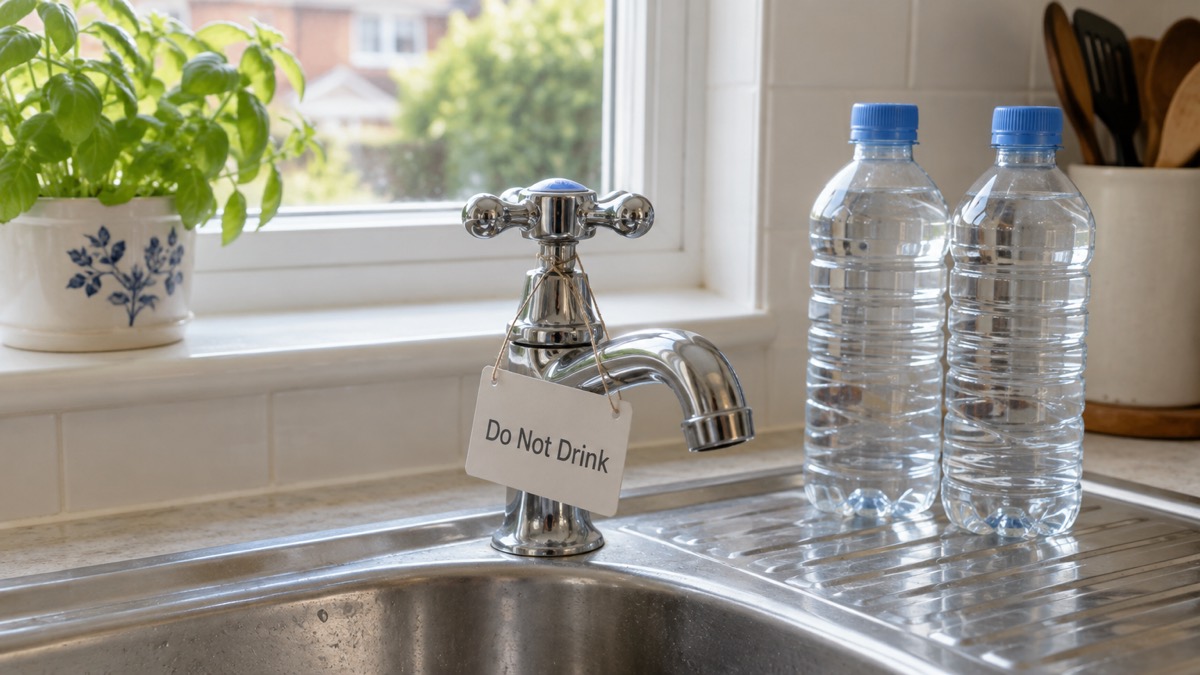
In most flooding circumstances the main supply is unaffected and so is safe to drink1. That is the reassuring starting point. After a chemical or radiation release, the same principle holds: unless your water company or the authorities tell you otherwise, the mains supply is monitored and treated, and you should not stop using it on rumour alone. What changes is that you need to know how to check, who to listen to, and what to do if a warning does come.
If you are told not to drink the water, or you notice a change in its colour, taste or smell, stop using it for drinking, brushing teeth, washing food and cooking until you have advice2. If in doubt, boil all water intended for drinking, brushing teeth, washing food and cooking, but remember that boiling kills germs and does not remove harmful chemicals4. Keep bottled water for three days at three litres per person per day for drinking, with more for cooking and washing6.
The first hours of any incident are about information as much as water. Go in, stay in and tune in: pay attention to official sources such as the websites and social media accounts of local authorities, government agencies and the emergency services, and to messages to your mobile phone from the UK Government Emergency Alerts Service7. Your water company is the body that will tell you whether the supply is safe, and it will say so publicly.
Go in, stay in, tune in: what to do with water in the first hours
In the first hours of a chemical or radiation incident, the official instruction is usually to shelter and listen, not to start emptying the taps. Pay attention to official sources of information such as the websites and social media accounts of local authorities, government agencies or emergency services, or messages to your mobile phone from the UK Government Emergency Alerts Service7. The UK Health Security Agency guidance on what to do in a chemical emergency also covers evacuations, pets, food and water, and information on specific hazardous chemicals, so it is worth knowing where to find it11.
While you wait, there are a few practical things to do with your water. Draw fresh water through the system by flushing your taps for 2 to 3 minutes first thing in the morning or after water has been sitting in your pipes for several hours12. This clears stale water from the plumbing and is normal practice, not a sign of contamination. If you have a private supply, the advice is firmer: if you believe the supply network has been affected, or you are unsure, avoid all usage and use alternative supplies while waiting for confirmation1.
For most households on mains water, the sensible first-hours routine is:
- Fill a jug or a clean container from the cold tap for drinking, and keep it covered.
- Check your water company's website and social media for any notice about your area13.
- Bring pets indoors during a chemical incident14.
- Do not use water on an electrical fire, and do not take any risks with your safety: get out, stay out and call 99915.
- Keep listening for the all-clear before you change anything.
If you have been told to evacuate, turn off your gas, electricity and water supplies if it is safe to do so16. That protects the supply and your home while you are away.
Is tap water safe to drink after a chemical or radiation release?
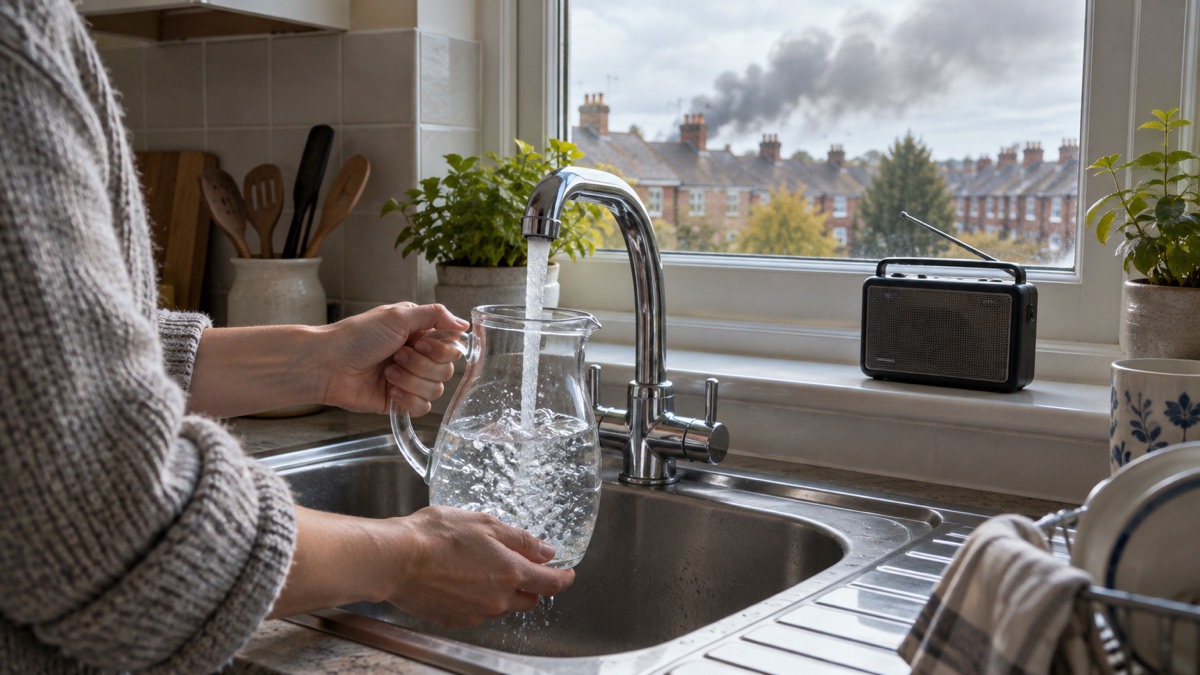
For most people, most of the time, yes. In most flooding circumstances the main supply is unaffected and so is safe to drink1. The same logic applies to chemical incidents: the mains supply is a treated, monitored network, and a release in the air or on a site does not automatically reach your taps. The authorities will tell you if it does.
After a radiation emergency, a wide range of food supplies and drinking water would be checked to see if they contained more radioactive materials than the allowed levels10. That monitoring is the reason you can wait for official word rather than guessing. The results decide whether restrictions are needed, and they are published.
What should make you act is a change in the water itself. Contact your water company if you notice a change in the colour, taste or smell of tap water3. Do not use tap water if you notice a change in the colour, taste or smell3. If your tap water is suddenly discoloured, you should not assume that it is safe to drink until you have sought advice from your water supplier17. There is one exception worth knowing: in areas with a known iron or manganese problem, if you have run your tap until the water becomes clear it will then be safe to use, unless the water supplier has issued a warning notice to say otherwise17.
| Situation | What the official advice says | What to do |
|---|---|---|
| Normal mains supply, no notice | Main supply usually unaffected and safe1 | Use as normal, flush taps if water has sat in the pipes12 |
| Sudden change in colour, taste or smell | Do not assume it is safe17 | Stop drinking it, contact your water company3 |
| Known iron or manganese area, water clears when run | Safe once clear unless a warning notice says otherwise17 | Run until clear, then use |
| Chemical incident nearby | Follow official updates7 | Shelter, listen, await water company advice |
| Radiation emergency | Food and drinking water would be checked10 | Await official results and any restriction |
Bottled and stored water: how much to keep and where
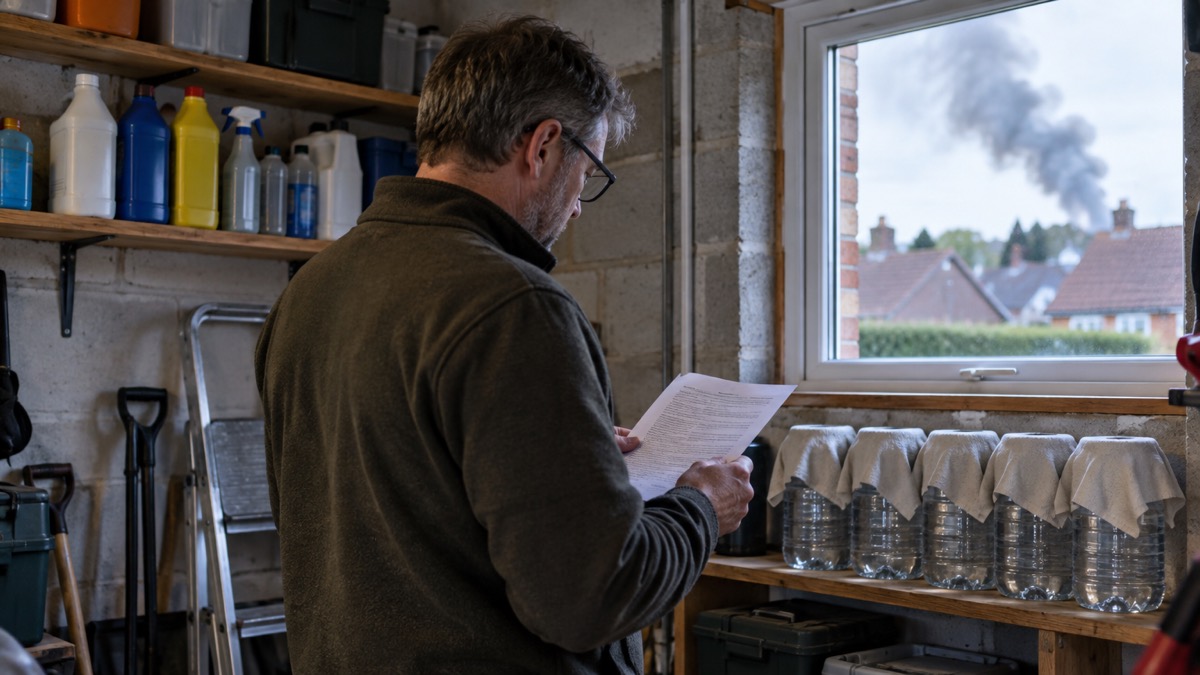
The government's household checklist is specific: bottled water for 3 days, 3 litres per person per day for drinking, and more would be needed for other tasks such as cooking and washing6. The Household Emergency Plan repeats the same figure: bottled water at 3 litres per person per day for at least 3 days18. Scale that to your household when you shop, and count the drinking figure as the minimum before cooking and washing are added.
Storing it well matters as much as storing enough. Keep bottled water cool, dark and covered, and rotate it so nothing sits past its date. Water you have drawn from the tap yourself does not keep: throw away any unused water after 24 hours8. That makes stored tap water a short-term measure for a known event, not a long-term reserve.
There is a second risk that catches households out: chemicals stored near water. Follow the storage instructions on the label, do not move products into other containers, keep all hazardous chemicals out of the reach of young children or locked away in a safe place, never store hazardous chemicals near food or food products, and keep hazardous chemicals away from items used to prepare and cook foods, like pots, pans and cooking utensils19. A bottle of bleach decanted into a drinks bottle is a poisoning waiting to happen, and in an emergency, when everyone is rushed, that risk rises.
When your water company says do not drink or do not use
A "do not drink" notice means exactly that: no drinking, no brushing teeth, no washing food, no cooking with it. A "do not use" notice is broader and usually covers washing and bathing as well. The wording matters, so read the notice in full and follow it rather than assuming the milder version applies.
The triggers for a notice are practical. Do not use the water supply if the tank or connecting pipework has been damaged, or where flood water has been in contact with taps or connections within or outside the home5. For private supplies, water may remain contaminated even after floodwater levels have subsided20. If a well or spring has been covered by floodwater, ring your local authority for advice; while waiting, or if in doubt, assume the water is unsafe to drink and source an alternative supply4.
When the notice is lifted, do not simply go back to normal. Once the water supply has been restored, flush all associated taps for a few minutes, or longer depending on the length of pipework, to remove contaminated water from the plumbing lines5. For mains taps that were submerged in contaminated floodwater, clean them using a bleach solution and run them for 30 seconds before the water is used21. Wash taps and let them run for a few minutes before use22.
Where tap water must never be used
Some water rules apply at all times, emergency or not. Never drink water from the hot tap9. Hot water sits in a cylinder or passes through a boiler and is not treated as drinking water, so keep drinking and cooking to the cold tap.
During and after a flood, several everyday uses of water become dangerous. Do not use gas and electrical appliances affected by the flood until they have been examined, cleaned if necessary, and tested23. Never use water on an electrical fire, and do not take any risks with your safety: get out, stay out and call 99915. If you use gas heating or gas appliances in your home, get a Gas Safe-registered engineer to do an inspection after a flood24.
Cleaning up brings its own rules. Wear gloves and a disposable plastic apron when using cleaning products and follow the manufacturer's instructions correctly25. Use a domestic disinfectant following the manufacturer's directions on concentrations, and wash food preparation surfaces, storage cupboards and refrigerators with food safe disinfectant25. Floodwater may be contaminated, so disinfect all areas affected after cleaning, wash your hands thoroughly with antiseptic, and keep open sores or cuts clean and use waterproof plasters26. Use rubber gloves when cleaning up27.
Outdoors, the same caution applies to open water. Never enter the water after drinking alcohol28. Flood water and open water after a storm are not places to cool off or to let children play.
Water for babies, pets and private supplies
Different members of the household need different answers, and it helps to have them settled before an incident rather than during one.
Babies and formula. If you have no tap water, using ready-made or ready-to-feed formula is the safest option29. Where drinking water is interrupted or contaminated, use tanker or bottled water for formula milk, and do not use unboiled tanker water to make a baby feed30. Keep a small stock of ready-to-feed formula in your emergency kit so a night-time interruption does not leave you improvising.
Pets and livestock. Bring pets indoors during a chemical incident14. Add pet food and bottled water to your pet kit6. If you evacuate, take pets with you where you can: pets evacuated with family members have a stress relieving effect during flooding and it avoids additional worry over abandoned animals31.
Private wells and springs. A private supply is your responsibility in a way mains water is not. Local authorities test private water supplies to check for bacteria, chemicals and metals32. If a well or spring has been covered by floodwater, ring the local authority for advice and assume the water is unsafe until told otherwise4. Do not use community wells or springs for drinking, washing or preparing food, as they may not be safe9.
| Household member | What to use | Source |
|---|---|---|
| Baby on formula | Ready-to-feed formula, or tanker or bottled water for the feed, never unboiled tanker water | 29 |
| Pets | Bottled water from the pet kit, kept indoors during a chemical incident | 6 |
| Private supply user | Alternative supply until the local authority confirms it is safe | 4 |
| Everyone else | Cold tap if no notice, bottled or boiled water if in doubt | 1 |
Getting official updates and help
Your water company is the first call for anything about the mains supply. Contact your water company if you notice a change in the colour, taste or smell of tap water3. Consult your local water authority about water supply safety for drinking, cooking and cleaning after an incident such as a fire33. Give as accurate a location as possible when you report anything34.
For wider official information, pay attention to official sources such as the websites and social media accounts of local authorities, government agencies or emergency services, and to messages to your mobile phone from the UK Government Emergency Alerts Service7. The UK Health Security Agency guidance on what to do in a chemical emergency covers evacuations, pets, food and water, and specific hazardous chemicals11. For flooding, the government's help during flood pages set out what to do before, during and after16.
If you have to leave home, turn off your gas, electricity and water supplies if it is safe to do so16. If your supply is a private one and it fails, your local authority can advise on alternative supplies while you wait5.
For the wider picture on sheltering, see Go In, Stay In, Tune In: Sheltering From a Chemical or Radiation Release, and for the household water store in general, see Water in an Emergency: A Household Guide. If you live near a nuclear site, What to Do in a Radiation Emergency and Living Near a Nuclear Site: Emergency Planning Zones and Information Booklets explain the local arrangements. Households with babies, older people or medical needs may find Extra Help in an Emergency useful, and pet owners should read Pets and Animals in an Emergency.
Sources (34)
- Flooding advice for consumers, Drinking Water Inspectorate, 2026
- Staying healthy and safe after flooding, Surrey County Council, 2026
- After a flood, GOV.UK, 2026
- How to recover from flooding, GOV.UK, 2026
- Private water supplies after floods or storms, Argyll and Bute Council, 2026
- Be Ready Checklist, UK Government Be Ready campaign, 2026
- Be informed about hazards, UK Government Prepare campaign, 2026
- Drinking water quality FAQs: chlorine, Drinking Water Quality Regulator for Scotland, 2026
- Weather and health, Public Health Wales, 2026
- Nuclear emergencies: information for the public, GOV.UK, 2026
- Hazardous substance exposure, Essex Prepared, 2026
- Chemical or medicinal taste in water, United Utilities, 2026
- Help and support during an incident | Dŵr Cymru Welsh Water, Dŵr Cymru Welsh Water
- Chemical accidents, Fareham Borough Council, 2026
- Looking after the electrics, North Wales Fire and Rescue Service, 2026
- Help during a flood, GOV.UK, 2026
- Brown, black or orange water, Drinking Water Inspectorate, 2026
- Be Ready Household Emergency Plan, UK Government Be Ready campaign, 2026
- Chemical safety at home, nidirect, 2026
- Flooding advice for properties using a private water supply, Shropshire Council, 2026
- Information about specific safety concerns, Northumberland County Council, 2026
- Flooding advice, Belfast City Council, 2026
- Documents: Be Prepared, Lancaster City Council, 2026
- After a flood: clearing up, nidirect, 2026
- Cleaning up and returning home after flooding, Derbyshire County Council, 2026
- After flooding, Surrey County Council, 2026
- Thunderstorms weather warning: advice and information, nidirect, 2026
- Coping with hot weather in London | London City Hall, London City Hall (london.gov.uk)
- Power cuts, UK Government Prepare campaign, 2026
- Keeping children safe during a flood, nidirect, 2025
- You prepare for emergency, Slough Borough Council, 2026
- Types of private water supply, Cumberland Council, 2026
- Dealing with the aftermath of a fire, Warwickshire County Council, 2026
- Water safety, Surrey County Council, 2026
 Bomb Threat Calls
 Radiation Checklist First Hour
 Power Cut Kit Checklist
 Where to Hide in an Attack
 When Armed Police Arrive
 Young People in a Terror Attack
 Family Caught in an Attack
 Suspicious Letters and Parcels
 Reporting Terrorist Content
 Corrosive Attack First Aid
 Shelter or Evacuate
 Collecting Children at School
 Food After a Nuclear Accident
 Martyn's Law at Venues
 Sellafield Emergency Advice