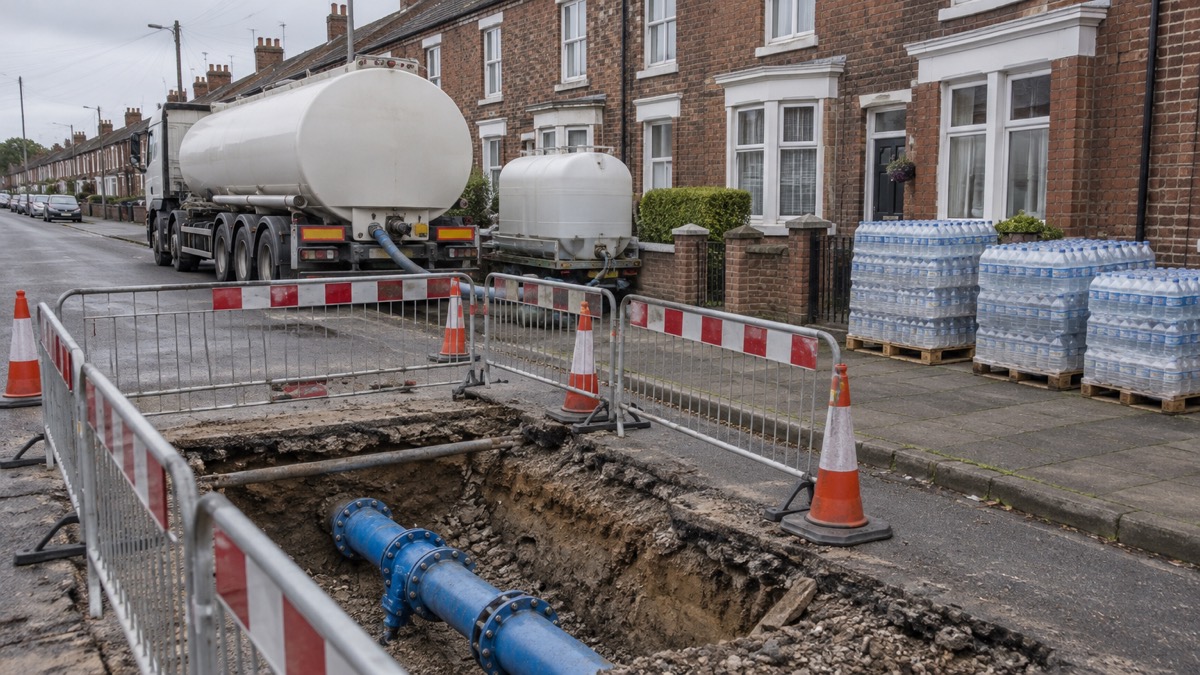
When your water stops, the first thing to know is this: your water company is the source of information about what is happening and what to do1. If you identify an issue with the water supply, alert your water company, and make sure you know their emergency number before you need it2. In a major incident the company will tell you what to do, whether that is boiling water, collecting from a bowser in the street, or simply waiting while a repair is made3.
Behind the scenes, a major incident sets off a planned sequence: the company declares the incident, brings in alternative supplies such as bottled water, tankers and bowsers, repairs the main, flushes and samples the network, and only then restores supply to homes. This page explains that sequence from the household's point of view: what you should do in the first hour, when alternative supplies start and what their limits are, what flushing and sampling mean at your kitchen tap, and how companies plan for these events and for drought. It also covers the Priority Services Register, compensation, and the wider emergency response that swings in behind the water company in a severe event.
What to do when your water supply stops
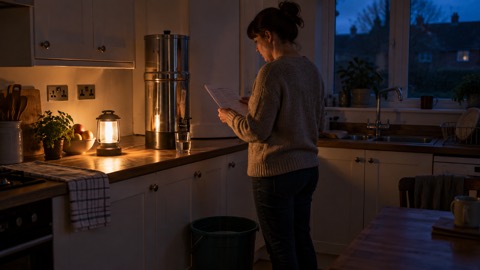
Work through these steps in order. Most interruptions are short and local, and the first few minutes are about getting information rather than guessing.
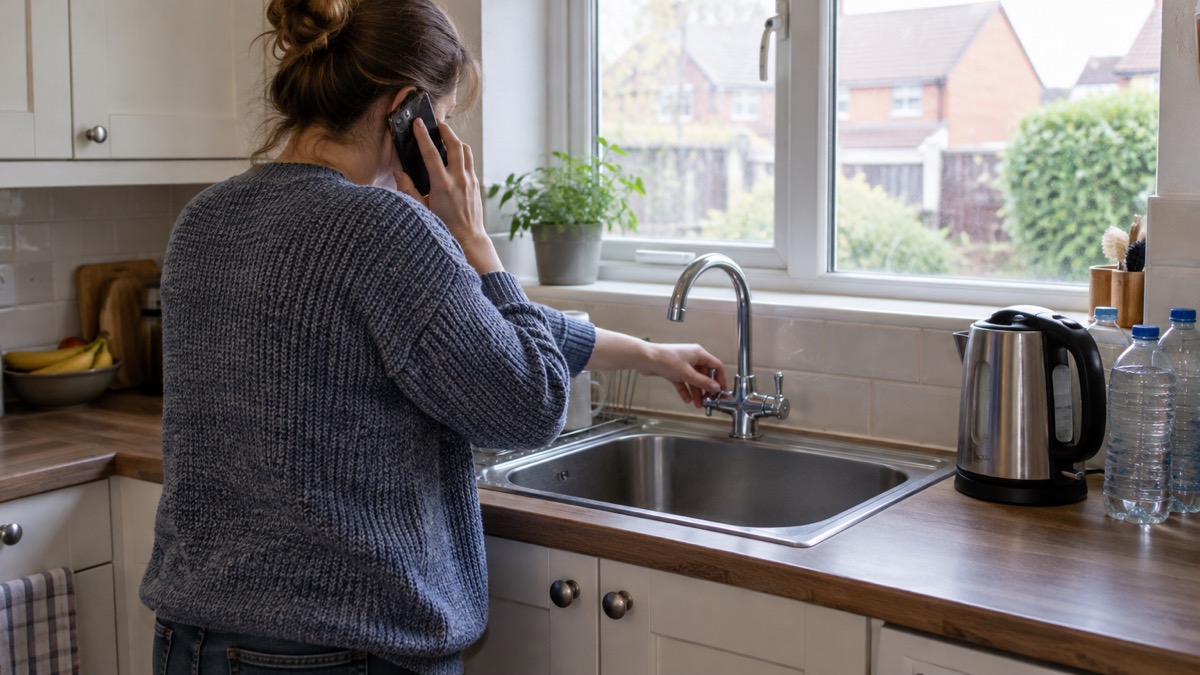
- Check whether it is a supply problem or a problem in your home. If your neighbours have water and you do not, the fault is likely on your side of the stopcock. If the problem is with the mains supply, your local water company will tell you what to do3.
- Alert your water company. If you identify an issue with the water supply, alert your water company, and make sure you know the emergency supply number for your water company2. If you are unsure who your supplier is, you can find out by entering your postcode on the Water UK website7.
- If a pipe has burst inside your home, turn off the water at the main stop valve4. If you do not know where your stop valve is or how to turn off your water, contact your supplier for guidance8.
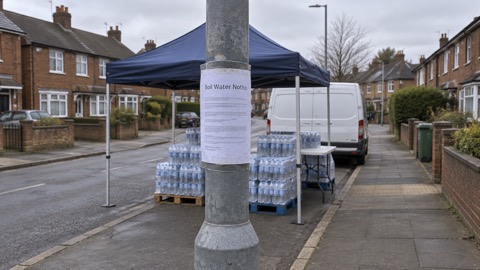
- Follow the company's instructions. Ofwat, the economic regulator of the water industry in England and Wales, provides information on what communication you should expect to receive from your water company in the case of an interruption to water supply5. Watch for a boil water notice: the water company issues the notice to consumers in the affected area, instructing them to boil their water before use9. If you receive one, follow our page on what to do if you get a boil water notice.
- If someone in your household relies on a medical device that needs water to function, talk to your care team to make a plan for what to do during a water outage1. Households on home dialysis have a dedicated guide on home dialysis and medical needs during an interruption.
- Contact your water provider if problems continue after the supply returns1.
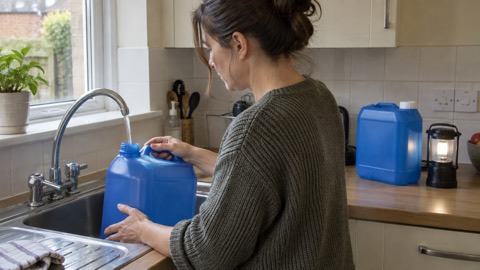
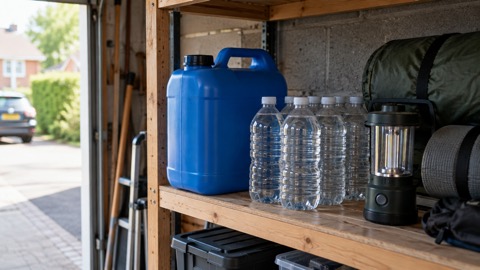
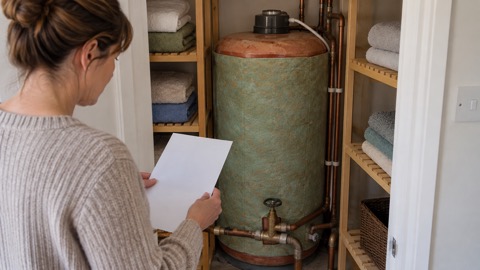
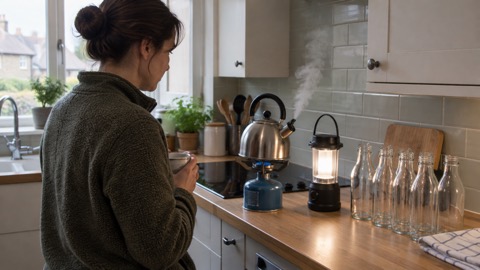
While you wait, remember what you already have: water in your pipes, cistern and hot water cylinder can be drawn off in an emergency, and our page on usable supplies already in your home explains how to do it safely. If the outage stretches on, our guides on how much drinking water to store per person and how to flush the toilet during an outage cover the practical side. The fire and rescue service in Hampshire includes bottled water in its grab bag advice for households, so a small store of bottled water is worth keeping regardless10.
More than 12 hours without water: when alternative supplies start
For a short interruption, the expectation is that the company repairs the main and restores supply. When an interruption runs longer, the company moves to providing alternative supplies. Official guidance is that the provision of alternative supplies by a water company, in bottles, tanks or bowsers, should be limited to short term unplanned emergencies11. In other words, bowsers and bottled deliveries are an emergency measure for unexpected failures, not a standing arrangement for planned or prolonged work.
How long can a serious failure last? The London Risk Register, which sets out the risks the capital plans for, describes a water supply infrastructure failure scenario in which up to 350,000 people are affected for between 24 hours and two weeks12. That is the planning assumption for a worst case in London, and it gives a sense of the scale local responders prepare for: even a major incident is usually measured in hours to days, but plans exist for one that lasts weeks.
Once the 12-hour mark passes, the expectation on your water company is to provide a suitable alternative supply, which in practice means bottled water, tankers or other temporary equipment13. Official guidance notes that where no agreement is in place, this provision of alternative supplies (bottles, tanks or bowsers) should be limited to short-term unplanned emergencies13. For households, the practical points are these:
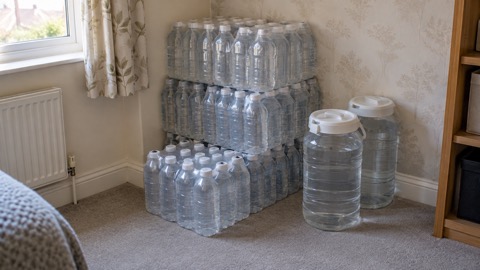
- Keep enough stored water to bridge the first hours before bowsers arrive. Our page on storing tap water safely at home explains how.
- Expect the company to tell you where to collect water once alternative supplies are deployed.
- If you are on the Priority Services Register, expect alternative supplies to be arranged for you rather than collected by you1.
Bottled water and bowsers: who gets them and the limits
When alternative supplies are deployed, you may be given bottled water, or have water tankers and bowsers parked near your home for you to collect water from3. In Scotland, where public mains supplies have sufficiency or quantity issues, Scottish Water takes steps to ensure safe drinking water is available, which may include providing bottled water or bowsers14. Local authority guidance on private supplies gives the same examples of what an alternative supply looks like: a supply of bottled water, or water supplied in tanks or bowsers15.
There is an important limit, and it is stated in official guidance more than once. Water companies may not always be able to provide an emergency supply of water in bowsers or in bottles, for example if they have their own ongoing emergency such as a burst main13. The Drinking Water Inspectorate's earlier guidance on alternative supplies for private water supplies makes the same point: companies may not always be able to provide an emergency supply, for example if they have their own emergency ongoing such as a mains burst16. A company stretched by a large failure may simply not have enough tankers and bowsers to cover every street at once.
| Type of alternative supply | What it is | Who it suits |
|---|---|---|
| Bottled water | Delivered or handed out in packs | Priority Services Register customers, and households who cannot carry water |
| Bowsers | Tanks parked in the street to collect from | Streets where supply is off for an extended period |
| Tankers | Vehicles that feed water into the network or fill bowsers | Used by the company to maintain supplies during repairs |
After the thaw following the 2018 cold snap, Ofwat's report on how companies handled the incident recommended that companies develop or update their plans regarding the provision, deployment and delivery of alternative water supplies, together with local partners and emergency services17. That recommendation came from real experience: the report found that multiple companies, including Severn Trent Water and Thames Water, did not have a plan in place with appropriate escalation triggers17. The industry has since been expected to plan alternative supplies jointly with local responders, which is why you may see local authority and emergency service vehicles involved in a large distribution effort.
Our page on bottled supplies, tankers and bowsers from your water company goes into more detail on how distribution works, and where bottled water stations are set up covers the collection points.
Register for priority help before an incident
The most useful thing you can do before any interruption is to join your water supplier's Priority Services Register. If you are eligible, sign up to let your supplier know that you need additional support, including when there is an interruption to your supply; you can do this via thepsr.co.uk1. If you are on the register, your water company will arrange alternative supplies for you during an interruption1. That is the difference between collecting water from a bowser in the street and having bottled water brought to your door.
Who is it for? Vulnerable customers in need of extra support can register with their water company as a priority customer2. Derbyshire County Council's guidance on the register, aimed at people keeping warm in winter, lists benefits that include advance notice of power cuts18, and the equivalent registers exist across utilities. The Greater London Authority's flash flooding advice is blunt about it: if you are a vulnerable person or know someone who is, sign up to the priority services registers for both power and water19.
Two points worth acting on now:
- Ask anyone you provide care for if they are registered. If you believe you are registered but have not received support during an incident, contact your water company as soon as possible1.
- Check your registration still holds after a move or a change of circumstances. The register only works if the company's records are current.
Households that need extra help in any emergency, not just water incidents, will find more on our extra help in an emergency page, and how to get bottled water delivered if you are vulnerable covers the delivery process in detail.
Discoloured water after mains work: run the cold tap until clear
When your supply comes back after a burst main or planned work, the water may look brown or cloudy. This is one of the most common after effects of an incident, and it is usually not a health emergency, but you should clear it before using the water for drinking or cooking.
The advice from the UK government's preparedness campaigns is to try running the cold tap nearest to your stopcock, which is usually under your kitchen sink, for a while to see if it clears the discolouration, and to contact your water provider if problems continue5. After flooding, Belfast City Council's advice is to wash taps and let them run for a few minutes before use, noting that mains tap water should not be contaminated after flooding20.
Cloudy or white water has its own causes. The Drinking Water Inspectorate lists a burst water main, and reinstatement of a main after work on the network, among the events that can cause white or cloudy water21. In most cases the cloudiness is trapped air and settles if you leave a glass to stand. Our pages on brown or discoloured tap water, why tap water is cloudy or milky and why your tap water tastes or smells different cover all of these in detail.
Lead pipes
Lead is a separate, long term issue rather than an incident response one, but it is worth knowing where responsibility lies. Where a risk of lead exists, water companies treat the water with orthophosphate to reduce the problem significantly22. Water companies are legally required to replace their communication pipe, the section between the main and your boundary, if it is made of lead and is at risk of contributing to lead in the drinking water supply22. The pipes inside your property remain the homeowner's responsibility.
How your water is tested
Water companies test water daily in your area and will give you the results free of charge on request, and their sampling techniques are accredited and independently verified7. Companies will normally take a sample in response to a complaint from a consumer, depending on the nature of it7. So if your water looks or tastes wrong after an incident and running the tap has not cleared it, asking for a sample is a reasonable next step. Our page on who checks drinking supplies explains the roles of the Drinking Water Inspectorate, Ofwat, CCW and the Drinking Water Quality Regulator for Scotland.
Mains flushing and sampling: what to expect at home
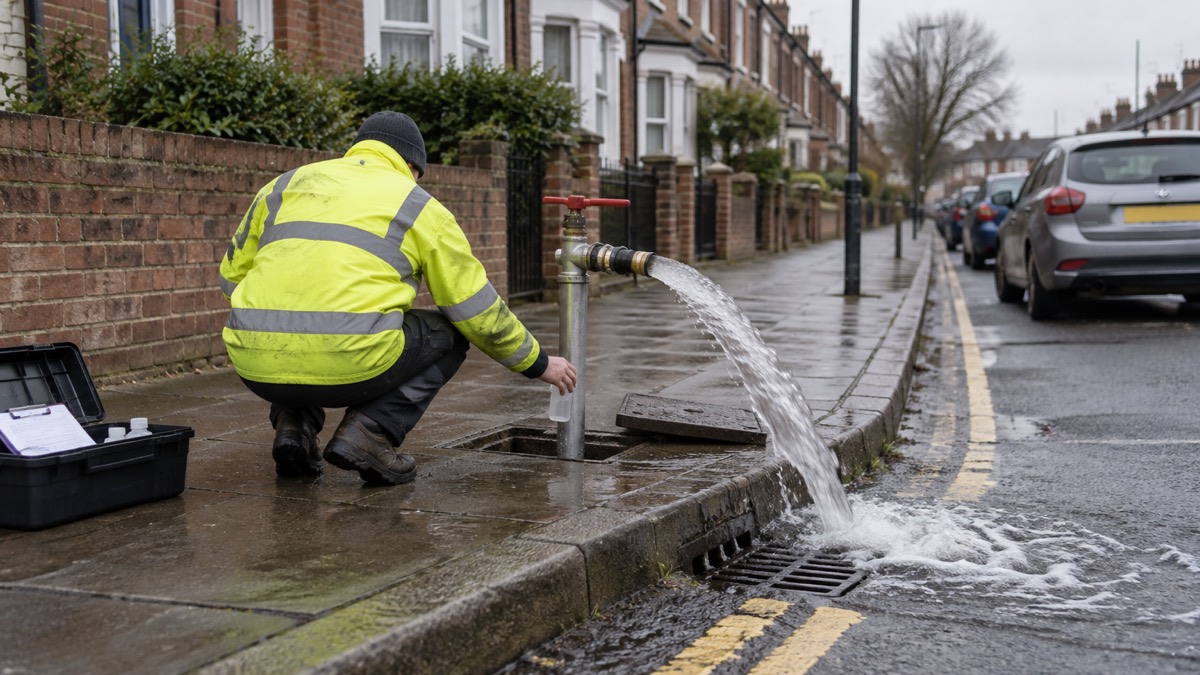
After a repair, the company does not simply turn the water back on. It flushes the repaired section of main, samples the water, and checks quality before and while supply returns. The Chief Inspector's report on drinking water in Wales for 2025, drawing lessons from a burst main incident at Aston affecting Dŵr Cymru Welsh Water customers, states that effective incident management must include thorough assessment of repair robustness to prevent escalation, clear water quality monitoring and recording during flushing and tanker operations, and routine sampling of the tankers themselves23. From the household's point of view, that means the supply may come back in stages, with the company running hydrants in the street and testing as it goes.
What you may notice at home:
- Discoloured water for a while after restoration, as disturbed sediment moves through the network. Run the cold tap nearest your stopcock until it clears5.
- A boil water notice in some incidents. The water company issues the notice to consumers in the affected area; for a private water supply the notice comes from your local authority9.
One caution applies once water returns after sitting in pipes and cisterns: the Health and Safety Executive has issued a safety notice drawing attention to key aspects of the proper management of the risks from legionella in a wide range of systems, such as hot and cold water systems in buildings24. Stagnant water in a system that has stood unused can pose risks, so follow your water company's instructions about running taps after a long interruption, and see our page on how to stay safe from legionella at home. Our page on what to do when your supply comes back on walks through the restoration steps in order.
Who is responsible for which pipe
When something goes wrong between the treatment works and your tap, responsibility splits at your boundary, and knowing the split saves time.
Water mains are the responsibility of the water company25. Sewers, and the removal and treatment of waste water, are also the water company's responsibility, so problems with sewers should be reported to your water company26. Mid and West Wales Fire and Rescue Service's flooding guidance adds that water companies will assist where possible to reduce the amount of water escaping from the system, and will tidy up areas where sewage has been deposited once flooding has subsided27.
The supply pipe from the main to your home is different: about a third of all leakage is from customers' supply pipes28. Ofwat, which published that figure, notes that companies have committed to a 50% reduction in leakage from 2017-18 levels by 205028, but the customer side remains the householder's to watch. Damp patches, lush grass in dry weather or a persistent trickle at the boundary can all point to a leaking supply pipe.
If flooding threatens your home while a main or sewer is surcharging, the standard flood advice applies: ensure important documents are safe, including your home insurance details26, and raise heavy electrical items such as fridges, freezers and washing machines on bricks27. Our flooding guide covers the full sequence.
How water companies plan for supply incidents and drought
None of the response described above is improvised. Water companies maintain plans for water supply incidents and regularly exercise and test those plans; the plans cover alternative water supplies and the prioritisation of vulnerable customers29. That last point matters to households: the plans your company rehearses assume a list of priority customers, which is only as good as the Priority Services Register it draws from.
Drought is planned for on a separate statutory footing. It is a statutory requirement from the UK government for water companies in England and Wales to produce drought plans and update them every five years, consulting on these plans with customers and other organisations28. In England, all water companies have a statutory obligation to prepare and publish a drought plan every 5 years under the provisions of the Water Industry Act 1991 as amended by the Water Act 200330. Natural Resources Wales describes what these plans contain: they show how the water undertaker will supply water to customers during periods of low rainfall, when water supplies become depleted, and how adverse effects during droughts will be minimised31. Water companies have a statutory duty to prepare, consult, publish and maintain a drought plan31.
Drought plans specify the triggers, such as low rainfall levels or low reservoir levels, that will prompt companies to take action to manage supply and water demand28. Different levels of action will be taken depending on the severity of the drought, including voluntary requests to customers to use less water and application of temporary restrictions on water use28. In Wales, Natural Resources Wales and the water companies, Dŵr Cymru Welsh Water and Hafren Dyfrdwy, produce drought plans outlining how they will manage water supplies during periods of dry weather29.
Two further points about the planning framework:
- Water resources management plans sit alongside drought plans. Every 5 years, water companies have a duty to prepare a water resources management plan that shows how they will manage water resources over at least the next 25 years30.
- Severe drought plans are not published. Water company severe drought plans are not in the public domain and must meet the measures set out in the Water company security and emergency measures: 2022 ministerial direction30. Households will hear about severe drought measures through official channels when they are activated, not in advance.
Companies also strengthen everyday resilience between incidents. Ofwat describes actions such as transferring water between supply zones and taking bulk supplies from other companies where possible28, which is why a problem in one zone can sometimes be worked around without homes losing supply at all.
Hosepipe bans and other restrictions in a shortage
Water companies can bring in hosepipe bans when water is in short supply, usually after a long dry or hot spell32. The formal name is a temporary use ban, and in the exceptionally dry autumn of 2026 they were widespread: the government's weekly dry weather and drought report for England for 9 to 15 October 2026 recorded that the following companies had implemented temporary use bans, in all or part of their supply areas: Affinity Water, Anglian Water, Bristol Water, Cambridge Water, Essex and Suffolk Water, Southern Water, South East Water, South West Water, Thames Water and Wessex Water6.
A temporary use ban restricts specified outdoor uses of water, and companies can remove exemptions as the situation worsens. Households can reduce demand indoors as well, and the Scottish Government's heatwave advice includes simple steps such as fixing dripping taps33. Restrictions escalate with drought severity: companies move from voluntary requests to use less water, to temporary restrictions, and in the most severe cases emergency drought orders, which are the trigger for the compensation described below28. Our heatwaves and drought guide covers what a shortage means for your household day to day.
Compensation when your supply fails
Compensation for interruptions follows rules set by Ofwat. All companies are required under licence conditions to pay compensation to customers where essential household water supplies are interrupted as a result of restrictions authorised by emergency drought orders28. That is the clearest statutory entitlement, and it applies to the most severe shortage measures rather than to every burst main.
For ordinary interruptions, the position depends on the company's guaranteed standards scheme, and Ofwat publishes information on what communication and redress you should expect from your water company in the case of an interruption to water supply34. The practical advice is the same in every case: contact your water company, keep a note of when the supply went off and came back, and ask specifically about payments under the guaranteed standards. If you ran taps for a long time to clear discolouration after mains work, mention it; there is no automatic credit for that water, but the company can tell you what applies.
Local Resilience Forums and the wider emergency response
A water company leads the response to a supply failure, but it does not act alone. Community risk registers across England list water infrastructure failure or loss of drinking water as a planned risk, with water companies as the lead agency and contingency arrangements for supply restoration and interim water supply35. Surrey's Community Risk Register for 2026 sets it out in exactly those terms: water company contingency arrangements for supply restoration and interim water supply, led by water companies35.
The coordination happens through Local Resilience Forums. In Greater Manchester, the Resilience Forum brings together emergency services, local authorities, NHS organisations, the Environment Agency and a wide range of other partners36. Its plans cover flooding, major fires and power cuts, as well as generic plans such as the Generic Response Plan and Shelter and Evacuation Guidance36. After an incident, these forums help facilitate recovery efforts, working with partners to restore normality and support affected communities.
In Wales, the equivalent risks are set out in the Welsh Government's resilience risks for Wales, which records that water companies maintain plans for water supply incidents and regularly exercise and test those plans29. For households, the practical significance is simple: in a major incident, listen for messages from your water company first, but expect information and help to come through local authority and emergency service channels as well. Our page on how the UK prepares for emergencies explains the system in more depth, and how your water company will contact you in an incident covers the alerting arrangements.
Sources (36)
- Water supply interruptions or outages, Prepare Campaign, 2026-10-12
- Loss of essential services, Lancashire Prepared, 2026-10-29
- Weather and health, Public Health Wales, 2026-07-16
- Adverse weather events, Llangattock Community Council, 2026-10-25
- Water supply interruptions or outages, Be Ready Campaign, 2026-10-12
- Dry weather and drought in England: 9 to 15 October 2026, Environment Agency, 2026
- Water testing, Drinking Water Inspectorate, 2025-12-09
- Preparing for a flood, Natural Resources Wales, 2026-10-29
- Receiving a boil water notice, Drinking Water Inspectorate, 2024-05-16
- Reduce the risk of wildfire damage to your property, Hampshire and Isle of Wight Fire and Rescue Service, 2026-08-27
- Managing insufficiency of private water supplies, Drinking Water Inspectorate, 2025-12-15
- London Risk Register v14, Greater London Authority, 2025-01
- Managing insufficiency of private water supplies (installations), Drinking Water Inspectorate, 2025-12-15
- Private water supplies, Argyll and Bute Council, 2026
- Private water supplies drought guidance, Drinking Water Inspectorate, 2026-10-28
- Alternative supplies for private water supplies, Drinking Water Inspectorate, 2017-11
- Thaw incident report, Ofwat, 2018-06
- Priority Services Register, Derbyshire County Council, 2026-10-29
- How to prepare for flash flooding, Greater London Authority, 2026-10-25
- Flooding advice, Belfast City Council, 2026-10-29
- White or cloudy water, Drinking Water Inspectorate, 2026
- Lead in drinking water, Drinking Water Inspectorate, 2026-05-01
- Drinking Water 2025: Chief Inspector's report for Wales, learning from events, Drinking Water Inspectorate, 2025
- Legionella management safety notice, Health and Safety Executive, 2026
- Report blocked drains, highways flooding, Lincolnshire County Council, 2026-10-29
- Flooding help and advice: during a flood, Nottinghamshire County Council, 2026-10-29
- Flooding advice, Mid and West Wales Fire and Rescue Service, 2026-10-29
- Drought information for households, Ofwat, 2026-10-29
- Resilience risks in Wales, Welsh Government, 2026-09-07
- Drought: how it is managed in England, Department for Environment, Food and Rural Affairs, 2026-04-08
- Drought planning and management, Natural Resources Wales, 2026-10-29
- Stay safe during hot weather, London Borough of Bexley, 2026
- Hot weather advice, Ready Scotland, 2026-03-24
- What standards are guaranteed by water and sewerage companies? - CCW, CCW
- Surrey Community Risk Register 2026, Surrey County Council, 2026
- Our risks and plans, Greater Manchester Combined Authority, 2026-10-29
 Supply Interruption Checklist
 Boil Notice Checklist
 Drinking Supply Checklist
 How Much Water to Store
 Storing Tap Water Safely
 Containers and Jerrycans
 Household Storage Tanks
 Water Already in Your Pipes
 Making Water Safe to Drink
 Boiling Water to Kill Germs
 Purification Tablets
 Emergency Filter Types
 What Water Filters Remove
 Gravity Filters Explained
 Hand Pump Filters