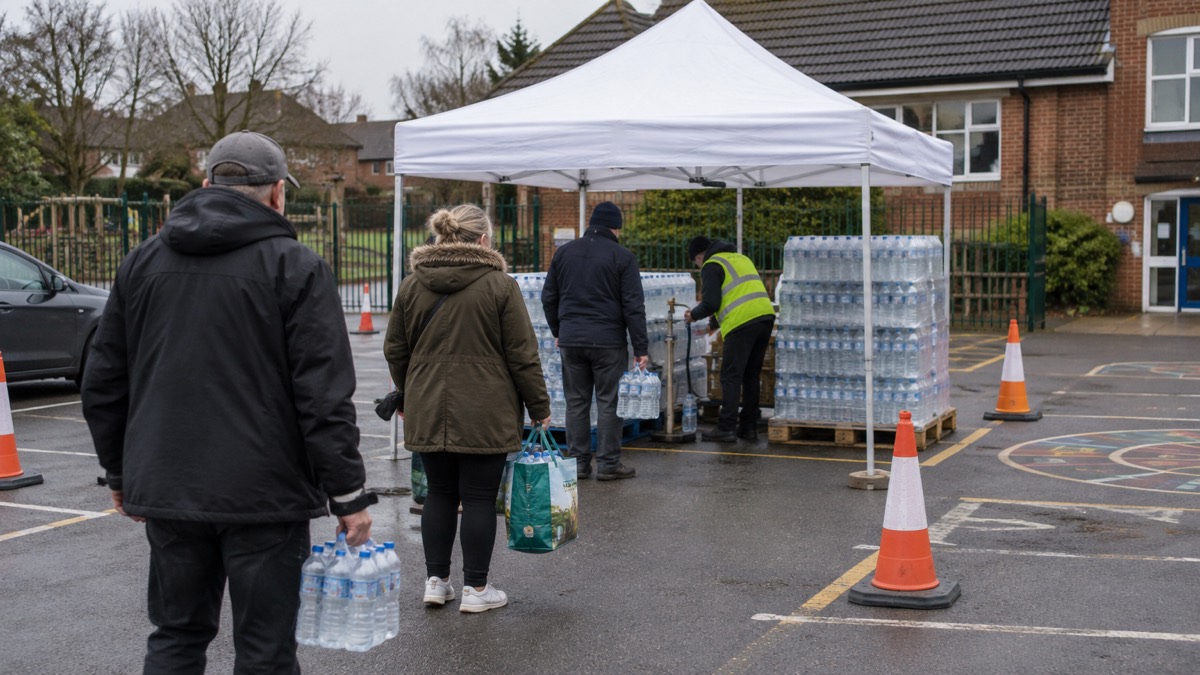
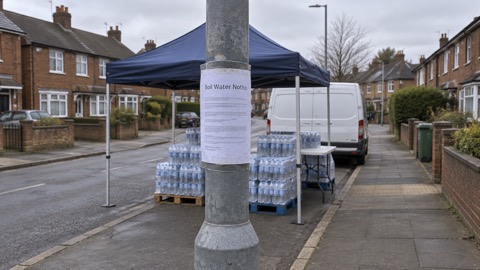
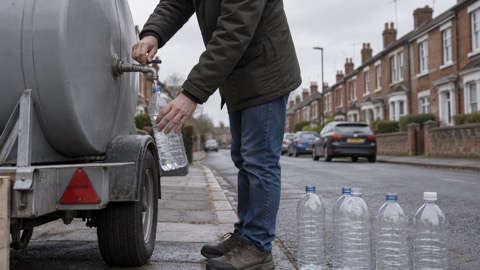
If your taps stop and the interruption is going to last, your water company may open a bottled water station: a collection point, usually in a large car park, where you can pick up drinking water. Companies say they normally choose a large car park in an accessible area as close to the centre of the interruption as possible, working with the council or community groups1. Bristol Water says it usually uses local supermarket or pub car parks2, and Affinity Water names supermarket car parks, community centres and sports centres3.
What you can expect is fairly consistent. You are entitled to 10 litres of bottled water for every 24 hours you are without a mains supply1. In the incidents researched by the Consumer Council for Water, people typically received two lots of 6x2L packs of water, usually loaded into car boots by staff members4. Most went every two to three days4.
The practical points are these. Check your company's website by postcode before you set out, because locations and opening hours change5. Take something to carry water in if you are on foot. And if you cannot get out, or need water for medical reasons, ask about the Priority Services Register, because delivery to the home is arranged through it6.
Where the stations go, and why not closer
Water companies are not free to put a station on the nearest corner. South East Water explains the constraint plainly: it needs locations with very large car parks to safely manage the flow of customer traffic and the heavy goods vehicles delivering pallets8. That single requirement explains most of what feels inconvenient about station locations. A station has to take cars in volume, turn them round safely, and receive lorries loaded with pallets of water.
The result is a shortlist of site types. Bristol Water usually sets up in local supermarket or pub car parks2. Affinity Water's normal sites are supermarket car parks, community centres or sports centres3. Southern Water says it sets up drive-through bottled water stations with safe pedestrian access, at locations agreed in advance with local authorities as part of emergency planning9. That advance agreement matters: it means the site has already been checked for access and traffic.
Companies also say the aim is to be close to the affected area. South East Water says it normally sets up in a large car park, in accessible areas as close to the centre of the interruption as possible1. Northumbrian Water and Essex & Suffolk Water both say collection points will be located near your home, for you to collect water by foot or vehicle10.
In practice, "as close as possible" can still be a drive. In one recent incident a customer reported that the closest water station was in an area that was not even affected, and that a station was moved closer after the local MP pushed for it4. Locations are not fixed for the duration of an incident.
Who can collect, and how much you get
Anyone in the affected area can use a station. Yorkshire Water says that if it has advised you not to use your water, or you have no water for a long period, it may provide bottled water at a collection point12.
The amount is the part people most often ask about. South East Water states the entitlement as 10 litres of bottled water for every 24 hours that you are without a mains water supply1. Southern Water gives the same figure as a planning baseline: at least 10 litres of water per person, per day, rising to 20 litres per person, per day, after 120 hours, which is five days9. If you want to work out what your own household needs, see how much drinking water to store per person.
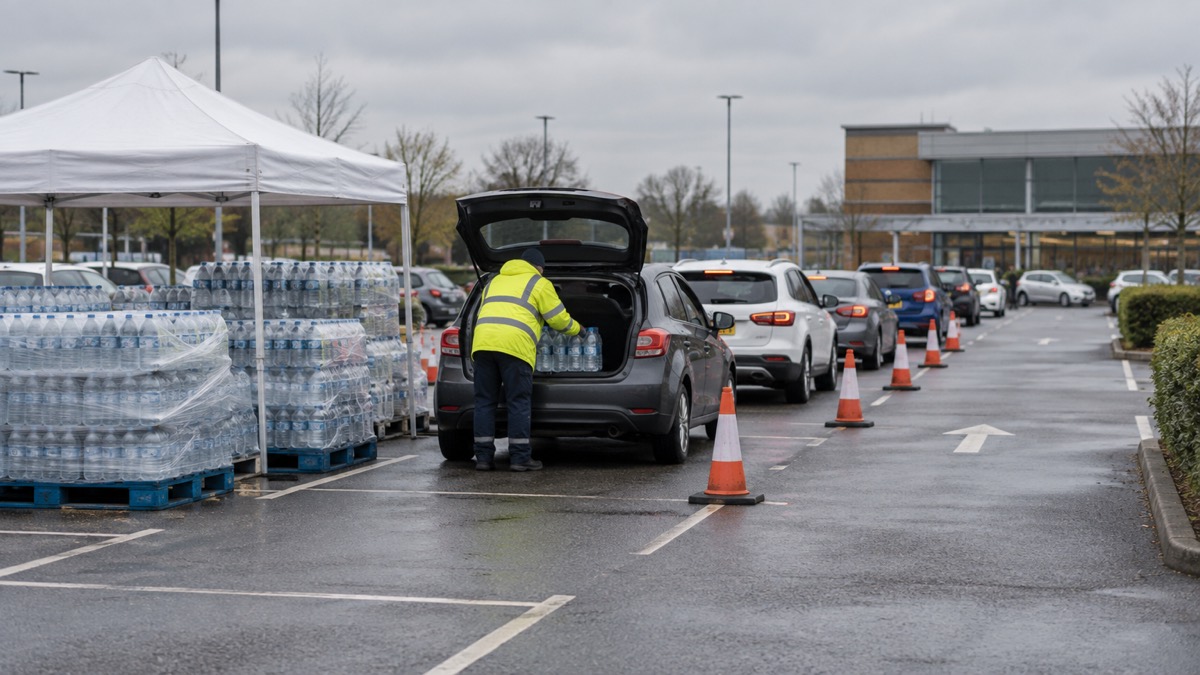
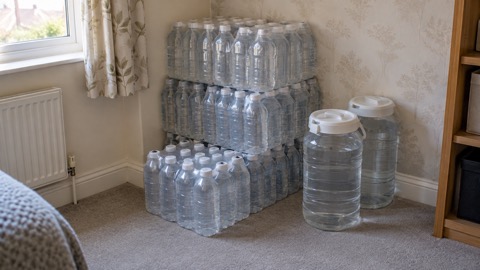
What that looks like at the barrier: in the incidents researched by the Consumer Council for Water, people typically received two lots of 6x2L packs of water, which were usually loaded into car boots by staff members4.
| Question | What the companies say |
|---|---|
| Who can collect? | Anyone with no water or told not to use their water for a long period12 |
| How much am I entitled to? | 10 litres per person for every 24 hours without mains supply1 |
| What is the planning baseline? | At least 10 litres per person per day, rising to 20 after five days9 |
| What does that look like on the ground? | Typically two 6x2L packs, loaded into the boot by staff4 |
Bottled water supplied by water companies has to comply with the Water Supply (Water Quality) Regulations, which means it can be used in the same way as tap water for all purposes, including preparing baby formula13. South East Water confirms that all bottled water it provides from a station, or delivers to your house or premises, is safe to use for baby formula8. For more on feeding infants during an interruption, see babies and formula feeds.
The trip, the queue and how often to go
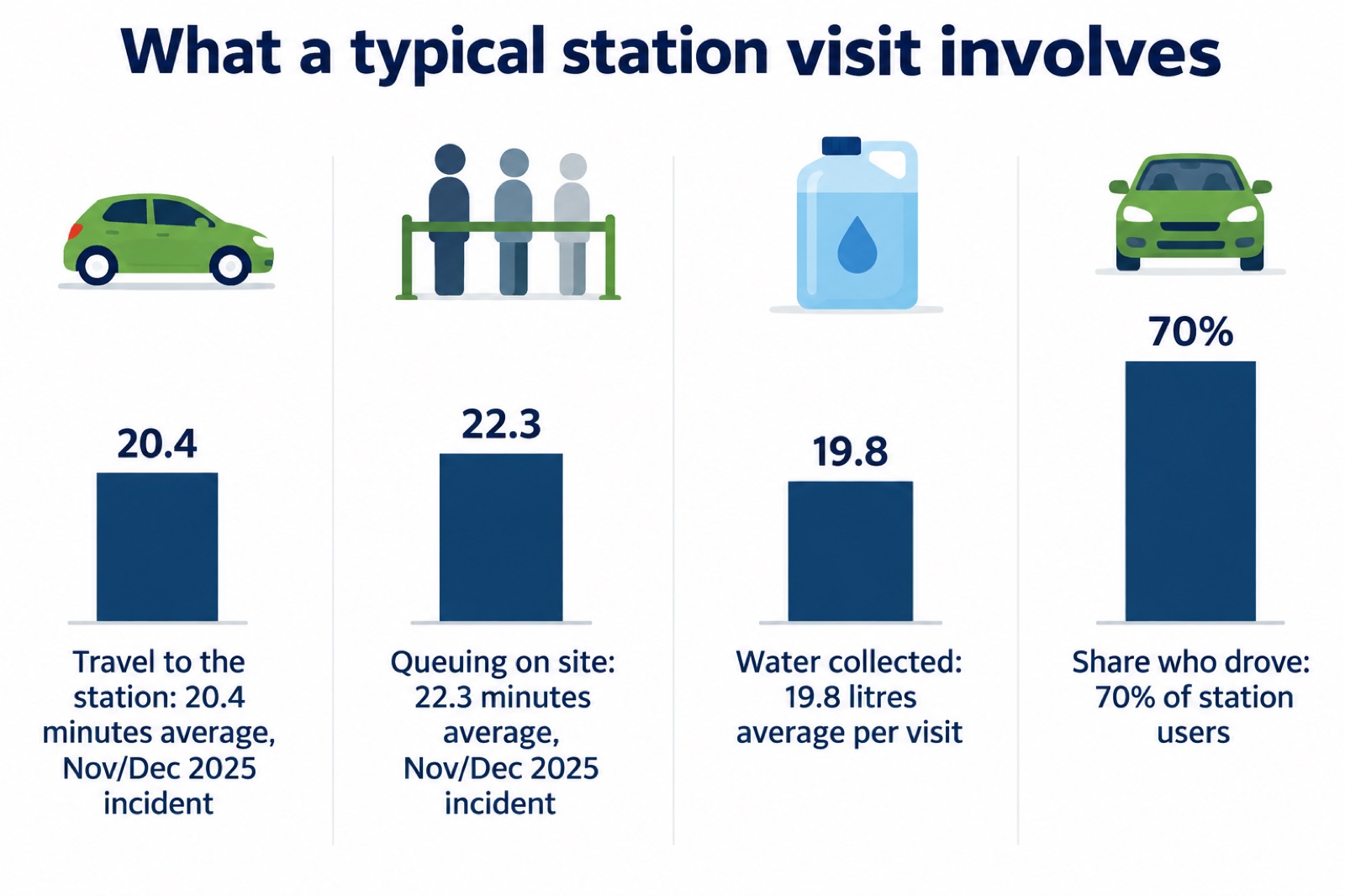
The Consumer Council for Water's research into two major South East Water incidents gives the clearest picture available of what a station visit is actually like. Across the two incidents, the average travel time from home to the station was 20.4 minutes and 22.2 minutes4. The average queue was 22.3 minutes and 26.4 minutes4. Around two thirds of customers, 67%, usually had to queue4.
Most people drove: 70% travelled by car or van in the first incident4. Among car users, 83% said traffic volume or road access made the trip difficult4. That is worth knowing before you set out, because the roads around a station can be the slowest part of the journey.
How often people went was driven by how long the incident lasted. 46% visited a station every two to three days4. The average amount collected per visit was 19.8 litres in the first incident and 17.8 litres in the second4.
Satisfaction with the queue was low: 26% rated their satisfaction with time queuing at 8 to 10 out of 104. Satisfaction with staff support was better, at 54% in the second incident4. The lesson for a household is to treat a station trip as a half-day errand rather than a quick stop, and to go when you need water rather than making repeated speculative trips.
When the station is miles away, or has run out
Two things go wrong most often: distance and shortage.
On distance, the research records customers in the January 2026 incident saying the bottled water collection points were 7 miles away and could not be approached, with one person queuing for 3 hours before giving up4. Another said they were advised bottled water was available 10 miles away, at a location that brought the town to a standstill4. These are first-hand accounts from customers, reported in the Consumer Council's research, not company statements, but they show what a station trip can become when demand is high.
On shortage, the Consumer Council found that over 40% of customers across both incidents did not believe the amount of water they were given at the stations was sufficient to meet their household's needs14. There are structural reasons. The Drinking Water Inspectorate's guidance accepts that water companies may not always be able to provide an emergency supply of water in bowsers or in bottles, for example if they have their own ongoing emergency such as a burst main15. South East Water explains why it prioritises bottled water stations over standpipes and static bowsers: stations are the most hygienic and efficient way to get drinking water to customers, standpipes can reduce mains pressure, and static bowsers can be difficult to keep sanitary8.
If a station is empty or too far, the alternatives are the ones covered in bottled supplies, tankers and bowsers from your water company. Public Health Wales notes that you may be given bottled water, or have water tankers or bowsers parked near your home to collect from16. While there is no mains supply, use alternative supplies such as bottled water solely for drinking, washing your hands and food preparation17.
Getting water home without a car
Companies do plan for people on foot. Southern Water's stations are drive-through sites with safe pedestrian access9, and Northumbrian Water and Essex & Suffolk Water both describe collection by foot or vehicle10. But the research shows the gap between design and experience: 82% of those without a car, whether walking, cycling or using the bus, had difficulty carrying the water home4.
That figure is not surprising once you picture the load. A typical collection of two 6x2L packs is heavy, and carrying that any distance by hand is hard work4.
What helps, based on what the facts show:
- Take wheels. A shopping trolley, a folding sack truck or a wheeled cool bag turns a 24 kilogram carry into a push.
- Take a companion if you can, so the load can be split and one person can manage doors and crossings.
- Collect less, more often if the station is close, rather than one heavy trip.
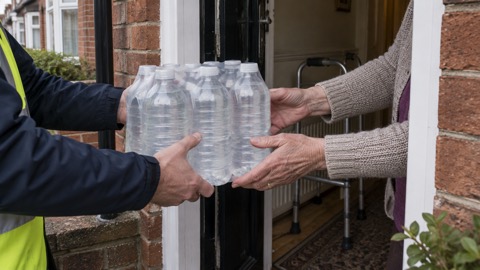
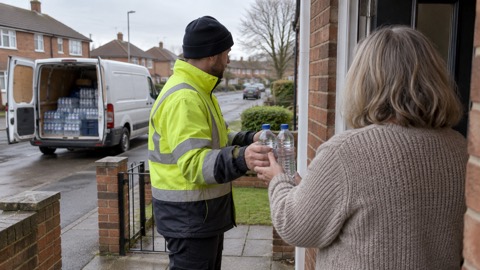
- Ask about delivery. If you cannot go outside and need water for medical reasons, Thames Water says it will deliver bottled water to you7. Affinity Water provides bottled water for customers who need additional assistance or who cannot collect from a station18.
The Priority Services Register is the route to all of this. It is a free register your water company keeps of customers who need extra help, and it is how delivery is arranged. Essex & Suffolk Water says that if your supply is going to be off for more than six hours, it will do its best to make water available to you in other ways, and will deliver bottled water to the home for customers with limited mobility or who rely on water for medical reasons6. Bristol Water's promise is that if your supply is interrupted for more than 4 hours, it will make sure bottled water is delivered to your home, aiming to get it to you within 12 hours unless supply is restored sooner2. For more on registering and what it covers, see how to get bottled water delivered if you are vulnerable and extra help in an emergency.
How long stations stay open, and how you hear about them
There is no standard opening period. A station can open for a single evening: when Southern Water opened a collection point for customers without supply in Crawley, it ran from 5.30pm until 10pm19. Others stay open for the duration of the interruption. Check the opening hours posted with the location before you travel.
Finding out where and when is the part companies most often get wrong. In the Consumer Council's research, 85% of station users in the first incident and 78% in the second said they received accurate information about the location of the water stations4. That leaves a substantial minority who did not.
The official route is your company's own website. The UK government's preparedness guidance says to look at your local water company's website, where you can search on your postcode and see if there is anything going on in your area5. Companies also notify customers by text message, phone call, social media and local press9. For more on how alerts reach you, see how will my water company contact me in an incident.
A sensible household habit, before anything happens, is to save your water company's incident page and phone number somewhere you can find them without power or internet at home. Then, when an incident starts, check the postcode search first, and check it again before you set out, because locations and hours change.
Sources (19)
- Our promise to you if your water supply is interrupted, South East Water, 2026
- Incident management, Bristol Water, 2026
- Incident support, Affinity Water, 2026
- CCW and Ofwat South East Water incident research report, Consumer Council for Water, June 2026
- Failure of water infrastructure or loss of drinking water, Wiltshire and Swindon Prepared, 2026
- Priority services, Essex & Suffolk Water, 2026
- Priority services, Thames Water, 2026
- FAQs: Kent and Sussex supply issues, South East Water, 2026
- What happens when there's an incident, Southern Water, 2026
- Managing incidents, Northumbrian Water, 2026
- Managing incidents, Essex & Suffolk Water, 2026
- How we manage incidents, Yorkshire Water, 2026
- Bottled water, Bristol Water, 2026
- South East Water incidents research, Consumer Council for Water, 3 June 2026
- Managing insufficiency of private water supplies, Drinking Water Inspectorate, 15 December 2025
- Weather and health, Public Health Wales, 2026
- Water supply interruptions or outages, UK Government Prepare campaign, 2026
- Incident support, Affinity Water, 2026
- Loss of supply in Crawley, Southern Water, 27 September 2025
 Supply Interruption Checklist
 Boil Notice Checklist
 Drinking Supply Checklist
 Boil Water Notice Advice
 When Supply Is Restored
 Check for an Outage
 Report No Water or Burst Pipe
 Bottled Water Delivery Help
 Flushing the Toilet in an Outage
 Washing Without Running Water
 Combi Boiler When Water Is Off
 Water Company Incident Alerts
 Checking a Water Company Caller
 Brown or Discoloured Tap Water
 Cloudy or Milky Tap Water