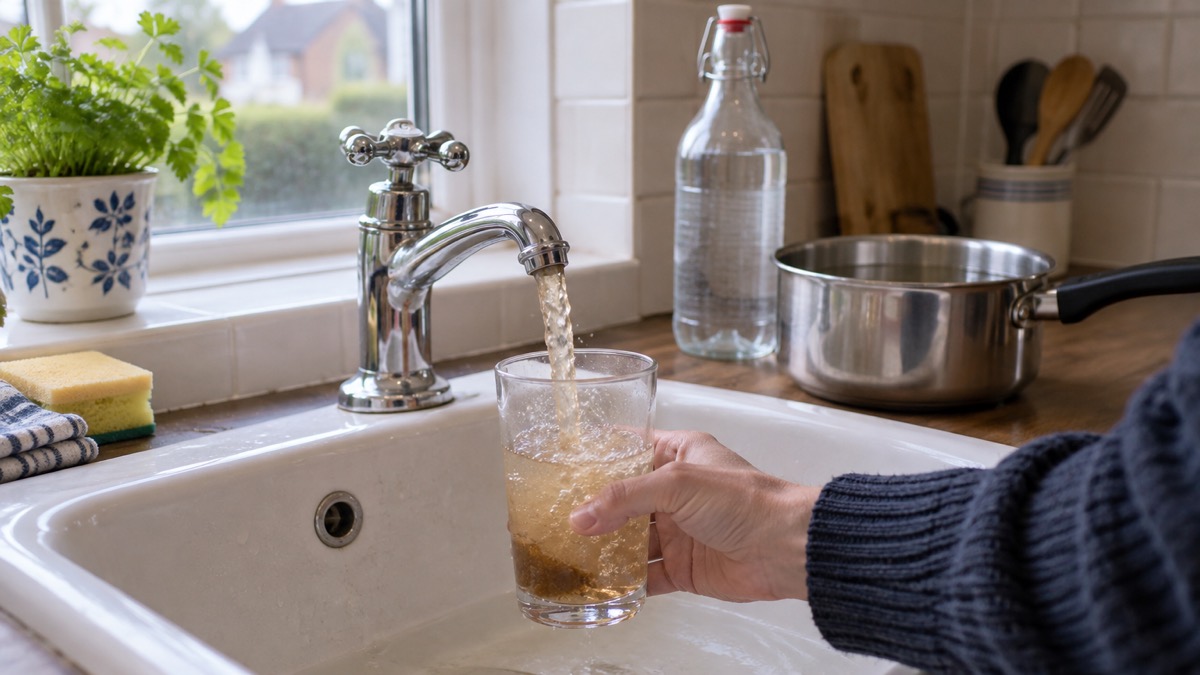
If your water has gone off, the most likely answer is that it will be back within 12 hours. That is the target most water companies work to for an emergency such as a burst main. Thames Water says 97% of the time water is back in supply within 12 hours1, and South Staffs Water says most supplies are restored in less than four hours2. The Consumer Council for Water (CCW) sets out the guaranteed standard: the company must restore the supply by the time stated in its notice, or within 12 hours if it was an emergency due to a leak or burst on a water main3.
Some repairs take longer. Larger mains are more difficult to repair, though the water is typically restored within 12 hours4. Storms and severe weather can push times out, and a major incident affecting thousands of properties can run for days. While you wait, the practical steps are simple: use the water you already have in your pipes and cistern, keep a few litres of bottled water for drinking, and check your company's incident updates for a restoration time.
Most supplies are back within 12 hours
The 12 hour figure is not a promise for every job, but it is the benchmark the industry works to and the standard the regulator expects. Affinity Water states it has a responsibility to restore your water supply within 12 hours9. Cambridge Water gives the same target, noting that some larger mains are more difficult to repair10. Thames Water aims to have water back on within 12 hours5.
For planned work the picture is different and more predictable. United Utilities says that if it needs to turn your water off, it will give you at least 48 hours' notice, and if plans change it will let you know as soon as possible11. That gives you time to fill containers and prepare, which is covered in our guide to planned work on the mains.
| Situation | Typical restoration time | Source |
|---|---|---|
| Emergency leak or burst on a main | Within 12 hours | 3 |
| Most supplies, planned or emergency work | Less than four hours | 2 |
| Larger mains repairs | Typically within 12 hours | 4 |
| Planned work | At least 48 hours' notice before the supply goes off | 11 |
| Severe storm (power networks, for comparison) | Up to 48 hours in category 2 storm weather | 12 |
The last row is about electricity rather than water, but it is a useful guide to how severe weather stretches every utility's repair times. Ofgem, the energy regulator, says local network operators aim to restore power within 12 hours for interruptions outside severe weather, and within 48 hours in severe storm category 2 weather13. Water repairs in the same storm will face the same access problems, so expect longer waits when the weather is bad.
If your supply is off and you have had no notice, report it. Our guide on how to report no water or a burst pipe explains what to tell your supplier and what to check first.
What to do while your water is off
You almost always have more water available than you think. The pipes in your home hold a few litres, the toilet cistern holds a flush or two, and any stored bottled water is ready to use. Our guide to usable supplies already in your pipes, cistern and cylinder explains how to get at it safely.
The government's preparedness guidance is blunt about timescales: during a national power outage, water supply may not come back on for a day or even longer14. The same caution applies to any major interruption. Plan for at least a day, and keep drinking water in store so you are not relying on a delivery.
- Drinking: keep bottled or stored water for drinking and for anyone who is medically dependent on water. Our guide on how much drinking water to store per person gives the quantities.
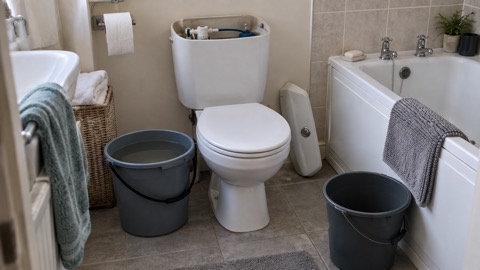
- Flushing: use the cistern or a bucket of stored water rather than flushing repeatedly. See how to flush the toilet during an outage.
- Washing: a small amount of water in a bowl goes a long way. See how to wash without running water.
- Medical devices: if you or someone in your household relies on a medical device that needs water to function, talk to your care team to make a plan for what to do if there is a water outage15. Our guide to home dialysis and medical needs during an interruption covers this in more detail.
- Private supplies: if you have a well, borehole or spring, the first steps are likely to include reducing current usage to conserve the supply and considering where you could access drinking water should the supply stop16. See private supplies: wells, boreholes and springs.
Longer outages: what South East Water customers saw in Kent and Sussex
Most interruptions are over in hours. A few are not, and it helps to know what a long one looks like so you can judge when to act. In November and December 2025, and again in January 2026, two major water supply disruptions affected tens of thousands of South East Water customers across Kent and Sussex17. The CCW's research into the incidents found that communication was the clearest and most consistent point of failure, with fewer than 1 in 10 affected customers satisfied with how reliably information was provided about when services would be restored17.
The January 2026 incident was caused by a combination of weather-related and network resilience issues, reduced capacity to treat water at the normal rate, alongside freeze-thaw conditions causing multiple burst mains across Kent and Sussex18. That combination, cold weather, bursts and reduced treatment capacity, is exactly the scenario that stretches restoration times beyond 12 hours.
Customer dissatisfaction with the reliability of timescales for restoring supplies was 82% after the November/December 2025 incident and 64% after the January 2026 incident18. Dissatisfaction with the time it took the company to respond was 56% and 46% respectively among customers who contacted it18.
What does that mean for you? Two things. First, treat any restoration time you are given during a major incident as an estimate, not a promise, and keep your own water in reserve. Second, do not wait for the company to contact you. Check its incident page and phone line yourself. Our guide to how water companies respond to a major incident explains what happens behind the scenes, and how will my water company contact me in an incident covers the channels they use.
Getting help if you need water delivered
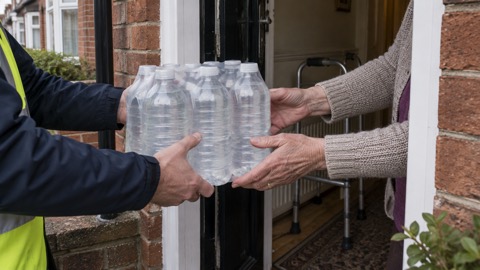
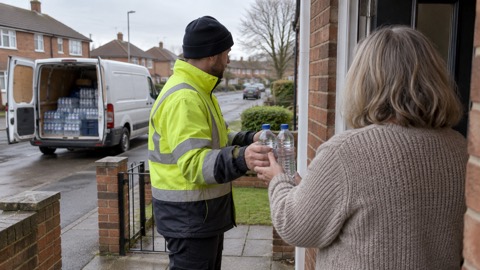
If you are likely to struggle without a supply, the single most useful thing you can do is join your water supplier's Priority Services Register. The government's preparedness guidance says that if you are eligible, sign up to your water supplier's Priority Service Register to let them know that you need additional support, including when there is an interruption to your supply14. Eligibility usually covers people who are older, disabled, medically dependent, or have limited mobility, and households with young children.
What you get varies by company, but the pattern is consistent:
| Company | What Priority Services gives you | Source |
|---|---|---|
| Wessex Water | Bottled water delivered within 5 hours unless supply is restored sooner (Priority 1 customers) | 6 |
| Southern Water | Bottled water delivered within 12 hours of the interruption, then every 24 hours until supply returns (Core Priority Services customers) | 19 |
| Bristol Water | Bottled water delivered to your home if supply is interrupted for more than 4 hours (CPSR customers) | 20 |
| Essex & Suffolk Water | Water made available if supply is off for more than six hours, and bottled water delivered to the home for those with limited mobility or who rely on water for medical reasons | 7 |
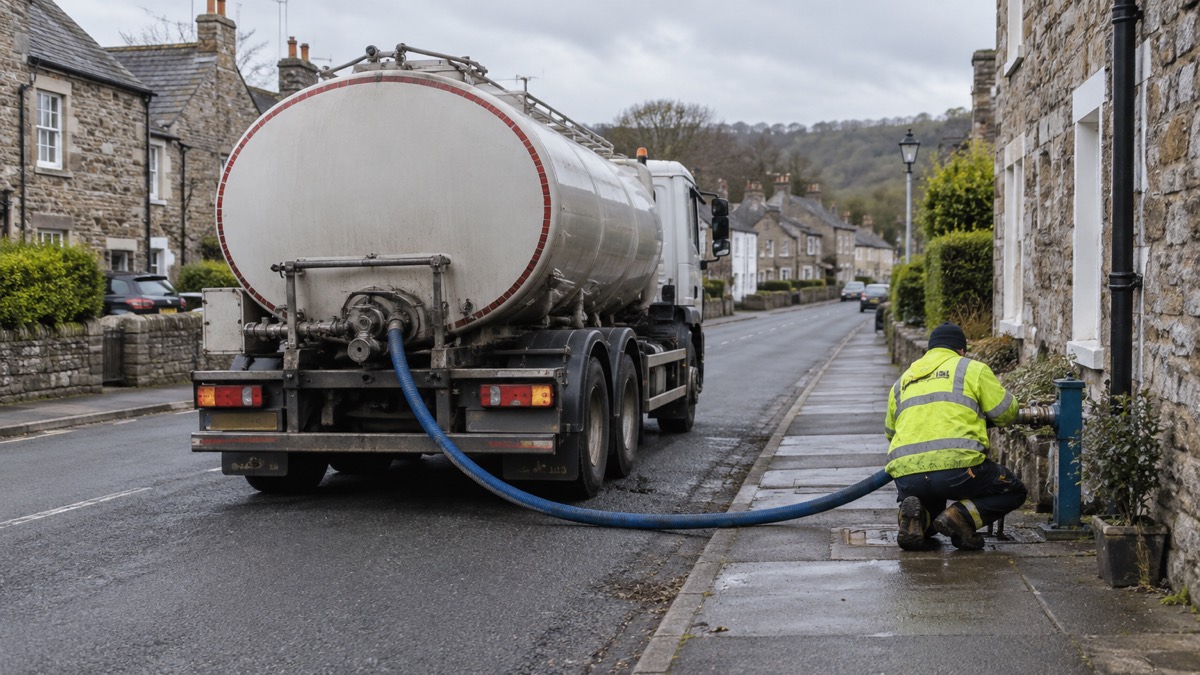
Registration is not instant everywhere. Northumbrian Water says it will update your account within 10 days of registering21, and Essex & Suffolk Water gives the same timescale for registering or changing options22. So do it now, not during an incident. Our guide on how to get bottled water delivered if you are vulnerable walks through the process.
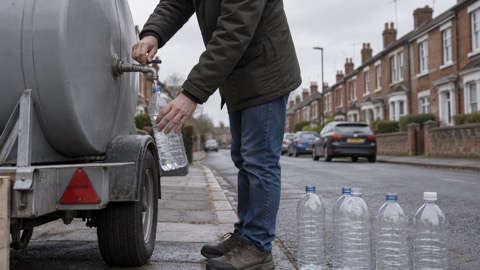
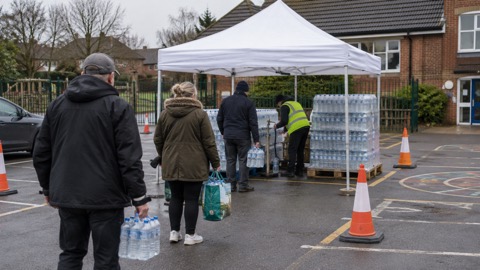
If you are not on the register and your supply is not back within 12 hours, Thames Water says it will arrange for an alternative, including bottled water stations set up locally to the incident in an accessible area5. Our guide on where bottled water stations are set up explains what to expect and what to bring.
When the water comes back on
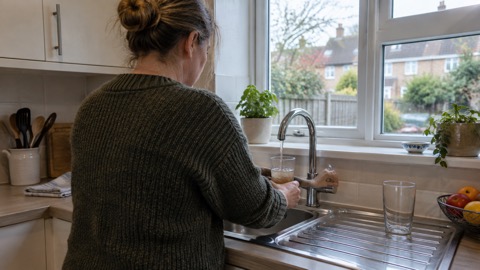
The supply returning is not quite the end of it. Water can be discoloured for a while as disturbed sediment moves through the pipes. Dŵr Cymru says discoloured water is unlikely to be harmful to health and often resolves within a few minutes once you run your taps, but it might need up to 45 minutes to clear completely8. The government's guidance says to try running the cold tap nearest to your stopcock, which is usually under your kitchen sink, for a while to see if it clears the discolouration, and contact your water provider if problems continue14.
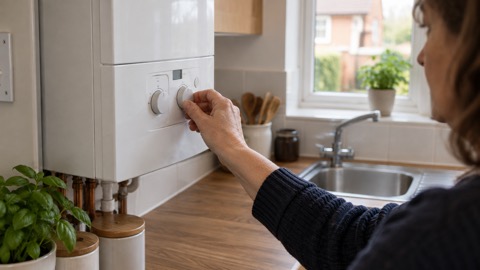
South Staffs Water gives a clear sequence: if it hasn't cleared after 20 minutes, wait for a couple of hours, and then repeat the process. If it hasn't cleared within 4 to 6 hours, contact the company24. Our guide on brown or discoloured tap water covers this in more detail, and what to do when your supply comes back on covers the wider checklist, including air locks and boiler questions.
If you have a private supply, flushing is more important. After a flood or storm, once the water supply has been restored, flush all associated taps for a few minutes, or longer depending on the length of pipework, to remove contaminated water from the plumbing lines23. Our guide to private supplies after floods or storms sets out the full routine.
Compensation and guaranteed standards
If your supply is not restored within the guaranteed standard, you may be entitled to a payment. Cambridge Water says that under its guaranteed service standards, if it fails to restore the supply within 24 hours, it will automatically pay £2010. The CCW sets out the general standard: the company must restore the water supply by the time stated in the notice, or within 12 hours if it was an emergency due to a leak or burst on a water main3.
The amounts and triggers vary between companies, so check your supplier's guaranteed service standards page or ask it directly. For comparison, the gas distribution network SGN says compensation for a loss of gas supply usually takes four to five weeks to be processed, though it can sometimes take up to three months to show on an account depending on the supplier's billing cycle25. Water payments are usually quicker, but do not count on the money arriving during the outage.
If you are on the Priority Services Register, the CCW says that if restoration is likely to take some time, the company should do what it can to support and meet your needs until the service is restored. That is the standard to hold them to.
Sources (25)
- Incident guide, Thames Water, 2026
- No water FAQs, South Staffs Water, 2026
- What standards are guaranteed by water and sewerage companies?, Consumer Council for Water, 2026
- Emergency guide, South Staffs Water, 2026
- What happens during an incident, Thames Water, 2026
- Guidance for incidents, Wessex Water, 2026
- Priority services, Essex & Suffolk Water, 2026
- Drinking water quality, Dŵr Cymru, 2026
- Incident support, Affinity Water, 2026
- Emergency guide, Cambridge Water, 2026
- New water pipes, United Utilities, 2026
- Help in a power cut, Ofgem, 2026
- Plan for a power cut, Ofgem, 2026
- Water supply interruptions or outages, UK Government, 2026
- Water supply interruptions or outages, UK Government, 2026
- Private water supplies, Scottish Borders Council, 2026
- South East Water incidents research, Consumer Council for Water, 2026
- CCW Ofwat SEW Incident Research Report, Consumer Council for Water, 2026
- What happens when there's an incident, Southern Water, 2026
- Incident management, Bristol Water, 2026
- Register for priority services, Northumbrian Water, 2026
- Change priority services options, Essex & Suffolk Water, 2026
- Private water supplies after floods or storms, Argyll and Bute Council, 2026
- Appearance of your water, South Staffs Water, 2026
- Gas supply updates, SGN, 2026
 Supply Interruption Checklist
 Boil Notice Checklist
 Drinking Supply Checklist
 Boil Water Notice Advice
 Check for an Outage
 Report No Water or Burst Pipe
 Bottled Water Stations
 Bottled Water Delivery Help
 Flushing the Toilet in an Outage
 Washing Without Running Water
 Combi Boiler When Water Is Off
 Water Company Incident Alerts
 Checking a Water Company Caller
 Brown or Discoloured Tap Water
 Cloudy or Milky Tap Water