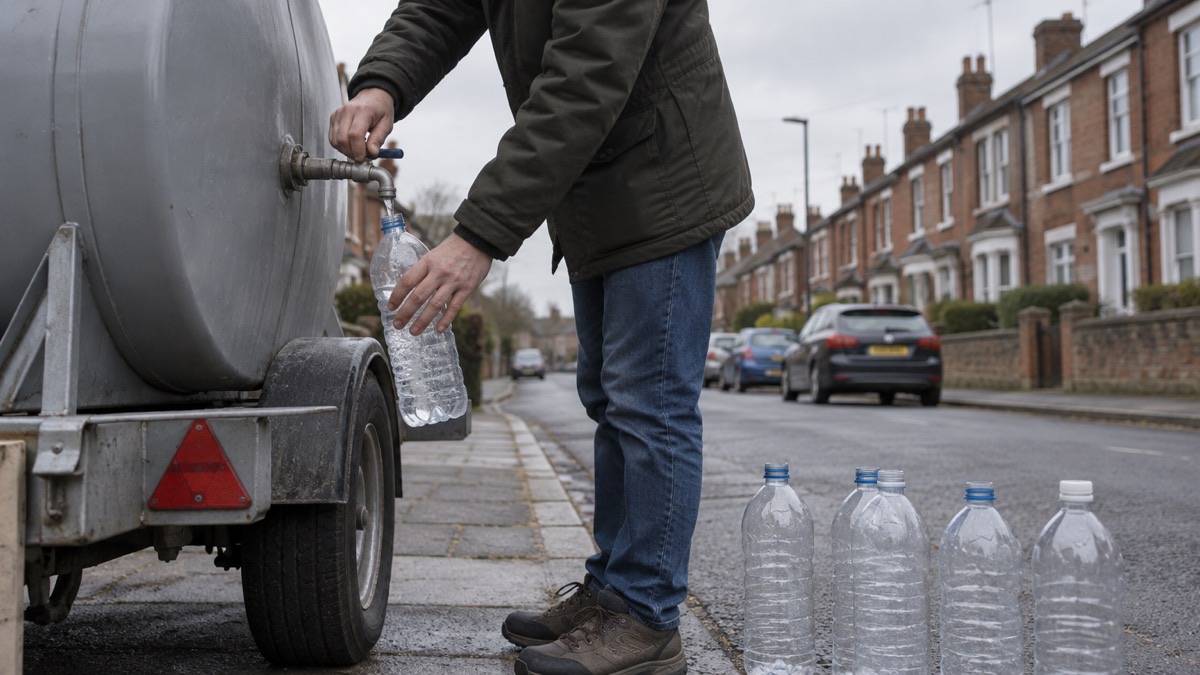
If the water has stopped, or the pressure has dropped to a trickle, the first thing to do is check your water company's website. Your water company is the best source of information during an interruption: search your postcode on its site to see whether there is a known problem in your area, and whether alternative water is being handed out nearby1. Most interruptions are short and caused by scheduled maintenance or a burst main, but a major incident can leave some communities without supply for several days2.
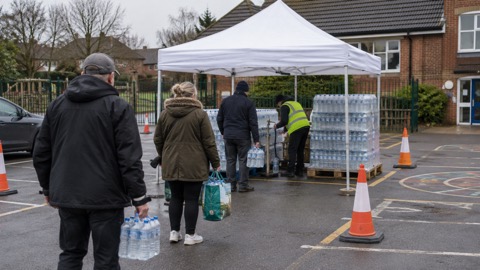
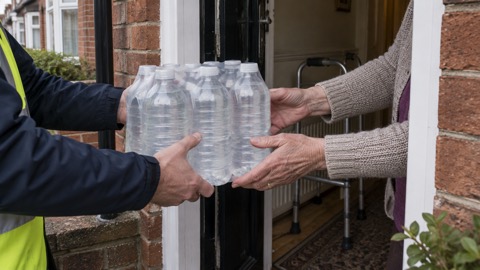
While the supply is off, use any bottled water you have solely for drinking, washing your hands and food preparation2. If you are on the Priority Services Register, your water company will arrange alternative supplies for you, and some suppliers make water available in the area, including delivering bottled water to the home, if the supply is likely to be off for more than 12 hours2.
The sections below take you through checking for an outage, telling low pressure from no supply, what happened in Kent and Sussex, how drought and groundwater affect supplies, and how to get extra help before the next interruption.
Check your water supplier's incident updates first
Every water company publishes live information about its network, and that is where an outage in your area will be listed. The government's preparedness guidance is direct: check your water provider's website regarding service in your area, and to see if you can pick up alternative sources of water1. Your water company is the best source of information if this happens2. If you are still having problems after an outage has ended, contact your water provider1.
The way you check varies slightly by company, but the principle is the same. Wiltshire and Swindon's resilience guidance says to look at your local water company's website, where you can search on your postcode and see if there is anything happening in your area3. Essex & Suffolk Water asks customers to check the local area online by entering an address or postcode to find disruptions or work nearby7. Hafren Dyfrdwy, which supplies parts of Wales, asks customers who notice a change in supply to check for known problems in their area before contacting the company8.
If you do not know who supplies your water, South East Water points customers to the Water UK find-your-supplier page, where you enter your postcode6. Water supply is organised by region, so your supplier is fixed by your address rather than chosen.
A few things are worth checking before you report a fault:
- Your internal stopcock. If neighbours have water and you do not, the problem may be inside your home.
- Planned work. Companies publish notices of scheduled maintenance, which is one of the common causes of interruption2.
- Your supplier's contact route. Use the number or form on the company's own site rather than a number found elsewhere.
If the supply is off because of flooding, contact your utility suppliers, as they may need to check your gas, electricity and water supply for safety9.
Low pressure or no water: what the difference tells you
A dribble and a dry tap point to different things, and the distinction decides what you do next. If you have no water or low pressure, check for known issues in your area to see if there is anything currently happening that could cause a supply issue5. That is usually caused by emergency repair work near your home, such as when a main supply pipe has burst, but it could also be a problem with the pipes in your home5.
| What you notice | Likely cause | What to do |
|---|---|---|
| No water, neighbours also affected | Burst main or emergency repair nearby5 | Check your supplier's known issues page and wait for updates5 |
| No water, neighbours unaffected | Problem with pipes in your home5 | Check your internal stopcock and plumbing |
| Low pressure only | Emergency repair work near your home5 | Check for known issues before reporting5 |
| Discoloured water after supply returns | Disturbed sediment in the mains | Run the cold tap nearest the stopcock for a while4 |
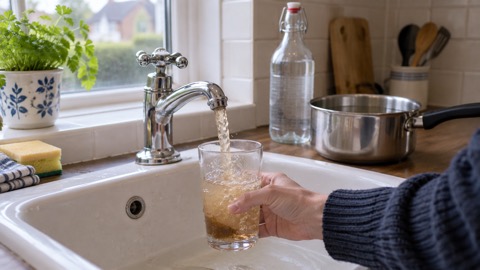
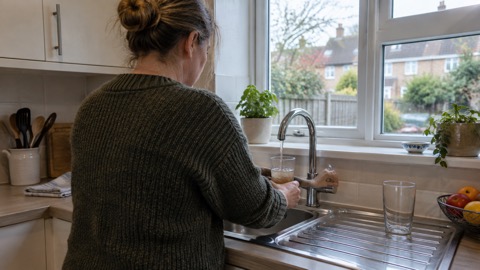
When the supply comes back, the water can be discoloured. Try running the cold tap nearest to your stopcock, which is usually under your kitchen sink, for a while to see if it clears the water, and contact your supplier if you continue to have problems1. There is more detail in our guide to brown or discoloured tap water, and if the pressure stays low after the interruption, see what to do about low pressure.
Recent supply disruptions in Kent and Sussex
The south east has had the most documented recent experience of major interruption, and it shows why checking updates matters. Two major water supply disruptions affected tens of thousands of South East Water customers across Kent and Sussex5. The first came in November and December 2025, and a second followed in January 20265.
The January 2026 incident had a combination of causes: weather-related and network resilience issues, reduced capacity to treat water at the normal rate, alongside freeze-thaw conditions causing multiple burst mains across Kent and Sussex10. That combination is worth knowing about, because it means a cold snap can produce an outage even where the network is otherwise working.
The research also found a communication problem. In the November to December 2025 disruption, 26% of customers were unclear how to access safe drinking water; in the January 2026 disruption, that rose to 41%11. The lesson for any household is to know now, before an incident, where your supplier posts updates and where alternative water would be handed out.
Interruptions are not confined to the south east. After a supply interruption in Flintshire, the Welsh Government said some communities were affected for several days12. That is the outer edge of what a household should plan for: not hours, but days.
Water scarcity, drought reports and groundwater levels
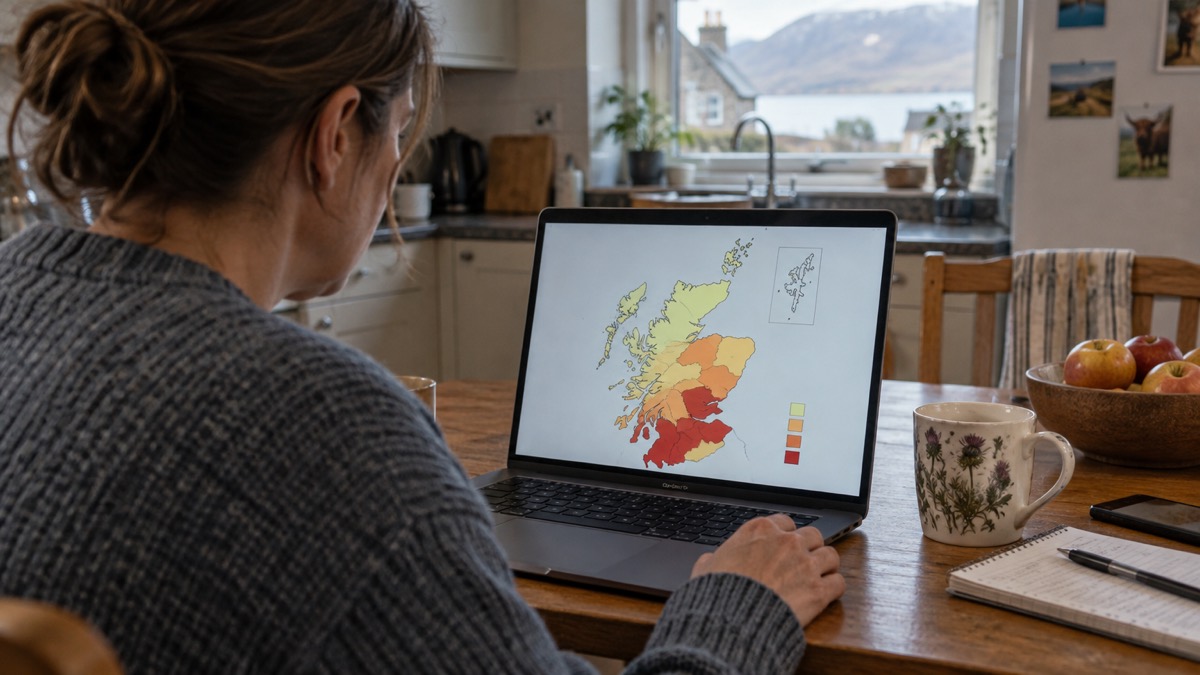
Drought and scarcity are slower than a burst main, but they change what your supplier can deliver and what restrictions apply. In Scotland, the Scottish Environment Protection Agency (SEPA) publishes a water scarcity report giving a summary of the overall level of water scarcity across different regions of Scotland, based on factors including river flow, rainfall, soil moisture, groundwater levels, rainfall forecast, loch levels and ecology monitoring14. SEPA measures rainfall and river flow data at hundreds of sites across Scotland and compares current conditions against long-term values to see how dry or wet it has been14.
The report is updated weekly on a Thursday, and SEPA produces weekly reports between May and September15. The latest report at the time of writing was dated 22 October 2026, headlined "Further recovery in many areas with more rainfall expected in coming days"15. You can view water scarcity area descriptions or enter your postcode in SEPA's Drought Risk Assessment Tool and click on Water Scarcity Level14. If you have a private supply, reporting the impact of dry weather on it helps SEPA assess water scarcity stress in your area16.
In England, groundwater is the measure to watch in some areas. Portsmouth Water reported on 15 October 2026 that groundwater levels across its supply area were 1.4 metres below average for the time of year, with no water use restrictions in place17. Groundwater also causes a different kind of problem: water coming up through the ground is a sign of groundwater flooding18.
Hosepipe bans and restrictions: check with your supplier
Restrictions are local, not national. Other exemptions may also apply, so check with your water company to see what rules are in place in your area19. That applies whether you are under a hosepipe ban or simply want to know what you can use water for in dry weather.
Even where no ban is in force, Dŵr Cymru asks customers to use water wisely and adopt water efficient practices21. The same principle applies across the UK: restrictions are a signal of pressure on supplies, and reducing use helps.
If you are on a private supply, such as a well, borehole or spring, the rules and the risks are different. Our guide to private supplies explains what to check, and SEPA's advice for private supply users is to report the impact of dry weather on your supply16.
Priority Services: extra help when the water goes off
If anyone in your household would struggle without mains water, the single most useful thing you can do is join the Priority Services Register. It is a free service that can give extra help if your electricity, gas or water stops working22. It is for people who might need help during a power cut or water outage, or someone they care for23.
The help it brings is practical. It may include access to bottled water during a water supply interruption, priority assistance, and tailored support if there is a power or gas outage24. It can also provide additional help during power or water outages, accessible communications, and other practical support25. If you are on the register, your water company will arrange alternative supplies for you during an outage2. Your suppliers will know you need extra support if your gas, electricity or water supply is cut off26, and they will message you when there is an interruption to the supply in your area27.
United Utilities gives a concrete example of what this means: if your water is likely to be off for more than 12 hours, the company will try to make water available in your area using other means, which may include delivering bottled water to the home4.
To register, sign up to your water supplier's Priority Services Register if you are eligible, so they know you need additional support, including when there is an interruption to your supply2. You can also check if you can join the free register at thepsr.co.uk, which gives extra advice and support from your energy or water supplier28. Central Bedfordshire Council's emergency kit guidance lists registering for the Priority Service Register as a step to take to receive extra help in a utility outage if eligible29.
For more on support for households with additional needs, see Extra Help in an Emergency, and for medical equipment specifically, our guide to home dialysis and medical needs during an interruption.
What to do while the supply is off
While there is no mains water supply, use alternative water supplies such as bottled water solely for drinking, washing your hands and food preparation2. That keeps your limited supply going for the things that matter most. If you have not stored any water, our guide to how much drinking water to store per person sets out a sensible starting point, and the supply interruption checklist lists what to keep ready.
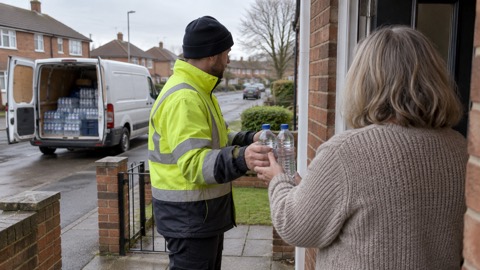
If your supplier is handing out bottled water, our guide to bottled supplies, tankers and bowsers from your water company explains how these distributions usually work, and where bottled water stations are set up covers what to expect. If you are registered as vulnerable, see how to get bottled water delivered.
When the supply returns, run the cold tap nearest the stopcock for a while to see if any discolouration clears, and contact your supplier if problems continue30. Our guide to what to do when your supply comes back on takes you through the first hour.
Sources (30)
- Water supply interruptions or outages, UK Government (Prepare), 2026-10-12
- Water supply interruptions or outages, UK Government (Be Ready), 2026-10-12
- Failure of water infrastructure or loss of drinking water, Wiltshire and Swindon Prepared, 2026-10-25
- Help with your water supply, United Utilities, 2026-10-28
- Water quality, Severn Trent Water
- Tubs, South East Water, 2026-10-29
- No water, Essex & Suffolk Water, 2026-10-28
- Supply interruptions, Hafren Dyfrdwy
- Housing help if your home is flooded, Somerset Council, 2026-06-04
- CCW Ofwat SEW Incident Research Report, Consumer Council for Water, 2026-06
- South East Water incidents research, Consumer Council for Water, 2026-06-03
- Written statement: water supply interruption Flintshire, Welsh Government, 2025-08-27
- Supply interruptions, Severn Trent Water
- Water scarcity report FAQs, Scottish Environment Protection Agency, 2026-10-29
- Water scarcity, Scottish Environment Protection Agency, 2026-10-22
- FAQs for private water supply users, Scottish Environment Protection Agency, 2026-10-29
- Current water situation in our supply area, Portsmouth Water, 2026-10-15
- Report a flood, Wessex Water, 2026-10-28
- Hosepipe bans, Consumer Council for Water, 2026-08-04
- Hosepipe bans FAQ, Consumer Council for Water, 2026-08-04
- Hosepipe ban exemptions, Dŵr Cymru, 2026-10-28
- Guidance at home, Oxford Health NHS Foundation Trust, 2026-09-15
- Be ready for emergencies, Cheshire Fire and Rescue Service, 2026-10-14
- Wellbeing and safety, Surrey County Council, 2026-10-28
- Storm preparation, Cornwall Council, 2026-10-29
- Keeping warm, healthy and safe in cold weather, Greater London Authority, 2026-10-25
- Protect yourself and your family, Dorset Prepared, 2026-04-21
- Safe and well booklet, Cheshire Fire and Rescue Service, 2026-04
- Emergency kits and grab bags, Central Bedfordshire Council, 2026
- Loss of essential services, Greater Manchester Combined Authority, 2026-10-29
 Supply Interruption Checklist
 Boil Notice Checklist
 Drinking Supply Checklist
 Boil Water Notice Advice
 When Supply Is Restored
 Report No Water or Burst Pipe
 Bottled Water Stations
 Bottled Water Delivery Help
 Flushing the Toilet in an Outage
 Washing Without Running Water
 Combi Boiler When Water Is Off
 Water Company Incident Alerts
 Checking a Water Company Caller
 Brown or Discoloured Tap Water
 Cloudy or Milky Tap Water