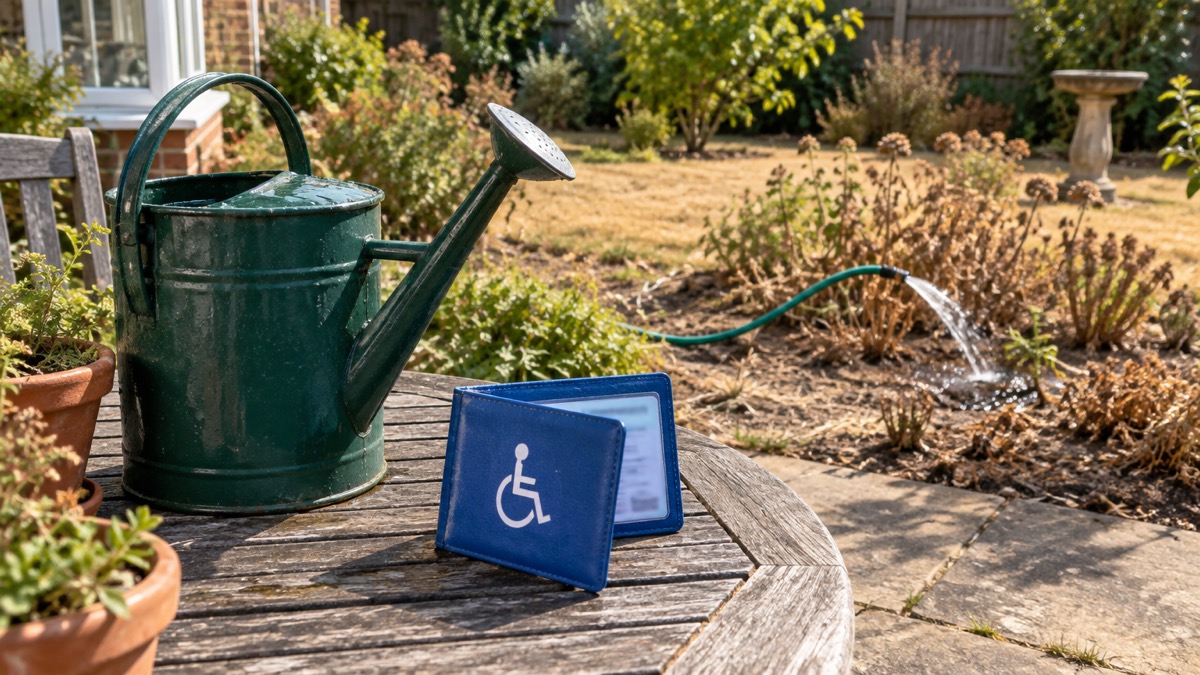
If a hosepipe ban is in force where you live and you hold a Blue Badge, you are usually exempt, but the exemption is not automatic everywhere and it is not permanent. Most water companies exempt Blue Badge holders, customers on their Priority Services Register with medical or mobility needs, and customers on the WaterSure tariff for medical reasons1. Some ask you to be on the register first, and some require that you cannot reasonably use a watering can or bucket instead2.
The practical step is the same whichever company supplies you: contact it, ask to join the Priority Services Register if you are not already on it, and confirm its exemption rules in writing. The register is completely free to join3. Do this before a ban reaches your area if you can, because exemptions can be withdrawn as a drought worsens: South East Water removed previously permitted exemptions in Sussex from 9 October 2026, leaving hosepipe use allowed only where it is necessary for health, safety or welfare reasons4.
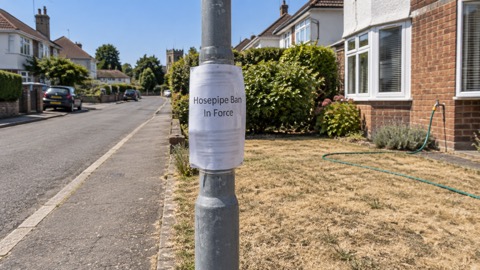
What a ban stops is narrow. It restricts hosepipes connected to the mains supply for non-essential uses such as watering the garden, filling a paddling pool or washing the car5. Drinking, cooking, showering and washing clothes carry on as normal6. Breaking a ban can lead to a fine of up to £1,0007.
Who qualifies for an exemption, and how to claim it
The core group is consistent across companies. Southern Water exempts customers on its Priority Services Register with medical or mobility needs, including Blue Badge holders and those on its WaterSure tariff10. Cambridge Water says Blue Badge holders, Priority Services Register customers and WaterSure tariff customers for medical reasons are exempt11. Bristol Water exempts customers who hold a Blue Badge, are on the register, or receive support through its WaterSure Plus tariff and are unable to make reasonable adjustment because of a health condition or disability12.
The detail differs in ways that matter. Affinity Water's exemption covers register customers, WaterSure customers and Blue Badge holders who cannot use a watering can or bucket because of a health condition or disability2. South East Water says Blue Badge holders and customers with mobility issues who are unable to use a watering can are exempt and do not need to apply or contact the company13. In parts of West Wales, Dŵr Cymru exempts certain vulnerable customers, Blue Badge holders, some commercial activities, and register customers who are physically unable or cannot make adjustments for health reasons8.
The Priority Services Register is the route most companies use. It is free, and eligibility includes people recovering from an injury14. If you have mobility problems and are on your water company's register, the hosepipe ban should not apply to you7.
- Check your company's exemption page before assuming you are covered, because the wording differs12.
- Join the Priority Services Register if you have medical or mobility needs and are not yet on it3.
- Ask your company what proof it wants if you rely on an exemption, since the rules are set company by company12.
- Expect the position to change as a drought develops: South East Water removed previously permitted exemptions for customers in Sussex from 9 October 2026, leaving hosepipe use allowed only where it is necessary for health, safety or welfare reasons13.
What a hosepipe ban stops you doing
A hosepipe ban means you must not use a hosepipe for non-essential water use15. The government's preparedness guidance puts it plainly: if a ban is in place where you live, you cannot use a hosepipe connected to your mains water supply for things like watering your garden, filling a paddling pool or washing your car5. Southern Water lists the activities it covers as watering gardens including with a sprinkler system, filling paddling pools, hot tubs, swimming pools, ponds or fountains, and washing cars, patios or windows10.
The Consumer Council for Water describes the same set: not using a hose pipe to water the garden, wash your car or fill a paddling pool16. Westminster City Council's drought advice says that during a Temporary Usage Ban you should avoid filling a paddling pool, washing your car and watering your garden17.
Allotments are caught too. Bristol Water says you cannot use a hosepipe to water a non-commercial allotment or vegetable patch18. The only exception it allows is where using a watering can is not a feasible option18.
What you can still use water for during a ban
Everyday essential use is untouched. Wessex Water says the ban does not impact everyday essential household use such as showering and washing9. South West Water says water can still be used as normal for drinking, washing and cooking6. Bristol Water lists drinking, cooking, showering and washing clothes among permitted uses15.
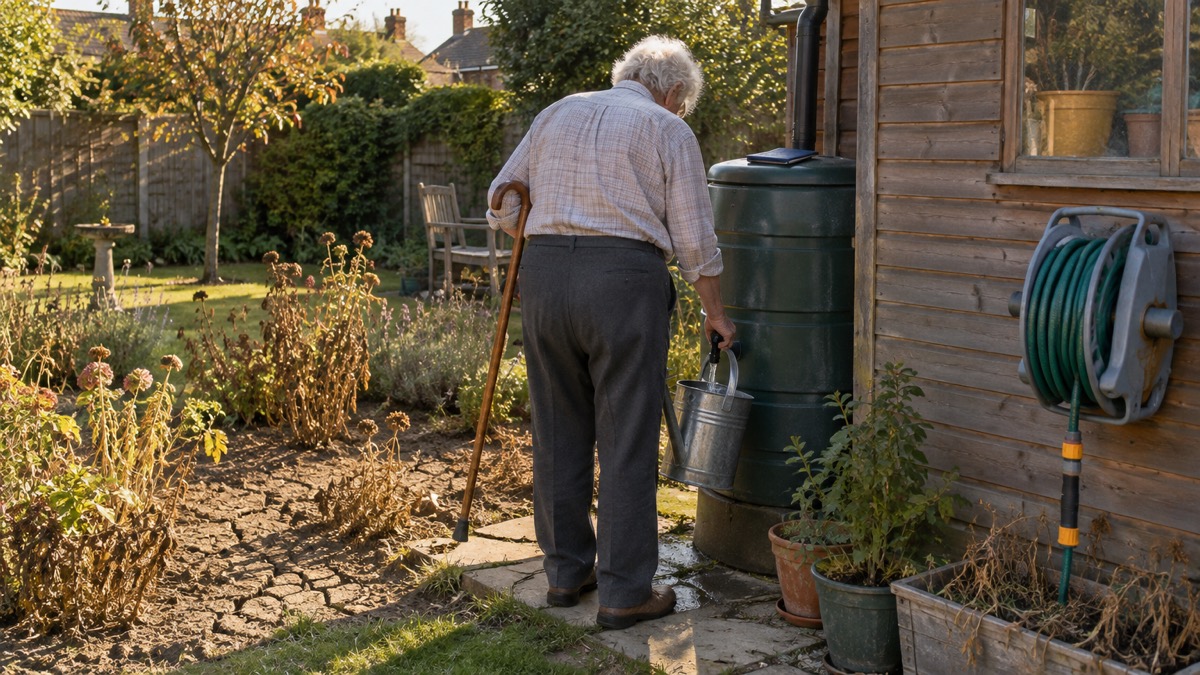
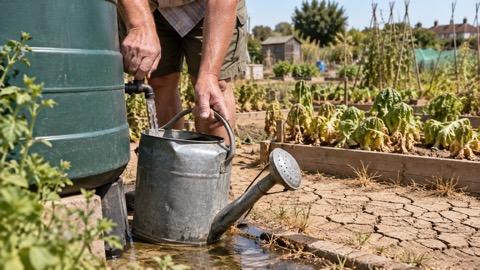
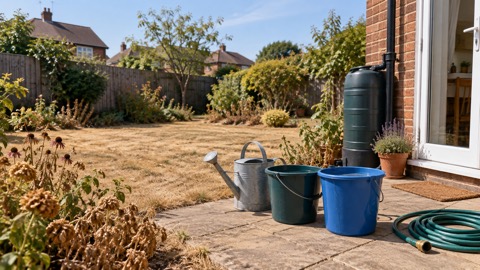
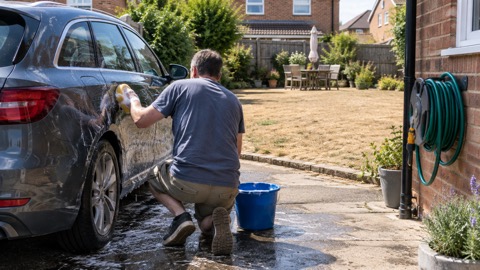
For the garden and the car, the watering can and the bucket are the workhorses. Wessex Water lists watering plants with a watering can, using water from a water butt, and filling up a bucket for car washing as allowed9. Bristol Water also permits washing your car at a commercial car wash15.
Some hosepipe uses survive a ban where they serve a specific purpose. South East Water's list of what you can still use a hosepipe for includes health or safety reasons, approved drip or trickle irrigation systems fitted with a pressure-reducing valve and a timer, reduced mobility without a Blue Badge where you cannot use a watering can, and watering newly laid turf during its first 28 days19. Wessex Water's garden exemptions include turf laid within the last 28 days20. For pools, South East Water allows hosepipe use where the pool is being built, used as part of medical or veterinary treatment, used to decontaminate animals from infection or disease, or used to rear or keep fish or other aquatic animals13.
Bristol Water allows one narrow fountain exception: where a fountain is part of a fishpond and is needed to provide enough oxygen in the water to keep fish healthy18. South Staffordshire Water notes that companies make standard exemptions such as for Blue Badge holders, and can make further standard exemptions for specific activities, for example where there is a need to maintain a pond that contains fish21.
| Still allowed | Usually restricted |
|---|---|
| Drinking, cooking, showering, washing clothes6 | Watering the garden with a hosepipe or sprinkler10 |
| Watering with a watering can or from a water butt9 | Filling paddling pools, hot tubs, ponds or fountains10 |
| Filling a bucket to wash the car9 | Washing the car with a hosepipe16 |
| Washing the car at a commercial car wash15 | Washing patios or windows with a hosepipe10 |
| Watering new turf in its first 28 days, where exempt19 | Watering a non-commercial allotment with a hosepipe18 |
Exemptions can be removed as a drought worsens
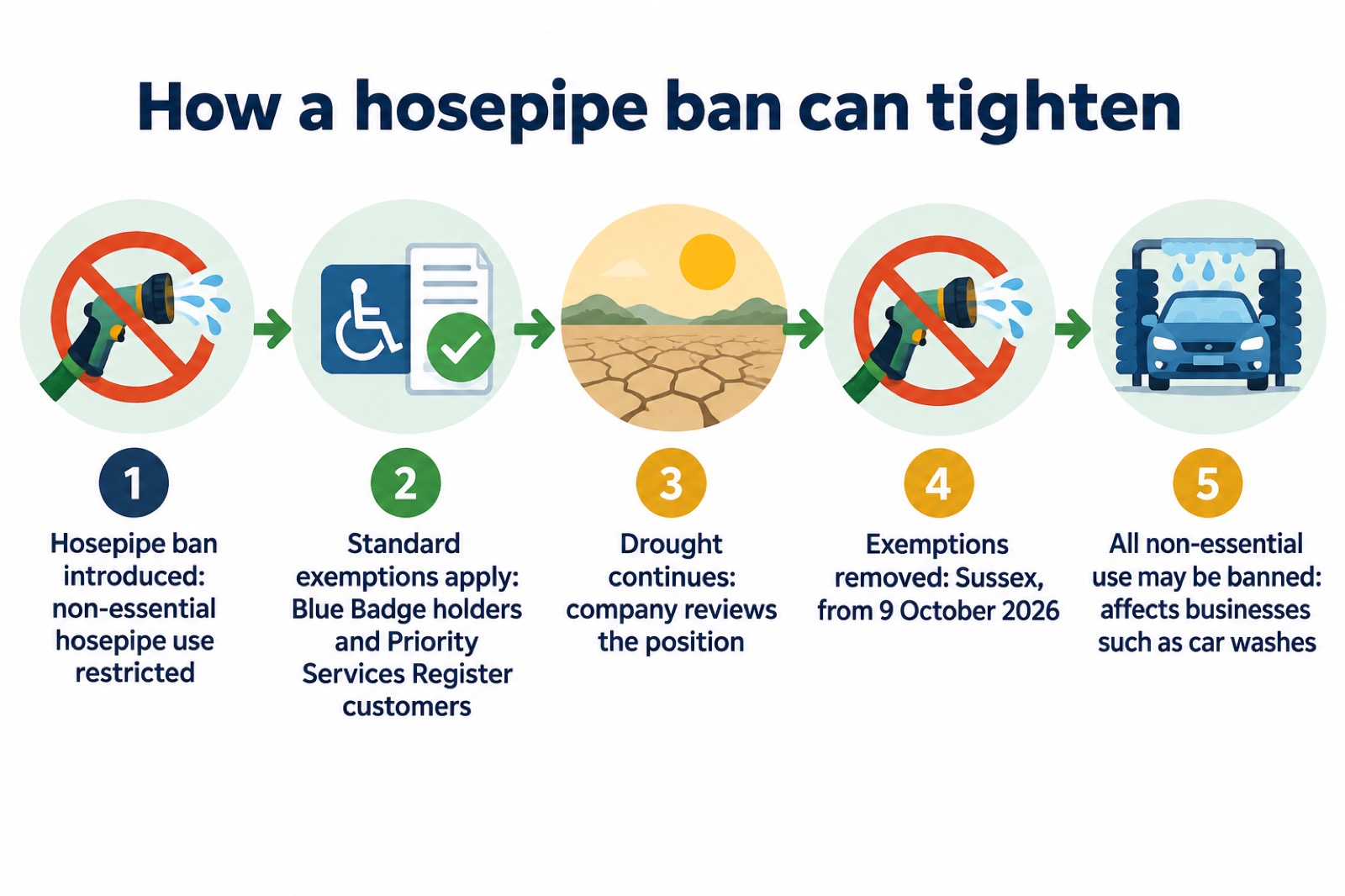
An exemption is a concession, not a permanent right. South East Water removed previously permitted exemptions for customers in Sussex from 9 October 2026, and from that date customers there can use a hosepipe only where it is necessary for health, safety or welfare reasons13. If the drought continues, your water company might ban all water use classed as 'non-essential', which would impact businesses who use water, such as car washes9.
The wider pattern is escalation. The Consumer Council for Water warns that if the drought continues, your water company might ban all water use classed as non-essential, which would affect businesses that use water such as car washes16. That is a step beyond a hosepipe ban, and it reaches commercial users as well as households.
Compensation is not the answer either. Cambridge Water says compensation does not apply during hosepipe restrictions, which are designated as an Ordinary Drought Order; compensation only applies during an Emergency Drought Order11. If your exemption is withdrawn, the fallback is the watering can, the bucket and any health or safety need you can demonstrate to your company.
Fines of up to £1,000 and how bans are enforced
Breaking a hosepipe ban is enforceable by law, and the Consumer Council for Water puts the maximum fine at up to £1,0007. Southern Water says the Act gives it powers to fine customers up to £1,000 if they ignore the ban10. Affinity Water says breaching the restrictions could result in a fine of up to £1,0002, and Bristol Water gives the same maximum18.
The legal machinery sits in the Water Industry Act 1991. Cambridge Water says anyone who fails to comply with a temporary use ban could be prosecuted and fined up to £1,000 by a Magistrates' Court under that Act11. Affinity Water cites Section 76(1) of the Act and the Water Use (Temporary Bans) Order 2010, and states that continuing to use a hosepipe without an exemption is a criminal offence2. Dŵr Cymru says a Temporary Use Ban is a legal restriction under the Water Industry Act 1991, and that breaches may result in enforcement action where appropriate8.
Companies generally say they would rather persuade than prosecute. Southern Water says it aims to communicate first, providing information about why it is important not to use a hosepipe during restrictions, but enforcement may follow for repeated or serious breaches10.
When a hosepipe ban is lifted
Bans stay in place until the water situation improves, and your company will announce when they are being removed and should provide regular updates16. Wessex Water says it can only lift the restrictions once water resources have safely returned to normal operating levels22.
Lifting is a local decision based on local storage. Dŵr Cymru lifted the hosepipe ban for customers served by the Mid and South Ceredigion water network on 4 September 2026, after an improvement in treated water storage levels across the affected zone meant restrictions were no longer required23. That shows how a ban can end in one area while remaining in force in another.
Bans have been widespread during 2026. Southern Water has a ban in place in Hampshire and on the Isle of Wight10. Bristol Water introduced its ban from 00:01am on Thursday 27 August across its supply area24. South East Water brought restrictions into force for customers in Sussex, Surrey, Hampshire and Berkshire from 00:01 on Saturday 25 July 20264. Affinity Water extended its Temporary Use Ban to its East region in August 2026, covering the Tendring Peninsula and north-east Essex2. Essex and Suffolk Water's ban came into force at 00:01 on Monday 3 August 2026, the first in the area since 199713.
The reasons are drought conditions rather than routine housekeeping. Southern Water says the warmest spring on record, followed by a record-breaking heatwave, left river levels 25% lower than expected for that time of year10. The Consumer Council for Water notes that companies may need to introduce hosepipe bans to manage longer periods of dry weather25.
For the current picture across the country, see England's 2026 Drought: Where Restrictions Apply. For the rules in more detail, read What You Can and Cannot Do in a Hosepipe Ban and Hosepipe Ban Fines and How to Report Misuse. If you are looking after someone who needs extra help in the heat, Extra Help in an Emergency explains the support available.
Sources (25)
- Hosepipe ban exemptions, Southern Water, 2026-10-29
- Hosepipe ban, Affinity Water, 2026-10-28
- Priority Services Register promise, Wessex Water, 2026-10-28
- Temporary use bans, South East Water, 2026-10-29
- Be informed about hazards: droughts, UK Government, 2026-10-19
- Hosepipe ban, South West Water, 2026-10-29
- Hosepipe bans FAQ, Consumer Council for Water, 2026-08-04
- Hosepipe ban frequently asked questions, Dŵr Cymru Welsh Water, 2026-10-28
- Hosepipe ban, Wessex Water, 2026-10-07
- Temporary use ban advice, Southern Water, 2026-10-28
- Temporary hosepipe ban FAQs, Cambridge Water, 2026-10-28
- Hosepipe ban exceptions, Bristol Water, 2026
- Temporary use ban, Essex and Suffolk Water, 2026-10-28
- Priority Services Register, Derbyshire County Council, 2026-10-29
- Hosepipe ban FAQs, Bristol Water, 2026
- Hosepipe bans, Consumer Council for Water, 2026-08-04
- Advice and support: drought, Westminster City Council, 2026-08-06
- Household FAQs, Bristol Water, 2026
- Temporary use ban FAQs, Essex and Suffolk Water, 2026-10-28
- Hosepipe ban exemptions, Wessex Water, 2026-10-28
- Drought FAQs, South Staffordshire Water, 2026-10-28
- Drought and water resources, Wessex Water, 2026-10-28
- Drought, Dŵr Cymru Welsh Water, 2026-09-04
- Drought 2026, Bristol Water, 2026-08-27
- Drought, Consumer Council for Water, 2026-06-10
 Flood Warning Checklist
 First Steps After a Flood
 Insurance Claim Records
 Barbecues and Wildfire Risk
 Hosepipe Ban Fines and Reporting
 Hosepipe Bans and the Garden
 Hosepipe Ban Rules
 Pools, Ponds and Car Washing
 Private Water Supply Drying Up
 Wildfire Home Protection
 What to Do Near a Wildfire