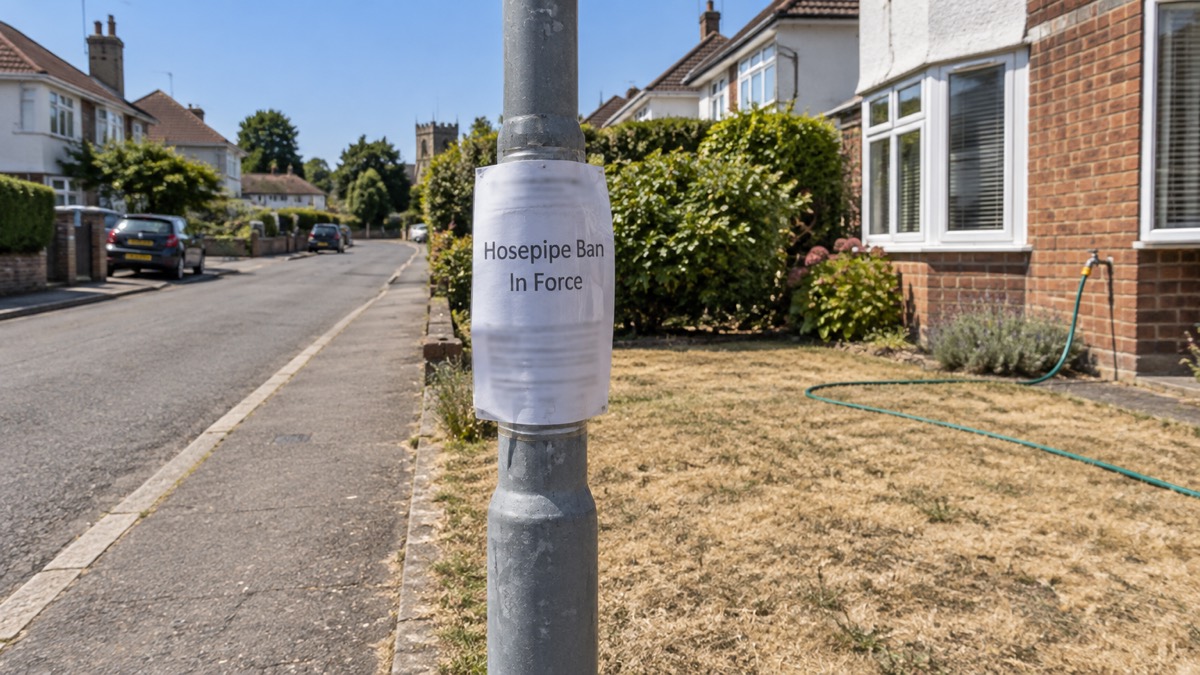
If a hosepipe ban is in force where you live, breaking it is an offence enforceable by law1. The ban is not a request: it is a legal measure under the Water Industry Act 1991, and continuing to use a hosepipe without an exemption is a criminal offence3. Most water companies would rather you understood the rules than prosecuted you, though. Affinity Water says that if you are seen using a hosepipe during the ban, you can expect the company to get in touch first, to check whether you are aware of the ban or entitled to an exemption, before it takes further action3.
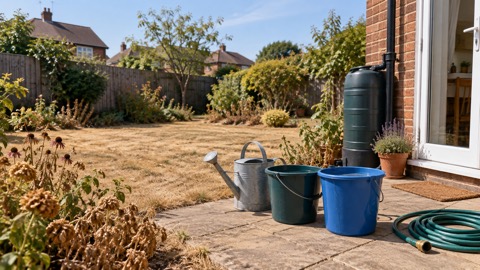
So the practical answer for a household is straightforward. Stop using a hosepipe connected to the mains for anything non-essential, switch to a watering can, bucket or water butt, check whether you qualify for an exemption, and if you are worried about a neighbour, report it through your supplier's proper channel rather than confronting anyone. Thames Water is explicit that you should not call 999 about a neighbour using a hosepipe4.
This page sets out what the fine is, how enforcement usually works, what the ban covers, who is exempt, how to report misuse, and how to find out whether a ban applies to you and when it might end.
The fine for breaking a hosepipe ban is up to £1,000
Every water company that publishes advice on this puts the maximum at the same level. Breaking the rules is an offence enforceable by law1. Affinity Water says breaching the restrictions could result in a fine of up to £1,0002, and Southern Water says the Act gives it powers to fine customers up to £1,000 if they ignore the ban6. Bristol Water puts the maximum fine at up to £1,0007.
The detail matters if you are the sort of person who wants to know exactly what is at stake. Cambridge Water says that under the Water Industry Act 1991, anyone who fails to comply with a temporary use ban could be prosecuted and fined up to £1,000 by a Magistrates' Court8. South East Water goes further and describes a fine of up to £1,000 per offence if convicted, citing section 76(5) of the Act9. In other words, the figure is a ceiling set by law, not a fixed penalty, and it is imposed by a court rather than posted to you like a parking ticket.
A hosepipe ban carries legal force, and Bristol Water says it is able to take enforcement action where the rules are breached7. That said, the tone of the companies' own guidance is instructive. Cambridge Water describes a hosepipe ban as its final defence for the environment, introduced only once many other actions have taken place10. The fine exists to make the restriction real, not to catch people out.
Water companies contact you first before taking action
If you are seen using a hosepipe during a ban, you can expect Affinity Water to get in touch first, to check whether you are aware of the ban or entitled to an exemption, before it takes further action3. That is the pattern to expect: a letter or contact, a conversation about whether an exemption applies, and only then anything more serious.
Enforcement sits with your water company, not with the council or the police. The government's preparedness guidance says water companies may choose to enforce Temporary Usage Bans, or hosepipe bans, to help conserve water11, and Westminster City Council repeats the same point: stay up to date on local hosepipe bans or legal limits enforced by your water company12. Your supplier is also the body that will tell you if it is going to turn off your water13.
What you cannot use a hosepipe for during a ban
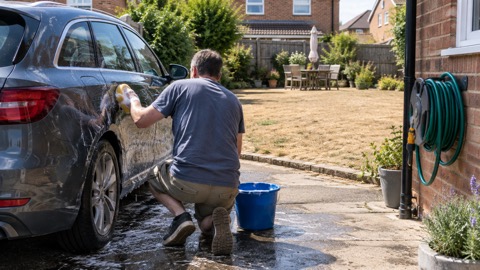
The core rule is simple: you must not use hosepipes for non-essential purposes while the ban is in place14. The government's own guidance says that if a hosepipe ban is in place where you live, you can't use a hosepipe connected to your mains water supply for things like watering your garden, filling a paddling pool or washing your car11.
The lists published by individual companies are longer and worth reading once, because they cover things people do not always think of as hosepipe use. Southern Water's list includes watering gardens, including using a sprinkler system; filling paddling pools, hot tubs, swimming pools, ponds or fountains; and washing cars, patios or windows6. Affinity Water adds jet washers, garden sprinklers and pressure washers to the list of equipment that is not allowed2. South West Water says customers must not use hosepipes for non-essential purposes while the ban is in place, including watering the garden, washing the car, filling a paddling pool, swimming pool or hot tub, cleaning the patio or driveway, and cleaning walls and windows15.
Essex & Suffolk Water sets out the prohibited purposes in the fullest terms, covering watering a garden, cleaning a private motor vehicle or trailer, watering plants on domestic or other non-commercial premises, cleaning a private leisure boat, filling or maintaining a domestic swimming or paddling pool, drawing water for domestic recreational use such as a hot tub, filling or maintaining a domestic pond, filling or maintaining an ornamental fountain, cleaning walls or windows of domestic premises, cleaning paths or patios, and cleaning other artificial outdoor surfaces16.
| Activity | Allowed during a ban? |
|---|---|
| Watering the garden with a watering can or water butt | Yes3 |
| Drinking, cooking, showering, washing clothes | Yes17 |
| Washing the car at a commercial car wash | Yes6 |
| Washing a private car with a hosepipe at home | No6 |
| Filling a paddling pool or hot tub with a hosepipe | No3 |
| Using a sprinkler, jet washer or pressure washer | No2 |
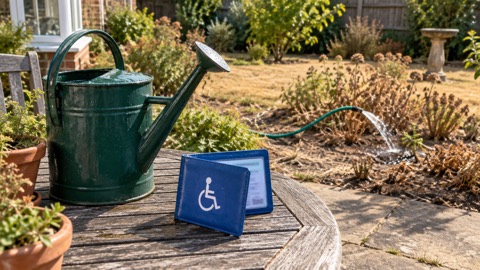
Exemptions: Blue Badge holders, priority services and specific activities
Some households can still use a hosepipe, and the exemptions are consistent across companies even where the wording differs. Southern Water says customers on its Priority Services Register with medical or mobility needs, including Blue Badge holders and those on its WaterSure tariff, are exempt6. Affinity Water says customers on the Priority Services Register, on the WaterSure tariff and Blue Badge holders can still use their hosepipe where they cannot use a watering can or bucket because of a health condition or disability2. Cambridge Water exempts Blue Badge holders, customers on its Priority Services Register, and WaterSure tariff customers for medical reasons8. Southern Water states that Blue Badge holders are automatically exempt from hosepipe restrictions18.
In Wales the position is framed in law as well as policy. Dŵr Cymru says some customers and activities are exempt under the legislation, including certain vulnerable customers, Blue Badge holders, some commercial activities, and customers on the Priority Services Register who are physically unable, or cannot make adjustments due to health reasons, to safely adhere to the prohibition19. Bristol Water says exceptions apply where water is being used by a business, or where customers are on its Priority Services Register, receive support from the WaterSure Plus tariff, or have a Blue Badge17.
If you think an exemption may apply to you, the practical step is to register. The Priority Services Register is run by suppliers to flag households that need extra help, and your water company can tell you how to join13. Do this before dry weather arrives rather than during a ban.
How to report someone using a hosepipe
If you believe someone is using a hosepipe in a way that is not permitted under the ban, you can report it to your water company17. Bristol Water asks customers to check the list of exceptions before reporting the activity, because what looks like a breach may be a lawful exemption7. Essex & Suffolk Water asks customers who are concerned to complete its online form, and says it will review the information provided20. South East Water directs reports of hosepipe misuse to its report water misuse webpage9. Affinity Water says it takes all reports of misuse seriously and will investigate accordingly2.
Two cautions are worth taking seriously. First, do not assume. Dŵr Cymru encourages everyone to focus on reducing their own water use rather than assuming someone is breaching the restrictions, as some customers and businesses are legally exempt19. Second, do not escalate it to the emergency services. Thames Water says you don't need to contact it about neighbours using hosepipes, that it will get in touch with customers who repeatedly don't comply, and that 999 must not be called4.
A sensible order of events is:
- Check your supplier's exemption list, so you know what is lawful7.
- If it still looks like misuse, use your supplier's reporting form or webpage20.
- Leave enforcement to the company, which will contact the household concerned3.
- Do not confront the household and do not call 9994.
Where hosepipe bans are in force and when they end
Bans are local, so the only reliable answer is to check with your own supplier. If you are not sure who supplies your water, check one of your bills or use Water UK's find your supplier tool to search using your postcode20. Water companies can bring in hosepipe bans when water is in short supply, usually after a long dry or hot spell21.
Bans stay in place until the water situation improves, and your company will announce when they are being removed and should provide regular updates22. Affinity Water says it will keep the ban in place only as long as necessary, is monitoring the situation daily, and will lift restrictions as soon as supply can meet demand2. Dŵr Cymru's exemptions notice says the prohibitions have effect from the stated date and remain in force until further notice23. Wessex Water's ban, introduced on 18 August, will remain in place across the region until further notice24.
The 2026 season shows how varied the picture can be. South East Water brought hosepipe restrictions into force for customers in Sussex, Surrey, Hampshire and Berkshire from 00:01 on Saturday 25 July 202625. Essex & Suffolk Water's Temporary Use Ban came into force at 00:01 on Monday 3 August 2026 for all household customers, the first ban in the area since 199716. Bristol Water's hosepipe ban began at 00:01 on 27 August 2026 across its supply area14. In Wales, Dŵr Cymru lifted the hosepipe ban for customers supplied by the Mid and South Ceredigion water network after treated water storage levels improved26. Once in force, a ban stays until the water situation improves: your company will announce when it is being removed and should provide regular updates1. For the current picture across England, see England's 2026 drought: where restrictions apply.
What the ban does not stop you doing
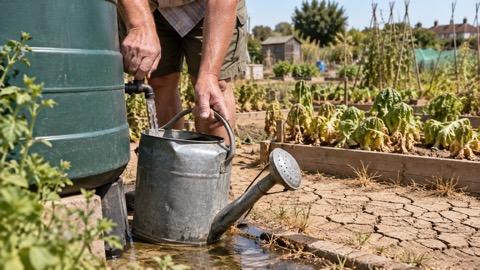
The restrictions are narrower than people often fear. Watering a garden with a watering can or water collected in a water butt is allowed, just not with a hosepipe or sprinkler3. Wessex Water says the ban does not impact everyday essential household use such as showering and washing, and lists watering plants with a watering can, using water from a water butt, and filling up a bucket for car washing among permitted activities5. Bristol Water lists drinking, cooking, showering and washing clothes, a watering can or bucket, and washing your car at a commercial car wash as permitted17.
There are also narrow exemptions for specific activities. South East Water exempts drip or trickle irrigation systems fitted with a pressure reducing valve and a timer, that are not handheld, and that do not cause run off or airborne dispersion25. A hosepipe may be used to top up a pond where it is unavoidable and for the welfare of aquatic animals, including fish9, and Bristol Water allows a hosepipe to top up a pond where it is necessary to maintain a minimum water level and protect the health and welfare of the fish7. Filling a fixed structure from empty after construction or significant refurbishment is exempt, but no subsequent filling by hosepipe is allowed25.
For the full rules on gardens, pools, ponds and cars, see what you can and cannot do in a hosepipe ban and paddling pools, ponds and car washing during a hosepipe ban. If you want to cut your use further, how to save water at home when supplies are low sets out where the savings are.
Sources (26)
- Hosepipe bans FAQ, Consumer Council for Water, 2026-08-04
- Hosepipe ban, Affinity Water, 2026-10-28
- Hosepipe ban FAQs, Affinity Water, 2026-10-29
- Hosepipe ban FAQs, Thames Water, 2026-10-28
- Hosepipe ban, Wessex Water, 2026-10-07
- Temporary use ban advice, Southern Water, 2026-10-28
- Hosepipe ban household FAQs, Bristol Water, 2026
- Temporary hosepipe ban FAQs, Cambridge Water, 2026-10-28
- TUBs Kent FAQs, South East Water, 2026-10-28
- What we've done, Cambridge Water, 2026-10-28
- Droughts, UK Government preparedness campaign, 2026-10-19
- Advice and support during drought, Westminster City Council, 2026-08-06
- Priority Services Register, Surrey County Council, 2026-10-28
- Drought 2026, Bristol Water, 2026
- Hosepipe ban, South West Water, 2026-10-29
- Temporary use ban, Essex & Suffolk Water, 2026-08-03
- Hosepipe ban FAQs, Bristol Water, 2026
- Hosepipe ban exemptions, Southern Water, 2026-10-29
- Hosepipe ban frequently asked questions, Dŵr Cymru Welsh Water, 2026-10-28
- Temporary use ban, Essex & Suffolk Water, 2026-10-28
- Stay safe during hot weather, London Borough of Bexley, 2026
- Hosepipe bans, Consumer Council for Water, 2026-08-04
- Hosepipe ban exemptions, Dŵr Cymru Welsh Water, 2026-10-28
- Drought and water resources, Wessex Water, 2026-10-28
- Temporary use bans, South East Water, 2026-10-29
- Drought, Dŵr Cymru Welsh Water, 2026-09-04
 Flood Warning Checklist
 First Steps After a Flood
 Insurance Claim Records
 Barbecues and Wildfire Risk
 Hosepipe Ban Exemptions
 Hosepipe Bans and the Garden
 Hosepipe Ban Rules
 Pools, Ponds and Car Washing
 Private Water Supply Drying Up
 Wildfire Home Protection
 What to Do Near a Wildfire