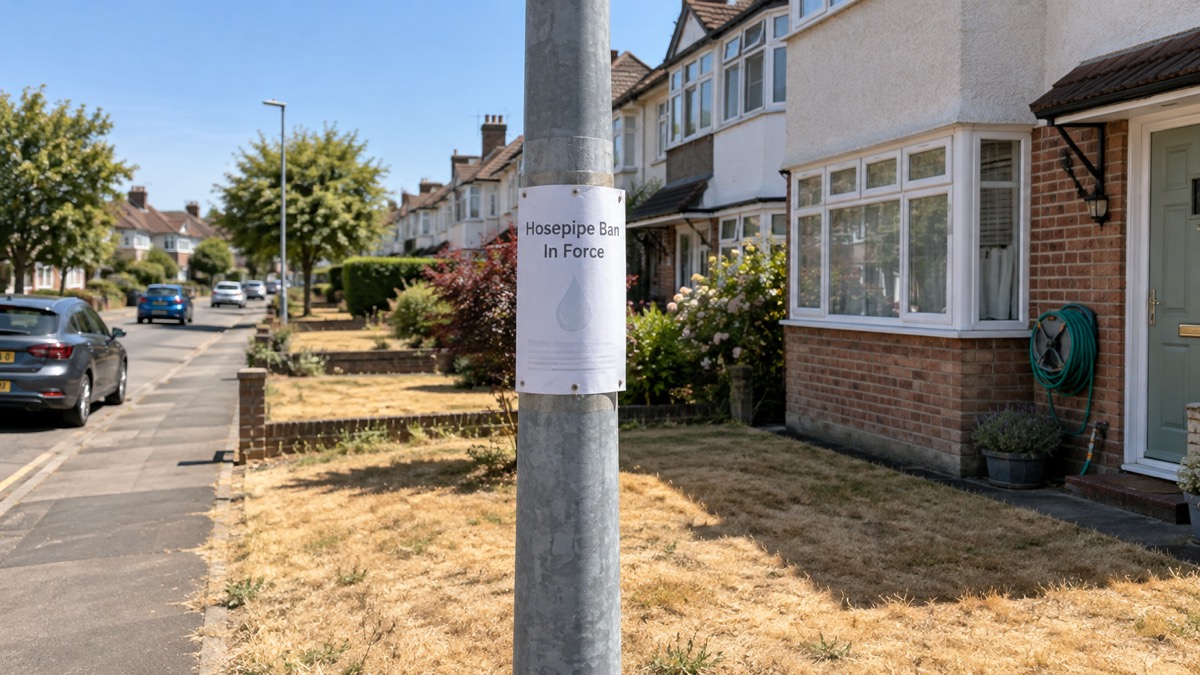
Drought: A Household Guide
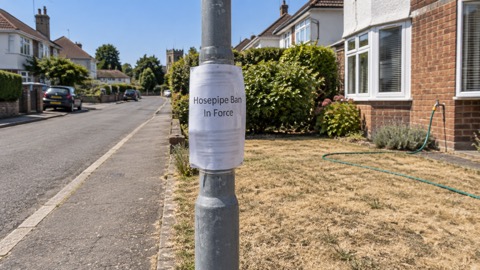
A hosepipe ban is a Temporary Use Ban, a legal measure introduced by a water company under section 76 of the Water Industry Act 1991, as amended by the Flood and Water Management Act 2010. It restricts specified uses of a hosepipe, such as watering gardens, washing private vehicles and filling domestic pools. Only the water company can introduce it, and it can apply to all or part of that company's supply area.1
The ban is intended to reduce demand, not to stop essential household use. Ofwat explains that there is still enough water to drink and wash with, while restrictions help preserve day-to-day supplies, support activities such as agriculture and protect the environment.2
Southern Water states that customers who ignore its restrictions can be fined up to £1,000. A ban has no standard fixed end date: Wessex Water says its restrictions remain until its water resource position stabilises.3
If your water supply stops
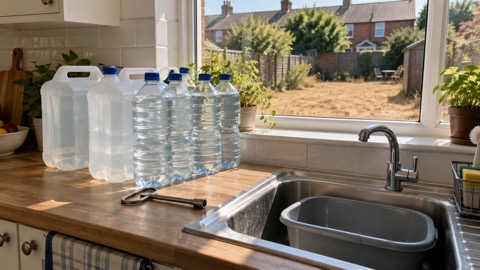
A hosepipe ban does not itself mean that your taps will stop working. However, NHS Inform warns that drought can interrupt supplies or reduce water pressure. Treat an actual loss of supply as a separate incident and contact your water company for its latest information and alternative-supply arrangements.6
If you do not know which company supplies you, enter your postcode in the Water UK supplier finder or check a water bill. The Drinking Water Inspectorate gives this route for identifying the responsible supplier.7
- Check whether the problem affects only your property or the wider supply area. Use your water company's current incident information and contact it about the loss of supply.7
- Ask about extra help before an emergency if you are eligible. Surrey County Council advises eligible customers to sign up to their water company's Extra Care register.8
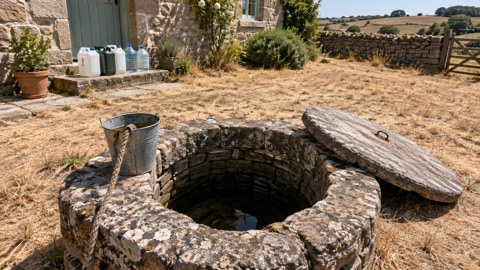
- If you have a private supply, do not assume the water company can always provide bowsers or bottled water. The Drinking Water Inspectorate says this may not always be possible, including when the company has an emergency such as a burst main. Read what to do if your private water supply dries up.9
Water companies maintain plans for supply incidents, but the practical point for a household is to know its supplier, keep its contact route available and register for additional support where eligible. The general household water emergency guide covers wider preparation for an interruption.
Check the restrictions where you live
Start with your own water company, not a national summary. Restrictions follow supply areas and water-resource conditions, so neighbouring counties or even different parts of one county can face different rules. The current drought restrictions page brings the 2026 position together, but the company's notice remains the place to confirm what applies to your address.
The Environment Agency's report for 9 to 15 October 2026 listed Temporary Use Bans in all or part of the supply areas of Affinity Water, Anglian Water, Bristol Water, Cambridge Water, Essex and Suffolk Water, Southern Water, South East Water, South West Water, Thames Water and Wessex Water. It reported no changes to those bans during that week.10
| Area or company notice | Position stated in the notice |
|---|---|
| South East Water | Restrictions across Kent, Sussex, Surrey, Hampshire and Berkshire. Kent restrictions began at 00:01 on 3 July 2026; those in Sussex, Surrey, Hampshire and Berkshire began at 00:01 on 25 July 2026. Sussex exemptions were narrowed from 9 October.11 |
| Southern Water | A ban was in place in Hampshire and on the Isle of Wight on 28 October 2026.3 |
| Essex and Suffolk Water | Restrictions began at 00:01 on 3 August 2026 and remained in force on 28 October, applying to all household customers across its supply area.12 |
| Wessex Water | Its 7 October notice applied to all customers in its region to whom it supplies water.4 |
| Affinity Water | On 29 October it reported no ban in its South East and Kent region, where groundwater remained in a stronger position and resources met demand without restrictions.13 |
| Devon | Devon County Council reported on 30 October that the ban remained in place and further sustained rain was needed for supplies to recover.14 |
In Wales, Dŵr Cymru introduced a Temporary Use Ban on 19 July 2026 affecting parts of Mid and South Ceredigion, North Pembrokeshire and North Carmarthenshire. This illustrates why a UK-wide assumption is unsafe: check the notice for the actual supply area.15
Only water companies decide to introduce these bans. Before enforcement, the company must notify customers and publish details on its website and in two newspapers circulating locally. Its drought plan explains how it will implement the restrictions.5

For the wider decision-making process, see how drought is declared and what each stage means and what water company drought plans contain.
What a hosepipe ban covers
The word hosepipe covers more than an ordinary garden hose. South East Water defines it as anything designed, adapted or used for the same purpose, including garden sprinklers and mains-connected irrigation systems, together with attachments such as pressure washers.11
Essex and Suffolk Water's notice gives a representative list of prohibited purposes. The exact exemptions still need checking in your own company's notice.12
| Restricted use of a hosepipe | Everyday examples |
|---|---|
| Watering a garden or plants | Garden beds, lawns and non-commercial planting |
| Cleaning a private motor vehicle or trailer | Car, caravan or trailer cleaning |
| Cleaning a private leisure boat | Exterior recreational boat cleaning |
| Filling or maintaining domestic pools | Swimming pools and paddling pools |
| Drawing water for domestic recreation | Filling a hot tub |
| Filling or maintaining a domestic pond | Ornamental garden ponds, subject to fish-welfare exceptions |
| Filling or maintaining an ornamental fountain | Decorative fountains and water features |
| Cleaning domestic walls or windows | House walls, windows and similar surfaces |
| Cleaning paths, patios or artificial outdoor surfaces | Patio, path and pressure-washer use |
The legal meaning of garden is also broad. Environment Agency guidance includes parks, public gardens, lawns, grass verges, sports and recreation grass, allotments and other green space. It excludes agricultural land, commercial growing land, temporary garden or flower displays, and plants in outdoor pots or in the ground under cover.5
Restrictions apply to household customers whether or not they have a water meter. Southern Water's household code states that a Temporary Use Ban covers all household customers in the affected water-resource area.16
For fuller activity-by-activity detail, use the guides to what you can and cannot do, gardens, allotments and new lawns, and paddling pools, ponds and car washing.
Watering and washing without a hosepipe
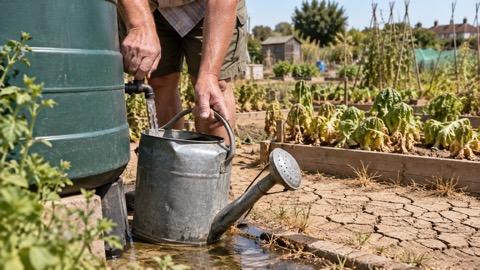
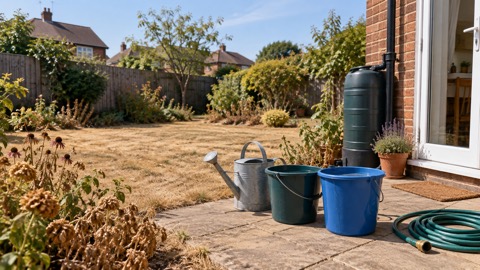
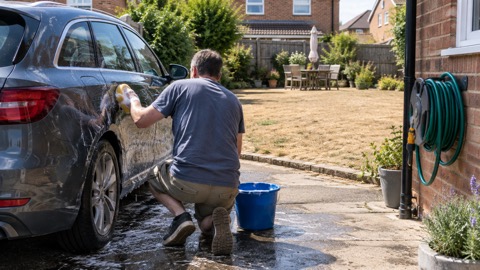
A ban restricts the method and purpose of water use; it does not prohibit every drop of outdoor watering. Wessex Water says essential household activities such as showering and washing continue, while watering plants with a watering can, using water from a water butt and filling a bucket to wash a car remain available.4
- Water plants with a watering can. Affinity Water confirms that this is allowed, unlike using a hosepipe or sprinkler.13
- Use collected rainwater. A water butt supplies outdoor watering without drawing directly through a mains hose. South East Water also says a hosepipe connected to a water butt or another recycled-water storage system is not restricted by its ban.11
- Wash the car with a bucket. This avoids the prohibited mains-hosepipe method while allowing cleaning to continue.4
- Reuse suitable kitchen water on plants. Environment Agency advice includes using water from the kitchen, such as washing-up water, for plant watering.5
- Keep pools and hot tubs empty rather than topping them up by mains hose. Affinity Water states that filling or topping up a hot tub, paddling pool or swimming pool this way is not allowed during its ban.13
Some notices contain limited alternatives for pools. South East Water lists exemptions for certain water-conservation recycling systems, hand-held containers, pools under construction and pools used for medical treatment. These are specific exceptions, not a general permission to refill a pool.11
Who is exempt from a ban
Exemptions protect health, mobility, safety and welfare, but they are not identical everywhere. Check both the activity and the customer eligibility in the current notice. The dedicated hosepipe ban exemptions guide explains the main categories.
| Company or circumstance | Exemption stated |
|---|---|
| Southern Water | Customers on its Priority Services Register with medical or mobility needs, including Blue Badge holders and those on WaterSure, are exempt.3 |
| Affinity Water | Priority Services Register customers, WaterSure customers and Blue Badge holders can continue using a hosepipe where medical reasons prevent adjustments such as using a watering can.13 |
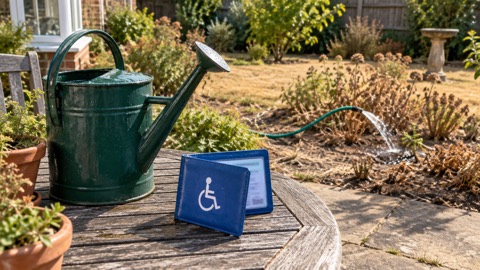
| Essex and Suffolk Water | Blue Badge holders and people with mobility issues who cannot use a watering can are exempt and do not need to apply or contact the company.12 |
| South East Water | Priority Services Register customers unable to make reasonable adjustments are covered, alongside specified animal-welfare and business needs. From 9 October 2026, Sussex customers retained only uses necessary for health, safety or welfare after other exemptions were removed.11 |
| Agriculture under Southern Water's notice | Agricultural activities are not affected by the ban, although the stated restrictions must still be observed.3 |
Activity exceptions can also matter. Essex and Suffolk Water allows an approved drip or trickle irrigation system with a pressure-reducing valve and timer, health or safety uses, and watering newly laid turf during its first 28 days. Its pool exceptions include construction, medical or veterinary treatment, animal decontamination and keeping fish or other aquatic animals.12
South East Water permits watering of the active playing area of sports or recreation grass outside daily peak hours of 8am to 10am and 5pm to 9pm. It also recognises particular commercial vehicle-cleaning, fish-welfare, religious and boat-cleaning exceptions.11
Do not assume that holding a Blue Badge or running a business automatically overrides every local notice. Sussex shows that exemptions can be tightened while a ban remains in force.11
Saving water at home
Saving water reduces pressure on supplies whether or not a ban has reached your area. Ofwat says bans help preserve water for daily use, support agriculture and protect the environment.2
Environment Agency research following droughts found that hosepipe bans and Temporary Use Bans can reduce water put into distribution by 3 to 5%. Its practical household advice is straightforward:5
- Install a rain butt to collect rainwater.
- Fix a leaking toilet.
- Use kitchen water, such as washing-up water, on plants.
- Take shorter showers.
The household water-saving guide develops these measures, while water harvesting explains collecting rainwater for suitable uses.
Water shortage and hosepipe ban checklist
- Check your supplier's current notice before using a hosepipe, sprinkler, irrigation system or pressure washer.5
- Switch to a watering can, bucket or water-butt supply for permitted outdoor jobs.4
- Stop filling or topping up pools and hot tubs with a mains hose unless a stated exemption applies.13
- Check medical, mobility and welfare exemptions, and register for extra help where eligible.8
- Repair a leaking toilet, shorten showers and collect rainwater to reduce household demand.5
- Contact the water company if supply pressure drops or the water stops, rather than treating it as an ordinary hosepipe restriction.6
Fines and reporting misuse
Southern Water states that the Water Industry Act gives it powers to fine customers up to £1,000 for ignoring a hosepipe ban. Its stated approach is to communicate first and explain why hosepipe use matters, with enforcement possible after repeated or serious breaches.3
Affinity Water likewise says it will contact a customer first to check awareness of the ban and whether an exemption applies before taking further action if hosepipe use continues.13
If you are concerned about possible misuse:
- Check that a restriction actually covers the address and activity.
- Remember that medical, mobility, welfare, recycled-water or business exemptions may apply.
- Use the water company's reporting route. Essex and Suffolk Water asks concerned customers to complete its online form so that it can review the information.12
The fines and reporting guide covers enforcement in more detail. A report is a request for the company to review the situation, not proof by itself that an offence has occurred.
When restrictions go further
A Temporary Use Ban is one stage of drought management, not the whole system. Water companies can introduce these bans using their own legal powers, while drought plans set out how restrictions will be implemented. Companies must publish a drought plan every 5 years and prepare a water resources management plan every 5 years, looking ahead at least 25 years.1
Ofwat describes supply-resilience measures including transfers between supply zones and bulk supplies from other companies where possible. It also distinguishes emergency drought orders, under which restrictions can affect essential household supplies, from the more familiar hosepipe restrictions.17
| Date in 2026 | Development |
|---|---|
| 2 October | A drought permit was issued at Wimbleball to reduce the compensation flow.10 |
| 9 October | The Yorkshire area moved into drought status.10 |
| 15 October | Severe drought was declared in parts of Cornwall, Devon, Dorset, Somerset, East Sussex and West Sussex.10 |
| 15 October | The Environment Agency declared Severe Drought in parts of Sussex after prolonged dry weather and exceptionally low water levels.11 |
These declarations do not automatically tell a household to use a hosepipe differently: the enforceable activities and exemptions come from the company's current notice. Follow drought permits, orders and emergency restrictions for the escalation beyond a ban, alongside the drought stages guide.
How long a ban lasts
There is no standard number of days or months. Wessex Water says its ban remains until the water resource position stabilises.4
Rain alone does not provide a universal ending rule. On 30 October 2026, Devon County Council said the county's ban remained in place and further sustained rain was needed for supplies to recover.14
The 2026 notices also show that start dates and later changes vary:
- South East Water's Kent restrictions began on 3 July 2026, with Sussex, Surrey, Hampshire and Berkshire following on 25 July 2026.11
- Essex and Suffolk Water's restrictions began on 3 August 2026 and remained in place on 28 October.12
- Sussex restrictions were tightened on 9 October 2026, demonstrating that a continuing ban can change as well as end.11
Earlier events show the potential scale. The government's drought-management record lists the following numbers of people affected by Temporary Use Bans:1
| Drought event | People affected |
|---|---|
| 2005 to early 2007 | 15,637,900 |
| 2010 | 6,500,000 |
| 2012 | 20,000,000 and 20,277,881 are both listed |
| 2025 to February 2026 | 9,046,577 |
See past UK droughts and heatwaves for historical context. For a current ban, keep checking the company notice until it confirms that restrictions have changed or ended.
Wildfires in dry weather
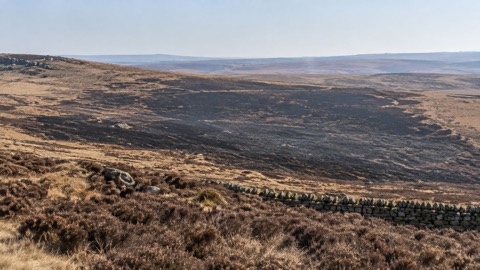
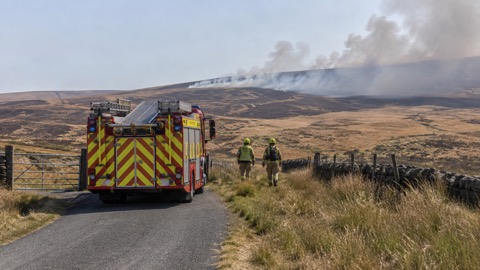
Drought increases wildfire risk, and fires add smoke, particles and other pollutants to the air. NHS Inform also warns that drier soil can release dust and pollutants.6
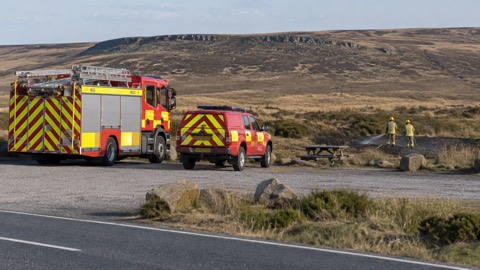
The same fire and rescue service advises avoiding bonfires in very dry weather as part of wildfire prevention.19
In Scotland, the Scottish Fire and Rescue Service says: "Don't have campfires or any outdoor fire when a wildfire danger assessment is in place or during prolonged dry periods."20
- Read wildfire and grass-fire prevention for the wider risk.
- Check barbecues and countryside fire risk before outdoor cooking in dry conditions.
- See protecting your home and garden from wildfire for property preparation.
- Use what to do if you see or are near a wildfire if a fire starts.
Health, water quality and who to contact
Public-health guidance for England identifies dehydration, increased transmission of infectious diseases and poorer mental health as possible consequences of drought. It also warns that additional dust can affect people with pre-existing respiratory conditions.21
NHS Inform adds risks from reduced water quality, poor hygiene and sanitation, interruptions or pressure loss, wildfire smoke and lower water levels in rivers, lochs and streams.6
| Concern | What to do |
|---|---|
| Supply stops or pressure drops | Contact the water company and check its incident information.6 |
| You are unsure who supplies the property | Check a bill or use Water UK's postcode supplier finder.7 |
| You are concerned about drinking-water quality | Contact the company. It normally samples in response to a complaint, depending on its nature; company sampling is accredited and independently verified.7 |
| You want local test results | Water companies test water daily in the area and provide results free of charge on request.7 |
| You may need additional assistance | Ask the company about its Extra Care register if you are eligible.8 |
Seasonal musty or earthy tastes can become more noticeable during exceptionally hot weather. The Drinking Water Inspectorate says companies must treat these tastes, although treatment is occasionally not optimal in such conditions.22
For wider support, see extra help in an emergency and the household heatwave guide. Private-supply households should use the specific private supply failure guidance rather than assuming public-main arrangements apply.
Sources (22)
- Drought: how it is managed in England, GOV.UK, 2026-04-08
- Hosepipe bans: what they mean for the public, Ofwat, 2022-08-12
- Temporary Use Ban advice, Southern Water, 2026-10-28
- Hosepipe ban information, Wessex Water, 2026-10-07
- Why do we have hosepipe bans during a drought?, Environment Agency, 2025-06-12
- How to stay safe during a drought, NHS Inform, 2026-05-12
- Water testing and consumer complaints, Drinking Water Inspectorate, 2025-12-09
- Power, gas and water: what if they fail, Surrey County Council, 2025-12-29
- Managing insufficiency of private water supplies, Drinking Water Inspectorate, 2025-12-15
- Dry weather and drought in England, 9 to 15 October 2026, GOV.UK, 2026
- Temporary Use Bans, South East Water, 2026-10-29
- Temporary Use Ban, Essex and Suffolk Water, 2026-10-28
- Hosepipe ban FAQs, Affinity Water, 2026-10-29
- Save water now and protect Devon's vulnerable residents, Devon County Council, 2026-10-30
- Update on dry weather, drought and water resources in Wales, Welsh Government, 2026-07-19
- Southern Water household code of practice, Ofwat, 2022-11
- Drought and household water supplies, Ofwat, 2026-10-29
- Bonfire safety, Devon and Somerset Fire and Rescue Service, 2026
- Wildfire prevention, Devon and Somerset Fire and Rescue Service, 2026
- Wildfire prevention in Scotland, Scottish Fire and Rescue Service, 2026-10-25
- Public health impact of drought: advice for the public, GOV.UK, 2022-07-28
- Taste and odour in drinking water, Drinking Water Inspectorate
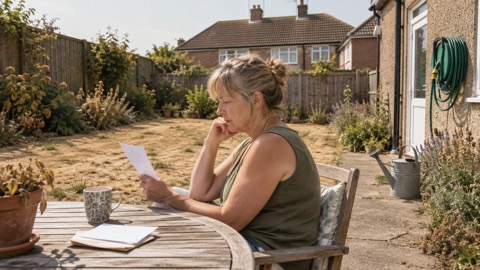 England 2026 Drought Areas
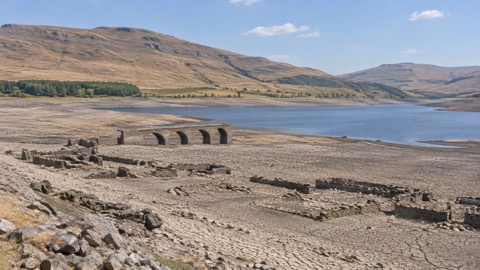 Past UK Droughts and Heatwaves
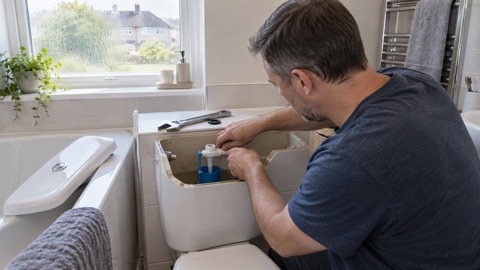 Saving Water at Home
 Drought Stages in England
 Water Company Drought Plans
 Wildfires and Grass Fires
 Barbecues and Wildfire Risk
 Hosepipe Ban Exemptions
 Hosepipe Ban Fines and Reporting
 Hosepipe Bans and the Garden
 Hosepipe Ban Rules
 Pools, Ponds and Car Washing
 Private Water Supply Drying Up
 Wildfire Home Protection
 What to Do Near a Wildfire
 Drought Permits and Rota Cuts





