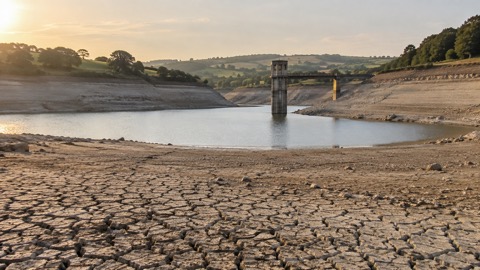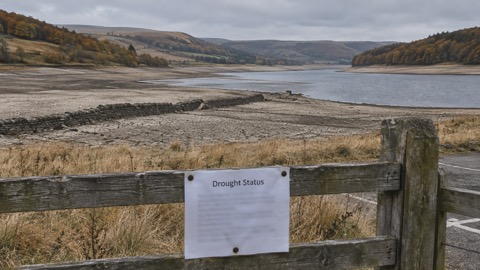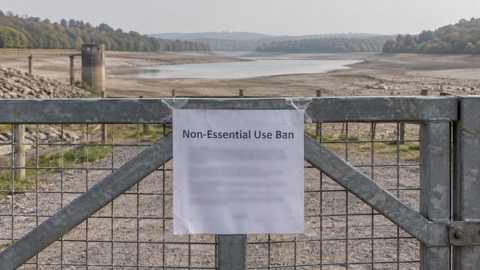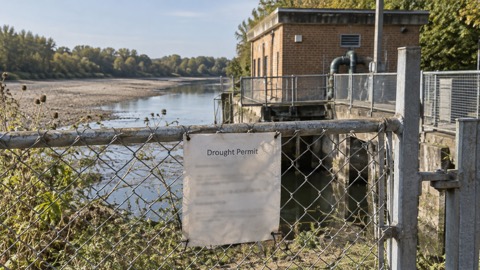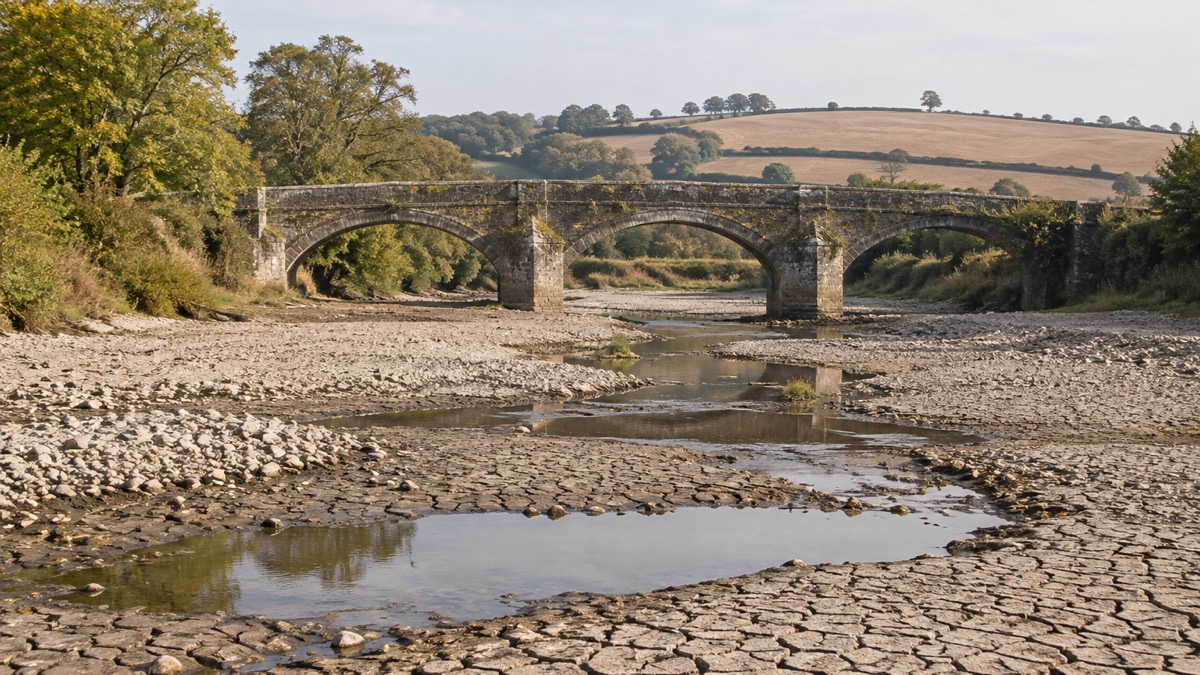
The Environment Agency has confirmed that parts of Devon, Dorset and Cornwall have entered Severe Drought status, South West Water says, following the dry summer of 2026, very low river levels and little rainfall in early autumn1. The water company reports that total reservoir storage across its area stood at 35% on 27/10/2026, against 51% at the same time last year1.
Storage at the company's individual reservoirs on the same date is set out below1.
| Reservoir | Storage on 27/10/2026 |
|---|---|
| Roadford | 35% |
| Colliford | 33% |
| Wimbleball | 15% |
| Stithians | 22% |
| Burrator | 47% |
| Tottiford | 18% |
| Drift | 32% |
| Venford | 40% |
South West Water says drinking water in the region is mainly taken from rivers and its 23 reservoirs, many of them small and serving local catchments, supported by three larger strategic reservoirs: Colliford, Roadford and Wimbleball1. It says Wimbleball is used to support flow in the River Exe, which then allows abstraction from the Pynes and Allers water treatment works, and that the dry weather has meant the Exe has dropped below the threshold at which water must be released from Wimbleball1. Colliford and Roadford also support abstraction from the Fowey and Tamar respectively, but have not dropped below the threshold as quickly as the Exe1.
"However, we also need customers to use less water to help reservoir levels recover in this critical phase of the drought."
The company says its teams are working to deliver major leakage reductions, which it says is already having an impact, and that it is continuing to support customers with free water-saving devices and proactive water saving advice1.
Coverage elsewhere describes a wider picture. The Guardian reports that a severe drought was declared earlier in October in parts of Devon, Cornwall, Dorset, Somerset, East Sussex and West Sussex, and that 82% of England and large parts of Wales remain in drought or severe drought2. It reports that the Environment Agency would expect reservoir storage to be about 75% at this time of year, and that it is estimated 120% of average rainfall is needed between now and April for all areas to be considered out of drought2. The Guardian also reports Wimbleball at 14.5% full, against South West Water's figure of 15% on 27/10/20261. It describes severe drought as the highest level of drought, declared when evidence shows drought is causing or will soon cause serious harm and when emergency action is needed to protect people, water supplies, the environment, farming, infrastructure or other critical services2.
The Daily Mail reports that an average of 55mm of rain fell across England in the seven days preceding October 27, with 87mm in the south-west, and that river levels have increased at all but two of the sites monitored by the Environment Agency3. It reports that storage levels had fallen to 31 per cent overall in Devon and Cornwall, and that millions of people remain under a hosepipe ban3. The Guardian reports that the government's national drought group was told that despite the "weather whiplash" brought by Storm Austen and Boelo, the recent rain has not changed the drought outlook2.
Why it matters for households
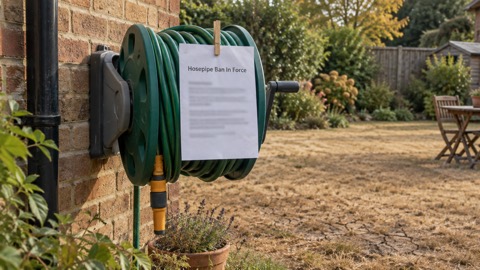
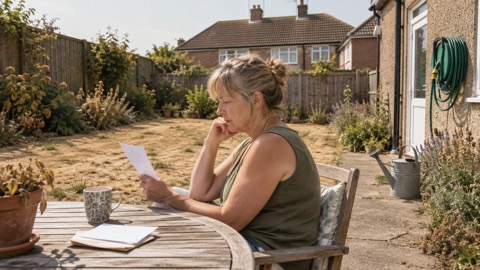
Households in the affected parts of Devon, Dorset and Cornwall are in the highest drought stage, which South West Water says requires customers to use less water to help reservoir levels recover1. The Daily Mail reports that millions of people remain under a hosepipe ban3. South West Water says it is offering free water-saving devices and water saving advice1. The Guardian reports that water scarcity has become a pressing concern for residents near Ardingly in Sussex, where the reservoir is 19% full and the neighbouring Weir Wood reservoir is 80% full but cannot be used because its treatment works has been out of action since 20182. Southern Water told the Guardian that Ardingly's current situation would not be resolved if the Weir Wood treatment works were operational2.
What happens next
The Guardian reports that Southern Water is seeking to rebuild the treatment works at Weir Wood by 2030, and that South East Water is conducting a feasibility study of a buried pipeline to connect the Ardingly and Weir Wood reservoirs2. It reports that 120% of average rainfall is needed between now and April for all areas to be considered out of drought2. Water minister Emma Hardy, who chaired the national drought group meeting, said water companies must continue to take every available measure to secure current supplies while ensuring that the spring is started in the strongest possible position2.
The stages of drought declaration in England, and what each means, are set out in our guide to how drought is declared in England. Current restrictions are tracked in England's 2026 drought: where restrictions apply, and practical household preparation is covered in Heatwaves and Drought: A Household Guide.
Sources (3)
- Reservoir levels | South West Water, southwestwater.co.uk
- ‘You can see the water going down’: residents on edge as one of England’s worst-hit reservoirs dries up | Drought | The Guardian, theguardian.com
- England records its wettest week for two years after storms Austen and Boelo bring heavy rain - yet parts of south remain officially in drought | Daily Mail Online, dailymail.com
 England 2026 Drought Areas
 Drought Stages in England
 Why UK Summers Are Hotter