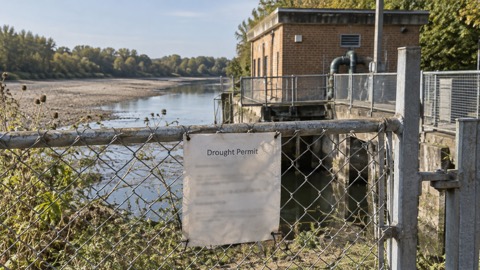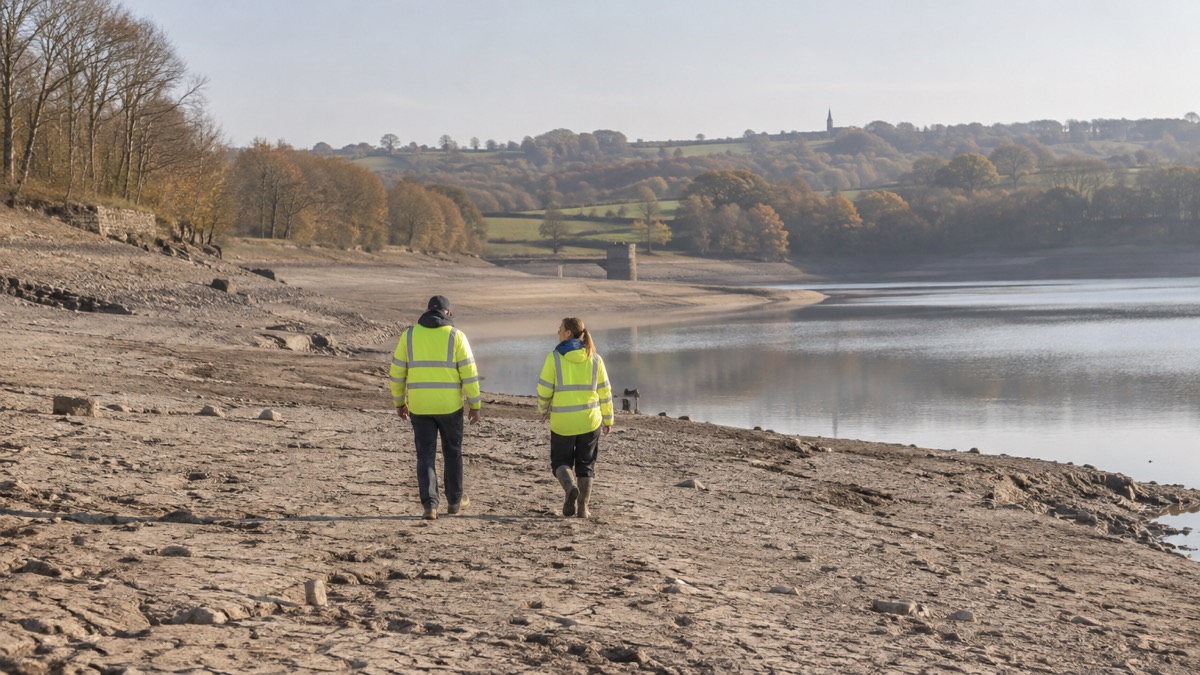
The Environment Agency declared severe drought on 15 October 2026 for parts of Cornwall, Devon, Dorset, Somerset, East Sussex and West Sussex, after the driest April to September in over a century depleted local reservoir levels1. The government confirmed the declaration in its weekly drought summary for 9 to 15 October, which also records that the Yorkshire area moved into drought status on 9 October2. Devon and Somerset Fire and Rescue Service described the south west reaching the "severe" category as "a UK first"3.
Severe drought is the highest level of drought that can be declared, and is used when evidence shows drought is causing, or will soon cause, serious harm, and emergency action is needed to protect people, water supplies, the environment, farming, infrastructure or other critical services1. The Agency states that severe drought does not automatically trigger restrictions and is not a civil emergency1. The usual seasonal rainfall has yet to arrive and 82% of England remains in drought1. To recover in some areas, 120% of typical rainfall is needed over the next six months1.
The declaration centres on two reservoirs: Ardingly in West Sussex and Wimbleball in Somerset. The Agency also names concerns for smaller South West Water reservoirs serving homes in south Devon and west Cornwall: Drift, Stithians, Tottiford and Venford1. National reservoir storage stood at 54% of capacity in the week ending 13 October, around 21% below the long-term average, with 18 reservoir groups less than 50% full and 11 classed as exceptionally low2. Rainfall for October to date ranged from 18% of the long-term average in south-east and south-west England to 41% in the north-west; England as a whole had received 26%2.
"We've declared severe drought where water supply is most at risk: around Ardingly reservoir in West Sussex and Wimbleball reservoir in Somerset."
| Area | Drought status, week of 9 to 15 October 20262 |
|---|---|
| Parts of Wessex; Devon, Cornwall and the Isles of Scilly; Solent and South Downs; Kent and South London | Severe drought |
| East Anglia; Hertfordshire and North London; Thames; West Midlands; East Midlands; Lincolnshire and Northamptonshire; Yorkshire | Drought |
| Northeast; Cumbria and Lancashire; Greater Manchester, Merseyside and Cheshire | Prolonged dry weather |
Why it matters for households
The Agency states the severe drought declaration covers the homes and businesses served by the two reservoirs, and advises households to check with their water company to find out if they are affected1. In affected areas, the Agency says the water company may introduce further water-saving measures to protect supply, which could include taking more water from the environment and limiting some business use1. It lists household steps including shorter showers, fixing leaks, careful garden watering, eco settings on dishwashers and washing machines, avoiding pre-rinsing dishes, low-flow shower heads, cistern displacement devices, filling machines to their recommended load, water butts and turning off taps when brushing teeth1.
South East Water, which operates Ardingly reservoir, says further hosepipe restrictions took effect in Sussex from 9 October 2026, with all exemptions removed so customers can use a hosepipe only where permitted for health, safety or welfare purposes4. It has applied for a Non-Essential Use Ban in Sussex, which would restrict certain commercial and non-household uses if approved and implemented4. A Temporary Use Ban is in force across Kent, Sussex, Surrey, Hampshire and Berkshire; in Kent it came into force from 00:01 on Friday 3 July 2026, and in Sussex, Surrey, Hampshire and Berkshire from 00:01 on Saturday 25 July 20265. The company says Surrey, Hampshire and Berkshire had not been placed in temporary restrictions for 14 years, since 20125.
Devon and Somerset Fire and Rescue Service says it has stopped using mains water during drill nights and for training that does not involve live fire, and limited vehicle washing to what is essential for safe operations, such as cleaning windscreens and blue lights3. It reports that wildfire risk remains high and that tackling such fires can require vast amounts of water3. Its Deputy Chief Fire Officer, Gerald Taylor, said: "Every drop of water matters during periods of prolonged dry weather"3. The service asks people to avoid lighting fires, campfires or disposable barbecues in the countryside, to stay with any barbecue or fire pit at all times, never to discard cigarettes or matches onto dry grass, to report fires early by calling 999, and to use water wisely at home and follow any advice from their water supplier3.
The Agency says it is increasing its scrutiny of water companies to make sure they stick to their statutory drought plans, with more monitoring, more checks and faster processing of permit applications, and is using regulatory discretion to give priority to protecting public water supply in specified severe drought areas1. It says it is working closely with Defra and the affected water companies, including an enhanced incident response1.
What happens next
The Agency says further dry weather is expected for the rest of October, and that without sufficient autumn rainfall and continued intervention measures there is an increasing risk to water supplies1. It says it will not hesitate to take the action needed to protect water supplies until enough rain brings recovery, and continues to monitor conditions with partners and the government1. The fire service says that with no expected rain on the horizon, pressure on water supplies is likely to continue3. South East Water says it has started an accelerated six-month programme of operational changes and engineering works to reduce the risk of supply interruptions4.
The current drought situation in England is set out in our guide, with an explanation of how drought is declared and what each stage means. Our household guide to heatwaves and drought covers practical preparation, and water company drought plans explains what the companies say and how households can respond.
Sources (5)
- What is severe drought?, Environment Agency: For homes and habitats., environmentagency.blog.gov.uk
- Dry weather and drought in England: 9 to 15 October 2026 - GOV.UK, gov.uk
- Help to preserve water supplies in severe drought | Devon and Somerset Fire and Rescue Service, dsfire.gov.uk
- Water latest | South East Water, southeastwater.co.uk
- Hosepipe ban in Kent | South East Water, southeastwater.co.uk
 England 2026 Drought Areas
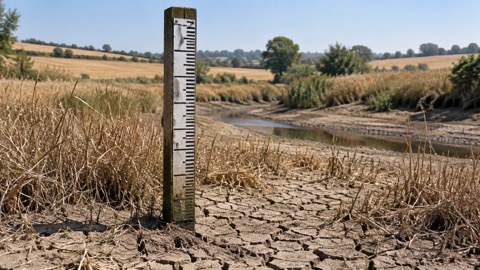 Drought Stages in England
 Why UK Summers Are Hotter