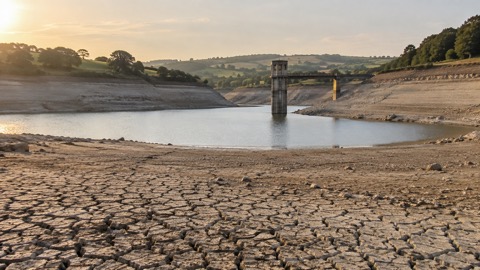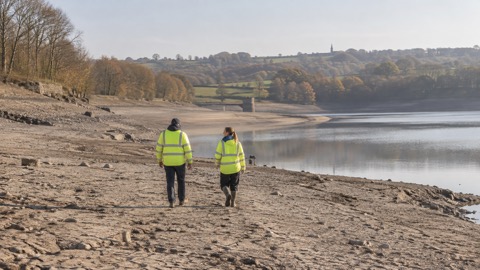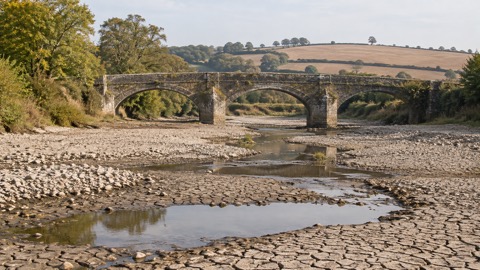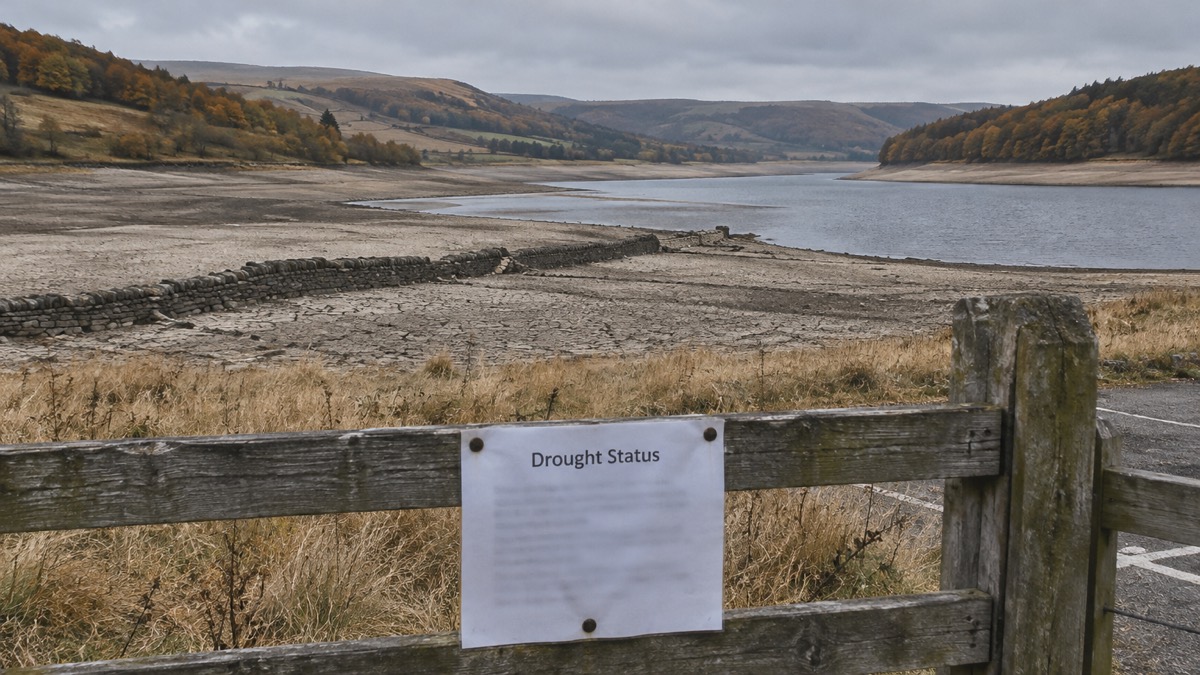
The Environment Agency reported that the Yorkshire area moved into drought status on 9 October 20261. The same weekly summary, covering 9 to 15 October, records that on 15 October the government declared severe drought in parts of Cornwall, Devon, Dorset, Somerset, East Sussex and West Sussex1. Eleven areas of England were in drought at that point, according to the Guardian2.
The agency's summary states that national reservoir storage stood at 54 per cent of capacity, around 21 per cent below the long-term average for the time of year, with 18 reservoir groups less than 50 per cent full and 11 classed as exceptionally low1. Rainfall for October to date ranged from 18 per cent of the long-term average in south-east and south-west England to 41 per cent in the north-west, and England as a whole had received 26 per cent of its October average1. The Guardian reported that England received about 65 per cent of its typical September rainfall2.
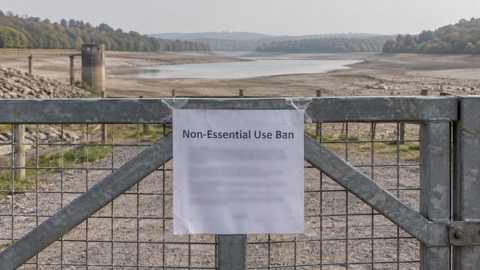
The agency recorded 403 environmental incidents since the start of 2026, exceeding the totals for 2022 (380) and 2025 (321), including 41 confirmed algae incidents and 99 confirmed dead fish incidents attributed to drought and dry weather1. It also reported 449 restrictions on abstraction licences and 1,383 voluntary restrictions reducing abstraction by 50 per cent1. Temporary use bans remained in place with no changes, covering the whole supply areas of Anglian Water, Bristol Water, Cambridge Water, Essex and Suffolk Water, South East Water, South West Water, Thames Water and Wessex Water, and parts of Affinity Water and Southern Water1.
"The recent rainfall is not yet enough to replenish all the water we've used over the spring and summer, and the Yorkshire drought declaration highlights the situation is still serious."
The i Paper reported that Yorkshire Water was not planning to impose restrictions on customers at that moment, despite the region's new status, and that reservoirs in the region held just above 40 per cent capacity against an average of 75 per cent for the time of year4. The Guardian reported that South East, Southern and South West Water had applied to extend restrictions to businesses through non-essential use bans, which could cover golf clubs, private schools and commercial car washes, and that Defra permission was required but the government had not yet responded2.
| Reservoir | Operator | Reported level |
|---|---|---|
| Ardingly, West Sussex | South East Water | 1.05bn litres of 5.2bn capacity; serves 280,000 people2 |
| Colliford, Bodmin Moor | South West Water | 37% full; 10.68bn of 28.5bn litres; serves 255,000 households2 |
| Wimbleball, Somerset | South West Water | 18% full; 3.8bn of 21.3bn litres; provides water for 390,000 people2 |
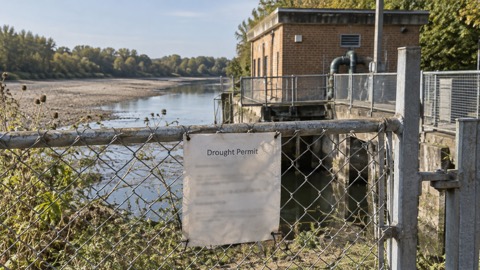
The Environment Agency granted South East Water's River Ouse (Ardingly reservoir) drought permit on 29 September, and a drought permit was issued at Wimbleball on 2 October to reduce the compensation flow1. The agency also released an updated regulatory position statement on 1 October allowing existing abstraction licence holders to take water outside their authorised abstraction period for filling water storage reservoirs, subject to specified conditions1.
Why it matters for households
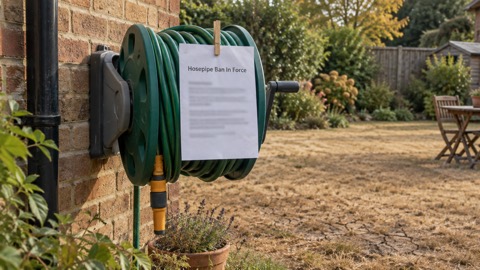
Households in the Yorkshire area are now in an area formally in drought status, although Yorkshire Water was reported as not planning customer restrictions at that point4. Temporary use bans remain in force across the supply areas listed above, and the agency reported no changes to them in the week to 15 October1. The Guardian reported that temporary use bans affected almost 30 million people across England as of October4. The Met Office says above-average rainfall is needed over a sustained seven-month period to bring all areas out of drought2. The i Paper reported that England would need 120 per cent of typical rainfall over the next seven months just to be considered out of drought status, and that above-average rainfall through autumn and winter would be needed for most areas to be out of drought by April 20274. The agency advised farmers to assess ground and weather conditions before spreading organic manures, including slurries, to protect rivers from pollution1.
What happens next
The i Paper reported that Defra announced on Monday 12 October that a new Flood and Drought Resilience Taskforce would launch that week to strengthen the country's ability to mitigate and respond to extreme weather4. Decisions on the three companies' non-essential use ban applications rest with Defra, which had not responded at the time of the Guardian's report2. The agency said there were growing concerns that farmers may not be able to refill water storage reservoirs over the winter, which could affect water availability for the 2027 irrigation season1.
For how the stages are declared, see how drought is declared in England and what each stage means; for where restrictions currently apply, see England's 2026 drought: where restrictions apply; and for what companies set out in their plans, see water company drought plans. The wider subject is covered in the heatwaves and drought hub.
Sources (4)
- Dry weather and drought in England: 9 to 15 October 2026 - GOV.UK, gov.uk
- Businesses could be barred from non-essential water use amid supply threat | Water | The Guardian, theguardian.com
- Flood alerts issued as Atlantic weather front to bring 45mph winds, inews.co.uk
- The UK towns at risk of running out of water until 2027, inews.co.uk
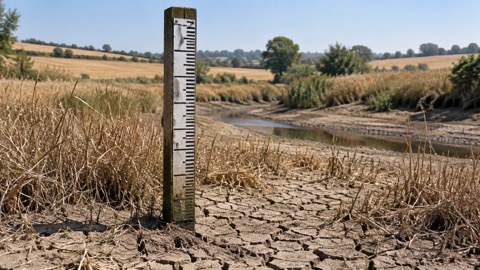 Drought Stages in England
 England 2026 Drought Areas