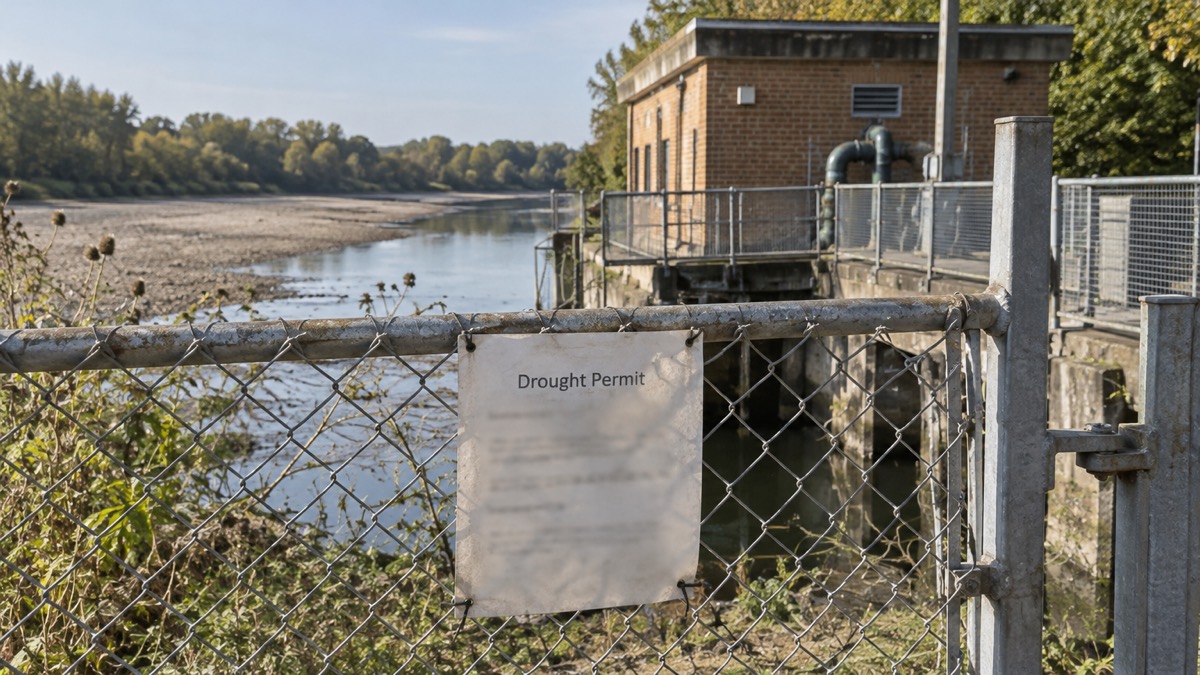
The Environment Agency granted South East Water's River Ouse (Ardingly reservoir) drought permit on 29 September, the same day it granted Thames Water's Farmoor drought permit1. The grants were recorded in the agency's weekly drought report for England, which also set out the wider water resource position1.
National reservoir storage stood at 54% of capacity, around 21% below the long-term average for the time of year, and 18 reservoir groups were less than 50% full, with 11 classed as exceptionally low1. Ardingly reservoir, operated by South East Water, is among those classed as exceptionally low1. The report says public water supply concerns are currently focused around Wimbleball reservoir in the south-west and Ardingly reservoir in the south-east1. A drought permit was also issued at Wimbleball on 2 October to reduce the compensation flow1.
Rainfall for October to date ranged from 18% of the long-term average in south-east and south-west England to 41% in the north-west, and England as a whole had received 26% of its October average1. River flows increased at most reported sites compared with the previous week, but most remained below normal or lower for the time of year, with six sites classed as exceptionally low1.
"The Environment Agency granted South East Water's River Ouse (Ardingly reservoir) drought permit on 29 September."
Temporary use bans remained in place across the whole supply areas of South East Water and Thames Water, among others, and the report records no changes to the bans in place1. The report also notes growing concern that farmers may not be able to refill water storage reservoirs over the winter, which could affect water availability for the 2027 irrigation season1.
| Measure | Position reported |
|---|---|
| National reservoir storage | 54% of capacity, around 21% below the long-term average1 |
| Reservoir groups under 50% full | 18, of which 11 exceptionally low1 |
| October rainfall to date, England | 26% of the long-term average1 |
| October rainfall to date, south-east and south-west | 18% of the long-term average1 |
| River flow sites classed exceptionally low | 6 of the sites reported1 |
Why it matters for households
The permits affect customers of South East Water and Thames Water, both of which had temporary use bans in place across their whole supply areas at the time of the report, with no changes recorded1. The agency's guide to drought permits, orders and emergency rota cuts explains how these instruments work and what they allow a company to do. The report states that further significant rainfall is needed to return to normal water resource conditions for many water companies1. It also records that the government declared severe drought in parts of Cornwall, Devon, Dorset, Somerset, East Sussex and West Sussex on 15 October, and that the Yorkshire area moved into drought status on 9 October1. The current position across England is set out in England's 2026 drought: where restrictions apply.
On farming, the agency advised that farmers assess ground and weather conditions before spreading organic manures, including slurries, to protect rivers from pollution1. It also released an updated regulatory position statement on 1 October allowing existing abstraction licence holders to take water outside their authorised abstraction period for filling water storage reservoirs, subject to specified conditions1.
What happens next
The report records 449 restrictions on abstraction licences and 1,383 voluntary restrictions reducing abstraction by 50%1. It says water companies continue to progress drought permits and orders, and that the agency expects companies to follow their drought plans and act early to ensure sufficient supplies1. Each water company's stated position is covered in water company drought plans: what they say and your say.
 Drought Permits and Rota Cuts
 England 2026 Drought Areas
 Water Company Drought Plans





