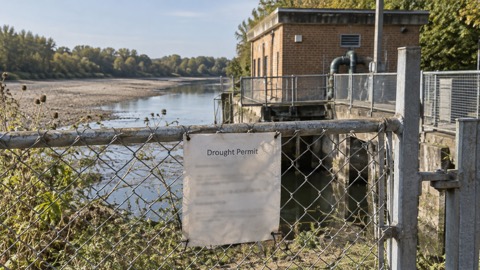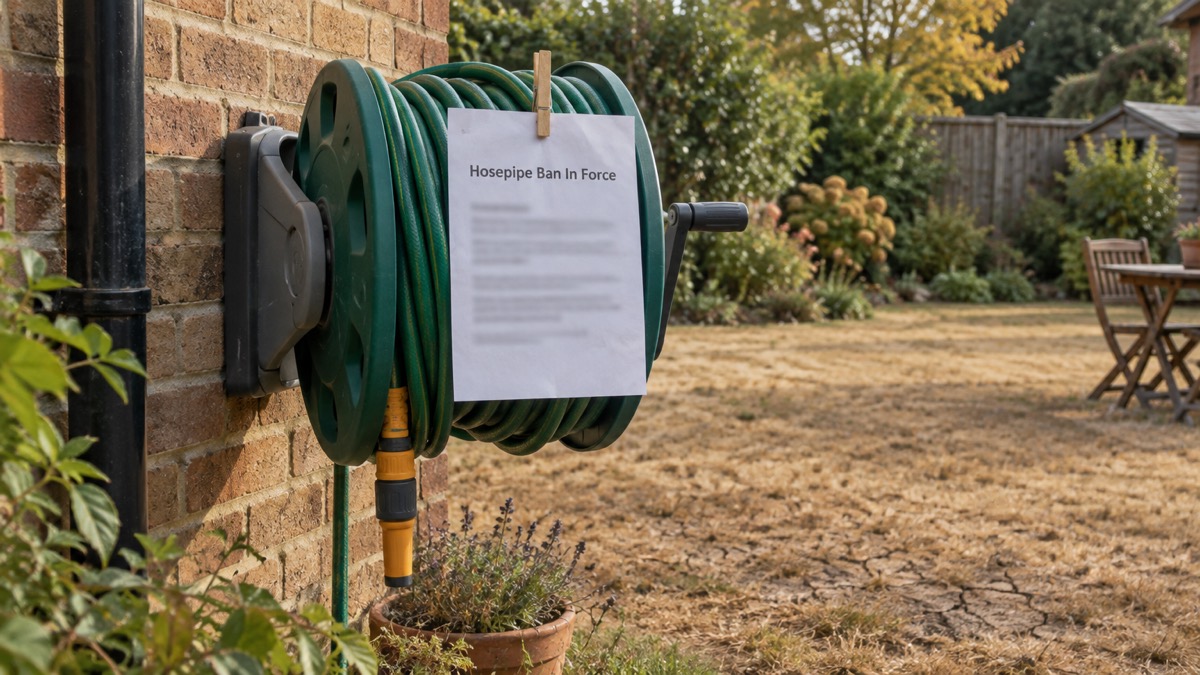
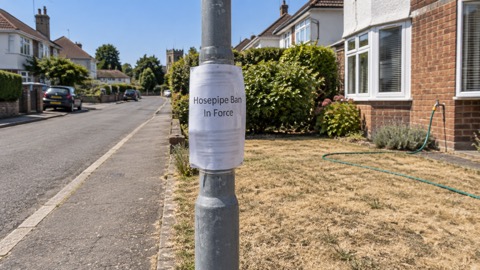
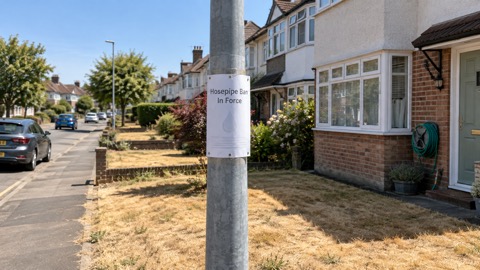
South East Water has removed all previously permitted hosepipe exemptions for households in its Sussex supply area, with the updated restrictions in force and enforceable from 9 October 20261. The company announced the change on Friday 2 October, and says it was required under the Water Industry Act 1991 to give notice to customers and stakeholders before removing exemptions2. The updated restrictions cover the Sussex supply area only, identified as Resource Zones 2 and 32.
The company says water levels at Ardingly Reservoir have continued to fall, and that the reservoir was 19.4 per cent full as of 11 October1. It reports that between March and August, Sussex received just over 56 per cent of expected rainfall3. South East Water also states that the Met Office is provisionally reporting summer 2026 to be the hottest on record, and that July in England was the driest since records began 190 years ago3.
"From 9 October 2026 , there are further hosepipe restrictions in Sussex. We've removed all exemptions, meaning customers will only be able to use a hosepipe where permitted for health, safety or welfare purposes."
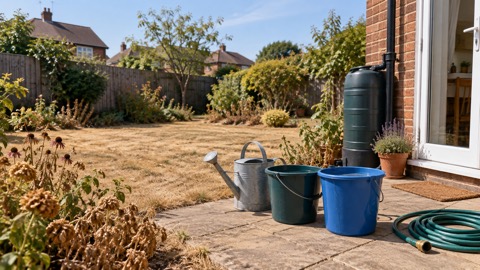
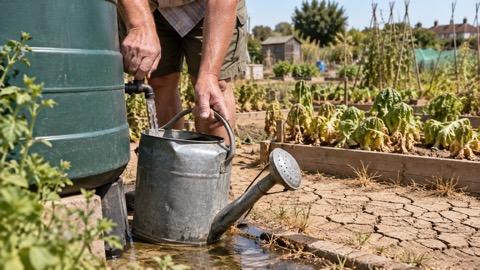
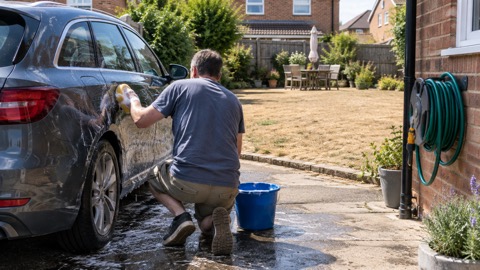
Under the updated restrictions, customers in Sussex can no longer use a hosepipe to water a garden, clean a private motor vehicle or a private leisure boat, water plants on domestic or other non-commercial premises, fill or maintain a domestic swimming or paddling pool, draw water for domestic recreational use such as hot tubs, fill or maintain a domestic pond or ornamental fountain, or clean walls, windows, paths, patios and other artificial outdoor surfaces2. Sprinklers connected to mains water are prohibited and jet washers connected to mains water are restricted2. The company says customers may water gardens by hand with a bucket or watering can, and may use greywater or rainwater from a water butt through a hosepipe, but a hosepipe connected to mains water cannot be used to fill a water butt2.
The following activities remain permitted in Sussex2:
| Activity | Status under the updated Sussex restrictions |
|---|---|
| Essential hosepipe use to prevent health or safety risks to humans or animals | Permitted |
| Hosepipe use where the health and welfare of animals or fish is paramount | Permitted |
| Water drawn from water butts or recycled water storage systems | Not restricted |
| Watering plants grown for sale or commercial use, National Plant Collections, temporary public flower displays | Permitted |
| Drip or trickle irrigation with pressure valve and timer, watering cans, sports pitch active-area watering outside 8am to 10am and 5pm to 9pm | Permitted |
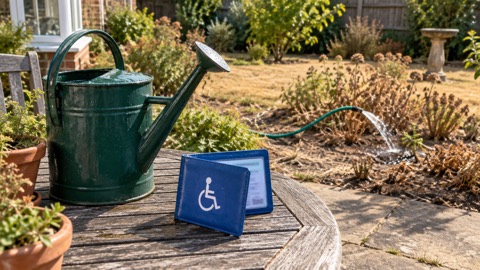
South East Water says being on its Priority Services Register does not automatically exempt a Sussex customer from the restrictions, and that an age-based exemption has ended, so customers who previously relied on one can no longer use a hosepipe unless for essential health and safety reasons2. The updated restrictions apply to all users billed by South East Water in the Sussex supply area, including customers of Last Mile Water, Advanced Water Infrastructure Networks (AWIN) and Independent Water Networks (IWNL)2. Customers in Kent, Surrey, Hampshire and Berkshire remain under the temporary use ban in place since July, and the previous exemptions still apply there4.
On 15 October the Environment Agency declared Severe Drought in parts of Sussex following prolonged dry weather and exceptionally low water levels1. South East Water says Severe Drought is the third of four drought stages, that the declaration does not introduce any new restrictions at this stage, and that existing hosepipe restrictions remain in place2. The company has also applied for a Non-Essential Use Ban under a Drought Order in its Sussex supply area, submitted on 2 October 2026; it says the application must be approved by the Secretary of State for Environment, Food and Rural Affairs and is not currently in force, and that it would only implement the ban if drought conditions become more severe3. It states there are no additional restrictions in place as a result of the application3.
Why it matters for households
The change affects households in South East Water's Sussex supply area from 9 October 2026, and the company says the restrictions are likely to remain in place until it is confident water resources have recovered, with the position kept under constant review2. For those households, activities that were previously exempt, including some age-based and Priority Services Register exemptions, no longer apply unless the use is necessary for health, safety or welfare reasons2. South East Water asks customers to continue following the restrictions and using water wisely1. Its published guidance for the Black status, at which hosepipe restrictions are introduced, states that a watering can may still be used and water from baths, showers and sinks can be reused in the garden1. The company says a garden hose can use up to 1,000 litres an hour, about the same as an average person uses in a week1.
What happens next
South East Water says it will keep the position under constant review and will announce any lifting of the restrictions through newspaper notices, email or letters to customers, its website and social media, and media organisations2. Its Non-Essential Use Ban application, which targets certain commercial and non-household uses of water, awaits a decision by the Secretary of State for Environment, Food and Rural Affairs and is not in force3. The company says it has started an accelerated six-month programme of operational changes and engineering works to reduce the risk of supply interruptions, including additional temporary drinking water storage tanks at critical sites and battery installation at key sites1. It reports 11 water tankers currently in use1.
For the rules on what a hosepipe ban covers, see what you can and cannot do in a hosepipe ban and how temporary use bans work. Our hosepipe ban exemptions page covers who has been exempt and on what grounds, and watering the garden, allotment and new lawn sets out the position on gardens. For ponds, pools and car washing, see paddling pools, ponds and car washing, and for enforcement, hosepipe ban fines and how to report misuse. A water shortage and hosepipe ban checklist is available, and the England drought situation page tracks where restrictions apply.
Sources (4)
- Water latest | South East Water, southeastwater.co.uk
- Sussex hosepipe restrictions FAQs | South East Water, southeastwater.co.uk
- Drought Orders | South East Water, southeastwater.co.uk
- Hosepipe ban in Kent | South East Water, southeastwater.co.uk
 Hosepipe Ban Rules
 England 2026 Drought Areas
 Hosepipe Bans and the Garden
 Pools, Ponds and Car Washing
 Hosepipe Ban Exemptions
 Hosepipe Ban Fines and Reporting
 Household Guide to Drought