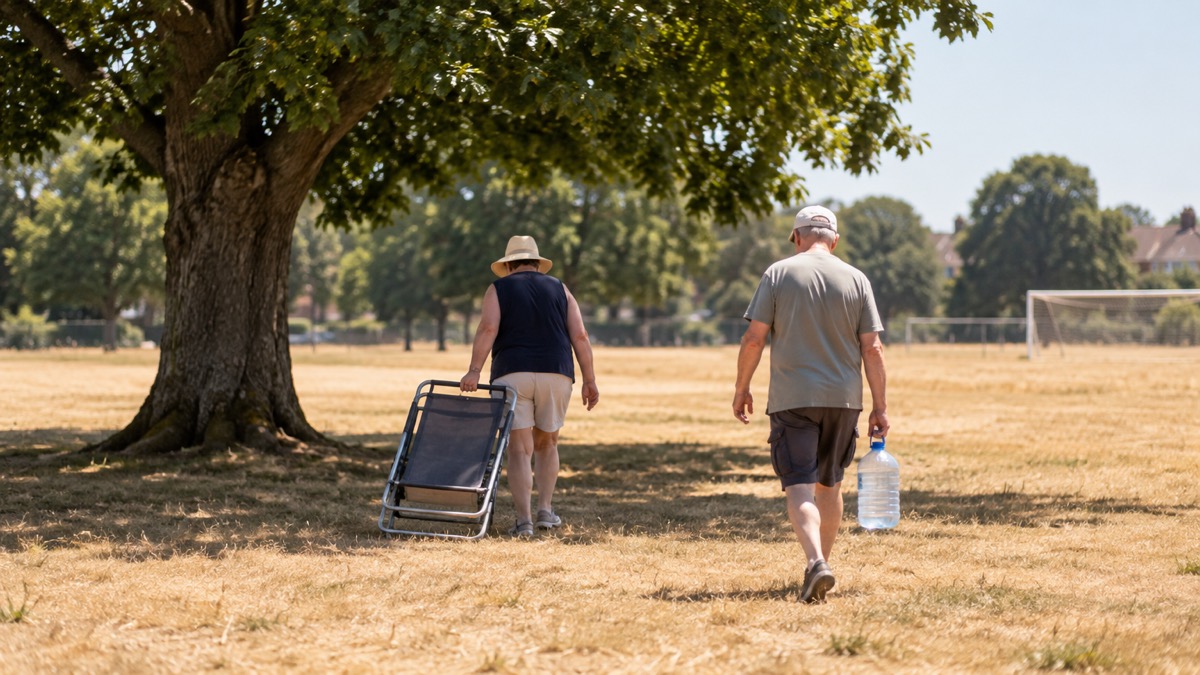
Yes, heatwaves in the UK are getting worse. Climate change is already causing warmer temperatures here, and heatwaves are becoming more frequent, longer and more intense1. In July 2022, temperatures in parts of England exceeded 40°C for the first time on record2, and NHS guidance is blunt about what that means: the UK can expect more frequent and more intense heatwaves, so it is important that we all make preparations now3.
For an ordinary household, the practical shift is this: hot spells that once counted as unusual are becoming a recurring feature of British summers, and they bring two separate problems. The first is heat itself, which harms health at lower temperatures than many people expect, with risks rising once temperatures go above 25°C4. The second is what prolonged heat leads to: heatwaves can cause health issues like heatstroke, and wildfires5.
This page explains what is changing, why, and what it means for how you prepare. For the practical steps, see our full Heatwaves and Drought household guide.
Heatwaves in the UK are getting hotter, longer and more frequent
A heatwave in the UK has a formal definition: it is declared when temperatures meet a set threshold for 3 or more consecutive days6. The threshold varies across the country, and you can read more about how it works on our page What Counts as a Heatwave in the UK: Met Office Thresholds.
What has changed is how often that definition is met, and by how much. Climate change is already causing warmer temperatures in the UK, and heatwaves are becoming more frequent, longer and more intense1. Oxfordshire's council notes the UK has experienced four heatwaves since 20074, and the Met Office points out that the UK still experiences heatwaves at a lesser frequency and intensity than some parts of the world, but the direction of travel is clear10. The Met Office also explains the weather mechanism behind long hot spells: in summer the UK can experience blocking anticyclones, which bring long spells of warm weather and create heatwave conditions10.
The clearest marker of the change is how often heatwaves now occur. Heatwaves are extreme weather events and, because of climate change, they are becoming more common2. Since 2007, the UK has experienced four heatwaves9. Before that, spells of this kind were a far less regular feature of British summers, and the trend is towards hotter, longer and more intense events.
The NHS's own guidance treats this as a planning issue, not a curiosity: the UK can expect more frequent and more intense heatwaves, so it is important that we all make preparations now3. That is the framing this site takes too. Heat is now one of the risks a UK household should prepare for alongside flooding and storms, and the sections below set out what that involves.
What climate change means for UK summers
The pattern experts anticipate is not just hotter weather but a change in the UK's overall weather, with altered patterns of rainfall and temperature and the potential for more frequent extreme weather events11. NHS guidance on climate adaptation spells out what the UK can expect: hotter and drier summers with more frequent severe heatwaves, alongside periods of intense storms and localised heavy rainfall, more frequent disruption of global supply chains, different disease patterns, and more frequent transport and power disruption5.
Some of the projected figures are striking. The Met Office's own analysis of the 2018 summer found that the likelihood of the UK experiencing a summer as hot or hotter than 2018 is a little over 1 in 10, and that such a summer is 30 times more likely to occur now than before the industrial revolution because of the higher concentration of carbon dioxide, a greenhouse gas, in the atmosphere12. In other words, a summer like 2018 is no longer a rare outlier but a realistic expectation for any given year.
The same trend is reported across the nations. Climate change means Wales is facing more frequent periods of hotter and drier weather13, and in Lancashire, as climate change progresses, the likelihood of experiencing very high summer temperatures increases14. Scotland's preparedness campaign likewise advises that hot spells are expected to become more frequent and more intense as the climate changes8.
Two practical points follow for households. First, the heat risk is not evenly spread: it interacts with housing, health and age, which is why the sections on who is at risk and keeping cool matter more than the headline temperatures. Second, hotter and drier summers come with knock-on effects: strain on water supplies, strain on power networks, and a rising wildfire risk, all covered below.
Above 25°C: when heat starts to harm health
Heat in the UK does not need to reach record levels to harm health. Temperatures above 25°C increase health risks for babies and young children, older people, homeless people, outdoor and manual workers, residents in top-floor flats, and those with long-term health conditions4.
The main risks posed by hot weather or a heatwave are not drinking enough water, which is dehydration, and overheating, which can make symptoms worse for people who already have problems with their heart or breathing10. West Midlands ambulance guidance lists the same core risks: heat exhaustion, heatstroke, dehydration and overheating, which are particularly worse for those with underlying heart or breathing problems15. The Met Office's severe weather advice explains why heart and breathing problems dominate: hot weather places a strain on the heart and lungs, so the majority of serious illness and deaths caused by heat are respiratory or cardiovascular16.
The Met Office's advice is also clear that this is not only a risk of extreme events. When temperatures remain abnormally high for longer than a couple of days, it can prove fatal, especially if you are elderly, very young or have an existing health problem16. That is why consecutive days matter in the heatwave definition, and why the first couple of hot days are the time to act, not the fourth.
Anyone can become unwell if they get too hot, but some people are at higher risk of becoming seriously unwell17. If you feel dizzy, weak, anxious, or have intense thirst and headache during hot weather, try to get help, move to a cool place as soon as possible and measure your body temperature3. For the signs of heat exhaustion and heatstroke and what to do, see Heat Exhaustion and Heatstroke: Signs and What to Do and When to Call 999 or NHS 111 for Heat Illness.
Who is most at risk in a heatwave
The official at-risk list is long, and it is worth reading in full because most households will find someone they know on it. Northern Ireland's official advice lists: older people, especially those over 75; babies and young children; people with mental health problems; people on certain types of medication; people with a chronic health condition such as breathing or heart problems; people who already have a high temperature from an infection; people who misuse alcohol or use illegal drugs; people with mobility problems; and people who are physically active, such as manual workers or sportspeople18.
The UK Health Security Agency's keep cool at home checklist adds pregnant women to the groups at higher risk19, and NHS guidance adds people on multiple medicines or medicines that may make them more badly affected by hot weather, and people whose jobs involve manual labour20. Guy's and St Thomas' NHS Trust also identifies people unable to make changes to their living accommodation, such as people living in hostels, as being at greater risk1.
Where you live matters as well as who you are. Flats on the top floor are among the homes most likely to overheat, because heat rises19. Government analysis of heat and mortality finds that people living in urban areas, or south-facing top-floor flats, face a greater risk21. Derbyshire's severe weather planning adds that older people and people with heart, respiratory and other serious health problems are most vulnerable when the temperature starts to rise22.
| Risk factor | Why it matters |
|---|---|
| Age over 75, babies and young children | Among the groups at greatest risk of serious harm from extreme heat18 |
| Heart, breathing or other serious health problems | Most serious heat illness and deaths are respiratory or cardiovascular16 |
| Top-floor or south-facing flat, urban area | Homes most likely to overheat; greater risk from heat19 |
| Certain medicines, including mental health medicines | Can increase sensitivity to heat and the risk of heat illness18 |
| Cannot adapt behaviour or living arrangements | Includes people with mobility problems and people living in hostels1 |
| Manual workers, sportspeople, homeless people | Exposed to high heat through work or living conditions4 |
One of the most useful things a household can do is look outward as well as inward. The elderly and very young are most at risk of dehydration, and if you have elderly neighbours, check on them daily during hot weather24. Our page How to Check On Older and Vulnerable Neighbours in the Heat and Who Is Most at Risk in Hot Weather go into this in detail.
Keeping cool at home: what to do when heat is forecast
The single most important habit is to act before the heat arrives. Stay informed: look at the weather forecast and check warnings from the Met Office to find out the risk for your area14. Listen to alerts on the radio, TV and social media about keeping cool25.
The core technique for keeping a home cool is counter-intuitive to many people: keep heat out during the day and let it out at night. Keep your home cool by shading and closing windows and curtains, especially in rooms that face the sun, and open windows when the air feels cooler, for example at night26. The Scottish Ambulance Service gives the same advice: keep your home cool by closing windows and curtains in rooms that face the sun17. Essex's preparedness advice adds the rule that trips people up: shut doors and windows when the temperature outside is hotter11. Opening everything on a hot afternoon lets that heat straight into your house.
A numbered approach for a hot spell:
- Check the Met Office forecast and warnings for your area before the heat arrives14.
- Close windows, curtains and blinds in rooms that face the sun, and keep them closed while the outside air is hotter than inside26.
- Open windows for ventilation when the outside air feels cooler, such as at night26.
- Identify the coolest room in your home and use it for sleeping19.
- Keep out of the sun between 11am and 3pm27.
- Drink plenty of fluids and avoid excess alcohol10.
- Check on older neighbours daily24.
For children, keep your child drinking little and often. Water and diluted squash or lower-fat milks are good choices, and ice lollies can help keep water levels topped up4. Our pages on How Much Water to Drink in Hot Weather and Keeping Babies and Young Children Safe in Hot Weather cover this in full.
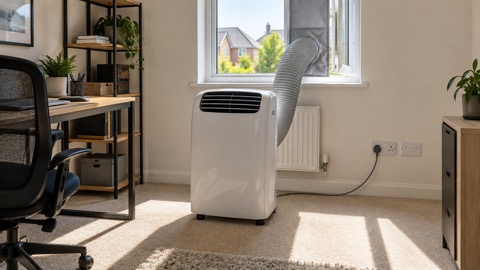
The UKHSA publishes a keep cool at home checklist for England19, and its guidance is worth following so that you are prepared for hot weather and can take action to cool yourself and your home6. For the full range of options, from shading to fans to portable air conditioning, see How to Keep Your Home Cool in Hot Weather and our Hot Weather Preparation Checklist.
Never leave children, older people or animals in a parked car

This is the one rule with no exceptions and no judgement call. Never leave anyone in a closed, parked vehicle, especially infants, young children or animals8. The Met Office's advice for keeping older people cool states it plainly8, and the same instruction appears in official guidance across the UK, from Lancashire14 and north west London10 to Northern Ireland, which says never leave animals inside a car on a hot day18, and Derbyshire, which says do not leave children or animals in a vehicle under any circumstances25.
The reason is speed. Small closed spaces such as stationary cars can get dangerously hot very quickly2, and even on cool days, strong sunshine can make car interiors very hot10. The temperature outside can be mild while the temperature inside a parked car is dangerous, so the outside temperature is never a reason to make an exception.
The rule extends beyond cars to any small closed space that can trap heat. Make sure that babies, children, older people and pets are not left alone in stationary cars or other closed spaces2.
Heat warnings and alerts: what a red warning means
The Met Office issues weather warnings in colours, and the colour tells you what to do. A red warning means: "Dangerous weather is expected and, if you have not done so already, you should take action now to keep yourself and others safe from the impact of the severe weather."7
That wording deserves attention. A red warning is not a forecast of inconvenience; it is an instruction to act before the weather arrives. Heatwaves have been happening in the UK more often than ever before, with four since 20079. Red warnings for heat are new to the UK, and the fact that one has now been issued means households should know in advance what they would do if another comes.
Alongside weather warnings, the UK operates heat-health alerting for the health effects of hot weather. Check the weather forecast and the heat-health alert system online for the risk in your area24, and see our page Heat-Health Alerts: Yellow, Amber and Red Explained and How to Sign Up for Heat-Health Alerts. The practical habit is simple: when any warning or alert is issued for your area, work through the keeping cool steps above the same day, before the peak of the heat.
How extreme heat strains water, power, transport and health services
Extreme heat does not only affect people. It can also place strains on water and energy utilities, road and rail transport, and the health and fire services16. The government's preparedness campaign spells out what that can mean for households: power cuts, restriction or loss of water supplies, and disruption to transport26.
That matters for preparation because a heatwave can produce compound problems. A hot evening with high demand for fans and cooling can coincide with strain on the electricity network; a dry summer can coincide with water restrictions. NHS climate adaptation guidance expects more frequent transport and power disruption as part of the UK's changing climate5, and also notes effects on health services themselves: indoor environments becoming less tolerable during heatwaves, affecting staff and patient comfort, hydration and fatigue, and more frequent activation of emergency plans such as cancelling services or moving patients to areas that can be actively cooled5.
What this means practically:
- Expect that a severe heatwave may bring a power cut, and know what you would do: see How to Keep Cool During a Power Cut in Hot Weather and our Power Cuts household guide.
- Expect that water supplies may come under pressure, and be ready to store water and use less: see How to Save Water at Home When Supplies Are Low and our Water in an Emergency guide.
- Expect transport disruption on the hottest days, and avoid unnecessary journeys when a warning is in force.
- Know that health services are under strain at exactly the moment you might need them, which is another reason to prevent heat illness rather than treat it.
Drought and hosepipe bans after hot, dry summers
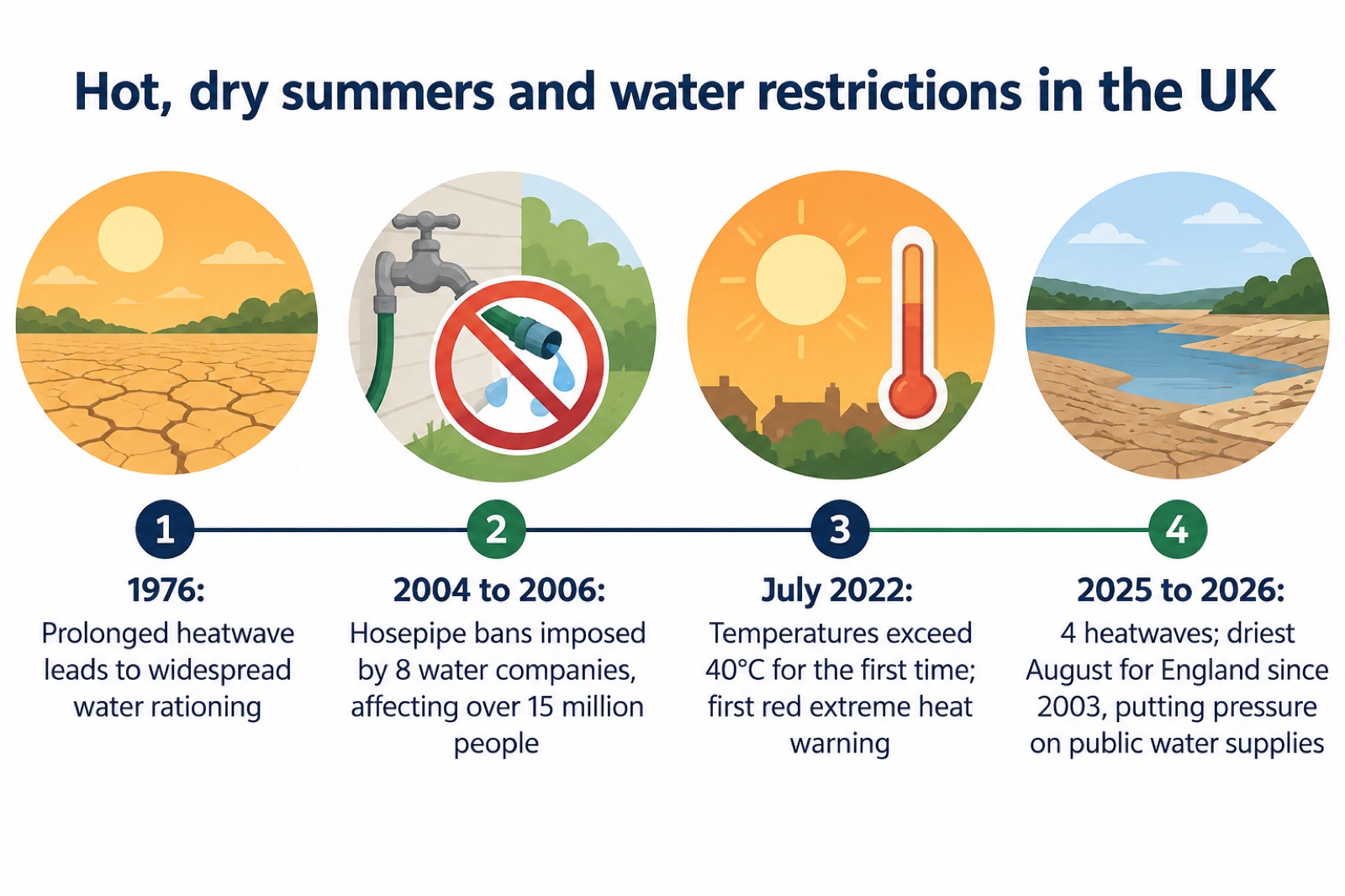
Hot summers and water restrictions go together, and the UK has a long history of it. In 1976, one of the most prolonged heatwaves in living memory affected domestic water supplies and led to widespread water rationing10. In the 2004 to 2006 drought, at the height of the event, hosepipe bans were imposed by 8 water companies affecting over 15 million people9.
The pattern has repeated. The 2025 to 2026 period brought a summer with 4 heatwaves, and it was the driest August for England since 2003, putting extra pressure on public water supplies9. The Environment Agency manages drought in England through stages, and hosepipe bans, formally called temporary use bans, are one of the tools water companies use as supplies tighten. Our pages on How Drought Is Declared in England and What Each Stage Means, Hosepipe Bans: How Temporary Use Bans Work and What You Can and Cannot Do in a Hosepipe Ban explain the detail.
The household response is straightforward. Store some water before a hot, dry summer, use less when restrictions are announced, and follow your water company's guidance rather than waiting for enforcement. If you rely on a private water supply, see What to Do If Your Private Water Supply Dries Up.
Wildfire risk in dry weather
The same hot, dry conditions that strain water supplies also raise the risk of fire. As heatwaves and summer droughts become more common, the risk of wildfires will also increase, harming air quality, wildlife and habitats28. In Wales, the wildfire risk is increasing, the wildfire season is getting longer, and more wildfires are occurring simultaneously, especially during summer heatwave conditions13. Scotland's preparedness campaign likewise warns of an increased risk from uncontrolled, quickly spreading wildfires during hot weather27.
For households, wildfire risk in the UK mostly means grass and heathland fires that start small and spread fast in dry vegetation. The prevention message is about care with fire and heat in the countryside: barbecues, cigarettes and glass can all start a fire in dry grass. See our pages on Wildfires and Grass Fires: Risk and Prevention, Barbecues and Wildfire Risk in Dry Weather and What to Do If You See or Are Near a Wildfire.
Wildfire smoke also affects air quality, which compounds the breathing difficulties heat already causes for people with heart and lung conditions. See Air Pollution, Ozone and Hay Fever in Hot Weather.
Mental health medication and hot weather
Some mental health medications increase sensitivity to hot weather, and that matters more as hot weather increases in frequency and severity due to climate change23. UKHSA guidance, which applies to England, states that people taking psychotropic medications may be at increased risk of death and other physical health impacts during heatwaves compared to those with other chronic conditions such as cardiovascular conditions23.
The mechanism is that certain medicines interfere with the body's temperature regulation and fluid balance. Northern Ireland's official guidance lists medicines that increase the risk of heat exhaustion or heatstroke: diuretics, antihistamines, beta-blockers, antipsychotics and recreational drugs such as amphetamines and ecstasy29. NHS heatwave guidance likewise identifies people on multiple medicines or medicines that may make them more likely to be badly affected by hot weather as more vulnerable20.
If you or someone in your household takes these medicines, do not stop taking them because of the weather. Instead, plan ahead for hot spells: know that your risk is higher, keep cool using the steps above, drink enough, and ask your doctor or pharmacist before the summer how your specific medicines affect you in heat. Our page Medicines That Raise the Risk of Illness in the Heat lists the medicines involved and what to ask.
Getting ready for the next hot summer
The trend line is settled enough that preparation is simply sensible household planning. Hot spells are expected to be more frequent and more intense as the climate changes8, heat-related deaths in the UK are projected to increase significantly in the future in the absence of future adaptation21, and the NHS's advice is that we should all make preparations now3.
A household that is ready for heat has, in outline:
- A habit of checking the Met Office forecast and warnings when hot weather is forecast14
- Curtains or blinds that can shade sun-facing rooms, and a plan for when to open and close windows26
- Enough drinking water stored, and knowledge of who in the household needs to drink most4
- A coolest room identified for sleeping, especially in top-floor flats19
- A daily check arranged for older or vulnerable neighbours24
- Awareness of any medicines in the household that raise heat risk29
- Some stored water and a plan to use less if restrictions are announced9
Start with our Hot Weather Preparation Checklist and the Heatwaves and Drought household guide, and if your household includes someone who needs extra help, see Extra Help in an Emergency.
Sources (29)
- Heatwave advice, Guy's and St Thomas' NHS Foundation Trust, 2026
- Beat the heat: staying safe in hot weather, UK Health Security Agency, 2026
- Heatwaves, Birmingham Women's and Children's NHS Foundation Trust, 2026
- Keeping cool in heat waves, Oxfordshire County Council, 2026
- Climate adaptation, Birmingham Women's and Children's NHS Foundation Trust, 2026
- Heat wave risk, Wiltshire and Swindon Prepared, 2026
- UK weather warnings, Met Office, 2026
- Tips for keeping older people cool, Met Office, 2026
- Drought: how it is managed in England, Environment Agency / Defra, 2026
- Hot weather and its impacts, Met Office, 2026
- Severe weather, Essex Prepared, 2026
- What is a heatwave?, Met Office, 2026
- Resilience and risks in Wales, Welsh Government, 2026
- Heatwave, Lancashire Prepared, 2026
- Warm weather advice, West Midlands Ambulance Service NHS Foundation Trust, 2026
- Severe weather advice, Met Office, 2026
- Hot weather advice, Scottish Ambulance Service, 2026
- Hot weather advice, nidirect (Northern Ireland government services), 2026
- Beat the heat: keep cool at home checklist, UK Health Security Agency, 2026
- Heatwave: how to cope in hot weather, NHS, 2026
- Heat summary: temperature and mortality, UK Health Security Agency, 2024
- Severe weather planning, Derbyshire County Council, 2026
- Mental health medications and extreme weather, UK Health Security Agency, 2025
- Be Prepared booklet, Lancaster City Council, 2025
- Severe weather planning, Derbyshire County Council, 2026
- Hot weather, Prepare Campaign (UK government), 2026
- Hot weather, Ready Scotland (Scottish Government), 2026
- Staffordshire's changing local climate, Staffordshire County Council, 2026
- Heat exhaustion and heatstroke, nidirect (Northern Ireland government services), 2025
 Baby and Child Hot Weather
 Hot Weather Preparation
 Flood Warning Checklist
 Air Pollution and Hay Fever
 Babies and Children in Heat
 Blue-Green Algae Risks
 Dehydration Signs and Prevention
 Evaporative Coolers and Fans
 Electric Fans Guide
 Heat Exhaustion and Heatstroke
 UK Heatwave Definition
 Who Is at Risk in Hot Weather
 Portable Air Conditioners Guide
 Sun Safety and Sunscreen
 Swimming Outdoors Safely