Babies and young children are among the groups most at risk from hot weather, and their health can be seriously affected by dehydration, heat exhaustion, heatstroke and sunburn1. The single most useful thing you can do is keep them out of the sun between 11am and 3pm, the hottest part of the day, and keep them in the shade when you are out at other times2. Dress them in loose-fitting clothing and a sunhat with a wide brim or a long flap at the back to protect the head, ears and neck, and apply sunscreen regularly4.
If a child does become very hot, act quickly. Official guidance is to move them to a cool area, encourage them to drink cool water and cool them as rapidly as possible, by sponging or spraying with cool water, placing cold packs around the neck and armpits, or wrapping them in a cool, wet sheet with a fan on them6. If they seem unwell with heat exhaustion, move them to a cool space, give them water, loosen any tight clothing, sponge their body with water and call 111 for advice2.
The rest of this page is the checklist itself, then the reasoning behind each item: why the middle of the day matters, how to spot a child who is overheating when they will not tell you, and the places a child should never be left or pushed on a very hot day.
The hot weather checklist for babies and children
Work through this list before a hot spell and again on the day. Each item is here because official guidance names it.
Keep them out of the sun between 11am and 3pm
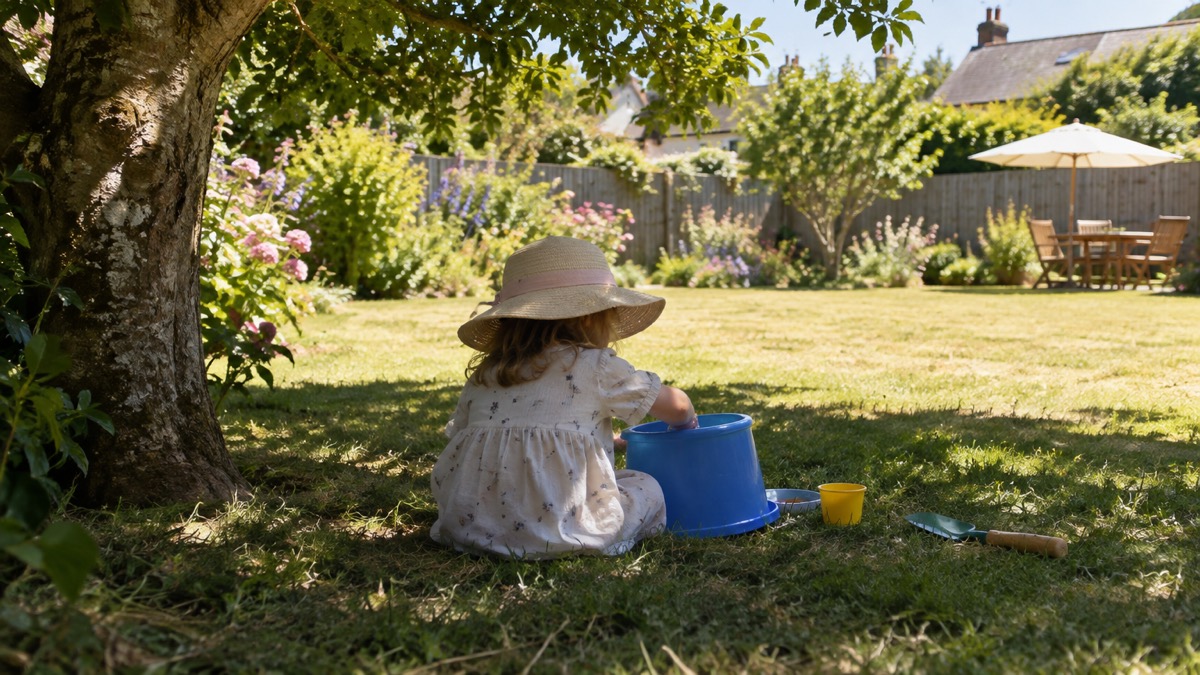
Every set of official hot weather instructions in the UK repeats the same window: keep out of the sun between 11am and 3pm9. It is the hottest part of the day, and it is when UV rays are strongest9. For babies and young children the advice is the same, and stated plainly: older babies should be kept out of the sun as much as possible, particularly in summer and between 11am and 3pm when the sun is at its strongest1.
In practice that means shifting the day rather than cancelling it. Plan outdoor play, errands and walks for the morning before 11am or the evening after 3pm, and treat the middle of the day as indoor or deep-shade time. The UK Health Security Agency's advice for hot weather is to keep out of the sun between 11am and 3pm, avoid extreme physical exertion, drink plenty of fluids, take water when travelling and look out for vulnerable people13.
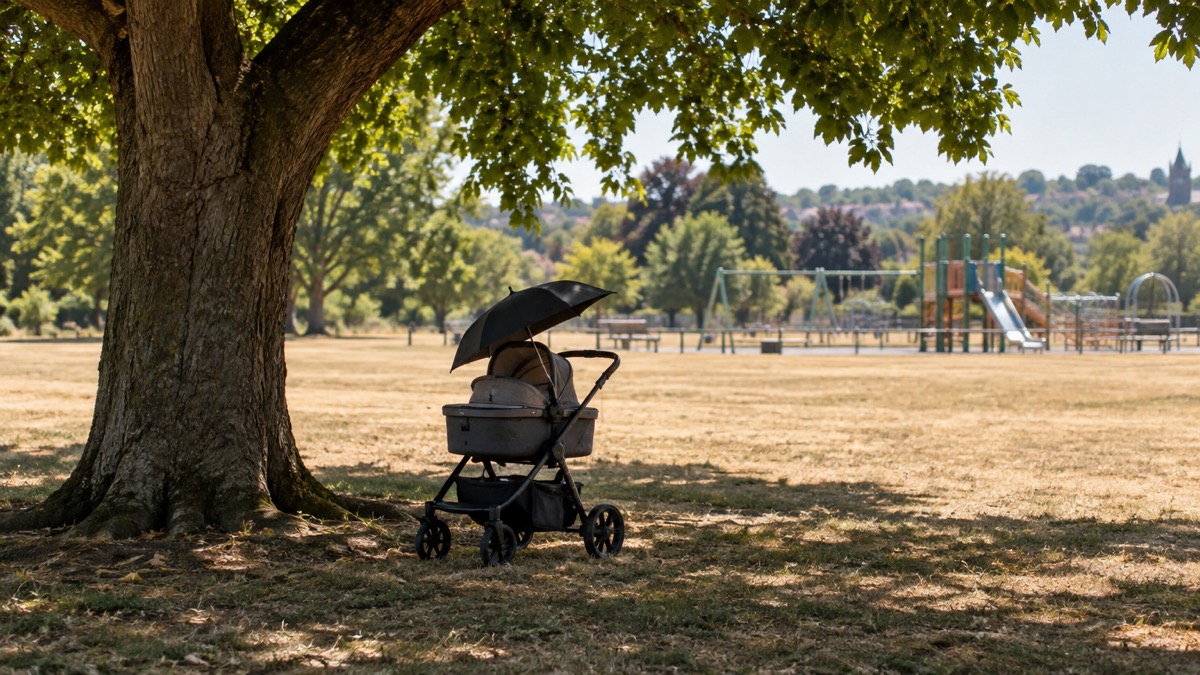
Shade is not the same as indoors, and not all shade is equal. A sunshade over a pram or a buggy can trap heat if it blocks airflow, which is why the guidance on prams is specific: keep them in the shade, remove excess clothing, ensure there is adequate air flow and check regularly that the child is not overheated11. A tree or a building's shadow that moves with the sun is better than a fixed cover that turns the pram into a warm box.
If you are out and about, public buildings such as places of worship, local libraries or supermarkets may be cooler than your home and can be visited as a way of cooling down8. More on finding one is below.
Light, loose clothing, a wide-brimmed hat and sunscreen reapplied often
Clothing does most of the work before sunscreen is even opened. Official advice is to wear loose-fitting, breathable clothing and a hat if possible14, and for children specifically: loose-fitting clothing, sunglasses and a sunhat with a wide brim or a long flap at the back to protect the head, ears and neck from the sun4. Light-coloured, close-weave fabrics are recommended for sun protection generally8.
Sunscreen is the second layer, not the first. Apply it regularly and wear a hat when outdoors5. The general sun protection advice is to stay in the shade between 11am and 3pm when UV levels are highest, wear lightweight loose-fitting light-coloured close-weave clothes, a wide-brimmed hat and wraparound or wide-armed sunglasses8.
| What to wear or carry | Why it matters | Source |
|---|---|---|
| Loose-fitting, breathable clothing | Lets air move and heat escape | 14 |
| Light-coloured, close-weave fabric | Recommended for sun protection | 8 |
| Wide-brimmed hat or hat with a long back flap | Protects head, ears and neck | 4 |
| Sunglasses | Named in child sun safety advice | 4 |
| Sunscreen, reapplied regularly | Second layer behind clothing and shade | 5 |
| Water bottle and spray bottle | Frequent water breaks and spraying down | 3 |
Children may not notice they are overheating: how to cool a very hot child
Children can be seriously affected by heat before they say anything about it. The risks official guidance names for babies and young children are dehydration, heat exhaustion, heatstroke and sunburn1, and the most common risk from heat is dehydration and sunburn6. Babies and young children aged five years and under are specifically named as more vulnerable in a heatwave15, and babies, young children and pregnant women are at particular risk from hot weather16.
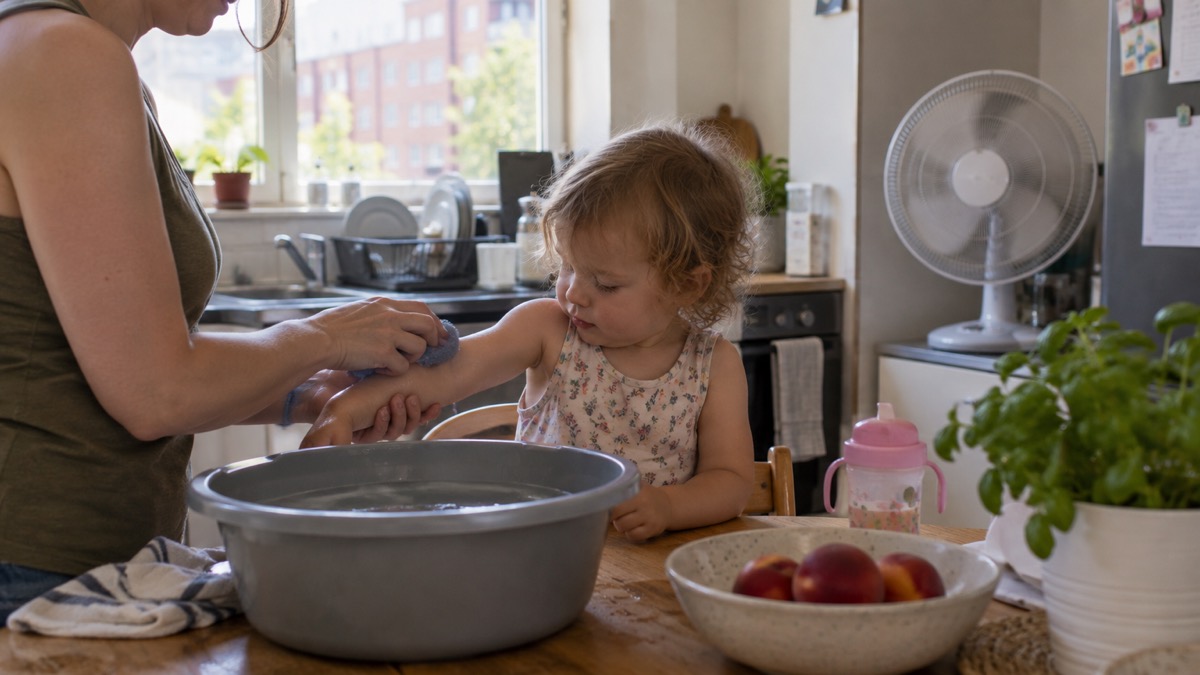
If a child is very hot, cool them first and ask questions later. The guidance is to sponge or spray them with cool water or use cold packs around the neck and armpits, and wrapping them in a cool, wet sheet with a fan on them can help cool them safely6. Cold packs wrapped in a cloth and placed under the armpits or on the neck can help, and you can improvise with a bag of frozen peas in a tea towel10. A damp cloth on the back of the neck, wrists or armpits is particularly effective because these are pulse points where blood vessels sit close to the surface10.
For a child who is hot but not unwell, the everyday measures are gentler: give frequent water breaks, spray down children with a spray bottle, and take cool baths and showers in extreme heat3. For the full picture of symptoms and when to escalate, see Heat Exhaustion and Heatstroke: Signs and What to Do and When to Call 999 or NHS 111 for Heat Illness.
Where children should not be pushed on very hot days
The clearest warning in the guidance concerns cars. Never leave anyone in a closed, parked vehicle, especially infants, young children or animals7. Do not leave babies or children in small, enclosed spaces such as a parked car, as they can get hot very quickly4. Ensure that babies, children or older people are not left alone in stationary cars17.
Prams and pushchairs are the other enclosed space to think about. Keep children in prams or pushchairs in the shade, remove excess clothing, ensure there is adequate air flow and check regularly to ensure they are not overheated11. A cover draped over the front to block the sun can cut airflow, so check the child's temperature and comfort often rather than assuming the cover is helping.
Away from the car, the guidance on where not to push a child is about heat and exertion rather than a specific place. Children should not take part in strenuous physical activities on very hot days8. If you are out with a pram, keep them in the shade, remove excess clothing, ensure there is adequate air flow and check regularly to ensure they are not overheated10.
Strenuous activity, sport and school in hot weather
The rule on activity is blunt: children should not take part in strenuous physical activities on very hot days8. Children should not take part in vigorous physical activity on very hot days10.
Schools are expected to manage heat rather than close. Official guidance for schools and early years settings recognises the importance of going to school for children and young people's learning, wellbeing and safety during hot weather, and advises schools to consider adjusting timetables to avoid teaching during very hot conditions6. Uniform rules should be relaxed, especially during amber or red Heat-Health Alerts, and children should wear loose, light-coloured clothing to help keep cool and sunhats with wide brims to avoid sunburn6. Schools are also advised to open windows early in the morning to let stored heat escape, close them during the day when it is hotter outside than inside, and encourage children outdoors to stay in the shade as much as possible6.
That guidance was first published on 19 December 2024 and updated on 8 July 2026 to align with guidance specifying children under five and to clarify measures supporting school attendance during hot weather6. For what the alert levels mean for your family, see Heat-Health Alerts: Yellow, Amber and Red Explained.
Cool spaces: libraries and other places to take a child
When home is too hot, official guidance points to public buildings. Libraries, leisure centres, supermarkets, community venues and places of worship can often provide a cooler environment10. Public buildings such as places of worship, local libraries or supermarkets may be cooler than your home and can be visited as a way of cooling down8.
Some councils go further and promote specific buildings as cool spaces. In Bexley, libraries are promoted as cooler spaces open during normal opening hours that can offer a comfortable place to rest during hot weather19. In London, cool spaces are described as indoor spaces for Londoners to shelter from the sun, cool down, rest and take respite on hot days, and the map also signposts outdoor spaces with shade, shaded seating, drinking water and toilets, though these may still be very hot during hot weather20.
For a family with a baby or toddler, a library has practical advantages: it is indoors, free to enter, and open during normal hours19. Check your own council's website before setting out, because the buildings promoted differ from place to place. Our guide to Cool Spaces: Finding Somewhere Cool Near You explains how to find one.
Keeping the checklist ready before the hot weather arrives
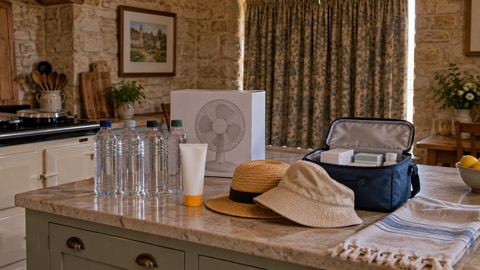
Most of this list costs nothing and needs no shopping, but a few items are worth having in the house before a hot spell so you are not searching for them on the hottest day.
- A spray bottle for spraying down children in extreme heat3
- Cold packs, or a bag of frozen peas and a tea towel for cooling at the neck and armpits10
- A cool, wet sheet and a fan for cooling a very hot child safely6
- Sunscreen and a wide-brimmed sunhat that fits now, not last summer4
- Loose, light-coloured clothing in the current size6
- Water bottles for frequent water breaks and for travelling3
It also helps to know your local cool spaces before you need them, and to check the heat alert level for your area. For the wider household picture, from keeping rooms cool to what to do in a power cut during a heatwave, start with Heatwaves and Drought: A Household Guide and the Hot Weather Preparation Checklist. If you are also looking after older relatives, Who Is Most at Risk in Hot Weather covers the other groups the guidance names.
Sources (20)
- Summer safety, Cheshire and Wirral Partnership NHS Foundation Trust, 2026
- Safety in summer, NHS West Yorkshire Healthier Together, 2026
- Staying safe over the summer, NHS Healthier Together, 2026
- Safety in the sun, NHS, 2024
- Hot weather advice, NHS Central East ICB, 2026
- Looking after children and those in early years settings before and during hot weather, GOV.UK, 2024, updated 2026
- How to cope in hot weather, Keeping Well North West London, 2026
- Beat the heat: staying safe in hot weather, GOV.UK, 2026
- Stay safe in extreme heat, Met Office, 2026
- Stay cool and safe in hot weather, Somerset Council, 2026
- Hot Weather Toolkit 2025, NHS Humber and North Yorkshire ICB, 2025
- Burn awareness, Cheshire Fire and Rescue Service, 2026
- Heatwave and drought water shortages, Dorset Prepared, 2026
- Heatwave safety advice, Mid and West Wales Fire and Rescue Service, 2026
- Heatwave: how to cope in hot weather, NHS, 2026
- Keeping warm or cool in extreme weather: scripts for broadcast media, GOV.UK, 2025
- Keeping cool in heat waves, Oxfordshire County Council, 2026
- Extreme weather summer guide, London Fire Brigade, 2024
- Stay safe during hot weather, London Borough of Bexley, 2026
- Cool spaces, Greater London Authority, 2026
 Hot Weather Preparation
 Flood Warning Checklist
 First Steps After a Flood