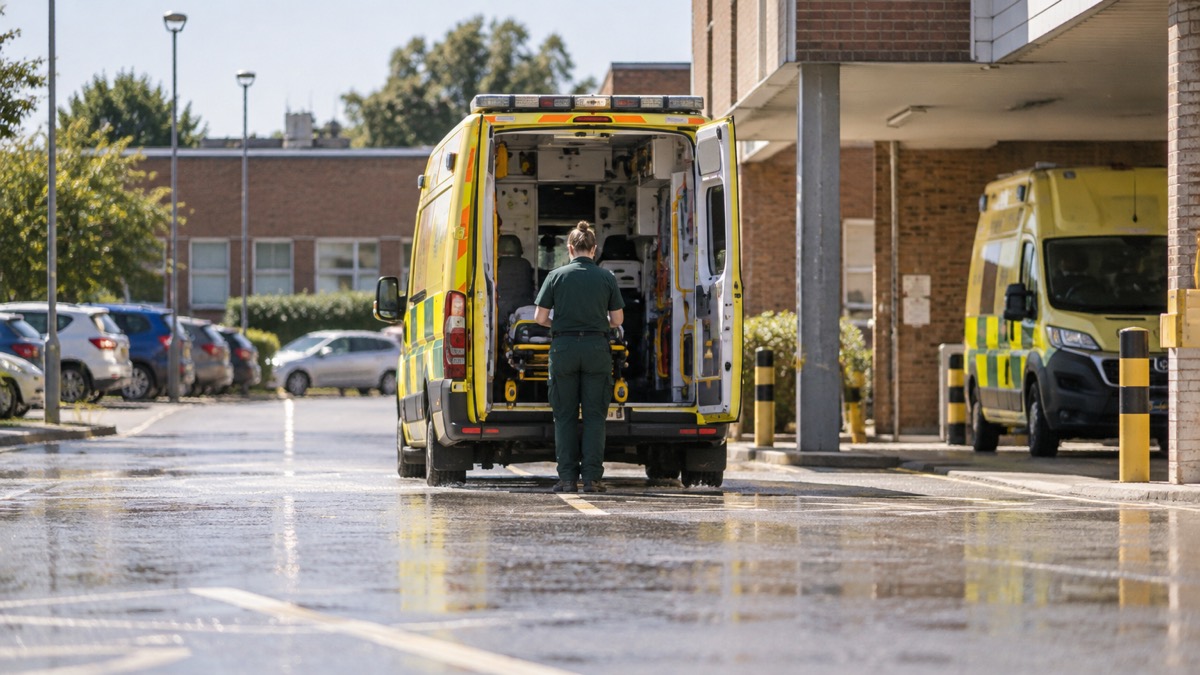
If you think someone has heatstroke, call 999 straight away. That is the advice from Somerset Council, NHS Berkshire Healthcare, Lancaster City Council, South Western Ambulance Service and the North East Ambulance Service, and it does not depend on being certain1. Heatstroke is a medical emergency: the body can no longer cool itself down and its temperature becomes dangerously high6. It can kill, can develop very suddenly and may lead quickly to unconsciousness7.
While you wait for the ambulance, keep cooling the person. If they have lost consciousness, put them in the recovery position and carry on cooling them2. Do not give them aspirin or paracetamol7.
Heat exhaustion is different. It is not usually serious if you can cool down within 30 minutes, but if you suspect it has turned into heatstroke, call 9998. If you are worried about heat illness that is not an emergency, NHS 111 is the number to use9.
Call 999 straight away if you suspect heatstroke
The threshold is suspicion, not certainty. Every official source on this point says the same thing in slightly different words: if you suspect heatstroke, phone 999 immediately1; if you suspect someone has heatstroke, call 9992; if you suspect someone is suffering from heat stroke, call 999 immediately4. Lancashire Prepared puts it as calling 999 if you suspect heat exhaustion has turned into heatstroke8, and the North East Ambulance Service simply says call 999 immediately5.
This matters because heatstroke is not a condition you can safely watch at home to see how it develops. The Northern Ireland guidance is blunt: heatstroke can kill, it can develop very suddenly and may lead very quickly to unconsciousness7. It is also less common than heat exhaustion but more serious, and it can put a strain on the brain, heart, lungs, liver and kidneys17.
Calling 999 is also the right move when the picture is unclear. The London Ambulance Service advises that you call 999 if someone is seriously ill or injured, unconscious, having difficulty breathing, or has symptoms of heat stroke5. If any of those apply, the call is justified.
Heatstroke signs: confusion, fast breathing and hot skin that is not sweating

The signs of heatstroke are a cluster, and you do not need all of them to act. The UK Health Security Agency broadcast script lists confusion, clumsiness, fast heartbeat, fast breathing or shortness of breath, hot skin and seizures18. The Mayor of London's guidance gives a similar list: confusion, lack of co-ordination, fast heartbeat, fast breathing or shortness of breath, hot skin that is not sweating, and seizures12.
For parents, the NHS children's guidance is simpler: call 999 if your child seems confused, breathing fast, has a high body temperature, or is unconscious19. The Humber and North Yorkshire integrated care board adds skin that is no longer sweating and seizures to that list, and says to put the person in the recovery position and keep trying to cool them down11.
| Sign | What it looks like | Source |
|---|---|---|
| Confusion | Not making sense, not recognising people or place | 11 |
| Fast breathing | Breathing quickly or short of breath at rest | 11 |
| Hot skin not sweating | Skin hot to touch and dry | 11 |
| Clumsiness | Lack of co-ordination, unsteady | 18 |
| Fast heartbeat | Pulse racing | 18 |
| Seizures | Fitting | 11 |
One sign needs a word of its own. NHS guidance describes hot skin that is not sweating and might look red, and notes this can be harder to see on darker skin shades2. Do not use skin colour as your test. Use the whole picture: confusion, breathing, heartbeat, co-ordination and whether the person is sweating at all.
Still unwell after 30 minutes of cooling: when heat exhaustion becomes an emergency
Heat exhaustion and heatstroke sit on the same scale, and the 30 minute mark is the practical dividing line. Lancashire Prepared's guidance is that heat exhaustion is not usually serious if you can cool down within 30 minutes, but if you suspect it has turned into heatstroke, call 9998. The NHS in Wales says to call 999 if someone is still unwell after 30 minutes of resting in a cool place, being cooled and drinking fluids14. The Leicester Partnership NHS booklet says the same: if you suspect someone has heatstroke and they are still feeling unwell after 30 minutes of resting in a cool place and drinking plenty of water, call 99913.
For a child, the NHS guidance is more specific. Call 999 if a child is still feeling unwell after 30 minutes of resting in a cool place and drinking plenty of water, with signs including confusion, shortness of breath, a high temperature above 40C, not sweating, or loss of consciousness20.
NHS Berkshire Healthcare defines heatstroke in the same terms: it happens when your body cannot cool down and your core temperature gets higher than 40ºC despite resting in a cool place and drinking fluids for 30 minutes or longer2. NHS Inform gives the figure as usually more than 40 degrees Celsius21.
When NHS 111 is the right call for heat illness
NHS 111 is for urgent problems that are not life-threatening. The Yorkshire Ambulance Service describes it as less urgent than a 999 call16. Guy's and St Thomas' NHS Foundation Trust says that if you need medical help for a heat-related health problem, contact NHS 111, and that in an emergency, or when you think someone has heatstroke, call 9999. The UK Health Security Agency's Beat the Heat guidance says the same: if you are concerned about symptoms, or they are worsening, seek medical advice by contacting NHS 111, and in an emergency, or if you think someone has heatstroke, dial 99910.
You can reach it by calling 111 or going to 111.nhs.uk, 24 hours a day, seven days a week, including when your GP surgery is closed15. It can help if you have an urgent medical problem and you are not sure what to do23. A free NHS 111 BSL service is available for BSL and English interpreter users25.
| Situation | Who to contact |
|---|---|
| Suspected heatstroke, confusion, seizures, unconsciousness | 9991 |
| Heat exhaustion not improving after 30 minutes of cooling | 9998 |
| Heat-related problem, worried but not an emergency | NHS 1119 |
| Unsure what to do about an urgent problem | NHS 11123 |
Heatstroke can come on without warning, so act on suspicion
The most important thing to understand about heatstroke is that it does not always announce itself. The Northern Ireland guidance states that heatstroke can also occur suddenly and without any warning7. That is why the official advice is framed around suspicion rather than confirmation: if you suspect it, call 9991.
The Red Cross guidance for households puts the same message in first aid terms: symptoms include hot, flushed and dry skin, headaches, dizziness or feeling confused or restless, and the help is to call 999 immediately or ask someone else to do it, then quickly move them into a cool place22. If you are on your own with someone who is deteriorating, asking a neighbour to make the call while you cool the person is a sensible division of labour, and the Red Cross explicitly allows for it22.
Heatstroke is also not confined to the very hottest days. The UK experienced a brief but unprecedented extreme heatwave in July 2022, when temperatures in parts of England exceeded 40C for the first time10, but the risk exists whenever the body cannot shed heat. The practical rule for a household is to know the signs before you need them, and to treat confusion in hot weather as a reason to call rather than a reason to wait.
Where to get help and what happens next
Once you have called 999, the call handler will tell you what to do while you wait. The general first aid advice is to keep cooling the person and to put them in the recovery position if they lose consciousness2. Do not give aspirin or paracetamol7.
If the person is treated for heatstroke, they will be treated in hospital, and it can take a few days to recover21. Heatstroke can strain the brain, heart, lungs, liver and kidneys and can be life-threatening17, which is why hospital treatment is the expected path once it is suspected.
For heat illness that is not an emergency, NHS 111 is available on 111 or at 111.nhs.uk, 24 hours a day, seven days a week15. If you need advice about a burn or scald, you can get help from NHS 11126. For anyone who needs extra help in hot weather, including older or disabled people, the Extra Help in an Emergency page explains how to arrange support, and the Heat Exhaustion and Heatstroke page covers the signs in more detail.
For dogs, the RSPCA advises that if a dog is showing any signs of heatstroke, dial 999 at once27. The Pets and Animals in an Emergency page covers wider planning for animals in hot weather.
Sources (27)
- Stay cool and safe in hot weather, Somerset Council, 2026-07-08
- Staying well in hot weather, NHS Berkshire Healthcare, 2026-10-29
- Be Prepared: Civil Contingencies, Lancaster City Council, 2026-10-26
- Heatwave: how to cope in hot weather, South Western Ambulance Service, 2026-10-29
- Summer safety advice, North East Ambulance Service, 2026-10-29
- Beat the Heat: staying safe in hot weather, UK Health Security Agency, 2026-07-21
- Hot weather advice, nidirect, 2026-10-05
- Heatwave, Lancashire Prepared, 2026-10-29
- Heatwave advice, Guy's and St Thomas' NHS Foundation Trust, 2026-06
- Beat the Heat: staying safe in hot weather, UK Health Security Agency, 2026-07-21
- Hot Weather Toolkit 2025, Humber and North Yorkshire ICB, 2025-05-28
- Coping with hot weather in London, Mayor of London, 2026-10-26
- Heatwave advice booklet, Leicester Partnership NHS Trust, 2022-07
- Heat exhaustion and heatstroke, NHS 111 Wales, 2026-06-22
- When to call 999, South Western Ambulance Service, 2026-10-29
- NHS 111, Yorkshire Ambulance Service, 2026-10-29
- Heat exhaustion and heatstroke, nidirect, 2025-12-02
- Keeping warm or cool in extreme weather: scripts for broadcast media, UK Health Security Agency, 2025-12-16
- Safety in summer, West Yorkshire Healthier Together, 2026-10-28
- Staying safe over the summer, Healthier Together, 2026-10-29
- Heatstroke and heat illness, NHS Inform, 2026-07-15
- Heatwaves: feeling the heat, British Red Cross, 2026
- Staying well in winter, Derbyshire County Council, 2026-10-29
- Staying well in winter, Derbyshire County Council, 2026-10-29
- Choose well and use the right health service, St George's University Hospitals NHS Foundation Trust, 2026-10-28
- Burns and scalds, Andaman Surgery, 2026
- Dogs in hot cars, RSPCA, 2026-10-29
 Baby and Child Hot Weather
 Hot Weather Preparation
 Flood Warning Checklist
 Baby's Room Temperature
 Child Dehydration Signs
 Fans in Very Hot Weather
 Signing Up for Heat Alerts
 Heat Rash
 How Much Water to Drink
 Keeping Cool in a Power Cut
 LPG Tank Safety in Hot Weather
 Medicines and Heat Risk
 New Build Overheating
 Checking On Older Neighbours
 Staying Cool in Pregnancy