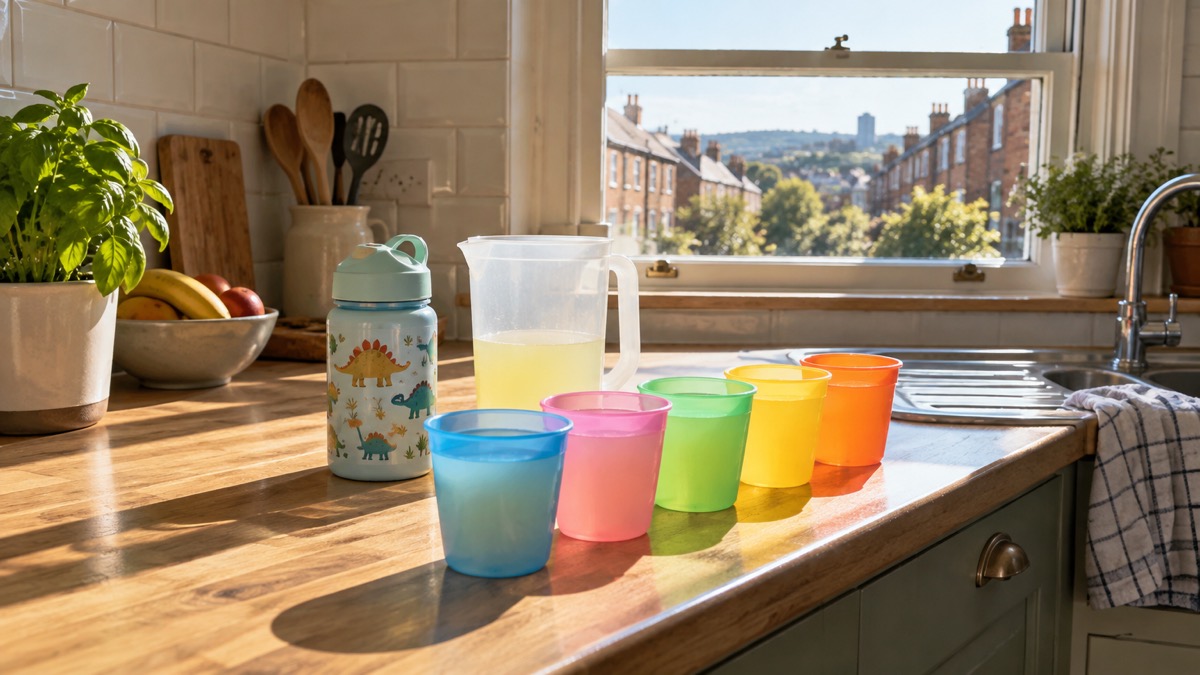
Dehydration happens when the body loses more water and salt than it takes in, and if it is not treated it can get worse and become a serious problem1. Babies, children and older adults are more at risk, and young children can deteriorate quickly2. That is why the question to ask is not only whether your child is thirsty, but whether they are drinking enough to keep their urine pale and their nappies wet.
The signs to look for in a child are feeling thirsty, peeing less often than usual, dark yellow strong-smelling pee, feeling dizzy or lightheaded, feeling tired, a dry mouth, lips and tongue, and sunken eyes2. In a baby, watch for a sunken soft spot (fontanelle) on top of the head, few or no tears when they cry, fewer wet nappies than usual, and being drowsy or irritable4. Offer water or diluted sugar-free squash little and often, and drink more when the risk is higher, such as in hot weather, during exercise, or with sickness and diarrhoea4.
Most children who are drinking and weeing normally need no more than that. The important exceptions are the red flags: no wee or wet nappy for 12 hours, a child who is very sleepy or difficult to wake, or a child who cannot keep fluids down. Those need advice from NHS 111, and some need 9995.
Signs of dehydration in children: thirst, less wee, tiredness and irritability
The first sign is usually thirst, and it is easy to miss because a child may not ask for a drink. The NHS lists the signs of dehydration in adults and children as feeling thirsty, dark yellow strong-smelling pee, peeing less often than usual, feeling dizzy or lightheaded, feeling tired, a dry mouth, lips and tongue, and sunken eyes2. A child may also complain of a headache and light-headedness, and may have muscle cramps3. Some children become irritable rather than quiet, which is easy to read as ordinary grumpiness.
The simplest check is the toilet or the nappy. Pee that is dark yellow and strong-smelling, or peeing less often than usual, points to dehydration4. In babies and young children, dehydration may show as pale or mottled skin, sunken eyes, absence of tears when crying, or significantly reduced wet nappies3. A child who is tired and irritable, or lightheaded, is showing the same picture, so ask about drinks as well as looking at the nappy.
Tiredness and irritability are part of the picture, but they are also the signs that matter most when they are extreme. A child who is unusually sleepy, confused or difficult to wake is not simply tired: that is a reason to seek urgent advice1. The same applies to a child who is very thirsty but cannot keep fluids down6.
| What to check | What is normal | What suggests dehydration |
|---|---|---|
| Thirst | Drinks and asks for more | Very thirsty, or not asking at all |
| Pee | Pale, regular | Dark yellow, strong-smelling, less often4 |
| Nappies | Wet regularly | Significantly reduced wet nappies, pale or mottled skin3 |
| Mouth | Moist | Dry mouth, lips and tongue1 |
| Eyes | Normal | Sunken eyes1 |
| Mood and energy | Settled | Tired, irritable, dizzy or lightheaded1 |
If you are unsure, offer small drinks often and keep checking. A child who perks up after a drink and starts weeing pale again is usually fine. A child who stays drowsy, stops drinking or stops weeing needs advice.
Babies and toddlers: dry nappies, no tears and a sunken soft spot
Babies cannot tell you they are thirsty, so the signs are physical. The NHS lists a sunken soft spot (fontanelle) on top of their head, few or no tears when they cry, fewer wet nappies than usual, and being drowsy or irritable4. The St John Ambulance adds pale or mottled skin, sunken eyes, absence of tears when crying, and significantly reduced wet nappies3. A baby who is drowsy or difficult to wake needs urgent advice, not a wait-and-see approach6.
Nappies are the most reliable guide for a baby or toddler. Fewer wet nappies than usual, pale or mottled skin, a sunken soft spot (fontanelle) on top of their head, few or no tears when they cry, or being drowsy or irritable all point to dehydration2. Keep offering breast or bottle feeds, and for older babies offer water between feeds. If a baby stops feeding, that is a reason to call 1118.
A sunken soft spot is a sign of dehydration, but a bulging one is different and more serious. Do not wait to see whether it settles. If your baby seems unwell and you are worried, contact NHS 111 or your GP, and call 999 if they lose consciousness or have a fit10.
Why young children can go downhill quickly
Children can recover from illness quickly but can also become more poorly quickly, so it is important to seek further advice if a child's condition gets worse11. Young children can deteriorate quickly with dehydration, which is why the advice is to act on the signs rather than wait for them to pass3. Their bodies lose water and salt faster than adults, and a child who is sick or has diarrhoea can become dehydrated within hours.
The risk is higher in very hot or humid conditions, and hot weather can lead to dehydration and heat-related illnesses such as heatstroke3. Children are also more at risk of heat exhaustion or heatstroke than adults, along with older people and people with long-term health conditions13. That does not mean every warm day is dangerous, but it does mean drinks and shade matter more for a child than for an adult doing the same thing.
Dehydration is also a complication of ordinary illness. The NHS lists having been sick or having diarrhoea, having a high temperature, sweating a lot after exercising, and having been in the sun or a hot environment too long among the causes of dehydration4. People who are already ill and dehydrated, for example from diarrhoea and vomiting, are more vulnerable in a heatwave15. A child with a tummy bug in July is at higher risk than a child with the same bug in a cool April.
The practical response is to keep offering drinks during illness and hot weather, and to check for the signs above rather than relying on thirst. If a child is not improving, or is getting worse, seek advice16.
Hot days, sickness and diarrhoea: when the risk is higher
Some days and some illnesses raise the risk, and knowing which helps you plan. The risk of dehydration is higher in very hot or humid conditions3. Hot weather can lead to dehydration and heat-related illnesses such as heatstroke12. Children, older people and people with long-term health conditions such as diabetes or heart problems are more at risk of heat exhaustion or heatstroke13.
Sickness and diarrhoea are the other big driver. The NHS lists having been sick or having diarrhoea, and having a high temperature, among the causes of dehydration1. Norovirus is a common cause of diarrhoea and vomiting, and dehydration is one of its main risks. NHS Scotland advises calling 111 if you are worried about a baby under 12 months, a child stops feeding, a child under 5 has signs of dehydration, you cannot keep fluid down, there is bloody diarrhoea, or diarrhoea lasts more than 7 days or vomiting more than 2 days8. The NHS in England gives the same advice, including calling 111 if signs of dehydration continue after using oral rehydration sachets9.
On hot days, the official advice is to keep your child drinking little and often, and ice lollies can help keep water levels topped up17. Water and diluted squash or lower-fat milks are good choices, while fruit juice, smoothies and sugary soft drinks can be high in sugar and should be limited because they can dehydrate the body7. Children should not take part in strenuous physical activities on very hot days7. Avoid strenuous activity during the hottest part of the day18.
When to call NHS 111 or 999
Most dehydration in children can be managed at home with drinks. Some signs need advice the same day, and a few need an ambulance. The NHS says that signs of serious dehydration need urgent treatment, and advises calling 111 or getting help from 111 online, including for advice about a child under 54.
Call 111 if your child has signs of dehydration and you are worried, if a baby under 12 months is involved, if a child stops feeding, if your child cannot keep fluids down, or if signs continue after oral rehydration sachets8. Call 111 if your child has had an accident and needs medical attention11.
Call 999 or go to A&E if your child has signs of dehydration and blue, grey, pale or blotchy skin, lips or tongue (on brown or black skin this may be easier to see on the palms of the hands or soles of the feet), skin that feels cold, difficulty breathing or taking lots of quick breaths, confusion, or is sleepier than normal or difficult to wake4. Call 999 immediately if your child loses consciousness or has a fit10.
| Situation | Who to contact |
|---|---|
| Signs of dehydration, child under 5, you are worried | NHS 111 or 111 online1 |
| Baby under 12 months you are worried about | NHS 1118 |
| Child stops feeding, cannot keep fluids down | NHS 1118 |
| Signs continue after oral rehydration sachets | NHS 1119 |
| Blue, grey or blotchy skin, cold skin, difficulty breathing, confusion, very sleepy | 999 or A&E1 |
| Loss of consciousness or a fit | 99910 |
For more on heat illness in children, see Heat Exhaustion and Heatstroke: Signs and What to Do and Keeping Babies and Young Children Safe in Hot Weather. For the wider picture on fluids, see Dehydration in Hot Weather: Signs and Prevention and How Much Water to Drink in Hot Weather.
Keeping children out of the sun and out of trouble
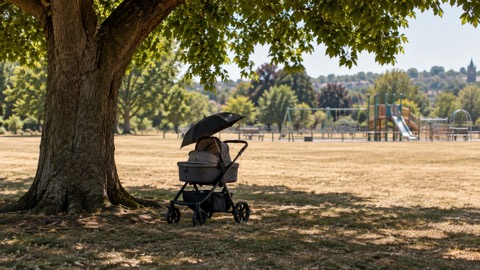
Sun and heat add to the dehydration risk, and some simple habits reduce it. Children aged under 6 months should be kept out of direct strong sunlight2. Babies less than six months old should be kept out of direct sunlight and older infants should also be kept out of the sun as much as possible19. For older children, shade, loose clothing and regular drinks help, and the Sun Safety: Sunscreen, SPF and UV for the Family page covers protection in more detail.
Water is a separate danger that often comes with hot days. Young children can drown in fewer than two inches of water in just 20 seconds, and children will disappear under the surface of water and not cry out for help11. Young children can drown in small amounts of water, including ponds and paddling pools20. Supervise children in and around water, because drowning can happen fast and silently21. If you have a paddling pool or pond, see Paddling Pools, Ponds and Car Washing During a Hosepipe Ban and Swimming Safely in Rivers, Lakes and the Sea in Hot Weather.
Hot drinks are another risk around young children. Keep hot drinks well away from young children22. A child who is dehydrated may be offered a drink, but a freshly made hot drink is not the answer on a hot day.
If your child is unwell in cold weather
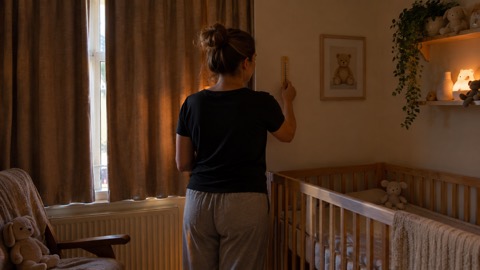
Dehydration is not only a summer problem. The risk is higher in very hot or humid conditions, but illness with sickness or diarrhoea raises it at any time of year3. In cold weather, the opposite risk also matters: hypothermia. A baby with hypothermia may be cold to touch, floppy, unusually quiet and sleepy, and may refuse to feed23. Symptoms of hypothermia include shivering, lips going blue, slurred speech and lack of coordination25.
Keep offering drinks during illness whatever the season, and keep the room at a comfortable temperature. If your child is unwell and you are worried, contact NHS 111 or your GP, and call 999 if they lose consciousness or have a fit10. For more on keeping children safe across the seasons, see the Baby and Child Hot Weather Checklist and Who Is Most at Risk in Hot Weather.
Sources (25)
- Safety in summer, NHS West Yorkshire Healthier Together, 2026-10-28
- Summer safety, Cheshire and Wirral Partnership NHS Foundation Trust, 2026-10-29
- Dehydration, St John Ambulance, 2026-10-28
- Dehydration - NHS, NHS
- Sepsis, NHS inform, 2026-09-28
- Symptoms, Meningitis Research Foundation, 2026
- Beat the heat: staying safe in hot weather, UK Health Security Agency, 2026-07-21
- Norovirus, NHS inform, 2026-10-13
- Norovirus, NHS, 2024-12-31
- Stay cool and safe in hot weather, Somerset Council, 2026-07-08
- Child safety, Berkshire Healthcare NHS Foundation Trust, 2026-10-29
- Hot weather, Ready Scotland, 2026-03-24
- Heat exhaustion and heatstroke, NHS, 2026-05-28
- Heat exhaustion and heatstroke, NHS 111 Wales, 2026-06-22
- Heatwave: how to cope in hot weather, NHS, 2026
- Poisoning :: Frimley HealthierTogether, Frimley HealthierTogether (NHS)
- Keeping cool in heat waves, Oxfordshire County Council, 2026
- Stay safe in extreme heat, Met Office, 2026-10-29
- Advice for vulnerable people, NHS Norfolk and Suffolk ICB, 2026-05-29
- Drowning first aid, NHS inform, 2026-07-24
- Water safety ahead of Drowning Prevention Week, North Yorkshire Fire and Rescue Service, 2026-06-11
- Burns and scalds, Andaman Surgery, 2026
- Hypothermia (low body temperature), NHS inform, 2026-07-15
- Keeping warm or cool in extreme weather, UK Health Security Agency, 2025-12-16
- Keep warm in winter, Derbyshire County Council, 2026-10-29
 Baby and Child Hot Weather
 Hot Weather Preparation
 Flood Warning Checklist
 Baby's Room Temperature
 Fans in Very Hot Weather
 Signing Up for Heat Alerts
 Heat Rash
 Calling 999 for Heat Illness
 How Much Water to Drink
 Keeping Cool in a Power Cut
 LPG Tank Safety in Hot Weather
 Medicines and Heat Risk
 New Build Overheating
 Checking On Older Neighbours
 Staying Cool in Pregnancy