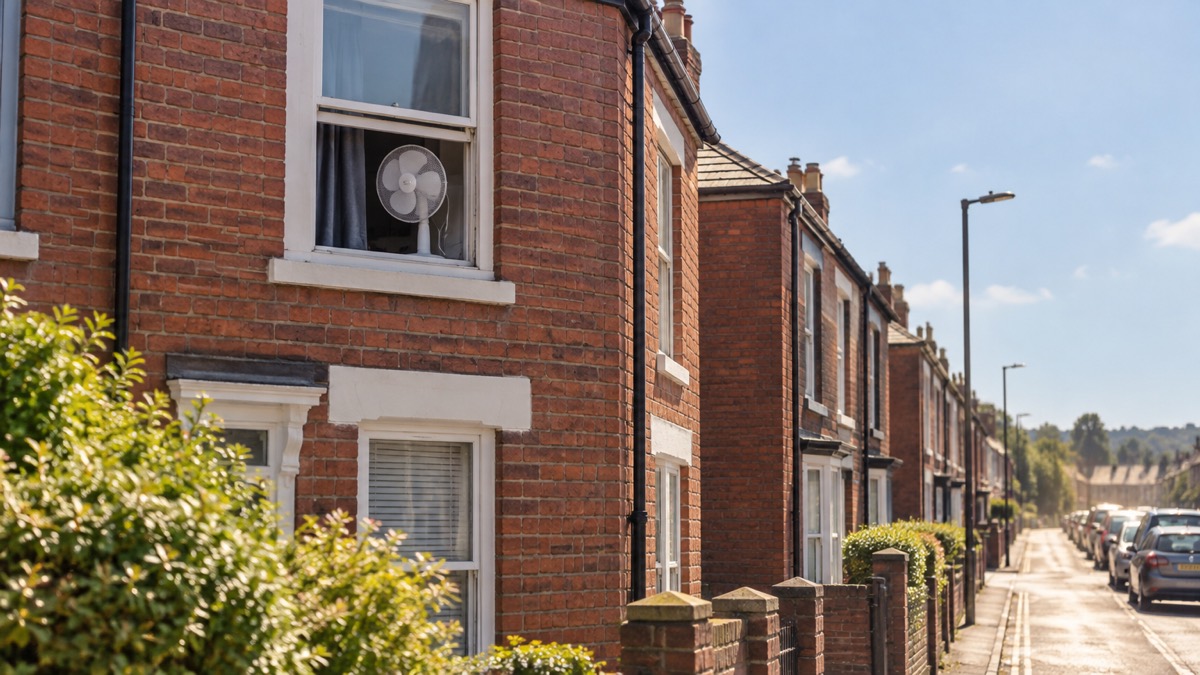
An electric fan is a sensible way to get through most hot weather in the UK. Official guidance is consistent on the point: use a fan while the air temperature is below 35°C, and do not aim it directly at your body, because a direct draught can speed up dehydration1. Above 35°C the advice changes. Several councils and NHS trusts say fans become less effective at that point and can make dehydration worse, and Oxfordshire's public health guidance is blunt: "Do not use fans if it's hotter than 35°C"2.
So the answer to the question people type into a search engine is 35°C. Below it, a fan moves air over your skin and helps you feel cooler. Above it, the air itself is so warm that a fan mostly moves hot air around, and the cooling effect on your body is lost while the drying effect on your skin continues2. That is why the same guidance that says fans can help also says to keep drinking regularly, especially for people who are ill and confined to bed4.
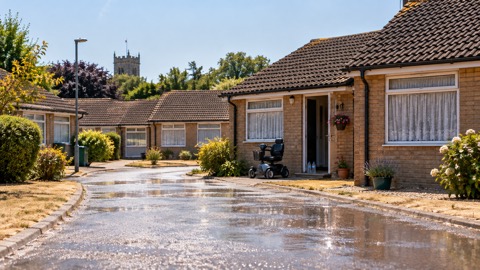
The people who need to know this most are not the ones who feel the heat first. Older people, especially those over 65, are named as most vulnerable when temperatures rise, along with people with heart, respiratory and other serious health problems5. A fan that feels merely ineffective to a fit adult can quietly worsen dehydration in someone frail, living alone, or unable to get up to fetch a drink. This page sets out when a fan helps, when it does not, how to run one without adding a fire risk, and where to get help.
Why 35°C is the line, and what a fan actually does
A fan does not cool the air in a room. It moves air across your skin, which helps your body shed heat by convection and by evaporating sweat. That works well while the air is cooler than your skin. Once the air temperature climbs past 35°C, the air is close to or above skin temperature, so the fan stops helping you lose heat and mainly accelerates the evaporation of moisture from your skin and airways2.
Official guidance from several sources describes the same effect in slightly different words. Somerset Council says that at temperatures above 35°C fans become less effective and can worsen dehydration, and adds a direct instruction not to point a fan at yourself3. Black Country ICB says fans may not prevent heat-related illness above 35°C and can cause excess dehydration, and advises placing the fan at a distance from people rather than aiming it at the body, with regular drinks, especially for sick people confined to bed4. Oxfordshire's guidance is the shortest: do not use fans above 35°C2.
Below the threshold the advice is equally clear. Oxford Health's falls guidance says to use a fan if the temperature is below 35°C8. The government's Beat the Heat guidance says to use electric fans if the air temperature is below 35°C, but not to aim the fan directly at your body as this can lead to dehydration1.
The government's Beat the Heat guidance sets 35°C as the threshold at which heat becomes dangerous, and its wording on fans is consistent: do not aim a fan directly at the body. Treat 35°C as the line and the direct-draught warning as applying at every temperature.
Keeping cool with a fan below 35°C

Below the threshold, a fan is one of the simplest tools a household has. Official guidance suggests portable electric fans used with a bowl of ice, or a permanent ceiling fan or ventilation system, as ways to keep cool at home2. The bowl of ice trick works because the fan draws air over the ice and delivers it slightly cooler; it is a small effect, but it is the one the guidance names.
The way you use the fan matters as much as the fan itself. Keep it at a distance and angled so that air circulates around the room rather than blasting at your skin, and keep drinking water alongside it4. If you are cooling a room rather than a person, the wider job of keeping heat out belongs with the guide to keeping your home cool: closing curtains on sun-facing windows, opening windows at night when it is cooler outside, and turning off lights and electrical equipment that are not in use1.
For anyone choosing a fan, the guide to electric fan types sets out the differences between pedestal, desk, tower and ceiling fans. If you are weighing a fan against a portable air conditioner, the comparison of fans and air conditioners explains which suits which kind of home. And if you need a fan that keeps running when the power fails, the comparison of cordless and mains fans covers the trade-offs.
A fan is not the only option, and for some households it is not the best one. The guide to evaporative coolers and misting fans explains what those devices can and cannot do, and the guide to portable air conditioners covers units that genuinely cool the air rather than move it.
Why older people are at greater risk in hot weather
Official guidance is unanimous that older people are among those most vulnerable when the temperature rises. Public Health Wales names older people, especially those over 656. The UK Health Security Agency's Beat the Heat guidance lists older people aged 65 years and over, and notes this is a change from previous guidance of 75 years of age and above1. The Met Office adds a further group: those who cannot adapt their behaviour to keep cool, and those exposed to high levels of heat because of where they live or work9.
The reasons are practical as much as medical. Older people are more likely to live alone, and those over 85 are more likely to have health concerns and reduced mobility10. A person who cannot easily get up to fetch a glass of water is exactly the person for whom a fan's drying effect is most dangerous. The same guidance that warns about fans above 35°C singles out sick people confined to bed as needing regular drinks4.
There is a second layer of risk that has nothing to do with the fan. Fire services warn that some older people have reduced senses, and that conditions such as dementia create specific fire risks: leaving cooking unattended, putting things on cookers or in microwaves that should not be there, misunderstanding the sound of a smoke detector, and not recognising the home they live in, which reduces their ability to get out safely10. Older people are also more likely to live alone, and low-income households are less likely to have fire safety measures in the home10.
| Who is at higher risk | Why it matters for fan use |
|---|---|
| People aged 65 and over | Named as most vulnerable in official guidance1 |
| People with heart or lung conditions | Named alongside older people as most vulnerable5 |
| People who live alone and cannot care for themselves | Listed among those at higher risk in official guidance11 |
| People with reduced mobility | Listed among those at higher risk in official guidance10 |
| People with dementia or memory loss | Listed among those at higher risk in official guidance10 |
If you are supporting someone in one of these groups, the guide to people most at risk in hot weather sets out the full list, and the guide to medicines that raise heat risk explains why some prescriptions matter. For the signs of heat illness and what to do, see the guide to heat exhaustion and heatstroke.
Fans can overheat and cause fires
A fan is an electrical appliance, and the fire risks around it are ordinary ones. The most common is overloading a socket. Warwickshire Fire and Rescue Service warns that plugging in appliances that together use more than 13 amps or 3000 watts risks overheating and possibly fire12. A fan on its own is modest, but a fan, a phone charger, a kettle and a heater on one extension lead is not. Check what is sharing the socket before you add another appliance.
The second risk is unattended running. A government product recall for a Valiant radiator fan, sold through several online marketplaces and retailers, warned that if the product is charged or left unattended in standby mode, a fault may occur leading to thermal runaway and the product catching fire13. That recall is specific to one product, but the principle applies to any appliance left charging or running unattended for long periods. Official hot weather advice says to turn off lights and electrical equipment not in use1.
The third risk is placement. Keep a fan clear of curtains, bedding and anything that could be drawn into the grille, and keep children and animals from poking things into the vents. Fire services give the same warning for fan heaters, noting that children or animals could drop or poke something through the vents onto the metal coil, which may start a fire14. A fan does not have a hot coil, but the habit of keeping fingers and objects out of the grille is the same.
For households where someone has reduced senses, the fire risk needs a second look. The London Fire Brigade notes that when the temperature in a room fitted with a sprinkler reaches 60 to 70 degrees, the sprinkler will spray water across the room15. Most homes do not have sprinklers, which makes early warning more important: test smoke alarms, keep the route to the door clear, and make sure anyone with reduced hearing or smell can be alerted. The guide to home emergencies covers fire safety in more detail.
Where to get help in a heatwave
If you or someone else becomes unwell in the heat, the route to help is straightforward. Guy's and St Thomas' NHS Foundation Trust advises that if you need medical help for a heat-related health problem, contact NHS 111, and in an emergency, or when you think someone has heatstroke, call 9997. The NHS heat exhaustion guidance says to get help from NHS 111 if you or someone else have symptoms you are struggling to treat, and to call 999 if you suspect heat exhaustion has turned into heatstroke16. Heat exhaustion is not usually serious if you can cool down within 30 minutes, but heatstroke is an emergency17.
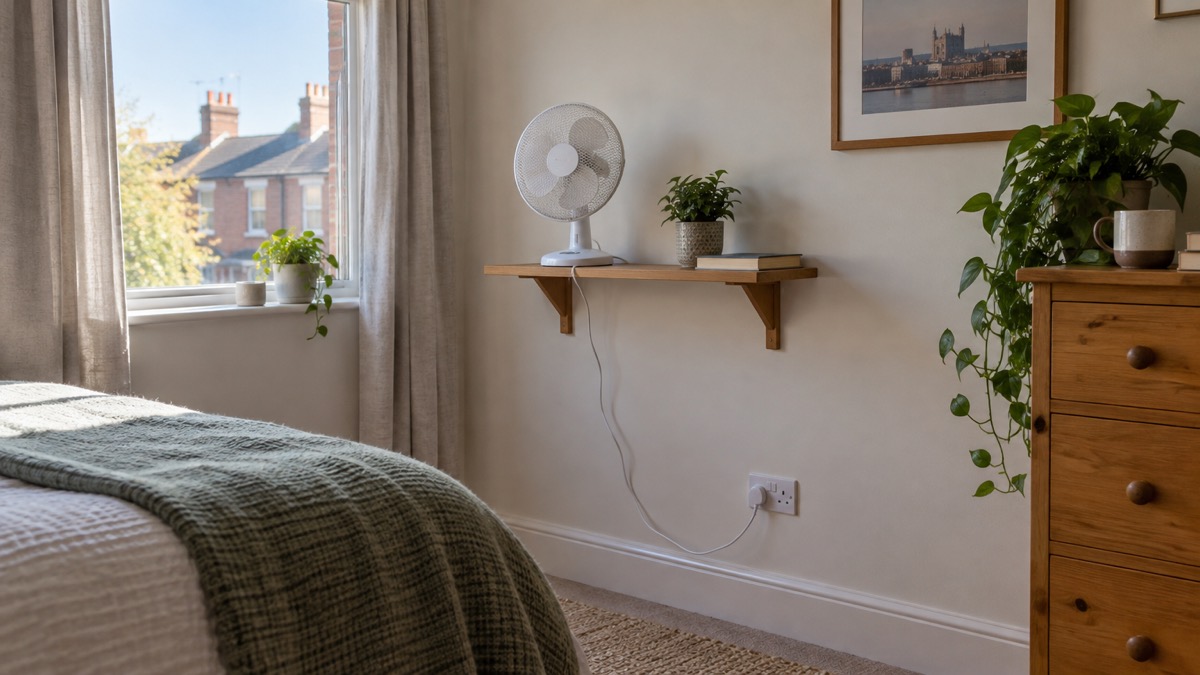
For people who need extra support, the first step is often a neighbour or relative rather than a service. Official advice for checking on elderly and disabled neighbours and relatives is to make sure they are OK with enough heat and food18. Before hot weather arrives, check that fridges, freezers, fans and air conditioning work properly19. The guide to checking on older and vulnerable neighbours sets out how to do this well, and the guide to extra help in an emergency covers the wider support available.
If you are caring for someone who cannot manage alone, the guide to people most at risk and the guide to heat-health alerts explain how warnings are issued and what each level means. The hot weather preparation checklist is a practical list to work through before a hot spell.
Sources (19)
- Beat the Heat: staying safe in hot weather, UK Health Security Agency, 2026
- Beat the Heat, Oxfordshire County Council, 2026
- Stay cool and safe in hot weather, Somerset Council, 2026
- Heatwaves, Black Country ICB, 2026
- Severe weather planning, Derbyshire County Council, 2026
- Weather and health, Public Health Wales, 2026
- Heatwave advice, Guy's and St Thomas' NHS Foundation Trust, 2026
- Falls guidance at home, Oxford Health NHS Foundation Trust, 2026
- Tips for keeping older people cool, Met Office, 2026
- Home safety partnerships, Devon and Somerset Fire and Rescue Service, 2026
- Advice for vulnerable people, NHS Norfolk and Suffolk ICB, 2026
- Fire safety at home, Warwickshire County Council, 2026
- Product recall: Valiant radiator fan, Office for Product Safety and Standards, 2025
- Heater safety, Devon and Somerset Fire and Rescue Service, 2024
- Sprinklers and Personal Protection Watermist Systems | London Fire Brigade, London Fire Brigade
- Heat exhaustion and heatstroke, NHS, 2026
- Heatwave, Lancashire Prepared, 2026
- Snow buddies, Derbyshire County Council, 2026
- Be prepared, Lancaster City Council, 2026
 Baby and Child Hot Weather
 Hot Weather Preparation
 Flood Warning Checklist
 Baby's Room Temperature
 Child Dehydration Signs
 Signing Up for Heat Alerts
 Heat Rash
 Calling 999 for Heat Illness
 How Much Water to Drink
 Keeping Cool in a Power Cut
 LPG Tank Safety in Hot Weather
 Medicines and Heat Risk
 New Build Overheating
 Checking On Older Neighbours
 Staying Cool in Pregnancy