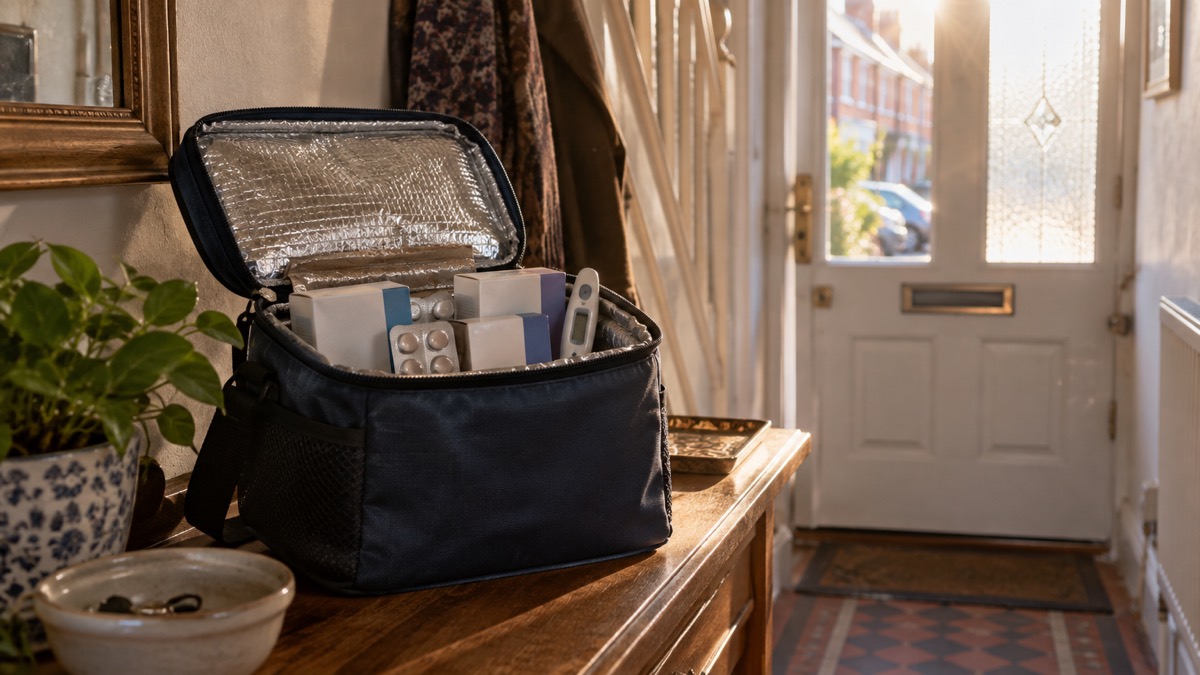
If you take regular medicines, hot weather can affect you more than it affects other people. Some medicines raise the risk of heat exhaustion and heatstroke, some interfere with sweating or cause dehydration, and some make your skin burn more easily in the sun. The single most important thing to know is that you should keep taking your medicines. Official guidance is clear: continue taking all of your prescribed medicines unless advised not to by a medical professional1.
What changes in hot weather is not your prescription but your routine. Most medicines should be kept below 25°C, somewhere cool, dry, out of direct sunlight and away from windowsills2. You need to drink regularly, stay out of the hottest part of the day, and know the signs that mean you need help. If you are concerned about symptoms, or they are worsening, contact NHS 111; in an emergency, or if you think someone has heatstroke, dial 9991.
This page sets out which medicines raise the risk, who is most vulnerable, how to store medicines in a heatwave, and what to do if someone becomes unwell. Always follow the directions on medicine packets and information leaflets, and never exceed the stated dose3.
Medicines that raise the risk of heat exhaustion and heatstroke
Certain medicines can increase your risk of developing heat exhaustion or heatstroke. The official list includes diuretics, antihistamines, beta-blockers, antipsychotics and recreational drugs such as amphetamines and ecstasy7. Others work in different ways. Some interfere with sweating, such as anticholinergics or beta blockers, which removes one of the body's main ways of cooling itself2. Diuretics, especially loop diuretics, can lead to dehydration and electrolyte abnormalities2.
Mental health medicines deserve particular attention. Some mental health medications increase sensitivity to hot weather, and people taking psychotropic medications may be at increased risk of death and other physical health impacts during heatwaves compared with people who have other chronic conditions such as cardiovascular conditions3. The heat-related risks named in that guidance include heatstroke, dehydration, nervous system changes and altered neurological function, such as confusion, agitation or disorientation3. That last point matters for families: a person can become confused before anyone realises the heat is the cause.
| Medicine group | What it does in the heat | Source |
|---|---|---|
| Diuretics, especially loop diuretics | Can lead to dehydration and electrolyte abnormalities | 2 |
| Anticholinergics and beta blockers | Interfere with sweating | 2 |
| Antihistamines, beta-blockers, antipsychotics | Named among medicines that increase heat exhaustion and heatstroke risk | 7 |
| Psychotropic medications | Increased risk of heatstroke, dehydration, confusion and disorientation | 3 |
The official guidance on mental health medications notes its own limit: not all medications that may require consideration during hot weather are considered there3. So absence from a list is not proof that a medicine is safe in heat. Read the leaflet that comes with your medication, or speak to your healthcare practitioner, because some medications can affect how your body manages heat8.
Who is most at risk when it is hot

Official heat guidance names people taking certain medications as a higher-risk group, alongside older people and people with heart, respiratory and other serious health problems4. People who are on multiple medicines, or medicines that may make them more likely to be badly affected by hot weather, are more vulnerable in a heatwave5. Public Health Wales lists people on medicine that may make them more likely to be badly affected by hot weather among those at risk10.
Age matters too. Older people and people with heart, respiratory and serious health problems are most vulnerable when the temperature starts to rise11. Since 21 July 2026, the Beat the Heat guidance has treated people aged 65 and over as the higher-risk threshold for older people, lowered from 75 and above4. If you are in that group and take regular medicines, you are carrying two of the risk factors at once.
There is a further, less obvious risk for carers. Prescription medications, particularly those that make you drowsy, can increase the risk of having a fire, especially if the person is a smoker, and can slow the ability to evacuate the property safely12. If someone in your household takes sedating medicine, check the smoke alarms and keep escape routes clear.
- Older people, particularly those aged 65 and over13
- People with heart, respiratory or serious health problems11
- People taking certain medicines, including several common groups4
- People on multiple medicines5
- People whose medicine affects sweating or hydration2
If you are in one of these groups, the practical response is the same: keep cool, drink regularly, and ask for help early rather than late. Our guide to who is most at risk in hot weather sets out the wider picture, and extra help in an emergency covers support for households that depend on medicines or equipment.
Keep taking your medicines and ask your pharmacist if you are unsure
The most common question in hot weather is whether to stop a medicine. The answer from official guidance is no. You should continue taking all of your prescribed medicines unless advised not to by a medical professional1. The same instruction appears in guidance aimed at higher-risk groups, which adds that you should call NHS 111 with health concerns13. Guy's and St Thomas' NHS Foundation Trust repeats it: continue taking prescribed medicines unless you are advised not to by a healthcare professional14.
If you are suffering from a chronic medical condition or taking multiple medications, seek medical advice15. If you have any concerns, contact your GP for further advice16. Your pharmacist is often the quickest route to an answer about a specific medicine, and official guidance points people to their pharmacist with questions about storage and heat17.
There is a second reason not to adjust your own medicines: heat illness can look like something else. Confusion, agitation or disorientation in someone taking psychotropic medication may be a heat effect rather than a worsening of their condition3, and that is a judgement for a clinician, not a household.
If you are worried about a relative who lives alone, our guide to checking on older and vulnerable neighbours in the heat suggests what to look for. For the signs themselves, see heat exhaustion and heatstroke.
Storing medicines in a heatwave: below 25°C
Most medicines should be kept below 25°C, so store them somewhere cool, dry, out of direct sunlight and away from windowsills2. Some medicines need to be stored below 25°C or in the fridge, so follow the storage instructions on the packaging14. The same rule is repeated across official guidance: check the packaging, and speak to your pharmacist if you have questions17. Some medicines need to be kept cool and may be affected by unusually high temperatures18.
Light, temperature and moisture can affect some medicines19. That means the bathroom cabinet, which is often warm and damp, is not always the best place, and a south-facing windowsill is the worst. Choose an inside cupboard away from heat sources and direct sun.
| Storage point | What to do | Source |
|---|---|---|
| Temperature | Most medicines below 25°C; some in the fridge, as the packaging says | 2 |
| Position | Cool, dry, out of direct sunlight, away from windowsills | 2 |
| Packaging | Keep in the original packaging with the product information and instructions | 20 |
| Children | Out of reach, preferably in a locked cupboard; childproof box if in the fridge | 20 |
| Travel | Carry essential medication, but do not leave it in a hot car | 21 |
Heat can spoil some medicines, which means they may not work as well. This can affect tablets, inhalers, patches, insulin and EpiPens21. If a medicine looks or smells different after hot weather, do not use it: take it to a pharmacy and ask. Return unused or out-of-date medicines to your pharmacy12.
Medicines, sun and travel: what else changes in hot weather
Some medicines can make your skin burn more easily in the sun21. Some medications can increase the sensitivity of your skin to sunburn, especially ones which suppress the immune system, and your pharmacist can tell you if yours may do this22. If you are on one of these, cover up, use shade and take extra care with sun exposure. Our sun safety guide covers sunscreen and UV for the family.
Travel needs a little planning. Keep medicines with you rather than in the boot, and never leave them in a parked car, which heats far beyond the outside air temperature. If a medicine has been in a hot car, ask your pharmacist whether it is still fit to use.
For households that depend on medicines or equipment, a little preparation pays. Our health emergencies guide covers medicine supplies and repeat prescriptions, and the hot weather preparation checklist sets out what to have ready before a hot spell.
Signs of heat illness and when to call 999
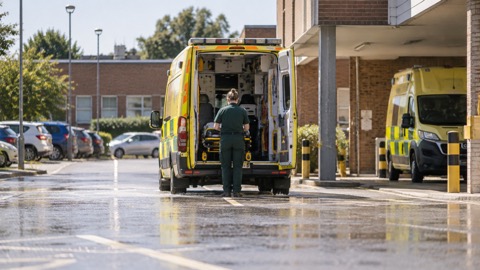
Heat exhaustion and heatstroke both need urgent treatment23. There is a high risk of heat exhaustion or heatstroke during hot weather or exercise24. Ambulance services do often see an increase in 999 calls for help when temperatures rise25, so knowing what to do early keeps you out of that queue.
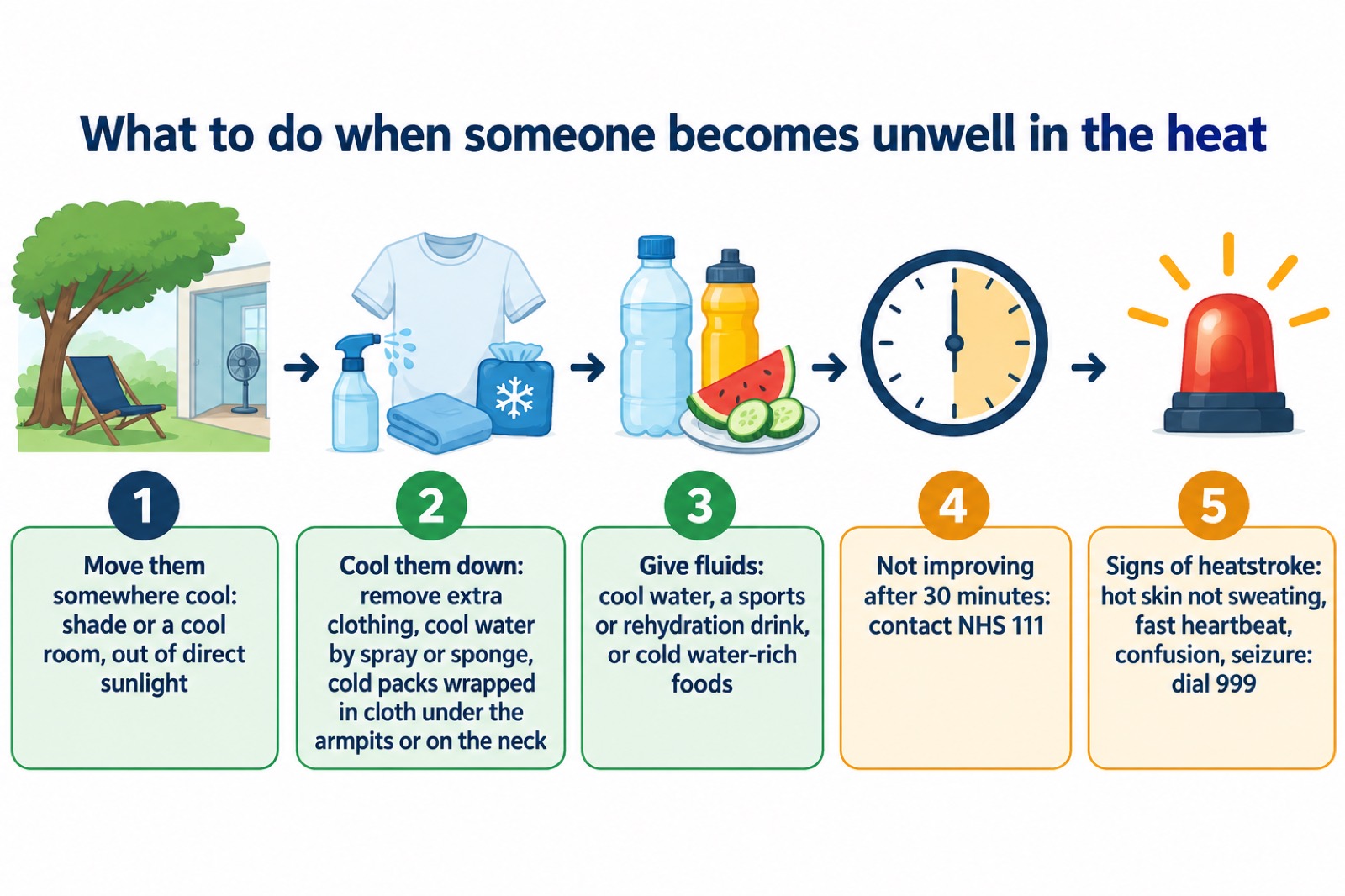
If someone has heat exhaustion, move them somewhere cool, rest, give them water and cool them down6. More fully: move to a cooler place such as a room with air conditioning or somewhere in the shade, avoid direct sunlight, remove unnecessary clothing, and give cool water or a sports or rehydration drink, or cold water-rich foods. Apply cool water by spray or sponge, and use cold packs wrapped in a cloth under the armpits or on the neck1.
The signs that mean emergency help include still being unwell after 30 minutes of resting in a cool place, being cooled and drinking fluids, hot skin that is not sweating, a fast heartbeat, fast breathing or shortness of breath, confusion and lack of coordination, or a seizure or fit24. If you are concerned about symptoms, or they are worsening, seek medical advice by contacting NHS 111; in an emergency, or if you think someone has heatstroke, dial 9991. Call 999 immediately if the situation is life-threatening18.
For a fuller account of the signs and the difference between heat exhaustion and heatstroke, see when to call 999 or NHS 111 for heat illness. Drinking enough matters too: our guide to how much water to drink in hot weather explains what to aim for, and dehydration in hot weather covers the signs.
Sources (26)
- Beat the heat: staying safe in hot weather, GOV.UK, 2026-07-21
- Staying well in hot weather, Berkshire Healthcare NHS Foundation Trust, 2026-10-29
- Mental health medications and extreme weather, GOV.UK, 2025-11-12
- Beat the heat: keep cool at home checklist, GOV.UK, 2026-07-21
- Heatwave: how to cope in hot weather, NHS, 2026-06-12
- Keeping cool in heat waves, Oxfordshire County Council, 2026
- Heat exhaustion and heatstroke, nidirect, 2025-12-02
- Hot weather, Ready Scotland, 2026-03-24
- Hot and sunny weather, Cumberland Council, 2026
- Weather and health, Public Health Wales, 2026-07-16
- Severe weather planning, Derbyshire County Council, 2026-10-29
- Home safety partnerships, Devon and Somerset Fire and Rescue Service, 2026
- Coping with hot weather in London, London Assembly, 2026-10-25
- Heatwave advice, Guy's and St Thomas' NHS Foundation Trust, 2026-06
- How to keep cool this summer, Lancashire County Council, 2026-10-29
- Keeping cool in summer, Derbyshire County Council, 2026-10-29
- How to stay safe in hot weather, NHS inform, 2026-06-11
- How to stay safe during a heatwave, Devon and Somerset Fire and Rescue Service, 2026-06-23
- Self care advice, NHS Birmingham and Solihull ICB, 2026-10-28
- Chemical safety in the home | nidirect, nidirect (Northern Ireland government)
- Weather safety, Oxford Health NHS Foundation Trust, 2026-09-18
- Advice for vulnerable people, NHS Norfolk and Suffolk ICB, 2026-05-29
- Hot weather advice | nidirect, nidirect (Northern Ireland government)
- Heat exhaustion and heatstroke, NHS, 2026-05-28
- Warm weather advice, West Midlands Ambulance Service NHS Foundation Trust, 2026-08-11
- Staying well in hot weather, Devon County Council, 2026-07-02
 Baby and Child Hot Weather
 Hot Weather Preparation
 Flood Warning Checklist
 Baby's Room Temperature
 Child Dehydration Signs
 Fans in Very Hot Weather
 Signing Up for Heat Alerts
 Heat Rash
 Calling 999 for Heat Illness
 How Much Water to Drink
 Keeping Cool in a Power Cut
 LPG Tank Safety in Hot Weather
 New Build Overheating
 Checking On Older Neighbours
 Staying Cool in Pregnancy