During a heatwave, the single most useful thing an ordinary household can do for an older neighbour is to check on them every day. That is the advice repeated across official UK guidance: check on elderly or sick neighbours, family or friends every day during a heatwave1. It is a small commitment that catches the problems heat causes before they become an emergency.
The people most at risk are older people, especially those aged 65 and over, along with those who live alone, have long-term health conditions or reduced mobility4. Many will not recognise that they are overheating, and some will not ask for help. A daily visit or phone call, a cold drink and a check that their home is not too hot covers most of what is needed.
This guide sets out who to look out for, why older bodies struggle in the heat, what to do on each visit and how to handle the awkward cases, such as a neighbour who refuses help or a caller at the door who is not who they claim to be.
Check on older and vulnerable neighbours every day
The core instruction is simple and it comes from public health bodies across the UK. Lancashire County Council, West Yorkshire Prepared, the Met Office, the NHS in Northern Ireland, the Black Country NHS and Essex Prepared all say the same thing: check on elderly or sick neighbours, family or friends every day during a heatwave1. The repetition is deliberate. Daily contact is the point at which heat illness in an older person is most likely to be caught early.
A daily check does not need to be long. A knock at the door, a phone call or a short sit-down in their front room is enough to see whether they are drinking, whether their home is bearably cool and whether they seem themselves. The Met Office advises trying to find out if someone is already looking after a vulnerable neighbour, or if they would like you to ring them daily3. That avoids duplication and makes sure nobody is missed.
If you are the one at higher risk, the advice works both ways: ask family, friends or neighbours to check on you11. The London Mayor's office puts it plainly: check on family, friends and neighbours who may be at higher risk of becoming unwell, and if you are at higher risk, ask them to do the same for you11.
It helps to agree a pattern. A morning call to confirm they are up and have had a drink, and an afternoon visit or call during the hottest part of the day, covers the two moments when problems most often show. If you are going away, ask another neighbour to take over, and tell the person you are checking on who will be coming.
Who is most at risk, and why older bodies struggle
Official guidance is consistent about who needs the most attention. Older people, especially those aged 65 and over, are named first in guidance from Public Health Wales, NHS Scotland, the NHS in England, Oxfordshire County Council and Bexley Council9. The list of other higher-risk groups is long: babies and children aged 5 and under, people with heart, lung or other long-term health conditions, people taking certain medications, people with disabilities or reduced mobility, people who live alone, and people experiencing homelessness13.
There has been a change in the age threshold. Guidance updated on 21 July 2026 notes that the higher-risk age for older people changed from 75 years and above to 65 years and over6. In practice that means a neighbour in their late sixties now falls within the group advised to take extra care, where previously they might not have been counted.
Why does heat hit older people harder? Official guidance points to several factors. Older people and those with heart, respiratory and other serious health problems are most vulnerable when the temperature starts to rise16. Some people cannot adapt their behaviour to keep cool, whether because of mobility, cognition or circumstance14. People who live alone and are unable to care for themselves, and people with mobility problems, are specifically listed as at risk10. Those caring for older people are advised to monitor room temperatures to prevent heat-related problems which could lead to ill health or, in more severe cases, death1.
The practical upshot is that an older neighbour may not notice they are too hot, may not be able to open a window or fetch a drink, and may not have anyone else looking in. That is exactly the gap a daily check fills.
| Higher-risk group | Why it matters in a heatwave |
|---|---|
| People aged 65 and over | Named first in official guidance; threshold lowered from 75 in July 20266 |
| People living alone | Unable to care for themselves and no one to notice deterioration10 |
| People with heart, lung or long-term conditions | Most vulnerable when temperatures rise16 |
| People with reduced mobility | Cannot easily move to a cooler room or fetch drinks10 |
| Babies and children aged 5 and under | More vulnerable in a heatwave13 |
| People taking certain medications | Some medicines affect the body's ability to cope with heat13 |
What to do on each visit
A good check covers three things: fluids, a cool home and signs that something is wrong. Warwickshire County Council advises checking in on loved ones and neighbours regularly, making sure they are staying hydrated, supporting them to keep their house as cool as possible and sharing contact details in case of emergency8. That is a workable template for every visit.
Start with a drink. Offer water, squash or tea, and check that a glass or bottle is actually being emptied. Ask whether they have eaten. Then look at the room: is a window open, is a curtain drawn against the sun, is a fan running? A cool room or area that can be maintained below 26°C is the standard recommended in residential settings18, and the same principle applies at home: aim to keep one room as cool as possible and use it during the hottest part of the day.
Then watch for signs of trouble. Belfast City Council's advice for checking on older neighbours includes watching for signs that something could be wrong, such as milk not being taken in or curtains remaining closed19. Those small signals, a bottle of milk still on the step, curtains drawn all day, are often the first indication that someone is unwell. Ask directly whether they feel unwell, and look for confusion, dizziness, headache, nausea, hot skin or unusual tiredness.
A short checklist for each visit:
- Drink: offer water and check that fluids are being taken8.
- Room temperature: make sure rooms are not getting too hot20.
- Cool space: help them reach the coolest room in the house18.
- Contact details: share phone numbers in case of emergency8.
Find out if someone is already looking after them
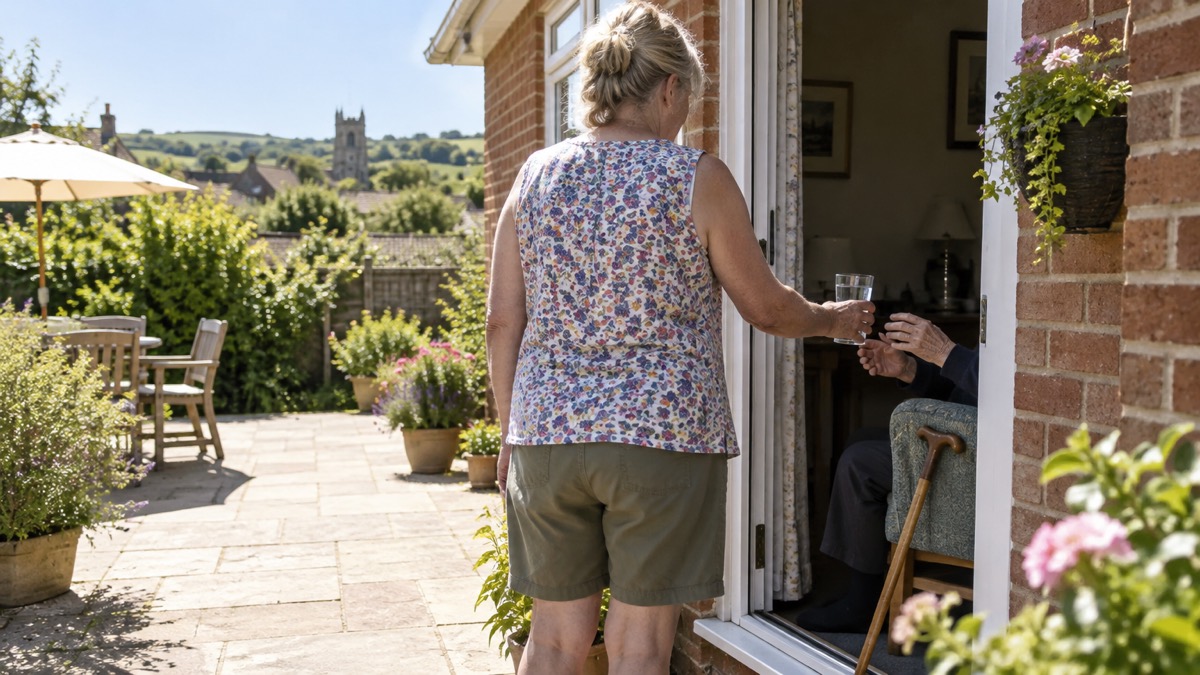
Before you take on a daily check, it is worth asking whether someone else is already doing it. The Met Office advises that if you have vulnerable neighbours who may be at risk during a heatwave, try to find out if someone is already looking after them or if they would like you to ring them daily3. A family member, a carer, a district nurse or another neighbour may already be visiting. Duplicating effort is less of a problem than missing someone, but coordination means the person gets consistent cover.
Ask the neighbour directly, and ask any regular visitor you meet. If a care worker calls, a brief word at the door about who is checking on which days avoids gaps. If the person has a falls alarm or a pendant, ask whether it is working and whether they wear it.
If you are worried about someone's health and cannot get an answer, try again later, then knock on a neighbour's door to see if they have a key or know where the person is. If you believe someone is seriously unwell inside, call 999.
If they refuse help, or cannot get to the door
Not everyone wants to be checked on, and some will say they are fine when they are not. Surrey County Council's advice is to look out for vulnerable neighbours and let them know if severe weather is approaching and that you would be happy to help if needed21. Framing help as a standing offer rather than an intrusion often works better than insisting.
For neighbours with reduced mobility, Essex Prepared advises considering assisting less able neighbours if it is safe to do so22. That might mean bringing a drink to the door, helping open a window, moving a chair into a cooler room or collecting shopping. Do not put yourself at risk, and do not attempt to lift or move someone who has fallen unless you are trained to do so; call 999.
If a neighbour refuses all help, keep the contact going. A wave over the fence, a note through the door and a regular phone call maintain the connection, and the day may come when they accept. If you believe someone lacks the capacity to keep themselves safe, contact their GP or adult social care at the local council.
Where to get help and how alerts work
Heat-health alerts are the official signal that hot weather is likely to affect health. They are provided by the UK Health Security Agency in partnership with the Met Office from June to September, with extraordinary alerts issued outside this period if conditions are reached12. The alerts provide key advice when adverse temperatures are likely to impact on the health and wellbeing of the population24. You can check the current alert status on the UKHSA dashboard25 and read more in our guide to heat-health alerts.
For people who need extra support, the Extra Help in an Emergency guide covers older, disabled and medically dependent households, including the Priority Services Register. If you are worried about an older neighbour's health, their GP is the first point of contact; in an emergency, call 999.
The wider Heatwaves and Drought section covers keeping your home cool, staying hydrated and what to do if the power fails during hot weather. Our guide to who is most at risk in hot weather goes into more detail on the full list of vulnerable groups.
Sources (25)
- How to keep cool this summer, Lancashire County Council, 2026
- Severe weather, West Yorkshire Prepared, 2026
- Hot weather and its impacts, Met Office, 2026
- Keeping warm and well: staying safe in cold weather - GOV.UK, GOV.UK (UK Health Security Agency publication)
- Adverse Weather Events - Llangattock Community Council, Llangattock Community Council
- Beat the heat: keep cool at home checklist, GOV.UK, 2026
- Hot weather, Public Health Wales, 2026
- Staying well in summer, Warwickshire County Council, 2026
- Heat exhaustion and heatstroke, nidirect, 2025
- Heatwaves, Black Country NHS, 2026
- Coping with hot weather in London, London Assembly, 2026
- Heat-health alert service, Met Office, 2026
- Keeping cool in heatwaves, Oxfordshire County Council, 2026
- How to stay safe in hot weather, NHS Inform Scotland, 2026
- Stay safe during hot weather, Bexley Council, 2026
- Severe weather planning, Derbyshire County Council, 2026
- Severe weather planning, Derbyshire County Council, 2026
- Supporting vulnerable people before and during hot weather, GOV.UK, 2024
- Seniors: stay warm | Belfast City Council, Belfast City Council
- Hot weather, Mersey and West Lancashire Teaching Hospitals NHS Trust, 2026
- Risks, Surrey County Council, 2026
- Step 2: during an emergency, Essex Prepared, 2026
- Snow buddies, Derbyshire County Council, 2026
- Be prepared, West Midlands Ambulance Service, 2026
- Heat health alerts dashboard, UK Health Security Agency, 2026
 Baby and Child Hot Weather
 Hot Weather Preparation
 Flood Warning Checklist
 Baby's Room Temperature
 Child Dehydration Signs
 Fans in Very Hot Weather
 Signing Up for Heat Alerts
 Heat Rash
 Calling 999 for Heat Illness
 How Much Water to Drink
 Keeping Cool in a Power Cut
 LPG Tank Safety in Hot Weather
 Medicines and Heat Risk
 New Build Overheating
 Staying Cool in Pregnancy