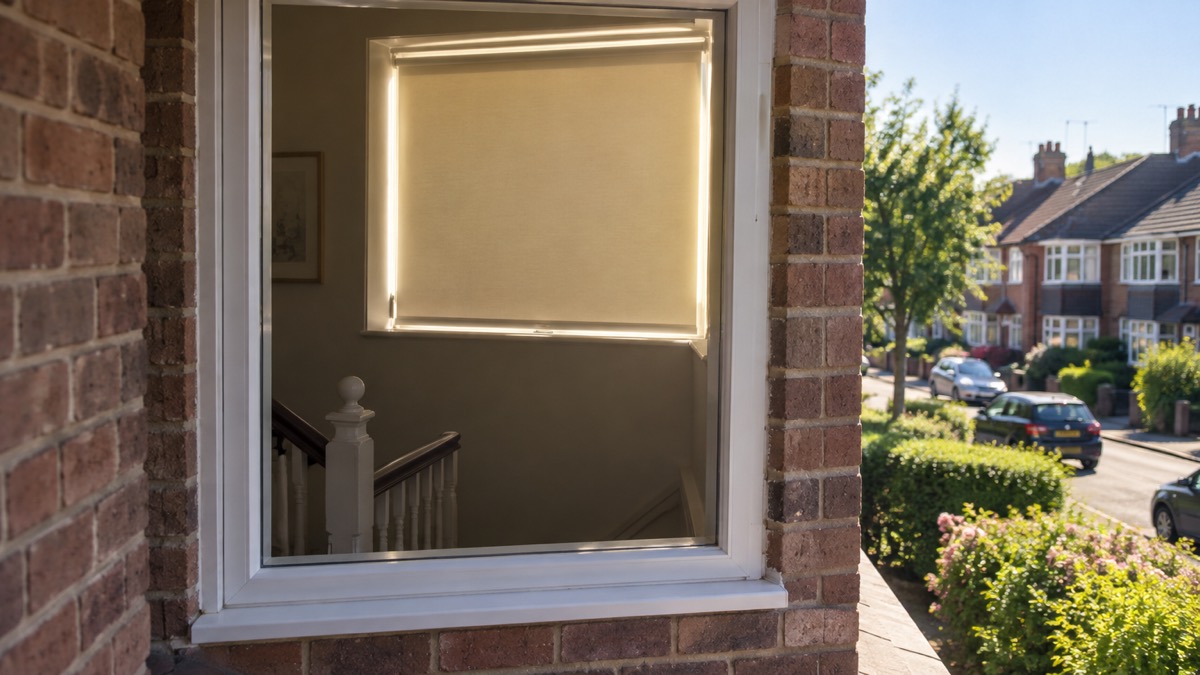
Sun on glass is one of the quickest ways a house heats up. The fix is simple and costs little: block the sun before it gets in, and time it so you are shutting out heat while the air outside is hotter than the air inside. Official guidance from councils and the NHS is consistent on this. Shade or cover windows exposed to direct sunlight and keep those windows closed during the day1. Close blinds and curtains to keep out the sun2. Close curtains in rooms that face the sun3.
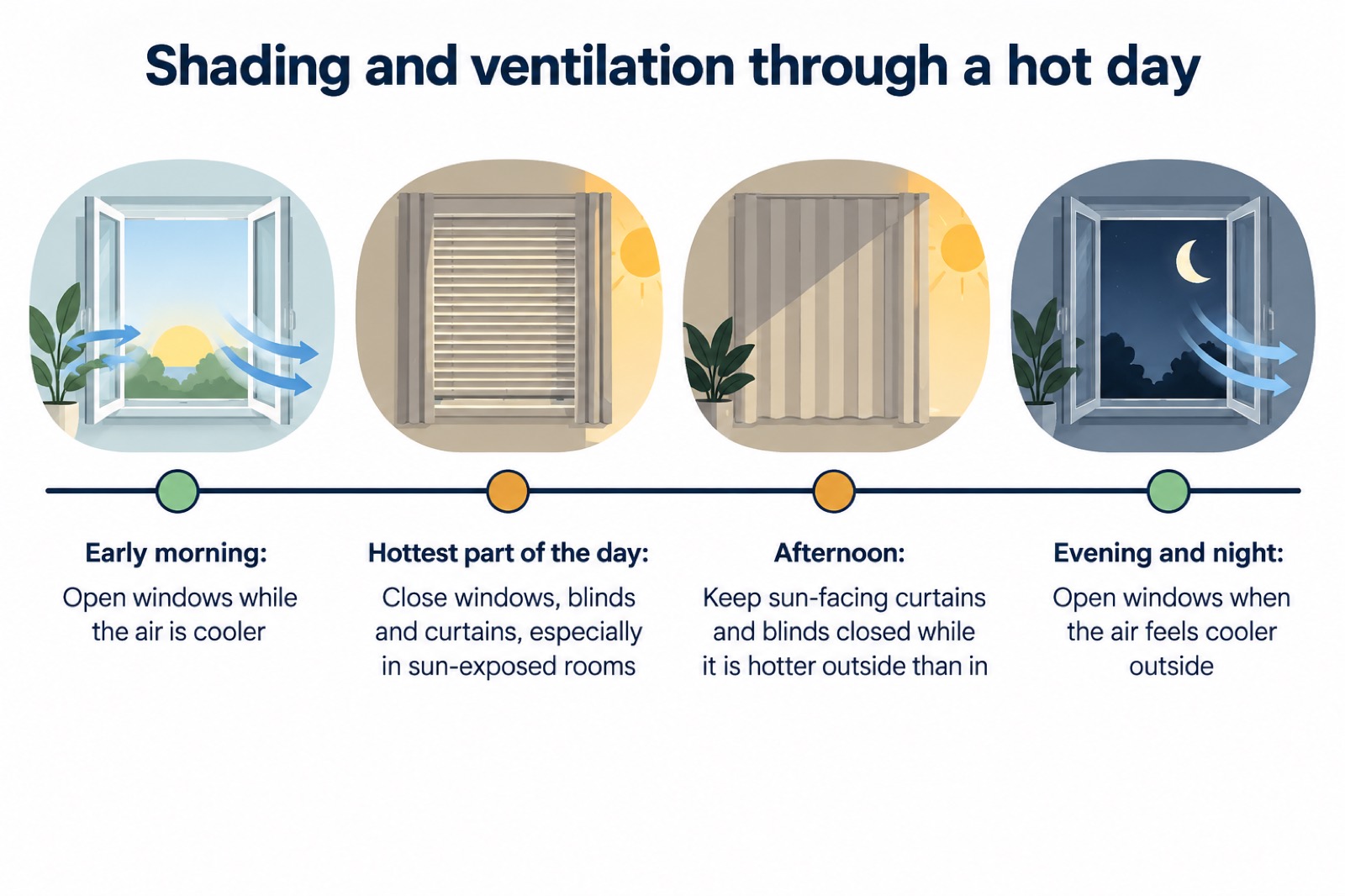
The order matters as much as the kit. Open windows early in the morning or overnight when the air is cooler, then close windows, blinds and curtains during the hottest part of the day, especially in rooms exposed to direct sunlight4. While it is hotter outside than inside, keep blinds or curtains closed at windows that are exposed to the sun5. When the air outside feels cooler, for example at night, open up again and try to get air flowing through the home6.
What you put on the window decides how well it works. Shades or reflective material outside the window are best; if that is not possible, use light-coloured curtains kept closed, because metallic blinds and dark curtains can make the room hotter4. Pale reflective linings keep heat out better than ordinary fabric7. And whatever you fit, do not seal a room completely: close curtains and blinds on sun-facing windows to block radiant heat, but make sure this does not completely cut off airflow8.
Shade the window from outside if you can, inside if you cannot
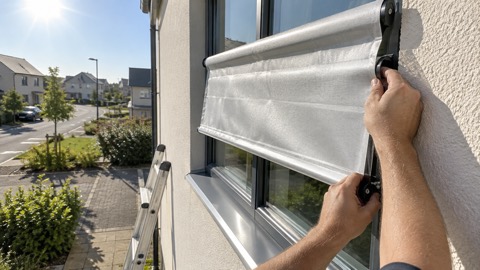
The single most effective place to stop solar heat is outside the glass, before it passes through. Official guidance is clear that shades or reflective material outside the windows are the first choice, with light-coloured curtains kept closed as the fallback4. The UK Health Security Agency's heatwave advice for broadcast during a power outage says the same: keep your home cool by closing windows, blinds and curtains that are in direct sunlight during the day, and close external shutters or shades9.
If you have external shutters, roller blinds or awnings already, use them. The government's Beat the Heat checklist suggests considering internal blinds or curtains, and notes that external shutters, roller blinds or awnings are also very effective10. For south-facing windows in particular, consider solar shading or reflective window blinds3.
Most households will be working from the inside. That is fine, provided you choose the right material. The difference between a pale curtain and a dark one is not cosmetic: dark fabric absorbs heat and radiates it into the room, and metallic Venetian blinds can do the same. Lancashire's civil contingency guidance puts it plainly, advising curtains rather than metal Venetian blinds for rooms that get a lot of sun11. Leicestershire's heatwave booklet adds that curtains with pale reflective linings are better at keeping the heat out7.
A simple way to think about it:
| Position | What to use | Why it works | Source |
|---|---|---|---|
| Outside the glass | External shutters, roller blinds, awnings, shades or reflective material | Stops the heat before it enters the room | 10 |
| Inside, best | Light-coloured curtains with pale reflective linings, kept closed | Reflects rather than absorbs, and blocks radiant heat | 4 |
| Inside, workable | Stick-up or removable blinds, thermal curtains you hang yourself | Practical where fixed fittings are not possible | 12 |
| Inside, avoid | Metallic blinds and dark curtains | Can make the room hotter | 4 |
Blinds and thermal curtains you can put up yourself
You do not need a builder to make a difference. Official guidance lists stick-up or removable blinds and thermal curtains you hang yourself as valid options, alongside mounted external shutters, awnings or fixed blinds for those who can fit them12. That covers most renters and most households on a budget.
The choice between them comes down to your circumstances rather than brand:
- Removable or stick-up blinds suit rented homes and windows you cannot drill, and come away when you leave. They are the option official guidance names for people who cannot fit permanent shading12.
- Thermal curtains you hang yourself suit anyone with a curtain rail already in place. Choose pale or reflective linings, since these keep heat out better7, and keep them closed on sun-facing windows during the day3.
- Fixed internal blinds or curtains are the everyday option where you can fit them, and the government checklist suggests considering them10.
- External shutters, roller blinds or awnings are the most effective, and the government checklist describes them as very effective, but they need fitting and, in a rented home, permission10.
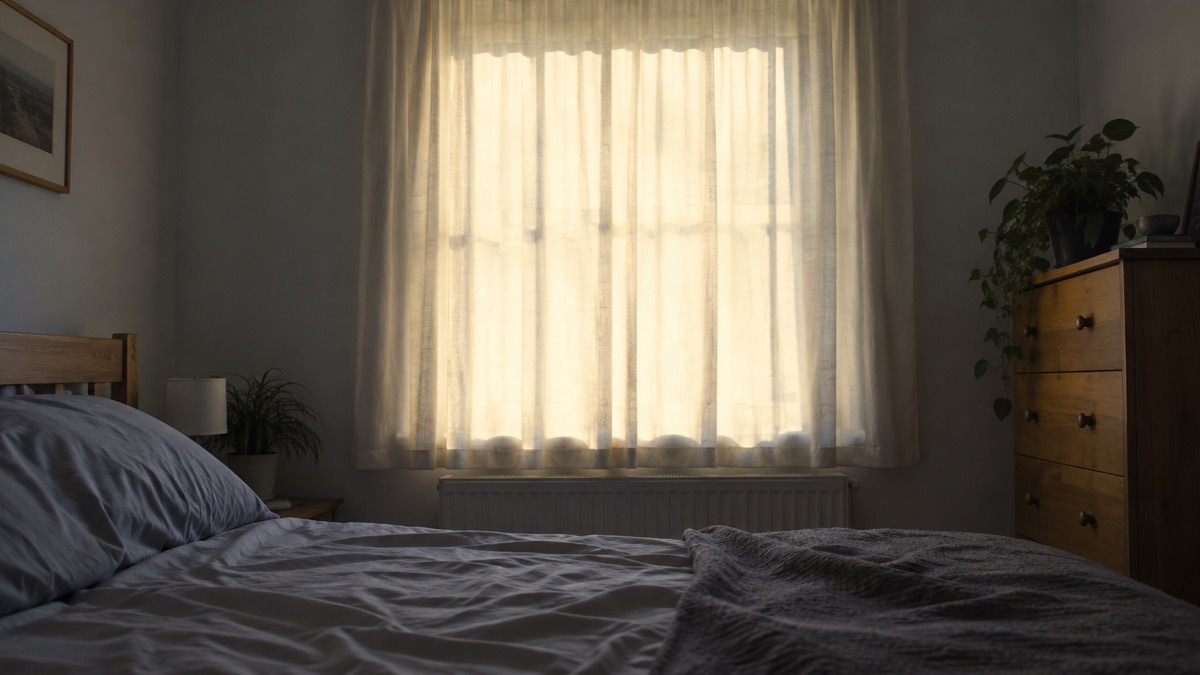
Whichever you choose, the same rules apply. Close them while it is hotter outside than inside, and on windows exposed to the sun5. Do not let the covering cut off airflow completely8. And if you are relying on open windows at night for cool air, think about safety: official guidance suggests keeping windows closed when it is hot, or installing window restrictors or grilles so windows can stay open safely at night12.
Which windows to shade first, and when to open up
You will get the most benefit by working through the house in a sensible order rather than covering every window at once.
- South-facing windows first. Official guidance singles out south-facing windows for solar shading or reflective blinds3.
- Any window in direct sun. Shade or cover windows exposed to direct sunlight and keep them closed during the day1.
- Rooms that get a lot of sun. Close curtains or blinds in these rooms, using pale reflective linings where you have them7.
- Bedrooms. Move to cooler parts of the house, especially for sleeping, and keep the bedroom shaded through the day4.
- Rooms you are not using. Turning off lights and electrical products that are not being used helps keep the house cooler4.
Timing is the other half of the job. Open windows early in the morning or overnight when the air is cooler, then close windows, blinds and curtains during the hottest part of the day, especially in rooms exposed to direct sunlight4. Close doors and windows in the heat of the day to keep it cooler inside13. Keep your home as cool as possible: shading windows and shutting them during the day may help, and you can open them when it is cooler at night6.
Where to check for heat health alerts
Shading your windows is part of a wider response to hot weather, and knowing when a hot spell is coming lets you close up before the house heats. Heat-health alerts are provided by the UK Health Security Agency in partnership with the Met Office14. The Met Office monitors regional daytime and night-time maximum temperature forecasts, and when certain temperature thresholds are reached it assesses potential impacts and likelihood14. During the summer, UKHSA works with the Met Office to issue alerts alongside the weather forecast if the weather is so hot that it has the potential to affect people's health15.
You can sign up to receive heat-health alerts and updates from the Met Office4. To receive both heat and cold alerts, register using the Weather-Health Alerting system registration form16. Your council will also point you to the Met Office for the latest information about heat alerts17.
Thresholds vary by region. In the North West, for example, the trigger for a heat health alert is 30°C on successive days with an intervening night temperature no lower than 15C18. That regional variation is why the alerts are issued by area rather than as a single national warning.
Alongside the alerts, the practical advice from councils is to stay hydrated, avoid the hottest part of the day, keep indoor spaces cool where possible, and check on vulnerable people17. If you are shading windows for someone else, older people are a particular priority: close curtains in rooms that face the sun to keep indoor spaces cooler, and close doors and windows in the heat of the day13.
Keeping the room cool once the sun is blocked
Shading is the main lever, but it works best alongside a few other habits. Close windows, blinds and curtains in direct sunlight during the day, close external shutters or shades, and only open windows when the air feels cooler outside than inside, for example at night9. Sit and sleep in the coolest part of the home, and go outside at cooler times of the day9.
If you are inside on a very hot day, close curtains, close windows if it is hotter outside than in your home, and turn off electrical equipment and lights that get hot20. Keep the home cool by closing the curtains in rooms that face the sun and ensure there is plenty of ventilation21. In London, the advice adds that it may be better to keep windows closed during the hottest parts of the day to keep the heat out, opening them when the air feels cooler outside, and trying to get air flowing through your home6.
For the wider picture, our guide to keeping your home cool in hot weather covers fans, cool rooms and the rest of the routine, and how to sleep and cool a bedroom on hot nights deals with the room where shading matters most. If you are shading a room for a baby, see what temperature a baby's room should be.
Sources (22)
- Stay safe this summer, Cornwall Council, 2026
- Summer preparedness, Essex Prepared, 2026
- Climate adaptation, Birmingham Women's and Children's NHS Foundation Trust, 2026
- Keeping cool, Derbyshire County Council, 2026
- Heatwave advice, Guy's and St Thomas' NHS Foundation Trust, 2026
- Coping with hot weather in London, Greater London Authority, 2026
- Heatwave advice booklet, Leicestershire Partnership NHS Trust, 2022
- Stay cool and safe in hot weather, Somerset Council, 2026
- Keeping warm or cool in extreme weather, UK Chief Medical Officers, GOV.UK, 2025
- Beat the Heat: keep cool at home checklist, GOV.UK, 2026
- Be prepared, Lancaster City Council, 2026
- Beat the Heat, Oxfordshire County Council, 2026
- Tips for keeping older people cool, Met Office, 2026
- Heat-health alert service, Met Office, 2026
- Beat the Heat: staying safe in hot weather, GOV.UK, 2026
- Health protection, Cornwall Council, 2026
- Heat health alert advice and information, Somerset Council, 2026
- Protect yourself: heatwave, Lancashire Prepared, 2026
- Heat health alerts dashboard, UK Health Security Agency, 2026
- Heat exhaustion and heatstroke, NHS 111 Wales, 2026
- Staying safe over the summer, Healthier Together, 2026
- Heatstroke and heat illness, NHS inform, 2026
 Baby and Child Hot Weather
 Hot Weather Preparation
 Flood Warning Checklist
 Baby's Room Temperature
 Child Dehydration Signs
 Fans in Very Hot Weather
 Signing Up for Heat Alerts
 Heat Rash
 Calling 999 for Heat Illness
 How Much Water to Drink
 Keeping Cool in a Power Cut
 LPG Tank Safety in Hot Weather
 Medicines and Heat Risk
 New Build Overheating
 Checking On Older Neighbours