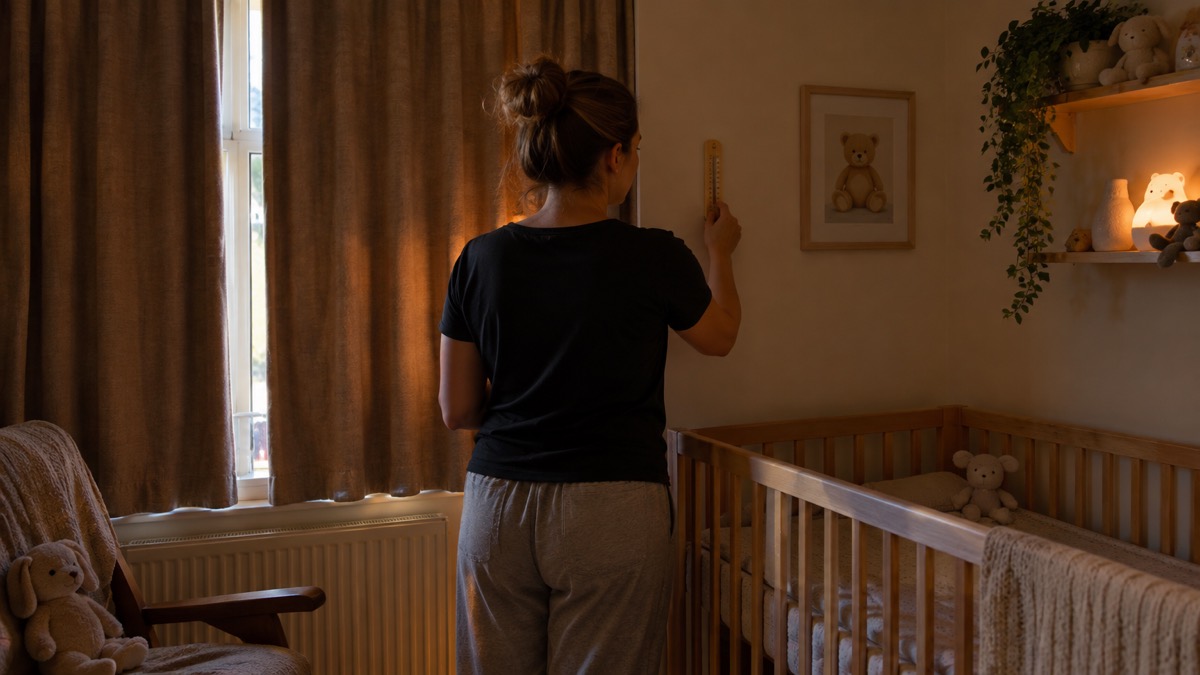
Babies should sleep in a room kept between 16C and 20C. That range comes from NHS guidance and is repeated across the UK: your baby will sleep most comfortably when their room is between 16C and 20C1, and keeping to it reduces the risk of sudden infant death syndrome (SIDS)2. The number to watch is not the thermostat setting but the actual air in the room, which is why a simple room thermometer is the first thing to sort out.
The reason the upper end matters more than most parents expect is that overheating is a known risk factor for SIDS3. Babies overheat because of too much bedding or clothing, or because the room is too hot3. In practice that means the job has two halves: keep the room inside the range, and dress the baby for the room rather than adding blankets on top.
The rest of this page covers how to check the temperature, what to do when the heating fails or a heatwave pushes the room above 20C, and the everyday places, prams, car seats and hats, where babies get too warm even when the nursery is fine.
Keep the room between 16C and 20C
The 16C to 20C band is the figure to hold in your head. It is given as the temperature babies should sleep in to reduce the risk of SIDS2, and separately as the temperature at which a baby will sleep most comfortably1. Northern Ireland's hypothermia guidance states it plainly: a baby's room should be 16 to 20°C7.
For context, an average temperature in babies and children is about 36.4C, though this varies from child to child8. A room at 16C to 20C is therefore well below body temperature, which is the point: the room carries heat away from a baby who cannot yet regulate their own temperature well.
The range is a band, not a target. Anywhere inside it is safe, and you do not need to chase a single figure. What you are trying to avoid is the room sitting above 20C for long stretches, particularly overnight when the baby is asleep and you are not watching. If the room drifts above the band, strip back bedding and clothing before you reach for anything else.
It also helps to know how the rest of the house compares. Living rooms are usually kept warmer: official advice puts the living room at 18C to 21C9, and winter guidance suggests at least 18C in the rooms you regularly use11. A nursery at 16C to 20C will therefore often feel cooler than the room you sit in, and that is normal. Do not heat the nursery to living room temperature to make it feel right to you.
| Room | Suggested temperature | Source |
|---|---|---|
| Baby's room for sleep | 16C to 20C | 7 |
| Living room | 18C to 21C | 9 |
| Rooms you use a lot, at night | at least 18C | 5 |
| Bedroom, general winter advice | 18C all night if you can | 12 |
Why overheating raises the risk of SIDS
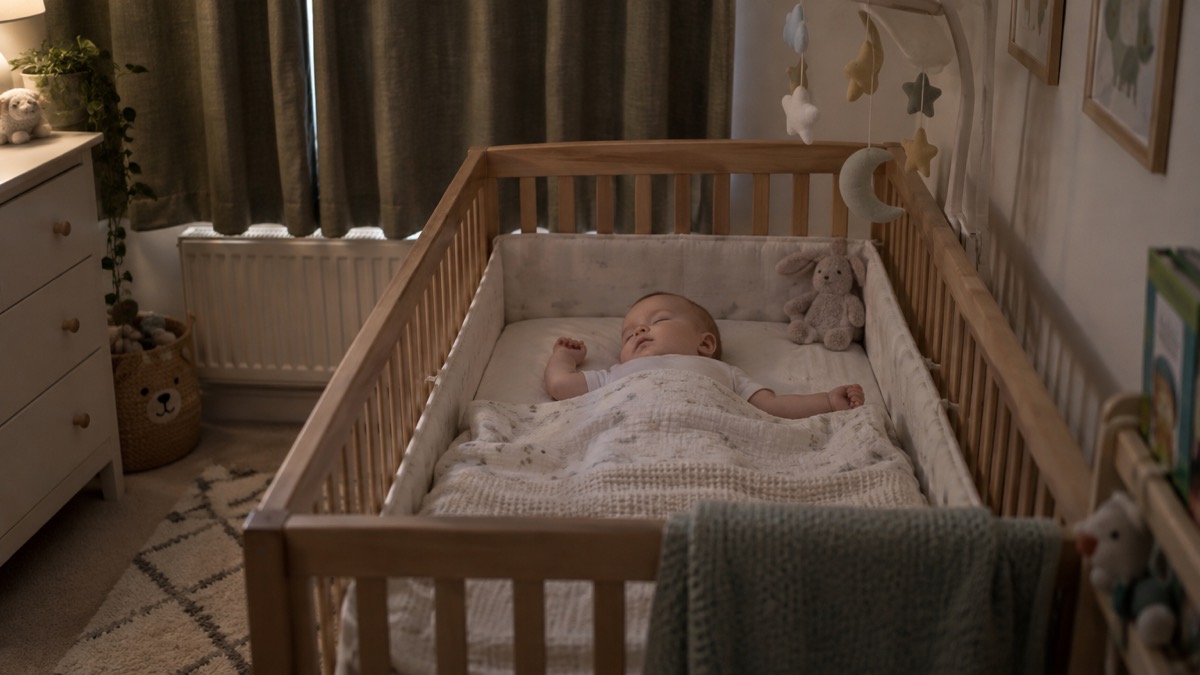
Overheating can increase the risk of sudden infant death syndrome3. That single sentence is the reason the upper end of the range gets so much attention. It is also why the advice on prams and bedding is framed as a SIDS precaution rather than a comfort one.
The causes are ordinary and easy to fix once you know them. Babies can overheat because of too much bedding or clothing, or because the room is too hot3. A baby's temperature can also be raised after vaccinations, or if they overheat because of too much bedding or clothing13. So a warm baby is not automatically a poorly one, but a warm baby in a warm room with too many layers is the combination to avoid.
The practical response is to dress for the room and check the baby, not the thermostat alone. If the room is at the top of the range, use fewer layers. If you have added a blanket because the baby felt cool, check again once the room has warmed. The guidance does not ask you to keep the room cold; it asks you not to let it run hot.
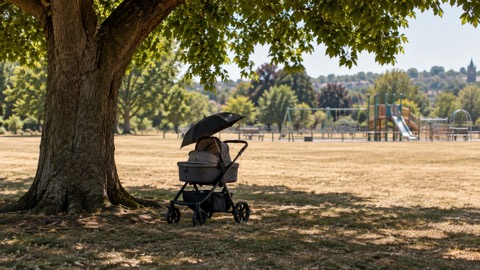
The same warning appears in summer safety advice: do not cover your baby's pushchair or pram with a blanket because it could lead to overheating; instead attach a parasol or sunshade and keep them out of direct sunlight15. A cover that blocks air turns a pram into a small hot box, which is exactly the condition the room guidance is trying to prevent.
Checking the temperature with a room thermometer
A nursery thermometer will help you monitor the temperature of your baby's room4. That is the whole instruction: one thermometer, in the room, read regularly. It takes the guesswork out of a job where your own sense of warmth is an unreliable guide, because an adult in a jumper will feel a cool nursery differently from a baby in a vest.
Where to put it matters less than using it consistently. Keep it away from direct sun, radiators and the cot itself so it reads the air the baby is breathing, and glance at it when you put the baby down and again before you go to bed. If you want a second reading point, the same principle applies to the rest of the house: official winter advice suggests using a room thermometer and keeping the living room between 18C and 21C10.
For checking the baby rather than the room, NHS guidance on thermometers is about body temperature: digital thermometers that you put in your mouth produce very accurate readings; an under-arm thermometer or an ear thermometer are good ways to read a baby or young child's temperature16. A room thermometer and a body thermometer do different jobs, and it helps to have both.
The same care with temperature shows up elsewhere in baby care, and the habit carries over. After warming your baby's milk, shake it and check the temperature with a few drops on your wrist; it should feel lukewarm, not hot17. When running the bath, put the cold water in first and then top it up with hot water, and test the temperature using your elbow before you put your baby or toddler in18. A thermometer in the nursery is the same idea applied to the air.
Cold weather, heating failures and power cuts
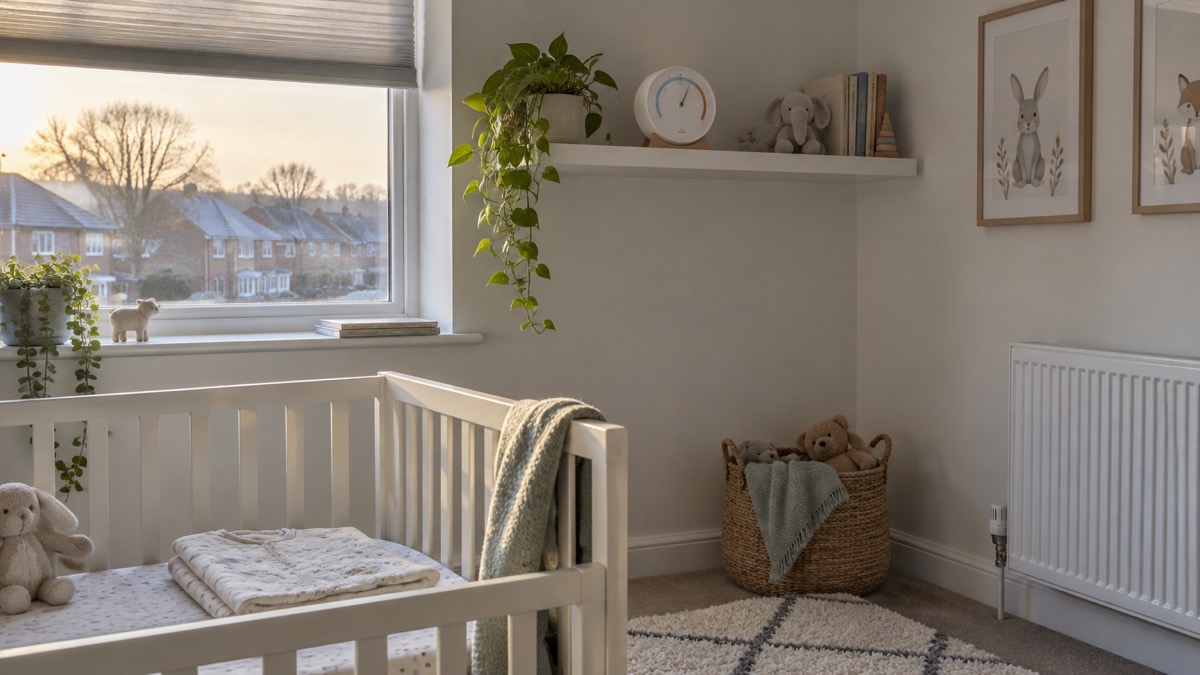
Cold is the other half of the job, and the risk is real: babies are more at risk of hypothermia than adults19. The aim in cold weather is still the 16C to 20C band, with a floor rather than a target. Winter guidance suggests heating rooms you use a lot to at least 18C at night5, and keeping your bedroom at 18C all night if you can, reducing drafts12. For a healthy adult under 65 with appropriate clothing and bedding, a bedroom below 18C may matter less20, but a baby is not in that group.
If the heating fails or the power goes off, work through the basics in order. Keep warm by using blankets and layered clothing, keep doors of unused rooms closed and close curtains to keep the heat in21. If it is cold, wrap up warm and close internal doors to keep the heat in22. Choose one room to keep warm and live in it, rather than trying to heat the whole house.
Watch the baby rather than the clock. A baby with hypothermia may be cold to touch, floppy, unusually quiet and sleepy, and may refuse to feed25. Those signs are given consistently across NHS guidance. If you see them after a cold night or a heating failure, get medical help rather than waiting.
Hot weather: keeping the room below 20C
In a heatwave the challenge flips, and babies are among those who find it hardest to keep cool28. The room can climb above 20C without anyone doing anything wrong, so the job becomes keeping it down rather than turning anything up.
Start with the building. Keep the sun out during the day and let cooler air in when it arrives, and see How to Keep Your Home Cool in Hot Weather for the room-by-room approach. For the nursery specifically, the same principles apply: shade the window, avoid adding heat in the room, and use the thermometer to see what is actually happening rather than relying on how it feels.
Then look at the baby. Babies and young children are listed among those who may find it hard to keep cool28, so strip back to fewer layers and check the back of the neck. Never leave a baby in a closed space or a stationary car, as these areas can get hot very quickly29. Small, closed spaces such as stationary cars can get dangerously hot very quickly, and babies, children, older adults and pets should not be left alone in them30.
If the heat is prolonged, the wider household plan matters too. The Baby and Child Hot Weather Checklist sets out what to have ready, and Keeping Babies and Young Children Safe in Hot Weather covers the day as a whole. For the room itself, How to Sleep and Cool a Bedroom on Hot Nights is the companion page.
Hats, hoods and car journeys
Most overheating happens outside the nursery, in the ordinary places a baby spends the day. The mechanism is always the same: too much clothing or bedding, or a space that is too hot3.
A hat or hood counts as clothing. Indoors, in a warm car or in a pram on a hot day, it adds a layer the baby cannot take off. The guidance does not single out hats, but the principle does: if the room is at the top of the 16C to 20C band, or the car is warm, remove the hat and check the baby's neck.
Cars deserve their own warning. Ensure that babies, children, older people or animals are not left alone in parked cars, which can quickly overheat6. The same point is made in hot weather guidance: small, closed spaces such as stationary cars can get dangerously hot very quickly30. A car that feels fine when you get out can be far hotter when you come back.
Prams are the third place. Do not cover your baby's pushchair or pram with a blanket because it could lead to overheating; instead attach a parasol or sunshade and keep them out of direct sunlight15. Babies' prams, travel systems and buggies should not be covered with blankets, cloths or any cover that prevents the air circulating, because covering could lead to overheating, which increases the chance of SIDS31.
| Place | What goes wrong | What to do |
|---|---|---|
| Nursery | Room drifts above 20C | Read the thermometer, remove layers4 |
| Pram or buggy | Cover traps heat | Clip-on sunshade or parasol, never a blanket14 |
| Parked car | Heats dangerously fast | Never leave a baby alone in it30 |
| Indoors in winter | Too many layers | Dress for the room, check the neck3 |
Sources (31)
- Keeping safe in the sun, Hillingdon CAMHS and CYP NHS
- How to stay well in winter, NHS 111 Wales
- Supporting vulnerable people before and during cold weather, GOV.UK
- Safety in the sun, NHS
- Cold weather warning advice, North Cumbria Integrated Care NHS Foundation Trust
- How to keep cool this summer, Lancashire County Council
- Hypothermia, nidirect
- What to keep in your Medicine Cabinet :: Hertfordshire and West Essex Healthier Together, Hertfordshire and West Essex Healthier Together (NHS)
- Keeping warm in winter, Nottinghamshire County Council
- Keeping warm in winter, Nottinghamshire County Council
- Stay well this winter, Cheshire and Merseyside NHS
- Winter top tips and advice, South Western Ambulance Service
- Your Health Guide Winter 2025-6, NHS Western Isles
- Child safety, Berkshire Healthcare NHS Foundation Trust
- Warm weather advice, West Midlands Ambulance Service
- Keep well stocked medicine cabinet at home, Black Country ICB
- Burns & Scalds, Just One Norfolk (NHS)
- Burns and scalds, Cambridgeshire and Peterborough Children's Health (NHS)
- Burns first aid, NHS inform
- Keeping your home warm in winter, Met Office
- Power cuts, Prepare campaign, GOV.UK
- Stay safe in snow, Met Office
- Stay safe in a thunderstorm, Met Office
- Strong winds and heavy rain warning: information and advice, nidirect
- Hypothermia (low body temperature), NHS inform
- Keeping warm or cool in extreme weather, GOV.UK
- Cold weather, Public Health Wales
- Hot weather, Public Health Wales
- How to stay safe in hot weather, NHS inform
- Hot weather, Prepare campaign, GOV.UK
- Safety in summer, West Yorkshire Healthier Together
 Baby and Child Hot Weather
 Hot Weather Preparation
 Flood Warning Checklist
 Child Dehydration Signs
 Fans in Very Hot Weather
 Signing Up for Heat Alerts
 Heat Rash
 Calling 999 for Heat Illness
 How Much Water to Drink
 Keeping Cool in a Power Cut
 LPG Tank Safety in Hot Weather
 Medicines and Heat Risk
 New Build Overheating
 Checking On Older Neighbours
 Staying Cool in Pregnancy