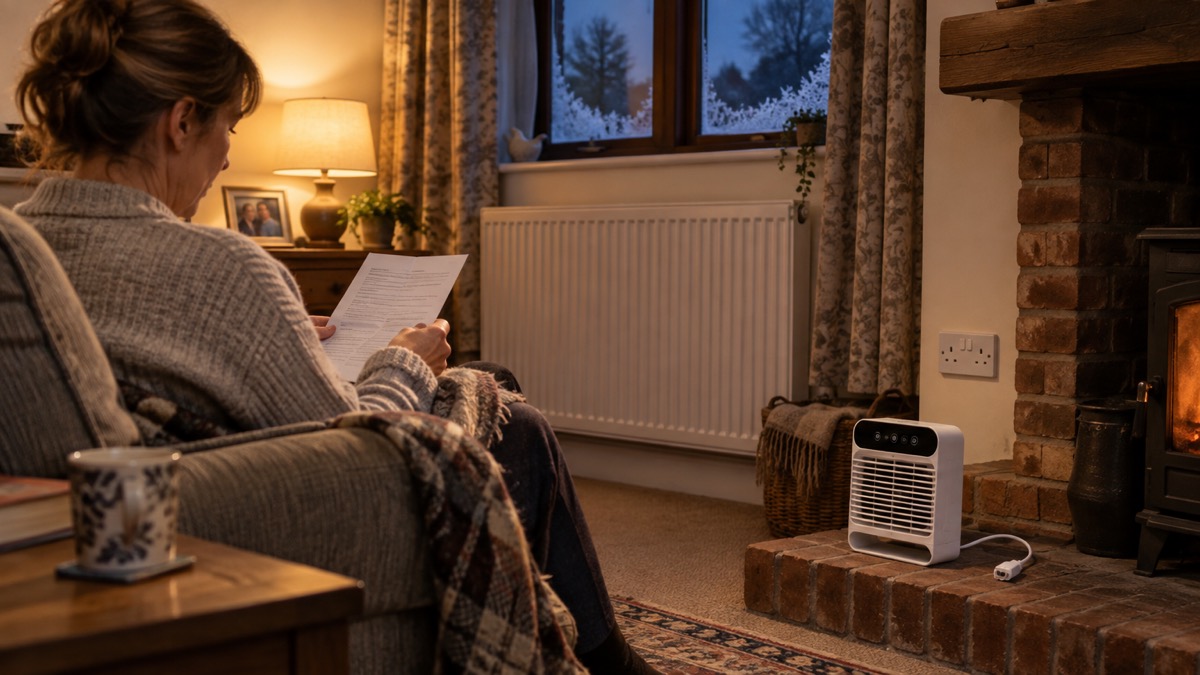
If you are thinking about a radiator fan, or you already own a Valiant, start with the recall. The Valiant Radiator Fan, a white rechargeable model with a black settings control screen, has been recalled from end users in batches 967, 968 and 970 because its battery may fail during charging or in normal use, leading to thermal runaway and the product catching fire1. The manufacturer advises owners to stop using it immediately and move it to an outdoor location1.
That notice sits at the centre of this page, because a fan you keep by the radiator for winter is exactly the sort of thing that gets charged overnight and forgotten. Everything else here follows from it: what a radiator fan does for a heated room, how the rechargeable version differs from a mains one, how to run one safely when the heating is limited, and what no fan can do for you in a power cut.
What a radiator fan does for a heated room
A radiator fan is a small electric fan designed to sit on or near a radiator and move the warm air that gathers around it out into the room. It does not generate heat. Its job is to stir the air so that the warmth your boiler has already paid for reaches the sofa rather than drifting up to the ceiling.
It helps to know what it is not. A fan heater is a different appliance: a metal coil is warmed up, and then the fan blows air over the metal coil, which drives the heat out into the room, giving instant heat but not the best result in larger spaces4. A radiator fan has no heating element at all. It simply circulates what is there.
That distinction matters for a household preparing for winter. If the central heating is working, a radiator fan can make a room feel warmer sooner and may let you run the boiler a little less. If the heating has failed, the fan has nothing to circulate and will only move cold air about. The warmth has to come from somewhere: a heated room, a portable heater used safely, or the layers and bedding you have ready. Our guide to keeping one room warm when the heating fails sets out how to concentrate heat in a single space, which is the approach a radiator fan supports rather than replaces.
Where a radiator itself is the problem, a fan will not fix it. If radiators are cold or uneven in temperature, or your home takes an excessively long time to reach the temperature you want, the system may need balancing, which is a job for a heating engineer with a radiator bleed key, a lockshield valve key or adjustable spanner, and a screwdriver5. Moving air around a radiator that is not heating properly just moves cool air around.
Valiant Radiator Fan: a white rechargeable model
The Valiant Radiator Fan is listed in the official product recall as a white rechargeable radiator fan with black settings control screen, classified as an electrical appliance and central heating replacement part or accessory1. It is a rechargeable unit rather than a mains-only one, which is why it appeals to households thinking about power cuts: it carries its own battery.
The recall notice gives the identifiers you need to check a unit you own or are offered secondhand:
| Detail | What the notice says |
|---|---|
| Description | White rechargeable radiator fan with black settings control screen1 |
| Product type | Electrical appliances and equipment, central heating replacement parts and accessories1 |
| Part code | FIR0461 |
| Barcode | 50610266208441 |
| Batch numbers | 967, 968 and 970, on the packaging next to the barcode and on the label on the base of the product1 |
| Notification number | 2510-02381 |
| Notified by | Local Authority Trading Standards1 |
The recall was published on 7 November 2025 and states that the product has been recalled from end users1. It was sold through a number of online and high street channels, including Amazon, eBay, Temu, B and Q, Debenhams, The Range and TikTok Shop, according to the notice's own title1.
If you own one, the instruction is unambiguous. The hazard is a risk of fire as the battery may fail during charging or while in normal use, leading to thermal runaway1. The manufacturer advises owners to stop using the product immediately and move it to an outdoor location1. Do not charge it, do not leave it plugged in on standby, and do not pass it on to a charity shop or a neighbour. The maker's page is at Valiant.
Radiator Fan or rechargeable radiator fan: how the versions differ
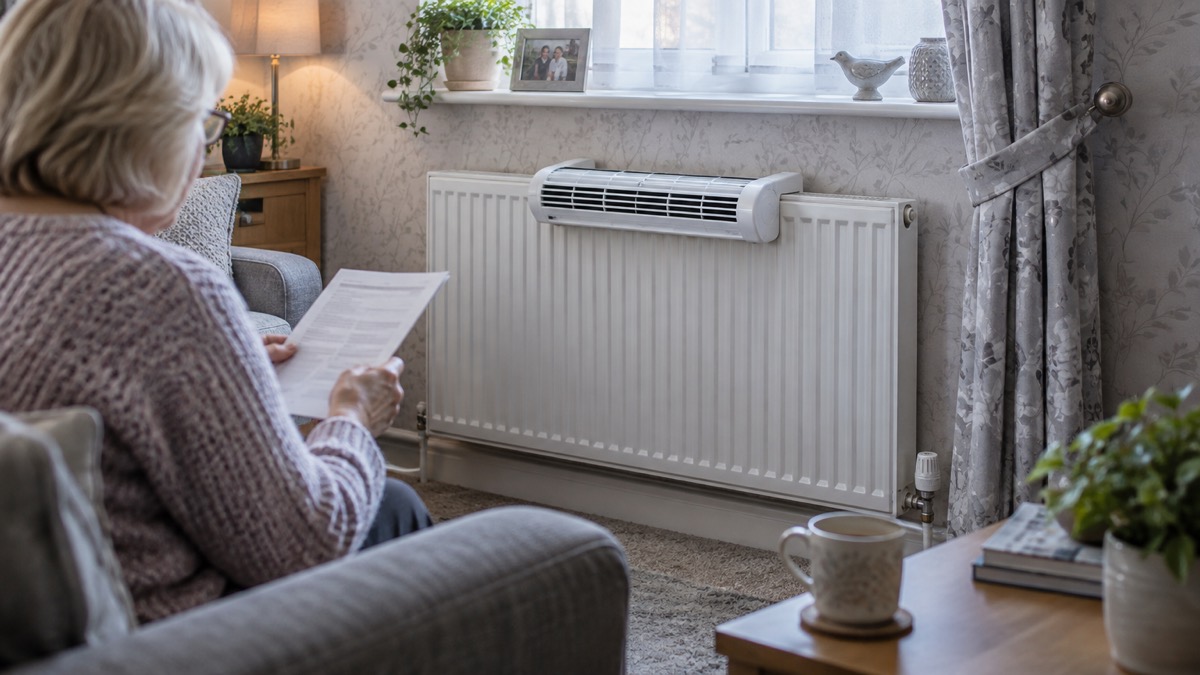
There are two broad choices, and they suit different households. A mains-powered fan runs whenever it is plugged in and never needs charging, but it stops the moment the power does. A rechargeable fan carries a battery, so it keeps going for a while after the mains fails, at the cost of something that must be charged, stored and checked.
Electric fans are common in UK homes in several forms: tower and pedestal models, which are larger, plus the smaller desk and velocity (or floor) fans6. A radiator-mounted fan is a further type, shaped to sit on the radiator itself rather than stand on the floor.
| Mains radiator fan | Rechargeable radiator fan | |
|---|---|---|
| Power source | Mains only | Built-in battery, charged from the mains |
| Works in a power cut | No | Yes, until the battery runs down |
| Upkeep | None beyond dusting | Must be charged and checked before winter |
| Best suited to | Households with reliable power who want to move warm air around | Households who want some air movement during an outage, and who will keep on top of charging |
| Watch out for | Useless the moment the power goes off | Battery faults and recalls; never charge unattended |
For a household building a plan around power cuts, the rechargeable version is the one that earns its place, but only if it is kept charged and only if it is not subject to a recall. A mains fan is a comfort item; a rechargeable one is a small piece of backup capability, on a par with a torch rather than a heater. If you are weighing up what to keep ready, our power cuts guide covers the wider picture, and the backup power section explains how batteries and charging fit into a household plan.
Settings and the black control screen
The Valiant model is identified by its black settings control screen, which is where speed and any timer settings are set1. The recall notice does not describe the individual settings, so this page does not either. What matters for preparedness is how you use any rechargeable fan so that it is ready when you need it and safe when you are not using it.
A sensible routine before each winter:
- Check the batch number on the base label against any live recall notice before charging1.
- Charge it fully while you are awake and in the room, never overnight.
- Run it for a short period on each speed to confirm it works and to hear whether the motor sounds rough.
- Switch it off at the plug and store it somewhere dry and cool, with the cable coiled and undamaged.
- Note on your calendar when you last charged it, so it does not sit flat for a year.
Fire and rescue services are clear that electrical appliances deserve respect. Only leave appliances switched on overnight if they are designed to do so, such as fridges or freezers7. If you are on a time of use tariff, avoid charging items overnight or leaving appliances running unattended overnight, because you would have less time to react and escape if a fire started8. Always place your fan on a flat stable surface and if you notice any smell of burning or unusual noises, turn it off immediately3.
Using a radiator fan when the heating is limited
When the heating is on but you are trying to run it less, a radiator fan has a genuine role: it spreads the warmth from the rooms you are heating into the space you are actually sitting in. Fire and rescue services suggest you can save money by turning off radiators in spaces that aren't often used, only keeping radiators switched on in the rooms you use most8. A fan in the main living room helps that concentrated heat go further.
If you heat with oil, the same logic applies. You can reduce running costs by turning down thermostatic radiator valves in rooms you use infrequently9. A fan will not change what the boiler burns, but it can make a lower setting feel more comfortable in the room you use.
There is a second, warmer-weather use that matters for preparedness. In a heatwave, official guidance is to use electric fans if the air temperature is below 35°C, but not to aim the fan directly at your body as this can lead to dehydration2. The same limit appears across official advice: use air fans only if the temperature is below 35 degrees, because higher than that you will just be moving hot air around, and don't aim it at your body to avoid dehydration10. NHS trusts repeat it for people at higher risk, including using a fan if the room temperature is below 35°C11, and the Met Office suggests taking a small hand-held battery fan when travelling in heat12.
"Use electric fans if the air temperature is below 35°C, but do not aim the fan directly at your body as this can lead to dehydration."
So the fan has two seasons. In winter it pushes warmth from a heated radiator into the room. In summer it keeps air moving, within the 35°C limit, for people who struggle in the heat. In both cases it is moving air, not changing the temperature.
What a radiator fan cannot do in a power cut
This is the part that matters most for a household preparing for an outage. A radiator fan cannot heat a room. With the boiler off, there is no warmth at the radiator for it to move, and a rechargeable fan will simply stir cold air until its battery runs down. Most power cuts do not last very long13, which is reassuring, but the plan for a cold, dark evening has to rest on warmth and light, not on air movement.
What to have ready instead:
- Layers and bedding to stay warm without heating, covered in our guide to clothing and bedding in a cold home.
- A hot water bottle, filled and checked safely, as set out in hot water bottles.
- Torches rather than candles. Official guidance is to avoid using candles and paraffin heaters14, and fire services have warned after a spate of candle fires over the festive period15.
- A safe portable heater plan, if you have one, following the manufacturer's instructions and ensuring heaters are safety registered and in good working order15.
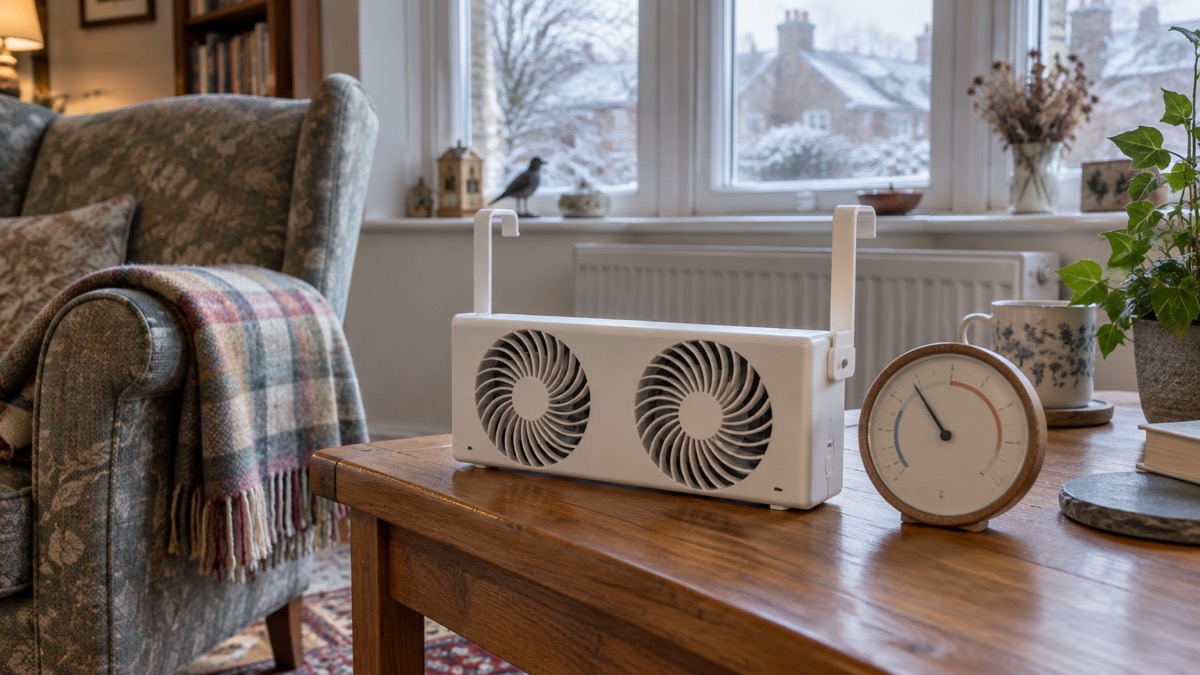
Some households have equipment that stops working in a power cut, including ventilators, oxygen concentrators, electric wheelchairs, hoists, communication devices and feeding pumps19. If that applies to you, a rechargeable fan is a minor comfort by comparison; plan around the equipment first, and see the Scottish Government's ready campaign guidance for disabled people and carers for the kind of preparation that helps.
Support and safety notices
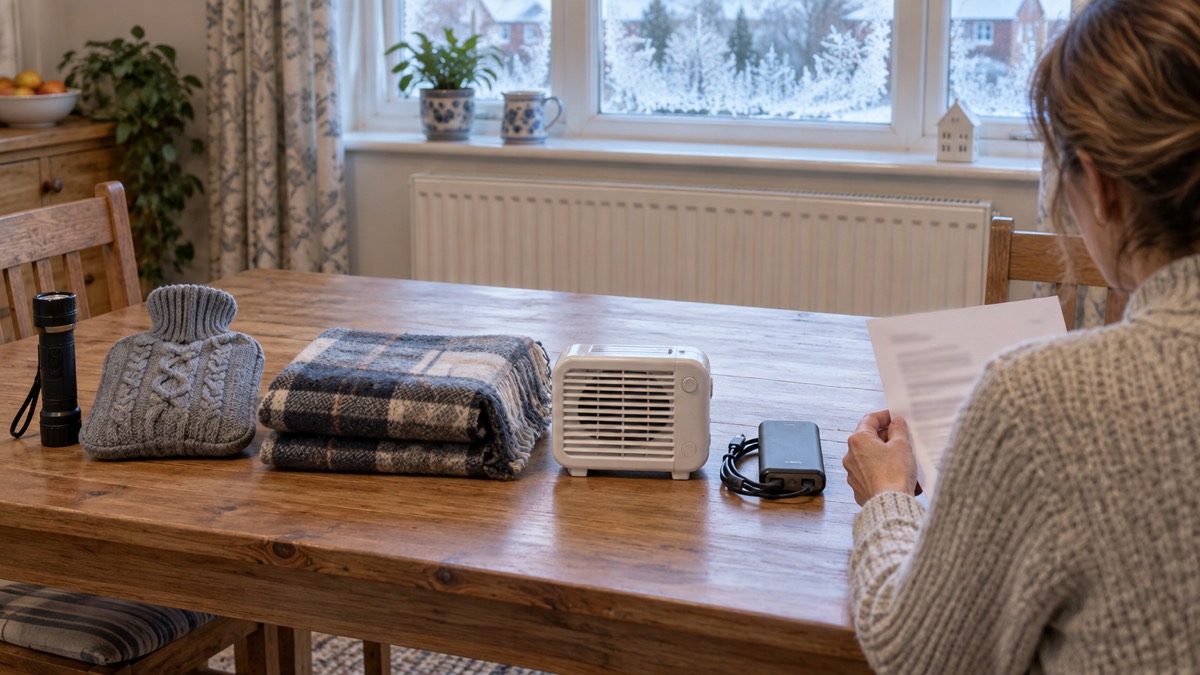
The Valiant Radiator Fan recall was notified by Local Authority Trading Standards, and the notice carries the reference 2510-02381. If you own an affected unit, the route to support is through the recall notice itself, which is where the manufacturer's instruction to stop using it and move it outdoors is published1. Keep a note of the batch number and where you bought it before you contact anyone.
For any heater or fan, the general safety advice is consistent across the fire and rescue services. Take precautions when heating your home20. Take care when using portable heaters or open fires to keep warm in colder weather21. Check portable heaters have a safety guard and don't place them near furniture, beds or curtains22. Only move fan heaters when they're off and cold4. And have your heating and cooking appliances checked by a Gas Safe registered engineer to make sure they are working safely23; the NHS repeats the same advice, to contact a Gas Safe registered engineer to make sure they're operating properly24.
Watch for the signs of a faulty gas appliance: a floppy yellow flame rather than a crisp blue one, black or brown marks on or around the appliance, a boiler pilot light that keeps going out, or increased condensation inside the windows25. If you see them, stop using the appliance and get it checked.
Product recalls are a recurring feature of the heating season, and it is worth knowing how to check. A recall affecting certain Ideal Heating Logic 2 Combi and System boilers was publicised by Humberside Fire and Rescue Service in December 202526, and a Kobe 2kw oil-filled nine-fin radiator was recalled from end users in July 2026 over a plug defect that may overheat and catch fire. Neither involves a radiator fan, but both show why a batch number on the base of an appliance is worth keeping.
If money is tight and you are weighing up how to stay warm, fire services offer safety advice and signposting to support available in relation to staying warm and saving money this winter27. Our guides to warm spaces and winter payments set out where that help sits. For the wider picture on heating without mains gas, start with heating and cooking without mains power or gas.
Sources (27)
- Product recall: Valiant Radiator Fan sold via Amazon, eBay, Temu, B and Q, Debenhams, The Range and TikTok Shop (2510-0238), GOV.UK, 7 November 2025
- Beat the Heat: staying safe in hot weather, GOV.UK, 21 July 2026
- Extreme weather summer guide, London Fire Brigade, May 2024
- Heater safety, Dorset and Wiltshire Fire and Rescue Service, 20 November 2024
- How to balance radiators, Vaillant, 2026
- Electric fans, Electrical Safety First, 25 October 2026
- Electrical safety, Greater Manchester Fire and Rescue Service, 29 October 2026
- Stay fire safe, Greater Manchester Fire and Rescue Service, 29 October 2026
- Helping you get through this winter, UKIFDA, 25 November 2022
- Keeping cool in heat waves, Oxfordshire County Council, 2026
- Hot weather and mental health: how to stay well in the heat, Homerton NHS, 10 July 2026
- Stay safe in extreme heat, Met Office, 29 October 2026
- Generators, Wiltshire and Swindon Prepared, 25 October 2026
- Adverse weather events, Llangattock Community Council, 25 October 2026
- Warning after spate of candle fires over festive period, London Fire Brigade, 28 December 2025
- Power cuts, Scottish Fire and Rescue Service, 25 October 2026
- Seasonal winter, Suffolk Fire and Rescue Service, 29 October 2026
- Flood recovery information, Devon County Council, 29 January 2026
- Disabled people and carers, Ready Scotland, 25 October 2026
- Home fire safety tips, Warwickshire County Council, 29 October 2026
- Don't let fire ruin your Christmas, Dorset and Wiltshire Fire and Rescue Service, 3 December 2025
- Keep warm in winter, Derbyshire County Council, 29 October 2026
- Cold weather alert issued: how to keep warm and well, Birmingham and Solihull Mental Health NHS Foundation Trust, 30 November 2023
- We're here to help you stay well this winter, NHS England, 31 October 2024
- Check your gas appliances, Gas Safe Register, 29 October 2026
- Check your boiler: important product recall, Molescroft Parish Council, 2 December 2025
- Think fire safety when saving money on your energy bills, Dorset and Wiltshire Fire and Rescue Service, 5 October 2022

 Campingaz Camping Kitchen 2 CV
 Campingaz Party Grill 200
 Campingaz Party Grill 400 CV
 Optimus Gemini II Stove
 Trangia 25 Large Stove
 Trangia 27 Small Stove
 Trangia Triangel Stove
 Trangia Mini Spirit Stove
 Flogas Gold Butane Cylinder
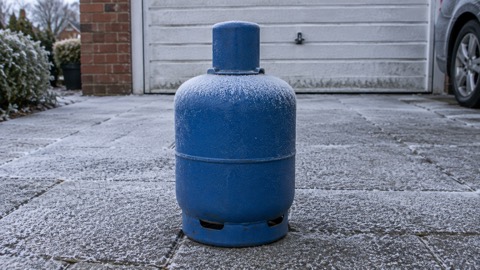 Calor 4.5kg Butane Cylinder
 MSR Trail Lite Pot
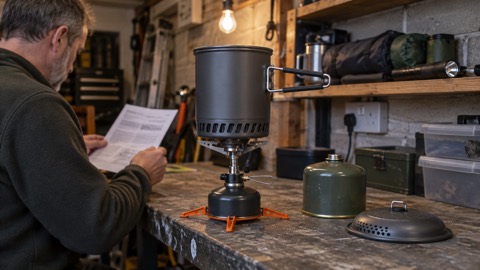 MSR Reactor Stove