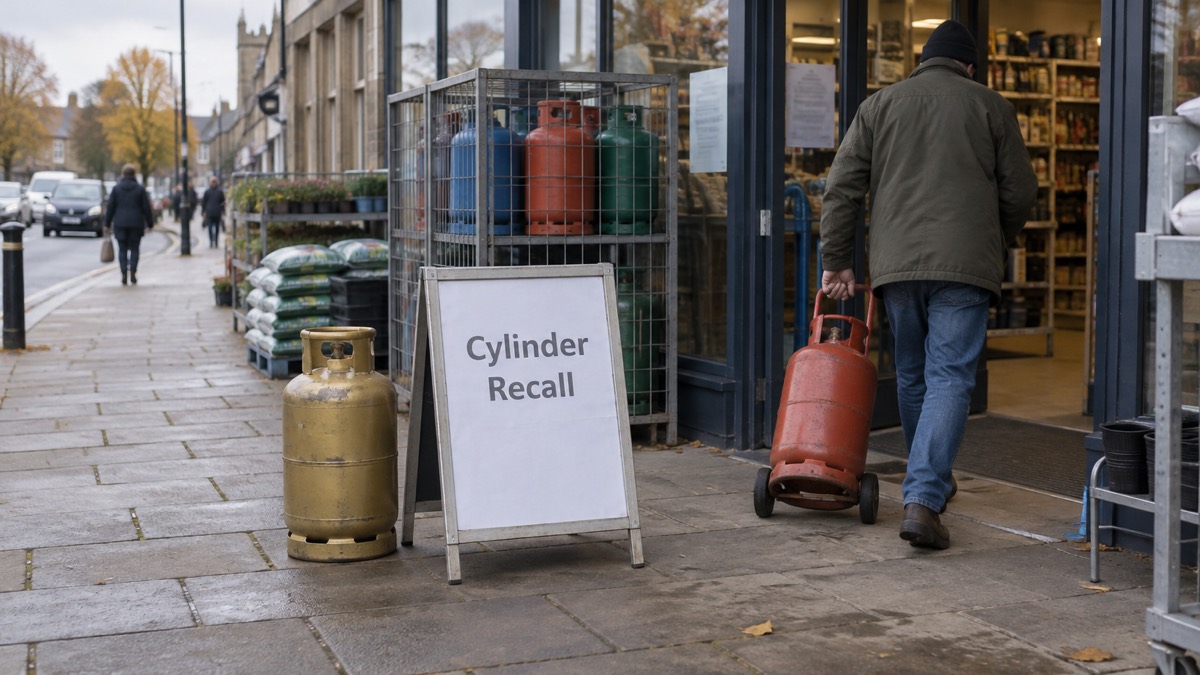
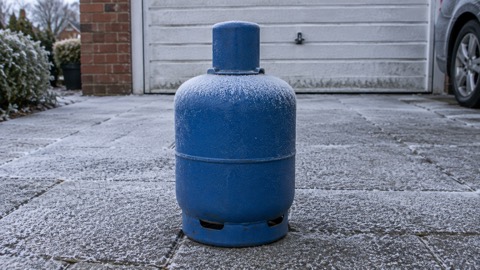
A Flogas gold butane gas cylinder is a refillable bottle of butane used to fuel portable heaters and camping stoves. If you own one, the first thing to do is check it against a product recall. The Office for Product Safety and Standards recalled Flogas Gold Butane Gas Cylinders in 4.5 kg, 7 kg and 13 kg sizes, sold between 6 and 22 November 2024 across East Anglia, East Midlands, the Home Counties and the South East, because they were filled with a butane and propane mixture outside the parameters for commercial butane defined in BS42501.
If your bottle falls into that group, stop using it immediately. Do not connect it to an appliance, and if it is already connected, disconnect it at once1. Then contact Flogas on 0330 041 6629 or at cylinder.recall@flogas.co.uk to arrange collection and a free replacement1. If you are not sure whether your bottle is affected, ring anyway: Flogas has said it will swap the bottle if there is any doubt, and no receipt is needed2.
For a household building up emergency heating and cooking cover, a butane cylinder is a useful thing to understand even if yours is not part of the recall. This page covers what the cylinder is, which bottles the recall covers, how to get a replacement, how to keep a bottle safely until it is collected, why the affected bottles are dangerous, and how butane regulators work.
Stop using a recalled bottle and do not connect it
The recall notice is blunt. Stop using the butane gas bottles immediately. Do not connect the gas. If already connected, disconnect it immediately1. The product has been recalled from end users and withdrawn from the market3.
That instruction matters most in the middle of an emergency, when a bottle may be the thing keeping a room warm or a pan boiling. The temptation is to use up what is left. Do not. The hazard is not wear and tear or a faulty valve you might spot; it is the contents. The cylinders were filled with a mixture of butane and propane outside the parameters for commercial butane defined in BS4250, which gives a higher vapour pressure within the cylinder than usual1.
A bottle that looks and feels normal can therefore be over-pressured. The notice says the product does not meet the requirements of The Gas Appliances (Enforcement) and Miscellaneous Amendments Regulations 20181.
If you have a spare bottle and are not sure which is which, treat the recall as a reason to check every gold butane bottle in the shed or garage before the next cold snap, not after.
Which bottles are affected
The recall covers gold and red butane bottles in three sizes: 4.5 kg, 7 kg and 13 kg1. Those are the net weights printed on the bottle1.
| Detail | What the recall says |
|---|---|
| Product type | Gas appliances and components, gold butane gas cylinder1 |
| Sizes | 4.5 kg, 7 kg and 13 kg1 |
| Colours named | Gold and red butane bottles1 |
| Country of origin | United Kingdom1 |
| PSD notification | 2411-01813 |
| Notified by | Local Authority Trading Standards3 |
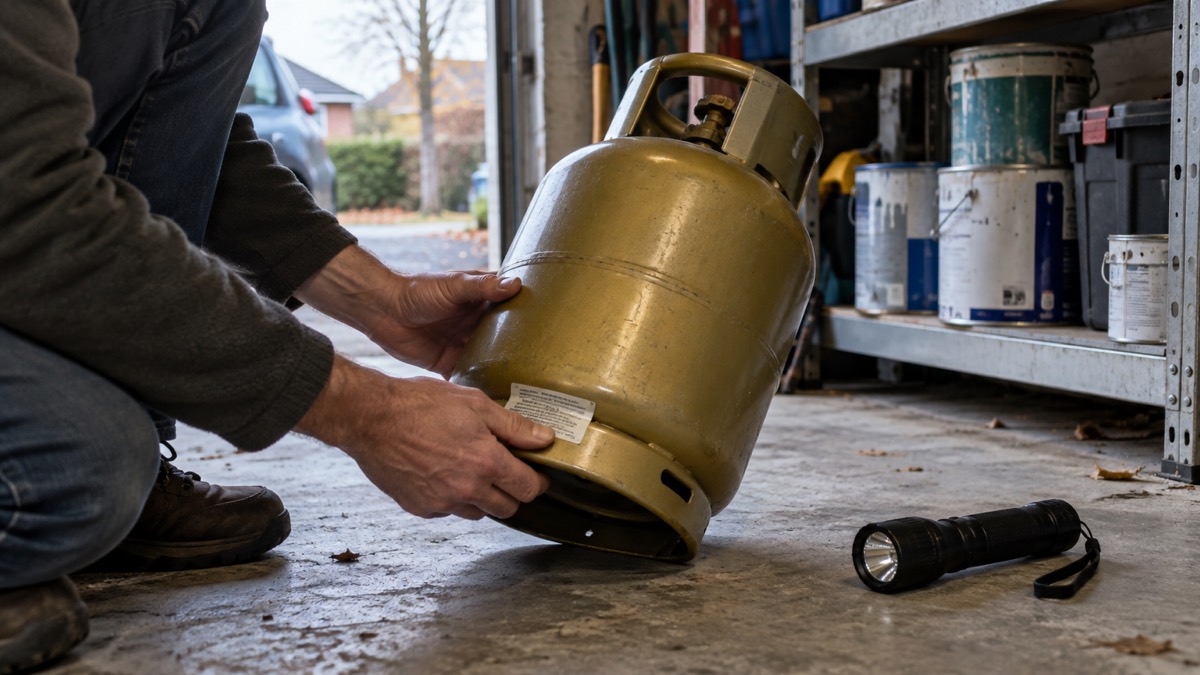
Two things are worth separating here. The recall notice describes the affected product as gold and red butane bottles in 4.5 kg, 7 kg and 13 kg sizes1. If you hold a red butane bottle, check it against the recall notice and, if in doubt, ask Flogas rather than assume.
Colour alone is not a reliable test in any case. Liquid Gas UK advises householders always to check labels and not to rely on gas bottle colour alone, as this may differ depending on the supplier4. Read the label, note the size and the brand, and keep a note of when and where you bought it.
Where and when the recalled bottles were sold
The affected bottles were sold between 6 and 22 November 2024 across East Anglia, East Midlands, the Home Counties and the South East1. Flogas's notice gives the same window and describes the area as South East England2.
They went out through retailers including B&Q, B&M, Homebase, other local sellers and gas dealers1. Flogas has said it is making all of its stockists in the region aware of the situation, naming B&Q, Go Outdoors, Homebase and B&M2.
If you bought a butane bottle in that period and in that part of England, the date and the area are your two strongest clues. A bottle bought outside that window, or well outside that region, is unlikely to be from the affected batch, but the label check is still the reliable step.
Getting a free replacement from Flogas
Contact Flogas on 0330 041 6629 or at cylinder.recall@flogas.co.uk to arrange collection and a free replacement1. The recall helpline number is repeated on Flogas's own recall page2.
A few things make the call quicker:
- Have the bottle in front of you so you can read the brand, size and any batch marking.
- Note roughly when and where you bought it, even if you have no receipt.
- Say if a portable heater is your only heat source. Flogas has said that if you rely on your portable heater as your only heat source, you should let them know when you call, and they will prioritise your replacement2.
- Ask what to do with the bottle between the call and the collection.
If you have no receipt, that is not a barrier. Flogas has said that if there is any doubt, it will swap your bottle, and that no receipt is needed, just verification of where and when you bought it2.
For an LPG emergency, the number listed for Flogas is 03457 200 1005. That is separate from the recall line. If you smell gas from a mains supply rather than a bottle, contact National Gas6.
Keeping a recalled bottle safe until it is collected
Once you have called, the bottle still has to sit somewhere until it is picked up. The official advice is to keep the cylinder stored outdoors where possible. If you must store it indoors, ensure it is away from sources of heat until collection is arranged1.
The same principles that apply to any LPG cylinder apply here, and they are worth knowing for the bottles you keep in normal times:
- Keep gas bottles outside a caravan in a secure, upright position, and turn them off when not in use7.
- On a boat, avoid using portable gas equipment on board where possible, and store all gas canisters in special gas lockers or open places where any leaks will flow overboard8.
- Make sure canisters are stored upright and where any leaking gas will flow overboard and not into the interior, preferably in a suitable, vapour-tight, self-draining locker9.
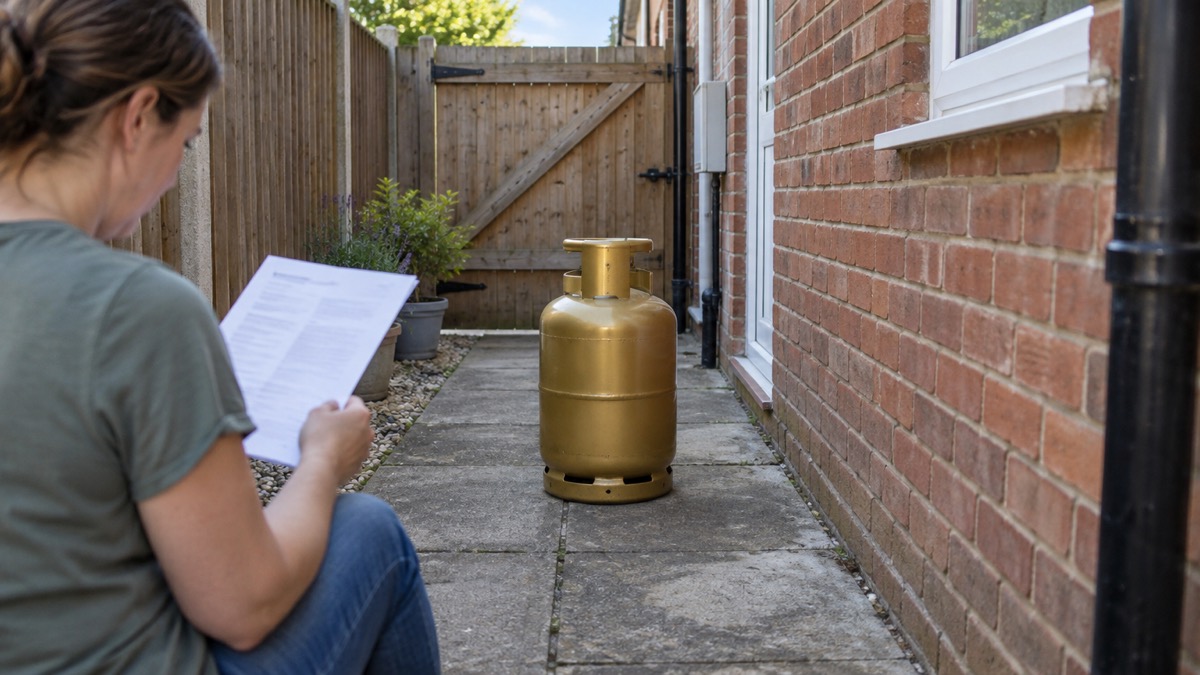
Butane is heavier than air. If there was an escape of LPG, the gas will collect at low level, can be an asphyxiant, and can become dangerous in the presence of a flame or spark10. That is why an outdoor store, or a locker that drains and vents away from the living space, is the right home for a bottle, and why a recalled one should not sit in a kitchen cupboard while you wait for the courier.
Why the bottles are dangerous: higher pressure and fire risk
The recall notice states the hazard plainly: the product presents a risk of fire because the butane cylinders have been filled with a mixture of butane and propane outside the parameters for commercial butane defined in BS4250, resulting in higher vapour pressure than usual1. The safety notice adds that this will result in a higher vapour pressure within the cylinder than usual3.
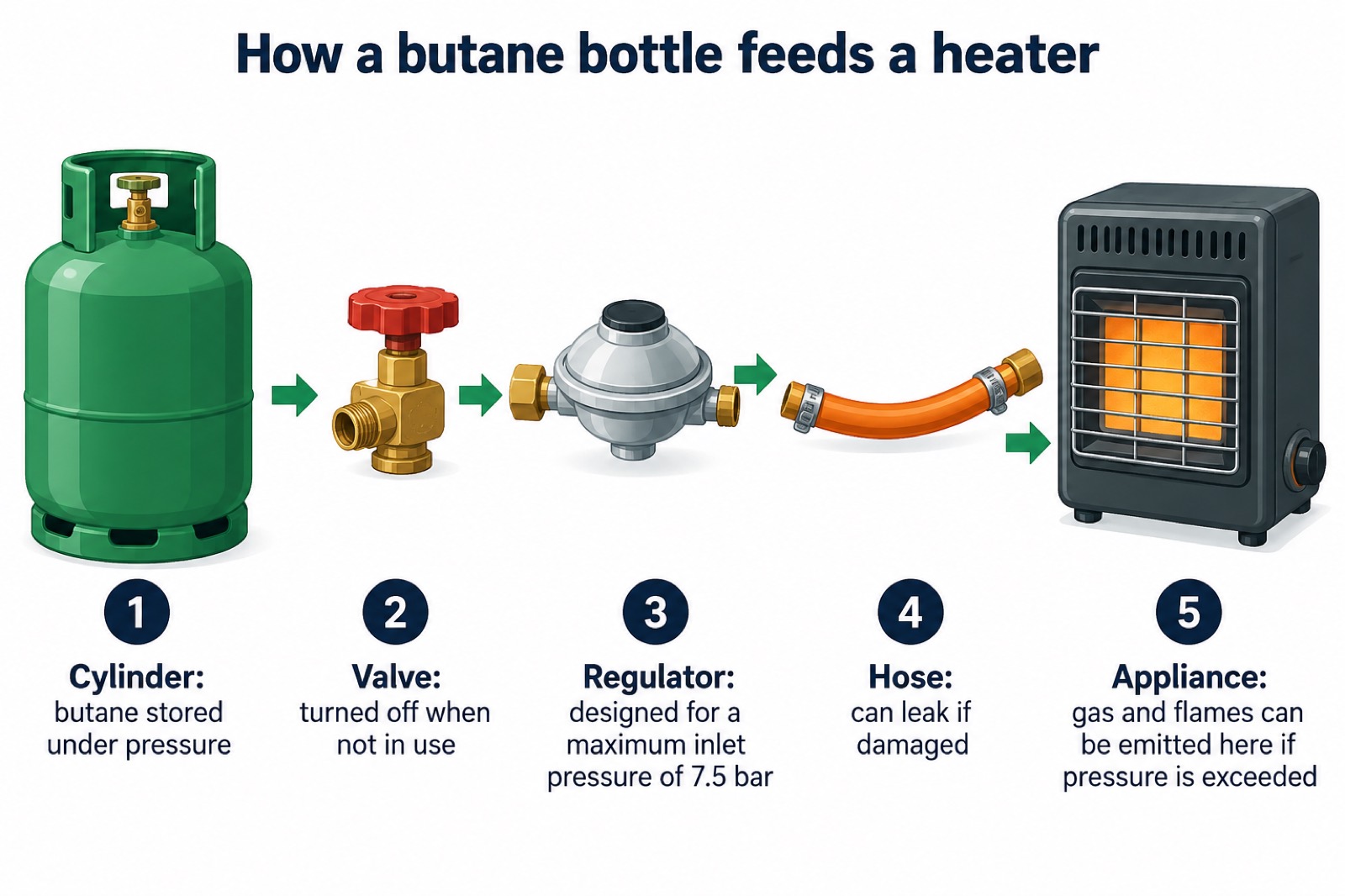
Higher pressure inside a cylinder puts strain on everything downstream of it: the valve, the hose and above all the regulator. The notice explains what happens if the inlet pressure of the regulator exceeds its design pressure. It could lead to leakage of joints, failure of components, or gas and flames being emitted from the appliance itself1.
That last point is the one to hold on to. The failure does not necessarily happen at the bottle. It can happen at the heater, which is exactly where someone is sitting.
LPG generally is stored under pressure and is highly flammable. Even a small leak can release a large volume of gas, which is heavier than air and can collect near the floor and ignite at a distance from the source of the leak11. LPG equipment can be particularly vulnerable: blocked or partially blocked burners can lead to higher carbon monoxide levels and flame failure, and LPG can leak from damage to hoses12.
A butane bottle feeds the regulator, which drops the pressure before gas reaches the appliance.
Regulators and the 7.5 bar limit
The regulator is the part that makes a butane bottle safe to use indoors. Butane regulators are manufactured to BSEN12864 or BSEN16129, which require them to be designed for a maximum inlet pressure of 7.5 bar3. A bottle whose contents generate more pressure than the regulator was designed for is a bottle that can overwhelm the one component standing between the gas and the room.
Regulators are also set to a delivery pressure for the appliance. In the UK, butane regulators are typically pre-set at nominally 28 to 30 mbar, and a propane regulator is pre-set to 37 mbar13. In touring caravans and motorhomes built to standard EN 1949, the regulators are installed by the manufacturer and pre-set at 30 mbar for both butane and propane13.
| Regulator type | Typical UK setting |
|---|---|
| Butane, domestic | nominally 28 to 30 mbar13 |
| Propane, domestic | 37 mbar13 |
| Caravan or motorhome, EN 1949 | 30 mbar for both butane and propane13 |
| Maximum inlet pressure, butane regulator | 7.5 bar3 |
Two practical rules follow. First, use the regulator supplied with or specified for the appliance, and check that the bottle type and size match what the appliance expects; the Health and Safety Executive advises ensuring that the correct size and type of gas bottle is being used15. Second, never try to refill a cartridge, and for cylinders follow the industry user information16.
If you are changing a bottle in normal times, do it in a well-ventilated place and away from sources of heat and ignition17. Our guide to changing an LPG cylinder safely walks through the sequence, and where to store gas cylinders at home covers siting.
What the cylinder does for a household in an emergency
A butane cylinder is a stored fuel supply for heat and cooking when the mains fail. Butane is the fuel used indoors with portable heaters or camping gear18. A mobile gas heater is a portable indoor heater powered by butane gas bottles only19.
That makes it a genuine part of a household plan for a winter power cut, when central heating and an electric hob are both out. But it comes with conditions that matter more than the convenience:
- Portable gas heaters use LPG, such as butane or propane11. Only use heaters designed for indoor use and follow the manufacturer's guidance11.
- Only use gas or paraffin heaters in well-ventilated areas, because heaters consume oxygen, so you could suffocate if a room is not properly aired20.
- If you have a portable gas heater that uses gas bottles and is approved for indoor use, make sure the room is well ventilated and follow all instructions carefully, as the fumes can be dangerous21.
- LPG and paraffin portable heaters are an expensive way to heat rooms22, so plan them as a fallback for one room rather than a substitute for the whole house.
A portable heater can be moved anywhere and heats the room it is in quickly, but it requires you to change the gas cylinders, which could be a hassle and also poses fire risks22. For a household preparing for outages, that trade-off is the whole decision: fast, local heat in exchange for fuel handling and ventilation discipline.
If a gas heater is your plan, read Portable Heaters: Electric, Gas and Paraffin Types Explained and Using a Portable Heater Safely at Home before winter. For the wider picture, Bottled Gas for Heaters and Stoves: Butane, Propane and Regulators and the comparison Butane or Propane Gas Bottles set out the alternatives. If you are weighing a gas bottle against a paraffin heater, Paraffin or Bottled Gas Heaters covers it.
Using a butane heater safely
The maker's and industry instructions for a mobile gas heater are specific, and they are worth following to the letter:
- Use the heater with butane gas only19.
- Use it only in a well-ventilated area with a ventilation opening running to the outside19.
- Ensure nothing stands or passes in front of the heater19.
- Use additional guards, especially if children or animals are present19.
- Position the heater facing towards the middle of a room, away from furnishings, furniture, fabrics and walls19.
- Use the supplied pressure regulator only19.
- Store butane cylinders in accordance with the Liquid Gas UK guidance19.
- Ensure the heater is correctly turned off when not in use19.
- Replace or repair damaged parts using genuine parts only19.
- Have it serviced annually by a competent gas engineer19.
- Turn the container's gas valve off immediately if gas is smelled or a leak is suspected19.
- Supervise children19.
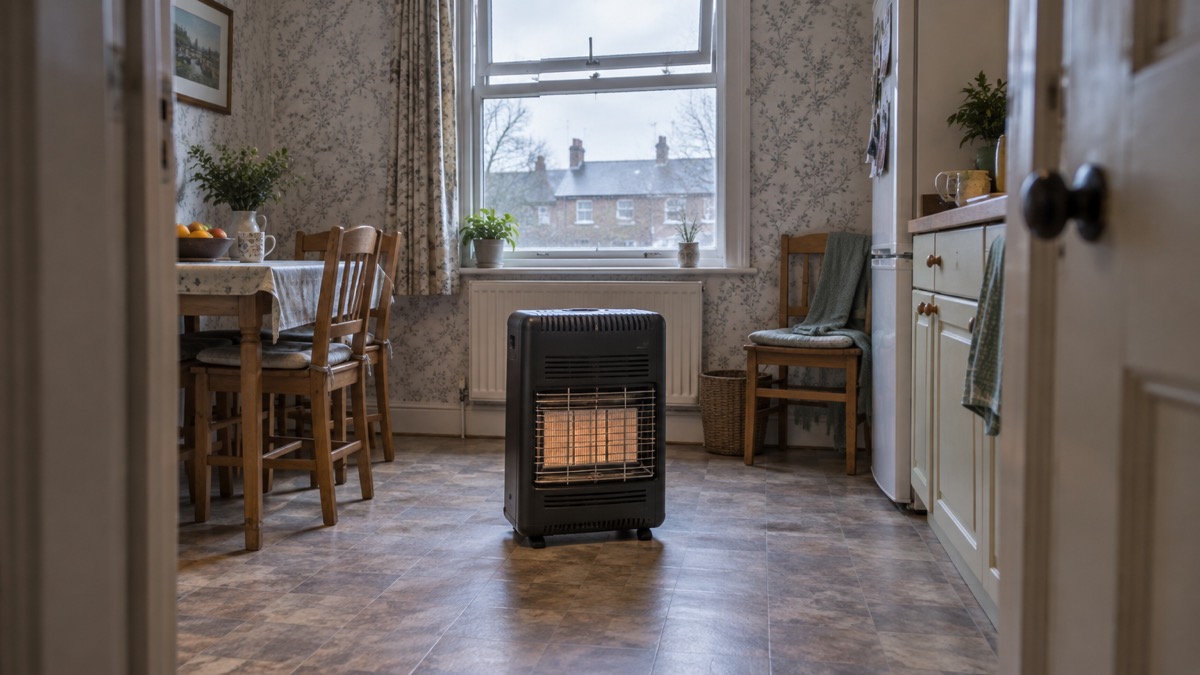
Carbon monoxide is the quiet risk with any fuel-burning appliance. LPG equipment can be particularly vulnerable, and blocked or partially blocked burners can lead to higher carbon monoxide levels and flame failure12. If you have a carbon monoxide alarm, test it before the heating season, and never run a heater in a sealed room. Our Home Emergencies guide covers what to do if an alarm sounds.
Support, spares and where to get help
Flogas is the maker and distributor of the recalled cylinder, and the recall line is the route for anything to do with it: 0330 041 6629 or cylinder.recall@flogas.co.uk1. The company's own recall page repeats the helpline and explains the batch and the swap policy2. For an LPG emergency, the number listed for Flogas is 03457 200 1005.
Beyond the recall, the support you are most likely to need is a competent gas engineer for an annual service, and a replacement regulator or hose from the appliance maker rather than a generic part. The heater instructions are clear that damaged parts should be replaced or repaired using genuine parts only19.
If you need to find a registered gas installer, the number published for CORGI is 0800 915 048523. For a mains gas leak, contact National Gas6.
If money or mobility makes a cold home a health risk, help exists. The Extra Help in an Emergency guide covers older, disabled and medically dependent households, and Warm Spaces and Warm Hubs: Finding One Near You lists the kind of local provision that opens in cold weather. For the wider household plan, start with Heating and Cooking Without Mains Power or Gas and Keeping One Room Warm When the Heating Fails.
Sources (23)
- Flogas Gold Butane Gas Cylinder recall leaflet, London Borough of Bromley, 2024-12-10
- Flogas cylinder recall, Flogas, 2024-11
- Product recall: Flogas Gold Butane Gas Cylinder 2411-0181, Office for Product Safety and Standards, 2024-12-03
- Liquid Gas UK issues timely reminder on cylinder safety, Liquid Gas UK, 2025-10-20
- Gas emergency contacts, CO-Gas Safety, 2015-07-06
- Help during a flood, GOV.UK, 2026-10-25
- Caravan, motorhome and campervan safety, Humberside Fire and Rescue Service, 2026-10-29
- Boat safety, Dorset and Wiltshire Fire and Rescue Service, 2025-06-25
- Fire risk on boats, Dorset and Wiltshire Fire and Rescue Service, 2022-05-24
- Using Calor gas safely: butane, Calor, 2017-03
- Portable heaters, Cheshire Fire and Rescue Service, 2026-05-26
- Carbon monoxide in construction, Health and Safety Executive
- Mobile gas heater guidance, Liquid Gas UK, 2026-04
- LPG regulator guidance, Liquid Gas UK, 2022
- Gas safety in the home: frequently asked questions, Health and Safety Executive
- LPG cylinder user information, Liquid Gas UK, 2014-01
- Heating your home safely, North Yorkshire Fire and Rescue Service, 2026-03-09
- Propane vs butane, Liquid Gas UK, 2026-10-25
- Information Sheet, Liquid Gas UK
- Home heating safety, Avon Fire and Rescue Service, 2024-03-18
- Keeping warm or cool in extreme weather, UK Chief Medical Officers, 2025-12-16
- Heater safety, Devon and Somerset Fire and Rescue Service, 2024-11-20
- Carbon monoxide safety, Mid and West Wales Fire and Rescue Service, 2023
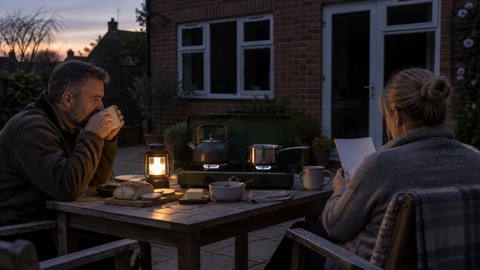 Campingaz Camping Kitchen 2 CV
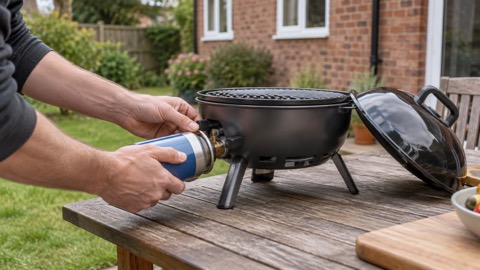 Campingaz Party Grill 200
 Campingaz Party Grill 400 CV
 Optimus Gemini II Stove
 Trangia 25 Large Stove
 Trangia 27 Small Stove
 Trangia Triangel Stove
 Trangia Mini Spirit Stove
 Calor 4.5kg Butane Cylinder
 MSR Trail Lite Pot
 MSR Reactor Stove
 MSR PocketRocket Stove Kit