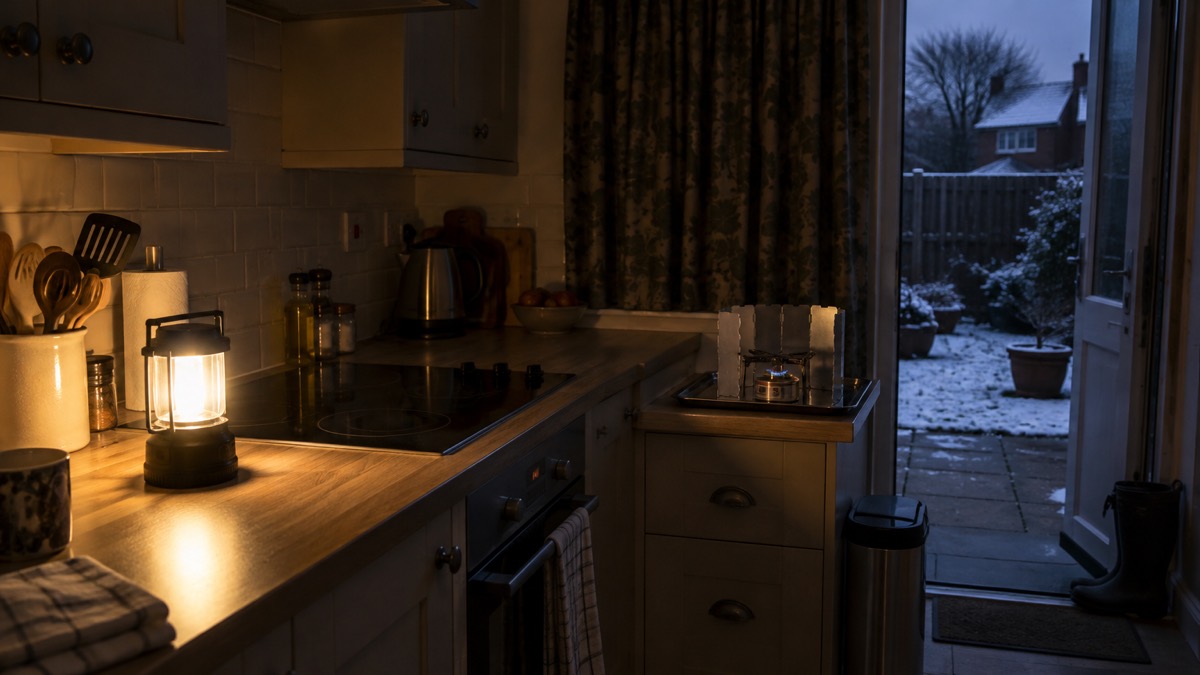
A Trangia 25 is a spirit stove set: a burner that runs on methylated spirit, a windshield and a set of pans that pack together into one unit. For a household it is a way to boil water and cook simple meals when the electricity or gas has failed, and it stores on a shelf until you need it. It is not a heater and it is not a substitute for a proper kitchen.
The one rule that matters more than any other: a spirit stove is a fuel-burning appliance and it produces carbon monoxide. The fire and rescue service warns that camping stoves can cause carbon monoxide poisoning even if you have the doors and windows open1. Trangia itself says its stoves can be used indoors, but only with good ventilation, a fireproof surface, free space above and around the stove, and constant supervision2. Treat indoor use as a last resort, never use it in a tent or caravan, and never leave it unattended3.
This page covers what the Trangia 25 does for a household in an emergency, what to check before you rely on it, how to burn and store the fuel safely, how to light and put out the burner, and where it must never be used.
What the Trangia 25 is and what it does in an emergency
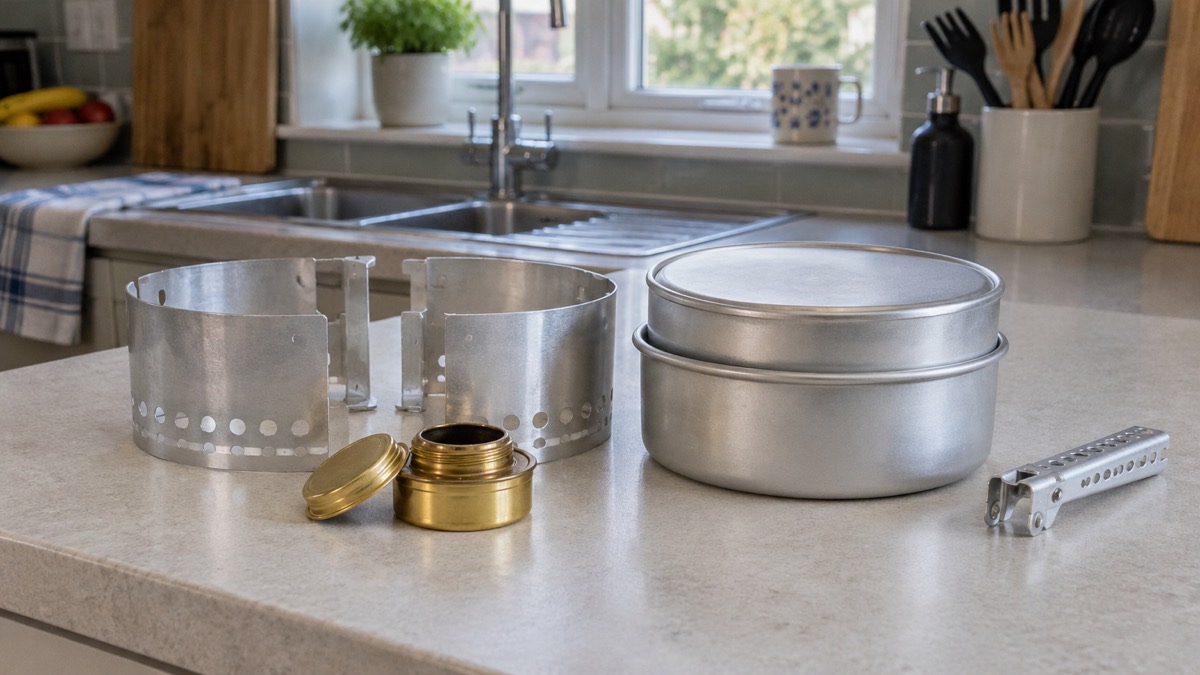
Trangia makes a range of stoves, and the 25 is the larger of its two main spirit sets, sized for a small group rather than a solo camper5. In a household emergency its job is narrow and useful: it gives you a controlled flame you can put a pan on when the mains supply has gone. That means hot water for drinks, washing and hot water bottles, and simple one-pot food from your emergency stores. It does not heat a room, and it should not be asked to.
The set packs into itself, so it takes up little space between emergencies. That matters for a household that wants a backup cooking method without dedicating a cupboard to it. Keep it somewhere you can reach in the dark, and keep the fuel with it but stored separately and safely.
Where it fits your plan is alongside your other cooking backup, not instead of it. If you are still deciding what kind of backup stove suits your household, the guide to camping stoves for a power cut sets the types side by side, and the comparison of gas cartridge or spirit burner stoves explains the trade-offs. The backup stove kit checklist lists what to keep with it.
Specifications that matter for a household
The facts that decide whether a stove suits your household are not the ones on a camping shop shelf. They are: what it burns, whether it can be used indoors at all, how much supervision it needs, and how safely the fuel stores. The table below sets out what the maker and the fire services say on each point.
| What matters | What the guidance says | Why it matters at home |
|---|---|---|
| Fuel | Methylated spirit in a spirit burner; Trangia also makes a gel burner2 | Fuel is liquid and flammable, so storage and refilling need care |
| Indoor use | Maker permits it with good ventilation, a fireproof surface, free space above and around, and supervision2 | It is not an outdoor-only stove, but the conditions are strict |
| Carbon monoxide | Camping stoves can cause poisoning even with doors and windows open1 | Ventilation alone does not make it safe in a closed room |
| Supervision | Never leave the stove unattended3 | Someone must watch it for the whole burn |
| Storage | Store in a Trangia cover bag to avoid sooting other packaging3 | Keeps soot off the rest of your kit |
| Cleaning | Do not put it in the dishwasher; the detergent is too strong for aluminium7 | Hand washing keeps the parts in good order |
Trangia's own guidance on its burners is worth reading before you buy, because the choice of burner changes how the stove behaves7. The maker suggests choosing the spirit burner or gas burner if you need to use indoors2. If you are weighing up fuel types, the page on what fuel to use in a spirit burner and how much goes into that in detail.
What it can cook and for how long
A spirit stove is a modest heat source. It is good at boiling water and at simmering a pan of something wet: soup, pasta, rice, porridge, tinned food heated through. It is poor at anything that needs a fierce, dry heat, and it will not run a large pan for a long time without attention.
For a household, plan around what it does well:
- Boiling water for drinks, washing and filling hot water bottles.
- One-pot meals from tinned or dried stores, stirred and watched.
- Reheating food that is already cooked, rather than cooking from raw.
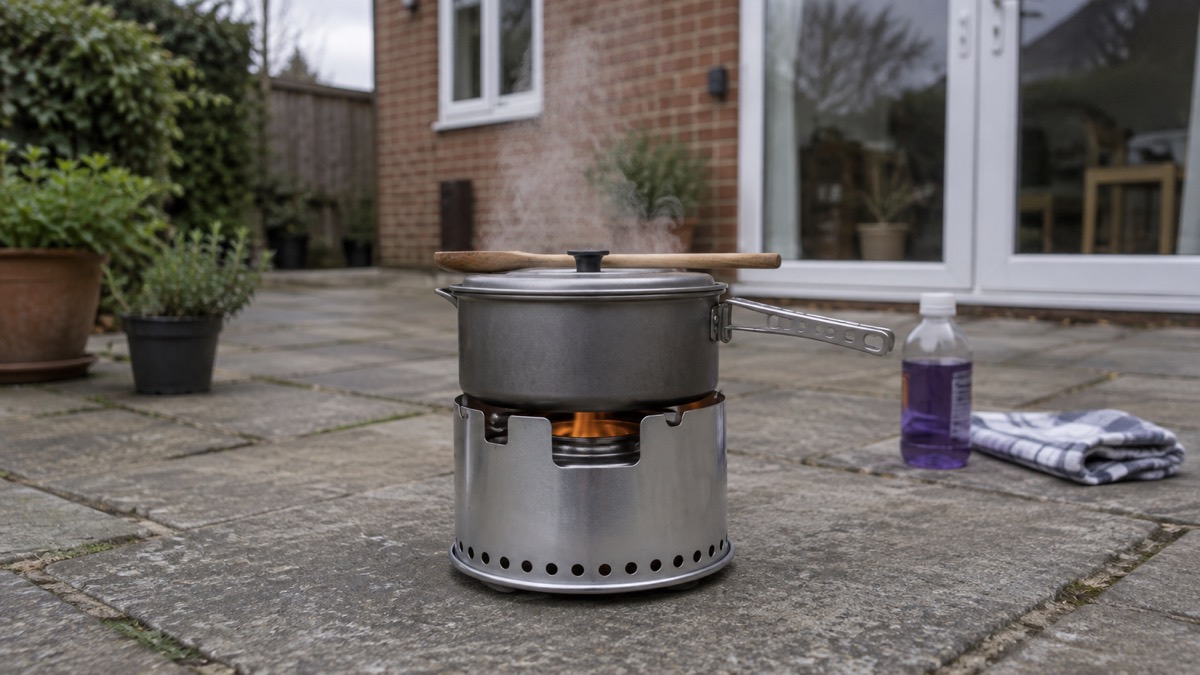
The Trangia 25 is sized for a small group, so it suits heating a pan for a few people at a time rather than cooking a full family meal in one go5. In a long outage, that means cooking in rounds and keeping the stove supervised throughout, rather than leaving a big pan on while you do something else.
What you can control is how efficiently you use it: put a lid on the pan, keep the windshield in place, and do not light it for a single cup when a flask would do. The emergency food guide explains how to plan meals that need only boiling water.
Fuel: what to burn and how to store it safely
Whatever you burn, the storage rules are the same, and they come from the fire and rescue service rather than from the maker.
Store fuel in approved containers and keep it away from heat sources6. Store it outside the home where possible, and keep quantities to a minimum6. Do not overstock fuels of any type, and store what you do keep safely8. These are simple rules, but they are the ones that stop a backup cooking plan turning into a fire.
A few practical points follow from those rules:
- Decant, do not pour from a large container near the stove. Fill the burner away from anything hot.
- Keep the bottle closed and labelled, so nobody mistakes it for something else in the dark.
- Store it cool and out of sunlight, away from heaters, cookers and anything that sparks.
- Buy only what you will use. A large stock of spirit is a large fire risk for no benefit.
If you also keep bottled gas or paraffin for heating, the same principle applies: do not overstock, and store it safely8. The page on where to store gas cylinders at home covers the parallel rules for gas.
How to light, use and put out a spirit stove
Lighting a spirit stove is simple, but the order matters. Work through it the same way every time so that it becomes habit before an emergency, not during one.
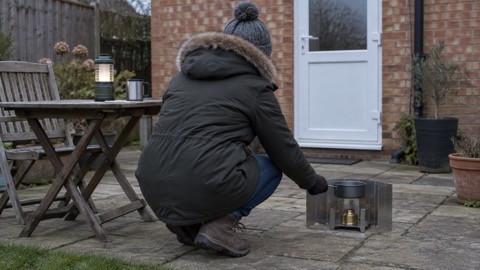
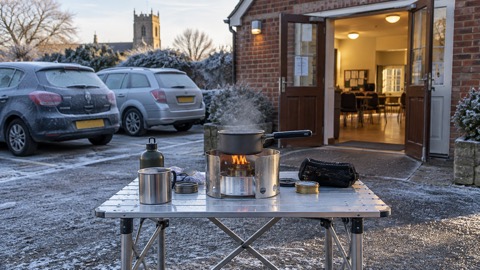
- Set up outdoors or in a well-ventilated space, on a stable, fireproof surface, with nothing above or around the stove that can catch alight3.
- Fill the burner with spirit, away from any heat, and wipe up spills before lighting.
- Fit the burner into the stove and set the windshield in place.
- Light it and stand back. The flame may be pale and hard to see.
- Cook with the pan lid on, watching the stove the whole time. Never leave it unattended3.
- Put it out by letting it burn off or by using the maker's method for your burner, then let it cool completely.
- Empty the burner once cool, and store the stove in its cover bag3.
"MAKE SURE THERE is free space above and around the stove so that nothing can catch alight."
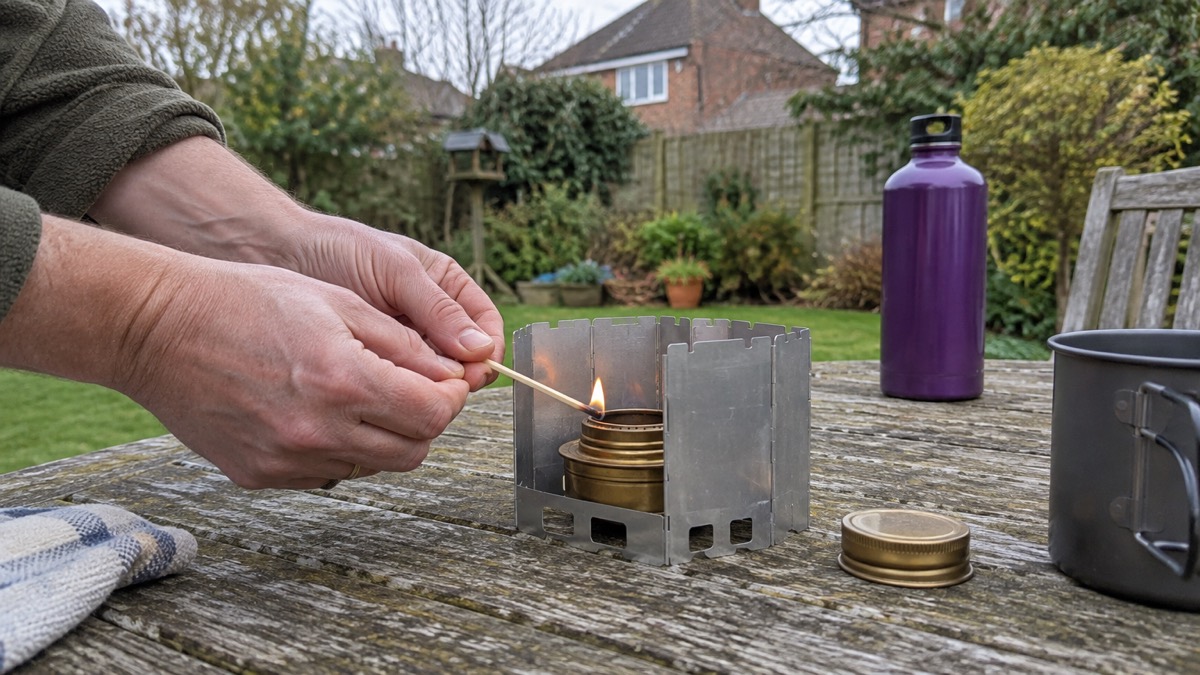
The same discipline applies to any open flame at home. The fire and rescue service's advice on candles is a useful reminder of the standard: nobody should leave a flame burning, and it should be put out before leaving the room9. A spirit stove deserves at least that level of care.
Where a spirit stove must never be used
There are places where a spirit stove must not go, whatever the weather or the temptation.
- Never in a tent. The fire and rescue service warns that the carbon monoxide a camping stove produces can kill, and the heat will set the tent on fire4.
- Never in a caravan or enclosed space. Fuel-burning outdoor appliances produce carbon monoxide, and using them in an enclosed space puts you and others at risk10.
- Never in a closed room with the door shut. Trangia advises that if you must use its stoves indoors, keep good ventilation, a fireproof surface, nothing above the stove and always supervise it1.
- Never unattended, even outdoors3.
- Never on a balcony cluttered with flammable items, or close to doors and windows where fumes can drift inside.
If you need to cook in a flat with no outdoor space, the safer answer is a stove designed and approved for indoor use, or cold food from your stores, not a spirit stove in the kitchen with the window open. The page on whether it is safe to use a camping stove indoors sets out the conditions in full.
Carbon monoxide, burns and other risks
Carbon monoxide is the risk that catches people out, because it has no colour and no smell. The fire and rescue service warns that camping stoves and barbecues can cause carbon monoxide poisoning even with doors and windows open1. The Health and Safety Executive notes that blocked or partially blocked burners can lead to higher carbon monoxide levels and flame failure, so keep the burner clean and stop using it if the flame behaves oddly12.
Burns are the other everyday risk. A spirit stove has an open flame, a hot burner and hot pans, and the flame can be nearly invisible. Keep children and pets back, use the pan handle, and never move a lit stove. The fire and rescue service's guidance on staying warm safely in winter makes the same point about any fuel-burning appliance: it poses a fire risk as well as a carbon monoxide risk13.
A carbon monoxide alarm is a sensible backstop in any home with a fuel-burning appliance. The guidance on carbon monoxide risks notes that you are at greater risk if there is no audible carbon monoxide alarm fitted and working14. Fit one, test it, and treat it as part of your emergency kit alongside the stove.
Cleaning, storage and support
A Trangia stove is built to last, and a little care keeps it ready. Trangia's own instructions are clear on the main points.
- Do not put it in the dishwasher. The maker states that dishwasher detergent is too strong and causes unsightly stains and a rough surface on aluminium, though the parts are still safe to use if it has happened7.
- Store it in a Trangia cover bag to avoid sooting your other packaging3.
- Empty and dry the burner before packing it away.
- Keep the fuel separate, in its approved container, stored safely6.
Trangia's pots and pans can be used over an open fire, a spirit stove or a gas stove, but some products have plastic parts that can melt in direct contact with fire, so take care not to overheat them7. That is worth knowing if you ever use the pans on another heat source during an outage.
Check the maker's guidance for the parts and guidance that apply to your model. If you are comparing the Trangia 25 with the smaller set, the page on the Trangia 27 small spirit stove explains the difference in size and capacity, and the Trangia brand page covers the maker's range.
Finally, keep the stove in context. It is one part of a household plan that also covers light, warmth and water. The power cuts guide explains what to do when the supply fails, the emergency kit guide lists what to keep ready, and the heating and cooking section covers the wider question of cooking and staying warm without mains power.
Sources (14)
- Staying safe while cutting costs, Dorset and Wiltshire Fire and Rescue Service, 2024
- Guide to gel burner, Trangia, 2022
- Use and care guide, Trangia, 2026
- Camping and caravanning safety, Devon and Somerset Fire and Rescue Service, 2026
- Trangia stove range, Trangia, 2026
- Staying warm, Cheshire Fire and Rescue Service, 2026
- Trangia frequently asked questions, Trangia, 2026
- Portable heaters, London Fire Brigade, 2026
- Fire safety indoors, Devon and Somerset Fire and Rescue Service, 2026
- Carbon monoxide advice, Northern Gas Networks, 2026
- Carbon monoxide poisoning, NHS 111 Wales, 2025
- Carbon monoxide, Health and Safety Executive, 2026
- Stay warm safely in winter, Devon and Somerset Fire and Rescue Service, 2026
- Carbon monoxide safety, Taunton and District Citizens Advice, 2026

 Campingaz Camping Kitchen 2 CV
 Campingaz Party Grill 200
 Campingaz Party Grill 400 CV
 Optimus Gemini II Stove
 Trangia 27 Small Stove
 Trangia Triangel Stove
 Trangia Mini Spirit Stove
 Flogas Gold Butane Cylinder
 Calor 4.5kg Butane Cylinder
 MSR Trail Lite Pot
 MSR Reactor Stove
 MSR PocketRocket Stove Kit