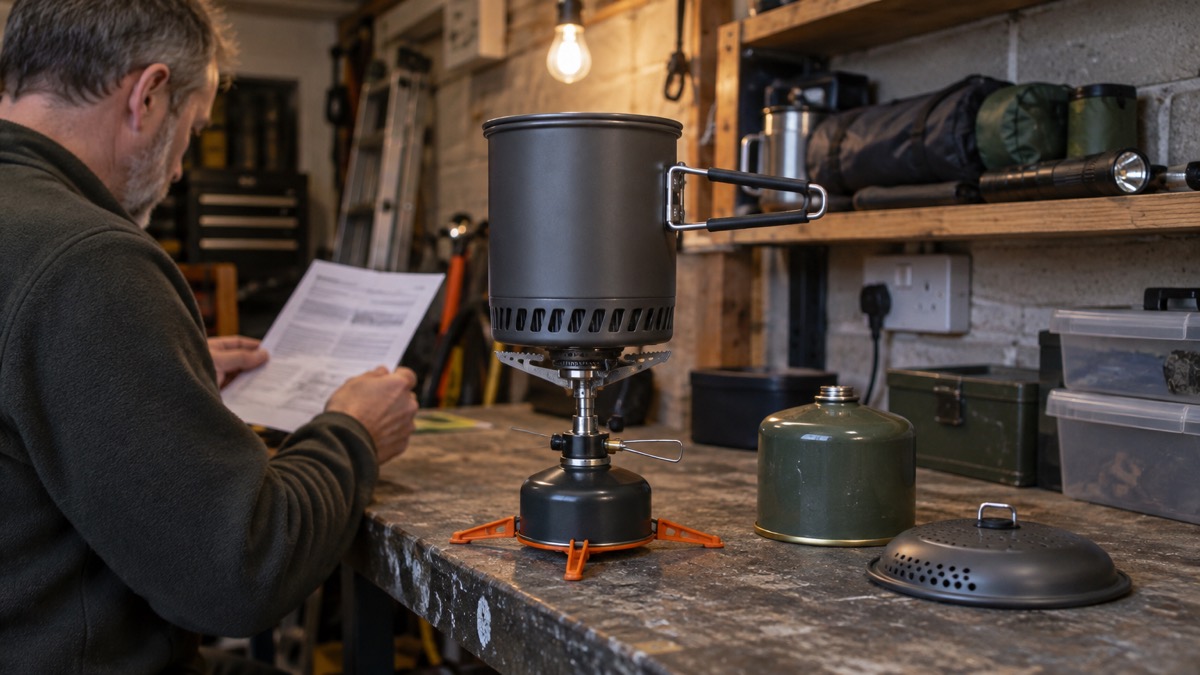
The MSR Reactor is a canister gas stove sold as a system: a burner that sits inside a heat exchanger pot, so the pot and stove are designed as one unit. For a household preparing for power cuts, it is a way to boil water and heat food outdoors when the mains gas or electricity has failed. The 1.7 litre system boils 1 litre of water in 3 minutes on MSR IsoPro fuel1.
Before anything else, check the pot. MSR Trail Lite and Reactor camping cooking pots were recalled on 25 March 2024 because the pot handle can come loose or disengage and spill hot contents on the user2. If your pot is affected, stop using it and contact Cascade Designs for a free replacement handle or lifter2. The company later decided to replace the handles of all pots without proof of purchase, so a missing receipt does not exclude you2.
This page covers what the stove does in an emergency, its specifications, which fuel it takes, how to clear water from the burner, how to store it, and where to get support. It does not give a price, and it does not rank the Reactor against other stoves.
The pot handle recall and what owners should do
The recall was notified by the Office for Product Safety and Standards on 25 March 2024 under reference 2402-0314. It covers MSR Trail Lite and Reactor camping cooking pots, a variety of cooking pots and stoves designed for camping, sold individually and as part of sets2. The hazard stated is that the pot handle of some cook pots can come loose or disengaged, spilling the contents on the user, and the notice describes this as presenting a risk of burns2.
The action the notice asks for is clear: affected consumers should immediately stop using the recalled camping cooking pots and contact Cascade Designs for a free replacement pot handle or lifter that is compatible with the affected pot2. On 24 October 2024 the notice was updated: as a precautionary measure, the company decided to replace the handles of all pots without proof of purchase2. That matters for a household that bought a stove years ago, or was given one, and no longer has the receipt.
A loose handle on a pan of boiling water is a scald hazard, and the fire and rescue service's general kitchen advice applies just as much to a stove in the garden as to a hob indoors: turn saucepan handles away from the edge so they cannot be knocked3. The NHS burns guidance is blunt about hot pans leading to bad burns4. If a burn does happen, the first aid advice is to stop the burning process first5.
The maker's own account adds context. A reviewer's note on the cookware page describes the original pot handle as prone to popping off, making for a serious boiled water burn risk, and says the new Reactor 1.7 litre pot resolved the issue while remaining the same pot otherwise6. Treat that as the maker's description of its own product history, not as an official finding.
What the Reactor does for a household in an emergency
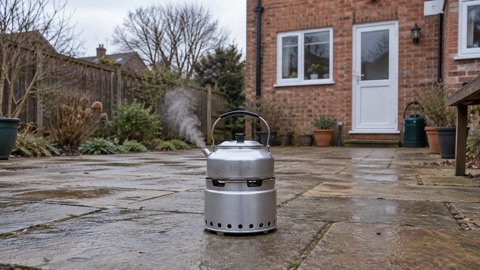
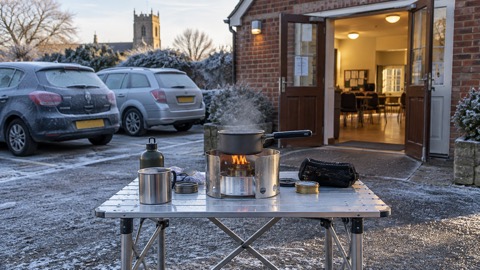
The Reactor is a boiling and reheating tool, not a kitchen. In a power cut or a gas failure it lets you boil water for drinks, rehydrate dried food, and heat a simple meal outdoors, using a fuel canister rather than mains energy. The maker describes the 1.7 litre system as an all-round performer with the capacity to boil water and melt snow fast for two or more people, and the 2.5 litre system as boiling enough for five freeze-dried meals at once or serving as a snow-melting unit for two to three people1.
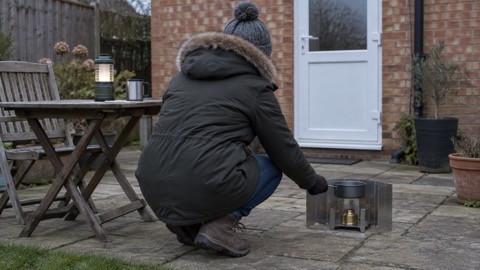
That framing tells you where it fits a household plan. It is a backup for hot water and hot food, not a substitute for a proper indoor cooking appliance, and it should be used outside. The heat exchanger completely encloses the radiant burner head, which the maker says virtually eliminates the effects of wind and so maintains boil times and saves fuel1. In a British winter, with wind and sleet, that matters: a sheltered flame is a shorter wait and less fuel burned.
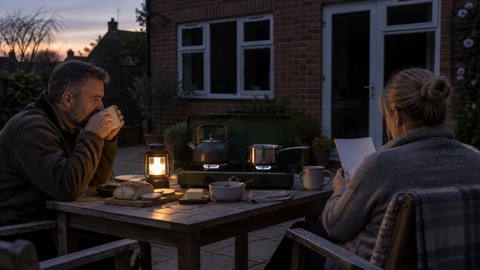
It also sits alongside the other reasons a household loses its normal cooking. Some traditional multi-rate electricity meters on the Radio Teleswitch Service were designed to support homes using electricity for heating and hot water, and the switch-off may mean heating and hot water stop functioning as normal7. A stove that needs no mains supply is one way to keep a hot drink and a hot meal going while that is sorted out.
The Reactor is made in the USA of US and imported materials1. That does not change what it does in an emergency, but it tells you it is a long-established product with a user base.
Specifications: the three Reactor systems side by side
MSR sells the Reactor as three systems, differing mainly in pot volume. The maker's figures are set out below; where a figure is not given for a system, it is not stated.
| Specification | 1.0 litre system | 1.7 litre system | 2.5 litre system |
|---|---|---|---|
| Pot volume | 1.0 litre1 | 1.7 litres1 | 2.5 litres1 |
| Boil time per litre (MSR IsoPro) | 3.5 minutes1 | 3 minutes1 | 3 minutes1 |
| Packaged weight | 0.43 kg (15.2 oz)1 | 0.50 kg (1 lb 1 oz)1 | 0.62 kg (1 lb 5 oz)1 |
| Minimum weight | 0.42 kg (14.9 oz)1 | 0.49 kg (1 lb 1 oz)1 | 0.61 kg (1 lb 5 oz)1 |
| Packed size | not stated | 13.5 x 16.8 cm1 | not stated |
| Nesting | nests optimally with the smaller-diameter 4 oz canisters, sold separately1 | pot nests with the stove and an 8 oz IsoPro canister1 | pot nests with the stove and an 8 oz IsoPro canister1 |
| Maker's suggested use | trips with 1 to 2 people, or where weight and space are at a premium1 | all-round performer for two or more1 | five freeze-dried meals at once, or snow melting for 2 to 3 people1 |
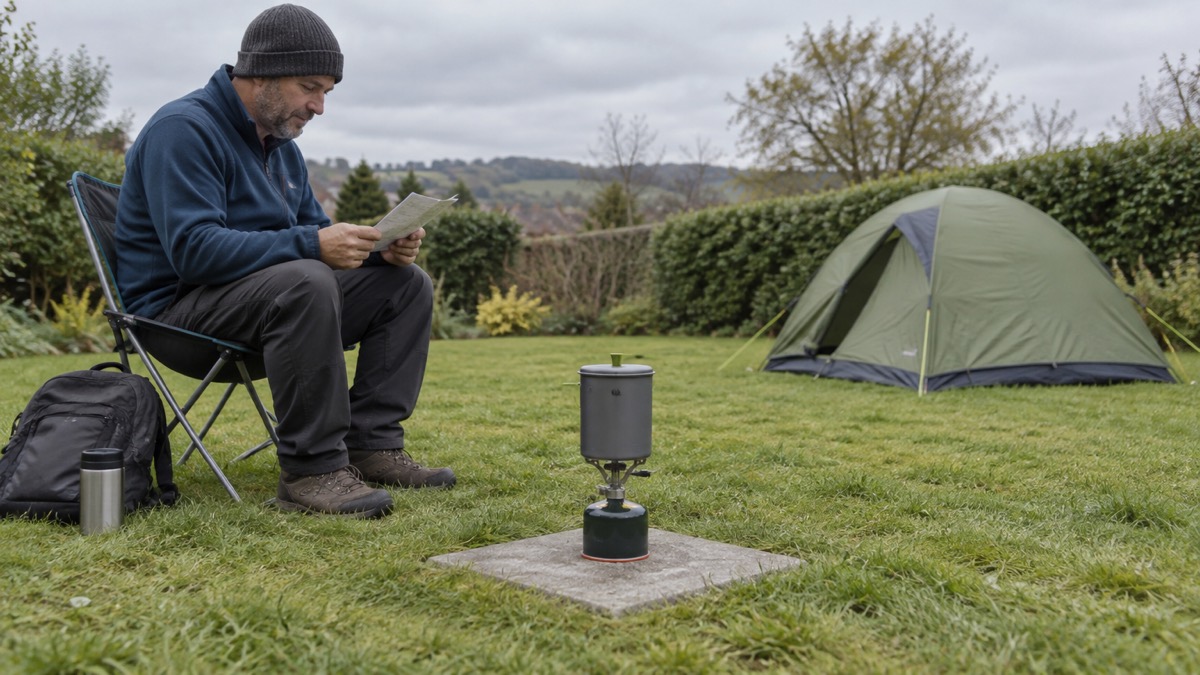
Across all variants the maker gives 2.8 litres boiled per 1 oz of fuel on MSR IsoPro, and states that the system can boil 0.5 litre of water in just 1.5 minutes in lab tests1. Lab figures are not the same as a windy evening in a back garden, so plan on the per-litre figures rather than the best case.
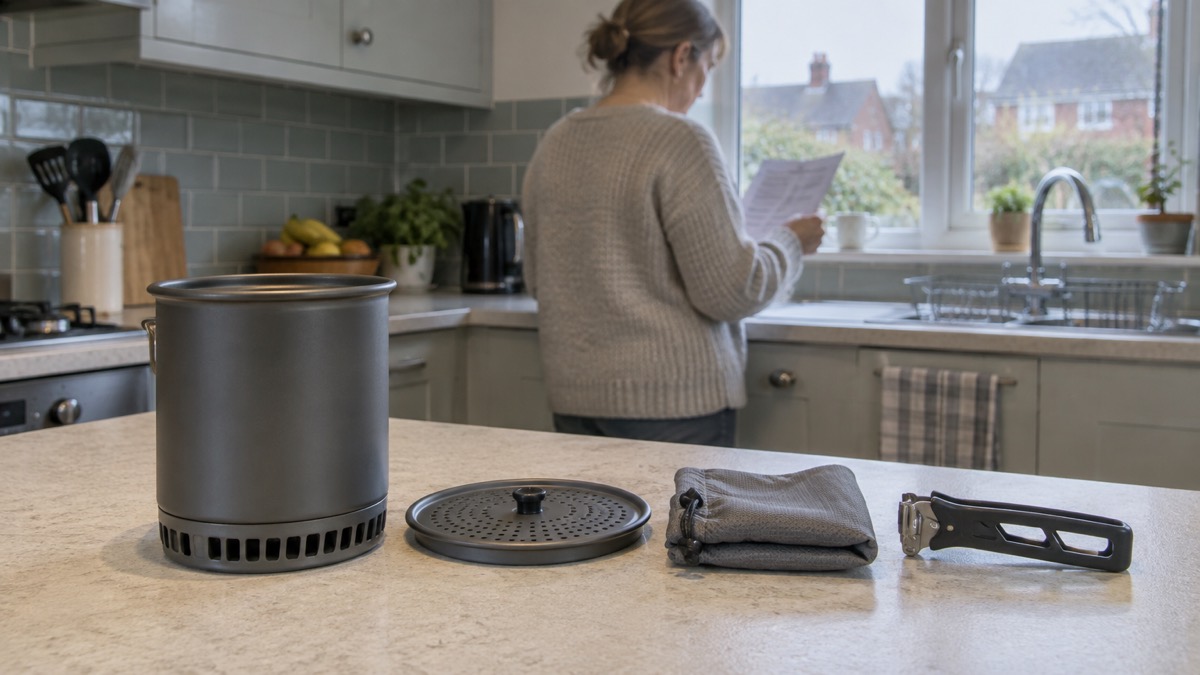
Every system includes the Reactor pot and stove, a BPA-free strainer lid, a PackTowl pot protector and a folding, locking handle1. The cookware is compatible with the MSR Reactor Stove only6.
Fuel: threaded, self-sealing canisters only
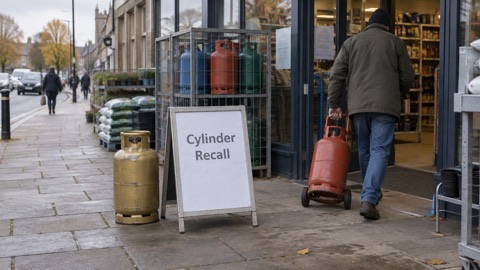
The Reactor will only accept threaded, self-sealing canisters1. That is the single most important compatibility fact for a household buying fuel in advance: unthreaded or pierceable cartridges will not fit, and forcing one is not an option. The same restriction applies across MSR's canister stoves, including the PocketRocket and WindPro1.
For best results with canister fuel, MSR says to always burn MSR IsoPro fuel canisters1. The boil times and fuel yields quoted on this page are the maker's figures for that fuel, so a different canister may give different results. The maker does not state a shelf life for canisters on these pages, so buy what you will use and rotate it rather than stockpiling indefinitely.
If you already own other MSR stoves, note that the multi-fuel models such as the XGK, DragonFly and WhisperLite Internationale can run on kerosene using the "k" jet included with the stove10. That is a different fuel system from the Reactor and does not change what the Reactor accepts.
If water or snow gets inside the burner head
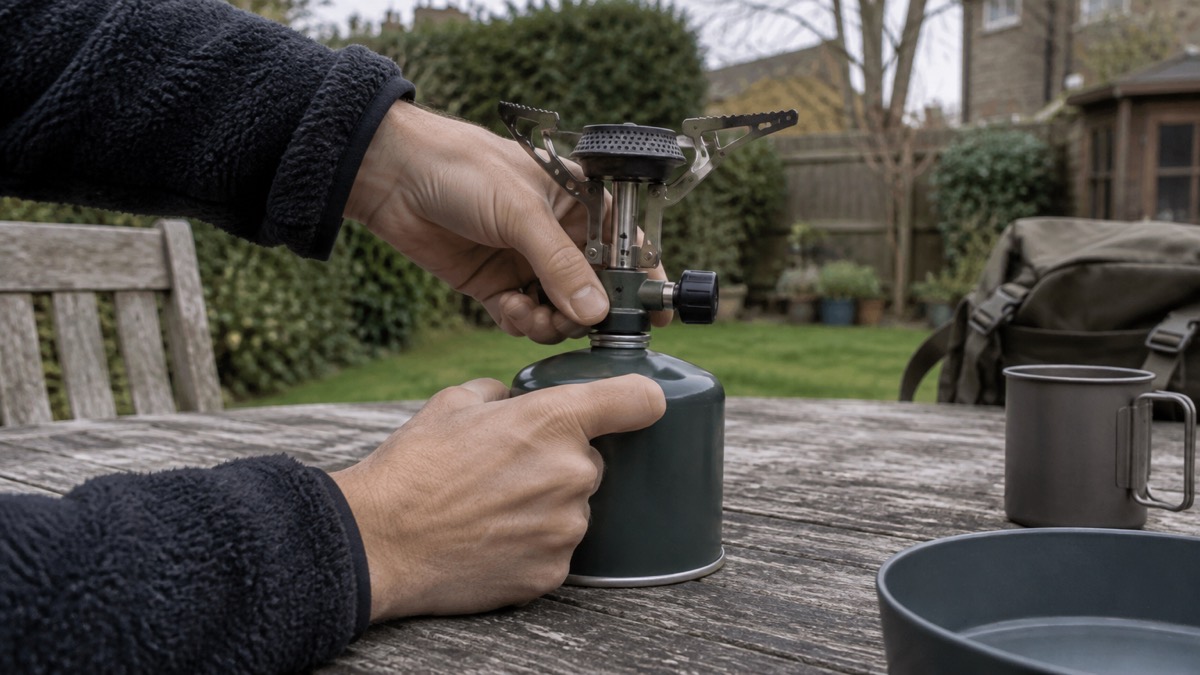
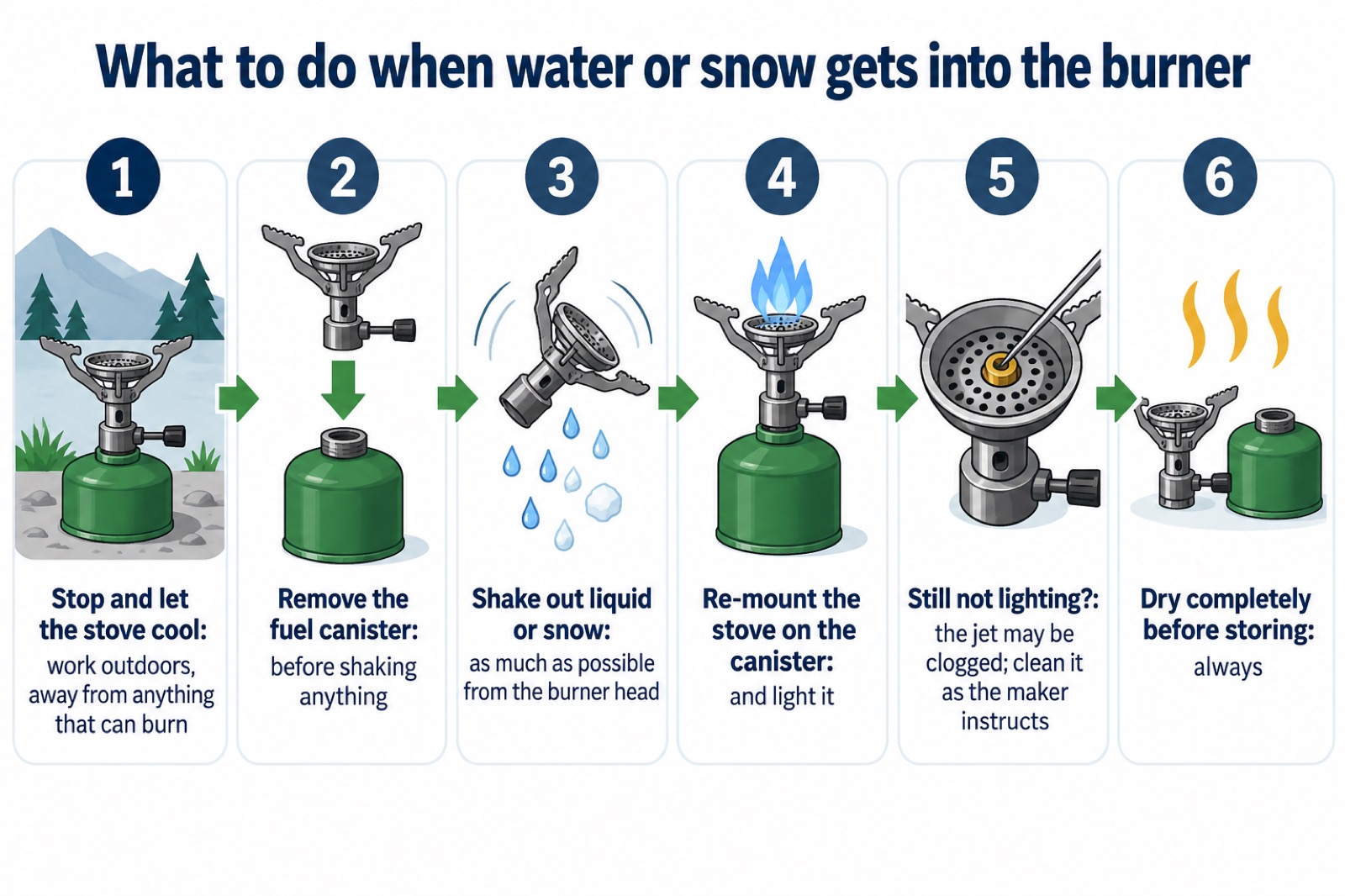
Water or snow in the burner is a common way for a canister stove to stop working in bad weather. MSR's instruction is specific: remove the fuel canister and simply shake out as much liquid or snow as possible, re-mount the stove on the canister and light it1. The same instruction appears in the maker's support pages9.
Note the order. The canister comes off first, before you shake anything. Then the stove goes back on the canister and is lit. Do not shake a stove with a canister attached, and keep the fuel away from any flame while you are working.
If the stove still will not light after the burner is clear, the maker says the most common reason is a clogged jet. Owners of shaker jet stoves should shake the stove vigorously up and down; owners of non-shaker jet stoves should use the jet cleaning wire provided with the stove9. That is a maker's troubleshooting step for its own product, and it is worth doing at home in daylight before an emergency rather than for the first time in the dark.
Using it safely: burns, carbon monoxide and ventilation
A canister stove is a fuel-burning appliance, and the fire and rescue services treat all of them the same way. Fuel-burning appliances such as stoves, fires, boilers and water heaters can produce carbon monoxide if they are not installed or maintained correctly, if flues and chimneys are not properly maintained, or if vents are blocked12. The risk of carbon monoxide poisoning increases in winter as households use more indoor heaters, gas appliances and solid fuel burners13. The Met Office winter checklist includes getting the boiler serviced, which is the same principle of keeping fuel-burning equipment in order14.
The practical rules for the Reactor follow from that:
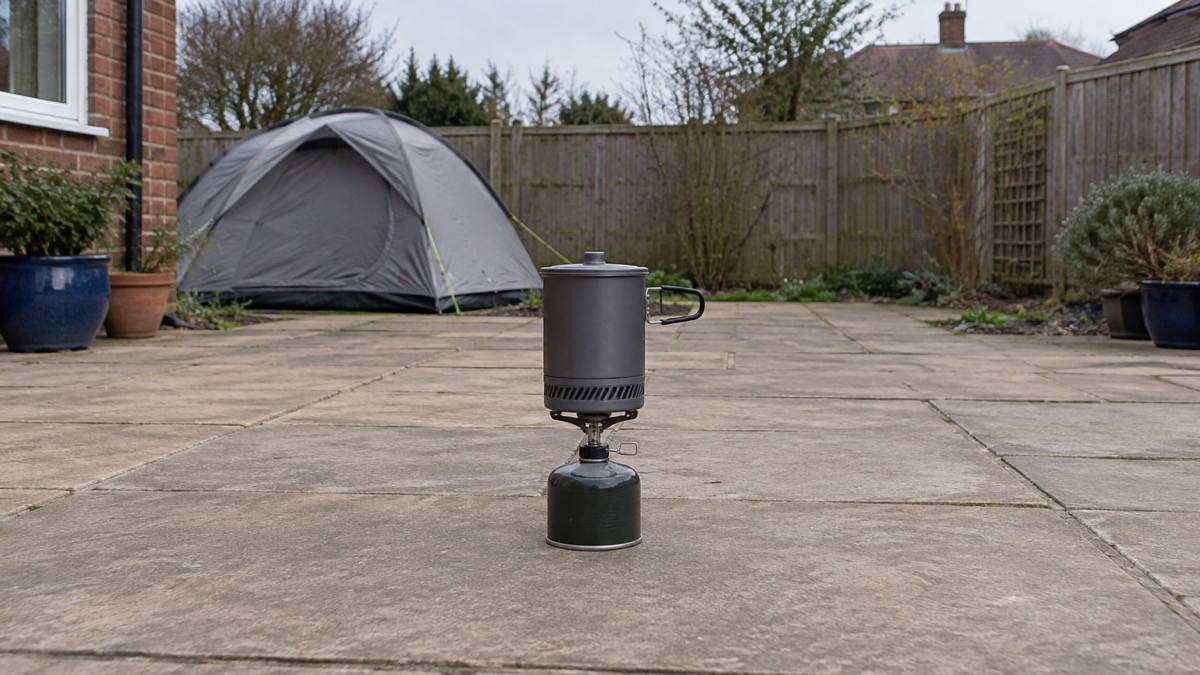
- Use it outdoors. It is a camping stove, and the maker's instructions are written for outdoor use.
- Never take a fuel-burning stove into a tent, a caravan or a closed room.
- Keep it on a stable, level surface so the pot cannot be knocked over.
- Let it cool before you change the canister or pack it away.
- Keep children and pets clear while it is lit.
The fire and rescue service in Scotland gives the same warning for heating and gas: if you light a stove or fire while the pipes of a back boiler are frozen, pressure will build up inside the boiler part and could cause an explosion, showering the room with burning fuel and flying shards of metal15. That is about a plumbed solid fuel appliance rather than a camping stove, but it is the reason a frozen heating system is not something to improvise around.
The maker's own safety note on materials is narrower. Some MSR stoves contain brass, and lead is a component of brass; should the brass be disrupted a user could potentially come into contact with the lead, though MSR states that lead levels fall below the "no significant risk" range9. The product page carries the California Proposition 65 wording that the system contains brass that can expose you to lead, a chemical known to the State of California to cause cancer and birth defects or other reproductive harm1. This is a materials disclosure, not a warning about normal use, but do not file, grind or modify brass parts.
Keeping it ready: drying, storing and checking before winter
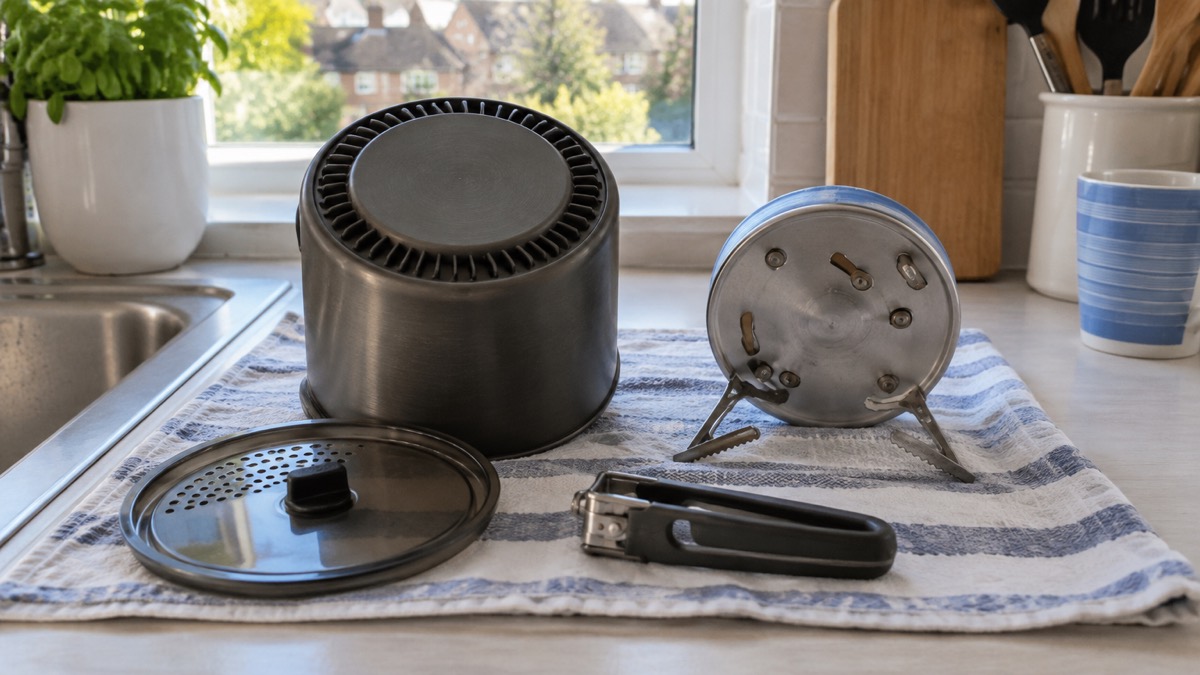
The maker's storage instruction is short and absolute: always completely dry the Reactor stove before storing it1. Water left in the burner or on the pot is how a stove fails the next time you need it. Dry it after every use, not just at the end of the season.
A sensible routine for a household that keeps the Reactor as backup kit:
- After every use: let it cool, then dry the stove completely before it goes back in its bag1.
- Before winter: check the pot handle is the replacement type and is secure, following the recall notice2.
- Check your fuel: confirm you hold threaded, self-sealing canisters, and that you have enough for the number of hot drinks and meals you plan for1.
- Check the jet: if the stove has been stored a long time, be ready to clean a clogged jet as the maker instructs9.
- Practise once: light it outdoors on a calm day so the first use in a storm is not the first use at all.
The wider household context is worth a moment. A stove is one part of a plan that also covers warmth, light and water. If your heating depends on electricity, the one warm room approach and a backup stove kit sit alongside it. If you are choosing between stove types, the guide to camping stoves for a power cut sets out the options, and gas cartridges explains valve types and cold weather behaviour. The question of whether any camping stove is safe indoors is answered plainly in is it safe to use a camping stove indoors.
Support, spares and the maker's warranty position
The route for a recalled pot is through Cascade Designs, which the recall notice names as the company to contact for a free replacement pot handle or lifter2. The maker's own pages carry the same story from the other side: the original pot handle would pop off, and the new Reactor 1.7 litre pot resolved the issue while remaining the same pot otherwise6.
For general faults, MSR's support pages cover the common ones. A stove that will not prime or light most often has a clogged jet, cleared by shaking a shaker jet stove or using the jet cleaning wire on other models9. On liquid fuel stoves, if pliers are used to remove a stuck cable, grip the weld at the tip only, because a frayed cable can damage the Fuel Tube O-ring, and damaged O-rings can result in dangerous fuel leaks, fire and personal injury9. That last point is about MSR's liquid fuel stoves rather than the Reactor, but it is the maker's own warning about how a small shortcut around fuel can go wrong.
The maker does not set out a warranty period for the Reactor on its product page, so check the terms that come with your stove and keep your proof of purchase if you have it. The recall update means a missing receipt does not block a replacement handle2, but it may matter for other claims.
MSR is the maker, and its brand page is at MSR. For the wider picture of cooking without mains power, start with heating and cooking without mains power or gas, and for the kit a household should hold before an emergency, see the emergency kit guide.
Sources (15)
- Reactor Stove Systems, MSR
- Product Recall: MSR Trail Lite and Reactor Camping Cooking Pots (2402-0314), Office for Product Safety and Standards, 25 March 2024
- Burn awareness, Cheshire Fire and Rescue Service
- Spot the danger, British Red Cross
- Burns first aid, London and South East Burns Network
- Reactor Cookware, MSR
- RTS meters, National Energy Action
- The Radio Teleswitch Service switch off, Wiltshire and Swindon Prepared
- MSR Stoves FAQ, MSR
- PocketRocket Stove Kit, MSR
- MSR Proposition 65 FAQ, MSR
- Carbon monoxide safety, Mid and West Wales Fire and Rescue Service
- London Fire Brigade extreme weather winter guide, London Fire Brigade
- WeatherReady winter checklist, Met Office
- Heating and gas, Scottish Fire and Rescue Service
 Campingaz Camping Kitchen 2 CV
 Campingaz Party Grill 200
 Campingaz Party Grill 400 CV
 Optimus Gemini II Stove
 Trangia 25 Large Stove
 Trangia 27 Small Stove
 Trangia Triangel Stove
 Trangia Mini Spirit Stove
 Flogas Gold Butane Cylinder
 Calor 4.5kg Butane Cylinder
 MSR Trail Lite Pot
 MSR PocketRocket Stove Kit