MSR is an outdoor equipment maker whose camping stoves, cook pots, water filters and shelters are bought by walkers and campers, and increasingly by households who want a way to cook, drink and stay warm when the mains fail. For a UK household preparing for a power cut, storm or flood, the useful parts of the range are simple: a stove that boils water outdoors, a filter that makes collected water safer to drink, and shelter and blankets for when heating is lost.
The single most important thing to know is where this kit may be used. Fire and rescue services are clear that camping stoves, portable barbecues, lit charcoal and generators must never be used in an enclosed space, because they are designed for outdoor use only and can produce poisonous carbon monoxide1. A stove is a tool for the garden or a well-ventilated outdoor spot, not the kitchen or a tent.
Everything else follows from that: choose a stove that suits how you will cook outdoors, store fuel within the legal limits and away from the house, keep filters clean and unfrozen, and check the recall pages before you rely on a product in an emergency.
What MSR makes for UK households
MSR's range is built for the outdoors, and that is exactly the context in which it is useful at home. When the power goes off, the things a household needs are a way to heat water and cook a simple meal without mains electricity, a way to make stored or collected water safer to drink, and something to keep people warm if the heating fails. MSR makes kit in each of those areas.
The products most relevant to a household plan are the camping stoves and cook systems, the water filters and purifiers, and the tents and shelters. Each has a page on this site setting out what it does and how to use it safely, and each sits inside a wider guide to that part of emergency planning.
| Kit type | What it does for a household | Where to read more |
|---|---|---|
| Camping stoves and cook systems | Boil water and cook simple food outdoors when the power is off | MSR Reactor Stove, MSR PocketRocket Stove Kit |
| Cook pots | Hold the food and water being heated, and pack away with the stove | MSR Trail Lite Pot |
| Water filters and purifiers | Make collected or stored water safer to drink | Water in an Emergency |
| Tents and shelter | Give a warm, dry place to sit or sleep if the home is damaged or cold | Emergency Kit |
The wider guides are the place to start if you are building a plan from scratch: Heating and Cooking Without Mains Power or Gas covers the whole question of cooking when the mains fail, and Getting Started sets out how to build a household plan around kit like this.
Camping stoves: cooking when the power is off
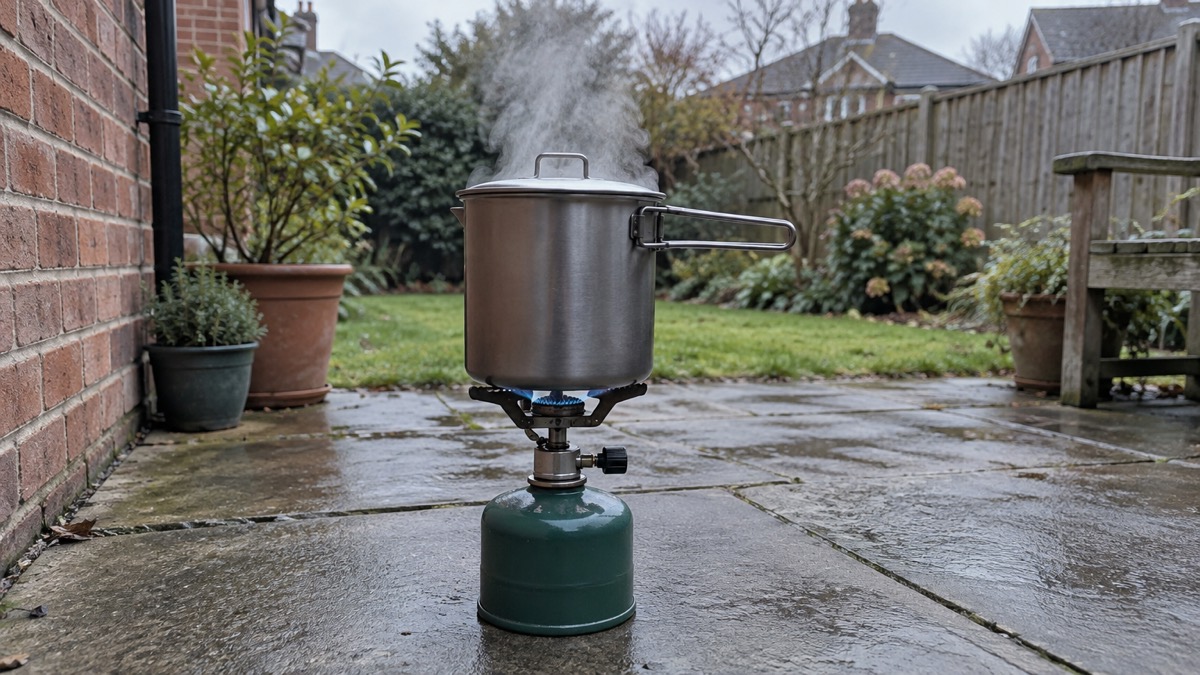
A camping stove is one of the simplest ways to get a hot meal and a hot drink during a power cut. Official food safety guidance for power cuts says you can cook food and heat water using a camping stove, barbecue or bottled gas stove, checking the manufacturer's instructions for safe use7. That is the permission a household needs, and it comes with a condition: the stove must be used as its maker intended, which for MSR stoves means outdoors.
The MSR Reactor Stove System is the maker's integrated stove and pot system. The maker lists the components included with all systems as the Reactor Pot and Stove, a BPA-free strainer lid, a PackTowl pot protector, and a folding and locking handle5. The 1.7 litre version packs down to 13.5 x 16.8 cm, and the system is made in the USA of US and imported materials5. For a household, the integrated design matters because the pot and stove are matched: there is less to assemble in the dark and less to go wrong.
Cooking on a camping stove takes longer than a domestic hob, and official guidance warns that because these appliances can take longer than usual, you need to make sure food is steaming hot and cooked all the way through7. Plan for that: allow more time, keep the lid on, and check that meat and reheated food are hot right through rather than merely warm.
Using an MSR stove safely
The maker's own instructions for the Reactor are the place to start. If water or snow gets inside the burner head, remove the fuel canister and shake out as much liquid or snow as possible, re-mount the stove and light it; always completely dry the Reactor stove before storing it5. A wet burner head is a common reason a stove fails to light, and drying it properly before storage prevents the problem recurring.
Stability is the other basic rule. Northern Ireland fire and rescue guidance on camping safety says you should make sure cooking appliances are stable and cannot be knocked over easily8. Set the stove on firm, level ground, away from tent fabric, dry grass and anything that could catch, and keep children and pets back while it is lit.
The general principle fire services apply to any fuel-burning appliance is to follow the manufacturer's guidance for safe use and maintenance, and to speak to a qualified professional if you are unsure9. For a camping stove that means the maker's manual, not guesswork.
A specific hazard has affected MSR cookware. A 2024 recall of MSR Trail and Reactor camping pots warned of a risk of burns because the pot handle of some cook pots can come loose or disengage, spilling the contents on the user10. Check whether your pot is affected before you use it, and see the recall section below.
Where a camping stove must never be used
This is the section to read twice. The dangers of using a fuel-burning stove in the wrong place are serious and well documented, and every fire and rescue service in the UK gives the same advice.
Humberside Fire and Rescue Service states that to avoid hazardous carbon monoxide exposures, fuel-burning equipment should never be used inside a tent, camper or other enclosed shelter11. Its list of fuel-burning equipment covers camping stoves, camping heaters, lanterns, charcoal grills and disposable barbecues11. Cheshire Fire and Rescue Service adds that cooking appliances should never be used inside small tents12.
The same rule applies indoors. During a power cut, fire and rescue guidance says never use a camping stove, portable barbecue, lit charcoal or generator in an enclosed space, as they are designed for outdoor use only and can produce poisonous carbon monoxide1. A garage, a conservatory, a porch or a shed with the door shut all count as enclosed spaces.
| Place | Can a camping stove be used? | Why |
|---|---|---|
| Garden or other outdoor spot, well ventilated | Yes, following the maker's instructions | Designed for outdoor use1 |
| Inside a tent or small tent | No | Risk of carbon monoxide and fire12 |
| Camper or other enclosed shelter | No | Risk of carbon monoxide11 |
| Kitchen, garage, shed or conservatory | No | Enclosed space, carbon monoxide risk1 |
Smoking inside a tent is also advised against by Northern Ireland fire and rescue guidance8, for the same reason: a flame or ember inside fabric is a fire risk. If the weather is too bad to cook outside, the safe answer is a cold meal, not a stove indoors.
Water filters and purifiers: making water safer to drink
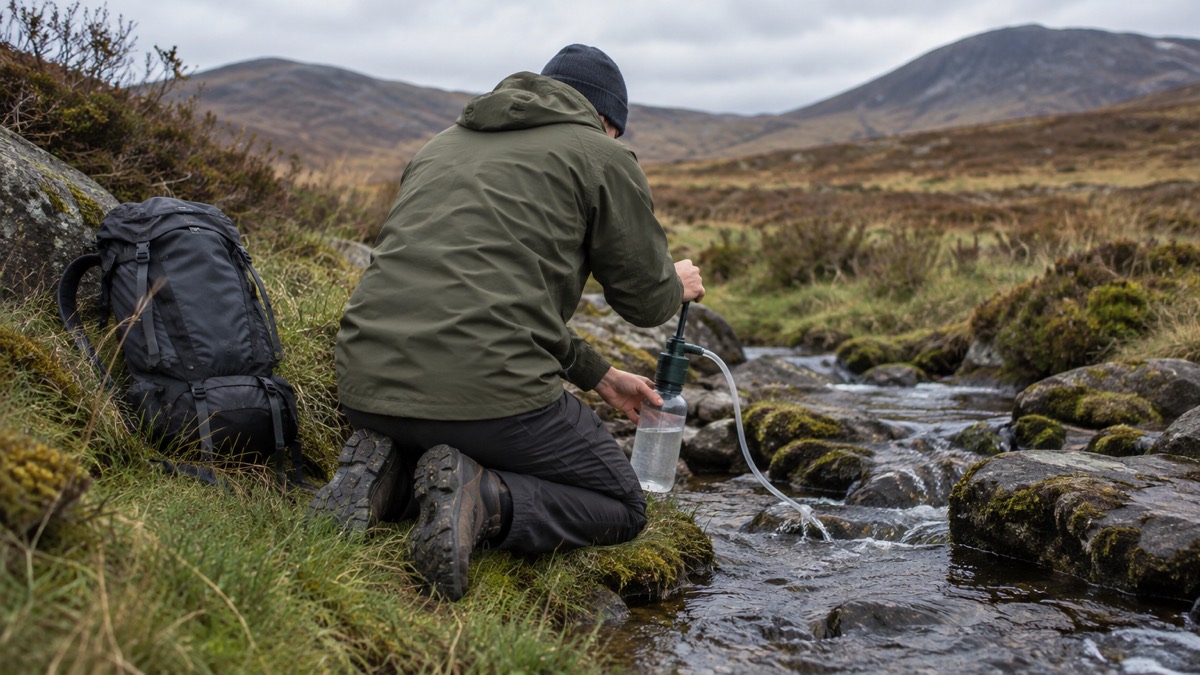
Water is the first thing to sort out in an emergency, and a filter is one way to make collected or stored water more palatable and safer. It helps to understand what a filter can and cannot do. Scottish drinking water guidance explains that chlorine is added to the water to disinfect it and keep it safe to drink13. Some domestic water filters remove chlorine, and the guidance is clear that if consumers choose to use these, it is important that they are maintained in accordance with manufacturers' instructions to remain safe to use13.
That principle carries straight over to a camping filter kept for emergencies. A filter is only as good as its maintenance: follow the maker's instructions for priming, cleaning and replacing the cartridge, and do not assume a filter that has sat unused for years will perform as it did when new.
For stored water, the Drinking Water Inspectorate advises checking the instructions supplied with the tank, as this should contain details of how to maintain and clean it14. The same discipline applies to any container you keep water in for an emergency: clean it, cover it, and follow the maker's guidance.
The wider guide to Water in an Emergency sets out how much to store and how to treat water when the supply is interrupted. A filter is a useful addition to that plan, not a replacement for stored water.
Looking after a water filter in storage
A filter that is stored badly can fail when you need it. The two risks that matter most for a household are a cartridge that has passed its shelf life and a filter element that has been damaged by frost.
On shelf life, one maker of replacement cartridges states that its standard filter cartridge has a shelf life of 3 to 5 years from the date of purchase15. That is a useful benchmark for how to date and rotate a filter, but the figure is that maker's for its own cartridge: check the instructions for your own filter, because replacement schedules differ between models.
On frost, the safe approach is to keep filters indoors, away from unheated sheds and garages in winter, and to check the maker's manual before using a filter that has been stored somewhere cold. The maker of the Lifeventure Water Filter Purifier Soft Flask recommends protecting the filter cartridge in freezing conditions by keeping the filter bottle full of water and insulating it from the cold13.
A simple storage routine keeps a filter ready:
- Keep the maker's instructions with the filter, in a bag or box, so the maintenance schedule is to hand.
- Note the date of purchase on the box, so you can judge shelf life against the maker's figure15.
- Store it indoors, dry, and away from frost.
- Check the cartridge and seals before the emergency season, not during it.
Tents and shelter for an emergency
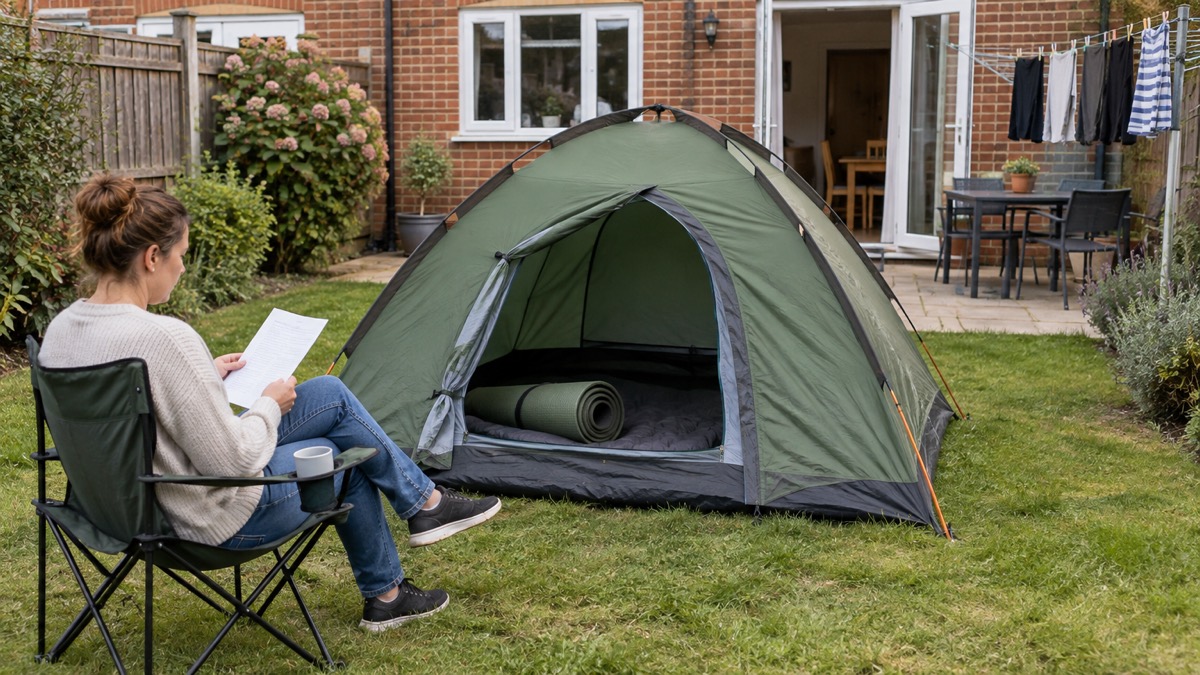
Shelter is part of the emergency kit, and official guidance names blankets specifically. The Scottish Government's emergency kit guidance says a home emergency kit should include blankets16, and that a car emergency kit should include a blanket16. A tent is not a substitute for a warm home, but it can give a dry, enclosed place to sit or sleep if a room is damaged, if windows are broken in a storm, or if a household needs to move out to the garden for a period.
MSR's tents are built for camping, and the same rules apply to using one at home as to using one on a hillside: pitch it on level ground, keep it clear of anything that could fall on it, and never light a stove or any other flame inside it11. A tent is shelter, not a cooking space.
For most households, blankets and warm clothing come first, and a tent is a useful extra for specific situations: a storm that takes out windows, a flood that makes a ground floor unusable, or a garden shelter while the house is aired. The Emergency Kit guide sets out the full list of what to keep ready.
Storing MSR kit so it works when needed
Kit that is put away wet, or stored with fuel, will let you down. The maker's instruction for the Reactor is to always completely dry the stove before storing it5. Do that every time, not just at the end of a season: a stove dried and packed away is a stove that will light when the power fails.
Fuel needs more care than the stove. Fire and rescue guidance says you may keep up to 30 litres of petrol in a suitable container in a garage or shed4, and that it should be stored in suitable portable metal or plastic containers, one demountable fuel tank, or a combination, as long as no more than 30 litres is kept2. Containers should be stored in a garage or shed away from other buildings, in a well-ventilated area away from sources of ignition such as electrical equipment and naked flames3. Never keep petrol inside your house or near a source of ignition4, and do not smoke near where it is stored2.
For gas, Fire Scotland advises storing spare cylinders outside where possible17. A regional resilience guide is blunt about the risk: petrol is dangerous, and should be stored away from any means of ignition18. It also gives the same 30 litre limit for a shed or garage, in a suitable container only18.
A storage routine for MSR kit:
- Dry the stove completely before packing it away5.
- Keep fuel in a suitable container in a garage or shed, never indoors3.
- Store spare gas cylinders outside where possible17.
- Keep the maker's instructions and any registration paperwork with the kit.
- Check the recall pages before the winter season, not during a power cut6.
Safety notices and recalls
Before you rely on any appliance in an emergency, check whether it has been recalled. Fire and rescue guidance says you should check your appliances are not subject to a product recall by checking the Office for Product Safety and Standards alerts and recalls page6.
MSR has had one recall relevant to households. On 25 March 2024, the Office for Product Safety and Standards notified a recall of MSR Trail and Reactor camping cooking pots, a variety of cooking pots and stoves designed for camping and sold individually and as part of sets10. The hazard was a risk of burns, as the pot handle of some cook pots can come loose or disengage, spilling the contents on the user10.
The official instruction to consumers was specific:
If you own MSR Trail or Reactor pots, check the notice and act on it. The same page is the place to check for other recalls, including camping stoves from other makers: a notice covered a Kovar Windproof Camping Stove, model K-203, a portable gas camping stove19. Checking the page takes a minute and is worth doing before the season when you would rely on the kit.
Support, spares and warranty in the UK
MSR backs its products with a warranty. The maker states that most MSR products are backed by a Limited Lifetime or 3-Year Warranty5. Keep your proof of purchase, because a warranty claim or a spare-part request will need it.
For spares, the maker's product information is the place to start: the Reactor Stove System ships with its pot, stove, strainer lid, pot protector and folding and locking handle5, so a lost or damaged part can be identified precisely when you contact the maker or the retailer. Registering an appliance helps here too: the Register My Appliance scheme exists to ensure manufacturers can contact you if a safety repair is needed6, which is exactly what you want if a recall affects your kit.
Availability is worth checking before you commit. The maker's US store listed the Reactor Stove System as out of stock in all sizes when checked on 2 November 20265, so confirm with a UK retailer that the model you want is available before building a plan around it.
For the wider picture of cooking and heating without mains power, the Heating and Cooking Without Mains Power or Gas guide covers the alternatives side by side, and Power Cuts explains what to do in the first minutes of an outage, including turning off electrical equipment, especially electric cooker hobs, while leaving on a light or radio to know when power returns1.
Sources (19)
- Power cuts, Dorset and Wiltshire Fire and Rescue Service, 2023
- Storing fuel, Devon and Somerset Fire and Rescue Service, 2026
- Domestic and non-workplace storage, Greater Manchester Fire and Rescue Service, 2026
- Fuel shortage, West Midlands Prepared, 2026
- MSR Reactor Stove Systems, MSR, 2026
- Maintain appliances and recalls, Greater Manchester Fire and Rescue Service, 2026
- Power cuts, Food Standards Scotland, 2026
- Fire and summer safety advice, nidirect, 2026
- Wood-burning stoves, Cheshire Fire and Rescue Service, 2026
- Product recall: MSR Trail and Reactor camping cooking pots, Office for Product Safety and Standards, 2024
- Barbecue safety, Humberside Fire and Rescue Service, 2026
- Camping safety, Cheshire Fire and Rescue Service, 2025
- Drinking water quality FAQs: chlorine, Drinking Water Quality Regulator for Scotland, 2026
- Water storage tanks and cisterns, Drinking Water Inspectorate, 2026
- LifeSaver replacement cartridge, Icon LifeSaver, 2026
- Emergency kit, Ready Scotland, 2026
- Heating and gas, Scottish Fire and Rescue Service, 2024
- Community Risk Register, West Midlands Local Resilience Forum, 2024
- Product safety report: Kovar Windproof Camping Stove, Office for Product Safety and Standards, 2026
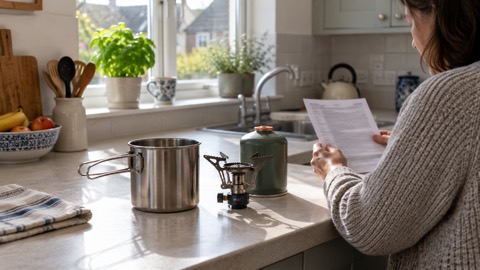 MSR Trail Lite PotSome units recalled
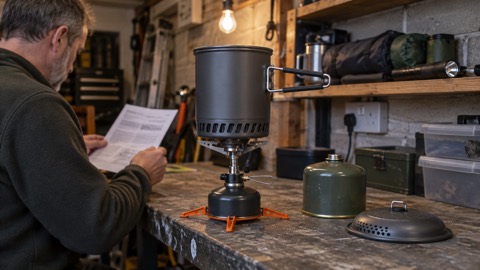 MSR Reactor Stove
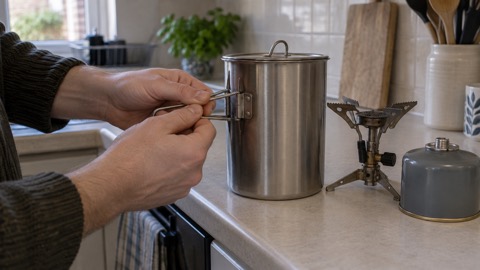 MSR PocketRocket Stove KitSome units recalled