Flogas is one of the UK's best-known suppliers of LPG, the bottled and tanked gas used by households that are off the mains gas network, and by people who keep a gas cooker or heater as a standby when the mains fails. The company states that it has more LPG depots across the UK than any other supplier, and its own material describes a track record of supplying LPG to customers all over the UK for over 35 years, with other pages saying over 40 years. For a household building an emergency plan, that matters less as a boast than as a practical point: a long-established supplier with a wide depot network is one you can reasonably expect to still be there, and still answer the phone, when a storm or a power cut hits.
If you are a Flogas customer, or you keep Flogas cylinders at home, there are two numbers to know before anything else. Flogas gives 0800 023 23 32 and 03457 200 100 as its emergency contact numbers, and its guidance describes the second as available 24/7 in an emergency. For general questions, support and finding a depot, the number is 0800 574 574. One range of Flogas butane cylinders was also made subject to a product recall in December 2024, which any household with a gold and red butane bottle should check, and this page covers that in full below1.
What Flogas supplies
Flogas supplies LPG, short for liquefied petroleum gas, to customers across the UK. Its own material frames this around off-grid homes: houses and other properties that have no mains gas connection and rely on delivered or bottled gas for heating, hot water and cooking. It also supplies businesses, including forklift truck users, and sells gas cylinders through retail chains and local gas dealers.
For an ordinary household, Flogas's products fall into two groups that matter for preparedness:
- Bottled gas (cylinders): butane and propane cylinders you buy or exchange at a shop or dealer, used with portable heaters, camping stoves, patio heaters and freestanding cookers. This is the form of gas most prepping households will come across, because a cylinder in the shed is a standalone reserve that works during a power cut.
- Bulk and delivered LPG: tanked gas supplied to off-grid homes on a contract, with deliveries arranged with the supplier. If your home is off-grid and heated by LPG, your preparedness questions are about delivery reliability and what happens if supply is disrupted.
If you lose your gas supply, official guidance from Essex Prepared is to contact your supplier directly, using the contact details the supplier publishes5. That is the practical reason to have Flogas's numbers written down before anything goes wrong: in a widespread event such as a storm, you do not want to be searching for a phone number with the heating off.
LPG is also worth understanding as part of a wider household plan. Gas appliances keep working through a power cut in a way electric ones do not, which is why many households keep a gas cooker or heater as a backup. Our heating and cooking without mains power guide sets out the options side by side, and our gas and heating failures guide covers what to do when a gas supply or appliance fails.
Flogas cylinders for a household reserve
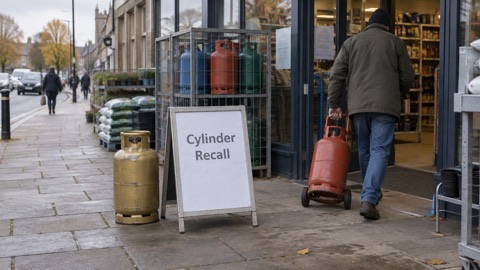
The Flogas product most households will encounter is the butane cylinder. The Flogas Gold Butane Gas Cylinder is sold as gold and red butane bottles in three sizes: 4.5 kg, 7 kg and 13 kg6. It reaches customers through retailers such as B&Q, B&M, Homebase, another local seller or a gas dealer6. Our product page for the Flogas Gold Butane Gas Cylinder covers what it does and how to use and store it safely.
In preparedness terms, a butane cylinder is a cooking and heating reserve. A portable gas cooker running from a cylinder lets a household make hot food and hot drinks through a power cut, which matters for morale as much as for warmth, and a compatible gas heater can take the edge off a cold room while the central heating is down. Butane suits indoor and warmer-season use; it vaporises less well in cold conditions, so households preparing for winter storms should think about where and when they will actually use the gas. Our emergency food guide covers what to cook without power, and our emergency lighting guide covers the rest of a power-cut kit.
Two practical points shape how a household keeps a cylinder ready:
- Buy from a source you can return to. Cylinder schemes generally work on exchange: you swap an empty bottle for a full one. Buying through a major retailer or a local dealer means you have somewhere to exchange it, and the recall below shows why keeping proof of where and when you bought a cylinder matters.
- Store it upright, outside or in a well-ventilated space, never indoors in a way that blocks escape routes. The recalled Gold butane cylinders show what can go wrong when a regulator is subjected to pressure beyond its design limit: the notification warns of leakage of joints, failure of components, or gas and flames being emitted from the appliance itself7. Our home emergencies guide covers gas leaks and carbon monoxide in detail.
The Flogas Gold Butane Gas Cylinder recall
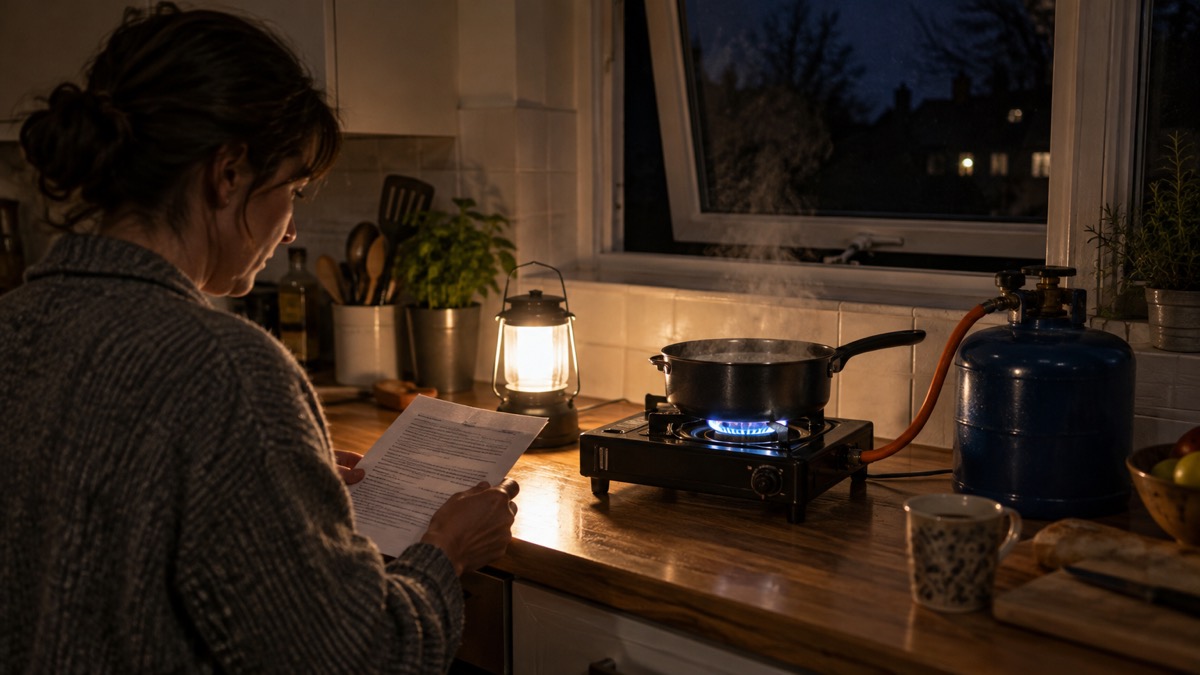
The recall exists because of a pressure fault. The official safety notice explains that the regulators are designed for a maximum inlet pressure of 7.5 bar, and that if this is exceeded it could lead to leakage of joints, failure of components, or gas or flames being emitted from the appliance itself6. The product does not meet the requirements of The Gas Appliances (Enforcement) and Miscellaneous Amendments Regulations 20186. The recall was notified by Local Authority Trading Standards1.
For a prepping household, this recall carries a lesson beyond the specific product: check your gas kit against current safety notices when you buy it and periodically afterwards. A cylinder bought as an emergency reserve may sit unused for months, and a fault that would be noticed quickly in daily use can go undetected in a reserve. Note the dates and regions above against your own purchases, and if in doubt, call Flogas on the recall line rather than testing the cylinder.
Flogas emergency numbers, and which to keep to hand
Flogas publishes two emergency contact numbers: 0800 023 23 32 and 03457 200 100, the latter described in its guidance as available 24/7 in an emergency. These are the numbers for problems with Flogas gas as a customer: a suspected problem with a cylinder or a delivery, or an urgent supply question. Keep both, because if one line is busy in a widespread incident the other may not be.
For a suspected gas leak, the number you call first is not Flogas's. It is the national gas emergency line:
| Situation | Number | Notes |
|---|---|---|
| Life-threatening emergency | 999 | Fire, injury, or any emergency4 |
| Suspected gas leak (Great Britain) | 0800 111 999 | National gas emergency line2 |
| Gas Emergency Service (Northern Ireland) | 0800 002 001 | 24 hours3 |
| Flogas emergency | 0800 023 23 32 or 03457 200 100 | Flogas's own emergency contacts, 03457 200 100 described as 24/7 |
| Flogas general enquiries | 0800 574 574 | Support, depots, cylinder questions |
| Flooding information (Scotland) | 0345 988 1188 | Floodline, for up-to-date local flooding information and advice9 |
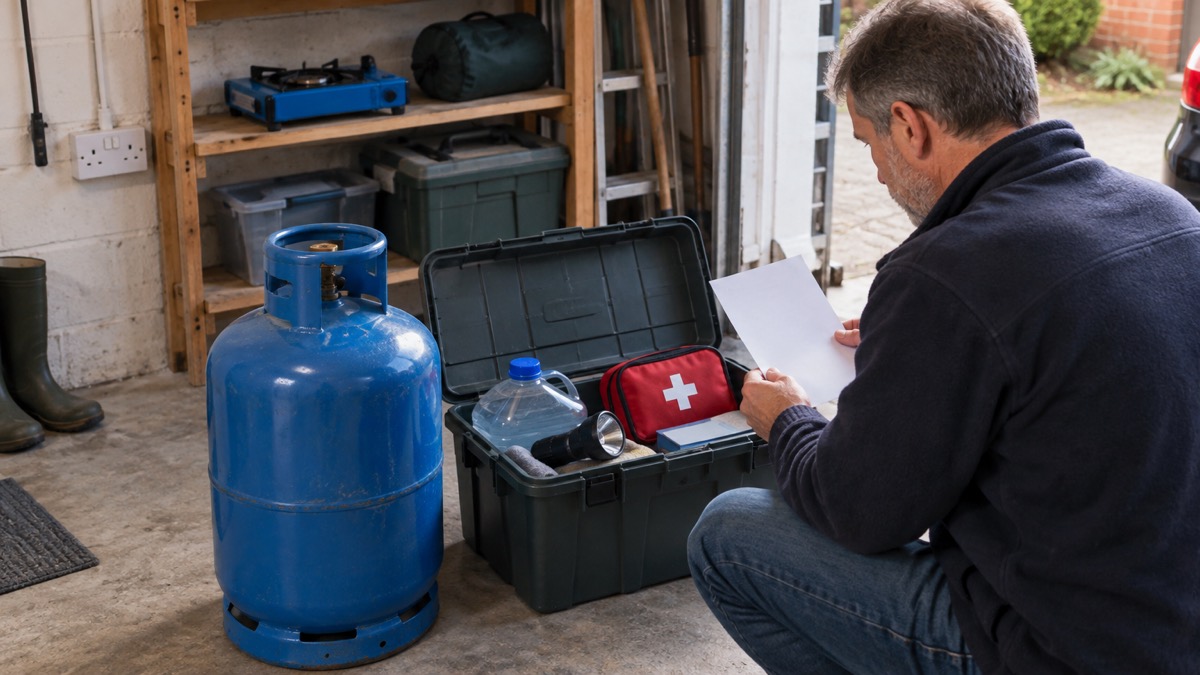
The 0800 111 999 number is given consistently by official bodies across Great Britain: Ready Scotland's emergency plan guidance lists it as the gas emergencies number2, Manchester Fire and Rescue Service tells people to call it for a safety check8, and Nottinghamshire County Council gives the same number for gas contact after flooding10. In Northern Ireland the Gas Emergency Service number is 0800 002 001, 24 hours, as given by nidirect3. If you are unsure whether a situation is an emergency, the fire and rescue services' position is plain: call 9994.
Official preparedness advice is to keep all emergency phone numbers stored in your phone and in a notebook by your telephone if you use a landline, and to consider keeping a copy in your purse or wallet11. That advice exists because power cuts and network outages take down the internet search you would otherwise rely on. Write the Flogas numbers, the gas emergency line and 999 on the same card, and put it with the rest of your emergency kit. Our staying informed guide covers keeping communications working when the usual channels fail.
Cylinders are not available online: ask by phone
Flogas cylinders are not sold through an online ordering route. To buy or exchange a cylinder, ask by phone on 0800 574 574, or go in person to a retailer or gas dealer. The Gold Butane range reaches customers through retailers such as B&Q, B&M, Homebase, another local seller or a gas dealer6, so a household's nearest source of Flogas gas may be an ordinary shop rather than a Flogas site.
For a preparedness plan, this shapes when you buy. Because you cannot simply order a cylinder online the day before a storm, treat gas as something to acquire in advance:
- Buy before the season in which you expect to need it, and exchange empties promptly, so the reserve is full when an incident arrives.
- Confirm by phone which sizes your local stockist carries, on 0800 574 574, before making a trip, particularly for the 13 kg size.
- Keep the receipt and note the purchase date, so you have the details to hand if you ever need to contact the supplier or arrange an exchange.
Forklift truck (FLT) cylinders
Flogas also supplies LPG for business uses, including forklift truck cylinders. These are not a household product and are not ordered online: enquire by phone on 0800 574 574 about FLT cylinder supply, sizes and delivery. A household that runs a smallholding, workshop or business from home and uses FLT gas should treat it like any other preparedness dependency: know the number, know the delivery lead times, and keep a spare cylinder if the equipment is essential to your livelihood.
Flogas depots across the UK
Flogas states that it has depots across the UK, more than any other LPG supplier. For a household, the depot network matters in two ways. First, it shortens the distance between you and a source of gas when you need to exchange or collect a cylinder. Second, in a widespread emergency such as a storm or flooding, a distributed network means your nearest depot may still be reachable when one regional centre is not.
To find your nearest depot and confirm what it holds, call the general enquiries line on 0800 574 574. Depot details change, so check by phone rather than relying on a remembered address, and note the depot's hours alongside its location: an emergency at night is answered by the emergency numbers, not by a depot counter.
If your area floods, be aware that gas appliances and supplies need checking before reuse. Nottinghamshire County Council's after-a-flood guidance directs households to contact the Gas Emergency Services on 0800 111 999 for gas matters after a flood10, and our flooding guide covers the full sequence of what to check before, during and after flood water enters your home.
Gas safety around LPG: what every household should know
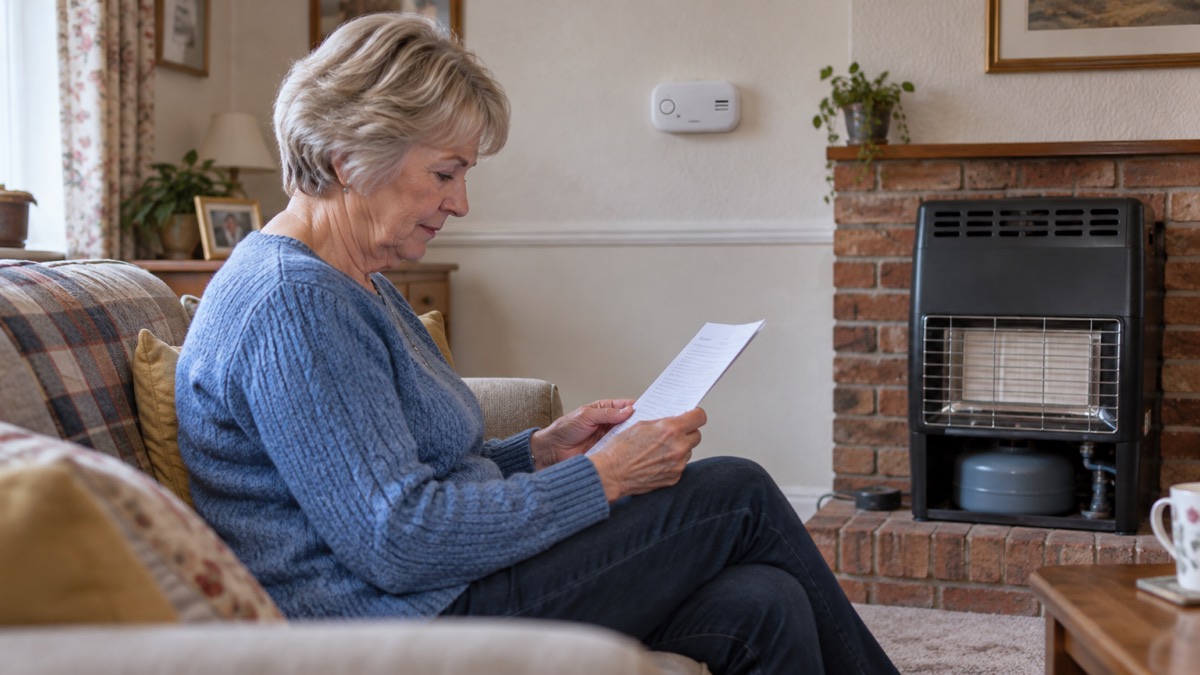
LPG is a useful emergency fuel, and it is safe when the right appliances are used correctly, but official advice is firm about the risks. The fire and rescue services and the Health and Safety Executive give the following, and it applies to any gas cylinder a household keeps:
- Never use gas appliances in a way they were not designed for. Devon and Somerset Fire and Rescue Service warns that gas appliances can cause carbon monoxide poisoning, and that a carbon monoxide alarm is essential in any home with a fuel-burning appliance12. Mid and West Wales Fire and Rescue Service gives the same warning, and lists the National Gas Emergency Service on 0800 111 999 for suspected gas leaks13.
- Have gas work done by a registered installer. The Health and Safety Executive advises consumers to check that anyone carrying out gas work is on the Gas Safe Register, and gives a freefone helpline on 0800 408 5500 as an alternative to checking online14. Argyll and Bute Council's gas safety guidance likewise directs households to the Gas Safe Register for registered engineers15.
- Ventilate any room where a gas heater or cooker is running. Carbon monoxide has no smell, and official guidance is that an audible carbon monoxide alarm, correctly placed, is the reliable warning12.
- In a leak, act on the national line first. Call 0800 111 999 in Great Britain2 or 0800 002 001 in Northern Ireland3, then your supplier.
Where Flogas fits a household plan
A gas cylinder is one part of a household's readiness, not the whole of it. Used well, it covers cooking and a degree of warmth through a power cut; it does not cover lighting, water, communications or food stores. Set against our main guides, a Flogas cylinder slots in like this:
| Need in an emergency | What covers it | Where to read more |
|---|---|---|
| Hot food and drinks without power | Gas cooker and butane cylinder | Emergency food and heating and cooking without mains |
| Warmth when heating fails | Gas heater, used with ventilation and a CO alarm | Gas and heating failures |
| Light | Torches and lanterns, not candles near gas | Emergency lighting |
| Knowing what is happening | Radio, charged phones, written contact numbers | Staying informed |
| The whole picture | A household plan and kit built in advance | Getting started |
The habit that matters most is simple: write the numbers down before you need them. Flogas's emergency lines, the national gas emergency line for your nation, and 999 belong on the same card, in your phone, and in your kit. Households that need extra support, including older, disabled or medically dependent people, should also read our extra help guide, which covers registers and services that exist specifically for them.
Sources (15)
- Product Recall: Flogas Gold Butane Gas Cylinder (2411-0181), GOV.UK, 2024-12-03
- Emergency plan: preparing for emergencies, Ready Scotland, 2026-10-29
- Strong winds and weather warning: information and advice, nidirect, 2026-10-24
- Safe4Summer: staying safe, Manchester Fire and Rescue Service, 2026-10-29
- Loss of gas and water, Essex Prepared, 2026-10-29
- Flogas Gold Butane Gas Cylinder safety notice, London Borough of Bromley, 2024-12-10
- Home fire safety, Northern Ireland Fire and Rescue Service, 2026-10-14
- Stay Fire Safe, Manchester Fire and Rescue Service, 2026-10-29
- Flooding guide for older communities | Beta | SEPA | Scottish Environment Protection Agency, Scottish Environment Protection Agency (SEPA)
- After a flood: further support, Nottinghamshire County Council, 2026-10-29
- Know the right number to call in an emergency, Lancashire Prepared, 2026-10-29
- Carbon monoxide safety at home, Devon and Somerset Fire and Rescue Service, 2026
- Carbon monoxide safety advice, Mid and West Wales Fire and Rescue Service, 2023
- Gas Safe Register check, Health and Safety Executive, 2026
- Gas safety, Argyll and Bute Council, 2026
 Flogas Gold Butane Gas CylinderSome units recalled