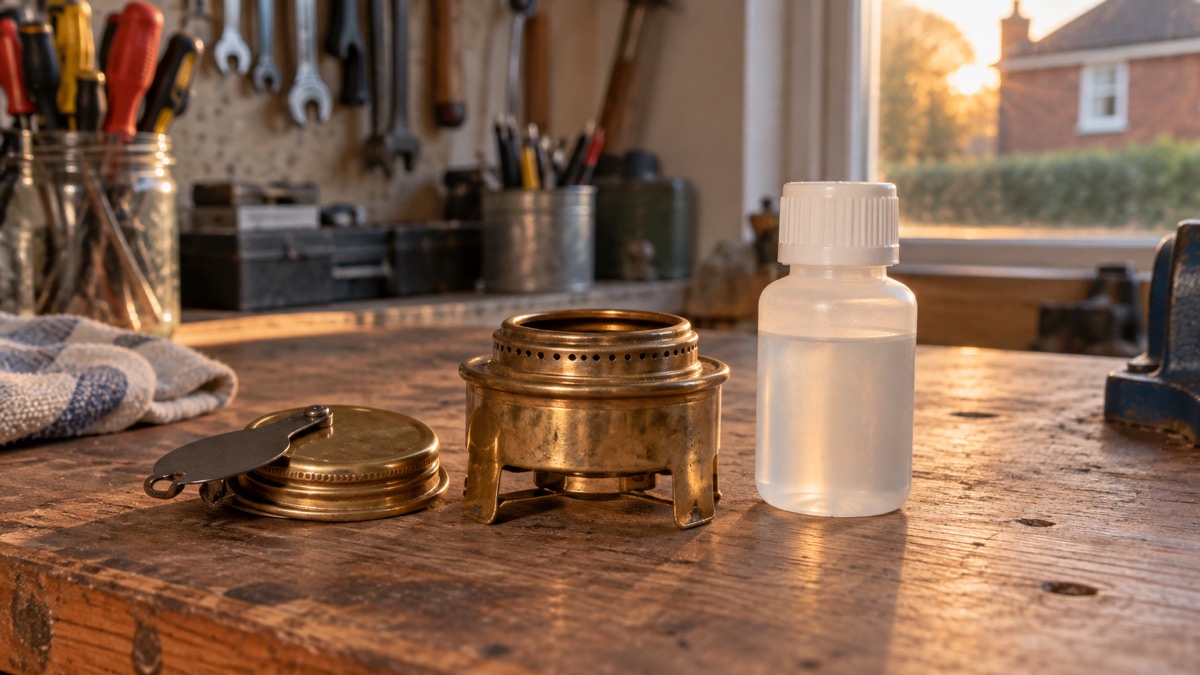
If you are weighing up a gas cartridge stove against a spirit burner stove for a power cut, the first thing to know is that neither is a heating appliance and neither should ever be used indoors. Fire and rescue services across the UK are consistent on this: a camping stove, barbecue or patio heater used inside a home, tent or caravan can cause carbon monoxide poisoning, which can kill1. The second thing is that several gas stoves and cylinders sold in the UK have been recalled, so check yours against the official notices before you rely on it3.
Used outdoors, both types will boil a pan and heat water when the mains gas or electricity is off. A gas cartridge stove lights quickly and is simple to control. A spirit burner stove, such as a Trangia, runs on liquid alcohol, has no pressurised cartridge and is made in Sweden6. Which suits your household depends on where you can safely use it and how much fuel you want to store.
This page sets out the recalls to check, the indoor ban and why it exists, what to do if you smell gas at home, and how to get support for a spirit burner stove. For the wider picture of cooking without mains power, start with Heating and Cooking Without Mains Power or Gas.
| Gas cartridge stove | Spirit burner stove | |
|---|---|---|
| Fuel | Pressurised gas cartridge5 | Liquid alcohol, such as ethanol6 |
| Complexity | Cartridge, and on some models a hose and regulator3 | Burner with a wick, no cartridge6 |
| Recall history | Several models recalled, including Vango, OEX and Optimus Gemini3 | No recall listed for the Trangia spirit burner in this guidance6 |
| Indoor use | Never1 | Never1 |
Check your stove and cylinder against the recalls first
Before you buy, borrow or unpack a backup stove, find its make and model and check it against the official recall notices on GOV.UK. A recall is issued when a product presents a risk that cannot be managed by ordinary care, and the notice tells you exactly what to do. The Office for Product Safety and Standards (OPSS) publishes these notices, and they name the brand, the model or barcode, and the action required7.
The recalls that matter most for a household stove are set out below. If your model matches, stop using it and follow the notice. Do not assume a stove is fine because it looks undamaged: the Vango and OEX recalls were issued because a hose can degrade over time in a way you may not see3.
| Product | Recall date | The problem | What to do |
|---|---|---|---|
| Vango folding gas stoves (two styles with hose) | 6 June 2024 | Gas hose may degrade over time, leading to a leak and possible hose ignition3 | Stop using immediately and return to place of purchase, or to Go Outdoors, Blacks, Millets, Fishing Republic or Ultimate Outdoors3 |
| OEX folding gas stoves (two styles with hose) | 6 June 2024 | Same hose degradation risk4 | Recalled from end users and withdrawn from the market4 |
| Optimus Gemini Portable 2-Burner Gas Stove, model 8020872 | 29 to 30 September 2022 | Gas regulator burr can tear the seal and cause an ignitable gas leak5 | Stop using and return to place of purchase for a refund7 |
| Flogas Gold Butane Gas Cylinder, 4.5 kg, 7 kg and 13 kg | 10 December 2024 | Filled with a butane and propane mixture outside BS4250 parameters8 | Stop using, do not connect, disconnect if connected, store outdoors, contact Flogas for collection and free replacement8 |
The Vango notice is blunt about the risk: the stoves present a "risk of fire, explosion and burns" because the hose may degrade3. The Optimus Gemini recall was notified by OPSS and covered a recall from end users and withdrawal from the market5. The Flogas recall covered cylinders sold between 6 and 22 November 20248.
There have been other recalls in the camping cooking market. MSR Trail Lite and Reactor camping cooking pots were recalled in March 2024, with specific barcodes and SKUs listed, presenting a risk of burns11. The lesson is the same: check the model and barcode, not just the brand.
Folding gas stoves recalled over hose damage and fire risk
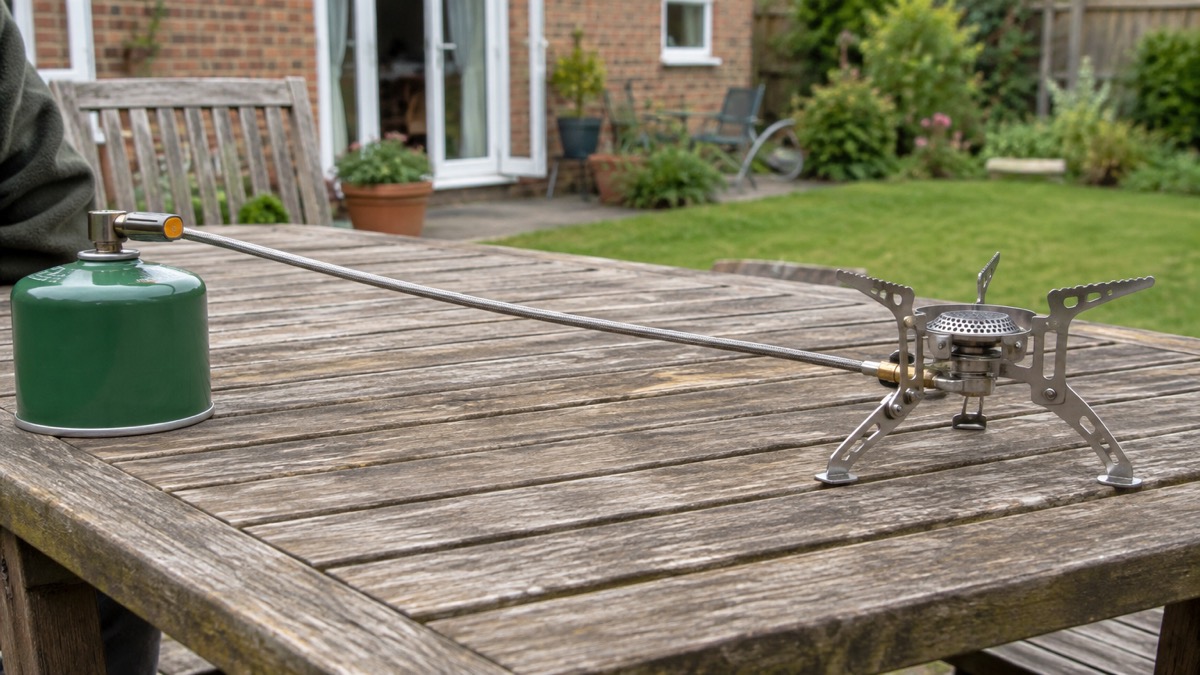
The Vango and OEX recalls are worth understanding in detail because they show how a stove that works perfectly on the day you buy it can become dangerous later. Both notices describe two styles of folding gas stove with a hose, and both give the same cause: the gas hose may degrade over time, leading to a gas leak and possible hose ignition3.
The Vango notice tells owners exactly what to do: "Owners must stop using affected stoves immediately and return to the place of purchase"3. It also lists stores that will accept returns: Go Outdoors, Go Outdoors Express, Blacks, Millets, Fishing Republic and Ultimate Outdoors3. The OEX notice records a recall from end users and withdrawal from the market, notified by Local Authority Trading Standards, with the PSD number 2405-00604.
What this means for a household is that a second-hand or stored-away folding stove is not automatically safe. If you bought one before June 2024, check the model against the notice. If it matches, return it rather than keeping it as a backup. A stove you cannot trust is worse than no stove, because the moment you need it is the moment you are least able to deal with a leak.
The same principle applies to any gas appliance with a hose. The Vango and OEX notices warn that the gas hose may degrade over time, leading to a gas leak and possible hose ignition, and that the stoves present a risk of fire, explosion and burns12. If in doubt, do not use it.
The Optimus Gemini two-burner stove: recall and what owners should do
The Optimus Gemini Portable 2-Burner Gas Stove was recalled in September 2022. It is a two-burner stove that can be used with isobutane-propane fuels, model number 8020872, barcode 0604375208728, country of origin Romania5. The recall was a recall of the product from end users and a withdrawal from the market, notified by the Office for Product Safety and Standards, with PSD case number 2209-02565.
The hazard was specific: the gas regulator burr can tear the seal and cause an ignitable gas leak5. The action for owners was equally specific: "Owners should stop using their stove immediately and return it to the place of purchase for a refund"7.
If you own a Gemini, or see one for sale second-hand, treat it as recalled. Do not use it, and do not pass it on to someone else as a working stove. The recall notice is the authoritative record, and it applies to the model and barcode listed5.
For households looking at twin-burner gas stoves more generally, the recall is a reminder that a stove with a regulator and a hose has more parts that can fail than a simple cartridge stove. That does not make twin-burner stoves unsafe in themselves, but it does mean you should check the model, read the maker's instructions and inspect the regulator and hose before use13.
Butane cylinders recalled over leaks and over-pressure
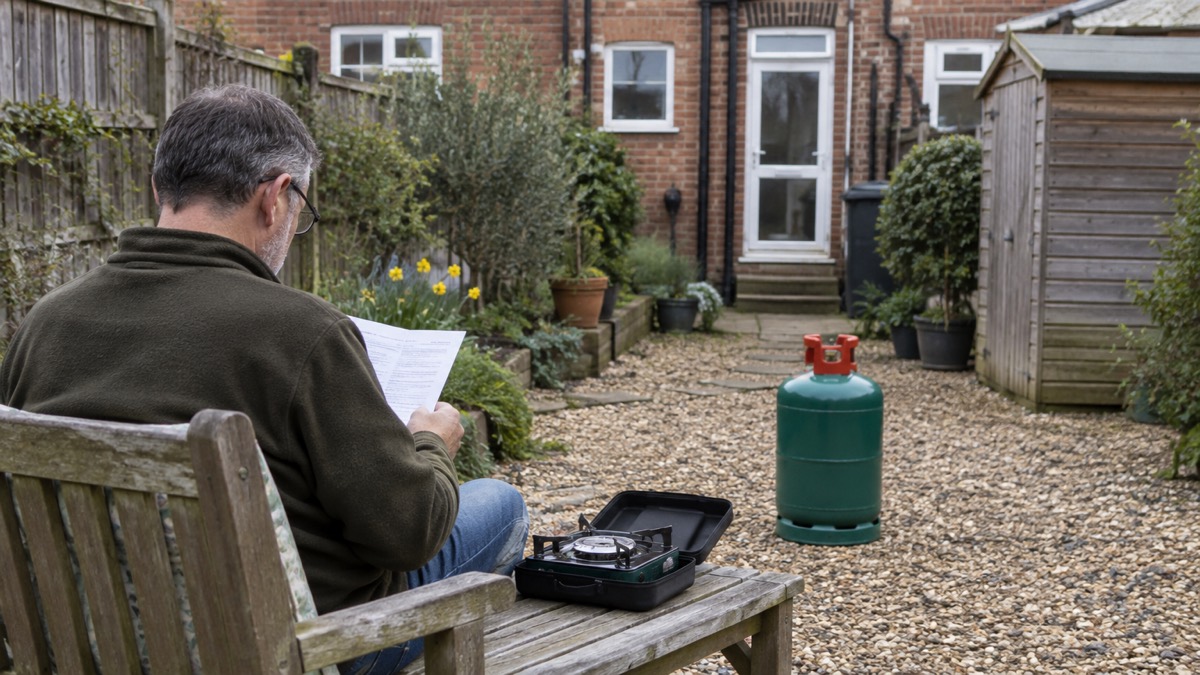
The Flogas Gold Butane Gas Cylinder recall of 10 December 2024 is the cylinder recall most relevant to households. It covered 4.5 kg, 7 kg and 13 kg cylinders sold between 6 and 22 November 2024, because they were filled with a butane and propane mixture outside BS4250 parameters8. The product was recalled from end users and withdrawn from the market8.
The notice sets out a clear sequence for anyone with an affected cylinder: stop using the bottles immediately, do not connect the gas, disconnect if already connected, store outdoors or away from sources of heat, and contact Flogas for collection and a free replacement8.
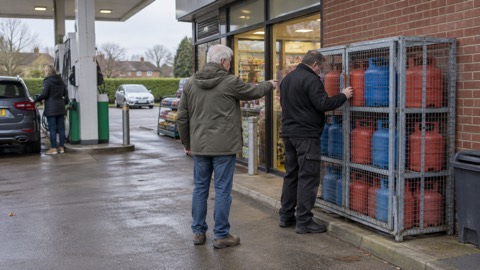
Cylinder safety more generally follows the same rules as stove safety. Only change gas cylinders when they are completely empty, and store them away from caravans and vehicles14. Make sure the tap is turned off before changing the cylinder, and change cylinders in the open air if possible, or open doors and windows to provide good ventilation12. Gas cylinders should be kept outside the caravan or tent, and turned off unless they are designed to run continuously16.
If you keep a spare cylinder for a backup stove, check it against the recall list before you rely on it, and store it as the Flogas recall advises: outdoors or away from sources of heat17. For more on valve types and cold weather, see Gas Cartridges: Valve Types, Cold Weather and Storage, and for bottles and regulators see Bottled Gas for Heaters and Stoves.
Never use a camping stove or portable gas heater indoors
This is the single most important rule on the page, and every fire and rescue service in the UK says it in some form. The Dorset and Wiltshire service puts it plainly: "Never use BBQs, camping stoves or patio heaters for heat indoors"1. The NHS says do not use a barbecue or camping stove indoors or inside a tent2. Northern Ireland's nidirect says never take a gas stove, light or heater into a tent, caravan or cabin unless it is a permanent fixture, installed and maintained correctly13.
The reason is carbon monoxide. It is a colourless, odourless gas produced by burning fuel, and it can build up in an enclosed space without warning2. A camping stove that seems to burn cleanly still produces it, and a portable gas heater designed for outdoor use produces far more. Fire and rescue services list camping stoves, camping heaters, lanterns, charcoal grills and disposable barbecues together as things that must never be used inside18.
"Never use fuel-burning devices (e.g. disposable barbecues, camping stoves, camping heaters, lanterns, and charcoal grills) inside a tent."
The rule extends to caravans, motorhomes and boats. Humberside Fire and Rescue Service says never run a gas, petrol or diesel-powered generator or a heater that is not designed for this purpose inside a caravan, motorhome, tent or awning21. North Yorkshire Fire and Rescue Service says never use fuel-burning devices inside a tent19. The Isle of Man service says do not use BBQs or stoves inside your tent or caravan15.
If you are using a camping stove outdoors, never change gas cartridges indoors or near ignition sources, as Scottish Fire and Rescue Service advises22. Keep flammable liquids and LPG cylinders outside the tent15. And never smoke inside a tent23.
For the full explanation of why indoor use is dangerous and what the alternatives are, see Is It Safe to Use a Camping Stove Indoors?. For keeping warm without a flame, see Keeping One Room Warm When the Heating Fails.
Smell gas in the house: what to do straight away
If you smell gas in your home, act immediately. Call the National Gas Emergency Service straight away10. An engineer will be sent to make the property safe9. While you wait, open doors and windows and avoid using naked flames9. Do not turn electrical switches on or off17.
The sequence matters because a spark can ignite gas. A light switch, a doorbell, a phone charger or a boiler thermostat can all produce one. That is why the advice is to avoid operating electrical switches and to avoid naked flames until the engineer has made the property safe9.
If gas is lost for a long period, National Grid will send details about the incident17. Keep a note of the emergency number somewhere you can find it in the dark, and make sure everyone in the household knows where the gas meter and emergency control valve are.
For more on gas supply issues and what to do when the gas goes off, see Gas and Heating Failures: A Household Guide and What You Might Need in a Gas Outage.
Spirit burner stoves: Trangia and where to get support
A spirit burner stove works differently from a gas cartridge stove. Instead of a pressurised cartridge, it burns liquid alcohol through a wick. Trangia, the Swedish maker, publishes a guide to its spirit burner that covers which stoves it fits, what fuel to use and how to look after it6.
The Trangia spirit burner is brass with a 100% cotton wick, and the maker states that no certificate is required for it6. It fits all Trangia stoves 25 Large and 27 Small, the Trangia Triangel (article number 400333), the Open spirit stove (article number 100230) and the Mini Trangia (article number 100285)6. The burner itself has article number BF6025006.
The maker's guidance on fuel is specific. Ethanol gives the best effect and can be found as pure as 96%, though it gives more soot than methanol6. The burner has a wick inside and needs liquid fuel to function properly, so gel or tablets will not work6. Place the stove in a protected position from the wind to save on fuel6.
"Place the stove on a fire-safe surface, such as a baking tray. Never leave a lit stove unattended."
Trangia also notes that if you have bought a stove with a spirit burner, you can buy an extra gas burner and alternate between the two6. That gives a household a choice: spirit burner for quiet, simple outdoor cooking, gas burner for faster control. Either way, the stove is for outdoor use, and the indoor ban applies just as much to a spirit burner as to a gas stove.
For fuel quantities and types, see What Fuel to Use in a Spirit Burner and How Much. For the wider choice of backup stoves, see Camping Stoves for a Power Cut: Types and How to Choose and the Backup Stove Kit Checklist.
Gas or spirit: which suits your household
The two types suit different circumstances. A gas cartridge stove is quick to light, easy to control and familiar to most campers, but it depends on a pressurised cartridge and, on some models, a hose and regulator that can fail or be recalled3. A spirit burner stove is simpler, with no pressurised cartridge, and runs on liquid alcohol, but it needs a protected spot out of the wind and the maker's fuel guidance followed6.
Whichever you choose, the safety rules are the same: use it outdoors, never indoors or in a tent, check it against recalls, and keep cylinders and fuel outside the tent1. For a side-by-side look at other backup cooking options, see Camping Stoves for a Power Cut.
If the boiler fails in cold weather
A boiler failure in cold weather is a different problem from a stove choice, but it is the situation that sends many households looking for a backup stove. The Met Office winter checklist includes having the boiler serviced. If it fails, the priority is to keep one room warm safely, using methods that do not involve bringing a camping stove or patio heater indoors1.
Fire and rescue services are clear that a camping stove or patio heater is not a substitute for a boiler1. For safe ways to stay warm, see Keeping One Room Warm When the Heating Fails, Portable Heaters: Electric, Gas and Paraffin Types Explained and Using a Portable Heater Safely at Home.
If you smell gas during a boiler failure, follow the gas smell advice above and call the National Gas Emergency Service10. If the boiler itself is faulty, contact a Gas Safe registered engineer. For the wider picture, see Gas and Heating Failures: A Household Guide.
Sources (24)
- Stay warm safely in winter, Dorset and Wiltshire Fire and Rescue Service, 2026
- Carbon monoxide poisoning, NHS, 16 December 2025
- Product recall: Vango folding gas stoves 2405-0054, GOV.UK, 6 June 2024
- Product recall: OEX folding gas stoves 2405-0060, GOV.UK, 6 June 2024
- Product recall: Optimus Gemini Portable 2-Burner Gas Stove 2209-0256, GOV.UK, 29 September 2022
- All about our burners: guide to the spirit burner, Trangia, 11 February 2026
- Optimus Gemini Portable 2-Burner Gas Stove recall leaflet, London Borough of Bromley, 30 September 2022
- Flogas Gold Butane Gas Cylinder recall leaflet, London Borough of Bromley, 10 December 2024
- Gas supply issues, Buckinghamshire Council, 29 October 2026
- What you might need in a gas outage, Wiltshire and Swindon Prepared, 25 October 2026
- Product recall: MSR Trail Lite and Reactor camping cooking pots 2402-0314, GOV.UK, 25 March 2024
- Outdoor cooking, Greater Manchester Fire and Rescue Service, 29 October 2026
- Carbon monoxide dangers if camping, caravanning or boating, nidirect, 2 April 2026
- Camping safety advice, Mid and West Wales Fire and Rescue Service, 29 October 2026
- Caravans and camping, North Yorkshire Fire and Rescue Service, 13 May 2026
- Caravan Safety Advice, Mid and West Wales Fire and Rescue Service
- Are You Ready booklet, Culham Parish Council, September 2025
- Barbecues, Northamptonshire Fire and Rescue Service, 2026
- Fire and summer safety advice, nidirect, 3 July 2026
- Stay safe this summer: essential tips from NIFRS, Northern Ireland Fire and Rescue Service, 22 June 2026
- Caravan, motor home and campervan safety, Humberside Fire and Rescue Service, 29 October 2026
- Power cuts, Scottish Fire and Rescue Service, 25 October 2026
- Help prevent wildfires, Oxfordshire County Council, 2026
- Flooding advice, Belfast City Council, 2026
 Electric or Gas Heaters
 Butane or Propane Gas Bottles
 Paraffin vs Gas Heaters
 Hot Water Bottle or Wheat Bag
 Radiator vs Fan Heater
 Wood Burner vs Multi-Fuel Stove