Optimus is a maker of portable outdoor stoves, sold in the UK through the Katadyn Group. For a household preparing for emergencies, the useful question is simple: if the power or gas fails, can this stove boil water and heat food safely, and what does it need to do that? Optimus makes two kinds of stove that bear on that. The Polaris Optifuel is a hybrid multi-fuel stove that runs on white gas, LP gas, petrol, kerosene, diesel or jet fuel, and comes with a 0.4L fuel bottle1. The Gemini is a two-burner gas stove that runs on isobutane-propane fuel, and it was recalled in 20222.
The most important thing to know before you buy or use any Optimus stove is that they are outdoor equipment. The maker's safety warning on the Polaris Optifuel says: "For Outdoor use only"1. That single instruction shapes everything else on this page: where you store it, where you use it, and how it fits into a household plan that may involve a power cut, a flood or a storm.
What Optimus makes for UK households
Optimus's range, as it appears to a UK household, is camping and outdoor cooking equipment. The two products with enough published detail to plan around are the Polaris Optifuel, a single-burner hybrid stove supplied with a 0.4L fuel bottle, and the Gemini Portable 2-Burner Gas Stove, a two-burner gas model1. Both are designed to be carried and used outside, which is exactly the role a stove plays in an emergency plan: not to replace the kitchen, but to give you a way to boil water and cook a hot meal when the kitchen has no power or gas.
That framing matters. A household emergency kit is built around things that work when normal services fail: a torch, a first aid kit, bottled water and ready-to-eat food, spare keys, spare glasses, medicines and a written plan with contact numbers4. A stove adds hot food and boiled water to that list, but only if you have a safe outdoor place to use it and fuel stored correctly. If you are starting from scratch, the Emergency Kit guide sets out what a household should keep ready, and the Heating and Cooking Without Mains Power or Gas guide covers the wider question of how to cook when the mains fail.
Optimus stoves sit in the outdoor cooking part of that plan. They are not indoor appliances, and they are not a substitute for a carbon monoxide alarm or for the fire safety basics in your home. Used as intended, outside and with the maker's instructions followed, they give a household a reliable way to make a hot drink and a hot meal during a long power cut.
Optimus products and what each one does
Polaris Optifuel: one burner, many fuels
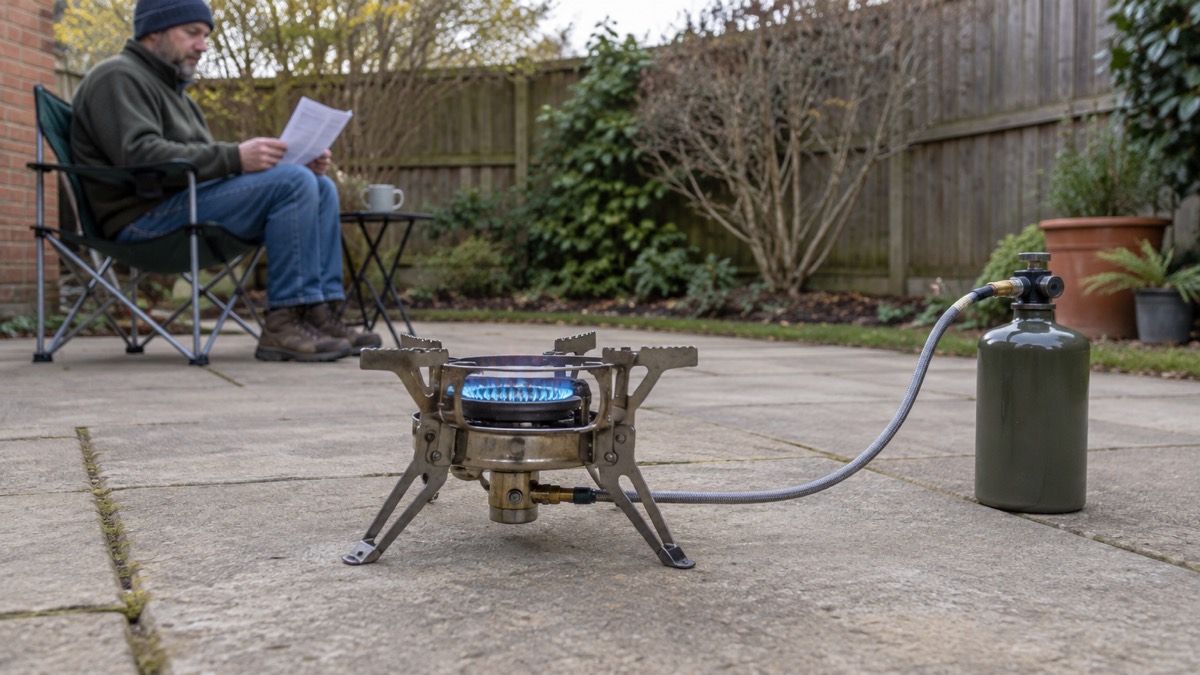
The Polaris Optifuel is a hybrid stove, meaning it can run on more than one kind of fuel. The maker lists white gas, LP gas, petrol, kerosene, diesel and jet fuel as options, and supplies the stove with a 0.4L fuel bottle1. In an emergency, that flexibility is the point: if one fuel is unavailable, another may still be to hand. The stove has a patented quick-priming burner, which the maker says primes quickly, and an integrated magnetic cleaning needle that lets you clean the stove even while cooking1. Both features matter when you are cooking in poor conditions with limited time.
The maker also gives a mode for cold weather: when using LP gas canisters, you flip between 4 Season Mode in cold temperatures and Efficiency Mode for other use1. That is a practical detail for a winter power cut, when a household may be cooking outside in low temperatures.
Gemini two-burner: recalled, do not use
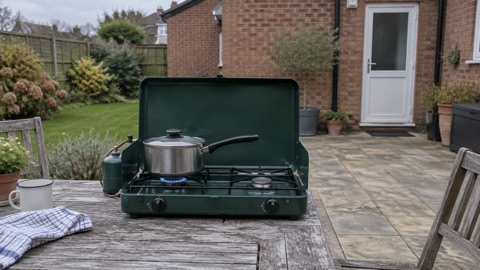
The Gemini Portable 2-Burner Gas Stove is a black metal stove with silver top burner surfaces, measuring 12 inches (20 cm) long and 4 inches (9 cm) wide, with "Optimus" printed on the side, and it runs on isobutane-propane fuels2. It was recalled from end users by the manufacturer and withdrawn from the market2. If you own one, the official notice is clear: "Owners should stop using their stove immediately and return it to the place of purchase for a refund"2. The recall is covered in more detail under safety notices below.
Specifications that matter in an emergency
When you are choosing or checking a stove for emergency use, a handful of figures decide whether it will do the job. The table below sets out what the maker and the official recall notice publish for the two Optimus models.
| Specification | Polaris Optifuel | Gemini 2-Burner |
|---|---|---|
| Stove type | Hybrid1 | Gas stove, two burner2 |
| Fuel | White gas, LP gas, petrol, kerosene, diesel, jet fuel1 | Isobutane-propane2 |
| Power | 4200 W / 14340 BTU1 | Not stated in the notice |
| Fuel consumption | 400 ml / 230 g1 | Not stated in the notice |
| Size | 140 mm long, 80 mm wide1 | 20 cm long, 9 cm wide2 |
| Included | 0.4L fuel bottle1 | Not stated in the notice |
| Status | On sale from the maker1 | Recalled and withdrawn2 |
Power and fuel consumption are the two figures that decide how useful a stove is in a long outage. A stove rated at 4200 W has plenty of output for boiling water and cooking a meal for a household, and a fuel consumption of 400 ml / 230 g tells you roughly how much fuel a period of cooking will use, so you can work out how much to store1. The Gemini's figures are not given in the recall notice, and since the stove has been withdrawn, the practical answer for a household is not to use one at all2.
Size matters for storage. The Polaris Optifuel is 140 mm long and 80 mm wide, small enough to keep in a cupboard or a box with the rest of your emergency kit1. The Gemini is 20 cm by 9 cm2. Neither is a large appliance, which is part of their appeal for a household with limited space.
Safe use and storage at home
The safety rules for an Optimus stove are short and firm, and they come from the maker and from the fire and rescue service.
- Use it outdoors only. The maker's warning on the Polaris Optifuel says: "For Outdoor use only"1.
- Read the instructions before use. The same warning begins: "Read instructions before using the appliance!"1.
- Use the right fuel. The maker states the stove should be used only with butane, isobutane or propane Optimus cartridges in compliance with EN4171.
- Keep fuel away from heat and out of reach. Store fuel separately, away from heat sources and out of the reach of children, following the Keep SAFE 6 Rule's advice on safe storage: keep things out of reach and out of sight7.
- Keep a carbon monoxide alarm working. The NHS advises installing a carbon monoxide detector, making sure it works, and changing the batteries when needed8.
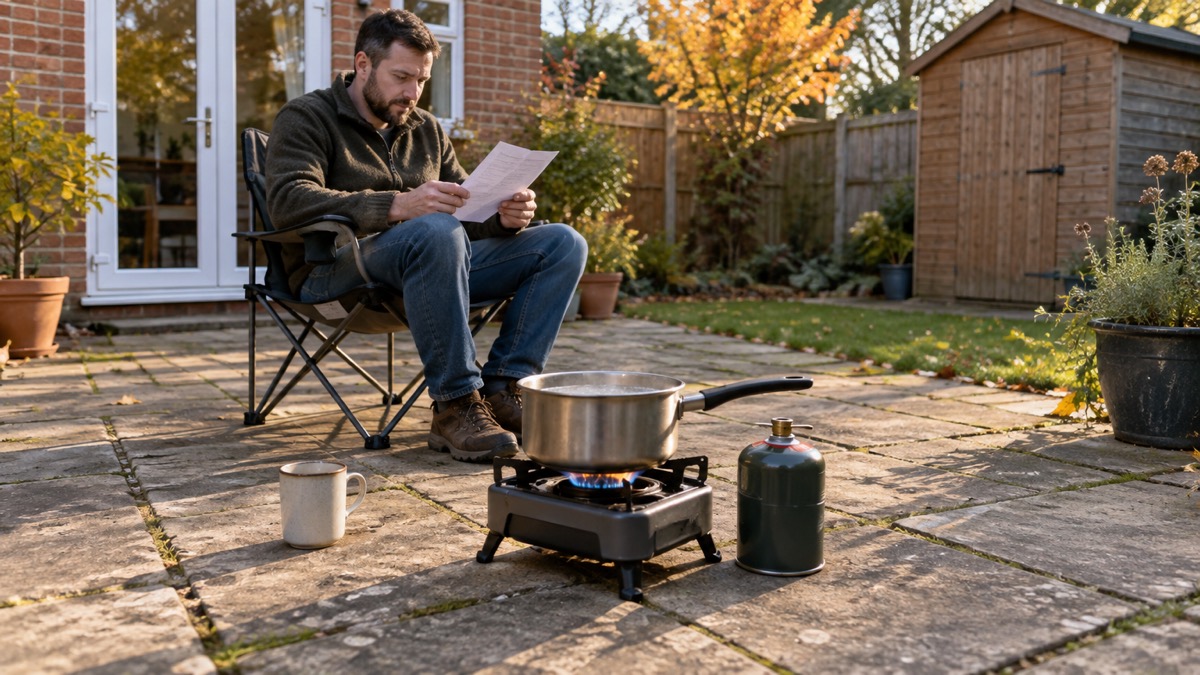
The fire and rescue service advice is unambiguous: do not use any fuel-driven equipment, including generators or petrol and diesel pumps, indoors9. A camping stove falls into the same category of risk. The safest pattern for a household is to decide in advance where outside you will cook: a level, stable surface in a yard or garden, away from doors, windows, vents and anything flammable, and never inside an enclosed space.
Storage follows the same logic. Keep the stove clean and dry, keep fuel in its proper container, and keep both out of the reach of children. If anyone in the household uses medical oxygen at home, the fire service advises that oxygen equipment is stored in a well-ventilated area, kept clean, dry and away from heat sources such as gas or electric fires and cookers10. A stove and its fuel should never be used or stored near oxygen equipment.
Where an Optimus product must never be used
The list of places an Optimus stove must never be used is short, but each item on it is a serious risk.
- Indoors, in any room of the home. The maker's warning is "For Outdoor use only"1, and fire and rescue services advise that fuel-driven equipment is never used indoors9.
- In a tent, caravan, shed or garage. These are enclosed spaces, and the same carbon monoxide risk applies.
- Near medical oxygen. Fire services advise that vapes and e-cigarettes are never used or charged near medical oxygen, emollient creams or airflow mattresses12, and the same caution applies to any naked flame or fuel-burning appliance. Oxygen equipment should be kept away from heat sources such as gas or electric fires and cookers10.
- Near emollient creams. Fire services advise avoiding getting emollient products on oxygen tubing or equipment13, and never using oil-based creams and moisturisers when using or handling oxygen equipment11. Emollients can soak into fabric and make it more flammable, so keep them away from any stove or flame.
- Anywhere it could block an escape route. Fire services advise never charging devices near exits or on escape routes14, and the same principle applies to anything that could burn or obstruct a way out.
The wider point is that a stove is a tool for outside. A household plan that includes one should also include a clear, agreed outdoor cooking place, a carbon monoxide alarm inside the home, and a rule that nobody brings the stove inside, however cold or wet the weather.
Looking after your kit so it works when needed
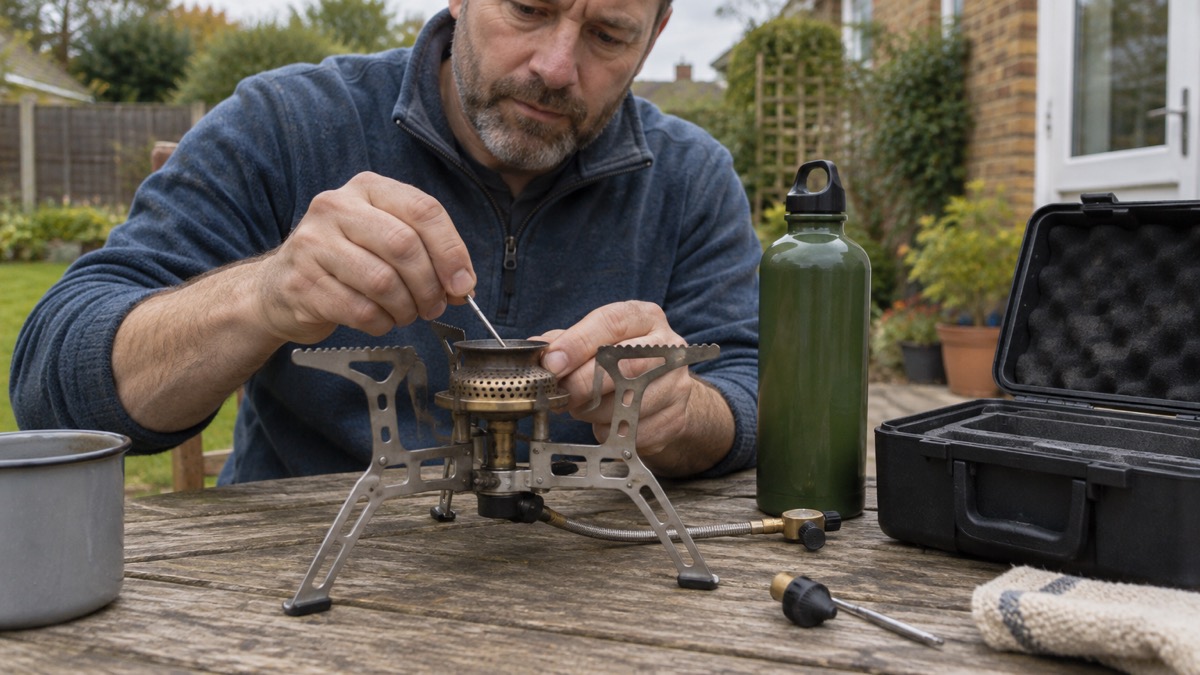
A stove that has sat unused for a year may not light first time. The maker's design helps here: the Polaris Optifuel has a patented quick-priming burner that primes quickly, and an integrated magnetic cleaning needle that lets you clean the stove even while cooking1. Both are maintenance features you can use as part of a regular check.
The general rule for emergency kit applies to a stove as much as to anything else: check it regularly. Official guidance on first aid kits says to check your kit regularly, note expiry dates on sterile items, and replace expired items, disposing of them safely16. The same habit works for a stove: check it over before the season when you might need it, make sure the fuel is in good condition and stored correctly, and make sure you know how to light it.
- Check the stove before you need it. Light it outdoors, following the maker's instructions, and confirm it burns steadily1.
- Check your fuel supply. Know which fuels your stove takes and keep a usable amount stored safely1.
- Check your alarms. Make sure your carbon monoxide detector works and change the batteries when needed7.
- Check your plan. Keep your household emergency plan and contact numbers with your kit, as official emergency kit checklists advise4.
Support and warranty
Optimus products are sold through the Katadyn Group, and the official recall notice for the Gemini directs owners to the Katadyn Group website for further information2. The Polaris Optifuel product page carries the product number 8019408 and the EAN 7612013194084, which are the identifiers to quote when you contact the maker or a retailer about a specific model1.
For a household, the practical steps are:
- Keep the model and serial number. Registration details typically include the model name or number, the serial number and the purchase date17.
- Register the appliance where the maker offers it. Registering ensures manufacturers can contact you if a safety repair is needed17.
- Contact the retailer first for a fault. Official guidance is that if an electrical item has a problem, you should stop using it and contact the shop where you bought it from18.
- Use the maker's route for model-specific questions. The Katadyn Group website is the contact point named in the official recall notice2.
There is no warranty period or repair scheme for Optimus stoves in the official material available here, so treat the retailer and the maker's own website as your routes for support. Keep your receipt and the model details with your household paperwork, so that if a safety notice is issued you can check your own stove against it quickly.
Safety notices and recalls
The Optimus Gemini Portable 2-Burner Gas Stove was recalled from end users by the manufacturer and withdrawn from the market, in a notice notified by the Office for Product Safety and Standards under case number 2209-02562. The affected stoves are black metal with silver top burner surfaces, measuring 12 inches (20 cm) long and 4 inches (9 cm) wide, with "Optimus" printed on the side, and they run on isobutane-propane fuels2. The affected serial numbers are RG000001 to RG006788 and RG023004 to RG023323, and the barcode is 06043752087282. The country of origin is Romania2.
Checking for a recall is a habit worth building for every appliance in the home, not just a stove. Official guidance is to check your appliances against the Office for Product Safety and Standards alerts and recalls page17, and to check the list of recalled items on the Electrical Safety First website, which explains what to do with your recalled appliance19. Fire and rescue services also point households to Electrical Safety First's online product checker to see if any appliances have been recalled18. If a product has been recalled, stop using it and follow the notice.
For a faulty product more generally, official guidance is to check the Government website to see if the product has been recalled by the maker, and if an electrical item has a problem, to stop using it and contact the shop where you bought it from18. For a fuel-burning stove that behaves abnormally, the same principle applies: stop using it, keep the model and serial number, and contact the retailer or the maker.
Sources (19)
- Optimus Polaris Optifuel incl. 0.4L Fuel Bottle, Katadyn, 2026-10-28
- Product recall: Optimus Gemini Portable 2-Burner Gas Stove 2209-0256, Office for Product Safety and Standards, 2022-09-30
- Maintain Appliances and Recalls - Greater Manchester Fire Rescue Service, Greater Manchester Fire Rescue Service
- Emergency kit, Ready Scotland, 2026-10-28
- Get prepared, Carmarthenshire County Council, 2026-10-28
- Prepare yourself, Wiltshire and Swindon Prepared, 2026-10-25
- Domestic and non-workplace storage, Greater Manchester Fire and Rescue Service, 2026-10-29
- Poisoning :: Frimley HealthierTogether, Frimley HealthierTogether (NHS)
- Carbon monoxide safety, Mid and West Wales Fire and Rescue Service, 2026-10-29
- Medical oxygen, Scottish Fire and Rescue Service, 2026-10-28
- Medication and medical devices, West Yorkshire Fire and Rescue Service, 2026-10-29
- Medical equipment, North Yorkshire Fire and Rescue Service, 2026-03-09
- Vaping, Greater Manchester Fire and Rescue Service, 2026-10-29
- Lithium-ion batteries, South Wales Fire and Rescue Service, 2026-01-13
- Specialist health equipment | Devon and Somerset Fire and Rescue Service, Devon and Somerset Fire and Rescue Service
- What to put in your first aid kit, Health and Safety Executive, 2026
- Electrical safety, Scottish Fire and Rescue Service, 2025-02-27
- Digital easy read fire safety booklet, London Fire Brigade, 2026
- Stay fire safe, Greater Manchester Fire and Rescue Service, 2026-10-29
 Optimus Gemini II: Twin-Burner Gas Stove Explained