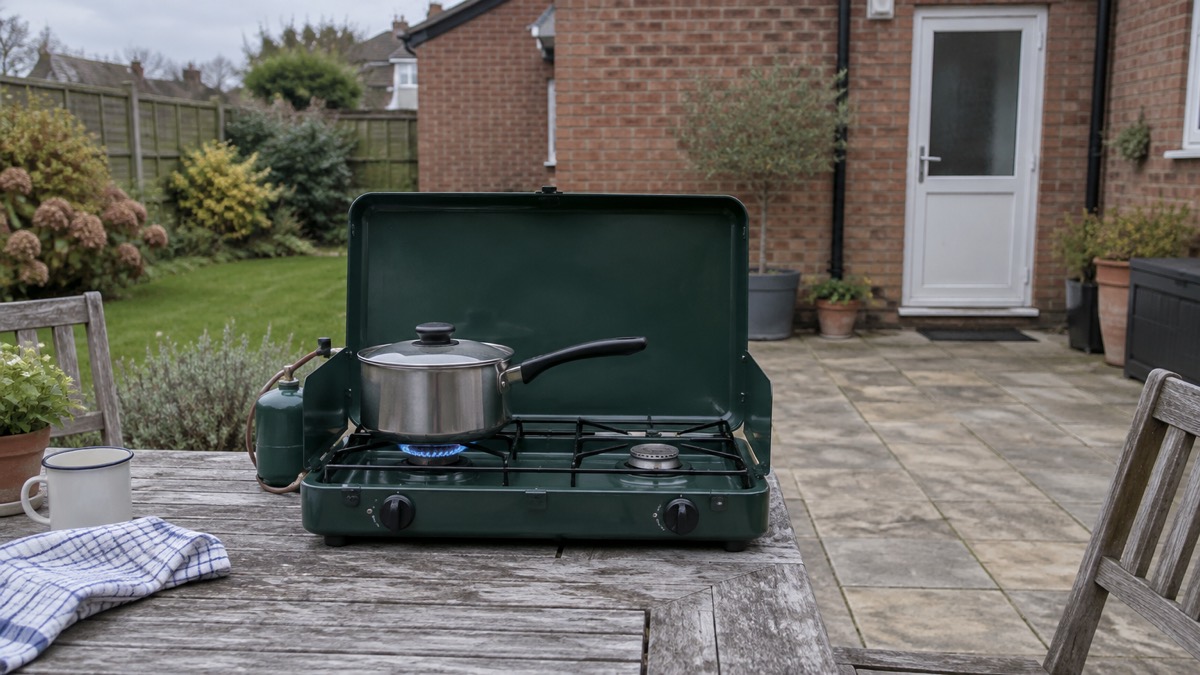
If you are looking at the Optimus Gemini II as a way to cook when the power or gas goes off, the first thing to settle is which stove you actually own or are about to buy. The Gemini II is a gas stove1, and it is the model described on this page. Check the model name on your stove before you rely on it.
The Gemini II is a fold-flat gas stove with two burners, each rated at 4.6 kW nominal, and independent flame control so you can boil on one and simmer on the other2. It measures 305 mm by 70 mm by 105 mm when folded, so it stores flat, and the maker gives an average boil time of 4 minutes and a maximum burn time of 165 minutes from a 450 g cartridge3. It is built for outdoor use only, and that single rule decides whether it is the right stove for your household.
The Optimus Gemini recall: check which model you own and what to do
The Gemini II is a gas stove1. Before you use any second-hand or unfamiliar stove, check the model name on the appliance itself rather than relying on the box or the listing.
That recall names the Optimus Gemini Portable 2-Burner Gas Stove. The stove on this page is the Optimus Gemini II, sold under item number 8021584 with barcode 06043752158493. If you are unsure which you have, check the model name and item number on the stove, its box or your receipt before you use it. If your stove matches the recalled model rather than the Gemini II, stop using it and follow the return instructions in the recall notice1.
What the Optimus Gemini II is: a fold-flat twin-burner gas stove
The Gemini II is a gas stove with two burners, made for cooking away from mains power and mains gas. The maker describes it as having a fold-flat design that fits easily in a pack without compromising performance, and an integrated regulator that provides consistent performance2. In plain terms, it folds down flat for storage, and the regulator is built into the stove rather than being a separate part you fit between the cartridge and the burner.
The maker states that the stove is built in Europe, describing it as proudly built in Europe and designed for long-term durability and reliable performance in the field6. The maker does not name a specific country on the product page, so if that matters to you, ask before you buy.
What it suits is outdoor cooking: a garden, a campsite, a picnic, or a sheltered spot outside the house during a power cut. What it does not suit is anything indoors. It is a camping-style gas stove, and the fire and rescue service advice on camping stoves and barbecues applies to it directly7.
Specifications: 4.6 kW per burner, 305 x 70 x 105 mm
The figures below are the maker's own, from its product pages. Where the maker gives a measurement in both millimetres and inches, both are shown.
| Specification | Figure |
|---|---|
| Product type | Gas stove3 |
| Burners | Two, with independent flame control2 |
| Power per burner | 4.6 kW nominal EN5212 |
| Rated output | 4600 W per burner3 |
| Length | 305 mm (12 in)2 |
| Width | 70 mm (2.76 in)2 |
| Height | 105 mm (4.14 in)2 |
| Average boil time | 4 minutes3 |
| Maximum burn time | 165 minutes from a 450 g cartridge3 |
| Fuel | Butane, isobutane or propane Optimus cartridges to EN4173 |
| Item number | 80215843 |
| Barcode | 06043752158493 |
| Made in | Europe6 |
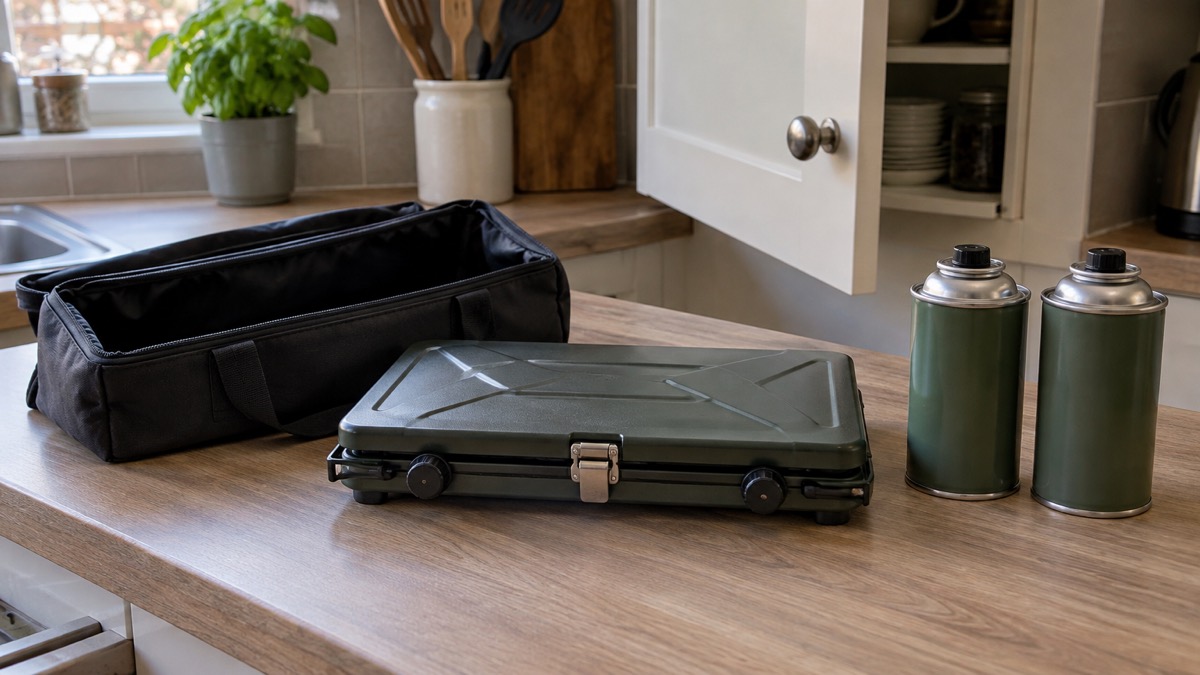
The maker's pages give the dimensions in two forms, one in millimetres and inches and one in millimetres only, and they agree on the figures: 305 mm long, 70 mm wide and 105 mm high2. The 4.6 kW figure is the nominal rating to EN5212.
Two burners at 4.6 kW each is a lot of heat for a portable stove. That is what makes the 4 minute average boil time possible, and it is also why gas use matters: the 165 minute maximum burn time is measured from a 450 g cartridge, and running both burners together will use that up faster than running one3.
Where the Gemini II must never be used: outdoors only, never indoors
The maker's instruction is unambiguous: the stove is for outdoor use only2. The maker also states that you should read the instructions before using the appliance, and use only butane, isobutane or propane Optimus cartridges in compliance with EN4173.
The fire and rescue services say the same thing about this class of stove. Dorset and Wiltshire Fire and Rescue Service states that using camping stoves or barbecues indoors is really dangerous, and that they are designed to be used outside only7. Mid and West Wales Fire and Rescue Service advises: "Don't use indoor camping stoves or other gasoline, propane or natural gas devices that are meant for outdoor use"8.
"Using camping stoves or barbecues indoors is really dangerous. They are designed to be used outside only"
The reason is carbon monoxide. A gas stove burning in an enclosed space produces this gas, which you cannot see, smell or taste, and it can build up to dangerous levels. The same principle is why fire services warn that outdoor heaters must never be used inside, and only models designed for indoor use should be used indoors9. Northern Powergrid puts it simply: never use outdoor heaters indoors10.
A garage, shed or porch is not outdoors for this purpose. The Armagh, Banbridge and Craigavon guidance on heaters and generators states that partly open spaces, garages and sheds are unsuitable for equipment that must run outdoors, and that generators should only be operated outdoors at least 6 metres (20 feet) away from windows, doors and vents9. Treat the stove the same way: cook outside, well clear of doors, windows and vents, so fumes cannot drift back into the house.
Cooking in wind and cold: the wind shield and built-in regulator
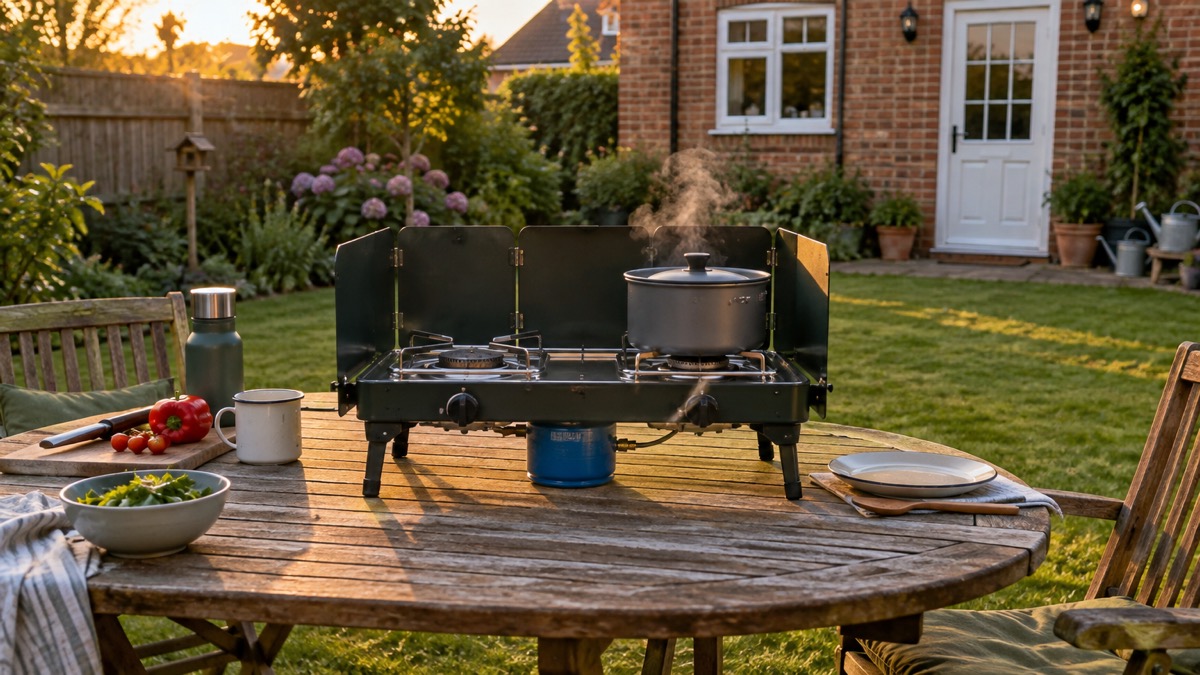
Two features matter most when the weather is against you: the integrated wind shield and the built-in pressure regulator. The maker states that a low, stable frame and integrated wind protection keep flames steady, while a built-in pressure regulator maintains reliable performance5. The maker also states that the integrated wind shield and low-profile design keep flames steady in rugged conditions2.
Why that matters in a power cut is simple. A flame that gutters in the wind heats the pot unevenly, takes longer to boil and wastes gas. The wind shield and low frame are there to keep the flame where it should be, and the regulator is there to keep the gas pressure steady as the cartridge cools or empties5.
Cold weather is the other factor. Gas cartridges lose pressure as they get cold, which is why the regulator and a sheltered spot matter. Set the stove up out of the wind, on a level surface, and give it time to settle before you light it. The maker states that the integrated wind shield and low-profile design keep flames steady in rugged conditions1.
Using the Gemini II for emergency cooking at home
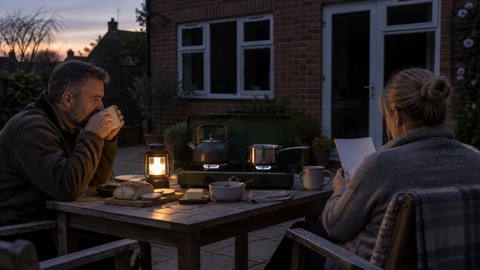
The Gemini II is a backup cooking method, not a replacement kitchen. Used outdoors, it lets you boil water and heat food when the power or gas has failed, and it pairs with the food you should already hold. Official guidance for households is to keep a supply of bottled water, ready-to-eat food such as tinned goods, and a tin opener11. Greater Manchester Combined Authority adds that the tinned food should not need cooking, such as ready-to-eat tinned meat, fruit or vegetables, with ready-made baby formula and pet food if needed12. Ready Scotland's emergency kit advice includes a mobile phone charger13.
That guidance points to the right role for the stove: it is for the meals you want hot, not for the food you rely on. Keep the no-cook stores as your baseline, and use the Gemini II to heat water, make a hot drink or warm through a meal when it is safe to cook outside.
A few practical points before you rely on it:
- Check the model first. Confirm which Optimus stove you have before you rely on it; the Gemini II is a gas stove1.
- Keep cartridges away from heat. Store cartridges away from heat and out of direct sunlight.
- Plan for the weather. Set the stove up in a sheltered, level outdoor spot, away from anything that could fall or blow over.
- Have a plan for the household. Decide now where the stove will be used and who will use it.
For the wider picture, see our guide to camping stoves for a power cut and the section on heating and cooking without mains power or gas. If you are choosing between fuel types, the comparison of gas cartridge or spirit burner stoves sets out the trade-offs, and the guide to gas cartridges covers valve types, cold weather and storage. Our backup stove kit checklist lists what to keep with the stove, and the emergency kit section covers the wider household stores.
Sources (13)
- Product recall: Optimus Gemini Portable 2-Burner Gas Stove, Office for Product Safety and Standards, 2022-09-29
- Optimus Gemini II product page, Katadyn, 2026-10-28
- Optimus Gemini II product page, Katadyn, 2026-10-28
- Recall: Optimus Gemini Portable 2-Burner Gas Stove, London Borough of Bromley, 2022-09-30
- Optimus Gemini II product page, Katadyn, 2026-10-28
- Optimus Gemini II product page, Katadyn, 2026-10-28
- Staying safe while cutting costs, Dorset and Wiltshire Fire and Rescue Service, 2024-10-23
- Carbon monoxide safety, Mid and West Wales Fire and Rescue Service, 2023
- Safe use of heaters and generators, Armagh City, Banbridge and Craigavon Borough Council, 2026-10-29
- What to do in a power cut, Northern Powergrid, 2026-10-25
- Preparing for an emergency, Nottinghamshire County Council, 2026-10-29
- Loss of essential services, Greater Manchester Combined Authority, 2026-10-29
- Emergency kit, Ready Scotland, 2026-10-22
 Campingaz Camping Kitchen 2 CV
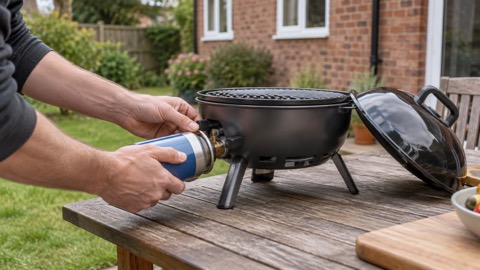 Campingaz Party Grill 200
 Campingaz Party Grill 400 CV