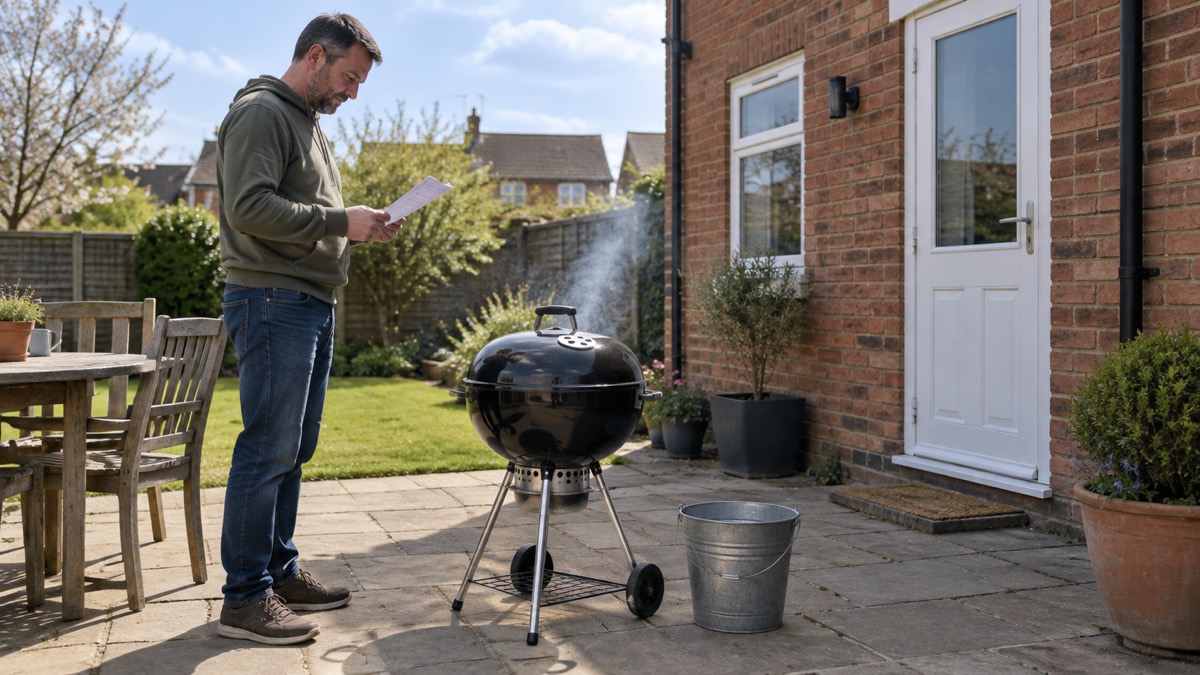
When the power is off or the gas supply has failed, a barbecue can look like a ready-made way to cook a hot meal, and in the garden it can be. But every fire and rescue service in the UK gives the same first rule: a barbecue belongs outdoors, and it stays outdoors. Manchester Fire and Rescue Service warns that people should never be tempted to bring a barbecue inside their home, because carbon monoxide is produced even if the flames have gone out1. The London Fire Brigade is just as blunt: an extinguished barbecue can continue to produce carbon monoxide for many hours after it has been extinguished, and carbon monoxide can travel through walls2.
That second point is the one households get wrong. Humberside Fire and Rescue Service reports that barbecues stay hot for hours and give off carbon monoxide fumes for several hours after they go out, so they must not be brought indoors or into a tent3. A barbecue that looks finished is not finished. This page sets out how to use a charcoal, gas or disposable barbecue safely during an outage: where to put it, how much charcoal to use, how to change and check a gas cylinder, and how to put the whole thing out and dispose of it.
Never bring a barbecue indoors, even after the flames have gone out
The rule is absolute, and it applies to every type of barbecue: charcoal, gas and disposable. North Wales Fire and Rescue Service says never to use barbecues or portable fuel-burning equipment indoors or in enclosed spaces8. Manchester Fire and Rescue Service puts it as a reminder in its kitchen safety advice: barbecues should never be lit indoors9. Somerset Council's household fire safety guidance adds the reason in plain terms: you should never take a smouldering or lit barbecue indoors, or into anywhere like a tent or caravan, because a barbecue gives off fumes for hours after use10.
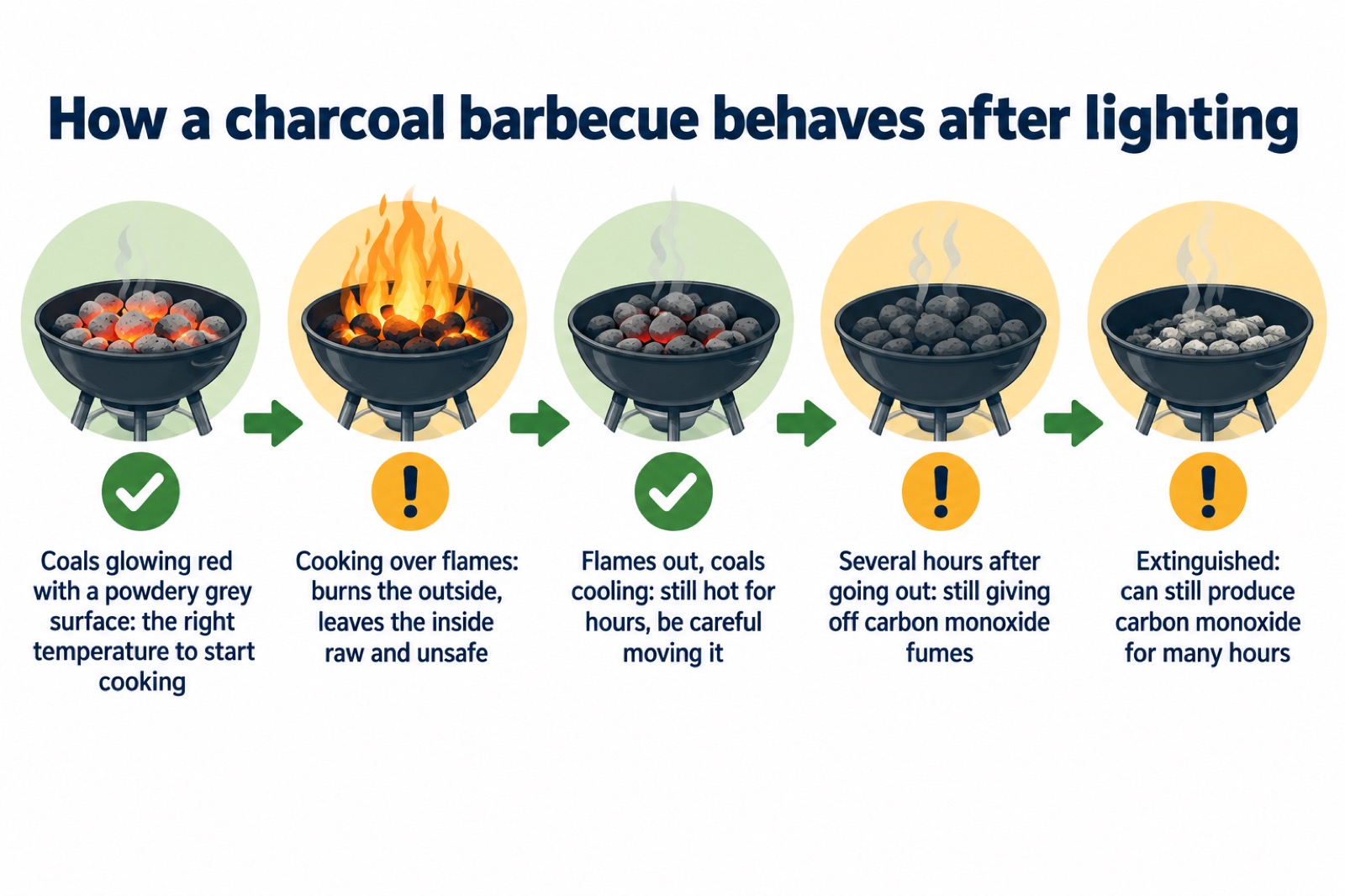
The danger people miss is that the risk does not end with the cooking. Carbon monoxide is produced while charcoal smoulders, and smouldering can continue long after the flames have died. The London Fire Brigade warns that an extinguished barbecue can continue to produce carbon monoxide for many hours after it has been extinguished, and that carbon monoxide can travel through walls, so you should keep your home well ventilated if one has been used nearby2. Humberside Fire and Rescue Service makes the same point for the hours after use: barbecues stay hot for hours, so be really careful moving them, and they give off carbon monoxide fumes for several hours after they go out3.
In an outage, the temptation is strongest at night. A household that has cooked on the patio in the evening may want to bring the barbecue just inside the door, into a garage or under a carport to keep the rain off it, or to use the last of the heat to warm a room. Every one of those moves is dangerous. A garage or carport is an enclosed space; a doorway pulls fumes into the house; and a barbecue used as a heater is the exact scenario fire services warn about most. If you have finished cooking, leave the barbecue outside and well away from the building, as Wiltshire and Swindon Prepared advises: even if you have put out the fire, leave it outside and well away from the building or tent or caravan you are staying in11.
If you are preparing for outages and want a cooking option that is designed with indoor use in mind, see the wider advice in Heating and Cooking Without Mains Power or Gas, and for the specific question of small stoves, Is It Safe to Use a Camping Stove Indoors?.
Carbon monoxide: why tents, caravans and cabins are off limits too
The same rule that keeps barbecues out of houses keeps them out of tents, caravans, awnings, cabins and mobile homes, and fire services repeat it every camping season because people still die this way. nidirect, the Northern Ireland government service, is direct: never take a smouldering or lit barbecue into a tent, caravan or cabin, even if you have finished cooking12. Cumbria Fire and Rescue Service adds that carbon monoxide can build up to levels that can kill very quickly in enclosed spaces such as tents and awnings13.
The reason tents and caravans are worse than houses, not better, is size. A small enclosed space fills with carbon monoxide far faster than a room does, and the gas has nowhere to go. Devon and Somerset Fire and Rescue Service explains both hazards together: the carbon monoxide barbecues and stoves produce can kill, and the heat they produce will set the tent on fire14. Dorset and Wiltshire Fire and Rescue Service gives the same combined warning, never to use barbecues inside or near the entrance to a tent or caravan, either for cooking or as a heat source, because the carbon monoxide they produce is lethal15.
Cheshire Fire and Rescue Service extends the rule to the whole family of fuel-burning kit: never use fuel-burning devices, including disposable barbecues, camping stoves, camping heaters, lanterns and charcoal grills, inside a tent16. The Scottish Fire and Rescue Service warns that using a portable barbecue or lit charcoal in an enclosed space like a tent or caravan can lead to a buildup of carbon monoxide, which can be fatal17. Staffordshire Fire and Rescue Service notes the pattern behind the tragedies: carbon monoxide poisoning happens when people bring gas and charcoal barbecues into tents and other small enclosed spaces, sometimes in an attempt to keep warm12.
That last point matters in an emergency. If your household is using a tent or caravan as somewhere to stay during an outage, the barbecue must stay outside, away from the entrance, for as long as it holds any heat at all. Cumbria Fire and Rescue Service also warns never to take a gas stove, light or heater into a tent, caravan or cabin unless it is a permanent fixture, installed and maintained correctly13. For more on staying warm safely under canvas, see Keeping Warm and Cooking in Tents and Caravans.
Where to set up: a solid, flat surface away from dry grass
Once the barbecue is staying outside, the next question is where outside. The consistent advice from fire services is a flat, stable surface with clear space around it. Cheshire Fire and Rescue Service says to ensure the barbecue is on a flat site, well away from a shed, trees or shrubs16. The Northern Ireland Fire and Rescue Service says to make sure the barbecue site is flat and away from fences, trees and shrubs18.
For disposable barbecues the surface matters even more, because the tray sits directly on whatever is beneath it. Mid and West Wales Fire and Rescue Service says a disposable barbecue must be placed on an even surface on either bricks or paving slabs19. Oxfordshire Fire and Rescue Service advice for the countryside is that any barbecue should be raised off the ground on a stable, non-flammable surface, never placed directly on grass or in undergrowth20.
Two surfaces to be particularly careful with:
- Decking. Devon and Somerset Fire and Rescue Service warns to be careful using disposable barbecues on decking, as they can set the decking on fire14. The London Fire Brigade says to put your barbecue on level ground, not decking21.
- Dry grass. Disposable barbecues and open flames can easily ignite dry grass and vegetation, particularly during periods of prolonged hot weather, according to Devon and Somerset Fire and Rescue Service22. The London Fire Brigade explains the mechanism: barbecues can cause fires when smouldering ash and embers are carried by the wind onto areas of dry grass21.
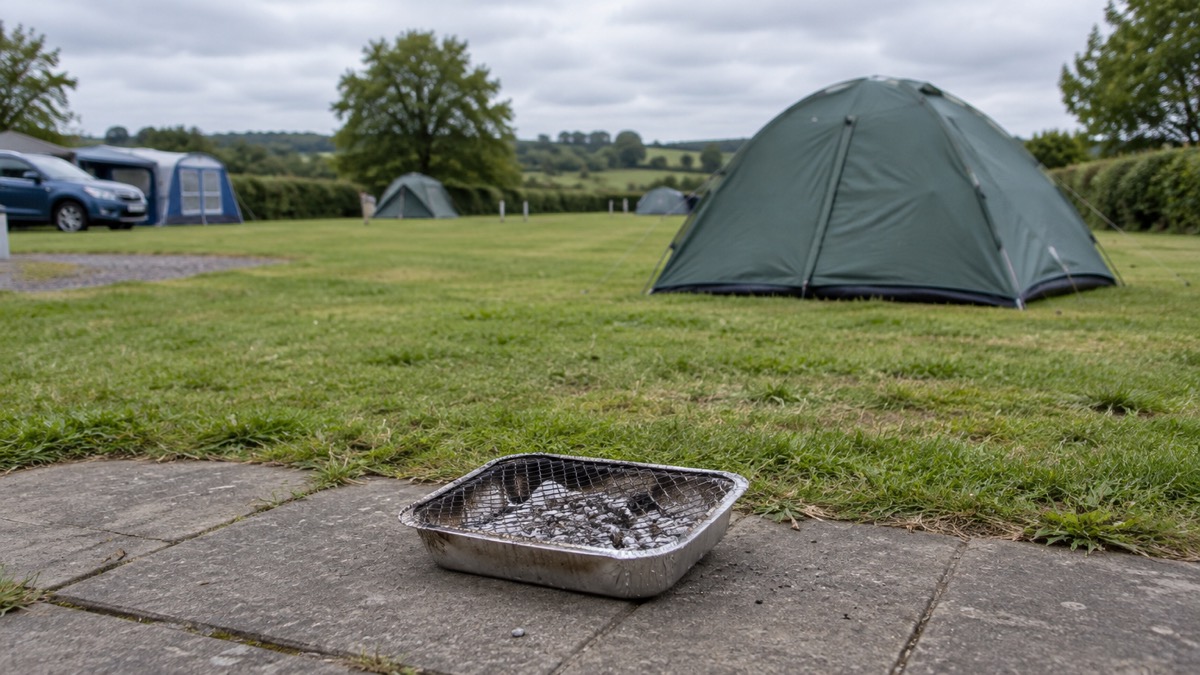
Balconies deserve a specific word. Humberside Fire and Rescue Service notes that disposable barbecues are sometimes used on balconies, where the wind may carry smouldering ash towards nearby grassland or neighbouring properties3. A balcony is rarely level, rarely clear of combustible material and never far from someone else's home, so treat it as unsuitable. Public benches are out too: Mid and West Wales Fire and Rescue Service says do not use disposable barbecues near or on public benches19.
Away from home, the advice hardens further. Manchester Fire and Rescue Service says never take a barbecue on the moors or to the countryside, because it poses a huge risk of fire, is a risk to the environment and can be a danger to others23. Devon and Somerset Fire and Rescue Service recommends a picnic or sandwiches rather than a disposable barbecue when you are out, because they have caused many wildfires in recent years24. If an outage has left you cooking outdoors at home, the garden on paving is the right place, with a bucket of water or garden hose nearby for emergencies, as the Northern Ireland Fire and Rescue Service advises7.
Charcoal: how much to use, how to light it, and when to cook
Charcoal barbecues are the commonest choice in an outage because the fuel stores well and needs no gas connection. The amount of charcoal matters for control as much as for cooking. The Welsh Ambulance Service NHS Trust's barbecue and food safety advice says to use only enough charcoal to cover the base of the barbecue to a depth of about 50mm (two inches)4. Mid and West Wales Fire and Rescue Service gives the same figure19, and the gov.uk fire safety outdoors guidance says to use enough charcoal to cover the base of the barbecue, but not more, normally around 5cms or 2 inches25. A deep bed of charcoal burns hotter, lasts longer and stays dangerous for longer, with no benefit for the meal.
Lighting is where the serious injuries happen. Cheshire Fire and Rescue Service is unequivocal: by far the biggest danger is the use of flammable liquids to light the barbecue, and petrol poured onto charcoal has caused violent and highly dangerous reactions16. Every service repeats the ban. Manchester Fire and Rescue Service says to start your barbecue only with barbecue lighter fuel or firelighters, never petrol, paraffin or other flammable liquids, and never to add more liquid fuel once it is lit9. North Wales Fire and Rescue Service says do not use petrol, paraffin or other flammable liquids to light a barbecue5. Mid and West Wales Fire and Rescue Service adds the technique: only use recognised firelighters or starter fuel, only on cold coals, and use the minimum necessary19. The Northern Ireland Fire and Rescue Service sums it up as never using petrol or paraffin to start or revive your barbecue18.
On the cooking itself, follow the heat rather than the clock. NHS inform in Scotland says you will know your barbecue is at the right temperature for cooking when the coals are glowing red and have a powdery grey surface26. It also warns never to cook food over flames, because the outside will burn while the inside stays raw and unsafe to eat26. In an outage, when you may be cooking unfamiliar food on unfamiliar equipment, waiting for the grey ash is the simplest reliable signal that the charcoal is ready.
Gas barbecues: connecting, checking and changing cylinders
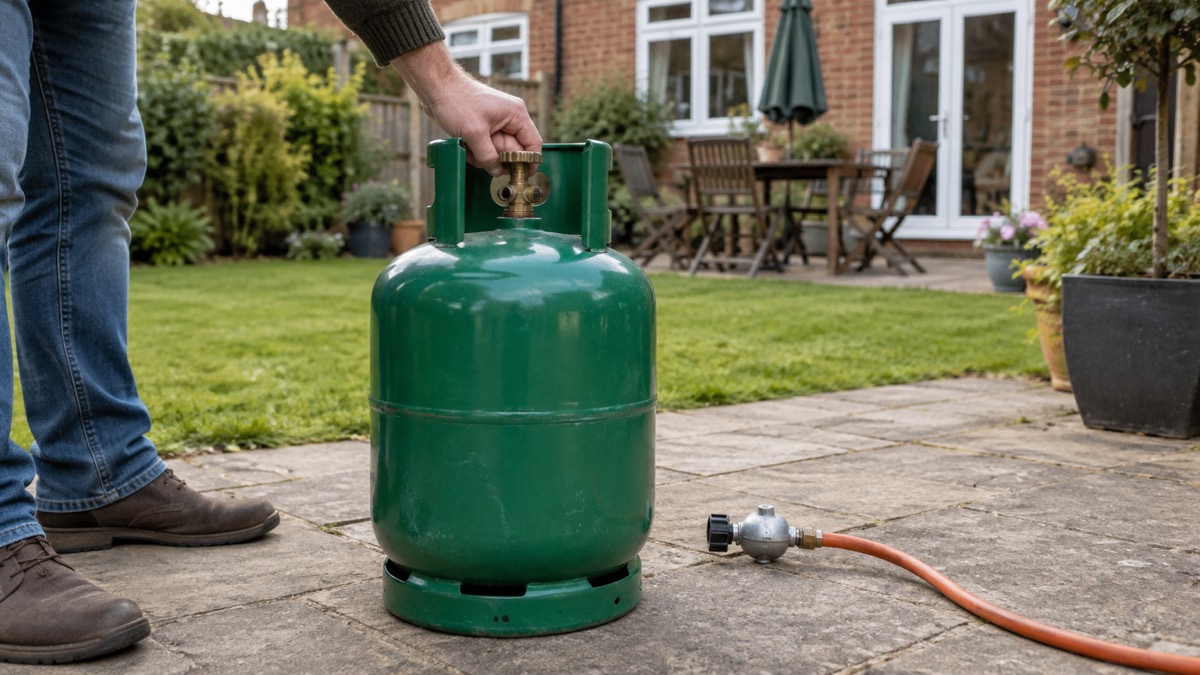
A gas barbecue is quicker to start than charcoal and easier to stop, which makes it a practical outage cooker, but it brings a cylinder of pressurised gas into the garden. The gov.uk fire safety outdoors guidance gives the two rules that govern everything else: make sure the gas tap is turned off before changing the cylinder, and always disconnect the cylinder in open air27. Manchester Fire and Rescue Service adds that you should change gas cylinders in the open air if possible, or open doors and windows to provide good ventilation if not9.
Before each use, check the equipment. Oxfordshire Fire and Rescue Service advice for caravans and mobile homes applies equally at home: check gas equipment and gas bottles before use, and make sure connections are secure and undamaged20. Devon and Somerset Fire and Rescue Service says to make sure the gas pipe connection is secure14.
How to check a gas cylinder for a leak
Mid and West Wales Fire and Rescue Service gives the standard test: if you suspect a leak to the cylinder or pipework, brush soapy water around the joints and watch for bubbles. Tighten to fix, but do not overtighten19. If you do find a leak, or suspect one, the same service and Devon and Somerset Fire and Rescue Service both say to turn off the main cylinder valve14. Devon and Somerset Fire and Rescue Service is clear about the next step: do not use a gas barbecue if you suspect a gas leak24.
If you smell gas strongly or feel unwell near the equipment, stop and act. Dizziness or headache near a gas appliance should always be treated seriously: get to fresh air, turn the gas off at the cylinder if you can do so safely, and do not relight the barbecue until the leak has been found and fixed.
Turning the gas off after cooking
The order matters, and fire services give it consistently. The Northern Ireland Fire and Rescue Service says that when you have finished cooking, turn off the gas cylinder before you turn off the barbecue controls; this ensures any gas in the pipework will be exhausted6. The gov.uk fire safety outdoors guidance says the same: after cooking, turn the gas supply off first and then the barbecue control, which will stop any gas from leaking25. Mid and West Wales Fire and Rescue Service's summer safety booklet puts it as turning off the cylinder before the controls so that any gas in the pipeline is used up28. The gov.uk guidance also says simply to turn gas off when not in use27.
For the details of handling larger cylinders, regulators and storage, see How to Change an LPG Cylinder Safely, Where to Store Gas Cylinders at Home and Bottled Gas for Heaters and Stoves.
"Make sure the gas tap is turned off before changing the cylinder and always disconnect the cylinder in open air."
Staying in charge: supervision, children, pets and alcohol
Every barbecue safety page returns to the same three rules: never leave it alone, keep children and pets back, and keep a clear head. Humberside Fire and Rescue Service says never leave the barbecue unattended3, and Mid and West Wales Fire and Rescue Service says the same19. Cumbria Fire and Rescue Service broadens it to any cooking: never leave a barbecue or any cooking unattended13. In an outage this is easy to break, because the household's attention is on torches, radios and everything else that has stopped working. Decide who is watching the barbecue before it is lit, and hand over properly if that person has to step away.
Children and pets need an actual boundary, not a general instruction. The Scottish Fire and Rescue Service says to establish a safe zone around the cooking area and make sure children and pets stay away from the grill while it is in use17. The Northern Ireland Fire and Rescue Service says to keep children, pets and garden games away from barbecues and fire pits29. Belfast City Council's garden safety advice says never to leave children unsupervised near a barbecue. A ball game in the garden during a power cut is exactly the scenario to plan around: mark the safe zone before the game starts.
Alcohol is the third leg of the rule. The Northern Ireland Fire and Rescue Service says alcohol consumption increases the risk of accidents occurring18, and its summer safety advice repeats the warning. Cumbria Fire and Rescue Service says to enjoy yourself, but not to drink too much alcohol if you are in charge of the barbecue or any cooking13. The Scottish Fire and Rescue Service is firmest: if you are responsible for the barbecue, stay sober to ensure you can react quickly and safely to any potential hazard17. In an emergency, when you may be cooking in poor light on an unfamiliar appliance, a sober cook is not caution, it is basic competence.
Keep the means of putting a fire out to hand from the moment you light up. The Northern Ireland Fire and Rescue Service says to keep a bucket of water or garden hose nearby in case of emergencies7.
Putting it out and getting rid of hot ashes
Putting a barbecue out safely takes longer than cooking on it, and the whole cooling period is part of the job. nidirect says to dispose of the barbecue safely, making sure all fire and ashes are completely extinguished12. The Northern Ireland Fire and Rescue Service says to make sure ashes are cold before disposal7. Cold means cold to the touch of a hand held near, then on, the ashes, not merely stopped smoking.
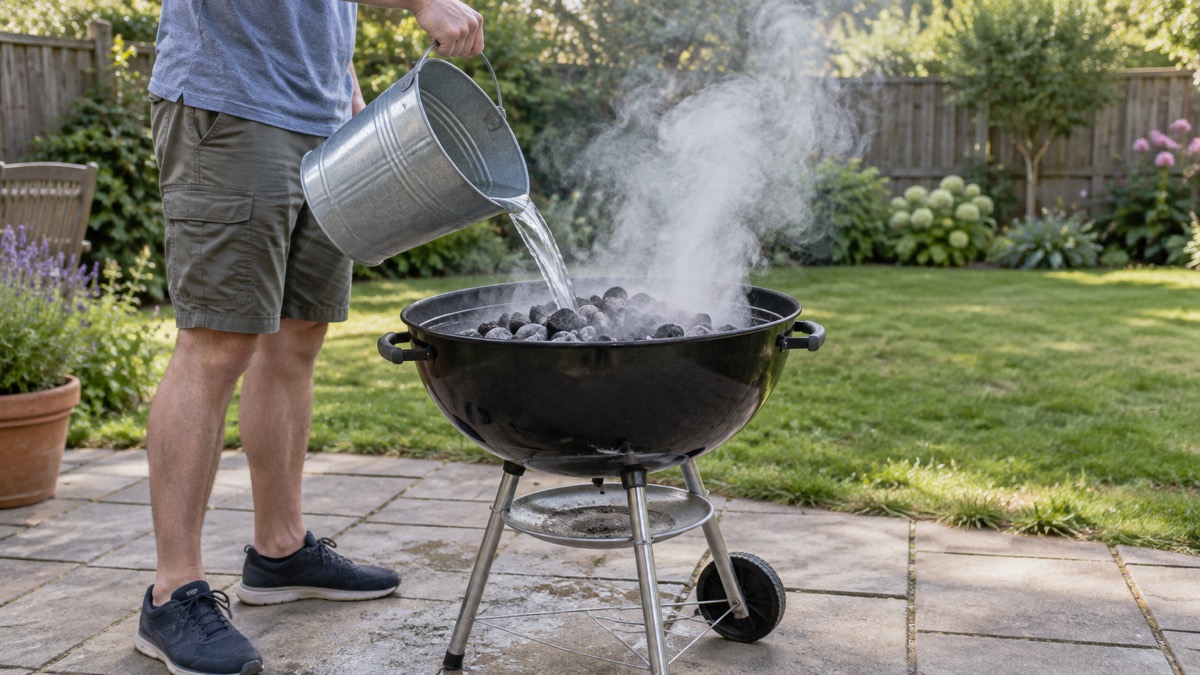
The disposal mistakes fire services see most are putting hot ash into bins and moving the barbecue too soon. Humberside Fire and Rescue Service says never to put hot ashes straight into a dustbin or wheelie bin, because they could melt the plastic and cause a fire3. The gov.uk fire safety outdoors guidance says that even when you have finished cooking the barbecue should stay outside, as it will still give off fumes for some time after use27. The Northern Ireland Fire and Rescue Service adds a warning specific to portable barbecues: make sure the area under it is cooled after use, because that area stores a lot of heat which can cause severe burns6. nidirect repeats the same warning.
Disposable barbecues need the most patience of all. Mid and West Wales Fire and Rescue Service warns that where a disposable barbecue has been used on sand, the sand underneath will become hot enough to burn skin for several hours after the barbecue has gone out19. The London Fire Brigade warns that long after disposable barbecues have been discarded they can still cause fires and give off dangerous carbon monoxide fumes21. Dousing a disposable tray thoroughly with water, then leaving it in place on the paving to cool completely, is the safe course; moving it while it is hot risks dropping embers on dry grass or decking on the way to the bin.
A numbered end-of-cooking routine, drawn from the official advice:
- Stop cooking and let the food come off the grill3.
- For gas: turn off the gas cylinder first, then the barbecue controls, so gas in the pipework is used up6.
- For charcoal and disposables: extinguish all fire and ashes completely12.
- Leave the barbecue outside, well away from the building, tent or caravan, while it cools11.
- Check the area under a portable barbecue has cooled before anyone goes near it6.
- Make sure the ashes are cold before disposal7, and never put hot ashes into a dustbin or wheelie bin3.
For the wider question of ash from solid fuels, see How to Dispose of Ashes Safely, and for a full list of what to have ready before an outage, see the Before-Winter Checklist for Your Heating and Stove and the Backup Stove Kit Checklist.
Sources (29)
- Carbon monoxide safety, Manchester Fire and Rescue Service
- Carbon monoxide safety in the home, London Fire Brigade
- Barbecue safety, Humberside Fire and Rescue Service
- BBQ and food safety, Welsh Ambulance Service NHS Trust
- Barbeque safety, North Wales Fire and Rescue Service
- Other safety advice, Northern Ireland Fire and Rescue Service
- Simple steps to keep you safe this summer, Northern Ireland Fire and Rescue Service, 2023-06-26
- Carbon monoxide, North Wales Fire and Rescue Service
- Barbecue safety, Manchester Fire and Rescue Service
- Household fire safety, Somerset Council, 2025-01-30
- Carbon monoxide: the silent killer, Wiltshire and Swindon Prepared, 2026-10-25
- Carbon monoxide dangers if camping, caravanning or boating, nidirect, 2026-04-02
- Safety outdoors, Cumbria Fire and Rescue Service
- Camping and caravanning safety, Devon and Somerset Fire and Rescue Service
- Camping and caravanning, Dorset and Wiltshire Fire and Rescue Service, 2025-06-20
- Barbecue safety tips, Cheshire Fire and Rescue Service, 2026-05-20
- Guide to safer barbecues, Scottish Fire and Rescue Service, 2024-06-24
- Stay safe this summer: essential tips from NIFRS, Northern Ireland Fire and Rescue Service, 2026-06-22
- Barbecue safety in your garden and outdoors, Mid and West Wales Fire and Rescue Service
- Help prevent wildfires, Oxfordshire Fire and Rescue Service
- Grass and wildfires, London Fire Brigade, 2026-10-25
- How to stay safe during a heatwave, Devon and Somerset Fire and Rescue Service, 2026-06-23
- Countryside safety, Manchester Fire and Rescue Service
- Barbecues, Devon and Somerset Fire and Rescue Service
- Fire safety outdoors, gov.uk, 2022-05-25
- Preparing and cooking food safely, NHS inform, 2025-02-21
- Fire and summer safety advice, nidirect, 2026-07-03
- Gas supply issues: prepare for adverse weather, Buckinghamshire Council
- NIFRS urges community to stay safe this summer - Northern Ireland Fire & Rescue Service, Northern Ireland Fire & Rescue Service
 Before-Winter Heating Checks
 Backup Stove Kit Checklist
 Wood Burner Lighting Kit
 Keeping One Room Warm
 Clothing and Bedding for Cold
 Stopping Draughts
 Hot Water Bottle Safety
 Wheat Bags and Fire Risk
 Electric Blanket Safety
 Portable Heater Types
 Portable Heater Safety
 Wood Burners in a Power Cut
 Using a Wood Burner Safely
 Open Fires and Fire Guards
 Firewood and Seasoning Logs