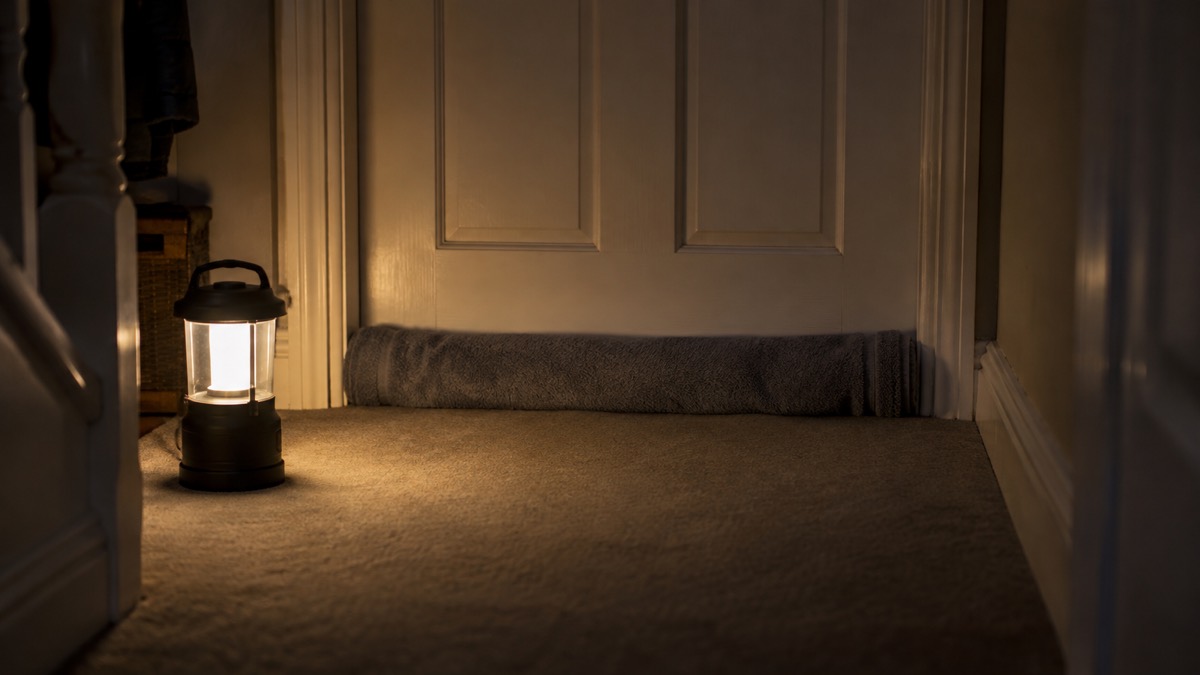
When the heating goes off, whether in a power cut, a boiler failure or a gas supply problem, the warmth already inside your home is all you have. Every gap under a door, around a window frame, through the letterbox or between floorboards lets that warmth leak out and cold air push in. NHS winter guidance is direct about the fix: "You can reduce draughts by fitting draught excluders around doors, or using an old towel to cover gaps."1
The work is quick, cheap and mostly doable with things you already own. Simple steps like closing doors, sealing draughts and turning off radiators in rooms you do not use as much will help keep your home at a stable temperature2. None of it needs a tradesperson, and all of it can be done in the first hour of an outage, before the house starts to cool.
One rule overrides everything else in this page: never block vents or air supplies in a room with a fuel-burning appliance, such as a gas fire, a wood burner, a paraffin heater or an open fire. Those appliances need a steady flow of air to burn safely. Sealing a room too tightly around a flame risks carbon monoxide, which kills. Draught-proof the gaps that leak heat, and leave the vents that feed the fire alone.
Start with the doors: a towel along the gap
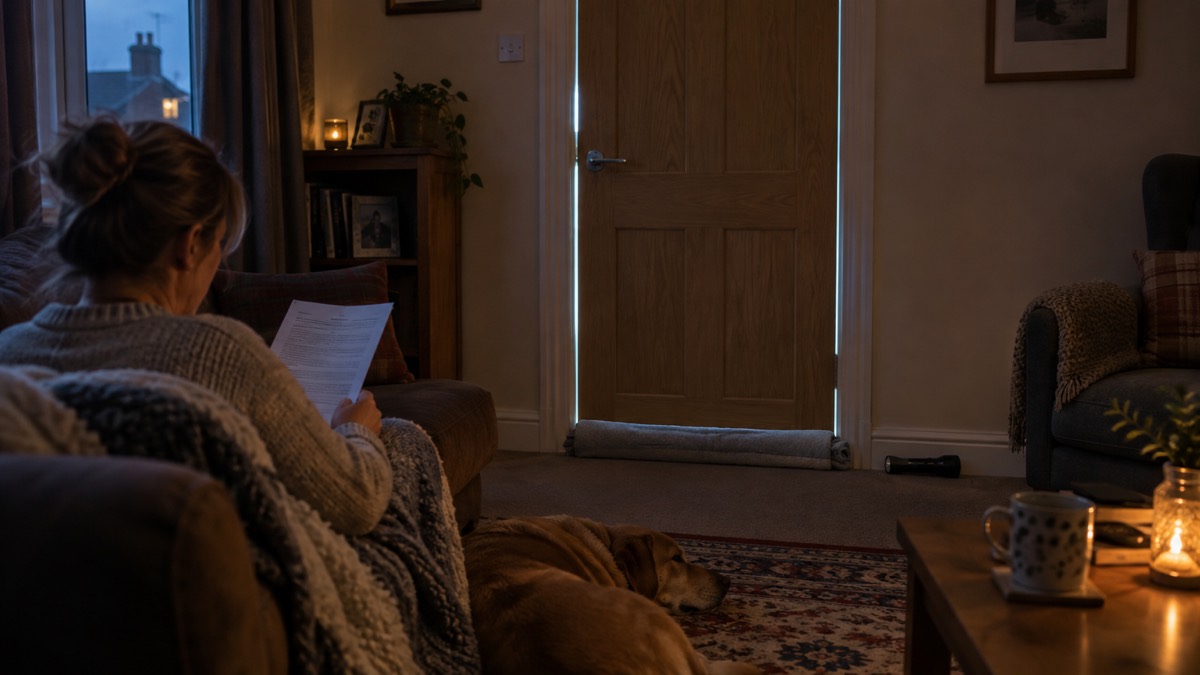
Doors come first because the gap under an external door is usually the single biggest draught in the house, and because it is the easiest to block with what you have to hand. NHS winter guidance says to fit draught excluders around doors or use an old towel to cover the gaps1. West Midlands Ambulance Service NHS trust puts the same advice in plain terms: reduce draughts by fitting draught excluders around doors cheaply, to maximise the heat in your home and minimise cold getting in8. NHS guidance in Scotland repeats it4.
In an outage, work through the doors in this order:
- External doors. Lay a rolled towel, blanket or draught excluder along the bottom gap. If the draught comes around the sides or top, a towel or cloth can be pushed into the frame on the outside edge where the door meets it.
- The room you are heating. If you are keeping one room warm, as our guide to keeping one room warm when the heating fails explains, draught-proof that room's internal door too, so heat does not drain into the cold rest of the house.
- Doors of unused rooms. Keep them closed. Official power cut advice is to keep doors of unused rooms closed and close curtains to keep the heat in6. Closing doors shrinks the space you are trying to keep warm, and every closed door is one less route for warm air to escape.
- The letterbox. NHS guidance for families says to line your letterbox3. A letterbox on an external door is a hole straight to the outside, and a flap alone rarely seals it. A piece of thick fabric, an old pair of tights stuffed with fabric, or a purpose-made letterbox brush all work.
The same technique has a second use that is worth knowing: fire and rescue services, including Cheshire Fire and Rescue Service, tell people trapped by fire to block gaps at the bottom of the door with bedding or towels to keep smoke out9. A household that has practised finding the draughts in its doors is also a household that knows where its doors leak, in any emergency.
Windows: rubber seals, draught proofing and temporary fixes
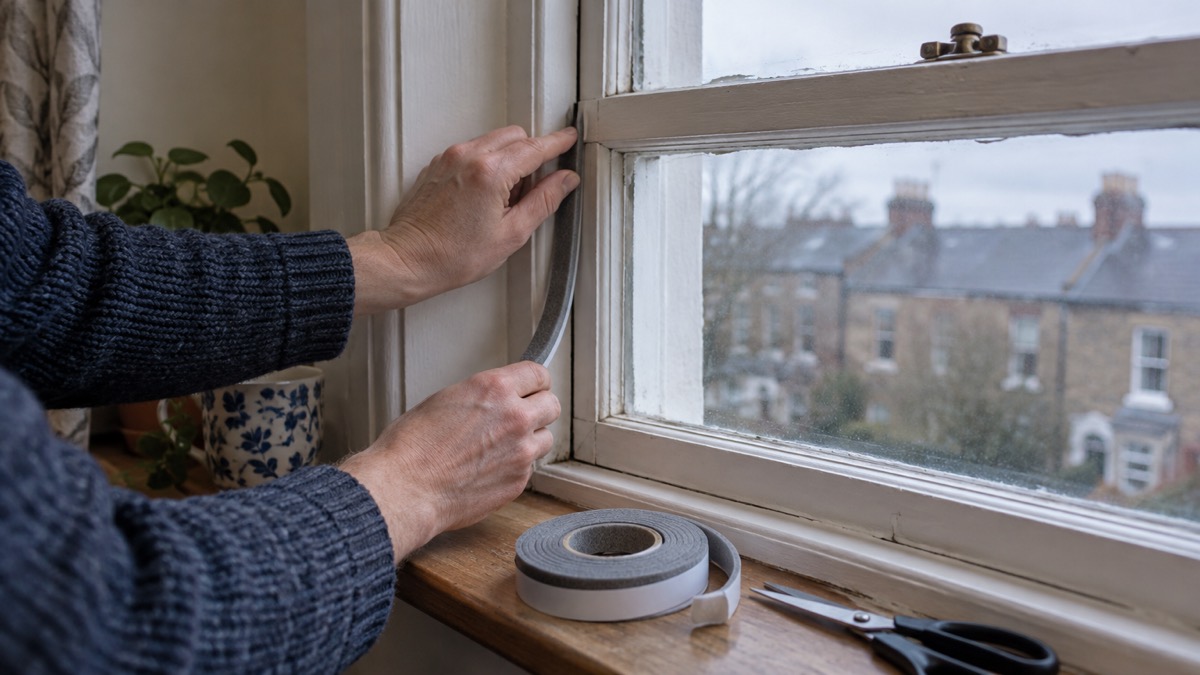
After doors, windows are the next biggest loss. Met Office seasonal advice is to fit draught proofing to seal any gaps around windows and doors5. The permanent fix is self-adhesive draught proofing strip, which is cheap, needs no tools and sticks around the frame where the window closes onto it. Rubber and brush strips both work on the same principle: they compress when the window shuts and close the gap.
For a temporary fix during an outage, Birmingham City Council's emergency preparedness guidance lists duct tape to seal doors, windows and vents if advised to do so10. That last phrase matters: tape is for gaps around frames, not for sealing a room airtight, and never for vents serving a fuel-burning appliance. Tape over the frame gaps of windows you will not need to open, and leave one window in each occupied room able to open, both for fresh air and in case of fire.
Check the window catches too. A sash or casement window that does not pull fully closed leaves a gap all round, and tightening or re-seating the catch may close more of it than any strip will. Where a pane is cracked or a bead has come loose, tape over it from the inside until it can be repaired.
Floors, skirting boards and chimneys
Draughts do not only come in at head height. NHS guidance for families lists the full set of places to seal: use draught excluders, seal cracks in floors and skirting boards, block unused chimneys, and line your letterbox3. Floorboard gaps and the joint where floor meets skirting board leak cold air from under the house, especially in older properties with suspended timber floors.
What to check, room by room:
- Gaps between floorboards. Fill with a flexible filler, or lay rugs over the worst areas. A rug is a genuine draught barrier over a board floor.
- The skirting joint. Run a hand along the bottom of the skirting on a cold day. Any gap can be sealed with filler or tape.
- Unused chimneys. An open chimney on a disused fireplace acts like an open window in the wall. Chimney balloons and caps are the proper fix; in the short term, an old pillow or blanket stuffed well up the flue, with the fireplace screened, blocks most of the updraught. Only do this on a chimney you are certain is not in use, and see our page on lighting an open fire after years without use before you ever light one.
- Pipework and cable holes. Where pipes or cables pass through an external wall, the hole around them is often unsealed. A cloth pushed in, or filler, closes it.
Derbyshire Fire and Rescue Service sums up the whole approach as keeping the warmth in, with draughts, insulation and drawing the curtains7. The point is that draught-proofing is not one product: it is finding every hole between the warm side and the cold side and closing it.
Making a homemade draught excluder
A draught excluder for the bottom of a door is one of the simplest things in the house to make, and official guidance treats it as a cheap, ordinary measure: you can fit draught excluders around doors cheaply2. The classic shape is a fabric tube, laid along the gap under the door.
To make one:
- Find a leg from old trousers, a sleeve, or a rectangle of any sturdy fabric, long enough to span the door width.
- Sew or pin one end closed.
- Fill it with anything that packs densely: rolled-up odd socks, scraps of fabric, old tights, newspaper screwed up loosely, or rice or lentils if you have spare.
- Close the other end the same way.
- Lay it along the gap, and check on a cold day that no draught still comes through. If it does, make it thicker.
Two refinements are worth the effort. Weight helps: a heavier filler sags into the uneven bottom of the gap better than a light one. And if you attach loops or tapes at each end, you can hook the excluder to the door handle and move it with the door rather than kicking it out of place each time you pass.
The same logic works at any scale. NHS guidance simply says an old towel will do1, and a folded blanket along a particularly bad door is just a bigger version of the same idea. If you have more than one external door, make one excluder per door before winter, and store them with your other cold-weather kit, alongside the items in our before-winter checklist for your heating and stove.
Curtains, and holding on to the heat you have
Blocking draughts only half does the job: the other half is stopping warmth leaving through the fabric of the house. Official power cut advice is to keep warm with blankets and layered clothing, keep doors of unused rooms closed, and close curtains to keep the heat in6. North Cumbria Integrated Care NHS guidance adds the same pair of habits: use draught excluders against external doors and close windows at night11.
Curtains work as an insulating layer over the cold glass, and they work best when they are closed as soon as the light goes, not after the room has already cooled. Thicker curtains, or curtains with a thermal lining, hold more heat, but any curtain beats a bare window. Keep curtains clear of any radiator or heater beneath the window, so the heat they trap can still reach the room rather than being held behind the fabric.
For clothing and bedding choices during an outage, see our guide to clothing and bedding to stay warm in a cold home, and for safe ways to add warmth, hot water bottles and electric blankets.
The vent rule: never seal a room with a flame in it
This is the one place where draught-proofing must stop. The same official guidance that tells you to seal gaps also tells you to ventilate: bringing fresh air into a room by opening a door or a window, even for a few minutes at a time, removes stale air, and trickle vents or grilles can bring in a little fresh air constantly12. NHS flood recovery guidance makes the same point from the other direction, telling households to make sure the home is well ventilated to help it dry out and prevent mould13.
So the rule in practice is: seal the leaks you control, and keep deliberate air paths open. That means:
- Vents and airbricks serving a fire, stove, boiler or heater stay open, always.
- If you are using any portable fuel-burning heater, keep a window or door slightly open in that room, and follow the safety guidance in using a portable heater safely at home.
- Even in a sealed, draught-proofed room, open a door or window for a few minutes now and then to change the air12.
Why a cold home matters for your health
This is not only a comfort question. Official winter health advice is blunt: keep rooms, including the bedroom, warm and close windows, because if your house is cold, your body temperature will drop and catching a cold is more likely14. Cold homes can have a significant impact on your health, and can lead to serious problems such as heart attacks, strokes, pneumonia and depression7.
The people most at risk are named again and again across official guidance. West Midlands Ambulance Service lists people aged 65 and older, babies and children under 5, people on a low income, people with a long-term health condition, people with a disability, pregnant women and people with a mental health condition8. North Cumbria's NHS guidance adds people with cardiovascular or respiratory diseases, people with learning disabilities, people at risk of falls, people living alone and unable to care for themselves, and housebound people or people with low mobility11. UKHSA guidance for social care managers notes that living in homes that are hard to heat, for example with broken or draughty doors and windows, is itself a risk factor15.
| Group named in official guidance | Source |
|---|---|
| People aged 65 and over | 8 |
| Babies and children under 5 | 8 |
| People with long-term health conditions, including cardiovascular and respiratory diseases | 8 |
| People on a low income | 8 |
| Pregnant women | 8 |
| People with a disability, learning disability or mental health condition | 8 |
| People living alone, housebound or with low mobility | 11 |
The same ambulance service guidance adds a practical duty for everyone else: check on neighbours and relatives who are older, very young or have long-term health conditions, because they are at particular risk from the cold8. A knock on the door during an outage, with a spare towel for the draught under theirs, is part of that.
Damp, mould and breathing problems
A cold house is often a damp house, and the two together are worse than either alone. UKHSA guidance states it plainly: "When a house is damp as well as cold, mould is more likely to occur. This can increase the risk of illness, especially from asthma."16 The same wording appears in the government's top tips for keeping warm and well2. NHS inform in Scotland lists breathing problems from exposure to mould and damp among the health impacts of flooding13.
The tension is real and needs managing, not choosing between. Draught-proofing keeps the fabric of the room warmer, and warmer surfaces attract less condensation, which is what feeds mould. But a sealed room with people breathing, cooking and drying clothes in it produces moisture that has to go somewhere. The answer is short, regular ventilation rather than constant heat loss: open a door or window for a few minutes at a time to change the air12, and keep any vent serving a heater clear.
If your home has been flooded, the balance shifts further towards ventilation. Natural Resources Wales advises households drying out a flooded property to keep doors and windows open, or to use a dehumidifier with the windows and doors closed17. During the drying-out period, do not draught-seal the wet rooms; let them breathe until they are dry, then seal.
Long-term conditions: why the cold hits harder
For some conditions, cold is not just uncomfortable but a trigger. NHS guidance for people with sickle cell disease says to stop cold air coming in by using draught excluders18. Cold weather guidance for the health and care sector identifies people with long-term conditions, including cardiovascular and respiratory diseases, as particularly at risk when temperatures fall15, and the same guidance for schools and early years settings tells those settings to prioritise heating maintenance, close rooms that are too cold to use, and ventilate indoor spaces to reduce infection risk19.
On stroke specifically, NHS inform notes that in most cases it is possible to significantly reduce your risk by lifestyle changes: a healthy low-fat, low-salt, high-fibre diet with plenty of fresh fruit, vegetables and whole grains, regular exercise, stopping smoking and cutting down on alcohol20. Keeping the home warm during cold weather is part of the same protection for anyone with cardiovascular disease.
The practical reading for a household in an outage: if anyone in the home has a long-term condition, draught-proof their room first, keep it warm through the outage, and treat their comfort as a health matter rather than a preference.
Where to get help with a cold home
You do not have to manage a cold home alone, and official guidance is built around referrals to agencies that can help7. The routes that exist:
- Warm spaces. Many councils, charities and community groups open warm rooms during cold weather. Our guide to warm spaces and warm hubs explains how to find one near you.
- **Winter payments. "Support with heating costs may be available. See our page on winter fuel payment, cold weather payment and warm home discount for what exists and who qualifies.
- **Extra help if you are vulnerable. "Older, disabled and medically dependent households can register for priority services; see extra help in an emergency.
- **Your neighbours. "Check on neighbours and relatives who are older, very young or have long-term health conditions8. Community schemes exist to organise this; see our guide to community resilience.
If you work with the public, there is recognised training on this. Official guidance for healthcare professionals points to UKHSA's 'Helping People Living in Cold Homes' e-learning module, which helps staff identify the people most likely to be at risk from adverse cold weather21. Parallel guidance exists for adult social care managers15, for teachers and educational professionals19 and for the voluntary and community sector16. The consistent message across all of them is that cold-home risk is spotted by the people who see the household, and that referrals work.
Sources (21)
- Stay Well This Winter, NHS England, 2025
- Top tips for keeping warm and well this winter, UK Government, 2026-04-28
- Keeping your home warm, Frimley Healthier Together NHS, 2026-10-25
- Your Health Guide, Winter 2025, West of Scotland Innovation Hub, 2025-12
- Keeping your home warm in winter, Met Office, 2026-10-26
- Be informed about hazards: power cuts, Prepare Campaign, 2026-10-21
- Cold weather advice, Derbyshire Fire and Rescue Service, 2026-10-29
- Cold weather advice, West Midlands Ambulance Service NHS Foundation Trust, 2026-05-20
- In the event of a fire, Cheshire Fire and Rescue Service, 2026-10-13
- Are you ready?, Birmingham City Council, 2026-05-06
- Cold weather warning advice, North Cumbria Integrated Care NHS, 2026-10-29
- Living safely with respiratory infections, UK Government, 2022-04-01
- How to protect your health when flooding occurs, NHS inform Scotland, 2025-11-07
- Snow Buddies, Derbyshire County Council, 2026-10-29
- Supporting vulnerable people before and during cold weather: adult social care managers, UK Government, 2025-09-24
- Cold health alert action card for the voluntary and community sector, UK Government, 2025-09-24
- What to do after a flood, Natural Resources Wales, 2026-10-29
- Keeping warm and well: sickle cell disease, University Hospitals Liverpool NHS, 2026-10-28
- Supporting vulnerable people before and during cold weather: teachers and educational professionals, UK Government, 2025-09-24
- Stroke, NHS inform Scotland, 2026-09-30
- Supporting vulnerable people before and during cold weather: healthcare professionals, UK Government, 2025-09-24
 Before-Winter Heating Checks
 Backup Stove Kit Checklist
 Wood Burner Lighting Kit
 Keeping One Room Warm
 Clothing and Bedding for Cold
 Hot Water Bottle Safety
 Wheat Bags and Fire Risk
 Electric Blanket Safety
 Portable Heater Types
 Portable Heater Safety
 Wood Burners in a Power Cut
 Using a Wood Burner Safely
 Open Fires and Fire Guards
 Firewood and Seasoning Logs
 Smoke Control Areas