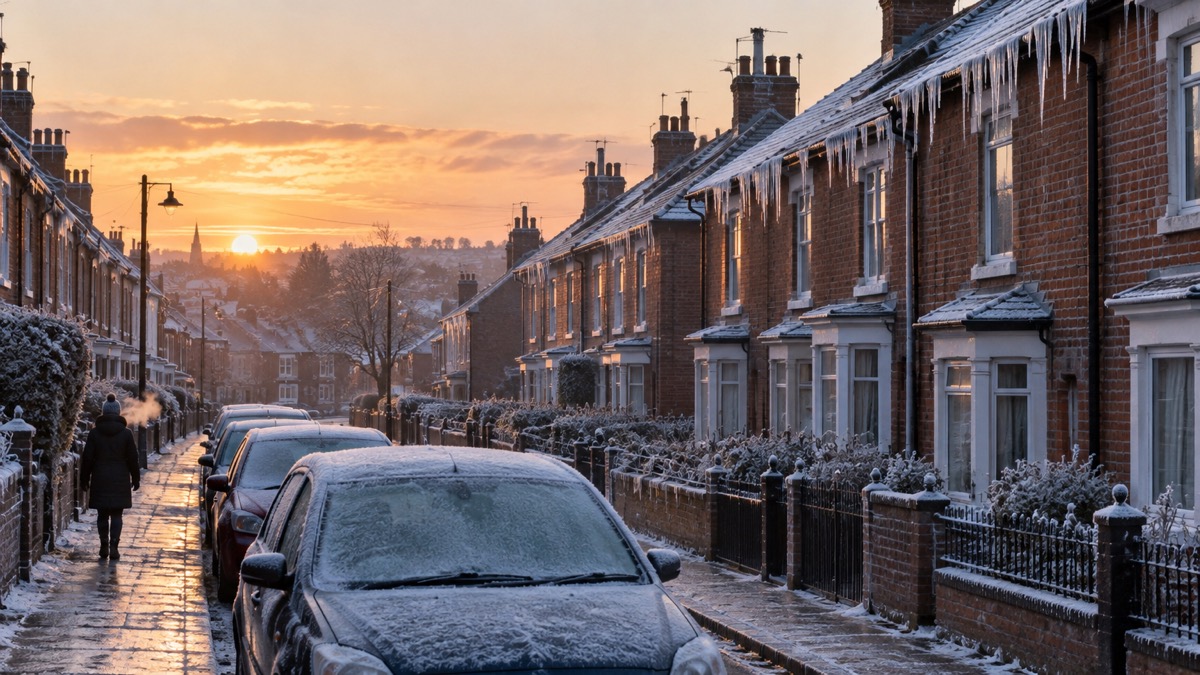
There are three official payments that help UK households with winter heating costs, and each works differently. The Cold Weather Payment gives £25 for every seven-day spell of very cold weather to people on certain benefits1. The Winter Fuel Payment is a lump sum of between £100 and £300 for people who have reached State Pension age1. The Warm Home Discount takes £150 off your electricity bill for eligible older and low-income households1.
Two of the three are paid automatically, which means many households receive money without claiming. The Cold Weather Payment arrives after each qualifying cold spell if you are on the right benefits2, and the Winter Fuel Payment is made automatically to eligible people who have reached State Pension age3. The Warm Home Discount is the one that needs your attention, because your energy supplier has to participate in the scheme and there are a limited number of discounts each winter4.
This page sets out what each payment is worth, who qualifies, when the money arrives and what to do if it does not. It also covers the different schemes in Scotland, Wales and Northern Ireland, and the local crisis funds that help when you cannot afford heating oil, food or energy bills at all.
Cold Weather Payment: £25 for each seven days at zero degrees or below
The Cold Weather Payment is a government scheme that gives eligible people £25 for every seven days the temperature is zero degrees celsius or below4. The trigger is precise: the payment becomes payable if the average temperature in your area is recorded as, or forecast to be, zero degrees celsius or below for seven consecutive days8. A single cold night does not count, and neither does a run of six days. The temperature is measured against a set level for your area over a full week, and only then does the payment trigger9.
The payment is £25 for each seven-day period of very cold weather occurring during the scheme period of 1 November and 31 March8. If a cold spell lasts a fortnight, that is two payments. If cold weather returns in January after a mild December, each separate qualifying period is paid separately. The scheme for 2026/27 starts on 1 November 202610, so the first possible payments of this winter fall in November if a sufficiently long freeze arrives early.
Because the payment follows the weather rather than a claim, you do not need to watch the forecast and apply each time. Payments are automatic, so if you are on a qualifying benefit when a cold spell hits, the money should reach you without any action on your part3. What matters for your household is being on a qualifying benefit when the cold spell happens.
Who gets a Cold Weather Payment
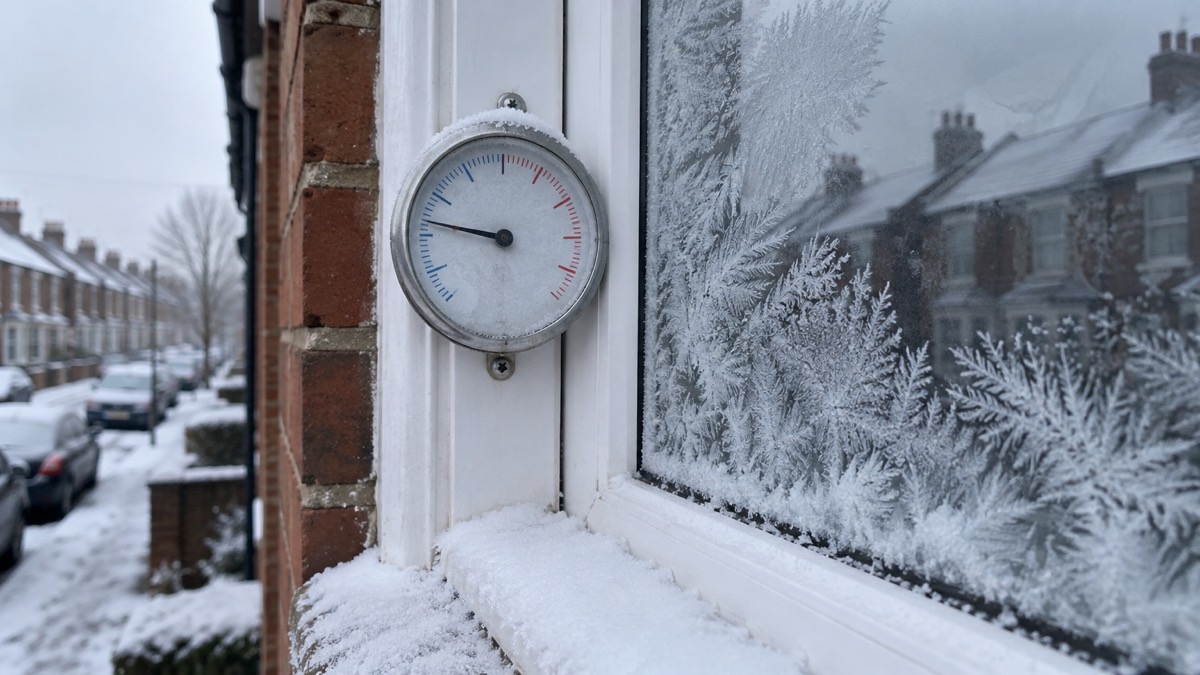
Cold Weather Payments go to households in receipt of certain benefits or the Support for Mortgage Interest scheme8. NHS guidance puts it plainly: you may get £25 when the weather is very cold for seven days in a row if you get certain benefits, and these payments are automatic2. The benefit is the gateway, so a household on a qualifying benefit receives the payment during a cold spell while an identical household next door on a different income does not.
There are two further routes worth knowing. Cold Weather Payments may be available to you if you receive certain benefits or have a child who is disabled or under the age of five7. That means some working-age families with young children qualify alongside pensioners and people on disability benefits. If you are not sure whether your benefit is one of those that counts, you can check your eligibility using a benefit calculator4.
The people most likely to be eligible are the same groups official guidance identifies as at greater risk in cold weather: people on a low income11, including those who cannot afford to keep warm enough during the winter months12. If you have recently moved onto a qualifying benefit, the payments should follow, but check that your claim record shows the correct address, since the payment is tied to the temperature recorded in your area.
Automatic payments between 1 November and 31 March
The Cold Weather Payment scheme runs between 1 November and 31 March1. Within that window, everything is automatic: if you qualify, it should be paid automatically and it does not affect your other benefits4. There is no form to fill in for each cold spell and no need to report the weather yourself.
The practical steps are therefore about checking rather than claiming:
- Confirm you are receiving a qualifying benefit before the season starts on 1 November8.
- Check your eligibility using a benefit calculator if you are unsure which benefits count4.
- Watch your bank account after any week of severe cold, since payments follow qualifying periods rather than a set date2.
- If a payment you expected does not arrive, contact Jobcentre Plus, or use the official Cold Weather Payment pages on gov.uk7.
Payments are not instant. They follow the end of each qualifying seven-day period, and a forecast-based trigger means the payment can begin before the cold weather has fully finished. If you believe a cold spell qualified in your area and nothing has arrived, Jobcentre Plus is the contact point, and you can find your nearest office in the phonebook7.
Winter Fuel Payment: £100 to £300 for people over State Pension age
The Winter Fuel Payment is a lump sum of between £100 and £300 for people over pension credit qualifying age13. For winter 2025 to 2026, you could get between £100 and £300 to help you pay your heating bills1. The standard figures are £200 for eligible households, or £300 for eligible households with someone aged 80 and over5. Age UK's guidance gives the fuller picture: your household receives £200 if at least one qualifying person is aged between State Pension age and 79, and £300 if at least one qualifying person is aged 80 or above10.
Where two people in the same household both qualify, the money is split. The payment is £100 if you qualify and live with someone under 80 who also qualifies, and £100 if you live with someone 80 or over while you are aged between State Pension age and 7910. The table below sets out the main amounts.
| Your situation | Payment |
|---|---|
| Household with someone aged 80 or above | £30010 |
| Household with a qualifying person aged State Pension age to 79 | £20010 |
| You qualify and live with someone under 80 who also qualifies | £100 each10 |
| You are aged 80 or over and live with someone under 80 who also qualifies | £200 for you, £100 for them10 |
| You are aged 80 or over and live with someone 80 or over who also qualifies | £150 each10 |
The payment is made automatically to eligible people who have reached State Pension age3. Any money you get is tax-free and will not affect your other benefits5. In Northern Ireland, the payment is also automatic, and nidirect is where the entitlement is checked; if you qualify there, you can use the money to buy "Stay Warm" oil savings stamps14.
There are situations where no payment is made. You do not qualify if, during the qualifying week, you live in a care home for the whole time from 29 June to 27 September 2026 and receive Pension Credit or Universal Credit, are a prisoner, have been in hospital for more than 52 weeks before the start of the qualifying week, or are subject to immigration control10. The qualifying week for winter 2024/25 was 16 to 22 September 2024, when you needed to have been getting the qualifying benefit5.
The income rules and opting out
Winter Fuel Payment eligibility now depends on receiving a qualifying benefit such as Pension Credit, checked during a qualifying week in September5. You must live in England and Wales in the qualifying week to receive a payment, and people living in the European Economic Area are no longer eligible10. This is a significant change from earlier winters, when the payment went to most people over State Pension age regardless of income.
If you do not want the payment, you can opt out by notifying the Department for Work and Pensions before 21 September 2026. If you change your mind afterwards, you can claim by 31 March 202710. Opting out is a personal choice some households make, but note that the money is tax-free and does not affect other benefits5, so taking it carries no downside for your other entitlements.
If you think you qualified and nothing arrived, you can still make a claim. Age UK has urged older people to claim help with heating costs when payments have gone missing, and the claim deadline for a winter is 31 March15. A late claim matters most if you have recently started receiving Pension Credit or another qualifying benefit and the automatic system has not yet caught up with your change in circumstances.
Warm Home Discount: £150 off your electricity bill
The Warm Home Discount gives eligible older and low-income consumers £150 off their energy bill16. It is a one-off discount applied to electricity bills between October and March8. If you are eligible, you could get £150 off your electricity bill in winter under the Warm Home Discount Scheme17, and most people get it automatically2. The scheme was introduced in 2011 to tackle fuel poverty5, and the government has confirmed its continuation for a new five-year period, up to the scheme year 2030/3110.
Eligibility works through two core groups. You are eligible under Core Group 1 if you receive the Guarantee Credit element of Pension Credit. You are eligible under Core Group 2 if you receive a qualifying means-tested benefit and are living in a property that has a high relative cost to heat5. The Core Group 2 test matters because two households on the same benefit can be treated differently: the property's heating cost, not just your income, decides it.
Eligibility is checked on a single qualifying date rather than continuously. For winter 2024/25, if you met the eligibility criteria on the qualifying date of 11 August 2024, you received the discount5. That means a change of circumstances in, say, November does not bring a discount that winter, even if you would have qualified had the check come later.
When your supplier is not in the scheme
Your energy supplier needs to participate in the scheme for you to get the discount, and if you are on a low income you may qualify4. Not every supplier takes part, so a household that qualifies under the rules can still miss out simply because of who sells them electricity. There are a limited number of discounts each winter4, which is another reason to act early rather than wait for the cold weather.
Contact your energy supplier as soon as possible; your supplier can tell you how to apply4. Claim by contacting your energy company13. For Core Group queries, the Warm Home Discount Helpline telephone line has now closed, but you can contact the scheme administrators by letter at Warm Home Discount Scheme, PO Box 14127, Selkirk, TD7 9AH5.
One point on where the money lands: the discount is normally applied to your electricity bill, but a discount can be applied to the gas bill instead if the supplier provides both gas and electricity to the household8.
Help if you cannot afford heating oil, food or energy bills
The three payments above are the national schemes, but they are not the last resort. If you are unable to pay your bill, contact your supplier and let them know18. Suppliers have arrangements for households in difficulty, and telling them early is better than falling into arrears first.
If you cannot afford to heat your home or buy food, contact Citizens Advice as soon as possible; they can help you access emergency support and check your benefits entitlement9. Citizens Advice also holds information about Winter Fuel Payments and Cold Weather Payments and help with energy bills19. Local support exists alongside this: you may be eligible for help with energy bills, or free improvements to your heating or insulation, particularly if you are vulnerable to the cold20.
For heating oil households, there is now a dedicated route. The Crisis and Resilience Fund provides one-off support for essential costs to households that have no other way to pay for what they need21. Somerset's version shows how the criteria work: you may be eligible if you live in the county, use heating oil as your main heating source, have less than 300 litres of oil remaining, are at risk of being unable to heat your home or access hot water, and receive Universal Credit or Pension Credit or can show you cannot afford a delivery9. Savings between £3,000 and £10,000 are allowed, with your need and situation assessed to establish whether using those savings would lead to financial hardship in the near future9. You will need to provide evidence that you meet the criteria9.
Other local routes include:
- Local Welfare Assistance: for households struggling to afford the basics, such as food, heating, clothing and fuel, or to pay household bills22.
- Warm and Well schemes: in Cornwall, for example, advice, support, grants or discounts on your energy bill are available to help you stay warm, including for people living in a cold or damp home or without central heating23.
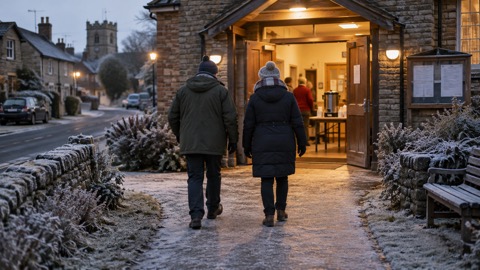
- Warm spaces: many communities run warm hubs during winter, and our page on warm spaces and warm hubs explains how to find one near you.
If you rely on heating oil generally, our guides on heating oil tanks and the Cold Weather Priority Scheme cover keeping a supply through winter and getting priority delivery in a freeze.
Where the rules differ in Scotland, Wales and Northern Ireland
The three payments are UK-wide in name but not in practice, and the differences matter if you live outside England.
Scotland. A new benefit, the Winter Heating Payment, has replaced the Cold Weather Payment in Scotland24. Unlike the Cold Weather Payment, it is not triggered by seven-day cold spells, so Scottish households on qualifying benefits receive a winter heating payment regardless of how mild the weather turns out to be. Check mygov.scot for the current amount and qualifying benefits.
Wales. The Cold Weather Payment itself operates in Wales on the same £25 basis as England. Department for Work and Pensions estimates for the period November 2020 to March 2021 put 223,000 people living in Wales as eligible for payments under the scheme, of whom 87,000 were in receipt of Pension Credit8. Wales also runs its own support: the Discretionary Assistance Fund makes Emergency Assistance Payments as a non-repayable grant to help with essential costs for people in a crisis situation and in need of immediate financial support8. The fund can help people experiencing severe financial hardship to meet the cost of food, gas and electricity, boiler repairs and oil and liquid gas purchases, and runs October to March annually8. Emergency assistance payments of up to £120 can be authorised, subject to meeting certain eligibility criteria8, and a pilot scheme in 2020-21 provided emergency assistance payments of up to £175 to purchase oil and liquid gas for off-grid households8. From 1 April 2023, all applicants are eligible for three payments in a 12-month rolling period5. Wales has also run its own Winter Fuel Support Scheme, providing households where one member receives certain welfare benefits with a one-off payment of £1008.
Northern Ireland. The Winter Fuel Payment is made automatically to eligible people who have reached State Pension age, and nidirect is the official source for checking entitlement3. If you qualify, you can use the money to buy "Stay Warm" oil savings stamps, a scheme run for households that heat with oil14. Cold Weather Payments operate in Northern Ireland on the same trigger and amount as elsewhere in the UK2.
Warm Home Discount. The scheme's published eligibility rules apply to England and Wales only5. Households in Scotland and Northern Ireland should check with their supplier and their own nation's official advice pages, since the arrangements differ.
| Nation | Cold Weather Payment | Winter Fuel Payment | Extra local support |
|---|---|---|---|
| England | £25 per qualifying cold week1 | £100 to £300, automatic3 | Crisis and Resilience Fund, Local Welfare Assistance21 |
| Wales | Same scheme; 223,000 people eligible in 2020 to 20218 | Same scheme8 | Discretionary Assistance Fund, three payments per 12 months5 |
| Scotland | Replaced by Winter Heating Payment24 | Check mygov.scot | Winter Heating Payment24 |
| Northern Ireland | Same trigger and amount2 | Automatic, checked on nidirect3 | "Stay Warm" oil savings stamps14 |
Who is most at risk, and where to turn
The payments exist because cold homes harm health, and official guidance is consistent about who is most at risk. People aged 65 and older, babies and children under the age of five, people on a low income who cannot afford heating, people who have a long-term health condition, people with a disability, pregnant women and people with a mental health condition are all identified as more vulnerable to the effects of cold weather25. NHS guidance adds people with long-term conditions such as heart, lung or kidney disease26. Cold weather vulnerability also includes people who have chronic medical conditions, those living with learning or physical disabilities, and those who cannot afford to keep warm enough during the winter months12.
If you are in one of these groups, the practical order is: make sure you are on the qualifying benefits (a benefit calculator does this4), confirm your supplier is in the Warm Home Discount scheme4, and know your local crisis fund before you need it22. Support is available if you are struggling with the cost of heating27, and asking early is easier than asking in a crisis. Our page on extra help in an emergency covers the wider support for older, disabled and medically dependent households, and keeping one room warm explains how to make the money you do have go further.
Sources (27)
- Keeping your home warm in winter, Met Office, 2026-10-26
- Keeping warm and well in winter, University Hospitals Liverpool NHS Foundation Trust, 2026-10-28
- Stay warm this winter, Belfast City Council, 2026-10-29
- Keeping your home warm, Frimley Healthier Together NHS, 2026-10-25
- England and Wales energy domestic consumer advice, Ofgem, 2024-11
- A UKIFDA guide for heating oil users - UKIFDA, UKIFDA
- Winter health, Hanham Health Surgery NHS, 2026-10-29
- Cold weather resilience plan, Welsh Government, 2022
- Help with heating costs and staying warm, Somerset County Council, 2026-10-28
- Help with heating costs factsheet, Age UK, 2026-09
- Supporting vulnerable people before and during cold weather, UK Government, 2026-10-06
- Supporting vulnerable people before and during cold weather, UK Government, 2025-09-24
- Top tips for keeping warm, Nottinghamshire County Council, 2023
- Stay warm at winter, Belfast City Council, 2026-10-29
- Age UK urges older people to claim help with heating costs, Age UK, 2018
- Keeping your home warm in winter, Met Office, 2026-10-26
- Keeping warm in winter, Nottinghamshire County Council, 2026-10-29
- Keeping warm in winter, Derbyshire County Council, 2026-10-29
- Winter weather advice, Welsh Government, 2026
- Find support this winter, Lancashire County Council, 2026-10-29
- Help this winter, Cumberland Council, 2026
- Seasonal winter safety advice, Suffolk County Council, 2026-10-29
- Warm and Well Cornwall, Cornwall Council, 2022-06-09
- Heat your home: managing rising costs, Argyll and Bute Council, 2024-11-20
- Stay well this winter, NHS Cheshire and Merseyside, 2026-10-28
- Staying warm in winter, nidirect, 2026-10-06
- Staying warm and well, Cheshire Fire and Rescue Service, 2026-08-06
 Cold Weather Priority Scheme
 Warm Spaces and Warm Hubs